Introduction to Chain Sling Capacity
What is Chain Sling Capacity?
Chain sling capacity refers to the maximum weight a chain sling can safely lift under specific conditions. It’s a critical measurement that ensures the safety and efficiency of lifting operations across various industries. Understanding chain sling capacity involves considering factors like the sling’s configuration, the angle at which it’s used, and the material grade of the chain itself. Safe and Secure Trading Company (SSTC) emphasizes that accurately determining this capacity is not just a best practice but a fundamental requirement for preventing accidents and ensuring the longevity of your rigging equipment.
Why Accurate Calculation Matters
Accurate calculation of chain sling capacity is paramount for preventing catastrophic failures and ensuring the safety of personnel and equipment. Overloading a sling can lead to chain breakage, dropped loads, and severe injuries. A precise understanding of lifting capacity allows you to choose the right sling for the job, minimizing risks and maximizing efficiency. We’ve seen countless situations where a little extra attention to detail during the planning phase saved significant costs and, more importantly, prevented harm. Failing to accurately calculate this can lead to equipment damage and potential work place fatalities. The principles outlined in ASME B30.9 are designed to mitigate these risks, and following them diligently is key to safe overhead lifting.
Understanding Key Terms and Definitions
Working Load Limit (WLL)
The Working Load Limit (WLL), sometimes referred to as the lifting capacity, is the maximum weight that a chain sling is designed to lift safely. This limit is set by the manufacturer and is typically marked on the sling itself. Exceeding the WLL is extremely dangerous and can lead to equipment failure and injuries. When our team in Dubai assesses rigging setups, the WLL is always the first number they check. The WLL is determined by dividing the Minimum Breaking Load (MBL) by a safety factor. The safety factor is determined by the application, regulatory requirements and governing industry standards. Always know and respect the WLL of your chain slings.
Sling Angle
The sling angle is the angle formed between the horizontal plane and the sling leg. This angle significantly affects the effective tension on each sling leg. As the sling angle decreases, the tension on each leg increases. For instance, a sling at a 30-degree angle experiences twice the tension compared to lifting the same load vertically. Understanding sling angle factor is crucial because it directly impacts the chain sling capacity. Always account for the sling angle, as it can drastically reduce the working load limit. We once had a client who consistently overlooked the sling angle, leading to premature wear on their slings.
Chain Grade
The chain grade indicates the strength and quality of the chain used in the sling. Higher chain grades denote stronger chains that can withstand greater loads. Common chain grades include Grade 80, Grade 100, and Grade 120, each offering different levels of strength and durability. The chain grade is a critical factor in determining the chain sling safety and overall lifting capacity. Always verify the chain grade markings on the sling before use. Using a lower grade chain than required can lead to catastrophic failures.
Design Factor
The design factor, also known as the safety factor, is a ratio that ensures the chain sling’s breaking strength significantly exceeds the working load limit. This factor accounts for uncertainties and potential overloads. A common design factor is 4:1 or 5:1, meaning the sling’s minimum breaking strength is four or five times its WLL. The design factor is a critical element in ensuring the safe operation of chain slings. It provides a buffer against unexpected stresses and variations in load. Ignoring the design factor can compromise the structural integrity of the sling.
Essential Factors Affecting Chain Sling Capacity
Sling Angle Considerations
The sling angle is one of the most critical factors affecting chain sling capacity. As the angle decreases from vertical, the tension on the sling legs increases dramatically. For example, at a 30-degree angle, the tension on each leg is twice the load being lifted. Therefore, it’s essential to use slings at angles as close to vertical as possible to maximize their lifting capacity. The sling angle factor must be accurately calculated and factored into the overall capacity calculation. We recommend using angle finders or inclinometers to ensure precise measurements.
Load Distribution
Proper load distribution is crucial, especially when using multi-leg slings. Uneven load distribution can overload one or more legs, reducing the overall lifting capacity. The load should be evenly distributed among all sling legs to ensure safe and efficient lifting. When dealing with unequal leg lengths, the shorter legs will bear a greater portion of the load. It’s important to calculate the load on each leg individually to ensure that no leg exceeds its WLL. Ensuring proper load distribution is a key aspect of chain sling safety.
Environmental Conditions
Environmental conditions, such as extreme temperatures, corrosive substances, and abrasive environments, can significantly affect chain sling capacity. High temperatures can reduce the strength of the chain, while corrosive substances can cause degradation and weakening. Abrasive environments can accelerate wear and tear, reducing the sling’s lifespan. When operating in such conditions, it’s crucial to use slings specifically designed for those environments and to inspect them more frequently. The selection of appropriate rigging equipment must always consider the environmental context.
Dynamic Loading vs. Static Loading
Dynamic loading refers to loads that involve sudden impacts, jerks, or movements, while static loading involves loads that are applied gradually and remain constant. Dynamic loading can significantly increase the stress on chain slings, exceeding their static load capacity. To account for dynamic loading, a dynamic load factor should be applied. This factor increases the effective load, ensuring the sling is not overloaded during dynamic conditions. Dynamic loading can be caused by sudden starts and stops or by wind gusts. We’ve found that neglecting dynamic load considerations is a common cause of sling failures.
Step-by-Step Guide to Calculating Chain Sling Capacity
Step 1: Determine the Load Weight
⚙️ Before you even think about selecting a chain sling, you absolutely must know the precise weight of the load you intend to lift. This is the foundational step, and any error here will propagate through the entire calculation, potentially leading to dangerous consequences. Use calibrated scales or consult the manufacturer’s specifications to get an accurate weight. Remember, it’s always better to overestimate slightly than to underestimate. One of the most common mistakes we see is relying on inaccurate or outdated weight information.
Step 2: Identify Sling Configuration (Single Leg, Multi-Leg)
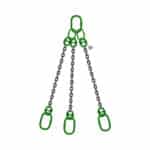
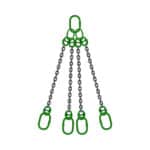
⚙️ Next, determine the sling configuration you plan to use. Is it a single-leg sling, a two-leg sling, a three-leg sling, or a four-leg sling? The configuration significantly impacts the load distribution and, therefore, the chain sling capacity. Multi-leg slings distribute the load across multiple legs, increasing the overall lifting capacity, but the angle of the legs plays a vital role. The configuration also dictates how you’ll calculate the sling angle factor.
Step 3: Measure Sling Angles
⚙️ This is where precision becomes paramount. Accurately measure the angles between each sling leg and the horizontal plane. Use a protractor, inclinometer, or a specialized angle finder for the most accurate readings. Remember, as the sling angle decreases, the tension on each leg increases. Ensure that all angles are within the manufacturer’s recommended limits. A seemingly small error in angle measurement can lead to a significant miscalculation of the chain sling capacity.
Step 4: Calculate Sling Angle Factor
⚙️ The sling angle factor accounts for the increased tension on the sling legs due to the angle. The formula for the sling angle factor is:
Sling Angle Factor = Length of Sling / Height from Load to Suspension Point.
Alternatively, you can use the following trigonometric formula:
Sling Angle Factor = 1 / sin(angle)
For example, at a 30-degree angle, the sine is 0.5, so the sling angle factor is 2. This means each leg experiences twice the load. Accurate calculation of the sling angle factor is absolutely essential for chain sling safety.
Step 5: Select the Appropriate Chain Grade
⚙️ Choose the chain grade that meets or exceeds the required strength for your lifting application. Refer to the chain manufacturer’s specifications and load charts to ensure you select the appropriate grade. Common chain grades include Grade 80, Grade 100, and Grade 120. Using a higher grade chain than necessary adds an extra margin of safety. The chain grade directly correlates to the chain sling capacity, so this selection should not be taken lightly. Chain grade can be determined by markings imprinted on the chain itself.
Step 6: Apply the Formula: WLL = (Chain Grade Rating x Number of Legs) / Sling Angle Factor
⚙️ Now, it’s time to put it all together. Apply the following formula to calculate the Working Load Limit (WLL):
WLL = (Chain Grade Rating x Number of Legs) / Sling Angle Factor
For example, if you have a two-leg sling using Grade 80 chain (rated at 8,000 lbs per leg) with a sling angle factor of 2, the WLL would be:
WLL = (8,000 lbs x 2) / 2 = 8,000 lbs
This means the sling can safely lift a load of 8,000 lbs under those specific conditions. Always double-check your calculations and ensure you haven’t missed any critical factors.
Chain Sling Configurations and Their Capacity
Single-Leg Slings: Calculating WLL
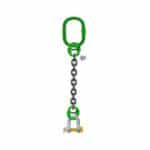
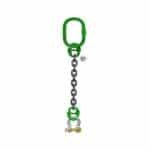
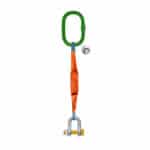
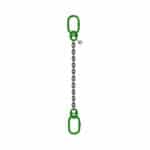
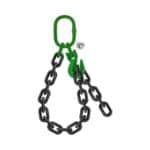
Single-leg slings are the simplest configuration, where one chain leg connects the load to the lifting device. The calculation for the WLL is straightforward: the WLL of the sling is equal to the rated capacity of the chain, provided the load is applied vertically. If the load is not vertical, the capacity is reduced according to the sling angle. Single-leg slings are best suited for loads that are easily balanced and do not require additional stability. Ensuring the load is directly below the lifting point is crucial for chain sling safety when using a single-leg sling.
Two-Leg Slings: Adjusting for Angle
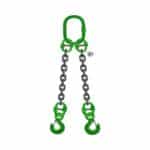
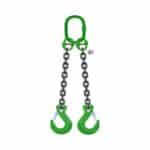
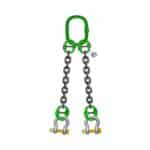
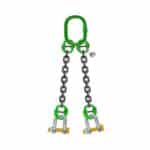
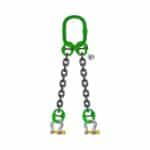
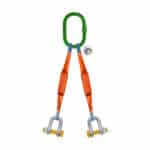
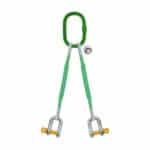
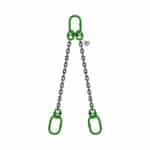
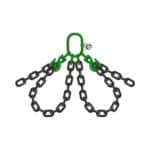
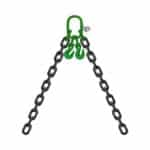
Two-leg slings distribute the load between two chain legs, increasing the overall lifting capacity compared to a single-leg sling. However, the sling angle significantly affects the WLL. As the angle between the legs increases, the tension on each leg also increases. The WLL must be adjusted using the sling angle factor. Two-leg slings provide better stability than single-leg slings and are suitable for loads that require more balance. Proper adjustment for angle is critical to accurately calculating chain sling capacity when using two-leg slings.
Three and Four-Leg Slings: Load Distribution
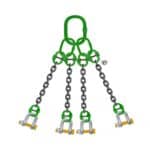
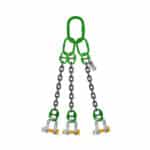
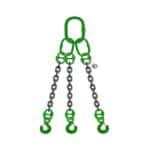
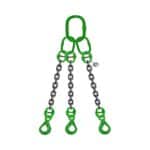
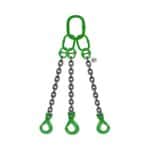
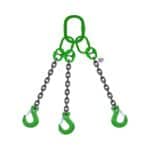
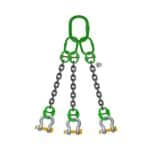
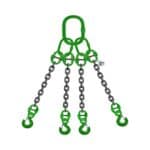
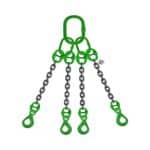
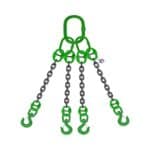
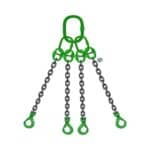
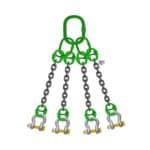
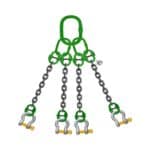
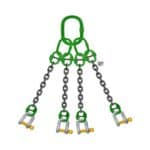
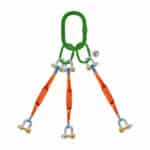
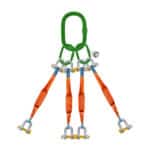
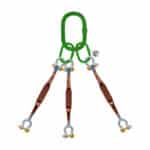
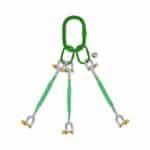
Three and four-leg slings offer even greater stability and load distribution. In theory, a four-leg sling should distribute the load equally among all four legs. In practice, it is typically assumed that only three legs share the load equally, due to variations in load distribution and sling length. The WLL calculation must account for the sling angle and the assumption that only three legs are effectively supporting the load. Three and four-leg slings are ideal for complex lifts and loads that require maximum stability. Proper load distribution is vital for chain sling safety when using these configurations.
Basket Hitch Configuration: Enhancing Capacity
The basket hitch configuration involves wrapping the sling around the load, with both ends connected to the lifting device. This configuration effectively doubles the lifting capacity compared to a single-leg sling, provided the angle between the sling legs is accounted for. The basket hitch is particularly useful for lifting long or cylindrical objects. However, it’s crucial to ensure that the load is stable and will not slip out of the sling. The sling angle factor must be applied to accurately calculate the chain sling capacity in a basket hitch configuration.
Advanced Considerations for Complex Lifts
Unequal Leg Lengths
When using multi-leg slings with unequal leg lengths, the shorter legs will bear a greater portion of the load. This is because the shorter legs are at a steeper angle, resulting in higher tension. It’s essential to calculate the load on each leg individually to ensure that no leg exceeds its WLL. In such cases, using adjustable slings can help equalize the load distribution. When our team in Dubai tackles this issue, they often find that precise measurement and adjustment are key to safe lifting.
Off-Center Loads
Off-center loads create uneven load distribution among the sling legs. The legs closer to the load’s center of gravity will bear a greater portion of the weight. To address this, it may be necessary to use a spreader bar to distribute the load more evenly. Alternatively, you can adjust the sling attachment points to compensate for the off-center load. Accurately assessing the load’s center of gravity is crucial for safely handling off-center loads and calculating chain sling capacity.
Dynamic Load Factors
Dynamic loads, which involve sudden impacts, jerks, or movements, can significantly increase the stress on chain slings. To account for dynamic loading, a dynamic load factor should be applied. This factor increases the effective load, ensuring the sling is not overloaded during dynamic conditions. The dynamic load factor depends on the severity of the dynamic forces involved. Common dynamic load factors range from 1.1 to 2.0. Always err on the side of caution when estimating dynamic load factors.
Using Load Charts and Tables
Load charts and tables provide pre-calculated WLL values for various sling configurations and angles. These charts simplify the calculation process and reduce the risk of errors. Always refer to the manufacturer’s load charts for the specific chain sling you are using. Load charts typically include information on chain grade, sling configuration, sling angle, and WLL. Using load charts is a best practice for ensuring chain sling safety.
Safety Inspection and Maintenance of Chain Slings
Pre-Use Inspection Checklist
✅ Before each use, conduct a thorough inspection of the chain sling. Check for signs of wear, damage, or deformation. Look for stretched, bent, or twisted links. Examine the hooks and connecting hardware for cracks or damage. Ensure that the sling is properly tagged with its WLL. A detailed pre-use inspection checklist is essential for maintaining chain sling safety. We once had a user who got stuck on this step. The trick to avoid that common issue is to create a written checklist and follow it religiously.
Identifying Wear and Damage
💡 Learn to recognize the signs of wear and damage on chain slings. Common indicators include elongated links, nicks, gouges, and corrosion. Any of these signs can weaken the sling and reduce its lifting capacity. If you find any damage, remove the sling from service immediately. Regular inspections are key to identifying wear and damage before they lead to failure. The most common signs of wear include stretching, bending, twisting, nicks, gouges and corrosion.
Proper Storage Techniques
💡 Store chain slings in a clean, dry environment to prevent corrosion and damage. Avoid storing them on the ground or in areas where they may be exposed to chemicals or extreme temperatures. Hang the slings neatly to prevent kinking or tangling. Proper storage techniques can significantly extend the lifespan of chain slings. When our team in Dubai is consulted, they typically emphasize that proper storage is just as important as proper use.
Removal Criteria
💡 Establish clear removal criteria for chain slings. Any sling that shows signs of damage, wear, or deformation should be removed from service immediately. Specific removal criteria may include exceeding a certain percentage of elongation, cracks in the links or hooks, or severe corrosion. Adhering to strict removal criteria is crucial for chain sling safety. Here are some common signs that a chain sling should be removed from service:
- Elongated links exceeding 5%
- Cracks or breaks in any part of the chain or hardware
- Severe corrosion
- Bent or twisted links
- Damaged or deformed hooks
Common Mistakes to Avoid in Capacity Calculation
Ignoring Sling Angle
Ignoring the sling angle is one of the most common and dangerous mistakes in capacity calculation. As the sling angle decreases, the tension on each leg increases dramatically. Failing to account for this can lead to overloading and sling failure. Always measure the sling angle accurately and factor it into the WLL calculation. We’ve seen countless accidents that could have been prevented by simply paying attention to the sling angle. Ignoring the sling angle can reduce lifting capacity by 50% or more.
Overestimating Load Capacity
Overestimating the load capacity of a chain sling can have disastrous consequences. Always use accurate weight measurements and refer to the manufacturer’s load charts to determine the WLL. Never assume that a sling can handle more than its rated capacity. Overestimating load capacity can lead to overloading and sling failure. Double-check all calculations and measurements to ensure accuracy. The best way to avoid overestimating the load capacity is to always use calibrated weighing equipment.
Neglecting Dynamic Loading
Neglecting dynamic loading is another common mistake that can lead to sling failure. Dynamic loads, which involve sudden impacts, jerks, or movements, can significantly increase the stress on chain slings. Always account for dynamic loading by applying a dynamic load factor. Ignoring dynamic loading can cause the sling to fail even if the static load is within the WLL. Always consider the potential for dynamic forces when planning a lift.
Using Damaged or Unrated Slings
Using damaged or unrated slings is a serious safety hazard. Always inspect chain slings before each use and remove any damaged slings from service. Never use slings that are not properly tagged with their WLL. Using damaged or unrated slings can lead to catastrophic failures and injuries. Only use slings that have been inspected and certified by a qualified professional.
Case Studies and Practical Examples
Example 1: Calculating Capacity for a Two-Leg Sling with a 60-degree Angle
Let’s say we need to lift a load weighing 4,000 lbs using a two-leg sling with a 60-degree angle between the legs. The chain grade is Grade 80, which has a rated capacity of 8,000 lbs per leg.
1. Load Weight: 4,000 lbs
2. Sling Configuration: Two-leg sling
3. Sling Angle: 60 degrees
4. Sling Angle Factor: 1 / sin(60) = 1 / 0.866 = 1.155
5. Chain Grade Rating: 8,000 lbs per leg
6. WLL Calculation: (8,000 lbs x 2) / 1.155 = 13,853 lbs
In this case, the sling has a WLL of 13,853 lbs, which is more than sufficient to lift the 4,000 lbs load safely.
Example 2: Determining Capacity for a Four-Leg Sling with Unequal Load Distribution
Suppose we are lifting a machine weighing 12,000 lbs using a four-leg sling. Due to the machine’s shape, the load distribution is unequal, with three legs effectively supporting the load. The sling angle is 45 degrees, and the chain grade is Grade 100, which has a rated capacity of 10,000 lbs per leg.
1. Load Weight: 12,000 lbs
2. Sling Configuration: Four-leg sling (three legs supporting)
3. Sling Angle: 45 degrees
4. Sling Angle Factor: 1 / sin(45) = 1 / 0.707 = 1.414
5. Chain Grade Rating: 10,000 lbs per leg
6. WLL Calculation: (10,000 lbs x 3) / 1.414 = 21,213 lbs
The sling has a WLL of 21,213 lbs, which is adequate for lifting the 12,000 lbs machine, even with the unequal load distribution.
Example 3: Assessing the Impact of Dynamic Loading on Sling Capacity
Consider a scenario where a 5,000 lbs load is being lifted, and there is a potential for dynamic loading due to sudden stops and starts. We estimate a dynamic load factor of 1.2. The sling is a two-leg sling with a 30-degree angle and Grade 80 chain (8,000 lbs per leg).
1. Load Weight: 5,000 lbs
2. Dynamic Load Factor: 1.2
3. Effective Load: 5,000 lbs x 1.2 = 6,000 lbs
4. Sling Configuration: Two-leg sling
5. Sling Angle: 30 degrees
6. Sling Angle Factor: 1 / sin(30) = 1 / 0.5 = 2
7. Chain Grade Rating: 8,000 lbs per leg
8. WLL Calculation: (8,000 lbs x 2) / 2 = 8,000 lbs
In this case, the sling has a WLL of 8,000 lbs, which is sufficient to handle the effective load of 6,000 lbs, even with dynamic loading.
Regulatory Standards and Compliance
OSHA Regulations
The Occupational Safety and Health Administration (OSHA) sets forth regulations regarding the safe use of rigging equipment, including chain slings. These regulations cover various aspects, such as inspection, maintenance, and training. Compliance with OSHA regulations is mandatory for all employers to ensure a safe working environment. OSHA standards emphasize the importance of regular inspections, proper training, and adherence to manufacturer’s recommendations for chain sling capacity. Failure to comply with OSHA regulations can result in fines and penalties.
ASME B30.9 Standards
ASME B30.9 is a comprehensive standard that provides guidelines for the safe use, inspection, and maintenance of slings, including chain slings. This standard covers topics such as sling design, material requirements, WLL calculation, and inspection procedures. Adhering to ASME B30.9 standards is a best practice for ensuring chain sling safety. The principles outlined in ASME B30.9 are designed to mitigate risks and prevent accidents. ASME B30.9 also provides guidance on the proper use of rigging equipment and the selection of appropriate slings for specific lifting applications.
Other Relevant Standards
In addition to OSHA and ASME B30.9, other relevant standards may apply depending on the industry and specific lifting application. These may include standards from organizations such as the American National Standards Institute (ANSI) and the Canadian Standards Association (CSA). Always consult with a qualified professional to determine the applicable standards for your lifting operations. Compliance with all relevant standards is crucial for ensuring chain sling safety and preventing accidents.
Tools and Resources for Chain Sling Calculation
Online Calculators
Online chain sling capacity calculators can simplify the calculation process and reduce the risk of errors. These calculators typically require you to input the load weight, sling configuration, sling angle, and chain grade. The calculator then automatically calculates the WLL. However, it’s important to verify the results and ensure that the calculator is using accurate formulas and data. Online calculators are a convenient tool, but they should not be relied upon as a substitute for proper training and understanding.
Load Charts
Load charts provide pre-calculated WLL values for various sling configurations and angles. These charts are typically provided by the sling manufacturer and are specific to the chain grade and sling design. Load charts simplify the calculation process and reduce the risk of errors. Always refer to the manufacturer’s load charts for the specific chain sling you are using. Load charts are an essential resource for ensuring chain sling safety.
Software Solutions
Software solutions offer advanced capabilities for managing and tracking rigging equipment, including chain slings. These solutions can help you maintain inspection records, track maintenance schedules, and calculate WLL values for complex lifting scenarios. Software solutions can also provide alerts and notifications when slings are due for inspection or maintenance. Investing in software solutions can improve efficiency and enhance chain sling safety.
Conclusion: Ensuring Safe Lifting Operations
Recap of Key Calculation Steps
Calculating chain sling capacity involves several critical steps: determining the load weight, identifying the sling configuration, measuring sling angles, calculating the sling angle factor, selecting the appropriate chain grade, and applying the WLL formula. Accurate execution of each step is essential for ensuring chain sling safety. Ignoring any of these steps can lead to overloading and sling failure. By following these steps diligently, you can minimize risks and maximize the safety of your lifting operations.
Importance of Ongoing Training
Ongoing training is crucial for maintaining a safe working environment and ensuring that personnel are competent in the use of chain slings. Training should cover topics such as sling inspection, WLL calculation, proper rigging techniques, and regulatory compliance. Regular refresher courses can help reinforce key concepts and keep personnel up-to-date on best practices. Investing in ongoing training is a commitment to safety and can significantly reduce the risk of accidents.
Resources for Further Learning
There are numerous resources available for further learning about chain sling capacity and safety. These include industry publications, online courses, and training programs offered by reputable organizations. Consulting with qualified professionals, such as rigging engineers and safety inspectors, can also provide valuable insights and guidance. Continuous learning is essential for staying informed about the latest standards and best practices in chain sling safety.
We at Safe and Secure Trading Company are dedicated to providing you with the knowledge and resources you need to ensure safe lifting operations. By understanding and applying the principles outlined in this guide, you can minimize risks, prevent accidents, and protect your personnel and equipment. We have given you the skills to enhance your work place safety and competence in calculating chain sling capacity.
FAQ Section
Q: What is the most important factor to consider when calculating chain sling capacity?
A: The sling angle is arguably the most critical factor because as the angle decreases, the tension on each sling leg increases dramatically, reducing the overall lifting capacity. Always measure and account for the sling angle accurately.
Q: How often should chain slings be inspected?
A: Chain slings should be inspected before each use and periodically, as determined by a qualified person, based on frequency of use, severity of conditions, and experience gained on the service life of slings used in similar circumstances.
Q: What should I do if I find damage on a chain sling?
A: If you find any damage, such as cracks, elongation, or corrosion, remove the sling from service immediately and do not use it until it has been inspected and repaired or replaced by a qualified professional.
Q: Can I use a chain sling that is not properly tagged with its WLL?
A: No, never use a chain sling that is not properly tagged with its WLL. The tag provides critical information about the sling’s lifting capacity and should always be legible and securely attached.
Q: What is the difference between Grade 80 and Grade 100 chain?
A: Grade 100 chain is stronger than Grade 80 chain, offering a higher lifting capacity for the same size. Grade 100 chain is often preferred for heavy-duty lifting applications, but it’s essential to select the appropriate grade based on the specific requirements of the lift.
Q: How does dynamic loading affect chain sling capacity?
A: Dynamic loading, which involves sudden impacts, jerks, or movements, can significantly increase the stress on chain slings. To account for dynamic loading, a dynamic load factor should be applied, increasing the effective load and ensuring the sling is not overloaded.
Q: Where can I find load charts for chain slings?
A: Load charts are typically provided by the sling manufacturer and are specific to the chain grade and sling design. Always refer to the manufacturer’s load charts for the specific chain sling you are using.
Q: What are some common mistakes to avoid when calculating chain sling capacity?
A: Some common mistakes include ignoring the sling angle, overestimating load capacity, neglecting dynamic loading, and using damaged or unrated slings. Always double-check your calculations and measurements to avoid these errors.
Q: What regulatory standards apply to chain slings?
A: Relevant regulatory standards include OSHA regulations and ASME B30.9 standards, which provide guidelines for the safe use, inspection, and maintenance of slings, including chain slings.
Q: Is it acceptable to repair a damaged chain sling myself?
A: No, you should never attempt to repair a damaged chain sling yourself. Repairs should only be performed by a qualified professional who has the necessary training and equipment to ensure the sling is restored to its original strength and safety.