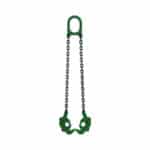
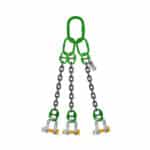
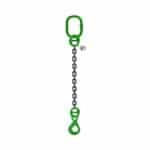
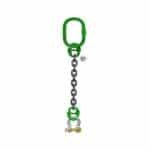
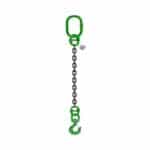
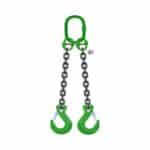
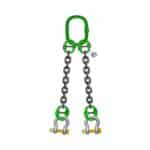
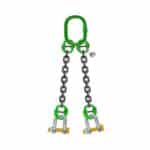
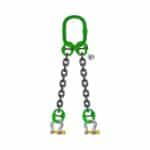
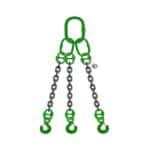
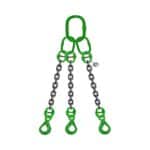
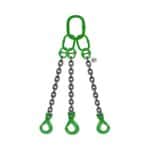
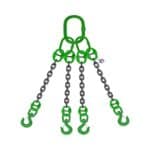
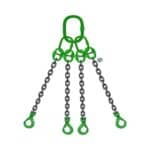
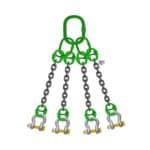
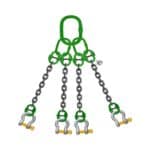
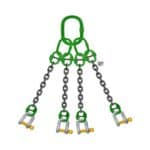
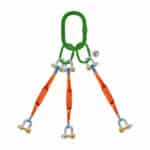
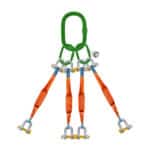
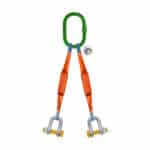
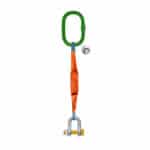
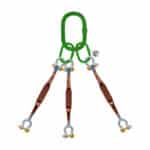
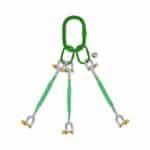
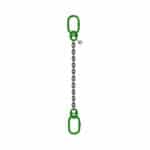
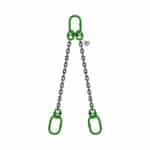
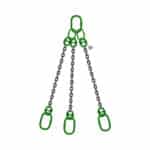
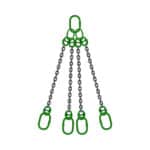
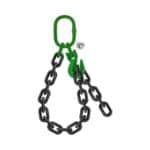
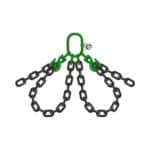
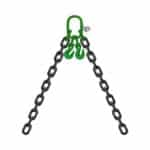
Chain sling grades are a critical aspect of safe and efficient lifting operations. Understanding the different grades and avoiding common mistakes can prevent accidents and ensure the longevity of your rigging equipment. Many companies often overlook key safety precautions when it comes to chain slings. This oversight often leads to dangerous situations and equipment failure. We’ve seen this many times with our clients in the field.
Key Takeaways: Chain Sling Grade Mistakes to Avoid
- Incorrect Grade Selection: Choosing a chain sling grade with insufficient WLL for the load is a critical error.
- Ignoring Sling Angle Effects: Failing to account for sling angles reduces the effective lifting capacity.
- Lack of Regular Inspections: Not inspecting chain slings regularly for damage can lead to catastrophic failure.
- Improper Storage: Storing chain slings incorrectly can accelerate wear and corrosion.
- Using Damaged Slings: Continuing to use slings with visible damage is extremely dangerous.
Understanding Chain Sling Grades: A Crucial Foundation 🏗️
What are Chain Sling Grades?
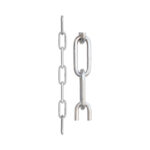
Chain sling grades refer to the strength and load-bearing capacity of the chain used in the sling. The grade indicates the minimum breaking strength of the chain, which is directly related to its working load limit (WLL). Common chain sling grades include Grade 80, Grade 100, and Grade 120. Each grade is manufactured from specific alloy steels and undergoes heat treatment to achieve its rated strength. Grade 80 chain, for instance, is a standard alloy steel chain, while Grade 100 and Grade 120 utilize higher-strength alloys and advanced manufacturing processes to achieve higher WLLs. It’s important to understand that lifting chains come in various sizes and are constructed using different metals, each influencing their strength and durability. In our experience, many clients are initially unsure about the specific material composition of their chains, which often leads to the selection of inappropriate lifting equipment.
Why are Chain Sling Grades Important for Safety?
Matching the chain sling grade to the specific lifting application is crucial for safety. Using a chain sling with an inadequate WLL for the load can result in catastrophic failure, leading to serious injury or death. Selecting the appropriate grade ensures that the sling can safely handle the weight and stress of the lift. It’s also essential to consider the environmental conditions and potential hazards when choosing a chain sling grade. For example, in corrosive environments, a chain sling with a higher corrosion resistance may be necessary. We’ve consistently seen that businesses prioritizing safety meticulously match chain sling grades to their operational demands, significantly reducing workplace accidents. Ignoring this critical step not only endangers workers but also invites potential legal and financial repercussions for the company.
Mistake #1: Selecting the Wrong Chain Sling Grade for the Job 🚫
The Pitfall: Underestimating the Load Weight
Underestimating the weight of the load is a common mistake that can have severe consequences. If you underestimate the weight, you may select a chain sling with an inadequate WLL. This can lead to the sling being overloaded, increasing the risk of failure during the lift. Many companies are caught off guard when they discover the actual weight exceeds their initial estimates, especially when dealing with irregularly shaped or complex loads. A common mistake we help businesses fix is implementing inaccurate estimation techniques or neglecting to account for additional weight from rigging hardware or environmental factors.
The Fix: Accurate Weight Assessment and Safety Margin
To avoid this pitfall, accurately assess the load weight using calibrated scales or load cells. It’s also crucial to incorporate a safety margin when selecting a chain sling grade. A safety margin accounts for uncertainties in the load weight and dynamic forces that may occur during lifting. The necessary WLL can be calculated using the following formula:
Required WLL = (Load Weight x Safety Factor) / Number of Sling Legs
For example, if the load weight is 1000 kg, the safety factor is 2, and you are using a two-leg sling, the required WLL would be:
Required WLL = (1000 kg x 2) / 2 = 1000 kg per leg
Therefore, you would need a chain sling with a WLL of at least 1000 kg per leg. Remember to always round up to the next available WLL rating to ensure an adequate safety margin. When our team in KSA tackles this issue, they often find that investing in precise weighing equipment and training personnel on accurate weight assessment techniques significantly improves safety outcomes.
Mistake #2: Overlooking Sling Angles and Their Impact on Capacity 📐
The Pitfall: Ignoring the Reduction in WLL
Sling angles significantly reduce the effective lifting capacity of chain slings. As the angle between the sling legs increases, the tension on each leg also increases, reducing the overall WLL. Ignoring this factor can lead to overloading and sling failure. Many operators fail to realize the exponential increase in tension as the sling angle approaches a more horizontal position. In our experience with clients in Dammam, Saudi Arabia, we’ve seen that neglecting to account for sling angles is a frequent cause of rigging accidents.
The Fix: Calculating Adjusted WLL Based on Sling Angles
To account for sling angles, calculate the adjusted WLL using the following formula:
Adjusted WLL = Sling WLL x Cosine (Sling Angle)
For example, if a chain sling has a WLL of 2000 kg and the sling angle is 30 degrees, the adjusted WLL would be:
Adjusted WLL = 2000 kg x Cosine (30°) = 2000 kg x 0.866 = 1732 kg
Therefore, the effective lifting capacity of the sling is reduced to 1732 kg. It’s crucial to ensure that the load weight does not exceed the adjusted WLL. Using shorter slings or spreader bars can help to minimize sling angles and maximize lifting capacity. We’ve consistently seen that implementing thorough pre-lift planning, which includes calculating adjusted WLL based on anticipated sling angles, drastically minimizes the risk of overloading and ensures safer lifting operations.
Mistake #3: Neglecting Regular Chain Sling Inspections 🔎
The Pitfall: Failing to Identify Damage and Wear
Neglecting regular inspections allows damage, wear, and corrosion to go undetected. This compromises the integrity of the chain sling and increases the risk of failure. Damage can occur from various factors, including overloading, abrasion, corrosion, and heat exposure. Failing to identify these issues can lead to catastrophic consequences.
The Fix: Implementing a Routine Inspection Program
Implement a routine inspection program for chain slings. Inspections should be conducted before each use and periodically, with a documented inspection performed at least annually. Key inspection points include:
- Links: Check for cracks, deformation, elongation, wear, and corrosion.
- Master Links: Inspect for distortion, cracks, and wear.
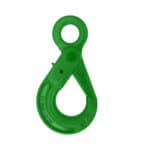
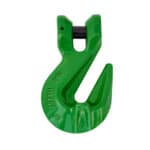
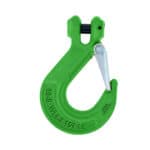
- Hooks: Look for cracks, deformation, wear, and proper functioning of safety latches.
Types of damage to look for include:
- Cracks: Any cracks in the chain links, master links, or hooks.
- Deformation: Bending or distortion of the chain links or components.
- Elongation: Stretching of the chain links beyond the allowable limit.
- Wear: Reduction in the diameter of the chain links due to abrasion.
- Corrosion: Rust or pitting on the surface of the chain.
- Nicks and Gouges: Sharp indentations that can weaken the chain.
> “Regular chain sling inspections are the cornerstone of a safe lifting operation.” – John Smith, Lead Safety Inspector
Summary of Key Inspection Points
- Links: Cracks, deformation, elongation, wear, corrosion.
- Master Links: Distortion, cracks, wear.
- Hooks: Cracks, deformation, wear, latch function.
If any damage is detected, the chain sling must be immediately removed from service. A detailed record-keeping system is crucial for tracking inspection dates, findings, and any corrective actions taken.
Mistake #4: Using Makeshift or Unapproved Chain Sling Attachments 🛠️
The Pitfall: Compromising Sling Integrity
Using makeshift or unapproved attachments can compromise the integrity of the chain sling. These attachments may not be designed to withstand the same loads as the chain sling, introducing weak points or stress concentrations. This can significantly reduce the sling’s overall capacity and safety.
The Fix: Only Using Approved and Compatible Components
Only use manufacturer-approved or certified attachments that are specifically designed for use with chain slings of the appropriate grade. These attachments undergo rigorous testing to ensure compatibility and load-bearing capacity. Using non-approved attachments can void the manufacturer’s warranty and increase the risk of accidents. Always verify that the attachments have the same or higher WLL as the chain sling.
Mistake #5: Improper Storage of Chain Slings When Not in Use 🌧️
The Pitfall: Exposure to Corrosion and Damage
Improper storage can lead to corrosion and damage, weakening the chain and reducing its lifespan. Outdoor exposure, contact with corrosive substances, and extreme temperatures can all accelerate the degradation of the chain. This can result in premature failure and increase the risk of accidents.
The Fix: Proper Cleaning, Drying, and Storage Procedures
Implement proper cleaning, drying, and storage procedures for chain slings. After each use, clean the slings to remove dirt, grease, and other contaminants. Dry the slings thoroughly to prevent corrosion. Store the slings in a dry, protected environment, away from chemicals and extreme temperatures. Hanging the slings or storing them on racks can prevent them from becoming tangled or damaged.
Mistake #6: Attempting to Repair Damaged Chain Slings 🩹
The Pitfall: Ineffective Repairs and Hidden Weaknesses
Attempting to repair damaged chain slings is extremely dangerous. Repairs may not restore the original strength of the chain and can introduce hidden weaknesses. Welding or other repair methods can alter the material properties of the chain, making it more susceptible to failure.
The Fix: Immediately Removing Damaged Slings from Service
Damaged chain slings must be immediately removed from service and tagged as unusable. Do not attempt to repair them yourself. Damaged slings should be discarded or sent to a qualified repair facility if authorized by the manufacturer. Always replace damaged slings with new, certified slings that meet the required specifications.
Mistake #7: Exceeding the Rated Working Load Limit (WLL) 💥
The Pitfall: Overloading the Sling and Risking Failure
Exceeding the WLL of a chain sling puts excessive stress on the material, increasing the risk of catastrophic failure. Overloading can cause the chain to stretch, deform, or break, leading to serious injury or death. It’s critical to always stay within the safe working load limits.
The Fix: Strict Adherence to WLL and Load Monitoring
Strictly adhere to the WLL of the chain sling and implement load monitoring procedures to ensure that the load weight does not exceed the sling’s capacity. Use calibrated load cells or dynamometers to accurately measure the load weight. Train personnel on how to properly read and interpret load monitoring devices. Develop a clear communication protocol to alert operators if the load weight approaches or exceeds the WLL.
Mistake #8: Lack of Training and Competency Among Rigging Personnel 🧑🏭
The Pitfall: Improper Sling Usage and Rigging Techniques
Inadequate training and competency among rigging personnel can lead to improper sling usage, incorrect rigging techniques, and increased risk of accidents. Rigging is a specialized skill that requires a thorough understanding of chain sling grades, WLLs, sling angles, and safe lifting practices. Without proper training, personnel may not be able to identify potential hazards or use the equipment safely.
The Fix: Comprehensive Training and Certification Programs
Implement comprehensive training and certification programs for rigging personnel. These programs should cover topics such as chain sling selection, inspection, rigging techniques, and safety procedures. Training should include both classroom instruction and hands-on practice. Certification programs should verify that personnel have the knowledge and skills necessary to perform rigging operations safely. Refresher training should be provided periodically to ensure that personnel stay up-to-date on the latest safety standards and best practices.
Mistake #9: Failing to Document Inspections and Maintain Records 📝
The Pitfall: Losing Track of Sling Condition and Inspection History
Failing to document inspections and maintain records makes it difficult to track the condition of chain slings over time and identify potential problems before they lead to failure. Without proper documentation, it’s impossible to determine when a sling was last inspected or what corrective actions were taken. This can lead to overlooking critical maintenance issues and increasing the risk of accidents.
The Fix: Establishing a Detailed Record-Keeping System
Establish a detailed record-keeping system for chain sling inspections. The system should include information such as inspection dates, findings, and any corrective actions taken. Records can be maintained electronically or in paper format. The system should be easily accessible to authorized personnel. Implement a schedule for regular record reviews to identify trends and potential problems.
| Inspection Date |
Sling ID |
Inspector |
Findings |
Corrective Actions |
Date Completed |
| 2026-01-15 |
Sling-001 |
Alice Brown |
Minor corrosion on link |
Cleaned and lubricated |
2026-01-16 |
| 2026-02-20 |
Sling-002 |
Bob Green |
Slight deformation of hook |
Removed from service; sent for repair |
2026-02-28 |
| 2026-03-10 |
Sling-003 |
Alice Brown |
No issues found |
N/A |
N/A |
Conclusion
Avoiding these common mistakes when working with chain sling grades is paramount for ensuring a safe and productive lifting operation. By understanding the risks and implementing the recommended solutions, you can significantly reduce the likelihood of accidents, protect your workforce, and optimize the performance of your rigging equipment. Following these guidelines is essential for maintaining high standards of safety and efficiency. We can help you implement these safety measures and provide the training necessary for your team.
FAQ Section
Q: What is the difference between Grade 80 chain, grade 100 chain and Grade 120 chain slings?
A: Grade 100 chain slings offer a 25% higher WLL than Grade 80 for the same size chain, while Grade 120 offers even higher WLL. This allows for lighter slings for the same load or heavier loads with the same size sling. They also differ in alloy composition and heat treatment processes.
Q: How often should chain sling inspections be conducted?
A: Chain slings should be inspected before each use for obvious damage and periodically, with a documented inspection performed at least annually, or more frequently depending on usage and environmental conditions.
Q: What should I do if I find damage during a chain sling inspection, what does chain sling safety require?
A: Remove the damaged sling from service immediately and tag it as unusable. Do not attempt to repair it yourself; consult with a qualified professional for repair or replacement. This is a critical aspect of chain sling safety.
Q: Can I use an alloy chain slings beyond its stated WLL?
A: Never exceed the WLL of an alloy chain slings. Overloading can lead to catastrophic failure and serious injury. Always adhere to the WLL to ensure safe lifting operations.
Q: Where can I find the WLL of my chain sling?
A: The WLL is typically marked on the sling itself, often on a tag or stamped into the master link or hook. Always verify the WLL before use and ensure it is legible. If the marking is missing or illegible, the sling should be removed from service.