Choosing the Right Lifting Shackle
Lifting shackles are essential components in rigging and lifting operations. Selecting the correct shackle is crucial for ensuring safety and preventing accidents. This guide from Safe and Secure Trading Company (SSTC) will provide you with a comprehensive understanding of how to choose the right lifting shackles for your specific needs. We’ll cover everything from shackle types and materials to load capacities and inspection procedures. Let’s dive in and explore how to make informed decisions that prioritize safety and efficiency in your lifting operations.
Understanding Lifting Shackles
A lifting shackle is a U-shaped piece of metal with a pin or bolt across the opening. It’s used to connect different components in a lifting or rigging system, such as wire ropes, chains, and other lifting accessories. The primary purpose of a shackle is to provide a secure and reliable connection point. Selecting the correct type and size is critical for safe lifting operations.
Shackle Components
- Body (Bow or Dee): The main U-shaped part of the shackle. The shape affects its load-bearing capabilities.
- Pin: The removable bolt that closes the shackle and secures the connection. Pins can be either screwed or bolted.
- Shoulder: The area where the bow meets the pin. The shoulder’s design influences the shackle’s strength.
Importance of Proper Shackle Selection
Choosing the wrong shackle can lead to catastrophic failures, resulting in property damage, serious injuries, or even fatalities. Proper selection ensures that the shackle can withstand the intended load, environmental conditions, and operational demands. We once encountered a situation where a client used an improperly rated shackle, and it deformed under load. Fortunately, the failure was caught before a complete collapse, but it highlighted the critical importance of proper selection.
Types of Lifting Shackles
There are several types of lifting shackles, each designed for specific applications. The most common types include:
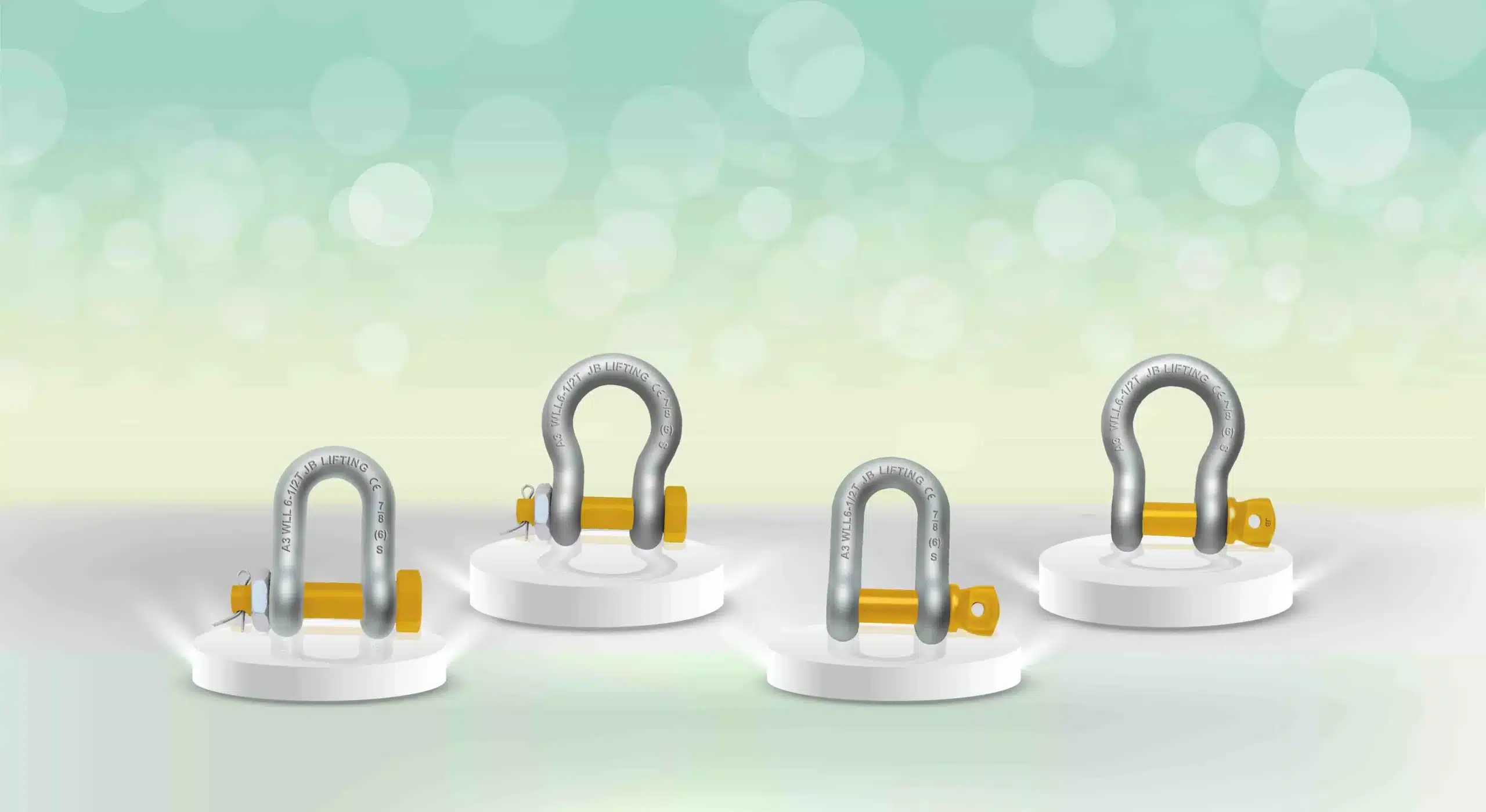
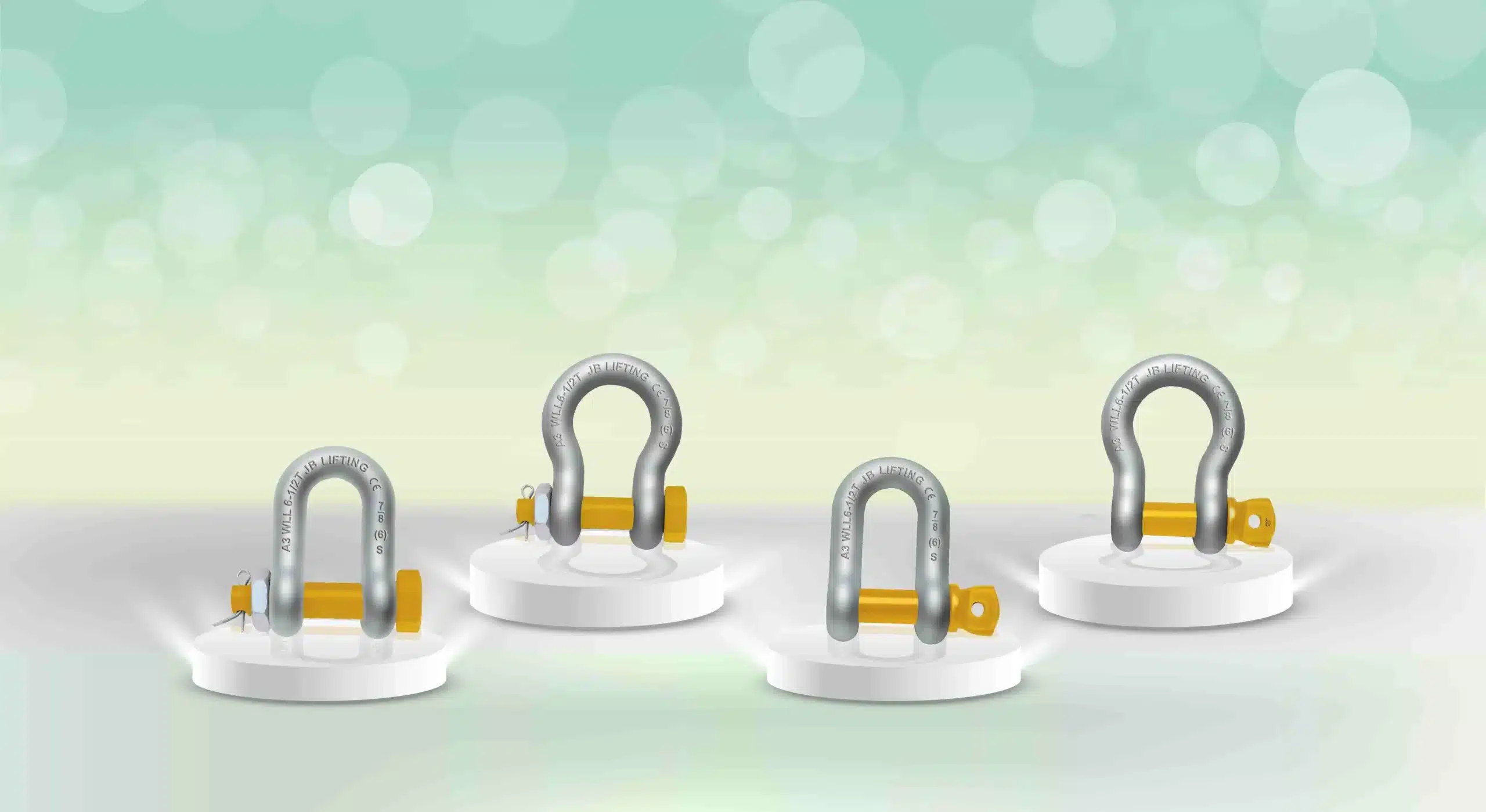
D Shackles (Chain Shackles)
D shackles, also known as chain shackles, are characterized by their narrow, D-shaped bow. This design makes them ideal for straight-line pulls. They are commonly used in applications where the load is applied directly in line with the shackle’s pin.
- Application: Connecting chains, wire ropes, and other rigging hardware in straight-pull configurations.
- Advantages: Strong in straight-line pulls, compact design.
- Disadvantages: Not suitable for angular loading.
Bow Shackles
Bow shackles have a larger, rounded bow, providing a greater area for load distribution. This makes them suitable for angular loading and connecting multiple components. Bow shackles are versatile and can be used in various lifting applications.
- Application: Connecting slings, chains, and other rigging hardware in angular or multi-leg configurations.
- Advantages: Versatile, suitable for angular loading.
- Disadvantages: Less strong than D shackles in straight-line pulls.
Safety Shackles
Safety shackles are designed with a locking mechanism to prevent the pin from accidentally dislodging. They are often used in critical lifting applications where added security is required. Safety shackles come in both D and bow configurations.
- Application: Critical lifting operations where pin dislodgement is a concern.
- Advantages: Enhanced safety, locking mechanism.
- Disadvantages: Can be more expensive than standard shackles.
Round Pin Shackles
Round pin shackles use a simple round pin secured by a cotter pin or wire. These are generally used for less critical applications where frequent connections and disconnections are needed.
- Application: Light-duty lifting and rigging.
- Advantages: Easy to use, quick connection and disconnection.
- Disadvantages: Lower strength, not suitable for heavy lifting.
Screw Pin Shackles
Screw pin shackles feature a threaded pin that is screwed into the shackle body. They are convenient for applications requiring frequent adjustments but are not recommended for dynamic loading or permanent installations.
- Application: Temporary lifting and rigging setups.
- Advantages: Easy to adjust, convenient for temporary setups.
- Disadvantages: Not suitable for dynamic loading, pin can loosen over time.
Bolt Type Shackles
Bolt type shackles utilize a bolt, nut, and cotter pin for secure fastening. They are designed for heavy-duty applications and provide a reliable connection that is resistant to vibration and shock.
- Application: Heavy-duty lifting and rigging, permanent installations.
- Advantages: High strength, resistant to vibration and shock.
- Disadvantages: More complex to install and remove.
Selecting the Right Shackle Material
The material of a lifting shackle significantly impacts its strength, durability, and resistance to environmental factors. Common shackle materials include carbon steel, alloy steel, and stainless steel.
Carbon Steel Shackles
Carbon steel shackles are a cost-effective option for general lifting applications. However, they are susceptible to rust and corrosion, making them unsuitable for marine or corrosive environments.
- Advantages: Cost-effective, suitable for general lifting.
- Disadvantages: Susceptible to rust and corrosion, lower strength compared to alloy steel.
Alloy Steel Shackles
Alloy steel shackles offer superior strength and durability compared to carbon steel. They are heat-treated to enhance their mechanical properties, making them suitable for heavy-duty lifting applications. When our team in Dubai tackles this issue, they often find alloy steel is the best option for demanding projects.
- Advantages: High strength, durable, suitable for heavy-duty lifting.
- Disadvantages: More expensive than carbon steel.
Stainless Steel Shackles
Stainless steel shackles provide excellent corrosion resistance, making them ideal for marine, chemical, and food processing environments. They are also suitable for applications where hygiene is critical.
- Advantages: Excellent corrosion resistance, suitable for marine and chemical environments.
- Disadvantages: More expensive than carbon and alloy steel, lower strength compared to alloy steel.
Determining Shackle Load Capacity
The shackle load capacity, also known as the working load limit (WLL), is the maximum weight that a shackle can safely support. It is crucial to select a shackle with a WLL that meets or exceeds the intended load. The shackle safety factor is the ratio between the minimum breaking strength (MBS) and the WLL.
Understanding Working Load Limit (WLL)
The working load limit (WLL) is the maximum load that should be applied to the shackle in normal service. It is typically marked on the shackle and should never be exceeded. Exceeding the WLL can lead to shackle failure and potential accidents.
Calculating the Shackle Safety Factor
The shackle safety factor is the ratio of the minimum breaking strength (MBS) to the working load limit (WLL). A higher safety factor indicates a greater margin of safety. Common safety factors for lifting shackles range from 4:1 to 6:1. For example, a shackle with a MBS of 20,000 lbs and a WLL of 5,000 lbs has a safety factor of 4:1.
Importance of Accurate Load Assessment
Accurately assessing the load is essential for selecting the right shackle. Consider the weight of the load, as well as any dynamic forces that may be applied during lifting, such as acceleration, deceleration, and shock loading. Always err on the side of caution and select a shackle with a WLL that exceeds the expected load.
Step-by-Step Guide to Choosing the Right Lifting Shackle
Here’s a detailed guide to help you select the correct lifting shackle for your application:
Step 1: Determine the Load Weight ⚙️
First, accurately determine the weight of the load you will be lifting. Use calibrated weighing equipment to ensure precision. If the load weight is unknown, estimate it conservatively to avoid underestimating the required shackle capacity.
Step 2: Identify the Lifting Configuration ⚙️
Next, identify the lifting configuration. Consider whether the load will be lifted in a straight line, at an angle, or with multiple legs. This will help you determine the type of shackle needed (D or bow).
Step 3: Select the Shackle Type ⚙️
Based on the lifting configuration, select the appropriate shackle type. D shackles are suitable for straight-line pulls, while bow shackles are better for angular loading and connecting multiple components.
Step 4: Choose the Shackle Material ⚙️
Choose the shackle material based on the environmental conditions and the type of load being lifted. Stainless steel is ideal for corrosive environments, while alloy steel is suitable for heavy-duty lifting. Carbon steel is a budget-friendly option for general use.
Step 5: Calculate the Required WLL ⚙️
Calculate the required working load limit (WLL) by considering the load weight, lifting configuration, and any dynamic forces. Use the following formula:
WLL = Load Weight x Dynamic Factor x Configuration Factor
The dynamic factor accounts for acceleration, deceleration, and shock loading, while the configuration factor accounts for the number of legs in the lifting system.
Step 6: Verify the Shackle Safety Factor ⚙️
Ensure that the selected shackle has an adequate safety factor. A safety factor of 4:1 to 6:1 is generally recommended for lifting applications. Verify that the shackle’s minimum breaking strength (MBS) is sufficient to provide the required safety factor.
Step 7: Inspect the Shackle ⚙️
Before each use, inspect the shackle for any signs of damage, such as cracks, deformation, or corrosion. Ensure that the pin is straight and that the threads are in good condition. Do not use a shackle that is damaged or worn. More information about shackle inspection is below.
Step 8: Use Proper Lifting Techniques ⚙️
Use proper lifting techniques to minimize stress on the shackle. Avoid shock loading, angular loading beyond the shackle’s rated capacity, and any other practices that could compromise the shackle’s integrity.
Step 9: Document the Selection Process ⚙️
Document the shackle selection process, including the load weight, lifting configuration, shackle type, material, WLL, and safety factor. This documentation will help ensure that the correct shackle is used for each lifting operation and will facilitate future inspections.
Step 10: Train Personnel ⚙️
Ensure that all personnel involved in lifting operations are properly trained in shackle selection, inspection, and usage. Training should cover the types of shackles, materials, load capacities, safety factors, and proper lifting techniques.
Shackle Inspection Procedures
Regular shackle inspection is crucial for identifying potential problems and ensuring safe lifting operations. Follow these guidelines for shackle inspection:
Visual Inspection
Visually inspect the shackle for any signs of damage, such as:
- Cracks: Check the shackle body and pin for cracks, especially in high-stress areas.
- Deformation: Look for any bending or distortion of the shackle body or pin.
- Corrosion: Examine the shackle for rust or corrosion, especially in marine or corrosive environments.
- Wear: Check for excessive wear on the shackle body or pin, particularly at the bearing points.
- Thread Damage: Inspect the pin threads for damage or wear.
Dimensional Inspection
Use calipers or other measuring tools to verify that the shackle dimensions are within acceptable tolerances. Check the shackle body and pin for any elongation or reduction in diameter.
Load Testing
Periodically load test shackles to verify their load-bearing capacity. Load testing should be performed by qualified personnel using calibrated testing equipment.
Frequency of Inspections
The frequency of shackle inspections depends on the frequency and severity of use. Shackles used in critical lifting operations should be inspected before each use. Shackles used less frequently should be inspected at least monthly.
Documentation
Maintain a record of all shackle inspections, including the date of inspection, the inspector’s name, the shackle’s identification number, and any findings. This documentation will help track the shackle’s condition and facilitate future inspections.
Common Mistakes to Avoid
Avoiding common mistakes in shackle selection and usage is crucial for ensuring safety and preventing accidents. Here are some common pitfalls to watch out for:
Overloading
Never exceed the shackle’s working load limit (WLL). Overloading can lead to shackle failure and potential accidents.
Angular Loading
Avoid angular loading beyond the shackle’s rated capacity. Angular loading can significantly reduce the shackle’s WLL.
Shock Loading
Minimize shock loading by lifting and lowering loads smoothly. Shock loading can create excessive stress on the shackle.
Using Damaged Shackles
Never use a shackle that is damaged or worn. Damaged shackles are more likely to fail under load.
Improper Pinning
Ensure that the shackle pin is properly installed and tightened. A loose or improperly installed pin can compromise the shackle’s integrity.
Neglecting Inspections
Regular shackle inspections are essential for identifying potential problems. Neglecting inspections can lead to undetected damage and potential accidents.
> “Always double-check the WLL and ensure it exceeds your load requirements. A small oversight can lead to catastrophic consequences.” – John Smith, Lead Safety Inspector
Troubleshooting Common Issues
Even with careful selection and usage, you may encounter issues with lifting shackles. Here are some common problems and how to address them:
Pin Binding
Problem: The shackle pin is difficult to insert or remove.
Solution: Clean and lubricate the pin threads. If the pin is bent or damaged, replace it. We once had a user who got stuck on this step. Here’s the trick to avoid that common issue: ensure the threads are clean of debris and apply a marine-grade lubricant.
Shackle Deformation
Problem: The shackle body or pin is deformed.
Solution: Remove the shackle from service immediately. Deformed shackles are unsafe and should not be used.
Corrosion
Problem: The shackle is corroded.
Solution: Remove the shackle from service if the corrosion is severe. For minor corrosion, clean the shackle and apply a protective coating. For stainless steel shackles, ensure the protective coating is rated for use on stainless.
Incorrect WLL
Problem: The selected shackle has an insufficient WLL.
Solution: Replace the shackle with one that has a WLL that meets or exceeds the load requirements. It is better to select a shackle that far exceeds the minimum WLL in order to account for any unforeseen circumstances.
The Role of Standards and Regulations
Compliance with industry standards and regulations is essential for ensuring the safety of lifting operations. These standards provide guidelines for shackle design, testing, and usage.
Key Standards Organizations
- ASME (American Society of Mechanical Engineers): ASME provides standards for lifting and rigging equipment, including shackles.
- ASTM International: ASTM develops standards for materials, testing, and performance of various products, including shackles.
- ISO (International Organization for Standardization): ISO develops international standards for a wide range of industries, including lifting and rigging.
Relevant Regulations
- OSHA (Occupational Safety and Health Administration): OSHA sets and enforces standards for workplace safety, including lifting and rigging operations.
- European Union Directives: The European Union has directives that address the safety of lifting equipment.
Ensuring Compliance
To ensure compliance with standards and regulations, follow these guidelines:
- Use Certified Shackles: Use shackles that are certified to meet relevant standards, such as ASME B30.26.
- Follow Manufacturer’s Instructions: Follow the manufacturer’s instructions for shackle usage, inspection, and maintenance.
- Train Personnel: Ensure that all personnel involved in lifting operations are trained in relevant standards and regulations.
- Maintain Documentation: Maintain documentation of shackle inspections, load testing, and compliance with standards and regulations.
| Shackle Type |
Typical Applications |
Advantages |
Disadvantages |
| D Shackle (Chain Shackle) |
Straight-line pulls, connecting chains and wire ropes |
Strong in straight-line pulls, compact design |
Not suitable for angular loading |
| Bow Shackle |
Angular loading, connecting slings and multiple components |
Versatile, suitable for angular loading |
Less strong than D shackles in straight-line pulls |
| Safety Shackle |
Critical lifting operations where pin dislodgement is a concern |
Enhanced safety, locking mechanism |
More expensive than standard shackles |
| Round Pin Shackle |
Light-duty lifting and rigging |
Easy to use, quick connection and disconnection |
Lower strength, not suitable for heavy lifting |
| Screw Pin Shackle |
Temporary lifting and rigging setups |
Easy to adjust, convenient for temporary setups |
Not suitable for dynamic loading, pin can loosen over time |
| Bolt Type Shackle |
Heavy-duty lifting and rigging, permanent installations |
High strength, resistant to vibration and shock |
More complex to install and remove |
Advanced Considerations for Specific Industries
Different industries have unique requirements for lifting shackles based on their specific applications and environmental conditions.
Marine Industry
In the marine industry, shackles are exposed to saltwater, which can cause corrosion. Stainless steel shackles are commonly used in marine applications due to their excellent corrosion resistance. Consider the use of alloy steel chain shackle components for heavy lifting.
Construction Industry
The construction industry often requires shackles for heavy-duty lifting and rigging. Alloy steel shackles are preferred for their high strength and durability. Regular inspection and maintenance are critical to ensure the safety of lifting operations on construction sites.
Oil and Gas Industry
The oil and gas industry involves lifting operations in harsh environments, including offshore platforms and refineries. Shackles used in this industry must be resistant to corrosion and capable of withstanding extreme temperatures and pressures. Safety shackles with locking mechanisms are often used to prevent accidental dislodgement.
Mining Industry
The mining industry requires shackles for lifting heavy equipment and materials in underground and surface operations. Alloy steel shackles are commonly used due to their high strength and resistance to abrasion. Regular inspection and load testing are essential to ensure the safety of lifting operations in mines.
Conclusion
Choosing the right lifting shackles is a critical aspect of ensuring safety and efficiency in lifting operations. By understanding the different types of shackles, materials, load capacities, and inspection procedures, you can make informed decisions that minimize the risk of accidents and maximize the performance of your lifting equipment. We’ve guided you through the selection process, emphasized the importance of regular inspections, and highlighted common mistakes to avoid.
Now you’re equipped to confidently choose the right lifting shackles for your specific needs, ensuring safe and secure lifting operations every time. We are here to help you find the perfect solution.
FAQ Section
Q: What is the difference between a D shackle and a bow shackle?
A: A D shackle (also known as a chain shackle) has a narrow, D-shaped bow and is best suited for straight-line pulls. A bow shackle has a larger, rounded bow, making it suitable for angular loading and connecting multiple components.
Q: How do I determine the correct working load limit (WLL) for a shackle?
A: The WLL should be determined by considering the weight of the load, the lifting configuration, and any dynamic forces. Use the formula WLL = Load Weight x Dynamic Factor x Configuration Factor and ensure that the selected shackle has a WLL that meets or exceeds the calculated value.
Q: What material is best for lifting shackles in a marine environment?
A: Stainless steel is the best material for lifting shackles in a marine environment due to its excellent corrosion resistance.
Q: How often should lifting shackles be inspected?
A: Lifting shackles should be inspected before each use, especially in critical lifting operations. Shackles used less frequently should be inspected at least monthly.
Q: What should I do if I find a damaged shackle?
A: Remove the damaged shackle from service immediately. Do not use a shackle that is cracked, deformed, corroded, or worn.
Q: Can I use a screw pin shackle for dynamic loading?
A: No, screw pin shackles are not recommended for dynamic loading. The pin can loosen over time, compromising the shackle’s integrity. Use a bolt type shackle for dynamic loading applications.
Q: What is the importance of the shackle safety factor?
A: The shackle safety factor is the ratio of the minimum breaking strength (MBS) to the working load limit (WLL). It provides a margin of safety to account for unexpected forces or variations in load. A higher safety factor indicates a greater margin of safety.
Q: How do I ensure compliance with industry standards and regulations?
A: Use certified shackles, follow the manufacturer’s instructions, train personnel in relevant standards and regulations, and maintain documentation of shackle inspections and load testing.