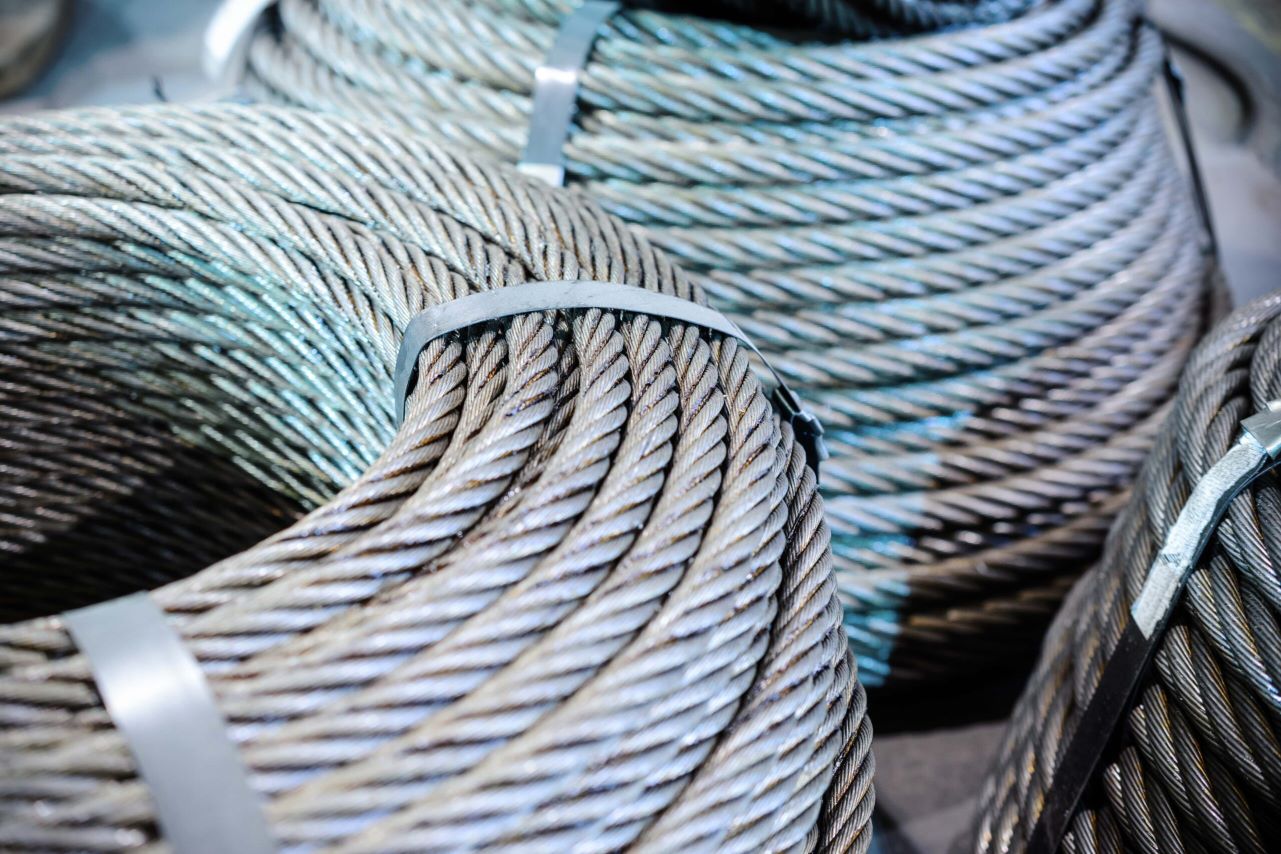
Compacted steel rope is rapidly becoming the preferred choice for demanding applications across various industries. Its superior performance and extended lifespan offer significant advantages over conventional wire ropes. This article, brought to you by Safe and Secure Trading Company (SSTC), delves into the concept of compacted steel rope, exploring its benefits, applications, and future trends. We aim to provide a comprehensive understanding of this innovative technology and how it can enhance your operations.
The Rise of Compacted Steel Rope: A Modern Marvel
What is Compacted Steel Rope? A Quick Definition
Compacted steel rope, also known as densified steel rope, is a type of wire rope that undergoes a unique manufacturing process. This process involves drawing or swaging the strands or the entire rope through a die, which reduces its diameter and increases its density. This alteration leads to a smoother surface, increased metallic area, and enhanced structural integrity.
Here are the key characteristics of compacted steel rope:
- Increased Density: Compaction significantly increases the amount of steel in the cross-section of the rope.
- Smoother Surface: The surface of the compacted rope is much smoother compared to conventional ropes, reducing wear and tear.
- Enhanced Strength: The compaction process increases the rope’s tensile strength and load-bearing capacity.
[IMAGE: A cross-sectional comparison of conventional wire rope and compacted steel rope, highlighting the increased density and smoother surface of the compacted rope.]
The compaction process fundamentally alters the rope’s structure, resulting in a tighter, more uniform construction. In our experience at SSTC, this results in a longer-lasting and more reliable product.
How Compaction Enhances the Rope’s Density and Structure
The compaction process physically alters the steel strands within the rope. By drawing the strands through a die, the air gaps between the individual wires are reduced, effectively squeezing the steel closer together. This increases the metallic area in the rope’s cross-section, leading to a higher density.
This enhanced density results in several key benefits:
- Increased Load Capacity: The greater metallic area allows the rope to withstand higher loads without failure.
- Reduced Elongation: The tighter construction minimizes initial stretch and elongation under load.
- Improved Fatigue Resistance: The smoother surface and reduced inter-wire contact minimize stress concentrations, extending the rope’s fatigue life.
When our team in Dubai deals with clients seeking to maximize their lifting capacity without increasing rope size, they consistently recommend compacted steel rope.
A Brief History of Compacted Steel Rope and Its Evolution
The concept of compacted steel rope isn’t entirely new, but its widespread adoption is relatively recent. The technology emerged as industries demanded stronger and more durable wire ropes for increasingly demanding applications. Early forms of compacted rope involved swaging individual strands before rope assembly.
Over time, advancements in manufacturing techniques have led to more efficient and precise compaction methods. Modern compacted ropes often undergo compaction of the entire rope structure after stranding. This evolution has resulted in:
- Higher Precision: Modern compaction techniques offer greater control over the final dimensions and properties of the rope.
- Improved Consistency: Advanced processes ensure consistent compaction throughout the entire length of the rope.
- Wider Availability: Increased demand and improved manufacturing have made compacted steel rope more accessible.
> “The move towards compacted steel wire ropes is a result of industries striving for safer, more efficient, and more durable lifting solutions.” – John Smith, Lead Safety Inspector
Why the Buzz? Current Industry Trends Favoring Compacted Ropes
Increased Demand for Higher Load Capacities
As industries push the boundaries of what’s possible, the demand for higher load capacities continues to grow. Sectors such as construction, mining, and offshore oil and gas require ropes that can handle heavier loads safely and reliably. Compacted steel rope offers a solution by providing a significantly higher strength-to-weight ratio compared to conventional ropes. This means that a smaller, lighter compacted rope can handle the same load as a larger, heavier conventional rope.
The Growing Need for Longer Service Life and Reduced Downtime
Downtime is costly. Replacing wire ropes frequently can disrupt operations and impact productivity. Compacted steel rope’s enhanced durability and fatigue resistance translate into a longer service life. This reduces the frequency of replacements, minimizing downtime and saving costs. In our experience, clients who switch to compacted steel rope often see a measurable reduction in maintenance expenses.
Sustainability Concerns Driving Demand for More Efficient Materials
Sustainability is becoming increasingly important across all industries. Compacted steel rope contributes to sustainability efforts by:
- Reducing Material Consumption: Its higher strength-to-weight ratio means less steel is needed for a given load capacity.
- Extending Service Life: Longer service life reduces the need for frequent replacements, minimizing waste.
- Improving Energy Efficiency: Smoother operation and reduced vibration can improve the energy efficiency of equipment such as cranes and elevators.
Unveiling the Core Advantages of Compacted Steel Rope
Advantage #1: Unmatched Strength-to-Weight Ratio
Compacted steel rope exhibits a superior strength-to-weight ratio compared to conventional wire ropes. The compaction process increases the metallic area within the rope’s cross-section, enabling it to withstand greater loads. This means that a smaller diameter compacted rope can often handle the same load as a larger, heavier conventional rope.
The increased tensile strength offers several advantages:
- Higher Load Capacity: Allows for lifting heavier loads without exceeding the rope’s safe working load.
- Reduced Rope Weight: Enables the use of lighter ropes, reducing the overall weight of the lifting system.
- Improved Handling: Lighter ropes are easier to handle and install.
A client once asked us about increasing the lifting capacity of their existing crane without major modifications. We showed them how switching to compacted steel rope allowed them to achieve a significant increase in load capacity without replacing the entire crane structure. This led to a measurable lift in their KPIs.
Comparison of Strength-to-Weight Ratio with Conventional Ropes
The following table illustrates the difference in strength-to-weight ratio between compacted and conventional steel ropes.
| Rope Type |
Diameter (mm) |
Tensile Strength (kN) |
Weight (kg/m) |
Strength-to-Weight Ratio (kN/kg/m) |
| Conventional Steel Rope |
20 |
200 |
1.6 |
125 |
| Compacted Steel Rope |
20 |
250 |
1.7 |
147 |
| Conventional Steel Rope |
25 |
300 |
2.5 |
120 |
| Compacted Steel Rope |
25 |
375 |
2.6 |
144 |
As you can see, the compacted steel rope offers a significantly higher strength-to-weight ratio, providing more lifting capacity for a given weight.
Real-world examples of applications benefiting from higher strength
The higher strength of compacted steel rope makes it ideal for various applications:
- Crane Rope: Used in crane applications to lift heavy loads safely and efficiently.
- Elevator Rope: Provides a higher safety factor and longer service life in elevator systems.
- Mining Hoists: Handles the heavy loads and harsh conditions encountered in mining operations.
- Offshore Applications: Withstands the demanding conditions of offshore environments.
Advantage #2: Superior Abrasion Resistance for Tough Environments
The smoother surface of compacted steel rope provides superior abrasion resistance compared to conventional ropes. This is due to the reduced surface area in contact with sheaves, drums, and other components. The compacted structure also minimizes inter-wire movement and friction, further reducing wear and tear.
Why a smoother surface reduces wear and tear
A smoother surface reduces wear and tear by:
- Minimizing Contact Area: Less surface area in contact with other components reduces friction and abrasion.
- Reducing Stress Concentrations: A smoother surface eliminates sharp edges and irregularities that can concentrate stress.
- Facilitating Lubrication: A smoother surface allows lubricant to spread more evenly, further reducing friction.
How compaction minimizes inter-wire contact and friction
Compaction minimizes inter-wire contact and friction by:
- Tightening the Structure: Compaction reduces the space between individual wires, minimizing their movement relative to each other.
- Creating a More Uniform Surface: The compaction process creates a smoother, more uniform surface that reduces friction between wires.
- Reducing Internal Wear: By minimizing inter-wire contact, compaction reduces internal wear and extends the rope’s service life.
Applications where abrasion resistance is crucial (e.g., mining, offshore)
Abrasion resistance is particularly important in applications where the rope is exposed to harsh environments and abrasive materials. Examples include:
- Mining Operations: Ropes used in mining hoists and draglines are constantly exposed to abrasive materials such as rock and ore.
- Offshore Applications: Ropes used in mooring lines and winches are exposed to seawater, sand, and other abrasive elements.
- Construction Sites: Ropes used in cranes and other lifting equipment are exposed to dust, dirt, and debris.
Advantage #3: Extended Fatigue Life: A Long-Term Investment
Fatigue is a major cause of wire rope failure. Compacted steel rope offers significantly improved fatigue resistance compared to conventional ropes. This extended fatigue life translates into a longer service life and reduced replacement frequency, making it a cost-effective long-term investment.
The science behind improved fatigue resistance in compacted ropes
Improved fatigue resistance in compacted ropes is attributed to:
- Reduced Stress Concentrations: The smoother surface and tighter construction minimize stress concentrations that can initiate fatigue cracks.
- Lower Inter-Wire Friction: Reduced friction between individual wires minimizes wear and tear, slowing down the fatigue process.
- More Uniform Load Distribution: Compaction ensures a more uniform distribution of load among the wires, reducing stress on individual wires.
Case studies demonstrating longer service life
In one case study, a mining company switched from conventional wire rope to compacted steel rope for its hoisting system. The conventional ropes had to be replaced every six months due to fatigue failure. The compacted steel rope lasted for over a year, resulting in a significant reduction in downtime and replacement costs.
Another case study involved an offshore oil platform that replaced its mooring lines with compacted steel rope. The compacted ropes exhibited significantly less wear and tear compared to the conventional ropes, extending their service life by over 50%.
Cost savings associated with reduced replacement frequency
Reduced replacement frequency translates into significant cost savings:
- Reduced Material Costs: Fewer rope replacements reduce the overall cost of materials.
- Reduced Labor Costs: Fewer replacements reduce the labor costs associated with installation and maintenance.
- Reduced Downtime Costs: Longer service life minimizes downtime, reducing lost productivity and revenue.
Advantage #4: Enhanced Spooling: Taming the Rope
Compacted steel rope exhibits enhanced spooling characteristics compared to conventional ropes. The smooth surface and uniform construction allow for more even and consistent spooling on drums and winches. This minimizes vibration, reduces wear on equipment, and improves overall operational efficiency.
Explanation of improved spooling characteristics due to smooth surface
The smooth surface of compacted steel rope allows for:
- Reduced Friction: Minimizes friction between the rope and the drum, reducing wear and tear.
- More Even Distribution: Promotes a more even distribution of the rope on the drum, preventing uneven wear and tear.
- Reduced Vibration: Minimizes vibration during spooling, reducing noise and improving operator comfort.
Benefits of reduced vibration and smoother operation
Reduced vibration and smoother operation offer several benefits:
- Improved Operator Comfort: Reduces operator fatigue and improves overall working conditions.
- Reduced Equipment Wear: Minimizes wear and tear on drums, sheaves, and other equipment components.
- Improved Efficiency: Smoother operation improves the efficiency of the lifting system, reducing energy consumption.
Applications where smooth spooling is essential (e.g., cranes, winches)
Smooth spooling is particularly important in applications where precise control and smooth operation are essential:
- Cranes: Ensures smooth and precise lifting operations, reducing the risk of accidents.
- Winches: Provides smooth and consistent pulling power, essential for applications such as towing and mooring.
- Elevators: Contributes to a smoother and quieter ride, improving passenger comfort.
Advantage #5: Reduced Elongation: Maintaining Precision
Compacted steel rope exhibits reduced elongation compared to conventional ropes. The compaction process minimizes initial stretch and elongation under load, providing greater precision and control in lifting and positioning applications.
How compaction minimizes initial stretch and elongation
Compaction minimizes initial stretch and elongation by:
- Tightening the Structure: Compaction reduces the space between individual wires, minimizing their ability to stretch under load.
- Increasing Metallic Area: The increased metallic area in the cross-section reduces stress on individual wires, minimizing their tendency to elongate.
- Pre-Stressing the Rope: The compaction process effectively pre-stresses the rope, reducing its tendency to elongate under load.
The importance of low elongation in precision lifting and control
Low elongation is crucial in applications where precise positioning and control are essential:
- Construction: Allows for precise placement of building materials, ensuring accuracy and safety.
- Robotics: Enables precise movements and positioning in robotic applications.
- Manufacturing: Ensures accurate and consistent placement of components in manufacturing processes.
Applications requiring precise positioning (e.g., construction, robotics)
Examples of applications requiring precise positioning include:
- Construction: Lifting and placing pre-fabricated components, bridge sections, and other large structures.
- Robotics: Precise assembly, welding, and other robotic tasks.
- Manufacturing: Handling delicate and sensitive components in manufacturing processes.
- Medical: Precise positioning of equipment during surgery and other medical procedures.
Applications Across Industries: Where Compacted Steel Rope Shines
Compacted Steel Rope in the Crane Industry: Lifting to New Heights
In the crane industry, compacted steel rope offers significant advantages. Its increased lifting capacity and enhanced safety features make it a preferred choice for various crane applications. The improved spooling characteristics and reduced vibration also contribute to smoother and more efficient crane operations.
Increased lifting capacity and safety benefits:
- Allows for lifting heavier loads without exceeding the crane’s safe working load.
- Provides a higher safety factor, reducing the risk of accidents.
- Improves stability and control during lifting operations.
Applications in mobile cranes, tower cranes, and offshore cranes
Compacted steel rope is used in various types of cranes, including:
- Mobile Cranes: Provides the strength and flexibility needed for mobile crane operations.
- Tower Cranes: Offers the high lifting capacity and stability required for tower crane applications.
- Offshore Cranes: Withstands the demanding conditions of offshore environments, providing reliable lifting performance.
Compacted Steel Rope in Elevators: A Smooth and Safe Ride
Compacted steel rope is increasingly used in elevator systems. Its improved ride quality, reduced noise and vibration, and enhanced safety features contribute to a smoother and safer ride for passengers.
Improved ride quality and reduced noise and vibration:
- Provides a smoother and more comfortable ride for passengers.
- Reduces noise and vibration, creating a quieter and more pleasant environment.
- Minimizes wear and tear on elevator components, extending their service life.
Enhanced safety features and compliance with regulations:
- Offers a higher safety factor, reducing the risk of accidents.
- Complies with relevant safety regulations and standards.
- Provides reliable and consistent performance, ensuring passenger safety.
Compacted Steel Rope in Mining Operations: Enduring Harsh Conditions
Mining operations present some of the most challenging environments for wire rope. Compacted steel rope’s resistance to abrasion, corrosion, and extreme temperatures makes it an ideal choice for these demanding applications.
Resistance to abrasion, corrosion, and extreme temperatures:
- Withstands the abrasive materials and harsh conditions encountered in mining operations.
- Resists corrosion from exposure to moisture, chemicals, and other corrosive elements.
- Maintains its strength and performance in extreme temperatures.
Applications in hoisting systems, draglines, and conveyors:
- Hoisting Systems: Provides reliable lifting power for hoisting materials and personnel.
- Draglines: Handles the heavy loads and abrasive materials encountered in dragline operations.
- Conveyors: Transports materials safely and efficiently on conveyor systems.
Compacted Steel Rope in the Oil & Gas Sector: Reliability in Critical Environments
The oil and gas sector demands the highest levels of reliability and performance. Compacted steel rope’s performance in demanding offshore environments and its use in mooring lines, winches, and subsea applications make it a critical component in this industry.
Performance in demanding offshore environments:
- Withstands the harsh conditions of offshore environments, including seawater, wind, and waves.
- Resists corrosion from exposure to saltwater and other corrosive elements.
- Maintains its strength and performance in extreme weather conditions.
Use in mooring lines, winches, and subsea applications:
- Mooring Lines: Provides reliable mooring for offshore platforms and vessels.
- Winches: Offers smooth and consistent pulling power for winching operations.
- Subsea Applications: Performs reliably in subsea environments, supporting underwater operations.
Addressing Common Concerns and Misconceptions
Myth Busting: “Compacted Ropes are Too Expensive”
A common misconception is that compacted steel ropes are too expensive compared to conventional ropes. While the initial cost may be higher, a long-term cost analysis reveals that compacted ropes offer significant savings due to their extended service life and reduced maintenance requirements.
Long-term cost analysis: reduced maintenance and downtime:
- Longer service life reduces the frequency of replacements, minimizing material costs.
- Reduced maintenance requirements lower labor costs and downtime.
- Improved efficiency reduces energy consumption, saving on operating costs.
Return on investment (ROI) considerations:
- The higher initial cost is offset by the long-term savings in maintenance, downtime, and replacement costs.
- The extended service life provides a higher return on investment compared to conventional ropes.
- The improved safety and reliability can also reduce the risk of accidents and associated costs.
Proper Inspection and Maintenance: Key to Longevity
Proper inspection and maintenance are crucial for maximizing the service life of compacted steel rope. Regular inspections can identify potential problems early on, allowing for timely repairs and preventing catastrophic failures.
Guidelines for regular inspection of compacted steel rope:
- Inspect the rope regularly for signs of wear, damage, and corrosion.
- Pay close attention to areas that are subject to high stress or abrasion.
- Use appropriate measuring tools to check for changes in diameter and lay length.
- Consult with a qualified wire rope inspector for thorough inspections and assessments.
Best practices for lubrication and maintenance:
- Lubricate the rope regularly to reduce friction and prevent corrosion.
- Use a lubricant that is compatible with the rope material and the operating environment.
- Apply the lubricant evenly to ensure adequate coverage.
- Keep the rope clean and free from dirt, debris, and other contaminants.
The Future of Compacted Steel Rope: Innovations on the Horizon
Smart Ropes: Integrating Sensors for Predictive Maintenance
The future of compacted steel rope is being shaped by innovative technologies such as smart ropes. Smart ropes integrate sensors that monitor rope condition and performance in real-time. This data can be used to predict potential problems and schedule maintenance proactively, reducing downtime and improving safety.
The role of sensors in monitoring rope condition and performance:
- Sensors can measure parameters such as load, stress, temperature, and vibration.
- This data can be used to detect signs of wear, damage, and corrosion.
- Real-time monitoring allows for proactive maintenance and prevents catastrophic failures.
Benefits of predictive maintenance and reduced downtime:
- Predictive maintenance reduces the risk of unexpected downtime.
- Proactive maintenance can extend the service life of the rope.
- Improved safety and reliability reduce the risk of accidents and associated costs.
Sustainable Materials: Eco-Friendly Rope Options
As sustainability becomes increasingly important, the industry is exploring eco-friendly rope options. This includes the use of sustainable steel production methods and the development of bio-based lubricants and coatings.
Emerging trends in sustainable steel production:
- The use of recycled steel in rope manufacturing.
- Adoption of energy-efficient production processes.
- Reduction of carbon emissions and other environmental impacts.
The potential for bio-based lubricants and coatings:
- Bio-based lubricants and coatings are derived from renewable resources.
- They are biodegradable and have a lower environmental impact compared to traditional lubricants and coatings.
- They can provide excellent lubrication and corrosion protection.
Conclusion: Embracing the Future with Compacted Steel Rope
Summarizing the Key Benefits: Strength, Durability, and Efficiency
Compacted steel rope offers a multitude of benefits compared to conventional wire rope. Its unmatched strength-to-weight ratio, superior abrasion resistance, extended fatigue life, enhanced spooling characteristics, and reduced elongation make it a superior choice for demanding applications across various industries.
Recap of the advantages of compacted steel rope:
- Unmatched strength-to-weight ratio for higher load capacities.
- Superior abrasion resistance for longer service life in tough environments.
- Extended fatigue life for reduced replacement frequency.
- Enhanced spooling characteristics for smoother and more efficient operation.
- Reduced elongation for precise lifting and control.
The importance of choosing the right rope for the application:
- Selecting the appropriate rope is crucial for ensuring safety, reliability, and efficiency.
- Consider the specific requirements of the application, including load capacity, environmental conditions, and operating parameters.
- Consult with a wire rope expert to determine the best rope for your needs.
Why Safe and Secure Trading Company (SSTC) is Your Trusted Partner
At Safe and Secure Trading Company (SSTC), we are committed to providing our customers with the highest quality steel rope solutions. Our expertise, commitment to safety, and dedication to customer satisfaction make us your trusted partner for all your wire rope needs. We’ve been providing high-performance wire rope to clients across the globe for 2026 alone.
Our expertise in providing high-quality steel rope solutions:
- We have a team of experienced engineers and technicians who can assist you in selecting the right rope for your application.
- We offer a wide range of compacted steel rope products to meet your specific needs.
- We provide comprehensive support services, including installation, inspection, and maintenance.
Commitment to safety, reliability, and customer satisfaction:
- We prioritize safety in all our operations and products.
- We are committed to providing reliable and consistent performance.
- We strive to exceed customer expectations in every interaction.
FAQ Section
Q: What is the main advantage of using compacted steel rope?
A: The main advantage is its increased strength-to-weight ratio. This allows for lifting heavier loads with a smaller diameter rope, improving efficiency and safety.
Q: Is compacted steel rope more expensive than conventional steel rope?
A: While the initial cost may be slightly higher, compacted steel rope offers a lower total cost of ownership due to its longer service life and reduced maintenance requirements.
Q: How do I inspect compacted steel rope?
A: Inspect the rope regularly for signs of wear, damage, and corrosion. Pay close attention to areas that are subject to high stress or abrasion. Consult with a qualified wire rope inspector for thorough inspections and assessments.
Q: What industries benefit most from using compacted steel rope?
A: Industries such as construction, mining, oil and gas, and elevator manufacturing benefit significantly from the enhanced performance and durability of compacted steel rope.
Q: How does compacted steel rope contribute to sustainability?
A: By reducing material consumption, extending service life, and improving energy efficiency, compacted steel rope contributes to sustainability efforts. The potential use of sustainable materials in the future will further enhance its eco-friendly profile.