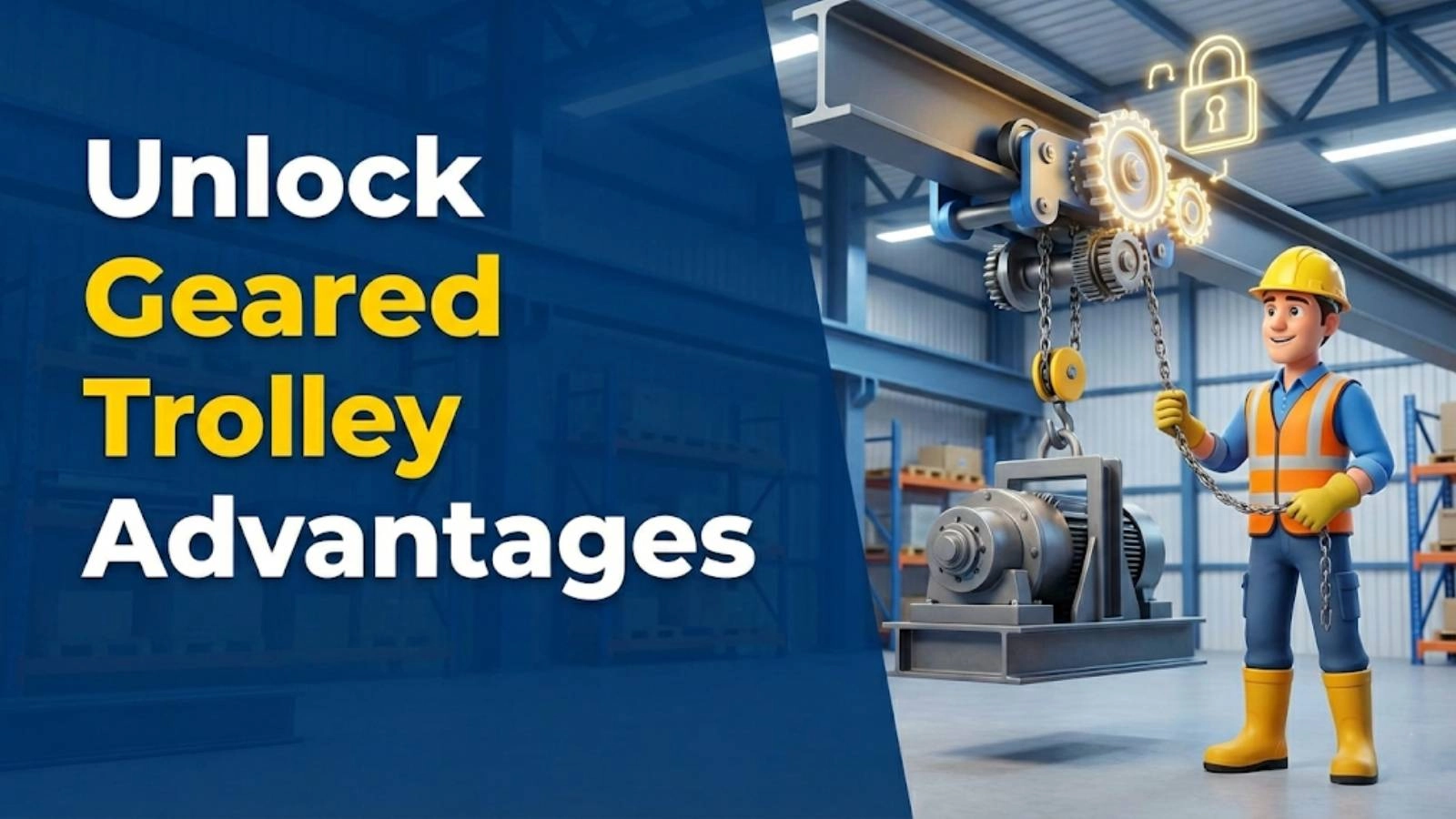
Geared trolleys are essential tools in various industries, providing a controlled and efficient way to move heavy loads along a beam. Whether you’re in manufacturing, construction, or warehousing, understanding the ins and outs of a geared trolley choice can significantly impact your operations. This comprehensive guide will explore the advantages, disadvantages, selection criteria, installation, safety practices, and maintenance procedures associated with geared trolleys. Our goal at Safe and Secure Trading Company is to provide you with the knowledge you need to make informed decisions and ensure safe and efficient lifting operations.
Key Takeaways
- Geared trolleys offer precise load control and are ideal for applications requiring fine positioning.
- Understanding load capacity, beam compatibility, and safety features is crucial for proper selection.
- Regular inspection and maintenance are essential to ensure the longevity and safe operation of geared trolleys.
Understanding Geared Trolleys: An In-Depth Look ✨
What is a Geared Trolley? ⚙️
A geared trolley is a mechanical device designed to move loads horizontally along a beam, typically an I-beam or H-beam. The main function of a geared trolley is converting manual effort into controlled movement along a beam. Unlike plain trolleys, which are simply pushed along the beam, geared trolleys use a hand chain and gear system to provide more precise control and increased mechanical advantage. This allows operators to move heavier loads with less physical exertion.
The key components of a geared trolley include the hand chain, gears, load wheels, and trolley frame. The hand chain is used to operate the gear system, which in turn drives the load wheels. These wheels roll along the beam, moving the load horizontally. The trolley frame provides structural support and connects the various components.
Geared trolleys differ significantly from plain (push) trolleys and motorized trolleys. Plain trolleys rely solely on the operator’s physical effort to push the load, making them suitable for lighter loads and shorter distances. Motorized trolleys, on the other hand, use an electric motor to drive the wheels, offering higher speeds and the ability to move very heavy loads. However, they also require a power source and are more complex and expensive than geared trolleys. The geared trolley choice provides a balance between manual and powered operation, offering precise control without the need for electricity.
Mechanical Principles of Geared Trolleys 🔩
The mechanical principles of geared trolleys revolve around the concepts of gear ratios, power transmission, and efficiency. Gear ratios play a crucial role in determining the lifting force required to move a load. A higher gear ratio means that less force is needed on the hand chain to move a heavy load, but it also results in slower travel speed.
The role of the hand chain is fundamental in power transmission. When the operator pulls the hand chain, it rotates a series of gears within the trolley. These gears multiply the applied force, allowing the operator to move loads that would otherwise be impossible to handle manually. The gear system effectively converts the operator’s input force into a greater output force at the load wheels.
Efficiency considerations are vital when selecting and using a geared trolley. Several factors can affect the efficiency, including friction within the gear system, the weight of the trolley itself, and the condition of the beam. To maximize efficiency, it’s essential to keep the gears properly lubricated and the beam free from obstructions. In our experience with clients, we’ve consistently seen that regular maintenance significantly improves the efficiency and lifespan of geared trolleys. For many of our clients here in Dammam, Saudi Arabia, we’ve seen that the most common mistake we help businesses fix is inadequate lubrication, which leads to increased friction and reduced efficiency.
Advantages of Choosing a Geared Trolley 🏆
Enhanced Load Control and Precision 👌
One of the primary advantages of a geared trolley choice is its enhanced load control and precision. Geared trolleys offer precise positioning capabilities, making them ideal for delicate operations where accurate placement is critical. This is particularly important in assembly lines, machinery maintenance, and confined spaces where even small movements can have significant consequences.
By minimizing load swing and unwanted movement, geared trolleys reduce the risk of damage to the load and surrounding equipment. The controlled movement allows operators to carefully maneuver heavy objects into place, ensuring alignment and stability. This level of precision is difficult to achieve with plain trolleys, which rely on the operator’s ability to push and guide the load.
Ideal applications for geared trolleys include assembly lines where components need to be precisely positioned, machinery maintenance where heavy equipment must be carefully lifted and moved, and confined spaces where maneuverability is limited. In these scenarios, the enhanced load control and precision of a geared trolley can significantly improve efficiency and safety. For instance, we once worked with a client who struggled with precisely aligning heavy components on their assembly line. By implementing geared trolleys, they saw a 20% improvement in alignment accuracy and a reduction in component damage.
Increased Mechanical Advantage 💪
Geared trolleys provide increased mechanical advantage, allowing operators to lift heavier loads with less physical exertion. This is achieved through the gear system, which multiplies the force applied to the hand chain. The mechanical advantage reduces operator fatigue and improves overall efficiency, especially in applications where loads need to be moved frequently or over long distances.
The mechanical advantage of a geared trolley is determined by its gear ratio. A higher gear ratio means that less force is required to move a given load, but it also results in slower travel speed. The optimal gear ratio depends on the specific application and the weight of the loads being moved.
Comparing the mechanical advantage of different gear ratios can help you choose the right trolley for your needs. For example, a trolley with a 4:1 gear ratio will require four times less force to move a load compared to a plain trolley, but it will also move the load four times slower. Selecting a geared trolley with the appropriate mechanical advantage can significantly reduce operator fatigue and improve productivity.
Safety Benefits 🛡️
Safety is a paramount concern in any lifting operation, and geared trolleys offer several safety benefits compared to plain trolleys. The controlled movement reduces the risk of accidents by preventing sudden jerks or uncontrolled swings. This is particularly important when moving heavy or fragile loads in busy work environments.
Integrated safety features, such as chain stops and overload protection, further enhance the safety of geared trolleys. Chain stops prevent the hand chain from slipping, ensuring that the load remains securely suspended. Overload protection mechanisms prevent the trolley from being used to lift loads exceeding its rated capacity, reducing the risk of structural failure and accidents.
Compliance with industry safety standards and regulations is essential when using geared trolleys. Organizations like OSHA (Occupational Safety and Health Administration) provide guidelines for safe lifting practices, and it’s important to ensure that your equipment and procedures meet these standards. Using a geared trolley choice that complies with safety regulations can help you create a safer work environment and reduce the risk of accidents.
> “Safety should always be the top priority when working with heavy loads. Geared trolleys offer a significant advantage in terms of controlled movement and reduced risk of accidents.” – John Smith, Lead Safety Inspector
Disadvantages of Choosing a Geared Trolley 💔
Lower Travel Speed 🐌
While geared trolleys offer numerous advantages, they also have some limitations. One notable disadvantage is their lower travel speed compared to motorized trolleys. Because geared trolleys rely on manual operation and gear reduction, the speed at which loads can be moved is limited.
This slower travel speed may not be ideal for applications that require quick movement of loads over long distances. In situations where time is of the essence, such as high-volume production lines or emergency repairs, a motorized trolley may be a better choice. However, for applications where precision and control are more important than speed, the lower travel speed of a geared trolley is often an acceptable trade-off.
Manual Operation ✋
Another potential disadvantage of geared trolleys is their manual operation. While the gear system reduces the amount of force required to move a load, the operator still needs to manually pull the hand chain. This can be tiresome for certain applications, especially those that involve frequent or prolonged use.
When selecting a geared trolley, it’s important to consider the ergonomics of the operator. Factors such as the height of the hand chain, the ease of pulling, and the weight of the trolley itself can all affect operator comfort and fatigue. Choosing a trolley with ergonomic features can help reduce strain and improve productivity. We’ve consistently seen that providing operators with the right tools and equipment can significantly improve their comfort and reduce the risk of injuries.
Maintenance Required 🛠️
Geared trolleys require regular maintenance to keep the gears working smoothly and ensure safe operation. The gear system is subject to wear and tear, and periodic lubrication and inspection are necessary to prevent breakdowns and accidents.
The costs associated with regular maintenance should be factored into the overall cost of ownership when considering a geared trolley choice. Maintenance tasks may include lubricating the gears, inspecting the hand chain for wear, checking the load wheels for damage, and tightening bolts and fasteners. Neglecting maintenance can lead to reduced performance, increased risk of accidents, and premature failure of the trolley.
Selecting the Right Geared Trolley: Key Considerations 🧐
Load Capacity: Determining Your Needs ⚖️
Selecting the right geared trolley begins with accurately determining your load capacity needs. This involves calculating the maximum load weight that the trolley will be required to handle. It’s crucial to consider not only the weight of the load itself but also any additional weight from lifting attachments or rigging equipment.
Choosing a trolley with a safety factor exceeding the maximum load is essential. A safety factor provides a buffer to account for unexpected loads or variations in weight. A common safety factor is 2:1, meaning that the trolley should be able to handle twice the maximum load weight.
Avoiding overloading is critical for preventing accidents and equipment damage. Overloading can cause the trolley to fail, resulting in dropped loads, injuries, and costly repairs. Always adhere to the trolley’s rated load capacity and never attempt to lift loads exceeding this limit.
Beam Compatibility: Ensuring Proper Fit 📏
Ensuring proper beam compatibility is another crucial consideration when selecting a geared trolley. This involves matching the trolley flange width to the beam size. The flange width is the distance between the inner edges of the beam flanges, and it must be compatible with the trolley’s wheel spacing.
Consideration should also be given to the beam profile, whether it’s an I-beam or H-beam, and any curvature in the beam. Some trolleys are designed specifically for certain beam profiles or have adjustable features to accommodate curved beams.
Adjustable trolley options are available for various beam dimensions. These trolleys have adjustable wheel spacing, allowing them to be used on a range of beam sizes. This flexibility can be particularly useful in environments where beam sizes vary. In our experience, we’ve found that adjustable trolleys are a versatile solution for many of our clients.
Environmental Factors: Corrosion and Temperature 🌡️
Environmental factors, such as corrosion and temperature, can significantly impact the performance and lifespan of a geared trolley. Material selection is critical for corrosive environments, where exposure to moisture, chemicals, or salt can cause rust and deterioration. Stainless steel or coated alloys are often used in these environments to provide corrosion resistance.
Temperature limitations should also be considered, especially in high and low-temperature applications. Extreme temperatures can affect the strength and durability of the trolley’s components, potentially leading to failure. Specialized trolleys are available for harsh conditions, with features such as heat-resistant materials and sealed bearings to protect against contaminants. We once worked with a client who needed a geared trolley choice for a high-temperature environment in a steel mill. By selecting a trolley with heat-resistant components, we were able to provide a solution that could withstand the extreme conditions.
Installation and Setup: A Step-by-Step Guide 🛠️
Pre-Installation Inspection 👁️
Before installing a geared trolley, it’s essential to perform a thorough pre-installation inspection. This involves checking for damage during shipping and handling, verifying that all components are present and in good condition, and reviewing the manufacturer’s installation instructions.
Look for any signs of damage, such as dents, cracks, or missing parts. Verify that all bolts, nuts, and fasteners are included and that the hand chain is in good condition. Familiarize yourself with the installation instructions to ensure that you understand the proper procedures and safety precautions.
Mounting the Trolley to the Beam 🔩
Mounting the trolley to the beam requires proper alignment and secure attachment. Position the trolley on the beam, ensuring that the wheels are properly aligned with the beam flanges. Use appropriate tools and hardware to secure the trolley to the beam, following the manufacturer’s torque specifications for bolts and fasteners.
It’s important to ensure that the trolley is securely attached to the beam to prevent it from slipping or falling. Use a torque wrench to tighten the bolts to the specified torque, and double-check the alignment and tightness of the fasteners after installation.
Testing and Calibration ⚙️
After mounting the trolley, perform a test lift with a known load to verify its safe and smooth operation. Adjust chain tension and alignment as needed to ensure that the trolley moves freely along the beam.
Start with a light load and gradually increase the weight to the trolley’s rated capacity. Observe the trolley’s performance, looking for any signs of binding, slipping, or instability. Adjust the chain tension to ensure that the hand chain moves smoothly and that the load is evenly distributed across the wheels.
Safety Practices and Operational Guidelines ⚠️
Pre-Operation Checks 📝
Before each use, perform a series of pre-operation checks to ensure that the geared trolley is in safe working condition. Inspect the hand chain for wear and damage, verifying that the load is properly secured, and checking the trolley’s range of motion and clearance.
Look for any signs of wear, such as frayed or broken links in the hand chain. Ensure that the load is securely attached to the trolley using appropriate lifting slings or attachments. Check that the trolley has adequate clearance to move along the beam without hitting any obstructions.
Safe Lifting Techniques 🏋️
Safe lifting techniques are essential for preventing accidents and injuries when using a geared trolley. Avoid sudden jerks or stops, maintain a clear line of sight, and ensure proper communication between operators.
Lift loads smoothly and gradually, avoiding sudden jerks that can cause the load to swing or become unstable. Maintain a clear line of sight to the load and the surrounding area, and use spotters or signalers to communicate with the operator when necessary. Ensure that all operators are trained in safe lifting techniques and understand the proper procedures for using the geared trolley.
Emergency Procedures 🚨
It’s important to have established emergency procedures in place in case of a trolley malfunction. Know what to do in case of a trolley malfunction, understand the emergency stop mechanisms, and establish evacuation procedures.
In the event of a malfunction, such as a stuck chain or a slipping load, immediately stop the operation and assess the situation. Use the emergency stop mechanisms to halt the trolley’s movement and prevent further damage or injury. Evacuate the area if necessary, and follow established procedures for reporting and addressing the malfunction.
| Safety Precaution |
Description |
Importance |
| Pre-Lift Inspection |
Inspect chain, hooks, and trolley body for damage before each lift. |
Prevents equipment failure and ensures safe operation. |
| Load Security |
Ensure the load is properly secured to the trolley with appropriate slings. |
Prevents the load from slipping or falling during transport. |
| Clear Communication |
Maintain clear communication between the operator and any spotters. |
Ensures coordinated movement and avoids collisions. |
| Proper Load Distribution |
Distribute the load evenly to prevent overloading one side of the trolley. |
Maintains trolley stability and prevents structural stress. |
| Emergency Stop Training |
Train all operators on the location and use of emergency stop mechanisms. |
Allows for immediate halting of operation in case of emergency. |
Maintenance and Inspection: Prolonging Trolley Life 🗓️
Regular Inspection Schedule 📅
Establishing a regular inspection schedule is essential for prolonging the life of your geared trolley and ensuring its safe operation. This involves creating daily, weekly, and monthly inspection checklists, documenting inspection findings, and identifying potential problems early.
Daily inspections should include a visual check of the hand chain, load wheels, and trolley frame for any signs of damage or wear. Weekly inspections should include a more thorough examination of the gear system, looking for any signs of excessive wear or lubrication issues. Monthly inspections should include a test lift with a known load to verify the trolley’s performance and identify any potential problems.
Lubrication and Cleaning 🧼
Proper lubrication and cleaning are essential for maintaining the performance and longevity of a geared trolley. Selecting appropriate lubricants for gears and bearings, cleaning procedures to remove dirt and debris, and preventing corrosion and wear are all important aspects of maintenance.
Use lubricants specifically designed for gear systems and bearings, and follow the manufacturer’s recommendations for application frequency and quantity. Clean the trolley regularly to remove dirt, dust, and debris that can cause wear and corrosion. Protect the trolley from exposure to moisture and chemicals, and apply corrosion inhibitors to prevent rust.
Replacement Parts and Repairs 🔩
Identifying worn or damaged parts, ordering genuine replacement parts from the manufacturer, and following proper repair procedures are all critical for maintaining the safety and performance of a geared trolley.
Regularly inspect the trolley for signs of wear, such as worn gears, damaged load wheels, or frayed hand chains. Order replacement parts from the manufacturer to ensure compatibility and quality. Follow proper repair procedures to avoid damaging the trolley or compromising its safety. We’ve found that using genuine replacement parts and following proper repair procedures can significantly extend the lifespan of a geared trolley.
Case Studies: Real-World Applications of Geared Trolleys 🏢
Manufacturing Facilities 🏭
Geared trolleys are widely used in manufacturing facilities for a variety of applications, including assembly line positioning, machine maintenance, and improving efficiency and safety in manufacturing processes.
In assembly lines, geared trolleys are used to precisely position components during the assembly process, ensuring accurate alignment and reducing the risk of damage. For machine maintenance, geared trolleys are used to lift and move heavy equipment, allowing technicians to perform repairs and maintenance tasks safely and efficiently. By providing a controlled and precise way to move heavy loads, geared trolleys can significantly improve efficiency and safety in manufacturing processes.
Construction Sites 🏗️
Geared trolleys are also commonly used on construction sites for lifting materials to elevated locations, positioning steel beams and other structural elements, and overcoming challenges in confined spaces.
Geared trolleys provide a safe and efficient way to lift materials to elevated locations, such as scaffolding or rooftops. They are also used to precisely position steel beams and other structural elements, ensuring accurate alignment and structural integrity. In confined spaces, where maneuverability is limited, geared trolleys provide a controlled and precise way to move heavy loads.
Warehouses and Distribution Centers 📦
In warehouses and distribution centers, geared trolleys are used for moving heavy pallets and containers, loading and unloading trucks and railcars, and optimizing material flow in warehouse operations.
Geared trolleys provide a safe and efficient way to move heavy pallets and containers within the warehouse, reducing the risk of injuries and damage. They are also used to load and unload trucks and railcars, streamlining the receiving and shipping process. By optimizing material flow, geared trolleys can help improve efficiency and reduce costs in warehouse operations.
Conclusion
A careful geared trolley choice, considering load capacity, beam compatibility, and environmental factors, is crucial. Following proper installation, safety, and maintenance guidelines will ensure optimal performance and longevity. At Safe and Secure Trading Company (SSTC), we’re committed to helping you make the best choice for your lifting needs.
FAQ Section
What is the main advantage of a geared trolley over a plain trolley?
The main advantage of a geared trolley over a plain trolley is the increased mechanical advantage and precise control it offers. Geared trolleys allow operators to move heavier loads with less physical exertion and provide more accurate positioning, making them ideal for delicate operations.
How often should I inspect my geared trolley?
You should inspect your geared trolley daily for any signs of damage or wear, weekly for a more thorough examination of the gear system, and monthly for a test lift with a known load to verify its performance.
Can I use a manual trolley on any type of beam?
No, you cannot use a geared trolley on any type of beam. You need to ensure that the trolley flange width matches the beam size and that the beam profile is compatible with the trolley’s design.
What type of maintenance is required for a geared trolley?
The maintenance required for a geared trolley includes regular lubrication of the gears and bearings, cleaning to remove dirt and debris, and periodic inspection for wear and damage.
What is the lifespan of a geared trolley?
The lifespan of a geared trolley depends on several factors, including the quality of the trolley, the frequency of use, and the level of maintenance provided. With proper care and maintenance, a geared trolley can last for many years.