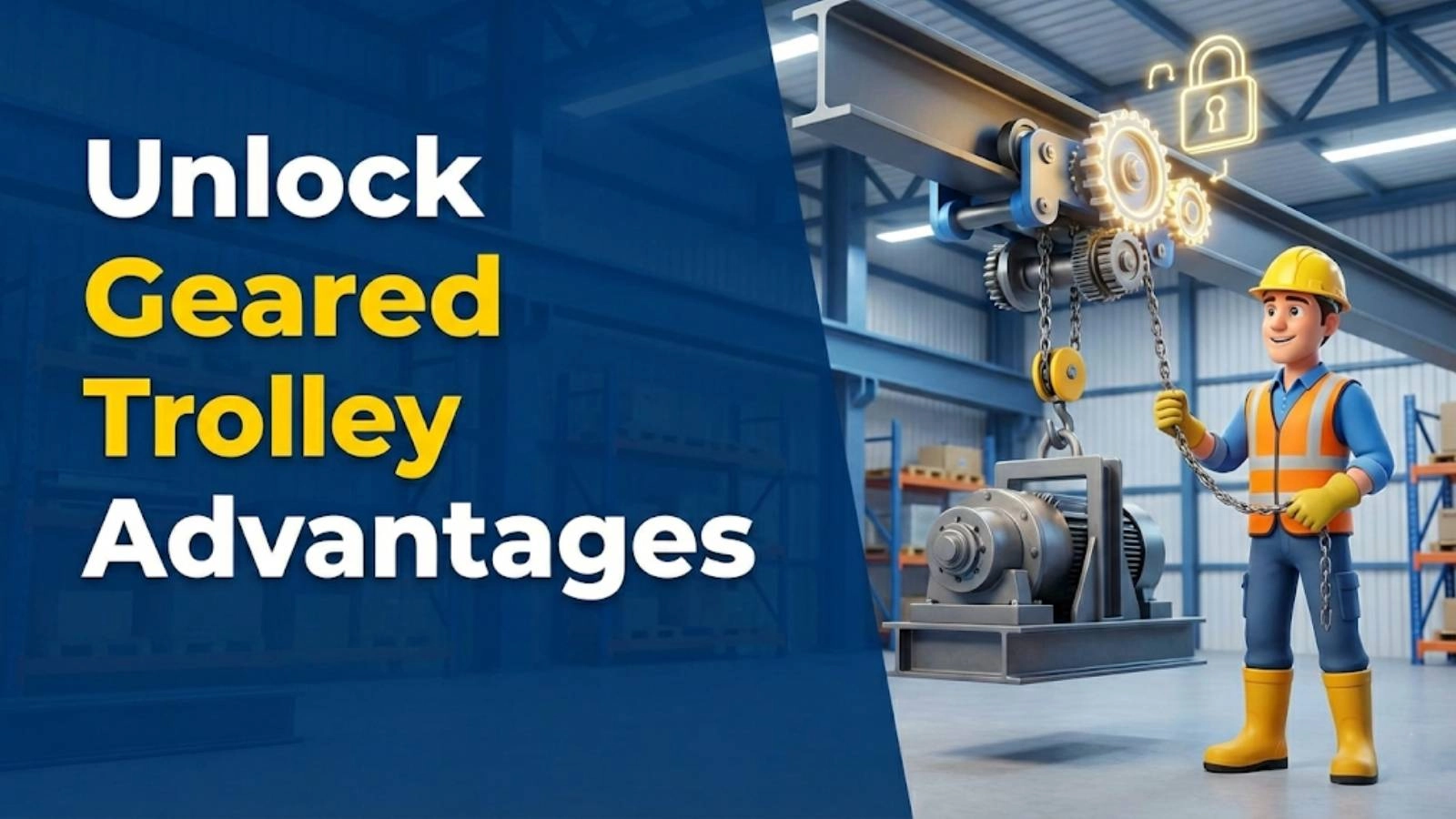
Here’s the listicle as requested:
A geared trolley is a crucial piece of equipment in many industries, providing a safe and efficient way to move heavy loads along a beam. Choosing the right geared trolley involves careful consideration of several factors to ensure it meets your specific needs and safety requirements. This buying guide from Safe and Secure Trading Company (SSTC) will walk you through the key geared trolley features to consider before making a purchase.
1. Load Capacity & Safety Factor
✅ One of the most important geared trolley features is its load capacity. Selecting a trolley with the appropriate capacity is essential for safe and efficient operation. Overloading a trolley can lead to equipment failure, property damage, and serious injuries. We always emphasize selecting a trolley that exceeds the maximum anticipated load to provide a safety margin.
1.1. Determining Required Load Capacity
To accurately assess the maximum weight your trolley needs to handle, consider not only the static load but also dynamic loads that can occur during lifting and moving operations. Dynamic loads can result from sudden stops, starts, or swinging motions, potentially increasing the effective weight by a significant margin. Always factor in the weight of any lifting accessories, such as slings or chains, and consider potential overloads that might occur due to misjudgments or unexpected circumstances. We advise clients to overestimate their needs slightly to ensure a safety buffer.
1.2. Understanding Safety Factors (SF)
Safety factors (SF) are critical for ensuring safe operation. The safety factor is the ratio of the trolley’s rated capacity to the maximum load it is designed to handle. For example, a safety factor of 5:1 means the trolley can withstand five times its rated load before failure. Industry standards, such as those set by ASME and OSHA, often dictate minimum SF requirements. A higher SF provides a greater margin of safety and reduces the risk of accidents. At SSTC, geared trolley safety is our highest priority, and we ensure our clients understand the implications of SF.
1.3. Impact of Load Capacity on Trolley Size
There’s a direct relationship between load capacity and the physical dimensions of the trolley. Higher load capacities typically require larger and more robust trolleys, which in turn affect track width and wheel diameter. A larger trolley may necessitate a wider beam to accommodate its size, and the wheels must be appropriately sized to support the increased weight. When selecting a geared trolley, consider the available space and beam dimensions to ensure compatibility. Here at SSTC, we can help you assess the structural impact that using different trolleys can have on your current operation.
2. Beam Compatibility & Adjustability
✅ Another crucial aspect is ensuring the geared trolley is compatible with your existing or planned beam structure. Mismatched trolleys and beams can lead to instability and dangerous operating conditions. Proper adjustment mechanisms are essential for adapting the trolley to different beam widths.
2.1. Identifying Appropriate Beam Size & Type
To ensure a proper trolley fit, accurately measure the beam flange width and thickness. These measurements are crucial for selecting a trolley that can securely attach to the beam. Different beam types, such as I-beams and H-beams, have varying flange dimensions, so choose a trolley specifically designed for your beam type. Always consult the trolley manufacturer’s specifications to verify compatibility. In our experience, precise measurement is often overlooked, which can lead to costly errors.
2.2. Geared Trolley Adjustment Mechanisms
Various mechanisms allow you to adjust the trolley to fit different beam widths. These can include adjustable side plates, threaded spindles, or shims. The ease and precision of adjustment are important considerations, especially if you need to move the trolley between different beams frequently. Some adjustment mechanisms are easier to use and provide a more secure fit than others. We’ve found that trolleys with fine-threaded spindles offer the most precise adjustments.
2.3. Analyzing Beam Load Capacity
It’s essential to verify the beam’s load capacity and ensure it can safely support the combined weight of the trolley, the load, and any dynamic forces. The beam’s load capacity should always exceed the trolley’s load capacity plus a safety margin. Consult with a structural engineer to assess the beam’s capacity if you’re unsure. For many of our clients here in Dammam, we’ve seen that neglecting this step can lead to serious structural damage and safety hazards.
3. Wheel Material & Durability
✅ The wheel material significantly impacts the trolley’s durability, rolling resistance, and overall performance. Steel and polyurethane are two common wheel materials, each with its own advantages and disadvantages. Regular maintenance is vital for maximizing the lifespan of the wheels.
3.1. Common Wheel Materials: Steel vs. Polyurethane
Steel wheels are known for their high durability and ability to withstand heavy loads. However, they can be noisy and may damage the beam over time. Polyurethane wheels offer quieter operation and better protection for the beam, but they may not be as durable as steel wheels under extremely heavy loads. The choice depends on your specific needs and operating conditions. In terms of typical lifespans, steel wheels can last for many years with proper lubrication, while polyurethane wheels may need replacement more frequently, especially in high-use environments.
3.2. Impact of Wheel Diameter on Rolling Resistance
Wheel diameter affects rolling resistance, which is the force required to move the trolley along the beam. Larger diameter wheels generally have lower rolling resistance, making it easier to move heavy loads. Smaller diameter wheels may be more suitable for applications where space is limited or precise positioning is required. Selecting the appropriate wheel diameter can significantly improve the efficiency of your material handling operations. A larger diameter generally reduces the effort involved with chain pulling, which reduces strain on your employees.
3.3. Wheel Bearing Types & Maintenance
Different types of wheel bearings, such as ball bearings and roller bearings, have varying performance characteristics and maintenance requirements. Ball bearings are suitable for lighter loads and higher speeds, while roller bearings are better for heavier loads and slower speeds. Regular lubrication is essential for maintaining optimal performance and extending the lifespan of the bearings. Follow the manufacturer’s recommendations for lubrication type and frequency. Neglecting bearing maintenance can lead to increased friction, reduced efficiency, and premature failure.
4. Gear Mechanism & Efficiency
✅ The gear mechanism is a critical component that determines the ease and efficiency of moving loads with a geared trolley. Different gear systems offer varying levels of efficiency, noise, and load distribution. Proper gear material and heat treatment are essential for durability and long-term performance.
4.1. Types of Gear Systems: Spur vs. Helical
Spur gears and helical gears are two common types of gear systems used in geared trolleys. Spur gears are simpler and more cost-effective, but they tend to be noisier and less efficient than helical gears. Helical gears offer smoother and quieter operation due to their angled teeth, which provide greater contact area and better load distribution. Helical gears are often preferred for applications where noise reduction and efficiency are important. While spur gears are typically more affordable, they do require more upkeep to ensure geared trolley safety.
4.2. Gear Ratio & Hand Chain Pull Force
The gear ratio is a key factor in determining the hand chain pull force required to move the trolley. A higher gear ratio reduces the pull force needed, making it easier to move heavy loads. However, it also increases the distance the hand chain must be pulled to move the trolley a given distance. The relationship between gear ratio, load weight, and pull force can be expressed by the formula: Pull Force = Load Weight / (Gear Ratio x Efficiency). Choosing the right gear ratio depends on the weight of the loads you’ll be moving and the physical strength of the operators.
4.3. Gear Material & Heat Treatment
The gear material and heat treatment are critical for ensuring the durability and resistance to wear of the gear mechanism. Hardened steel is a common material choice due to its high strength and wear resistance. Heat treatment processes, such as quenching and tempering, further enhance the hardness and durability of the gears. Proper gear material and heat treatment are essential for extending the lifespan of the trolley and minimizing maintenance requirements. We always recommend that our clients seek trolleys with high-quality gears to avoid costly repairs down the road.
5. Safety Features & Locking Mechanisms
✅ Geared trolley safety is paramount, and several safety features and locking mechanisms are designed to prevent accidents and ensure safe operation. Overload protection, anti-drop devices, and high-strength hand chains are essential components. Regular inspection and maintenance of these features are crucial for maintaining a safe working environment.
5.1. Overload Protection Mechanisms
Overload protection mechanisms, such as slip clutches or shear pins, prevent damage to the trolley and beam by limiting the maximum load that can be applied. If the load exceeds the trolley’s rated capacity, the slip clutch will engage, preventing further lifting, or the shear pin will break, stopping the lifting operation altogether. These mechanisms protect against overloading, which can lead to equipment failure and serious accidents. The inclusion of a quality overload protection mechanism is one of the top geared trolley features that we recommend to our clients.
5.2. Anti-Drop Devices & Rail Clamps
Anti-drop devices and rail clamps prevent the trolley from falling off the beam in case of wheel failure or accidental dislodgement. Anti-drop devices typically consist of safety catches or pawls that engage with the beam flange, preventing the trolley from falling. Rail clamps provide a secure grip on the beam, preventing the trolley from rolling off the end of the track. These features are essential for maintaining geared trolley safety, especially in situations where the trolley is subjected to sudden impacts or vibrations.
5.3. Hand Chain Material & Strength
Using high-strength hand chain materials and proper chain length is crucial for safe and efficient operation. The hand chain should be made of a durable material, such as alloy steel, and should have a sufficient load capacity to handle the weight of the load. The chain length should be appropriate for the lifting height and allow the operator to maintain a comfortable and safe working position. Regular inspection of the hand chain for wear, damage, or corrosion is essential for ensuring safe operation.
6. Compliance with Industry Standards
✅ Adhering to industry standards and regulations is essential for ensuring the safety and reliability of geared trolleys. Compliance with standards such as ASME B30.11, OSHA regulations, and ISO standards demonstrates a commitment to safety and quality. Always verify that the trolley you choose meets the relevant standards for your application.
6.1. ASME B30.11 Standards for Trolleys
ASME B30.11 standards provide comprehensive guidelines for the design, construction, installation, inspection, testing, and maintenance of trolleys. These standards cover various aspects of trolley safety, including load capacity, safety factors, materials, welding, and marking. Compliance with ASME B30.11 ensures that the trolley meets rigorous safety requirements and is suitable for its intended purpose.
6.2. OSHA Regulations for Overhead Lifting
OSHA regulations outline specific requirements for overhead lifting operations, including the safe use of geared trolleys. These regulations cover topics such as operator training, equipment inspection, load handling, and fall protection. Compliance with OSHA regulations is mandatory for employers and is essential for protecting workers from hazards associated with overhead lifting.
6.3. ISO Standards for Lifting Equipment
ISO standards provide international guidelines for the design, manufacture, and testing of lifting equipment, including geared trolleys. These standards cover aspects such as load capacity, safety factors, materials, and testing procedures. Compliance with ISO standards demonstrates that the trolley meets internationally recognized safety and quality requirements.
7. Environmental Factors & Corrosion Resistance
✅ Environmental factors can significantly impact the performance and lifespan of geared trolleys. Operating temperature range, corrosion resistance, and the impact of dust and debris should be considered when selecting a trolley, especially for use in harsh environments. Choosing the right materials and coatings can extend the lifespan of the trolley and reduce maintenance costs.
7.1. Operating Temperature Range
Consider the operating temperature range and choose a trolley suitable for extreme cold or heat, if necessary. Some materials become brittle at low temperatures, while others may lose strength at high temperatures. Verify that the trolley’s components, such as wheels, gears, and bearings, are rated for the expected temperature range. Special lubricants may also be required for extreme temperature conditions.
7.2. Corrosion-Resistant Coatings & Materials
Corrosion-resistant coatings and materials are essential for trolleys used in harsh environments where they may be exposed to moisture, chemicals, or salt spray. Coatings such as epoxy and galvanizing provide a protective barrier against corrosion, while materials such as stainless steel offer inherent corrosion resistance. Choosing the right coatings and materials can significantly extend the lifespan of the trolley and reduce maintenance requirements. For geared trolley safety, look for models that can withstand exposure to chemicals.
7.3. Impact of Dust & Debris on Performance
Dust and debris can affect trolley performance by increasing friction, clogging bearings, and accelerating wear. Regular cleaning and lubrication are essential for maintaining optimal performance in dusty or dirty environments. Consider using trolleys with sealed bearings or protective covers to minimize the ingress of dust and debris. In our operational experience, we’ve seen how neglecting cleaning can drastically reduce a trolley’s performance.
8. Ease of Installation & Maintenance
✅ Ease of installation and maintenance are important considerations, especially if you plan to install and maintain the trolley yourself. Clear installation procedures, readily available tools, and simple lubrication requirements can save time and reduce costs. Regular inspection checklists and schedules help identify potential problems before they lead to accidents.
8.1. Installation Procedures & Tools
The typical installation procedures for geared trolleys involve attaching the trolley to the beam and adjusting it to fit the beam width. The required tools may include wrenches, screwdrivers, and measuring tapes. Clear and well-illustrated installation instructions are essential for ensuring proper installation. Consider choosing a trolley with a simple and straightforward installation process.
8.2. Lubrication Requirements & Schedules
Regular lubrication is essential for maintaining optimal performance and extending the lifespan of trolley components such as wheels, gears, and bearings. The recommended lubrication requirements and schedules vary depending on the trolley type, operating conditions, and lubricant type. Follow the manufacturer’s recommendations for lubrication type and frequency. Develop a lubrication schedule and train personnel to perform lubrication tasks properly.
8.3. Inspection Checklists & Frequency
Regular inspection is crucial for identifying potential problems before they lead to accidents. A sample inspection checklist should include items such as wheel condition, gear wear, chain condition, and safety device functionality. The recommended inspection frequency depends on the trolley’s usage and operating conditions. More frequent inspections may be necessary for trolleys used in heavy-duty applications or harsh environments.
> “Regular inspection and maintenance are the keys to ensuring the long-term safety and reliability of your geared trolley.” – John Smith, Lead Safety Inspector
9. Cost-Benefit Analysis & ROI
✅ When making a purchasing decision, it’s important to conduct a cost-benefit analysis and calculate the return on investment (ROI) for different geared trolleys. Consider the initial purchase price, long-term costs, impact on productivity, and potential safety improvements. A well-chosen trolley can significantly improve material handling efficiency and reduce overall costs.
9.1. Initial Purchase Price vs. Long-Term Costs
Compare the initial purchase price of different geared trolleys with their long-term costs, including maintenance, repairs, and downtime. A cheaper trolley may have lower upfront costs, but it may also have higher maintenance costs and a shorter lifespan. Consider the total cost of ownership over the trolley’s expected lifespan when making your purchasing decision. The geared trolley specifications will play a key role in determining the longevity and long-term value of your purchase.
9.2. Impact on Productivity & Efficiency
Analyze the impact of using a geared trolley on productivity and efficiency in material handling operations. A geared trolley can significantly reduce the time and effort required to move heavy loads, improving productivity and reducing labor costs. Consider the potential for increased throughput, reduced material damage, and improved worker safety when evaluating the benefits of a geared trolley.
9.3. Calculating Return on Investment (ROI)
Calculate the return on investment (ROI) for a geared trolley based on factors such as labor savings, reduced material damage, and improved safety. The ROI can be calculated using the formula: ROI = (Total Benefits – Total Costs) / Total Costs. A positive ROI indicates that the investment in a geared trolley is financially beneficial. We find that customers who do a thorough analysis often discover savings that they didn’t initially anticipate.
Top 3 Considerations:
1. Load Capacity & Safety Factor
2. Beam Compatibility & Adjustability
3. Wheel Material & Durability
Conclusion
By carefully considering these geared trolley features, you can select the right trolley for your specific needs and ensure safe and efficient material handling operations. A well-chosen trolley can improve productivity, reduce costs, and enhance worker safety. We at Safe and Secure Trading Company are committed to providing our clients with high-quality geared trolleys and expert advice.
FAQ Section
Q: What is the difference between a geared trolley and a plain trolley?
A: A geared trolley uses gears and a hand chain to move loads horizontally along a beam, providing more control and precision. A plain trolley, also known as a manual trolley, is moved by pushing or pulling the load directly, which requires more physical effort and less control.
Q: How do I determine the appropriate load capacity for my geared trolley?
A: Assess the maximum weight you need to lift, including dynamic loads and any lifting accessories. Choose a trolley with a load capacity that exceeds this weight by a safety factor (typically 5:1).
Q: What is the importance of beam compatibility?
A: Beam compatibility ensures the trolley fits properly on the beam, preventing instability and potential accidents. Measure the beam flange width and thickness, and choose a trolley designed for your specific beam type (I-beam or H-beam). Beam width compatibility is essential for safe operation.
Q: What are the advantages of steel wheels vs. polyurethane wheels?
A: Steel wheels are more durable and can handle heavier loads, while polyurethane wheels are quieter and provide better protection for the beam.
Q: How often should I lubricate my geared trolley?
A: Follow the manufacturer’s recommendations for lubrication type and frequency. Regular lubrication is essential for maintaining optimal performance and extending the lifespan of trolley components.
Q: What safety features should I look for in a geared trolley?
A: Look for overload protection mechanisms, anti-drop devices, and high-strength hand chains to ensure safe operation. Geared trolley safety is a top priority.
Q: What industry standards should my geared trolley comply with?
A: Ensure the trolley complies with relevant standards such as ASME B30.11, OSHA regulations, and ISO standards.
Q: How can I calculate the return on investment (ROI) for a geared trolley?
A: Calculate the ROI based on factors such as labor savings, reduced material damage, and improved safety. The formula is: ROI = (Total Benefits – Total Costs) / Total Costs.
Q: What are some common maintenance tasks for geared trolleys?
A: Common maintenance tasks include lubrication, inspection, cleaning, and replacement of worn parts. Regular maintenance helps prevent accidents and extends the lifespan of the trolley.
Q: Where can I find geared trolley specifications?
A: Geared trolley specifications can be found in the product manuals and on the manufacturer’s website.
| Feature |
Description |
Importance |
| Load Capacity |
Maximum weight the trolley can safely handle. |
Critical for safety and preventing equipment failure. |
| Beam Compatibility |
Ensures the trolley fits properly on the beam. |
Essential for stability and preventing accidents. |
| Wheel Material |
Affects durability, rolling resistance, and noise. |
Impacts performance and lifespan. |
| Gear Mechanism |
Determines efficiency and ease of movement. |
Improves productivity and reduces effort. |
| Safety Features |
Overload protection, anti-drop devices, rail clamps. |
Paramount for preventing accidents. |
| Industry Standards |
Compliance with ASME, OSHA, and ISO standards. |
Ensures safety and quality. |
| Environmental Factors |
Resistance to temperature, corrosion, and dust. |
Extends lifespan in harsh environments. |
| Installation & Maintenance |
Ease of installation, lubrication, and inspection. |
Reduces costs and downtime. |
| Cost-Benefit Analysis |
Long-term costs, productivity impact, and ROI. |
Informs purchasing decisions. |