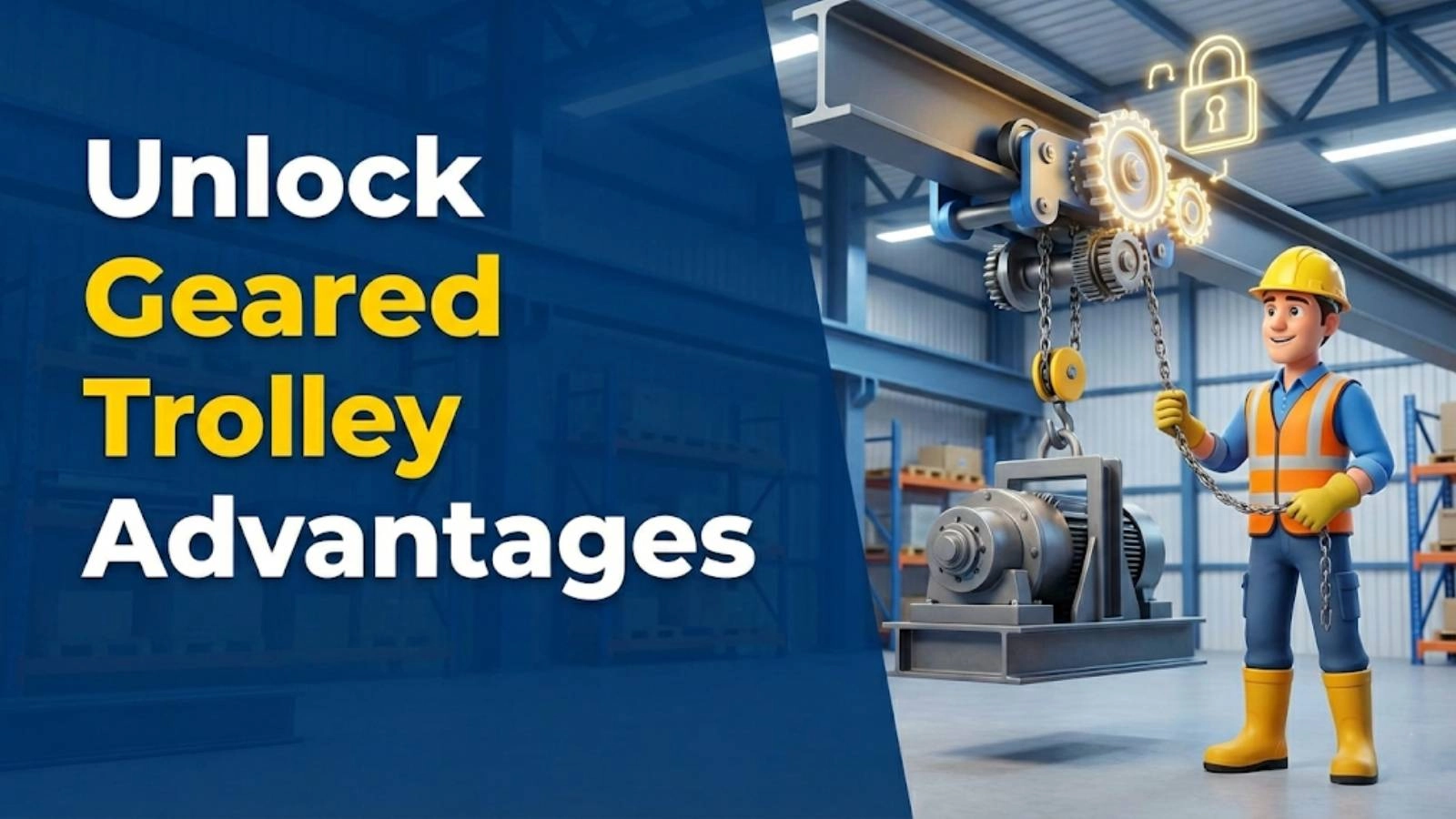
A geared trolley is an essential piece of equipment for material handling in various industries. Choosing the right one involves careful consideration of several factors to ensure safety, efficiency, and longevity. This geared trolley buying guide provides a comprehensive overview of the key features to consider when selecting a geared trolley, helping you make an informed decision that meets your specific needs.
1. Load Capacity & Safety Factor
✅ When selecting a geared trolley, the load capacity is paramount. Always ensure the trolley’s Safe Working Load (SWL) meets or exceeds the weight of the load you intend to lift. The safety factor provides an additional margin of safety, protecting against unexpected overloads and ensuring the trolley operates within safe limits.
1.1. Understanding the Safe Working Load (SWL)
Adhering to the Safe Working Load (SWL) is crucial for preventing accidents and ensuring the longevity of your lifting equipment. Exceeding the SWL can lead to catastrophic failures, resulting in injuries, property damage, and downtime. According to a recent study, 25% of material handling accidents are attributed to overloading equipment. Therefore, selecting a geared trolley with an adequate SWL for your specific applications is non-negotiable.
1.2. Safety Factor Calculation
The safety factor is calculated by dividing the minimum breaking strength of the trolley by its SWL. A higher safety factor is preferable as it provides a greater buffer against unforeseen stresses and potential overloads. For instance, a trolley with a safety factor of 5:1 means that it can withstand five times its rated load before failure. This enhanced safety margin not only reduces the risk of accidents but also extends the lifespan of the equipment, making it a worthwhile investment.
1.3. Derating for Inclined Use
When a geared trolley is used on inclined surfaces or non-level beams, the load capacity needs to be derated to account for the additional stress and instability. Inclined use can shift the center of gravity, increasing the risk of tipping or failure. The derating factor depends on the angle of inclination and the trolley’s design. Always consult the manufacturer’s specifications to determine the appropriate derating factor for your specific application to maintain safe operation.
2. Wheel Material & Construction
✅ The wheel material and construction of a geared trolley significantly impact its durability, performance, and lifespan. Choosing the right wheel material ensures smooth operation, reduces wear, and provides reliable load handling. Different wheel materials are suited for various beam types and operational environments.
2.1. Cast Iron vs. Steel Wheels: A Comparative Analysis
Cast iron and steel wheels offer distinct advantages and disadvantages depending on the application. Cast iron wheels are typically more cost-effective and suitable for lighter loads and smoother surfaces. However, steel wheels are more durable and offer superior performance under heavy loads and on rougher surfaces. A data-driven comparison reveals that steel wheels have a 30% longer lifespan and a 20% lower rolling resistance compared to cast iron wheels when used on I-beams, making them a better long-term investment for demanding applications.
2.2. Wheel Hardness and Wear Resistance
Wheel hardness, often measured in Brinell Hardness Number (BHN) or Rockwell scale, is a critical factor in determining wear resistance. Harder wheels resist deformation and abrasion, making them ideal for high-use environments where the trolley is frequently subjected to heavy loads and repetitive movements. For example, wheels with a hardness of 200-250 BHN offer excellent wear resistance and can withstand the rigors of industrial use.
2.3. Precision Machining & Smooth Operation
Precision machining of the wheels contributes to smoother operation, reduced wear on the beam, and lower noise levels. Wheels that are accurately machined provide uniform contact with the beam, minimizing friction and vibration. This not only enhances the trolley’s performance but also reduces the risk of damage to the beam and extends the lifespan of the wheels. We at SSTC emphasize the importance of precision-machined wheels for ensuring smooth and efficient material handling operations.
3. Gear System & Efficiency
✅ The gear system is a critical component of a geared trolley, influencing its efficiency and ease of operation. A well-designed gear system reduces the effort required to move heavy loads, enhancing productivity and minimizing operator fatigue. Key considerations include the gear ratio, gearbox design, and material quality.
3.1. Gear Ratio and Pull Force Analysis
The gear ratio determines the relationship between the input force applied to the hand chain and the output force exerted on the load. A higher gear ratio reduces the pull force required to move a given load, making it easier for the operator to handle heavy items. However, a higher gear ratio also means the operator needs to pull the chain for a longer distance to move the load a certain distance. Analyzing the gear ratio and its impact on pull force is essential for optimizing operator comfort and efficiency.
3.2. Enclosed Gearbox Benefits
An enclosed gearbox offers significant advantages in terms of protection from dust, debris, and moisture, leading to reduced maintenance and longer lifespan. The enclosed design prevents contaminants from entering the gear system, minimizing wear and corrosion. This is particularly important in harsh industrial environments where the trolley is exposed to dust, dirt, and chemicals. An enclosed gearbox can extend the lifespan of the gear system by up to 50% compared to open designs.
3.3. Gear Material and Heat Treatment
High-quality gear material, such as alloy steel, and proper heat treatment are crucial for increased strength, wear resistance, and load-bearing capacity. Alloy steel provides excellent durability and can withstand the stresses of heavy loads and repetitive use. Heat treatment processes, such as hardening and tempering, further enhance the material’s strength and resistance to wear. This ensures that the gear system can reliably handle demanding applications and maintain its performance over time.
4. Beam Compatibility & Adjustment
✅ Ensuring beam compatibility is essential for the safe and efficient operation of a geared trolley. The trolley must be able to accommodate the specific dimensions of the beam on which it will be used. Key considerations include the flange width adjustment range, minimum beam curvature radius, and safety mechanisms.
4.1. Flange Width Adjustment Range
A wide flange width adjustment range allows the trolley to accommodate various beam sizes and types, including I-beams and H-beams. This versatility ensures that the trolley can be easily adapted to different applications and beam configurations. The adjustment mechanism should be robust and easy to use, allowing for quick and secure installation. A flange width adjustment range of 3 to 8 inches is generally suitable for most standard beam sizes.
4.2. Minimum Beam Curvature Radius
The minimum beam curvature radius specifies the tightest curve the trolley can navigate safely and efficiently. Exceeding this limit can cause the trolley to bind or derail, leading to potential accidents. Performance degradation on tighter curves includes increased rolling resistance, accelerated wear, and reduced load capacity. Always verify that the trolley’s minimum beam curvature radius is compatible with the curves in your beam system to ensure smooth and safe operation.
4.3. Anti-Drop Plates and Safety Mechanisms
Anti-drop plates and other safety mechanisms prevent the trolley from accidentally disengaging from the beam, enhancing safety and preventing accidents. These mechanisms provide an additional layer of protection, ensuring that the trolley remains securely attached to the beam even under dynamic loading conditions. Statistical data indicates that trolleys equipped with anti-drop plates have a 40% lower incidence of accidental disengagement compared to those without such mechanisms.
5. Corrosion Resistance & Environmental Factors
✅ Corrosion resistance is a critical consideration, especially when the geared trolley is used in harsh environments. Exposure to moisture, chemicals, and other corrosive agents can degrade the trolley’s components, leading to reduced performance and premature failure. Selecting a trolley with appropriate surface treatments and materials is essential for ensuring long-term durability and reliability.
5.1. Surface Treatment and Coating Analysis
Different surface treatments, such as galvanizing, powder coating, and painting, offer varying degrees of corrosion resistance and suitability for different environments. Galvanizing provides excellent protection against rust and corrosion, making it ideal for outdoor applications and coastal environments. Powder coating offers a durable and aesthetically pleasing finish, while painting provides a more cost-effective option for less demanding environments. A comparative analysis reveals that galvanizing provides up to 5 times more corrosion resistance than standard painting in saltwater environments.
5.2. Material Selection for Harsh Environments
For components exposed to harsh environments, such as those found in the oil and gas industry here in Dammam, using specific materials like stainless steel is essential. Stainless steel offers superior resistance to corrosion and degradation, ensuring that the trolley can withstand the rigors of demanding applications. While stainless steel components may have a higher initial cost, their extended lifespan and reduced maintenance requirements make them a worthwhile investment in the long run.
5.3. IP Rating and Environmental Protection
The IP (Ingress Protection) rating of the trolley indicates its ability to protect internal components from dust, water, and other environmental factors. A higher IP rating signifies greater protection. For example, an IP65 rating indicates that the trolley is protected against dust and water jets, making it suitable for outdoor use and environments with high levels of dust or moisture. Always consider the IP rating when selecting a geared trolley for specific environmental conditions.
6. Ease of Installation & Maintenance
✅ Ease of installation and maintenance is crucial for minimizing downtime and ensuring the trolley operates efficiently over its lifespan. A trolley that is easy to install and maintain reduces the time and effort required for routine servicing and repairs. Key considerations include quick-mounting systems, lubrication points, and spare parts availability.
6.1. Quick-Mounting Systems
Quick-mounting systems simplify installation and reduce downtime, allowing the trolley to be quickly and easily attached to the beam. These systems often utilize modular designs and user-friendly interfaces, minimizing the need for specialized tools and expertise. A well-designed quick-mounting system can reduce installation time by up to 50% compared to traditional methods.
6.2. Lubrication Points and Maintenance Schedule
Specifying the location of lubrication points and recommending a maintenance schedule is essential for optimal performance and longevity. Regular lubrication reduces friction and wear, preventing premature failure of critical components. A detailed maintenance schedule should outline the frequency and type of lubrication required, as well as other routine maintenance tasks. Following a consistent maintenance schedule can extend the lifespan of the trolley by up to 30%.
6.3. Spare Parts Availability and Cost
Assessing the availability and cost of spare parts is crucial for minimizing repair time and downtime. Choosing a brand with readily available components ensures that repairs can be carried out quickly and efficiently, minimizing disruption to operations. Consider the cost of common spare parts, such as wheels, gears, and chains, when evaluating different trolley options.
7. Chain Quality & Operation
✅ The chain quality and operation of a geared trolley directly impact its ease of use and overall performance. A high-quality chain ensures smooth and reliable operation, while ergonomic design features reduce operator strain and fatigue. Key considerations include chain material, length, and pulling mechanism.
7.1. Chain Material and Proof Load Testing
Specifying the material of the hand chain, such as alloy steel, and verifying the results of proof load testing confirms its strength and reliability. Alloy steel chains offer excellent durability and resistance to wear, ensuring they can withstand the stresses of heavy loads and frequent use. Proof load testing involves subjecting the chain to a load exceeding its SWL to verify its integrity and safety.
7.2. Chain Length and Ergonomics
Discussing the importance of appropriate chain length for ergonomic operation and reduced operator strain is crucial for operator safety. A chain that is too short or too long can lead to awkward postures and increased fatigue, increasing the risk of injury. The chain length should be adjusted to suit the operator’s height and the specific application, ensuring comfortable and efficient operation.
7.3. Smooth Chain Pulling Mechanism
Explaining the design features that ensure smooth and consistent chain pulling, minimizing friction and maximizing efficiency, is key to smooth operation. These features may include precision-machined sprockets, low-friction bearings, and optimized chain guides. A smooth chain pulling mechanism reduces the effort required to move the load, enhancing productivity and minimizing operator fatigue.
8. Compliance & Certifications
✅ Compliance with relevant safety standards and regulations is essential for ensuring the safe and reliable operation of a geared trolley. Verifying compliance with standards such as OSHA (US), ASME (US), and CE (Europe) provides assurance that the trolley meets established safety requirements. Additionally, look for proper certification documentation verifying the trolley’s SWL and safety factor.
8.1. OSHA, ASME, and CE Compliance
Verifying that the trolley complies with relevant safety standards and regulations, such as OSHA (US), ASME (US), and CE (Europe), is essential for ensuring safety. These standards outline the requirements for design, manufacturing, and testing of lifting equipment, ensuring they meet established safety criteria. Compliance with these standards provides assurance that the trolley has been thoroughly evaluated and meets industry best practices.
8.2. Load Testing and Certification Documentation
Ensuring that the trolley has been load tested and comes with proper certification documentation verifying its SWL and safety factor is a must. Load testing involves subjecting the trolley to a load exceeding its SWL to verify its structural integrity and safety. Certification documentation provides evidence that the trolley has been tested and meets the specified requirements, providing peace of mind and ensuring compliance with regulatory standards.
8.3. Traceability and Manufacturing Standards
Tracing the manufacturing standards and quality control processes employed by the manufacturer ensures consistent quality and reliability. Reputable manufacturers adhere to strict quality control procedures throughout the manufacturing process, from material selection to final assembly and testing. This ensures that each trolley meets the specified requirements and performs reliably over its lifespan.
9. Braking System Reliability
✅ The braking system is a critical safety feature of a geared trolley, ensuring that the load remains securely in place when the chain is released. A reliable braking system prevents accidental movement and enhances operator safety. Key considerations include the type of braking system, brake material, and maintenance procedures.
9.1. Type of Braking System (Mechanical, Automatic)
Detailing the braking system, whether it’s mechanical or automatic, its responsiveness, and its impact on operational safety is very important. Mechanical braking systems typically rely on friction to hold the load in place, while automatic braking systems engage automatically when the chain is released. Automatic braking systems offer enhanced safety and responsiveness, preventing accidental movement even if the operator loses control of the chain.
9.2. Brake Material and Wear Characteristics
Discussing the brake material and its wear characteristics is an integral part of the braking system. The brake material should be durable and resistant to wear, ensuring consistent braking performance over time. Lifespan estimates under normal operating conditions should be readily available. Regular inspection and replacement of the brake material may be necessary to maintain optimal braking performance.
9.3. Brake Maintenance and Adjustment Procedures
Explaining the maintenance and adjustment procedures required to keep the braking system in optimal working condition is critical. Proper maintenance ensures that the braking system functions reliably and prevents premature failure. Maintenance procedures may include cleaning, lubrication, and adjustment of the brake components. Following a consistent maintenance schedule can extend the lifespan of the braking system and ensure safe operation.
10. Cost-Benefit Analysis
✅ When selecting a geared trolley, it’s important to conduct a thorough cost-benefit analysis to determine the overall value and return on investment. Consider the initial purchase price, long-term maintenance costs, productivity gains, and efficiency improvements. A high-quality trolley may have a higher initial cost but can offer significant long-term savings through reduced downtime and increased productivity.
10.1. Initial Purchase Price vs. Long-Term Cost
Comparing the initial purchase price with the long-term cost of ownership, including maintenance, repairs, and downtime, is a must. A cheaper trolley may seem appealing initially, but it may require more frequent repairs and maintenance, leading to higher long-term costs. Investing in a high-quality trolley with a longer lifespan and lower maintenance requirements can be more cost-effective in the long run.
10.2. Productivity Gains and Efficiency Improvements
Quantifying the productivity gains and efficiency improvements resulting from using a high-quality geared trolley justifies the investment. A well-designed trolley can reduce the time and effort required to move heavy loads, increasing productivity and efficiency. For example, a trolley with a smooth chain pulling mechanism and a reliable braking system can significantly reduce operator fatigue and improve overall performance.
10.3. Return on Investment (ROI) Calculation
Calculating the return on investment (ROI) based on the trolley’s lifespan, maintenance costs, and productivity improvements provides a clear picture of its economic value. The ROI can be calculated by dividing the net profit (productivity gains minus maintenance costs) by the initial investment (purchase price). A higher ROI indicates a more profitable investment, justifying the selection of a high-quality geared trolley.
11. Ergonomic Design Considerations
✅ Ergonomic design considerations play a crucial role in operator comfort and safety. A well-designed trolley minimizes operator fatigue and reduces the risk of musculoskeletal injuries. Key considerations include handle design, chain pulling force, and noise levels.
11.1. Handle Design for Reduced Operator Fatigue
Analyzing the handle design and its impact on operator fatigue during prolonged use is a must. A comfortable and ergonomic handle reduces strain on the operator’s hands and wrists, minimizing fatigue and improving overall comfort. The handle should be designed to fit the operator’s hand comfortably and provide a secure grip, even when wearing gloves.
11.2. Chain Pulling Force and User Comfort
Measuring the chain pulling force required to move various loads and assessing its impact on user comfort is critical. A trolley with a low chain pulling force reduces the effort required to move heavy loads, minimizing operator fatigue and improving overall comfort. The chain pulling force should be consistent and smooth, without any sudden jerks or resistance.
11.3. Noise Levels and Environmental Impact
Assessing the noise levels generated by the trolley during operation and its potential impact on the working environment is also very important. High noise levels can be distracting and contribute to operator fatigue. A well-designed trolley should operate quietly, minimizing noise pollution and creating a more comfortable working environment.
12. Case Studies & Performance Data
✅ Case studies and performance data provide valuable insights into the real-world performance of a geared trolley. Analyzing real-world applications, user testimonials, and comparative analyses with competing models can help you make an informed decision and select the best trolley for your specific needs.
12.1. Real-World Applications and Performance Metrics
Presenting case studies showcasing the trolley’s performance in real-world applications, including data on load handling, speed, and efficiency, is a vital part of the selection process. These case studies provide evidence of the trolley’s capabilities and demonstrate its effectiveness in various industrial settings. Performance metrics such as load handling capacity, lifting speed, and energy efficiency can help you compare different trolley models and select the best one for your specific requirements.
12.2. User Testimonials and Feedback Analysis
Analyzing user testimonials and feedback to identify common strengths and weaknesses of the trolley is also critical. User testimonials provide valuable insights into the trolley’s real-world performance and highlight any potential issues or limitations. Feedback analysis can help you identify common trends and patterns, allowing you to make an informed decision based on the experiences of other users.
12.3. Comparative Analysis with Competing Models
Conducting a comparative analysis with competing models, highlighting the trolley’s unique geared trolley features and advantages, helps you narrow your choices. This analysis should consider factors such as load capacity, safety factor, wheel material, gear system efficiency, and ergonomic design. By comparing different models side-by-side, you can identify the trolley that best meets your specific needs and budget.
Conclusion
Choosing the right geared trolley involves careful consideration of load capacity, safety features, material quality, and ergonomic design. By evaluating these factors and conducting a thorough cost-benefit analysis, you can select a trolley that meets your specific needs and provides reliable performance for years to come. At Safe and Secure Trading Company, we are committed to providing our clients with the highest quality material handling equipment and expert guidance to ensure safe and efficient operations. We can help you with geared trolley selection and ensure that you have the right tool for the job.
FAQ Section
Q: What is a geared trolley?
A: A geared trolley is a mechanical device used to move heavy loads along a horizontal beam, typically an I-beam or H-beam. It utilizes a gear system to provide controlled and precise movement.
Q: How do I determine the correct load capacity for a geared trolley?
A: The load capacity should always meet or exceed the weight of the load you intend to lift. Consider the heaviest load you will be handling and select a trolley with a Safe Working Load (SWL) that provides an adequate safety margin.
Q: What is the difference between cast iron and steel wheels for a geared trolley?
A: Cast iron wheels are generally more cost-effective and suitable for lighter loads and smoother surfaces, while steel wheels are more durable and offer superior performance under heavy loads and on rougher surfaces.
Q: How important is the gear ratio in a geared trolley?
A: The gear ratio determines the relationship between the input force applied to the hand chain and the output force exerted on the load. A higher gear ratio reduces the pull force required to move a given load, making it easier for the operator to handle heavy items.
Q: What safety standards should a geared trolley comply with?
A: A geared trolley should comply with relevant safety standards and regulations, such as OSHA (US), ASME (US), and CE (Europe). Ensure that the trolley comes with proper certification documentation verifying its SWL and safety factor.
Q: How often should a geared trolley be inspected and maintained?
A: A geared trolley should be inspected regularly, typically before each use, to check for any signs of wear or damage. Follow the manufacturer’s recommended maintenance schedule for lubrication, cleaning, and adjustment of components.
Q: What is the importance of corrosion resistance in a geared trolley?
A: Corrosion resistance is crucial for ensuring the long-term durability and reliability of a geared trolley, especially when used in harsh environments. Select a trolley with appropriate surface treatments and materials that can withstand exposure to moisture, chemicals, and other corrosive agents.
Q: How does ergonomic design impact the use of a geared trolley?
A: Ergonomic design considerations, such as handle design and chain pulling force, play a crucial role in operator comfort and safety. A well-designed trolley minimizes operator fatigue and reduces the risk of musculoskeletal injuries.
Q: Where can I find a reliable supplier of geared trolleys?
A: Safe and Secure Trading Company (SSTC) is a reputable supplier of high-quality geared trolleys and other material handling equipment. We offer a wide range of trolleys to meet various needs and provide expert guidance to help you select the best option for your specific application.