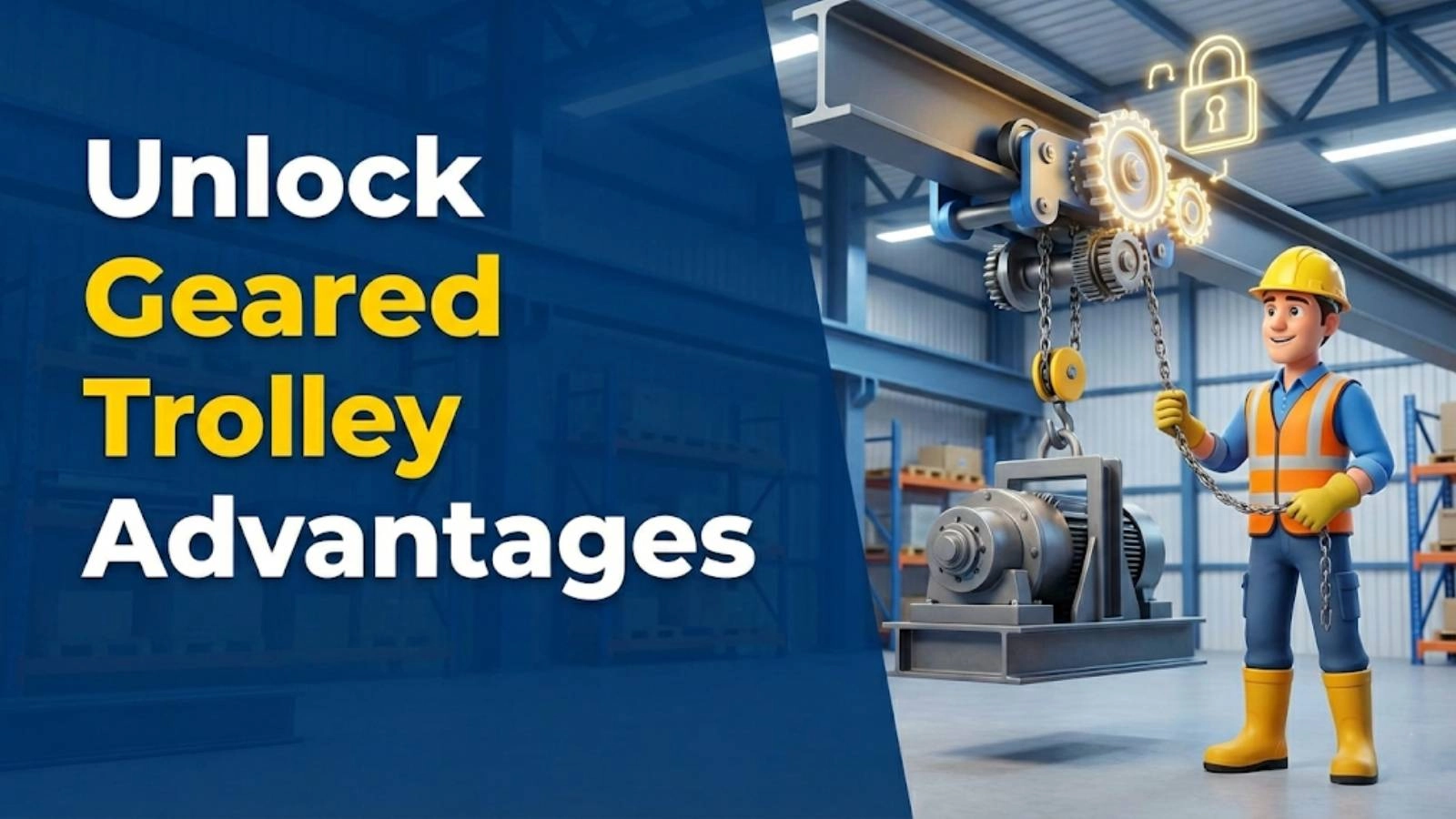
Introduction: Preventing Costly Geared Trolley Failures
Geared trolleys are essential components in many material handling systems, providing a reliable and efficient way to move heavy loads along a beam or track. These trolleys, utilizing gears to facilitate smooth and controlled movement, are integral to operations in warehouses, manufacturing plants, and construction sites. However, like any piece of machinery, geared trolleys require regular and diligent maintenance to ensure their continued safe and efficient operation. Neglecting geared trolley maintenance can lead to costly downtime, reduced productivity, and, most importantly, serious safety hazards.
The financial implications of inadequate maintenance can be substantial. A seemingly minor issue, if left unaddressed, can quickly escalate into a major repair or even a complete system failure, resulting in significant expenses and operational disruptions. Moreover, the safety risks associated with poorly maintained trolleys are a serious concern. A malfunctioning trolley can cause loads to drop unexpectedly, leading to injuries, property damage, and potential legal liabilities. Proper industrial trolley maintenance is therefore not just a matter of cost savings but a critical aspect of workplace safety.
This article aims to guide you through the most common geared trolley maintenance mistakes and provide practical advice on how to avoid them. By understanding these pitfalls and implementing a proactive maintenance program, you can significantly extend the lifespan of your trolleys, minimize downtime, and create a safer working environment for your employees. We’ll cover everything from adhering to manufacturer’s recommendations to implementing a comprehensive trolley maintenance schedule.
Mistake #1: Ignoring the Manufacturer’s Recommendations
One of the most common and easily avoidable mistakes in geared trolley maintenance is ignoring the manufacturer’s recommendations. Each trolley model is designed with specific materials, tolerances, and operating parameters. Therefore, the manufacturer’s manual contains crucial information about proper maintenance schedules, lubrication types, inspection procedures, and replacement part specifications. Overlooking these guidelines can lead to premature wear, reduced performance, and even catastrophic failures.
Failing to consult the manufacturer’s manual is like ignoring the instructions for a complex piece of equipment. While some general maintenance practices apply across different trolley models, specific recommendations are tailored to the unique design and characteristics of each trolley. For example, the recommended lubrication type may vary depending on the gear material and operating temperature. Similarly, the inspection intervals may differ based on the expected load frequency and environmental conditions.
To avoid this mistake, always consult the manufacturer’s manual before performing any maintenance on your geared trolley. Our team in Dubai emphasizes this point during every training session we conduct. The manual should be readily accessible to all maintenance personnel and operators. If you don’t have a copy of the manual, contact the manufacturer or supplier to obtain one.
Proper documentation and record-keeping are essential for effective maintenance management. Maintain a logbook for each trolley, recording all inspections, maintenance activities, and repairs. This logbook should include the date of the activity, the name of the person performing the work, a description of the work performed, and any parts that were replaced. This detailed record-keeping helps you track the maintenance history of each trolley, identify potential problems early on, and ensure that maintenance is performed according to the manufacturer’s recommendations. Neglecting these records will be detrimental to your crane trolley maintenance program.
> “Ignoring manufacturer’s recommendations is like driving a car without knowing how to read the dashboard – you’re bound to run into trouble sooner or later.” – David Lee, Mechanical Engineer
Mistake #2: Infrequent or Inadequate Visual Inspections
Infrequent or inadequate visual inspections are another common mistake that can lead to serious problems with geared trolleys. Small problems, such as loose bolts, worn wheels, or minor corrosion, can quickly escalate into major issues if not detected and addressed promptly. Regular visual inspections are crucial for identifying these early warning signs and preventing costly downtime and safety hazards.
Think of visual inspections as a proactive health check for your trolleys. Just as a doctor checks your vital signs to detect potential health problems, a visual inspection helps you identify any abnormalities or signs of wear and tear on your trolley. The earlier you detect these problems, the easier and less expensive they are to fix.
To avoid this mistake, establish a regular inspection schedule for your geared trolleys. The frequency of inspections should be based on the trolley’s usage, operating environment, and the manufacturer’s recommendations. A daily inspection should include a quick visual check for any obvious damage or loose components. Weekly inspections should be more thorough, focusing on key areas such as the wheels, gears, chains, load-bearing components, and safety latches. Monthly inspections should involve a more detailed examination, including lubrication and testing of all safety features. A trolley safety inspection is vital for your staff.
Key areas to inspect include:
- Wheels: Check for wear, cracks, chips, and proper alignment.
- Gears: Inspect for wear, damage, and proper lubrication.
- Chains: Look for signs of stretching, corrosion, and damage to links.
- Load-bearing components: Examine for cracks, deformation, and corrosion.
- Safety latches: Verify that they are functioning properly and securely engaging.
Documenting inspection findings and taking prompt action are essential. Use a standardized inspection checklist to ensure that all critical areas are checked consistently. Record any findings in the trolley’s logbook and prioritize repairs based on the severity of the problem. Address minor issues immediately to prevent them from escalating into major repairs. If you identify a potentially dangerous condition, take the trolley out of service until the problem is resolved. Our safety protocols at Safe and Secure Trading Company mandate immediate removal from service for any trolley exhibiting signs of critical failure. The trolley maintenance checklist should contain all relevant steps.
Mistake #3: Neglecting Proper Lubrication
Neglecting proper lubrication is a surefire way to shorten the lifespan of your geared trolleys. Friction between moving parts causes wear and tear, leading to premature failure. Proper lubrication reduces friction, dissipates heat, and protects against corrosion, extending the life of your trolley and ensuring smooth, efficient operation.
Imagine the gears inside your trolley grinding against each other without any lubrication. The resulting friction would generate excessive heat, causing the metal to wear down rapidly. Eventually, the gears would seize up, rendering the trolley unusable. Lubrication acts as a protective barrier, preventing this from happening.
To avoid this mistake, use the correct type of lubricant recommended by the manufacturer. Different lubricants are designed for different applications and operating conditions. Using the wrong lubricant can be as bad as using no lubricant at all. The manufacturer’s manual will specify the appropriate lubricant type for your trolley, taking into account factors such as gear material, operating temperature, and load frequency. Trolley wheel lubrication is important for avoiding failures.
Lubrication frequency is another critical factor. How often you should lubricate your trolley depends on its usage and operating environment. In general, trolleys that are used frequently or operate in harsh environments will require more frequent lubrication. The manufacturer’s manual will provide specific recommendations for lubrication frequency. As a general guideline, lubricate the gears and wheels at least once a month. For trolleys used in heavy-duty applications, lubrication may be required weekly or even daily.
Proper lubrication techniques are also important. When applying lubricant, make sure to clean the surfaces to be lubricated first. Use a brush or cloth to remove any dirt, grime, or old lubricant. Apply the lubricant evenly and sparingly, avoiding over-lubrication. Over-lubrication can attract dirt and debris, which can actually increase wear and tear.
Choosing the right lubricant for the environment is crucial. If your trolley operates in a high-temperature environment, use a high-temperature grease that will not melt or break down at elevated temperatures. If your trolley is exposed to chemicals or corrosive substances, use a lubricant that is resistant to these substances. Always consult the manufacturer’s manual or a lubrication specialist to determine the best lubricant for your specific application. This is especially true for industrial trolley maintenance applications.
Mistake #4: Overloading the Trolley Beyond Its Capacity
Overloading a geared trolley beyond its rated capacity is a serious mistake that can have catastrophic consequences. Exceeding the load limit compromises safety, damages the trolley, and can lead to unexpected failures, potentially causing injuries or property damage. The weight capacity is clearly marked on the trolley for a reason – it’s the maximum load the trolley is designed to handle safely.
Think of a weightlifter trying to lift more weight than they can handle. The strain on their muscles and joints could lead to serious injuries. Similarly, overloading a trolley puts excessive stress on its components, leading to deformation, cracking, or even complete failure.
To avoid this mistake, always know the trolley’s weight capacity and adhere to it strictly. The weight capacity should be clearly marked on the trolley itself. If you are unsure of the weight capacity, consult the manufacturer’s manual or contact the supplier. Never assume that a trolley can handle a load that exceeds its rated capacity. Hoist trolley maintenance requires constant weight monitoring.
Proper load distribution is also essential. Ensure that the load is balanced evenly across the trolley’s load-bearing points. An unbalanced load can put excessive stress on one side of the trolley, increasing the risk of failure. Use slings or lifting devices to distribute the load evenly and avoid placing the entire weight on a single point.
The consequences of overloading can be severe. Examples of potential failures include:
- Wheel failure: Overloading can cause the wheels to crack, deform, or break, leading to the trolley derailing from the track.
- Gear damage: Excessive load can strip the gears, preventing the trolley from moving smoothly or at all.
- Frame deformation: Overloading can cause the trolley frame to bend or distort, compromising its structural integrity.
- Chain breakage: If the trolley uses a chain drive, overloading can cause the chain to stretch or break, resulting in a sudden and uncontrolled drop of the load.
Always err on the side of caution and never exceed the trolley’s rated capacity. If you need to lift a load that is close to the trolley’s weight capacity, consider using a trolley with a higher weight rating or using multiple trolleys to distribute the load.
Mistake #5: Improper Track Maintenance
Improper track maintenance can significantly impact the performance and lifespan of your geared trolleys. The track provides the pathway for the trolley to move, and any damage or misalignment can create excessive stress on the trolley, leading to premature wear and tear. Neglecting track maintenance is like driving a car on a bumpy, pothole-filled road – it’s going to take a toll on the vehicle.
Think of the track as the foundation for your trolley system. A solid, well-maintained foundation is essential for supporting the weight of the trolley and the load it carries. If the track is damaged or misaligned, it can cause the trolley to vibrate, bind, or even derail, creating a safety hazard.
To avoid this mistake, regularly inspect the track for damage, corrosion, and proper alignment. Look for signs of:
- Cracks or dents: These can weaken the track and cause it to fail under load.
- Corrosion: Rust can weaken the track and make it more susceptible to damage.
- Misalignment: Uneven track sections can cause the trolley to bind or derail.
- Loose bolts or fasteners: These can compromise the structural integrity of the track.
Track alignment procedures are critical for ensuring smooth and safe trolley operation. Misaligned tracks can cause the trolley to experience excessive friction and stress, leading to premature wear on the wheels and gears. Use a level and measuring tape to check the track for proper alignment. Adjust the track as needed to ensure that it is level and straight.
Correcting track issues promptly is essential. Repair or replace any damaged sections of the track immediately. Tighten any loose bolts or fasteners. If the track is misaligned, adjust it as needed to ensure that it is level and straight. Ignoring track issues can lead to more serious problems down the road, including trolley failures and safety hazards. Overhead crane maintenance requires a robust track maintenance program.
Mistake #6: Ignoring Unusual Noises or Vibrations
Ignoring unusual noises or vibrations emanating from your geared trolley is akin to ignoring warning lights on your car’s dashboard. These are often early warning signs of mechanical problems that, if left unaddressed, can lead to more serious and costly repairs. A well-maintained trolley operates smoothly and quietly. Any deviation from this norm should be investigated promptly.
Think of your ears and sense of touch as diagnostic tools for your trolley. They can provide valuable clues about the health of the trolley’s internal components. Unusual noises or vibrations often indicate that something is loose, worn, or misaligned.
To avoid this mistake, train operators to recognize unusual sounds or vibrations. Operators should be instructed to report any abnormalities immediately. Common noises and their potential causes include:
- Grinding: May indicate worn gears or lack of lubrication.
- Clicking: Could be a sign of loose bolts or a damaged chain link.
- Squealing: Often indicates dry bearings or worn wheels.
- Vibration: May be caused by misalignment, loose components, or damaged wheels.
When you hear or feel an unusual noise or vibration, take the trolley out of service for further inspection. Don’t continue to operate the trolley if you suspect a problem. Continuing to use a malfunctioning trolley can exacerbate the problem and lead to more serious damage.
During the inspection, carefully examine the trolley for any signs of damage or wear. Check the wheels, gears, chains, and load-bearing components. Look for loose bolts, cracks, or other abnormalities. If you are unable to identify the source of the noise or vibration, consult a qualified technician.
Mistake #7: Using Incorrect Replacement Parts
Using incorrect replacement parts in your geared trolley maintenance can have serious consequences, compromising safety and reducing the trolley’s lifespan. Non-OEM (Original Equipment Manufacturer) parts may not meet the required specifications and can lead to premature wear, reduced performance, and even catastrophic failures. This is especially true for critical components such as gears, wheels, and load-bearing parts.
Think of your trolley as a precision machine. Each component is designed to work in harmony with the others. Using incorrect replacement parts disrupts this balance and can create a cascade of problems.
To avoid this mistake, always use genuine replacement parts from the manufacturer or a reputable supplier. Genuine parts are designed and manufactured to meet the exact specifications of your trolley model. They are made from high-quality materials and undergo rigorous testing to ensure their reliability and performance.
Verifying part compatibility and specifications is crucial. Before installing any replacement part, double-check that it is the correct part for your trolley model. Compare the part number and specifications with those listed in the manufacturer’s manual. If you are unsure, consult the manufacturer or supplier for assistance.
The risks associated with using counterfeit or substandard parts are significant. Counterfeit parts may look similar to genuine parts, but they are often made from inferior materials and do not meet the required specifications. Using counterfeit parts can compromise safety and lead to premature failures. Substandard parts may also void the trolley’s warranty. Geared trolley repair should be done with the highest quality parts.
Mistake #8: Lack of Qualified Maintenance Personnel
A lack of qualified maintenance personnel is a significant oversight that can undermine even the most well-intentioned geared trolley maintenance program. Inexperienced personnel may miss critical maintenance steps or perform them incorrectly, leading to reduced performance, increased downtime, and potential safety hazards. Maintaining geared trolleys requires specialized knowledge and skills.
Imagine entrusting the maintenance of a complex piece of medical equipment to someone with no medical training. The results could be disastrous. Similarly, entrusting the maintenance of your geared trolleys to unqualified personnel can have serious consequences.
To avoid this mistake, ensure that maintenance is performed by trained and qualified technicians. Technicians should have a thorough understanding of geared trolley mechanics, safety procedures, and maintenance best practices. They should also be familiar with the specific trolley models that they are maintaining.
Certifications and training programs are essential for ensuring that maintenance personnel have the necessary skills and knowledge. Look for technicians who have completed recognized training programs in crane and hoist maintenance. Certifications from reputable organizations demonstrate a commitment to professional development and competence.
Outsourcing maintenance to a professional service provider is another option to consider. Professional service providers have the expertise, equipment, and resources to perform comprehensive maintenance services, including inspections, lubrication, repairs, and replacements. Outsourcing can also help you reduce your internal maintenance costs and free up your staff to focus on other tasks.
The benefits of a well-trained maintenance team are numerous. A qualified team can:
- Identify potential problems early on, preventing costly downtime.
- Perform maintenance tasks correctly, ensuring optimal trolley performance.
- Adhere to safety procedures, reducing the risk of accidents.
- Extend the lifespan of your trolleys, saving you money in the long run.
Mistake #9: Failing to Document Maintenance Activities
Failing to document maintenance activities is a critical oversight that can hinder your ability to track maintenance history, identify potential problems, and optimize your geared trolley maintenance program. Lack of records makes it difficult to assess the effectiveness of your maintenance efforts and can lead to reactive, rather than proactive, maintenance practices. Imagine trying to manage your finances without keeping track of your income and expenses. You would have no idea where your money is going and would be unable to make informed decisions about your spending. Similarly, failing to document maintenance activities leaves you in the dark about the condition of your trolleys and makes it difficult to plan for future maintenance needs.
To avoid this mistake, maintain detailed records of all inspections, maintenance, and repairs. These records should include:
- The date of the activity
- The name of the person performing the work
- A description of the work performed
- Any parts that were replaced
- Any findings or observations
Using a computerized maintenance management system (CMMS) can streamline your record-keeping process. A CMMS allows you to track maintenance activities, schedule preventative maintenance tasks, manage inventory, and generate reports. A CMMS can also help you comply with regulatory requirements and improve your overall maintenance efficiency.
The benefits of a well-documented maintenance program are significant. With accurate and complete records, you can:
- Track the maintenance history of each trolley, identifying trends and potential problems.
- Schedule preventative maintenance tasks based on actual usage and condition, rather than arbitrary time intervals.
- Manage inventory more effectively, ensuring that you have the right parts on hand when you need them.
- Generate reports to assess the effectiveness of your maintenance program and identify areas for improvement.
- Comply with regulatory requirements and demonstrate your commitment to safety.
Geared Trolley Maintenance Checklist: A Quick Reference Guide
Here’s a quick reference geared trolley maintenance checklist to help you keep your trolleys in top condition.
| Item |
Frequency |
Action |
| Wheels |
Daily |
Visual inspection for wear, cracks, and proper alignment. |
| Wheels |
Monthly |
Lubricate wheels with manufacturer-recommended lubricant. |
| Gears |
Daily |
Visual inspection for wear and damage. |
| Gears |
Monthly |
Lubricate gears with manufacturer-recommended lubricant. |
| Chains (if applicable) |
Daily |
Visual inspection for stretching, corrosion, and damage. |
| Chains (if applicable) |
Monthly |
Lubricate chain with manufacturer-recommended lubricant. |
| Load-bearing components |
Weekly |
Visual inspection for cracks, deformation, and corrosion. |
| Safety latches |
Weekly |
Verify proper function and secure engagement. |
| Track |
Monthly |
Inspect for damage, corrosion, and proper alignment. |
| All components |
Annually |
Comprehensive inspection and overhaul by qualified technician. |
Conclusion: Ensuring Safe and Efficient Operations
Proactive geared trolley maintenance is paramount for ensuring safe and efficient material handling operations. By avoiding the common mistakes outlined in this article, you can significantly extend the lifespan of your trolleys, minimize downtime, and create a safer working environment for your employees. Remember to prioritize manufacturer’s recommendations, conduct regular visual inspections, maintain proper lubrication, avoid overloading, and address track issues promptly. Documenting all maintenance activities will provide valuable insights and help you optimize your maintenance program. We are committed to helping you achieve optimal performance and safety in your material handling operations.
By following these guidelines, you’re not just maintaining equipment; you’re investing in the safety and productivity of your entire operation. Ignoring geared trolley maintenance is a risk no business can afford. We’re here to help you keep your trolleys rolling smoothly and safely.
FAQ Section
Q: How often should I lubricate my geared trolley?
A: The lubrication frequency depends on the trolley’s usage and operating environment. As a general guideline, lubricate the gears and wheels at least once a month. For trolleys used in heavy-duty applications or harsh environments, lubrication may be required weekly or even daily. Always consult the manufacturer’s manual for specific recommendations.
Q: What type of lubricant should I use?
A: Use the type of lubricant recommended by the manufacturer. Different lubricants are designed for different applications and operating conditions. The manufacturer’s manual will specify the appropriate lubricant type for your trolley, taking into account factors such as gear material, operating temperature, and load frequency.
Q: How do I know if my trolley is overloaded?
A: The trolley’s weight capacity is clearly marked on the trolley itself. Never exceed this weight limit. Ensure that the load is balanced evenly across the trolley’s load-bearing points. If you are unsure of the weight of the load, use a calibrated scale to weigh it before lifting.
Q: What should I do if I hear an unusual noise or vibration coming from my trolley?
A: Take the trolley out of service immediately and inspect it for any signs of damage or wear. Check the wheels, gears, chains, and load-bearing components. Look for loose bolts, cracks, or other abnormalities. If you are unable to identify the source of the noise or vibration, consult a qualified technician.
Q: Where can I find genuine replacement parts for my geared trolley?
A: Always use genuine replacement parts from the manufacturer or a reputable supplier. Genuine parts are designed and manufactured to meet the exact specifications of your trolley model. Contact the manufacturer or supplier to order replacement parts.
Q: Why is documentation so important?
A: Documentation allows you to track the maintenance history of your trolley, identify trends, and plan for future maintenance. It helps you comply with safety regulations and can be vital in case of accidents or warranty claims.
Q: Can I perform geared trolley maintenance myself?
A: Simple maintenance tasks like lubrication and visual inspections can be performed by trained personnel. However, more complex repairs and overhauls should be performed by qualified technicians with specialized knowledge and equipment. It’s best to err on the side of caution and involve professionals for anything beyond basic maintenance.