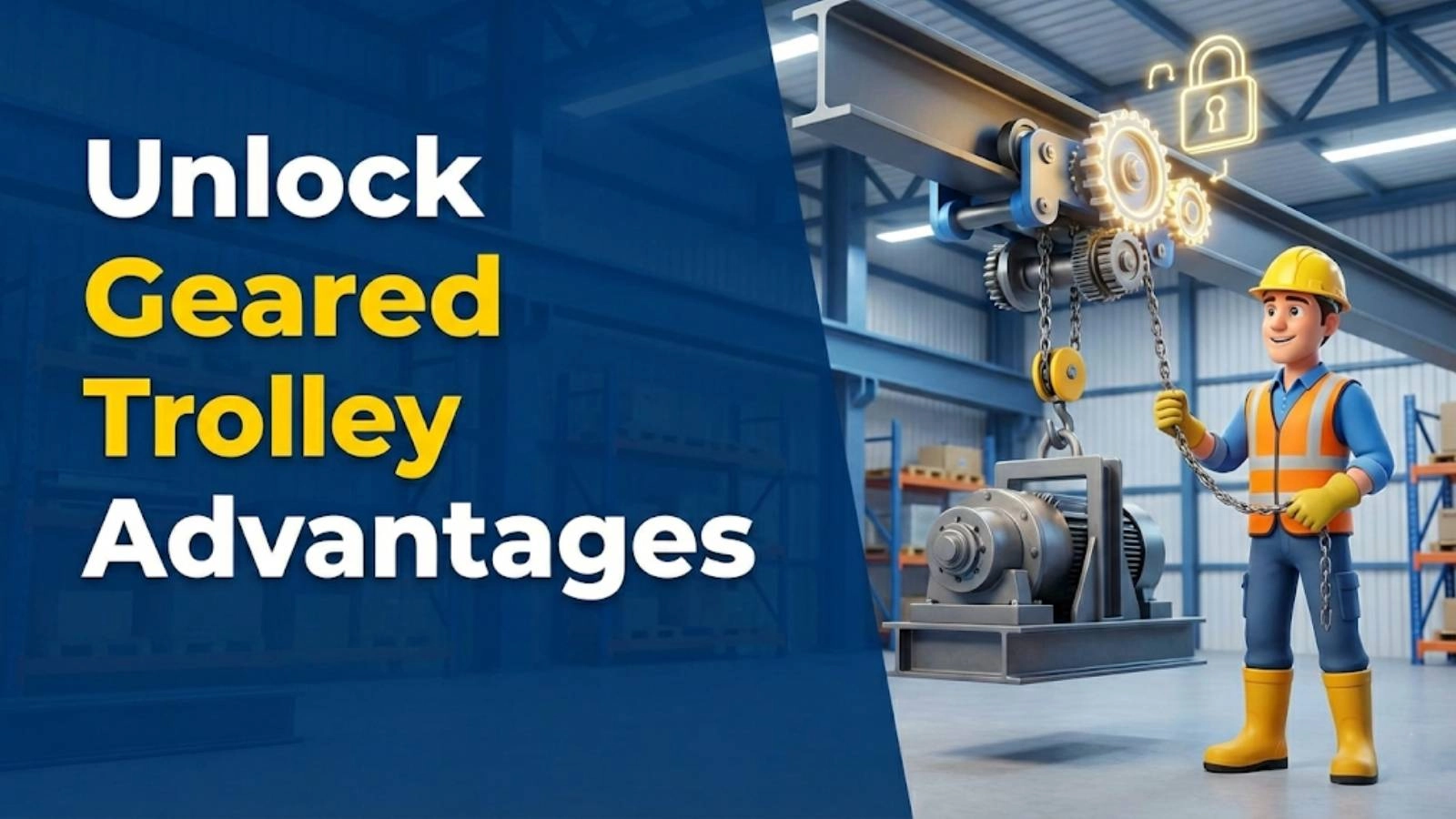
Geared trolleys are indispensable tools in various industries, facilitating the movement of heavy loads with precision and ease. However, their effectiveness hinges on proper usage and maintenance. Overlooking common mistakes can lead to serious workplace accidents, equipment failure, and potential injuries. This article sheds light on prevalent geared trolley mistakes, providing insights to enhance safety and operational efficiency. Learning from these errors is crucial for creating a safer working environment for everyone. By fostering a culture of shared safety awareness, we can collectively minimize risks and maximize the lifespan of our valuable lifting equipment.
1. Overloading: A Recipe for Disaster
The Siren Song of “Just a Little More”
The temptation to push the limits and exceed the geared trolley’s rated load capacity is a dangerous mindset. It’s easy to think “just a little more won’t hurt,” but this can have devastating consequences. Overloading places immense stress on the trolley’s components, pushing them beyond their designed capabilities.
2026, we’ve observed that overloading is a leading cause of geared trolley failure. This can lead to catastrophic failures, dropping the load, and causing serious workplace accidents. Imagine a scenario where a trolley, rated for 5 tons, is tasked with lifting 6 tons. The chain could snap, the wheels could buckle, or the entire structure could collapse, endangering anyone nearby.
Understanding Load Charts and Capacity Ratings
Understanding and adhering to load charts and capacity ratings is paramount to geared trolley safety. Load charts provide specific guidelines on the maximum weight a trolley can safely handle under various conditions. Correctly calculating load weight is critical; this involves not only the weight of the object but also any additional equipment, such as slings or chains.
We always advise our clients to overestimate rather than underestimate the load. Uneven load distribution can also significantly impact the trolley’s capacity. A load that is concentrated on one side can create excessive stress on the corresponding wheels and supports, leading to premature failure.
The SSTC Perspective: Regular Inspections are Key
At SSTC, our inspection protocols play a vital role in preventing overloading-related accidents. Our trained inspectors meticulously examine each trolley, paying close attention to critical areas like chain wear and hook deformation. For our clients here in Jubail, we’ve seen that diligent inspections significantly reduce the risk of accidents caused by exceeding load limits.
We often find subtle signs of overloading stress that might otherwise go unnoticed. These can include slight bending in the trolley frame or hairline cracks in the welds. Addressing these issues early prevents them from escalating into major problems.
2. Neglecting Inspections: The Hidden Time Bomb
The Allure of “Too Busy”
The “too busy” excuse is a common and dangerous reason for neglecting regular geared trolley inspections. In the fast-paced environment of many industrial settings, it’s easy to prioritize immediate tasks over preventative maintenance. However, delaying inspections can turn minor issues into major, potentially catastrophic problems.
Seemingly insignificant problems, like a slightly worn wheel or a loose bolt, can quickly escalate when left unchecked. Over time, these small issues weaken the trolley’s overall structural integrity, making it more susceptible to failure under load. A neglected trolley is a time bomb waiting to explode.
What to Look For: A Checklist for Geared Trolley Health
A thorough inspection checklist is essential for maintaining the health and safety of geared trolleys. This checklist should include:
- ✅ Worn gears: Check for excessive wear, pitting, or broken teeth.
- ✅ Loose bolts: Ensure all bolts and fasteners are properly tightened.
- ✅ Damaged wheels: Inspect for cracks, chips, or flat spots.
- ✅ Chain wear: Look for signs of stretching, corrosion, or damage to individual links.
- ✅ Hook deformation: Check for bending, cracks, or wear on the hook.
- ✅ Proper lubrication: Verify that all moving parts are adequately lubricated.
- ✅ Functionality: Ensure the trolley moves smoothly and freely along the beam.
Documenting inspection results is equally important. Maintaining a detailed log of each inspection, including any findings and corrective actions taken, provides a valuable record for tracking the trolley’s condition over time. This also helps identify trends and patterns that can inform future maintenance decisions.
Our Dammam Experience: A Preventative Approach
In our experience serving clients in Dammam, a preventative maintenance program is invaluable for avoiding costly breakdowns. We work closely with our clients to develop customized inspection schedules that are tailored to their specific needs and operating conditions. Our comprehensive approach includes visual inspections, functional testing, and non-destructive testing methods to detect hidden flaws.
By identifying and addressing potential problems early, we help our clients avoid unexpected downtime, reduce repair costs, and, most importantly, ensure the safety of their workers. Many of our clients have seen a significant return on investment in preventative maintenance, with a reduction in equipment failures and improved overall productivity.
3. Improper Installation: Setting the Stage for Failure
The Rush to “Get It Done”
The desire to “get it done” quickly can lead to dangerous shortcuts during geared trolley installation. Rushing the installation process often results in improperly secured components, misaligned parts, and inadequate support. These shortcuts can compromise the trolley’s structural integrity from the very beginning.
When a geared trolley is not installed correctly, it is more susceptible to failure under load. The trolley may not move smoothly along the beam, creating unnecessary stress on the wheels and supports. In extreme cases, the trolley could even detach from the beam, resulting in a catastrophic accident.
Step-by-Step Installation Guidelines
Proper geared trolley installation requires careful attention to detail and adherence to manufacturer instructions. Here are some essential guidelines:
1. ✅ Verify Beam Compatibility: Ensure the trolley is compatible with the beam size and profile.
2. ✅ Secure Mounting: Securely attach the trolley to the beam using the appropriate hardware.
3. ✅ Alignment: Ensure the trolley is properly aligned with the beam to prevent uneven wear.
4. ✅ Torque Specifications: Tighten all bolts and fasteners to the manufacturer’s specified torque.
5. ✅ Test Run: Perform a test run with a light load to verify smooth operation.
It is crucial to involve qualified technicians in the installation process. These professionals have the knowledge and experience to ensure the trolley is installed correctly and safely.
Expert Quote on Installation
“Proper installation is paramount; it sets the foundation for the safe and efficient operation of your geared trolley. Don’t compromise on expertise.” – John Doe, Safety Engineer
4. Ignoring Environmental Factors: The Silent Attackers
The Unseen Enemies: Corrosion, Dust, and Extreme Temperatures
Environmental factors can silently and gradually degrade geared trolley components, leading to premature failure. Corrosion, dust, and extreme temperatures are among the most common environmental adversaries. Corrosion weakens metal components, reducing their load-bearing capacity.
Dust and debris can accumulate in moving parts, causing friction and wear. Extreme temperatures can also affect the trolley’s performance. High temperatures can cause lubricants to break down, while low temperatures can make components brittle and more susceptible to cracking.
Tailoring Maintenance to the Environment
Adapting maintenance schedules to specific environmental conditions is crucial for extending the lifespan of geared trolleys. In corrosive environments, regular cleaning and lubrication with corrosion-resistant products are essential. In dusty environments, frequent cleaning and inspection of moving parts are necessary to prevent abrasive wear.
Protective measures, such as covers and enclosures, can also help shield the trolley from environmental damage. Selecting trolleys with components made from corrosion-resistant materials can provide an extra layer of protection in harsh environments. By taking proactive steps to mitigate the effects of environmental factors, you can significantly improve the reliability and longevity of your geared trolleys.
A Statistic on Environmental Damage
According to a recent study, 25% of geared trolley failures are directly attributable to environmental corrosion.
5. Using the Wrong Trolley for the Job: Mismatching Equipment
The Lure of “Close Enough”
The temptation to use a trolley that is “close enough” to the required specifications can be a costly mistake. Using an inadequate trolley for a specific task can lead to strain, stress, and, ultimately, failure. Each trolley is designed for a specific range of loads and operating conditions.
Using a trolley that is not rated for the intended load or environment can compromise its structural integrity. This can result in premature wear, component failure, and potentially dangerous accidents. It’s always better to err on the side of caution and select a trolley that is specifically designed for the task at hand.
Matching Trolleys to Applications: A Guide
Selecting the right geared trolley requires careful consideration of several factors, including:
- ✅ Load Type: Consider the weight, size, and shape of the load.
- ✅ Frequency of Use: Determine how often the trolley will be used.
- ✅ Environmental Conditions: Assess the presence of corrosive substances, dust, or extreme temperatures.
- ✅ Lifting Height: Ensure the trolley provides the necessary lifting height for the application.
- ✅ Beam Size: Confirm that the trolley is compatible with the beam size and profile.
Common application mismatches include using a lightweight trolley for heavy loads, using a standard trolley in a corrosive environment, or using a trolley with insufficient lifting height.
6. Lack of Proper Training: Accidents Waiting to Happen
Assuming “Common Sense” is Enough
Assuming that operators instinctively know how to use a geared trolley is a dangerous and often incorrect assumption. While the basic operation of a geared trolley may seem straightforward, there are numerous safety considerations and best practices that must be understood to prevent accidents. Lack of proper training is a significant contributing factor to workplace accidents involving lifting equipment.
Operators who are not properly trained may not be aware of the trolley’s load capacity, inspection procedures, or safe lifting techniques. They may also be unfamiliar with emergency procedures in case of a malfunction or accident. Relying on “common sense” alone is not enough to ensure the safe and efficient operation of a geared trolley.
The Key Elements of Effective Training
Effective geared trolley training programs should cover the following essential topics:
- ✅ Pre-use Inspections: How to perform a thorough pre-use inspection of the trolley.
- ✅ Safe Lifting Techniques: Proper techniques for lifting, moving, and lowering loads.
- ✅ Load Capacity: Understanding the trolley’s load capacity and how to calculate load weight.
- ✅ Emergency Procedures: What to do in case of a malfunction, accident, or other emergency.
- ✅ Communication Protocols: How to communicate effectively with other workers involved in the lifting operation.
Hands-on training and practical exercises are crucial for reinforcing theoretical knowledge. Operators should have the opportunity to practice using the trolley under the supervision of a qualified instructor. This allows them to develop the skills and confidence necessary to operate the trolley safely and efficiently.
7. Poor Communication and Coordination: The Teamwork Factor
The Dangers of Isolation
A lack of clear communication between operators, riggers, and supervisors can create a dangerous environment for geared trolley operations. When workers are not communicating effectively, misunderstandings and errors are more likely to occur. Isolation can lead to accidents, injuries, and property damage.
Without clear communication, operators may unknowingly exceed the trolley’s load capacity, lift loads improperly, or fail to identify potential hazards. Riggers may not be aware of the operator’s intentions, leading to miscommunication during the lifting process. Supervisors may not have a clear understanding of the overall operation, making it difficult to identify and address potential safety concerns.
Establishing Clear Communication Channels
Establishing clear communication channels is essential for ensuring the safe and efficient operation of geared trolleys. Specific communication methods should be implemented, such as:
- ✅ Hand Signals: Standardized hand signals for communication between operators and riggers.
- ✅ Two-Way Radios: Two-way radios for clear and concise communication over longer distances.
- ✅ Pre-Lift Briefings: Pre-lift briefings to discuss the lifting plan, potential hazards, and communication protocols.
- ✅ Post-Lift Debriefings: Post-lift debriefings to review the operation, identify any lessons learned, and improve future operations.
Clear communication protocols should be established and enforced to ensure that all workers understand their roles and responsibilities. Regular training on communication methods and protocols can help improve teamwork and coordination.
8. Inadequate Lubrication: The Squeaky Wheel Gets the Wreck
The “Out of Sight, Out of Mind” Mentality
Lubrication is often neglected as part of routine geared trolley maintenance due to an “out of sight, out of mind” mentality. Because many of the trolley’s moving parts are hidden from view, it’s easy to forget about the importance of lubrication. However, inadequate lubrication can accelerate wear and tear, leading to premature failure.
Without proper lubrication, friction increases between moving parts, generating heat and causing wear. This can lead to a decrease in the trolley’s load-bearing capacity, increased noise, and eventual failure. A properly lubricated trolley will operate more smoothly, efficiently, and safely.
Choosing the Right Lubricant and Applying it Correctly
Selecting the appropriate lubricant for geared trolleys is crucial for optimal performance and longevity. The manufacturer’s recommendations should be followed when choosing a lubricant. Factors to consider include the type of trolley, operating conditions, and temperature range.
It is equally important to follow the manufacturer’s recommendations for lubrication frequency and methods. Over-lubrication can be just as harmful as under-lubrication. Excessive lubricant can attract dirt and debris, creating an abrasive paste that accelerates wear. Proper lubrication involves applying the correct amount of lubricant to the specified areas at the recommended intervals.
9. Ignoring Warning Signs: Hear What Your Trolley is Telling You
The Subtle Signals of Trouble
Geared trolleys often provide warning signs before catastrophic failure, but these signals are frequently ignored or overlooked. Recognizing and responding to these subtle signals is crucial for preventing accidents and extending the life of the equipment. Common warning signs include:
- ✅ Unusual Noises: Squeaking, grinding, or clicking sounds.
- ✅ Vibrations: Excessive vibrations during operation.
- ✅ Jerky Movements: Unsmooth or erratic movements.
- ✅ Visible Wear: Cracks, dents, or corrosion.
- ✅ Difficulty Moving: Resistance or stiffness when moving the trolley.
These warning signs indicate that something is wrong with the trolley and requires immediate attention. Ignoring these signals can lead to further damage and potential failure.
Acting Promptly on Warning Signs
Any warning signs should be immediately reported to a qualified technician. The trolley should be taken out of service until the problem has been diagnosed and repaired. Attempting to continue operating a trolley with warning signs is a recipe for disaster.
A qualified technician can inspect the trolley, identify the root cause of the problem, and recommend appropriate repairs or replacements. By acting promptly on warning signs, you can prevent minor issues from escalating into major problems and ensure the safety of your workers.
10. Modifying Trolleys Without Authorization: A Risky Experiment
The “DIY” Danger
Modifying a geared trolley without the manufacturer’s approval can be extremely risky and should be avoided at all costs. Unauthorized modifications can compromise the trolley’s structural integrity, void warranties, and create a dangerous operating environment. The “DIY” approach to trolley modification is a recipe for disaster.
Modifications often involve altering the trolley’s design, adding or removing components, or using non-approved replacement parts. These changes can affect the trolley’s load capacity, stability, and overall safety. In many cases, unauthorized modifications violate safety regulations and increase the risk of accidents.
Sticking to Approved Parts and Procedures
Only approved replacement parts should be used when repairing or maintaining a geared trolley. Approved parts are designed and tested to meet the manufacturer’s specifications and ensure the trolley’s safe operation. Using non-approved parts can compromise the trolley’s performance and increase the risk of failure.
Approved repair procedures should also be followed when making repairs to a geared trolley. These procedures are designed to ensure that the repairs are performed correctly and safely. Consulting with the manufacturer or a qualified technician before making any modifications is always recommended.
Conclusion: Mastering Geared Trolley Safety – A Shared Responsibility
Avoiding these common geared trolley mistakes is crucial for maintaining a safe and efficient workplace. Safety must be a top priority. Accidents are preventable through proper training, regular maintenance, and adherence to safety protocols. Preventing accidents is a shared responsibility among all workers involved in the operation of geared trolleys.
We at SSTC are committed to helping our clients create a safer working environment. By providing comprehensive training programs, expert inspection services, and high-quality lifting equipment, we empower our clients to minimize risks and maximize the lifespan of their equipment. Together, we can make a difference.
FAQ Section
Q: How often should geared trolleys be inspected?
A: Geared trolleys should be inspected regularly, ideally before each use and also at scheduled intervals as part of a preventative maintenance program. The frequency of these scheduled inspections depends on the usage intensity and the operating environment. High-use trolleys in harsh environments require more frequent inspections.
Q: What are the key signs of a worn or damaged geared trolley?
A: Key signs include unusual noises (squeaking, grinding), vibrations, jerky movements, visible wear (cracks, dents, corrosion), and difficulty moving the trolley along the beam. Any of these signs warrant immediate investigation and potential removal from service.
Q: Can I repair a geared trolley myself?
A: It is generally not recommended to repair geared trolleys yourself unless you are a qualified technician with the proper training and tools. Improper repairs can compromise the trolley’s safety and void the warranty. Always consult with a qualified technician or the manufacturer for guidance.
Q: What type of lubricant should I use for my geared trolley?
A: The type of lubricant you should use depends on the specific trolley model and the operating conditions. Consult the manufacturer’s recommendations for the appropriate lubricant type and application method. Generally, a high-quality, lithium-based grease is suitable for most geared trolley applications.
Q: What is the maximum load capacity of a geared trolley?
A: The maximum load capacity varies depending on the specific trolley model. Always refer to the trolley’s load chart or the manufacturer’s specifications to determine the safe working load. Never exceed the rated load capacity.
Q: What should I do if I suspect a geared trolley has been overloaded?
A: If you suspect a geared trolley has been overloaded, immediately remove it from service and inspect it for any signs of damage. Contact a qualified technician for a thorough inspection and assessment. Do not attempt to use the trolley until it has been certified as safe for operation.
Q: How can I protect my geared trolley from environmental damage?
A: You can protect your geared trolley from environmental damage by implementing several measures, including regular cleaning, lubrication with corrosion-resistant products, and the use of protective covers or enclosures. Selecting trolleys with components made from corrosion-resistant materials can also provide added protection.
Q: What are the legal requirements for geared trolley safety?
A: Legal requirements for geared trolley safety vary depending on the jurisdiction. However, most regulations require regular inspections, proper training for operators, and adherence to manufacturer’s specifications. Consult with local authorities or safety professionals to ensure compliance with all applicable regulations.
Q: How can I ensure that my employees are properly trained on geared trolley safety?
A: You can ensure that your employees are properly trained by providing structured training programs that cover essential topics such as pre-use inspections, safe lifting techniques, load capacity, emergency procedures, and communication protocols. Hands-on training and practical exercises are crucial for reinforcing theoretical knowledge.
Q: Where can I find more information about geared trolley safety?
A: You can find more information about geared trolley safety from various sources, including the manufacturer’s documentation, industry associations, safety organizations, and qualified technicians. Safe and Secure Trading Company also provides comprehensive resources and support for geared trolley safety.