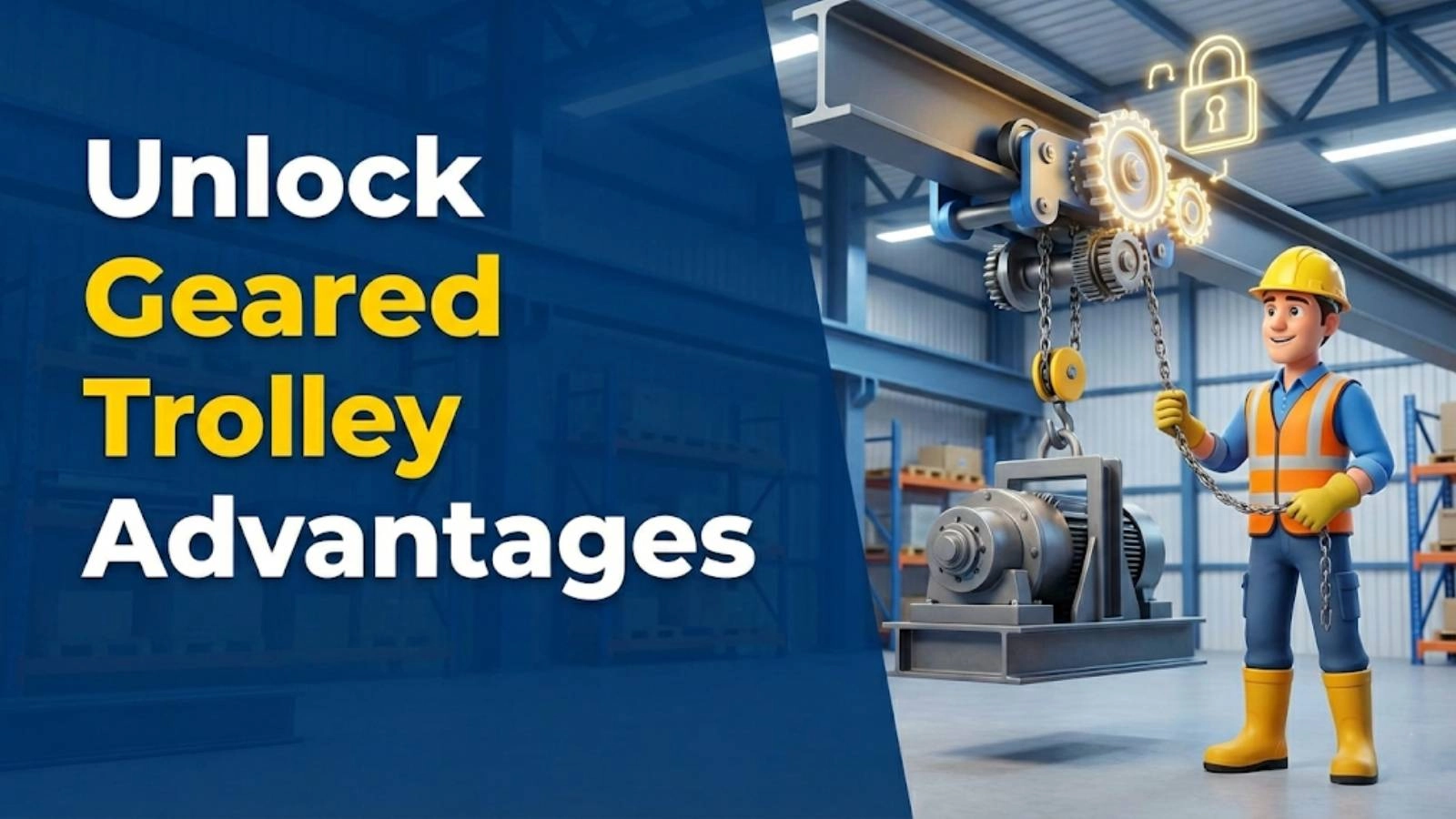
A geared trolley selection is a critical decision for any business involved in material handling. Choosing the wrong trolley can lead to safety hazards, operational inefficiencies, and costly repairs. This guide will help you navigate the selection process, avoid common pitfalls, and ensure you choose the right geared trolley for your needs.
Key Takeaways
- Understand common mistakes in geared trolley selection to improve safety and efficiency.
- Learn the importance of matching trolley capacity with load requirements.
- Discover essential maintenance practices that extend the life of your geared trolley.
- Explore the impact of beam size and compatibility on trolley performance.
- Identify the risks of neglecting regular trolley inspections and lubrication.
Understanding Geared Trolleys and Their Applications ⚙️
What is a Geared Trolley?
A geared trolley is a mechanical device designed to move heavy loads horizontally along a beam. Unlike a plain trolley, which relies on manual pushing or pulling, a geared trolley uses a hand chain and gears to provide precise and controlled movement. This allows for smoother and more efficient positioning of loads, especially when dealing with heavier items or when greater precision is required.
Common Uses in Material Handling
Geared trolleys are versatile tools used across various industries. In manufacturing, they help position components during assembly. Construction sites use them to lift and move materials to different locations. Warehouses rely on geared trolleys for loading and unloading goods, optimizing storage space, and facilitating order fulfillment. In our experience with clients in the automotive sector, geared trolleys play a critical role in engine assembly lines. We’ve consistently seen that proper geared trolley selection and maintenance can significantly improve workflow and reduce downtime in these settings.
Why Proper Selection Matters
Proper geared trolley selection is essential for several reasons. First and foremost, it ensures the safety of workers and prevents accidents caused by equipment failure or mishandling of loads. Secondly, it enhances operational efficiency by enabling smooth and precise movement of materials. Thirdly, it protects your investment by preventing damage to the trolley, the beam, and the materials being handled. Finally, selecting the right geared trolley helps you comply with safety regulations and industry standards. A common mistake we help businesses fix is underestimating the importance of these factors, which often leads to costly and dangerous consequences.
Mistake #1: Overlooking Load Capacity and Safety Limits ⚠️
The Danger of Exceeding Capacity
Exceeding the load capacity of a geared trolley is one of the most dangerous mistakes you can make. Overloading puts excessive stress on the trolley’s components, increasing the risk of failure. This can result in the load dropping unexpectedly, causing serious injuries to workers, damage to equipment, and potential legal liabilities. We once worked with a client in the steel industry who struggled with frequent trolley failures. By analyzing their operations, we discovered that they were consistently overloading their trolleys, leading to premature wear and tear and increased safety risks.
How to Calculate Load Requirements Accurately
To avoid overloading, it’s crucial to calculate your load requirements accurately. This involves determining the weight of the load itself, as well as any additional weight from rigging, attachments, or other equipment. Ensure you account for the heaviest load you will ever need to lift with the trolley. It’s always better to overestimate slightly to provide a safety margin. For many of our clients here in Dammam, Saudi Arabia, we’ve seen that using calibrated weighing equipment and maintaining accurate records of load weights are essential steps in this process.
Matching Trolley Capacity to Application
Once you’ve calculated your load requirements, select a trolley capacity that exceeds the maximum anticipated load. Industry best practice dictates a safety margin of at least 20%. This means that if your maximum load is 1000 kg, you should choose a trolley with a capacity of at least 1200 kg. This buffer provides an extra layer of safety and helps prevent overloading, even if the load weight is slightly underestimated. When our team in KSA tackles this issue, they often find that clients initially underestimate their load requirements, highlighting the importance of thorough assessment.
Mistake #2: Ignoring Beam Size and Compatibility 📏
Why Beam Size Matters
The beam size is a critical factor in geared trolley selection. The trolley must be compatible with the beam’s width and flange thickness to ensure safe and effective operation. If the trolley is too small, it may not fit securely on the beam, increasing the risk of slippage or detachment. If it’s too large, it may not roll smoothly, causing strain on the trolley and the beam.
How to Measure Your Beam Correctly
Accurate beam measurement is essential for ensuring compatibility. Use a reliable measuring tool, such as a caliper or tape measure, to determine the beam’s width, flange thickness, and web height. Measure at several points along the beam to account for any variations or irregularities. Record these measurements carefully and compare them to the trolley’s specifications to ensure a proper fit.
Adjusting for Different Beam Sizes
If your beam size doesn’t perfectly match the trolley’s specifications, you may need to make adjustments. Some trolleys are adjustable, allowing you to adapt them to different beam sizes within a limited range. Alternatively, you can use shims to fill small gaps between the trolley and the beam. However, it’s crucial to ensure that any adjustments are made correctly and do not compromise the trolley’s safety or performance. In our experience with clients, it’s often best to consult with a qualified engineer or technician to determine the best course of action.
Mistake #3: Neglecting Environmental Factors 🌦️
The Impact of Temperature and Humidity
Environmental factors can significantly affect the performance and lifespan of a geared trolley. Extreme temperatures can cause lubricants to thicken or thin, affecting the trolley’s movement. High humidity can lead to corrosion and rust, weakening the trolley’s components. In our experience, neglecting these factors can lead to premature wear and tear and increased maintenance costs.
Choosing the Right Materials for Harsh Environments
In harsh environments, it’s essential to choose trolleys made from materials that can withstand the conditions. Stainless steel or corrosion-resistant coatings are ideal for damp or corrosive environments. For high-temperature applications, select trolleys with heat-resistant components and lubricants. We’ve consistently seen that investing in the right materials upfront can save significant money in the long run by reducing maintenance and replacement costs.
Protecting Your Trolley from the Elements
In addition to choosing the right materials, consider protecting your trolley from direct exposure to the elements. Use covers or shelters to shield the trolley from rain, snow, and direct sunlight. Regular cleaning and maintenance can also help prevent corrosion and extend the trolley’s lifespan. A common mistake we help businesses fix is neglecting these simple preventative measures.
Mistake #4: Failing to Inspect the Trolley Regularly 🔍
The Importance of Routine Inspections
Regular inspections are critical for identifying potential problems before they lead to equipment failure or accidents. Routine checks can reveal wear, damage, loose components, or other issues that may compromise the trolley’s safety and performance. In our experience, implementing a regular inspection program is one of the most effective ways to prevent accidents and extend the life of your equipment.
Key Inspection Points: Wheels, Gears, and Chain
Focus your inspections on areas that are subject to high stress and wear. Check the wheels for cracks, chips, or excessive wear. Examine the gears for broken teeth or signs of damage. Inspect the chain for kinks, corrosion, or elongation. Also, check all bolts, nuts, and fasteners to ensure they are properly tightened. A good practice is to keep a log of your inspections and any maintenance performed.
Creating an Inspection Checklist
To ensure thorough inspections every time, develop a detailed inspection checklist. This checklist should include all key inspection points and provide space to record your findings. Use the checklist during each inspection and document any issues that need to be addressed. This will help you track the trolley’s condition over time and identify any recurring problems.
Mistake #5: Skimping on Lubrication and Maintenance 🛢️
Why Lubrication is Crucial
Proper lubrication is essential for reducing friction, preventing wear, and ensuring smooth operation of the industrial trolley. Lubrication reduces friction between moving parts, minimizing wear and tear. It also helps prevent corrosion and protects the trolley’s components from damage. In our experience, neglecting lubrication is a common cause of premature trolley failure.
Selecting the Right Lubricant
Use lubricants recommended by the trolley manufacturer. If specific recommendations are not available, use a high-quality, lithium-based grease or oil. Ensure the lubricant is compatible with the trolley’s components and operating conditions. Avoid using lubricants that are too thick or too thin, as this can affect the trolley’s performance.
Establishing a Lubrication Schedule
Follow a regular lubrication schedule based on usage and environmental conditions. Trolleys that are used frequently or operate in harsh environments may require more frequent lubrication. Consult the manufacturer’s recommendations for guidance. As a general rule, lubricate the trolley at least once a month, or more often if needed. We once worked with a client who struggled with frequent trolley breakdowns. By implementing a regular lubrication schedule, they significantly reduced their downtime and maintenance costs.
Mistake #6: Improper Installation and Setup 🛠️
The Importance of Following Manufacturer Instructions
Adhering to the manufacturer’s guidelines ensures correct installation and safe operation of the overhead crane trolley. Manufacturer instructions provide detailed information on how to properly install and set up the trolley. These instructions are based on the trolley’s design and intended use. Ignoring these guidelines can lead to improper installation, which can compromise the trolley’s safety and performance.
Common Installation Errors
Avoid overtightening bolts, neglecting safety latches, and improper chain alignment. Overtightening bolts can damage the trolley’s components, while neglecting safety latches can increase the risk of accidental detachment. Improper chain alignment can cause the chain to bind or slip, affecting the trolley’s movement. A common mistake we help businesses fix is overlooking these seemingly minor details during installation.
Using Qualified Personnel for Installation
Employ trained and experienced technicians for trolley installation. Qualified technicians have the knowledge and skills necessary to install the trolley correctly and ensure it is safe to operate. They can also identify any potential problems or issues during installation and address them before they cause problems. In our experience, investing in qualified personnel for installation is a worthwhile investment that can prevent costly mistakes and accidents.
Mistake #7: Ignoring Safety Protocols and Training 🚫
The Role of Safety Training
Proper training teaches operators how to use the manual trolley safely and identify potential hazards. Safety training is essential for ensuring that operators understand the risks associated with using a trolley and know how to operate it safely. Training should cover topics such as load capacity, proper lifting techniques, and emergency procedures.
Essential Safety Practices
Emphasize load stability, clear communication, and avoiding overloads. Ensure that loads are properly balanced and secured before lifting. Establish clear communication protocols between operators and other workers in the area. Strictly avoid overloading the trolley, as this can lead to equipment failure and accidents. We’ve consistently seen that companies with strong safety training programs have fewer accidents and lower insurance costs.
Implementing a Safety Program
Develop a comprehensive safety program that includes regular training, inspections, and documentation. A safety program should outline procedures for safe trolley operation, regular inspections, and maintenance. It should also include documentation of training, inspections, and any incidents or accidents. This program demonstrates a commitment to safety and helps ensure that all workers are aware of safety protocols and procedures.
Mistake #8: Choosing the Cheapest Option Instead of the Best Value 💰
The Pitfalls of Cutting Costs
Selecting a low-quality hoist trolley to save money can lead to frequent breakdowns and safety risks. Low-quality trolleys are often made from inferior materials and may not be designed to withstand the rigors of industrial use. This can lead to frequent breakdowns, increased maintenance costs, and potential safety risks. In our experience, cutting costs on equipment can often result in higher costs in the long run.
Evaluating Long-Term Value
Consider the trolley’s lifespan, maintenance costs, and potential downtime when making your decision. When evaluating different trolleys, consider their lifespan, maintenance requirements, and potential downtime. A trolley with a longer lifespan and lower maintenance costs may be a better value, even if it has a higher initial price. Also, consider the potential cost of downtime if the trolley breaks down or requires frequent repairs.
Investing in Quality and Reliability
Choose a reputable brand with a proven track record of durability and performance. When selecting a trolley, choose a reputable brand with a history of producing durable and reliable equipment. Read reviews and ask for recommendations from other users. Investing in quality and reliability can provide peace of mind and ensure that your trolley will perform safely and effectively for years to come.
> “Safety should always be the top priority when selecting and using material handling equipment. Never compromise on quality or safety to save money.” – John Smith, Lead Safety Inspector
Conclusion
Avoiding these common mistakes in geared trolley selection and maintenance is critical for ensuring the safety, efficiency, and longevity of your material handling operations. By understanding load capacities, beam compatibility, environmental factors, and the importance of regular inspections and lubrication, you can make informed decisions that protect your employees and your investment. We at SSTC are ready to help you navigate your geared trolley needs.
FAQ Section
Q: How often should I inspect my geared trolley?
A: Inspect your geared trolley before each use and conduct a thorough inspection at least every month. More frequent inspections may be necessary in harsh environments or with heavy usage.
Q: What type of lubricant should I use?
A: Use the lubricant recommended by the trolley manufacturer. If not specified, use a high-quality, lithium-based grease. Avoid using lubricants that are not compatible with the trolley’s components or operating conditions.
Q: How do I know if my beam is compatible with the trolley?
A: Check the trolley specifications for the required beam size and flange thickness. Measure your beam to ensure it meets these requirements. If you are unsure, consult with a qualified engineer or technician.
Q: What should I do if I notice damage to the trolley?
A: Immediately remove the trolley from service and tag it for repair. Do not use the trolley until it has been inspected and repaired by a qualified technician. Ignoring damage can lead to equipment failure and accidents.