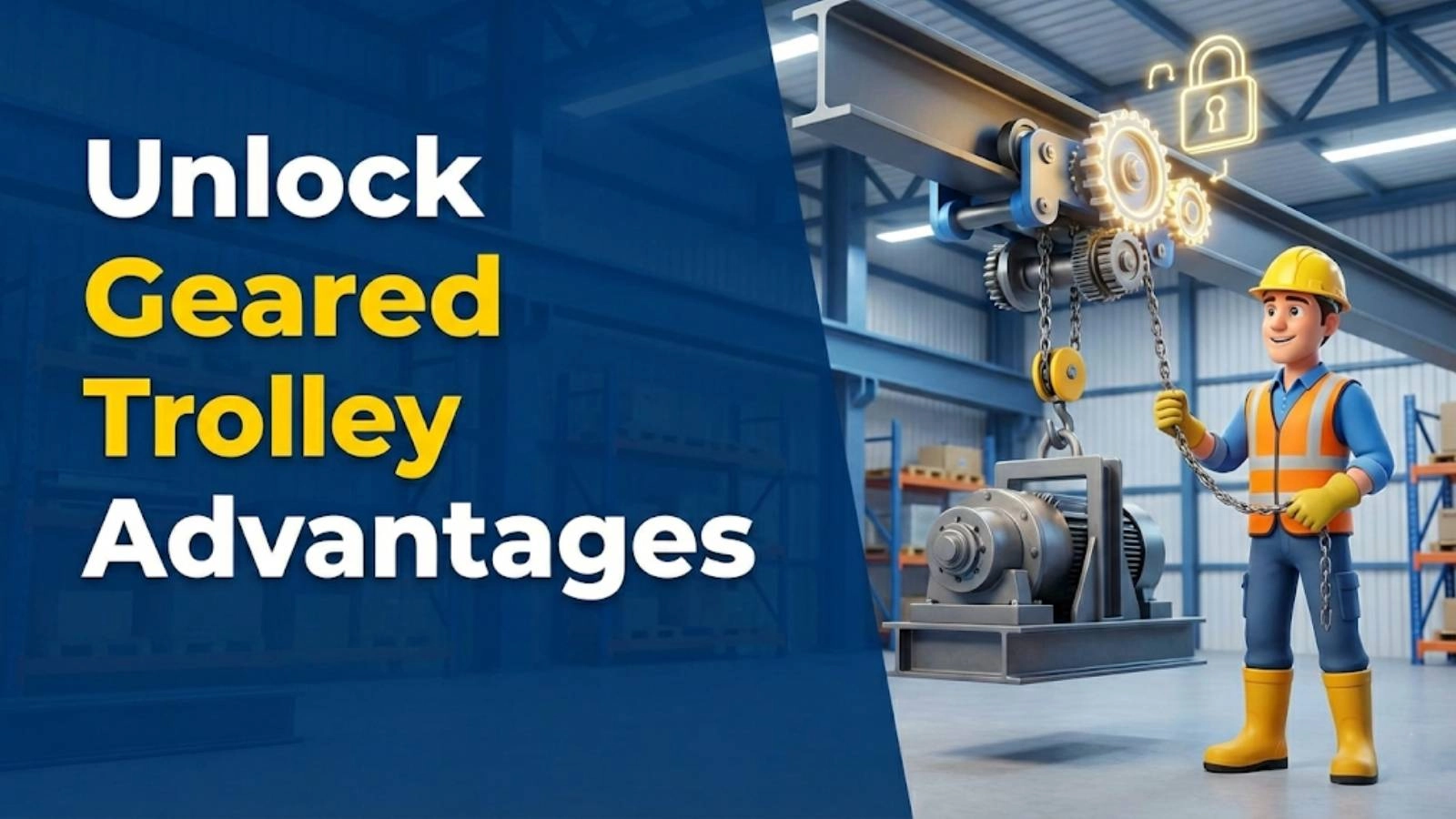
Geared trolleys are essential tools in various industries, providing a safe and efficient way to move heavy loads horizontally. These devices use a gear mechanism to offer controlled movement, making them ideal for applications where precision is crucial. This comprehensive guide explores the definition, benefits, selection, and maintenance of geared trolleys, ensuring you have all the information needed to make informed decisions.
Key Takeaways
- Geared trolleys provide precise load control, especially for heavy items.
- Proper selection based on capacity, beam size, and environment is crucial.
- Regular inspection and maintenance ensure safe and efficient operation.
- Understanding different trolley types helps match the right tool to the job.
- Geared trolleys enhance workplace safety when used correctly.
What are Geared Trolleys? 🤔
Definition and Basic Function
A geared trolley is a mechanical device designed to move heavy loads horizontally along a beam. Unlike plain or push trolleys, a geared trolley employs gears to provide controlled and precise movement. This control is especially vital when dealing with delicate or heavy items that require careful positioning. The geared system allows for smooth and gradual movement, minimizing the risk of sudden jerks or uncontrolled swings.
Geared trolleys are typically manually operated using a hand chain. Pulling the chain activates the gears, which then turn the wheels, causing the trolley to move along the beam. This manual operation provides the operator with a direct sense of control, allowing for precise adjustments and positioning. We find that in many industrial settings, this manual control is preferred because it offers a tactile connection to the load, enhancing safety and accuracy.
Geared Trolleys vs. Other Trolley Types
Understanding the differences between geared trolleys and other types, such as plain trolleys and electric trolleys, is essential for selecting the right tool for the job. Each type has its own strengths and weaknesses, making it suitable for different applications.
- Plain Trolleys (Push Trolleys): These are the simplest type of trolley, relying on manual effort to push the load along the beam. They are inexpensive and easy to use but offer little control over the speed or direction of movement. Plain trolleys are best suited for lighter loads and situations where precise positioning is not critical.
- Electric Trolleys: These trolleys are motorized, allowing for automated movement of heavy loads. They are faster and require less manual effort compared to geared or plain trolleys. Electric trolleys are ideal for high-volume operations where speed and efficiency are paramount. However, they are more expensive and require a power source, which can limit their portability.
- Why Geared Trolleys? Geared trolleys strike a balance between control and cost-effectiveness. They offer more precise movement than plain trolleys while being more affordable and versatile than electric trolleys. The geared mechanism allows for controlled movement even with heavy loads, making them suitable for tasks that require careful positioning. We’ve consistently seen that businesses that prioritize both control and budget often find geared trolleys to be the optimal choice.
Common Applications
Geared trolleys are used in a wide range of industries and applications, providing a reliable solution for moving heavy loads. Their versatility and controlled movement make them suitable for various tasks.
- Manufacturing Plants: In manufacturing, geared trolleys are used to move heavy components along assembly lines. They allow for precise positioning of parts, ensuring accurate assembly and reducing the risk of damage. For many of our clients here in Dammam, Saudi Arabia, we’ve seen that integrating geared trolleys into their manufacturing processes has significantly improved efficiency.
- Construction Sites: On construction sites, geared trolleys are essential for lifting and positioning materials such as steel beams, concrete blocks, and heavy equipment. The controlled movement provided by geared trolleys ensures that materials are placed accurately, reducing the risk of accidents and delays.
- Warehouses: Warehouses use geared trolleys to handle heavy inventory, allowing for efficient loading and unloading of goods. The controlled movement helps prevent product damage and ensures that items are stored safely. We once worked with a client who struggled with moving heavy pallets in their warehouse. By implementing geared trolleys, they saw a 20% improvement in their material handling efficiency.
Benefits of Using Geared Trolleys ✨
Enhanced Load Control
One of the primary benefits of using geared trolleys is the enhanced control they provide over the load. The gearing mechanism allows for precise and gradual movement, which is especially important when handling heavy or delicate items.
- Gearing allows for precise and gradual movement of heavy loads. This precision reduces the likelihood of errors and ensures that the load is positioned exactly where it needs to be.
- Reduces the risk of sudden stops or uncontrolled swings. Unlike plain trolleys, which can be prone to sudden movements, geared trolleys provide a smooth and controlled motion, minimizing the risk of accidents.
- Ideal for delicate positioning tasks. When working with fragile or sensitive materials, the controlled movement of a geared trolley ensures that the items are not damaged during transport.
Increased Safety
Safety is a paramount concern in any industrial setting, and geared trolleys contribute significantly to a safer work environment. The controlled movement they provide minimizes the risk of accidents and injuries.
- Controlled movement minimizes the risk of accidents. By providing a stable and controlled platform for moving heavy loads, geared trolleys reduce the likelihood of slips, falls, and other accidents.
- Reduces strain on operators compared to pushing heavy loads directly. Manually pushing heavy loads can lead to muscle strain and other injuries. Geared trolleys reduce the physical effort required, minimizing the risk of such injuries.
- Provides a more stable lifting platform. The stability offered by geared trolleys ensures that the load is secure and less likely to tip or fall during transport.
Improved Efficiency
Geared trolleys can significantly improve efficiency in various industrial settings by streamlining material handling processes and reducing the time required to move heavy loads.
- Allows one person to move heavy loads with relative ease. With a geared trolley, a single operator can move loads that would otherwise require multiple people, freeing up valuable manpower for other tasks.
- Speeds up material handling processes. The controlled movement and ease of operation allow for faster and more efficient material handling, reducing cycle times and increasing throughput.
- Optimizes workflow in various industrial settings. By facilitating the smooth and efficient movement of materials, geared trolleys help optimize workflow and improve overall productivity.
Cost-Effectiveness
Geared trolleys offer a cost-effective solution for material handling, providing a good return on investment due to their lower initial cost, reduced energy consumption, and minimal maintenance requirements.
- Lower initial investment compared to electric trolleys. Geared trolleys are significantly less expensive than electric trolleys, making them an attractive option for businesses with budget constraints.
- Reduced energy consumption. Unlike electric trolleys, geared trolleys do not require electricity to operate, resulting in lower energy bills and a reduced carbon footprint.
- Minimal maintenance requirements. Geared trolleys are relatively simple devices with few moving parts, resulting in minimal maintenance requirements and lower operating costs.
Choosing the Right Geared Trolley 🛒
Selecting the right geared trolley is crucial for ensuring safe and efficient operation. Several factors must be considered, including load capacity, beam size, wheel material, and environmental conditions.
Load Capacity
The load capacity is the most critical factor to consider when choosing a geared trolley. It is essential to select a trolley that can safely handle the maximum weight you will be lifting.
- Determine the maximum weight you will be lifting. Accurately assess the heaviest load you will need to move with the trolley.
- Select a trolley with a capacity that exceeds your heaviest load. Always choose a trolley with a load capacity that is greater than the maximum weight you will be lifting to provide a safety margin.
- Consider a safety factor of at least 25%. As a general rule, choose a trolley with a load capacity that is at least 25% higher than your heaviest load to account for any unexpected weight or stress.
Beam Size and Type
The beam size and type are also important considerations. The trolley must be compatible with the dimensions of your I-beam or H-beam to ensure proper fit and safe operation.
- Measure the width and flange thickness of your I-beam or H-beam. Accurately measure the dimensions of your beam to ensure compatibility with the trolley.
- Ensure the trolley is compatible with your beam dimensions. Check the trolley’s specifications to ensure that it is designed to work with your beam’s width and flange thickness.
- Adjustable trolleys offer greater versatility. Consider using an adjustable trolley, which can be adapted to fit a range of beam sizes, providing greater flexibility.
Wheel Material
The wheel material affects the trolley’s performance, durability, and noise level. Different wheel materials are suitable for different applications and environments.
- Steel Wheels: Durable and suitable for heavy loads on smooth beams. Steel wheels offer excellent load-bearing capacity and are ideal for use on smooth steel beams.
- Cast Iron Wheels: Cost-effective but may wear faster. Cast iron wheels are a more economical option, but they may wear more quickly than steel wheels, especially under heavy loads.
- Nylon Wheels: Quieter operation and less likely to damage the beam. Nylon wheels provide quieter operation and are less likely to damage the beam’s surface. They are suitable for applications where noise is a concern or where the beam is made of a softer material.
Environmental Factors
The environment in which the trolley will be used can also affect its performance and longevity. Consider factors such as indoor vs. outdoor use, temperature, and chemical exposure.
- Indoor vs. Outdoor Use: Consider corrosion resistance for outdoor applications. If the trolley will be used outdoors, choose a model with corrosion-resistant materials to protect it from the elements.
- Temperature: High or low temperatures can affect performance. Extreme temperatures can affect the trolley’s performance. Choose a trolley that is designed to operate within the temperature range of your environment.
- Chemical Exposure: Choose materials resistant to chemicals in your environment. If the trolley will be exposed to chemicals, select a model with materials that are resistant to those chemicals to prevent damage and ensure safe operation.
Essential Safety Tips for Geared Trolley Operation ⚠️
Operating a geared trolley safely requires adherence to best practices and regular inspections. By following these safety tips, you can minimize the risk of accidents and injuries.
Pre-Use Inspection
Before each use, it is essential to inspect the trolley for any signs of damage or wear. This helps identify potential problems before they can lead to accidents.
- Check the trolley for any signs of damage or wear. Look for cracks, dents, or other damage that could compromise the trolley’s structural integrity.
- Ensure the wheels are properly lubricated. Properly lubricated wheels ensure smooth and efficient operation.
- Verify that the trolley is securely attached to the beam. Ensure that the trolley is securely fastened to the beam before lifting any load.
Safe Lifting Practices
Safe lifting practices are crucial for preventing accidents and injuries. Always follow these guidelines when operating a geared trolley.
- Never exceed the rated load capacity of the trolley. Exceeding the load capacity can cause the trolley to fail, leading to serious accidents.
- Ensure the load is balanced and stable. An unbalanced load can cause the trolley to tip or swing, increasing the risk of accidents.
- Use proper lifting techniques to avoid strain. Use proper lifting techniques, such as keeping your back straight and lifting with your legs, to avoid muscle strain and other injuries.
Operating the Trolley
When operating the trolley, use smooth and controlled movements to prevent accidents and ensure precise positioning of the load.
- Use smooth and controlled movements. Avoid jerky or sudden movements that could cause the load to swing or become unstable.
- Avoid sudden starts or stops. Sudden starts or stops can cause the load to shift, increasing the risk of accidents.
- Keep the work area clear of obstructions. Ensure that the work area is free of obstacles that could interfere with the trolley’s operation.
Regular Maintenance
Regular maintenance is essential for keeping the trolley in good working condition and prolonging its lifespan.
- Lubricate moving parts regularly. Regularly lubricate the wheels, gears, and other moving parts to ensure smooth operation and prevent wear.
- Inspect wheels for wear and tear. Check the wheels for signs of wear and tear, such as cracks, chips, or flat spots. Replace worn wheels as needed.
- Check the gears for proper alignment. Ensure that the gears are properly aligned and free of debris. Adjust the alignment as needed to ensure smooth and efficient operation.
Step-by-Step Guide to Installing a Geared Trolley 🛠️
Proper installation is essential for ensuring the safe and efficient operation of a geared trolley. Follow these steps to install your trolley correctly.
Preparing the Beam
Before installing the trolley, it is important to prepare the beam by ensuring that it is clean, free of debris, and structurally sound.
- Ensure the beam is clean and free of debris. Remove any dirt, rust, or other debris from the beam’s surface to ensure a secure fit.
- Inspect the beam for any signs of damage. Check the beam for cracks, dents, or other damage that could compromise its structural integrity.
- Verify that the beam can support the combined weight of the trolley and load. Ensure that the beam is strong enough to support the weight of the trolley and the maximum load you will be lifting.
Attaching the Trolley
Attaching the trolley to the beam involves loosening the side plates, positioning the trolley, and tightening the plates securely.
- Loosen the side plates or adjustment bolts on the trolley. Loosen the side plates or adjustment bolts to allow the trolley to fit over the beam.
- Position the trolley on the beam, ensuring the wheels are properly aligned. Place the trolley on the beam, ensuring that the wheels are properly aligned and in contact with the beam’s surface.
- Tighten the side plates or adjustment bolts securely. Tighten the side plates or adjustment bolts securely to ensure that the trolley is firmly attached to the beam.
Testing the Installation
After installing the trolley, it is important to test the installation to ensure that it is safe and functioning properly.
- Slowly move the trolley along the beam to check for smooth operation. Move the trolley along the beam to check for any signs of binding or uneven movement.
- Gradually increase the load to test the trolley’s capacity. Gradually increase the load to test the trolley’s capacity and ensure that it can handle the weight safely.
- Make any necessary adjustments to ensure stability and safety. Make any necessary adjustments to the trolley or beam to ensure stability and safety.
Maintenance and Troubleshooting for Geared Trolleys ⚙️
Regular maintenance and timely troubleshooting are essential for keeping your geared trolley in good working condition and prolonging its lifespan.
Regular Maintenance Schedule
A regular maintenance schedule helps prevent problems and ensures that the trolley operates safely and efficiently.
- Daily: Visual inspection for damage or wear. Conduct a visual inspection of the trolley each day before use, looking for any signs of damage or wear.
- Weekly: Lubricate moving parts. Lubricate the wheels, gears, and other moving parts on a weekly basis to ensure smooth operation.
- Monthly: Check gears and wheels for alignment and wear. Check the gears and wheels for proper alignment and wear on a monthly basis.
- Annually: Professional inspection and servicing. Have the trolley professionally inspected and serviced on an annual basis to ensure that it is in good working condition.
Common Problems and Solutions
Knowing how to troubleshoot common problems can help you quickly resolve issues and minimize downtime.
- Trolley is difficult to move: Lubricate the wheels and check for obstructions. If the trolley is difficult to move, lubricate the wheels and check for any obstructions that may be interfering with its movement.
- Gears are slipping: Adjust the gear alignment or replace worn parts. If the gears are slipping, adjust the gear alignment or replace any worn parts.
- Wheels are worn: Replace the wheels with the correct type and size. If the wheels are worn, replace them with the correct type and size to ensure proper operation.
Extending the Lifespan of Your Trolley
Following these tips can help extend the lifespan of your trolley and ensure that it operates safely and efficiently for many years.
- Follow the manufacturer’s maintenance recommendations. Follow the manufacturer’s maintenance recommendations to ensure that the trolley is properly cared for.
- Protect the trolley from harsh environmental conditions. Protect the trolley from exposure to harsh environmental conditions, such as extreme temperatures, moisture, and chemicals.
- Use the trolley only for its intended purpose. Use the trolley only for its intended purpose and do not exceed its load capacity.
Real-World Examples: Geared Trolleys in Action 🏢
Geared trolleys have proven their value across various industries. These case studies illustrate their practical benefits.
Case Study 1: Manufacturing Plant
- A manufacturing plant used geared trolleys to move heavy machine parts. The plant implemented geared trolleys to move heavy machine parts along its assembly line.
- Reduced labor costs and improved efficiency by 30%. By using geared trolleys, the plant was able to reduce labor costs and improve efficiency by 30%.
- Improved worker safety by minimizing manual lifting. The use of geared trolleys also improved worker safety by minimizing the need for manual lifting.
Case Study 2: Construction Site
- A construction site used geared trolleys to position steel beams. Geared trolleys were used on a construction site to position steel beams.
- Increased precision and reduced material waste. The trolleys allowed for increased precision, which reduced material waste and improved the accuracy of the construction process.
- Completed the project ahead of schedule. The project was completed ahead of schedule thanks to the efficiency gains provided by the geared trolleys.
Case Study 3: Warehouse
- A warehouse used geared trolleys to handle heavy inventory. A warehouse implemented geared trolleys to handle heavy inventory items.
- Optimized storage space and improved inventory management. The trolleys allowed for better optimization of storage space and improved inventory management.
- Reduced the risk of product damage. By providing controlled movement, the geared trolleys reduced the risk of product damage during handling.
“The controlled movement provided by geared trolleys significantly improves safety and efficiency in material handling. Proper selection and maintenance are key to maximizing their benefits.” – John Smith, SSTC Safety Consultant
Geared Trolleys: Future Trends and Innovations 🚀
The future of geared trolleys is likely to be shaped by technological advancements and a focus on ergonomics and safety.
Smart Trolleys
- Integration of sensors and data analytics for predictive maintenance. Smart trolleys will incorporate sensors and data analytics to predict maintenance needs, reducing downtime and improving reliability.
- Remote monitoring and control capabilities. Remote monitoring and control capabilities will allow operators to monitor and control the trolleys from a distance, improving safety and efficiency.
Ergonomic Design
- Improved handle designs for reduced operator fatigue. Ergonomic design improvements, such as improved handle designs, will reduce operator fatigue and improve comfort.
- Lighter materials for easier handling. The use of lighter materials will make the trolleys easier to handle and maneuver, further reducing operator strain.
Enhanced Safety Features
- Automatic overload protection. Automatic overload protection will prevent the trolley from lifting loads that exceed its capacity, improving safety.
- Anti-collision systems. Anti-collision systems will prevent the trolley from colliding with other objects, reducing the risk of accidents.
Conclusion
In conclusion, geared trolleys provide a controlled and safe method for moving heavy loads horizontally. Their advantages include enhanced control, increased safety, and improved efficiency, making them a valuable asset across various industries. Selecting the right geared trolley involves considering factors such as load capacity, beam size, and environmental conditions. Regular maintenance and adherence to safety protocols are essential for ensuring long-term reliability and preventing accidents. Here at Safe and Secure Trading Company, we’re committed to providing top-quality geared trolleys and expert guidance to help you optimize your material handling operations.
FAQ Section
What is the main advantage of a geared trolley over a plain trolley?
A geared trolley provides more controlled and precise movement of heavy loads, reducing the risk of accidents. The geared mechanism allows for gradual and accurate positioning, which is especially important when handling delicate or heavy items.
How do I determine the correct load capacity for my geared trolley?
Choose a trolley with a load capacity that exceeds your heaviest load, with a safety factor of at least 25%. This ensures that the trolley can safely handle the weight without being overloaded, providing an additional margin of safety.
What type of maintenance is required for a geared trolley?
Regular lubrication of moving parts, inspection of wheels for wear, and checking gears for proper alignment are essential. These maintenance tasks help keep the trolley in good working condition, preventing breakdowns and ensuring safe operation.
Can geared trolleys be used outdoors?
Yes, but select a trolley with corrosion-resistant materials to withstand outdoor conditions. Exposure to the elements can cause corrosion, which can compromise the trolley’s structural integrity and performance.
Where can I find reliable geared trolleys?
Consult with reputable suppliers like Safe and Secure Trading Company for high-quality geared trolleys and expert advice. We offer a wide range of geared trolleys to meet your specific needs and can provide guidance on selecting the right model for your application.