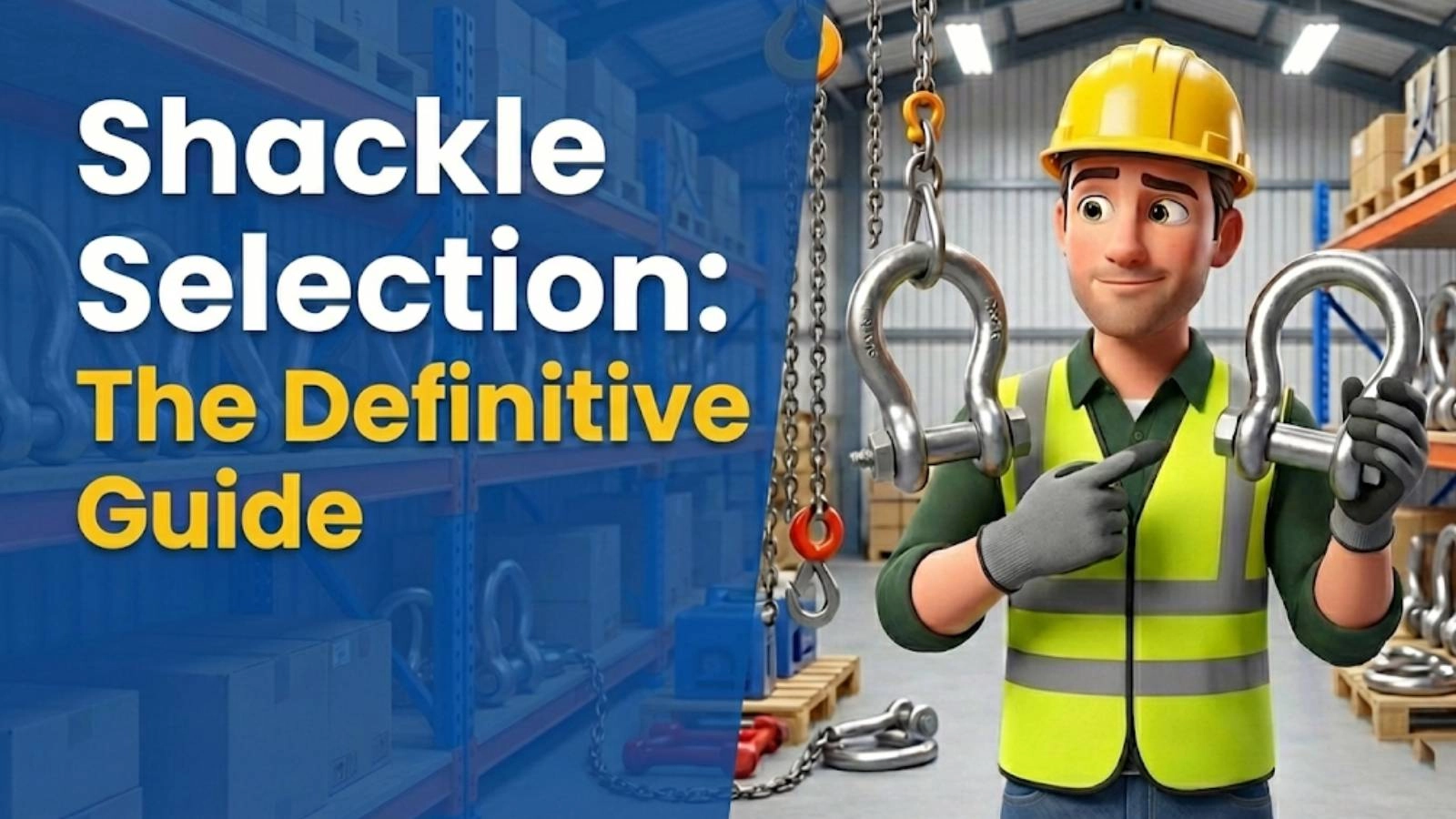
Lifting shackles are critical components in rigging operations. Understanding the dangers and common mistakes associated with their use is paramount to ensuring workplace safety and preventing costly accidents. At Safe and Secure Trading Company (SSTC), our experience in Dubai and across the globe has shown us that proper inspection and maintenance can significantly reduce risks. Ignoring these lifting shackle dangers can lead to serious consequences.
Mistake #1: Ignoring Load Capacity (WLL)
Understanding WLL and Safety Factors
The Working Load Limit (WLL) is the maximum weight a shackle can safely lift. Exceeding this limit is a recipe for disaster. We always advise our clients to adhere strictly to the WLL marked on the shackle. Understanding the WLL and the safety factors involved is crucial. The safety factor is a multiplier that indicates how much stronger the shackle is than its WLL. For example, a shackle with a WLL of 1 ton and a safety factor of 5:1 can theoretically withstand 5 tons before failing. This factor provides a buffer for unforeseen circumstances, but it should never be used as an excuse to exceed the WLL.
The Consequences of Overloading
Overloading can cause immediate shackle failure, leading to dropped loads, equipment damage, and serious injuries. In our experience, the forces involved in rigging operations are immense, and even a slight overload can have devastating results. A dropped load can crush equipment, damage structures, and, most tragically, cause severe harm or death to personnel. Avoiding these lifting shackle dangers starts with respecting the WLL.
How to Calculate and Respect WLL
Always consult the shackle’s documentation and consider all factors, including the angle of the load. When calculating the load, remember to account for the weight of the load itself, as well as any additional forces that may be applied due to angles, acceleration, or dynamic loading. For instance, if a load is being lifted at an angle, the force on the shackles increases significantly. The WLL must be sufficient to handle the combined forces. We often find that our clients benefit from a thorough risk assessment before any lifting operation. This ensures all potential factors are considered. Using worn shackles can lead to lifting shackle dangers, if the load capacity isn’t known.
Mistake #2: Using Incorrect Shackle Type
Understanding Different Shackle Types (Anchor vs. Chain)
Anchor shackles (bow shackles) are generally used for connecting to a wider range of rigging hardware, while chain shackles (D-shackles) are narrower and designed for in-line pulls. The shape of the shackle body dictates its primary use. Anchor shackles, with their wider bow, allow for connection to multiple items or for loads to be applied from various angles. Chain shackles are designed for straight, in-line pulls and are less forgiving of angular loading. It is crucial to use the right type to avoid lifting shackle dangers.
Applying the Wrong Shackle to the Task
Using the wrong type can create uneven stress distribution and increase the risk of failure. An anchor shackle used in an in-line pull may experience concentrated stress at the pin, while a chain shackle used for angular loading may bend or deform. These stresses can significantly reduce the shackle’s capacity and lead to premature failure. Proper selection is vital in preventing lifting shackle dangers.
Selecting the Right Shackle for Each Application
Choose shackles based on the specific lifting task, considering the load direction, angle, and type of rigging hardware involved. For example, if you need to connect a wire rope sling to a lifting eye on a piece of equipment, an anchor shackle would be the appropriate choice. However, if you are using a chain sling for a straight vertical lift, a chain shackle would be more suitable. Careful consideration of these factors is essential for ensuring safe lifting practices. Our team in Dubai often advises clients on the optimal rigging equipment for their specific needs. A lack of shackle safety can create lifting shackle dangers.
Mistake #3: Neglecting Regular Shackle Inspection
Why Regular Inspections are Crucial
Regular inspections identify wear, damage, and other potential problems before they lead to failure. Shackles are subjected to harsh conditions, including abrasion, corrosion, and impact. These conditions can gradually weaken the shackle over time, making it more susceptible to failure. Regular inspections allow you to detect these issues early and take corrective action before an accident occurs. Spotting lifting shackle dangers starts with regular inspections.
Key Inspection Points: Bends, Cracks, Corrosion
Look for any signs of deformation, cracks, rust, or corrosion on the shackle body, pin, and threads. Bends or deformation indicate that the shackle has been overloaded or subjected to excessive force. Cracks are a serious concern, as they can propagate rapidly and lead to sudden failure. Rust and corrosion weaken the metal and reduce its load-bearing capacity. Pay close attention to these key inspection points during every inspection. Failing to inspect worn shackles can lead to lifting shackle dangers.
Implementing a Shackle Inspection Schedule
Establish a routine inspection schedule and keep detailed records of all inspections. The frequency of inspections should depend on the severity of the operating environment and the frequency of use. Shackles used in harsh environments or for frequent lifting operations should be inspected more often. Detailed records of inspections, including the date, inspector’s name, and any findings, are essential for tracking the condition of the shackles over time. A documented shackle inspection program is a cornerstone of rigging safety and reduces lifting shackle dangers.
Mistake #4: Improper Shackle Pin Installation
Ensuring Full Pin Engagement
The shackle pin must be fully threaded or seated to ensure proper load distribution. When the pin is not fully engaged, the load is concentrated on a smaller area of the shackle, significantly reducing its capacity. A fully engaged pin distributes the load evenly across the entire shackle body, maximizing its strength and stability. Failing to ensure full pin engagement leads to serious lifting shackle dangers.
The Risks of Partially Engaged Pins
A partially engaged pin significantly reduces the shackle’s load capacity and increases the risk of failure. The pin can bend, shear, or even pop out of the shackle under load, leading to a dropped load and potential injuries. It’s critical to verify that the pin is fully seated and secured before any lifting operation begins. Using damaged shackles or failing to inspect can add to lifting shackle dangers.
Proper Pin Tightening and Securing Methods
Use the correct tools and techniques to tighten the pin to the manufacturer’s specifications and secure it properly. Some shackles use a threaded pin with a locking nut, while others use a bolt with a cotter pin. Regardless of the type, it is essential to follow the manufacturer’s instructions for proper tightening and securing. This ensures that the pin remains in place during the lifting operation and prevents accidental disengagement. Implementing safe lifting practices and understanding shackle safety protocols are essential to preventing lifting shackle dangers.
Mistake #5: Mismatching Shackle and Load Ratings
Matching Shackle Capacity to Load Requirements
Always ensure that the shackle’s WLL meets or exceeds the weight of the load being lifted. This seems obvious, but it’s a mistake we see surprisingly often. It is not enough to simply estimate the weight of the load; you must have an accurate measurement. If the load is heavier than the shackle’s WLL, you must use a larger shackle or a different lifting method. Matching load capacity is paramount to preventing lifting shackle dangers.
The Danger of Using Underrated Shackles
Using shackles with a lower WLL than the load can lead to catastrophic failure. The shackle can break under the stress, causing the load to drop and potentially causing serious injuries or fatalities. There is no excuse for using underrated shackles. Take the time to verify the load and select the appropriate shackle for the job. Selecting rigging equipment carefully is key in preventing lifting shackle dangers.
How to Verify Compatibility
Double-check all load ratings and shackle specifications before each lift. This includes verifying the WLL of the shackle, the weight of the load, and any other factors that may affect the load on the shackle. Consult the shackle’s documentation or the manufacturer’s website for detailed specifications. When our team performs inspections, we always cross-reference the equipment’s markings with the manufacturer’s data. Verifying compatibility is a fundamental aspect of rigging safety and minimizes lifting shackle dangers.
Mistake #6: Ignoring Environmental Factors
The Impact of Corrosion, Temperature, and Chemicals
Exposure to harsh environments can weaken shackles over time. Saltwater, chemicals, extreme temperatures, and UV radiation can all degrade the metal and reduce its load-bearing capacity. Corrosion is a particularly insidious problem, as it can weaken the shackle from the inside out, making it difficult to detect until it’s too late. Ignoring environmental factors is a major contributing factor to lifting shackle dangers.
Selecting Shackles for Specific Environments
Choose shackles made from materials that are resistant to corrosion, extreme temperatures, and chemicals. For example, stainless steel shackles are highly resistant to corrosion and are ideal for use in marine environments. Alloy steel shackles are stronger and more resistant to temperature extremes, but they are more susceptible to corrosion. Consider the specific environmental conditions when selecting shackles for your application. Proper materials selection mitigates lifting shackle dangers.
Implementing Protective Measures
Apply protective coatings or use shackle covers to minimize environmental damage. Protective coatings, such as galvanizing or epoxy paint, can help to prevent corrosion. Shackle covers can protect the shackle from physical damage and exposure to chemicals. These measures can significantly extend the life of your shackles and reduce the risk of failure. Proactive protection reduces lifting shackle dangers.
Mistake #7: Not Properly Storing Shackles
Risks of Improper Storage (Rust, Damage)
Improper storage can lead to rust, corrosion, and physical damage. Leaving shackles exposed to the elements can accelerate corrosion and weaken the metal. Storing shackles in a disorganized manner can lead to physical damage, such as dents or scratches, which can compromise their structural integrity. Ignoring proper storage contributes to lifting shackle dangers.
Best Practices for Shackle Storage
Store shackles in a clean, dry environment away from direct sunlight and extreme temperatures. This helps to prevent rust and corrosion. Protect shackles from physical damage by storing them in a designated area where they will not be bumped, scratched, or otherwise damaged. Consider using a climate-controlled storage area for critical rigging equipment. Implementing best practices minimizes lifting shackle dangers.
Implementing a Shackle Storage System
Use racks or bins to organize shackles and protect them from damage. A well-organized storage system makes it easy to find the right shackle for the job and prevents damage from improper handling. Label each rack or bin with the shackle size and WLL to ensure that the correct shackle is always selected. A proper storage system aids shackle maintenance and reduces lifting shackle dangers.
Mistake #8: Lack of Training and Awareness
The Importance of Rigging Training
Proper training is essential for understanding shackle safety and proper usage. Rigging operations can be complex and dangerous. Without proper training, workers may not understand the risks involved or how to use shackles safely. Rigging training should cover topics such as shackle inspection, load calculation, sling selection, and safe lifting practices. Comprehensive training reduces lifting shackle dangers.
Common Misconceptions about Shackle Safety
One common misconception is that any shackle of a certain size is suitable for any load. This is simply untrue; WLL is key. Another misconception is that shackles are indestructible and do not require regular inspection. These misconceptions can lead to dangerous practices and increase the risk of accidents. Debunking these misconceptions is crucial for promoting shackle safety. Correcting misconceptions promotes shackle safety and reduces lifting shackle dangers.
Implementing Rigging Safety Programs
Provide comprehensive training programs that cover shackle inspection, usage, and maintenance. These programs should be tailored to the specific needs of your workplace and should be updated regularly to reflect changes in industry standards and best practices. Consider using a combination of classroom training, hands-on demonstrations, and on-the-job mentoring to ensure that workers fully understand the principles of shackle safety. Robust safety programs mitigate lifting shackle dangers.
Mistake #9: Using Makeshift or Repaired Shackles
The Dangers of Using Non-Certified Shackles
Using shackles that have not been certified or have been repaired can compromise their structural integrity. Certified shackles have been tested and meet industry safety standards. Makeshift shackles may be made from substandard materials or may not be properly heat-treated, making them prone to failure. Repaired shackles may have hidden damage that weakens their structure. Using non-certified equipment creates serious lifting shackle dangers.
Why You Should Always Use Certified Equipment
Certified shackles have been tested and meet industry safety standards. Certification provides assurance that the shackle can safely handle the load it is designed for. Using certified equipment is a fundamental principle of rigging safety and helps to prevent accidents. Adhering to safety standards reduces lifting shackle dangers.
Implementing a Strict Policy Against Makeshift Equipment
Establish a policy that prohibits the use of non-certified or repaired shackles. This policy should be clearly communicated to all workers and should be enforced consistently. Provide workers with access to certified shackles and other rigging equipment so that they do not have to resort to using makeshift or repaired equipment. Strict policies promote shackle safety and reduce lifting shackle dangers.
“The most common lifting shackle dangers we see arise from a lack of proper inspection and understanding of the equipment’s limitations. Don’t compromise on safety; always prioritize certified and well-maintained equipment.” – John Smith, Senior Rigging Engineer
Common Misconceptions
A common misconception is that shackles are indestructible. They are not. They are subject to wear, tear, and environmental factors. Regular inspection and adherence to WLL are crucial. Many believe that a visual check is enough, but detailed inspection is required. Another false belief is that shackles are only at risk of damage when lifting heavy loads. Even lighter loads can cause wear and tear over time, especially if the shackle is not properly maintained. Addressing misconceptions boosts shackle safety and prevents lifting accidents.
The Benefits of Avoiding These Mistakes
Avoiding these mistakes results in safer lifting operations, reduced risk of lifting accidents, and prolonged equipment life. By prioritizing safety, companies can protect their employees, equipment, and reputation. Safe operations can lead to increased productivity and reduced downtime, ultimately improving the bottom line. Investing in safety is an investment in the future.
| Mistake |
Consequence |
Prevention |
| Ignoring Load Capacity |
Shackle failure, dropped load |
Adhere to WLL, calculate load |
| Incorrect Shackle Type |
Uneven stress, increased failure risk |
Select correct shackle for the task |
| Neglecting Inspection |
Unidentified damage leading to failure |
Regular inspection schedule |
| Improper Pin Installation |
Reduced capacity, failure |
Full pin engagement, proper tightening |
| Mismatching Ratings |
Catastrophic failure |
Verify compatibility |
| Ignoring Environment |
Weakening over time |
Select resistant materials |
| Improper Storage |
Rust, damage |
Clean, dry storage |
| Lack of Training |
Improper usage |
Rigging safety programs |
| Makeshift Shackles |
Compromised integrity |
Use certified equipment only |
Conclusion
Understanding and avoiding these lifting shackle dangers is crucial for maintaining a safe and efficient work environment. By prioritizing safety, we protect our teams and assets. Safe and Secure Trading Company is dedicated to promoting safe lifting practices through training, inspections, and the provision of high-quality rigging equipment.
FAQ Section
Q: How often should lifting shackles be inspected?
A: The frequency of inspection depends on the usage and environment. Shackles used frequently or in harsh conditions should be inspected daily. At a minimum, a thorough inspection should be conducted before each use.
Q: What are the key signs of a damaged shackle?
A: Look for signs of bending, cracks, corrosion, worn threads, and any other visible damage. Any shackle exhibiting these signs should be removed from service immediately.
Q: Can a shackle be used if it has minor surface rust?
A: Minor surface rust may be acceptable if it does not affect the shackle’s structural integrity. However, if the rust is deep or extensive, the shackle should be removed from service.
Q: What is the difference between a bow shackle and a D-shackle?
A: A bow shackle (anchor shackle) has a larger, rounded shape, making it suitable for multi-leg slings and angular loading. A D-shackle (chain shackle) is narrower and designed for straight, in-line pulls.
Q: Can a shackle be repaired?
A: No, shackles should never be repaired. Any damaged shackle should be removed from service and replaced with a new, certified shackle.
Q: What is the importance of using certified shackles?
A: Certified shackles have been tested and meet industry safety standards. This certification provides assurance that the shackle can safely handle the load it is designed for.
Q: Where can I find the WLL of a shackle?
A: The WLL is typically stamped or marked on the shackle body or pin. It may also be found in the shackle’s documentation.
Q: What should I do if I suspect a shackle has been overloaded?
A: If you suspect a shackle has been overloaded, remove it from service immediately and inspect it for damage. Even if no damage is visible, it is best to replace the shackle as it may have been weakened.
Q: How does temperature affect shackle capacity?
A: Extreme temperatures can affect the strength of steel shackles. High temperatures can reduce their load-bearing capacity, while very low temperatures can make them more brittle. Consult the manufacturer’s specifications for temperature derating factors.
Q: What types of training are available for rigging safety and shackle usage?
A: Safe and Secure Trading Company, along with other organizations, offers comprehensive rigging safety training programs that cover shackle inspection, usage, and maintenance. These programs can be tailored to the specific needs of your workplace.