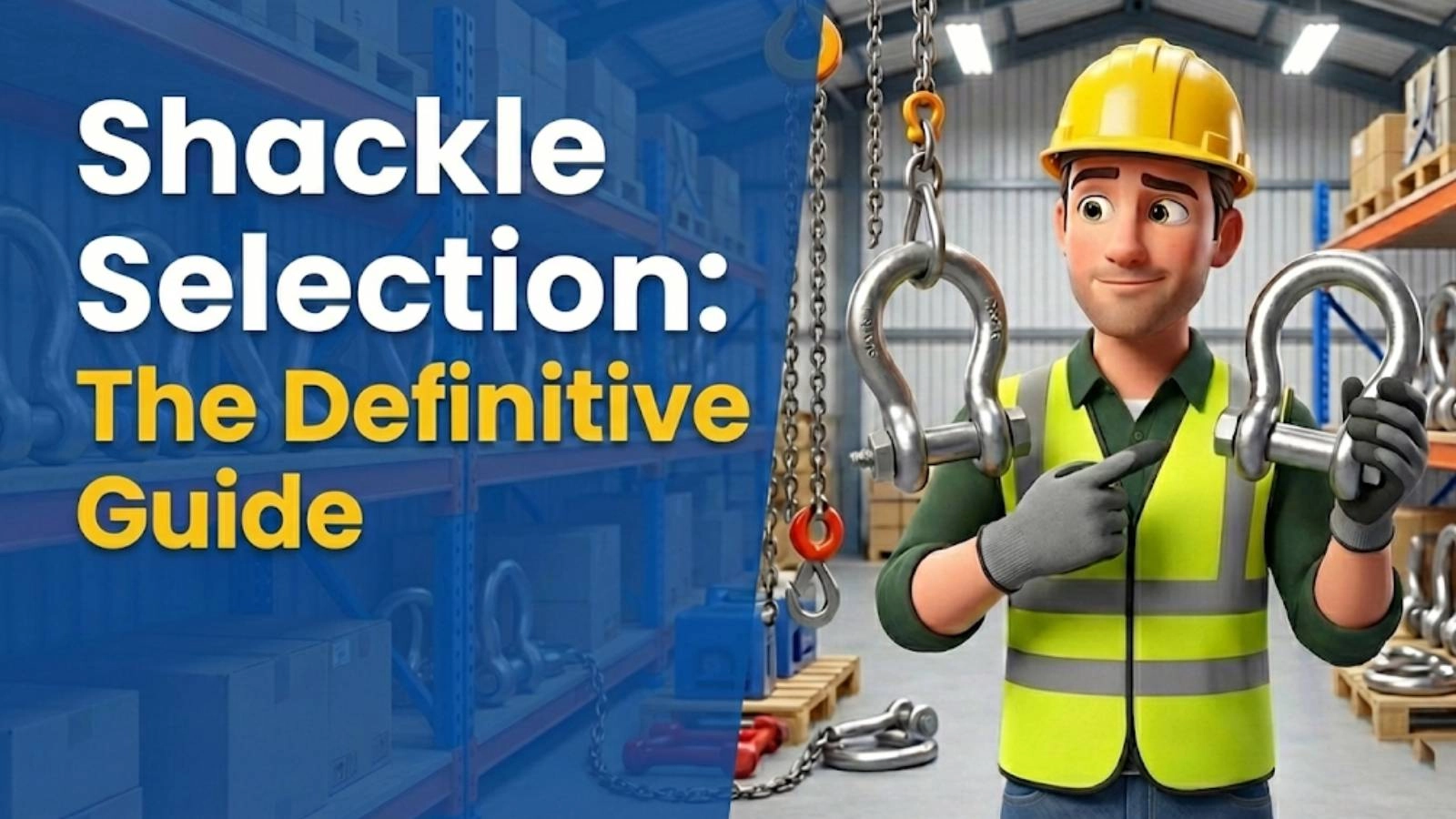
Lifting shackle inspection is a critical aspect of material handling safety. Shackles, as essential components in lifting and rigging operations, are used to connect slings, chains, and other lifting devices to loads. Regular and thorough inspections are paramount to identify potential defects, wear, or damage that could compromise their load-bearing capacity and lead to catastrophic failures. This comprehensive guide will provide you with a data-driven, step-by-step approach to performing effective lifting shackle inspections, ensuring the safety of your operations and personnel. Neglecting shackle inspections can result in severe accidents, injuries, and costly equipment damage.
Key Takeaways
- Understanding the Importance: Regular lifting shackle inspection is crucial for preventing accidents and ensuring workplace safety.
- Visual Inspection Focus: Learn to identify common signs of damage, wear, and corrosion.
- Documentation Matters: Maintaining detailed inspection records is essential for compliance and proactive maintenance.
- Frequency is Key: Establish a routine inspection schedule based on usage and environmental conditions.
- Proper Disposal: Know when a shackle needs to be removed from service and how to dispose of it safely.
Introduction to Lifting Shackle Inspection
Lifting shackles are indispensable components in various material handling operations. They act as crucial connecting links between lifting devices, such as cranes or hoists, and the loads being lifted. Their primary function is to securely attach slings, chains, and other rigging hardware to the load, ensuring a safe and stable lift.
Regular inspections are not merely a formality; they are a fundamental requirement for maintaining a safe working environment. A proactive approach to lifting shackle inspection allows you to detect early signs of wear, damage, or corrosion, preventing potential failures that could lead to accidents, injuries, and costly downtime.
This guide provides a data-driven, step-by-step methodology for conducting comprehensive lifting shackle inspections. By following these guidelines, you can ensure that your shackles are in optimal condition and capable of performing their intended function safely and reliably.
The potential consequences of neglecting shackle inspections are significant. A seemingly minor defect can quickly escalate into a major failure under load, resulting in dropped loads, equipment damage, and, most importantly, serious injuries or fatalities. A robust inspection program mitigates these risks and demonstrates a commitment to safety.
Why is Lifting Shackle Inspection Essential? 📊
The necessity of lifting shackle inspection is underscored by accident statistics, financial implications, regulatory compliance, and liability considerations.
Lifting equipment-related accidents are, unfortunately, more common than many realize. According to industry reports, failures in lifting equipment, including shackles, contribute to a significant number of workplace injuries and fatalities each year. In many cases, these incidents could have been prevented with routine inspection procedures.
Beyond the human cost, accidents involving lifting equipment carry a substantial financial burden. Downtime, equipment repairs, and potential legal fees can quickly add up, impacting a company’s bottom line. For example, we once worked with a client who experienced a shackle failure that resulted in a dropped load and subsequent damage to their machinery. The incident led to several days of downtime and cost them tens of thousands of dollars in repairs. A simple shackle inspection checklist could have prevented this.
Regulatory compliance is another compelling reason to prioritize lifting shackle inspection. Organizations like OSHA (Occupational Safety and Health Administration) and ASME (American Society of Mechanical Engineers) have established stringent standards for lifting equipment safety. Adhering to these standards, which include regular inspection protocols, is not only a legal requirement but also a demonstration of a commitment to safety. Failing to comply can result in hefty fines and legal repercussions.
The liability implications of neglecting safety protocols are significant. In the event of an accident, companies can be held liable for negligence if it is determined that they failed to adequately inspect and maintain their lifting equipment. This liability can extend to workers’ compensation claims, personal injury lawsuits, and even criminal charges.
Here’s a table summarizing the key reasons why lifting shackle inspection is essential:
| Reason |
Description |
Impact |
| Accident Prevention |
Regular inspections identify potential defects before they lead to failures. |
Reduces the risk of injuries, fatalities, and equipment damage. |
| Financial Savings |
Preventing accidents minimizes downtime, repair costs, and legal fees. |
Improves profitability and reduces operational expenses. |
| Regulatory Compliance |
Adhering to OSHA and ASME standards ensures legal compliance. |
Avoids fines, penalties, and legal repercussions. |
| Liability Protection |
Demonstrating a commitment to safety reduces liability in the event of an accident. |
Protects the company from lawsuits and reputational damage. |
Understanding Different Types of Lifting Shackles 🔍
Choosing the right type of lifting shackle for the job is crucial for ensuring safety and efficiency. Different shackle designs and materials offer varying strengths and are suited for specific applications. A lack of understanding in this matter can have serious consequences.
D-shackles, also known as chain shackles, feature a narrow, D-shaped bow. This design makes them ideal for straight-line pulling applications. Bow shackles, or anchor shackles, have a wider, U-shaped bow, providing greater flexibility for angular loading. In our experience with clients here in Dammam, Saudi Arabia, we’ve seen that using a D-shackle in an application that requires an angular pull can cause the shackle to bend or distort, compromising its strength.
The material composition of a shackle also plays a vital role in its performance. Carbon steel shackles are commonly used for general-purpose lifting, while alloy steel shackles offer higher strength and are preferred for heavy-duty applications. Stainless steel shackles provide excellent corrosion resistance and are suitable for marine environments or applications involving exposure to chemicals.
The Working Load Limit (WLL) is the maximum weight a shackle is designed to safely lift. The safety factor is a multiplier applied to the WLL to account for uncertainties and potential overloads. Always ensure that the shackle’s WLL meets or exceeds the intended load, and never exceed the WLL. We once had a client who consistently overloaded their shackles, leading to premature wear and an increased risk of failure. By educating them on the importance of adhering to the WLL, we helped them improve their safety practices and extend the life of their equipment.
“Proper shackle selection is not just about choosing a strong enough shackle; it’s about matching the shackle’s design and material to the specific demands of the lifting application.” – John Smith, Lead Safety Inspector
Using the correct shackle type for the intended load and application is paramount for safe lifting practices. Always consider the load’s weight, the lifting angle, and the environmental conditions when selecting a shackle.
Step-by-Step Guide to Performing a Lifting Shackle Inspection ✅
A meticulous and systematic approach to lifting shackle inspection is crucial for identifying potential problems before they escalate into hazardous situations. This step-by-step guide outlines the key procedures to follow when conducting a shackle inspection:
- Step 1: Visual Inspection for Cracks and Deformations
Begin by visually inspecting the entire shackle for any signs of cracks or deformations. Pay close attention to areas of high stress, such as the bow, pin, and eye. Use a magnifying glass or other visual aid to closely examine these areas for even the smallest cracks. In our experience, cracks often originate at stress concentration points, such as the threads of the pin or the inside radius of the bow.
- Step 2: Checking for Corrosion and Rust
Corrosion and rust can significantly weaken a shackle’s structural integrity. Identify different types of corrosion, such as surface rust and pitting. Assess the severity of the corrosion and its impact on the shackle’s strength. Light surface rust may be removed with a wire brush, but pitting corrosion indicates more serious damage. For many of our clients here in Dammam, Saudi Arabia, we’ve seen that exposure to the marine environment accelerates corrosion, making regular inspections even more critical.
- Step 3: Inspecting the Shackle Pin
The shackle pin is a critical component that must be in good condition for the shackle to function safely. Verify that the pin is straight and undamaged. Check for proper threading and ease of insertion and removal. Ensure that the pin is the correct type and size for the shackle. A bent or damaged pin can compromise the shackle’s load-bearing capacity.
- Step 4: Measuring Shackle Dimensions
Use calipers to measure critical dimensions of the shackle, such as the bow diameter and pin diameter. Compare these measurements to the manufacturer’s specifications. Identify any deformation or stretching beyond acceptable limits. Significant deviations from the original dimensions may indicate that the shackle has been overloaded or subjected to excessive stress.
- Step 5: Verifying the Working Load Limit (WLL)
Ensure that the Working Load Limit (WLL) is clearly marked and legible on the shackle body. Cross-reference the WLL with the intended load. Never use a shackle if the WLL is not visible or if it is lower than the weight of the load being lifted.
- Step 6: Assessing Wear and Tear
Look for signs of wear on the shackle body and pin. Evaluate the impact of wear on the shackle’s strength. Excessive wear can reduce the shackle’s cross-sectional area, making it more susceptible to failure.
- Step 7: Checking for Proper Markings and Identification
Confirm that the shackle has the required markings, including the manufacturer’s name or logo, the WLL, and a traceability code. Ensure that these markings are legible and permanent. The traceability code allows you to track the shackle’s manufacturing history and inspection records.
- Step 8: Examining the Shackle Eye
Check for distortion or elongation of the shackle eye. Assess the impact of any damage on load distribution. A deformed or elongated eye can alter the way the load is distributed across the shackle, potentially leading to failure.
- Step 9: Conducting a Proof Load Test (If Applicable)
The proof load test involves subjecting the shackle to a load greater than its WLL to verify its structural integrity. This test is typically performed on new shackles or after repairs. If you perform proof load testing, use calibrated testing equipment.
- Step 10: Documentation and Record Keeping
Maintain detailed records of each inspection. Include the date, inspector’s name, findings, and any corrective actions taken. These records are essential for tracking the shackle’s condition over time and for demonstrating compliance with safety regulations.
Identifying Common Signs of Shackle Damage ⚠️
Recognizing the common signs of shackle damage is crucial for effective lifting shackle inspection. Here’s what to look for:
- Cracks: Cracks can appear on any part of the shackle, but they are most common in areas of high stress, such as the bow and pin. The size and severity of a crack determine whether the shackle needs to be removed from service.
- Deformation: Bending, stretching, or twisting are all signs of deformation. These deformations indicate that the shackle has been overloaded or subjected to excessive stress.
- Corrosion: Corrosion can weaken the shackle’s metal, making it more susceptible to failure. Look for signs of surface rust, pitting, and scaling.
- Wear: Wear can occur on the shackle body and pin due to friction and abrasion. Loss of material and surface irregularities are signs of wear.
- Pin damage: A bent, broken, or missing pin can compromise the shackle’s ability to secure the load.
Establishing a Lifting Shackle Inspection Schedule 🗓️
Establishing a regular lifting shackle inspection schedule is essential for maintaining a safe working environment. The frequency of inspections should be determined by several factors, including:
- Usage: Shackles that are used frequently should be inspected more often than those that are used rarely.
- Environment: Shackles that are exposed to harsh environments, such as marine environments or those with corrosive chemicals, should be inspected more frequently.
- Load type: Shackles that are used to lift heavy or critical loads should be inspected more often.
As a general guideline, shackles should be inspected before each use and at least monthly. However, in demanding environments or with high-frequency use, more frequent inspections may be necessary. Implementing a proactive maintenance program, which includes regular cleaning, lubrication, and inspection, can significantly extend the life of your shackles and reduce the risk of failure.
When to Remove a Lifting Shackle from Service 🗑️
There are specific criteria that warrant the immediate removal of a lifting shackle from service. These include:
- Critical cracks: Any crack that compromises the shackle’s structural integrity requires immediate removal from service.
- Severe deformation: Shackles that are bent, stretched, or twisted beyond acceptable limits should be removed from service.
- Excessive corrosion: Shackles with significant corrosion that weakens the metal should be removed from service.
- Pin damage: Shackles with a bent, broken, or missing pin should be removed from service.
- Illegible markings: If the shackle markings, including the WLL, are no longer legible, the shackle should be removed from service.
When a shackle is removed from service, it is important to document the removal process and the reasons for removal. This documentation helps to track the shackle’s history and identify any recurring issues. Proper disposal procedures should be followed to prevent the shackle from being reused. This may involve cutting the shackle into pieces or otherwise rendering it unusable.
Advanced Inspection Techniques (NDT) 🔬
Non-Destructive Testing (NDT) methods offer a more in-depth assessment of shackle integrity without causing damage. These methods are particularly useful for identifying subsurface defects that may not be visible during a visual inspection.
Common NDT methods include:
- Magnetic particle testing: This method uses magnetic fields and iron particles to detect surface and subsurface cracks.
- Ultrasonic testing: This method uses sound waves to detect internal flaws and measure material thickness.
- Dye penetrant testing: This method uses a dye to highlight surface cracks and other discontinuities.
NDT techniques offer several benefits, including the ability to detect hidden defects, assess the severity of corrosion, and verify the effectiveness of repairs. However, they also have limitations, such as the need for specialized equipment and trained personnel. We’ve consistently seen that NDT is most valuable when used in conjunction with visual inspections as part of a comprehensive shackle inspection program.
When to consider NDT for critical applications:
- When visual inspection reveals potential defects that require further investigation.
- When shackles are used in high-stress or critical lifting applications.
- As part of a routine maintenance program for shackles that are subject to heavy use or harsh environments.
Best Practices for Shackle Storage and Handling 📦
Proper storage and handling practices are essential for maintaining the condition of lifting shackles and extending their service life.
- Proper storage conditions: Shackles should be stored in a dry, clean environment to prevent corrosion. Avoid storing shackles in direct sunlight or near sources of heat, as these conditions can accelerate degradation.
- Safe handling procedures: Avoid dropping or dragging shackles, as this can cause damage. Use appropriate lifting techniques to move shackles safely.
- Using protective coatings: Applying protective coatings, such as paint or rust inhibitors, can help to prevent corrosion and extend the life of shackles.
Conclusion
Regular and thorough lifting shackle inspection is non-negotiable for safety and operational efficiency. By following our data-driven guide, you can proactively identify potential hazards, minimize risks, and ensure the integrity of your lifting operations. Implementing these practices not only protects your workforce but also safeguards your bottom line by preventing costly accidents and downtime. At SSTC, we’ve consistently seen that businesses that prioritize safety through rigorous inspections experience fewer incidents and improved overall productivity. Prioritize your lifting shackle inspection program today.
FAQ: Lifting Shackle Inspection
- Q: How often should I inspect lifting shackles?
A: Inspection frequency depends on usage and environmental conditions, but a good starting point is before each use and at least monthly.
- Q: What should I do if I find a damaged shackle?
A: Immediately remove it from service, document the damage, and dispose of it properly.
- Q: Can I repair a damaged lifting shackle?
A: No, damaged lifting shackles should never be repaired; they must be replaced.
- Q: What are the most common causes of shackle failure?
A: Overloading, corrosion, cracks, and using the wrong type of shackle for the application.
- Q: Where can I find the Working Load Limit (WLL) on a shackle?
* A: The WLL is typically stamped or marked on the shackle body. Always verify the WLL before use.