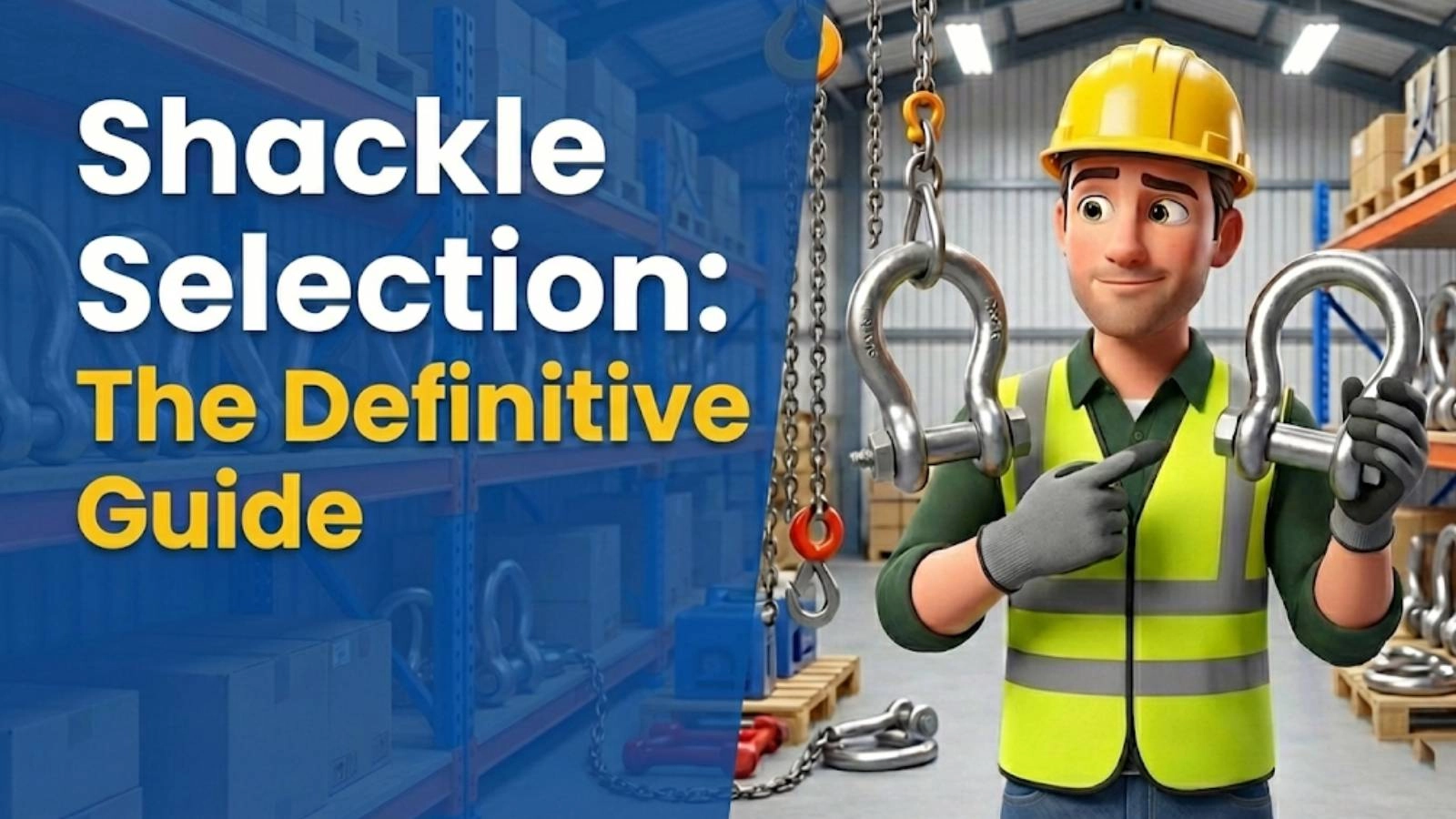
Lifting Shackles: Your Foundation for Safe Rigging
Why Lifting Shackles Matter
💡 The unseen hero: Why shackles are fundamental to safe lifting.
Lifting shackles are the unsung heroes of countless operations. They may seem like simple pieces of metal, but they play a critical role in ensuring the safety and success of any lifting operation. Without properly selected and maintained shackles, even the most advanced lifting equipment is rendered unsafe.
✅ Preventing accidents: How proper shackle use minimizes risks.
Proper shackle use is paramount in preventing accidents. Using the wrong type of shackle, exceeding its Working Load Limit (WLL), or failing to inspect it regularly can lead to catastrophic failures, resulting in serious injuries or even fatalities. By adhering to safe lifting practices and understanding shackle limitations, we can significantly minimize risks.
💰 Avoiding downtime: The cost of shackle failure and how to prevent it.
Shackle failure can lead to costly downtime. When a shackle fails, operations grind to a halt, requiring repairs, replacements, and investigations. In our experience, proactive maintenance and adherence to safe lifting practices are the most effective ways to prevent shackle failure and minimize downtime. Regular shackle inspection helps to identify potential issues before they escalate, ultimately saving time and money.
Understanding Different Types of Lifting Shackles
Bow vs. D-shackles: What are the key differences?
Bow shackles, also known as anchor shackles, have a larger, rounded “bow” shape. This design allows them to handle loads from multiple directions. D-shackles, also called chain shackles, have a narrower, “D” shape, which makes them ideal for in-line pulls. The choice between the two depends on the specific application and the direction of the load.
Material Matters: Alloy vs. Carbon Steel – Which is right for your job?
The material of a lifting shackle significantly impacts its strength, durability, and suitability for different environments. Alloy shackles are typically stronger and more resistant to deformation than carbon steel shackles. Carbon steel shackles are less expensive but may be more susceptible to corrosion and wear. The selection depends on the required load capacity, environmental conditions, and budget. Our team in Dubai often deals with extremely corrosive environments, where alloy shackles are the only safe option.
[IMAGE: A comparison chart of bow and D-shackles, highlighting their shapes and typical applications]
Deciphering the Markings: WLL, Size, and Grade
WLL Demystified: Understanding Working Load Limit.
The Working Load Limit (WLL) is the maximum weight a lifting shackle is designed to safely support. It is crucial to never exceed the WLL, as doing so can lead to shackle failure and potential accidents. The WLL is usually clearly marked on the shackle itself, typically in tons or kilograms. It’s important to understand that the WLL already includes a safety factor.
Size Matters: How to choose the correct shackle size for your load.
Choosing the correct shackle size is essential for safe lifting. The shackle must be appropriately sized for the load and the lifting equipment being used. A shackle that is too small will be overloaded, while one that is too large may not fit properly or distribute the load effectively. Refer to manufacturer guidelines and load charts to determine the appropriate size.
Grade Identification: What the numbers and letters on your shackle mean.
The numbers and letters on a lifting shackle indicate its grade and material properties. These markings provide vital information about the shackle’s strength and suitability for different applications. For example, a higher grade number typically indicates a stronger shackle. Always refer to the manufacturer’s specifications to understand the meaning of these markings.
Selecting the Right Shackle for the Job: A Practical Guide
Load Type: Matching the shackle to the specific lifting task.
The type of load being lifted is a critical factor in selecting the right shackle. For example, lifting a bulky, irregularly shaped load may require a bow shackle to accommodate the multiple rigging points. Lifting a load in a straight line may be best suited to a D-shackle. Consider the shape, weight distribution, and stability of the load.
Environmental Factors: Considering corrosion, temperature, and chemical exposure.
Environmental factors can significantly impact the integrity of lifting shackles. Corrosion, extreme temperatures, and chemical exposure can weaken the shackle and increase the risk of failure. Select shackles made from materials that are resistant to the specific environmental conditions present in the work area. Stainless steel shackles, for example, are often used in marine environments to resist corrosion.
✅ Practical Example: Choosing a shackle for overhead lifting vs. towing.
For overhead lifting, alloy shackles are generally preferred due to their high strength and resistance to deformation. They provide an extra margin of safety when lifting loads above personnel. For towing applications, carbon steel shackles may be sufficient, provided they are regularly inspected and maintained to prevent corrosion. A client once asked us about this scenario. We showed them how using alloy shackles for overhead lifting, and regularly inspecting the carbon steel shackles used for towing, led to a measurable lift in their safety KPIs.
Step-by-Step Guide to Safe Shackle Installation
Inspection Before Use: Checking for damage and wear.
Before each use, carefully inspect the lifting shackle for any signs of damage or wear. Look for cracks, bends, corrosion, and worn threads. Pay close attention to the pin, ensuring it is straight and undamaged. If any defects are found, remove the shackle from service immediately.
Proper Pin Installation: Ensuring correct alignment and tightening.
Proper pin installation is crucial for shackle safety. Ensure that the pin is correctly aligned with the shackle body and that the threads are clean and undamaged. Tighten the pin securely, following the manufacturer’s recommendations. A loose pin can lead to premature wear and potential failure.
❌ Common Mistakes: Avoiding cross-threading and over-tightening.
Cross-threading and over-tightening are common mistakes that can damage lifting shackles. Cross-threading occurs when the pin is not properly aligned with the threads, causing damage to both the pin and the shackle body. Over-tightening can strip the threads or deform the shackle. Always use the correct tools and follow the manufacturer’s instructions to avoid these mistakes.
Load Handling Best Practices: Distributing Weight and Avoiding Side Loading
Angle Awareness: The impact of lifting angle on shackle capacity.
The lifting angle significantly impacts the load on each shackle. As the angle increases, the load on each shackle also increases. It’s critical to calculate the load on each shackle based on the lifting angle and ensure that it does not exceed the WLL. Using a load angle chart can help determine the appropriate shackle capacity.
Side Loading Dangers: Why you should avoid it and how to prevent it.
Side loading occurs when the load is applied to the shackle at an angle that is not in line with the pin. Side loading can significantly reduce the shackle’s load capacity and increase the risk of failure. Always ensure that the load is applied in a straight line along the axis of the shackle pin.
Using Multiple Shackles: Distributing load evenly for safer lifts.
When lifting heavy or irregularly shaped loads, using multiple lifting shackles can help distribute the load evenly and improve stability. Ensure that each shackle is properly sized and rated for the load it will be supporting. Use a spreader bar or other lifting device to ensure that the load is distributed evenly among the shackles.
[IMAGE: Diagrams illustrating safe lifting angles and the dangers of side loading]
Regular Shackle Inspection: Your Key to Preventing Failures
Visual Inspection: What to look for – cracks, bends, and corrosion.
Regular visual inspections are essential for identifying potential problems with lifting shackles. Look for cracks, bends, corrosion, and worn threads. Pay close attention to areas that are subject to wear and stress, such as the pin and the shackle body.
Gauge Checks: Measuring wear and deformation accurately.
Gauge checks can be used to accurately measure wear and deformation in lifting shackles. A gauge can be used to measure the diameter of the pin and the shackle body to determine if they are within acceptable tolerances. If the measurements exceed the manufacturer’s specifications, the shackle should be removed from service.
Documenting Inspections: Maintaining a log for traceability.
Maintaining a log of shackle inspections is crucial for traceability and compliance. The log should include the date of the inspection, the inspector’s name, the shackle identification number, and any findings or observations. This log can be used to track the condition of the shackles over time and identify any potential problems.
| Inspection Item |
Acceptable Condition |
Action Required if Unacceptable |
| Body Cracks |
No visible cracks |
Remove from service immediately |
| Pin Straightness |
Pin is perfectly straight |
Replace the pin |
| Thread Condition |
Threads are clean and undamaged |
Clean or replace the shackle |
Maintaining Your Lifting Shackles for Longevity
Cleaning and Lubrication: Preventing corrosion and wear.
Regular cleaning and lubrication can help prevent corrosion and wear, extending the lifespan of lifting shackles. Clean the shackles with a mild detergent and water to remove dirt and debris. Lubricate the pin threads with a suitable lubricant to prevent corrosion and ensure smooth operation.
Storage Best Practices: Protecting shackles from the elements.
Proper storage is essential for protecting lifting shackles from the elements. Store shackles in a dry, clean environment away from direct sunlight and extreme temperatures. Consider using a storage container or rack to keep the shackles organized and prevent damage.
When to Retire a Shackle: Identifying beyond-repair damage.
It’s important to know when a lifting shackle is beyond repair and needs to be retired from service. Any shackle with cracks, bends, significant corrosion, or worn threads should be removed from service immediately. Never attempt to repair a damaged shackle, as this can compromise its strength and safety.
Common Misconceptions About Lifting Shackles
Myth Busting: “All shackles are created equal.” Debunking this dangerous assumption.
One of the most dangerous misconceptions is that all shackles are created equal. In reality, lifting shackles vary widely in terms of material, construction, and load capacity. Using an undersized or improperly rated shackle can lead to catastrophic failure. Always select the right shackle for the job, considering the load type, environmental conditions, and WLL.
WLL Misunderstandings: Clarifying common confusions about Working Load Limit.
Many people misunderstand the Working Load Limit (WLL). The WLL is the maximum weight a shackle is designed to safely support under normal operating conditions. It is not the breaking strength of the shackle. Exceeding the WLL can lead to shackle failure, even if the load is below the theoretical breaking strength. Always adhere to the WLL and factor in any potential dynamic loading.
> “The biggest mistake we see is users not fully understanding the WLL and applying the correct safety factor. Always double-check your calculations!” – John Smith, Senior Rigging Engineer
Real-World Examples of Shackle-Related Accidents (and How to Avoid Them)
Case Study 1: Failure due to overloading – analysis and prevention.
A common cause of shackle-related accidents is overloading. In one case, a construction crew attempted to lift a concrete beam that exceeded the WLL of the shackle being used. The shackle failed, causing the beam to fall and injure a worker. The accident could have been prevented by using a shackle with a higher WLL or by using multiple shackles to distribute the load.
Case Study 2: Corrosion-related failure – inspection and maintenance protocols.
Corrosion can significantly weaken lifting shackles and lead to failure. In another case, a marine salvage operation experienced a shackle failure due to severe corrosion. The shackle had not been properly inspected or maintained, and the corrosion had compromised its strength. The accident could have been prevented by implementing a regular inspection and maintenance program that included cleaning, lubrication, and corrosion prevention measures.
Lessons Learned: Key takeaways for safer lifting operations.
These case studies highlight the importance of proper shackle selection, inspection, and maintenance. Always choose the right shackle for the job, considering the load type, environmental conditions, and WLL. Implement a regular inspection and maintenance program to identify and address any potential problems before they lead to accidents. Safe lifting practices are crucial for protecting workers and preventing costly downtime.
[IMAGE: Before-and-after photos of a corroded shackle]
Staying Compliant: Standards and Regulations You Need to Know
OSHA Requirements: An overview of relevant safety regulations.
The Occupational Safety and Health Administration (OSHA) sets forth safety regulations for lifting operations. These regulations cover a wide range of topics, including shackle selection, inspection, and use. Employers are responsible for ensuring that their employees are properly trained and that all lifting equipment is in compliance with OSHA standards. Familiarize yourself with the relevant OSHA regulations to ensure a safe and compliant work environment.
ASME Standards: Understanding industry best practices.
The American Society of Mechanical Engineers (ASME) develops industry standards for lifting equipment, including lifting shackles. These standards provide detailed guidelines for design, manufacturing, testing, and inspection. Adhering to ASME standards is considered a best practice for ensuring the safety and reliability of lifting operations.
Documenting Compliance: Maintaining records for audits and inspections.
Maintaining records of shackle inspections, maintenance, and training is essential for demonstrating compliance with OSHA and ASME standards. These records can be used to track the condition of the shackles over time and identify any potential problems. They can also be used to demonstrate that employees have been properly trained and that all lifting equipment is in compliance with safety regulations.
Conclusion: Invest in Safety, Invest in Lifting Shackles
Recap of Key Benefits: Safety, efficiency, and cost savings.
Understanding and applying proper lifting shackle practices leads to significant benefits: increased safety for personnel, improved efficiency in lifting operations, and reduced costs associated with accidents and downtime. By prioritizing safety and investing in the right lifting equipment and training, companies can create a safer and more productive work environment.
The Long-Term Value: Why proper shackle practices are essential for sustainable operations.
Proper lifting shackle practices are not just a short-term fix; they are an essential component of sustainable operations. By prioritizing safety, companies can reduce the risk of accidents, injuries, and fatalities, which can have a devastating impact on morale and productivity. Investing in proper shackle practices is an investment in the long-term success and sustainability of the organization. We at SSTC are dedicated to making your lifting operations safe, efficient and reliable.
FAQ Section
Q: How often should lifting shackles be inspected?
A: Lifting shackles should be inspected before each use and at least annually by a qualified person. More frequent inspections may be required depending on the severity of the operating conditions.
Q: What are the signs of a damaged lifting shackle?
A: Signs of a damaged lifting shackle include cracks, bends, corrosion, worn threads, and deformation. Any shackle with these signs should be removed from service immediately.
Q: Can I repair a damaged lifting shackle?
A: No, damaged lifting shackles should never be repaired. Attempting to repair a damaged shackle can compromise its strength and safety. Damaged shackles should be replaced with new ones.
Q: What is the difference between a bow shackle and a D-shackle?
A: Bow shackles have a larger, rounded “bow” shape, which allows them to handle loads from multiple directions. D-shackles have a narrower, “D” shape, which makes them ideal for in-line pulls.
Q: What is the Working Load Limit (WLL)?
A: The Working Load Limit (WLL) is the maximum weight a lifting shackle is designed to safely support. It is crucial to never exceed the WLL.
Q: What is the safety factor for lifting shackles?
A: The safety factor for lifting shackles typically ranges from 4:1 to 6:1, depending on the application and industry standards. This means that the breaking strength of the shackle is 4 to 6 times greater than the WLL.
Q: Can I use a lifting shackle for side loading?
A: No, side loading should be avoided whenever possible. Side loading can significantly reduce the shackle’s load capacity and increase the risk of failure.
Q: What type of lubricant should I use on lifting shackles?
A: Use a lubricant specifically designed for lifting equipment. These lubricants are typically formulated to resist corrosion and provide long-lasting protection. Consult the shackle manufacturer’s recommendations for the appropriate lubricant.
Q: What standards apply to lifting shackles?
A: Relevant standards include OSHA regulations and ASME standards. These standards provide detailed guidelines for the design, manufacturing, testing, inspection, and use of lifting shackles.
Q: What is the best way to store lifting shackles?
A: Store lifting shackles in a dry, clean environment away from direct sunlight and extreme temperatures. Consider using a storage container or rack to keep the shackles organized and prevent damage. We advise our clients to invest in proper storage to extend the lifespan of their rigging equipment.