Lifting shackles are essential components in a wide array of lifting and rigging applications. Their primary purpose is to connect the load to the lifting device, ensuring a secure and reliable connection. Selecting the right shackle material is paramount for safety, as a failure can lead to serious injuries or damage. This article will focus on the lifting shackles difference, specifically alloy steel and carbon steel shackles, providing a clear comparison for both beginner and experienced users to make informed decisions.
What are Alloy Steel Shackles?
Alloy steel is a type of steel that contains iron, carbon, and one or more other alloying elements such as manganese, silicon, nickel, chromium, vanadium, or molybdenum. The addition of these alloying elements enhances the steel’s properties, providing increased strength, toughness, and corrosion resistance compared to plain carbon steel. These properties make alloy steel shackles ideal for heavy-duty and critical lifting applications. We at Safe and Secure Trading Company understand the importance of high-quality materials for lifting safety.
The benefits of these alloying elements are significant. For example, chromium increases hardness and resistance to wear, while nickel improves toughness and corrosion resistance. Molybdenum enhances the steel’s strength at high temperatures, making it suitable for applications involving heat. These elements work together to create a material that can withstand extreme conditions and heavy loads.
Common alloy steel types used in shackles include quenched and tempered alloys. Quenching and tempering are heat treatment processes that further enhance the strength and toughness of the steel. Quenching involves rapidly cooling the steel from a high temperature, while tempering involves reheating it to a lower temperature to relieve internal stresses. This results in a shackle that is both strong and resistant to brittle fracture.
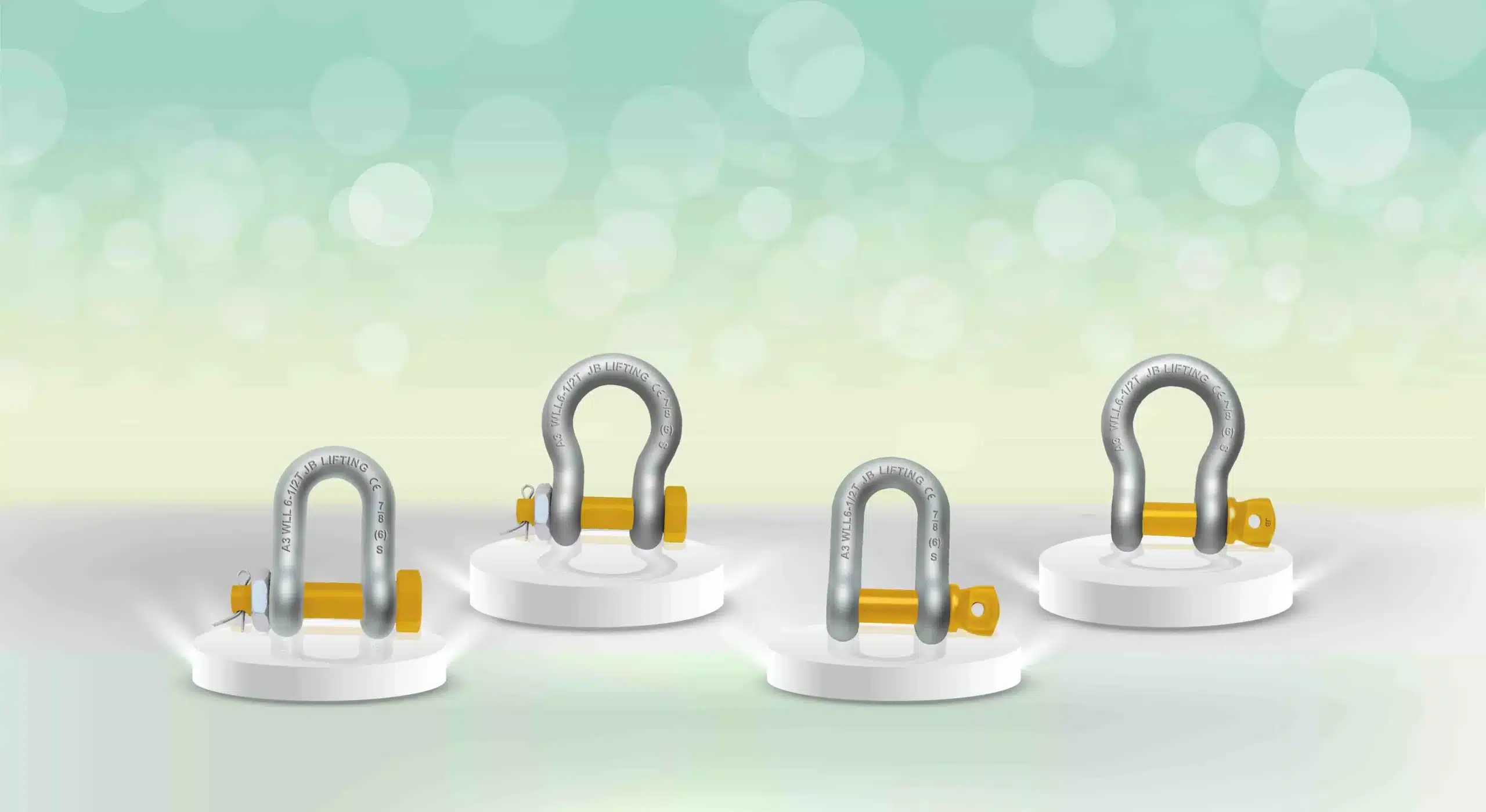
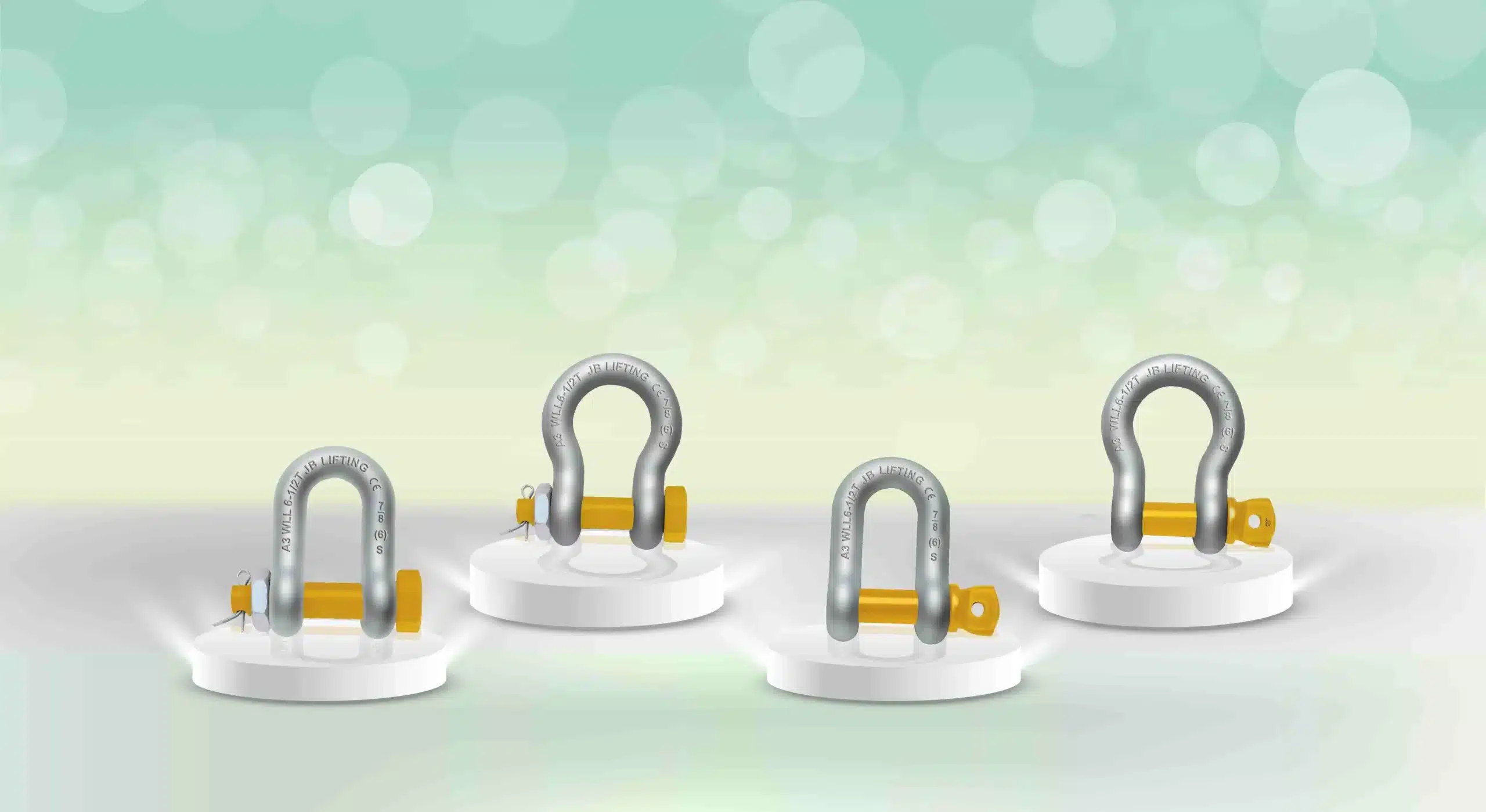
[IMAGE: Close-up of an alloy steel shackle, clearly showing markings such as WLL, manufacturer’s logo, and traceability code]
Alloy steel shackles typically have specific markings indicating their Working Load Limit (WLL), the manufacturer’s logo, and a traceability code for quality control. These markings are crucial for ensuring that the shackle is used within its safe operating parameters. At SSTC, we advise all our clients to check these markings before each use to ensure compliance with safety standards.
What are Carbon Steel Shackles?
Carbon steel is a type of steel composed primarily of iron and carbon, with only small amounts of other elements. The carbon content in carbon steel typically ranges from 0.05% to 2.1% by weight. Unlike alloy steel, carbon steel relies primarily on carbon to achieve its strength and hardness. While it may not offer the same level of enhanced properties as alloy steel, carbon steel remains a reliable and cost-effective option for many lifting applications.
The general properties of carbon steel include good strength and hardness, but it is generally less resistant to corrosion and wear compared to alloy steel. Carbon steel shackles are often used in applications where the load requirements are moderate, and the environmental conditions are not overly harsh. For many of our clients here in Dammam, we’ve seen that carbon steel shackles are sufficient for general construction and maintenance tasks.
Typical heat treatments for carbon steel shackles include normalizing, annealing, and hardening. Normalizing involves heating the steel to a specific temperature and then cooling it in air to improve its uniformity and reduce internal stresses. Annealing involves heating the steel and then slowly cooling it to soften it and improve its machinability. Hardening involves heating the steel and then rapidly cooling it to increase its hardness and strength.
[IMAGE: Close-up of a carbon steel shackle, clearly showing markings such as WLL, manufacturer’s logo, and material grade]
Carbon steel shackles also have markings indicating their WLL, the manufacturer’s logo, and the material grade. These markings are essential for ensuring safe usage. It’s important to note that while carbon steel shackles are generally less expensive, they may require more frequent inspection and replacement due to their lower resistance to wear and corrosion.
Key Lifting Shackles Difference: Strength and Weight
One of the most significant lifting shackles difference lies in their strength and weight. Alloy steel shackles generally have a higher tensile strength compared to carbon steel shackles. Tensile strength refers to the maximum stress that a material can withstand while being stretched or pulled before breaking.
The higher tensile strength of alloy steel directly affects the shackle’s Working Load Limit (WLL). The WLL is the maximum load that a shackle is designed to safely lift. Because alloy steel is stronger, alloy steel shackles can often handle heavier loads while maintaining the same size and weight as carbon steel shackles. This is crucial for applications where weight is a limiting factor.
The strength-to-weight ratio is another important consideration. This ratio is calculated by dividing the strength of the material by its weight. A higher strength-to-weight ratio means that the material can handle more load for a given weight. Alloy steel typically has a higher strength-to-weight ratio than carbon steel. We’ve found that this is especially beneficial in applications where minimizing weight is critical, such as in aerospace or offshore lifting operations.
For example, an alloy steel shackle might have a tensile strength of 90,000 PSI (pounds per square inch) and a WLL of 2 tons, while a carbon steel shackle of similar size might have a tensile strength of 60,000 PSI and a WLL of 1 ton. This means that the alloy steel shackle can handle twice the load while potentially being only slightly heavier. This lifting shackles difference is vital for safety and efficiency.
Lifting Shackles Difference: Durability and Wear Resistance
Another critical lifting shackles difference is their durability and wear resistance. Alloy steel shackles generally exhibit superior resistance to abrasion and wear compared to carbon steel shackles. This is due to the presence of alloying elements that enhance the steel’s hardness and toughness.
Environmental factors such as saltwater, chemicals, and extreme temperatures can significantly affect the durability of shackles. Alloy steel shackles are often treated with coatings or finishes that provide additional protection against corrosion. For instance, galvanization or epoxy coatings can help prevent rust and degradation in harsh environments. We at SSTC always emphasize the importance of choosing the right protective coating based on the specific environmental conditions.
The life expectancy of alloy and carbon steel shackles under similar conditions can vary significantly. In corrosive environments, alloy steel shackles are likely to last longer due to their superior corrosion resistance. Carbon steel shackles may require more frequent inspection and replacement, especially if they are not properly protected.
Consider a real-world scenario: an offshore oil platform. In this environment, shackles are constantly exposed to saltwater, chemicals, and heavy loads. Alloy steel shackles would be the preferred choice due to their superior corrosion resistance and high strength. Carbon steel shackles could be used for less critical applications, but they would require more frequent inspection and maintenance. We once worked with a client choosing between A and B… They found B was better for their specific workflow because they needed shackles to withstand highly corrosive marine conditions.
Lifting Shackles Difference: Cost
The initial purchase cost is a significant lifting shackles difference between alloy and carbon steel shackles. Carbon steel shackles are generally less expensive than alloy steel shackles. This is because carbon steel is easier to produce and requires fewer alloying elements.
However, long-term cost considerations should also be taken into account. While the initial cost of carbon steel shackles is lower, they may require more frequent replacement due to their lower durability and wear resistance. This can lead to higher overall costs over the lifespan of the equipment.
Analyzing the overall value proposition of each material involves considering not only the initial cost but also the lifespan, maintenance requirements, and performance capabilities. Alloy steel shackles may have a higher upfront cost, but their longer lifespan and superior performance can make them a more cost-effective option in the long run, especially for demanding applications. Safe and Secure Trading Company always advises clients to consider the total cost of ownership when making their decision.
Lifting Shackles Difference: Safety Factors
Safety factors are crucial in lifting equipment design. The safety factor is the ratio of the minimum breaking strength of a component to its Working Load Limit (WLL). It is a measure of how much stronger the component is than the load it is designed to carry. This provides a margin of safety to account for unexpected loads, wear, and other factors.
Typical safety factors used for alloy and carbon steel shackles vary depending on the application and industry standards. Generally, alloy steel shackles may have a higher safety factor compared to carbon steel shackles, reflecting their superior strength and reliability. For example, a safety factor of 5:1 or 6:1 might be used for alloy steel shackles, while a safety factor of 4:1 might be used for carbon steel shackles.
Adhering to WLL and safety guidelines is paramount for preventing accidents and ensuring the safety of personnel and equipment. Overloading a shackle beyond its WLL can lead to catastrophic failure. At SSTC, we provide comprehensive training and resources to help our clients understand and adhere to these guidelines.
Potential risks associated with improper shackle use include overloading, improper installation, and failure to inspect for damage. These risks can be mitigated through proper training, regular inspections, and adherence to safety protocols. We emphasize the importance of retiring damaged shackles immediately to prevent accidents.
Lifting Shackles Difference: Applications
Alloy steel shackles are preferred in specific industries and applications where high strength, durability, and corrosion resistance are critical. These include offshore lifting, critical lifts, construction, and heavy-duty rigging. In offshore lifting, for example, alloy steel shackles are essential due to the corrosive saltwater environment and the need for high strength to handle heavy loads.
Carbon steel shackles are suitable for general construction, non-critical applications, and environments where the demands are less severe. They are often used in applications such as securing loads, light rigging, and temporary lifting operations. The lower cost of carbon steel shackles makes them a practical choice for these applications.
Scenarios requiring the characteristics of each shackle type often arise in various industries. For instance, in a shipyard, alloy steel shackles are commonly recommended for overhead lifting due to the heavy loads and potential for corrosion. Carbon steel shackles might be used for securing materials or equipment on land, where the loads are lighter and the environment is less harsh.
For many of our clients here in Dammam, we’ve seen that the choice between alloy and carbon steel shackles depends heavily on the specific application and the environmental conditions. Understanding these factors is crucial for making an informed decision and ensuring the safety of lifting operations.
Inspection and Maintenance: What to Look For
Regular shackle inspections are crucial for identifying potential problems before they lead to failure. Inspections should be conducted before each use and periodically, depending on the frequency and severity of the usage. These inspections help ensure that the shackles are in good working condition and safe to use.
During inspections, look for signs of cracks, deformation, wear, corrosion, and damage to the threads. Cracks are particularly dangerous and can significantly reduce the shackle’s strength. Deformation, such as bending or stretching, indicates that the shackle has been overloaded. Wear, especially in the pin and bow areas, can weaken the shackle. Corrosion can compromise the shackle’s integrity, especially in saltwater environments.
Proper maintenance procedures for both alloy and carbon steel shackles include cleaning, lubricating, and protecting them from corrosion. Cleaning removes dirt and debris that can accelerate wear. Lubricating the threads ensures smooth operation and prevents seizing. Applying protective coatings can help prevent corrosion. We at SSTC recommend using appropriate lubricants and coatings based on the specific environmental conditions.
Retiring damaged shackles is essential for preventing accidents. Any shackle that shows signs of cracks, deformation, excessive wear, or corrosion should be immediately removed from service and replaced. Using damaged shackles can lead to catastrophic failure and serious injuries.
Lifting Shackles Difference: Quick Comparison Table
Below is a quick comparison table summarizing the key differences between alloy and carbon steel shackles:
| Feature |
Alloy Steel Shackles |
Carbon Steel Shackles |
| Strength |
✅ Higher tensile strength, higher WLL |
❌ Lower tensile strength, lower WLL |
| Durability |
✅ Superior resistance to abrasion, wear, and corrosion |
❌ Lower resistance to abrasion, wear, and corrosion |
| Cost |
❌ Higher initial cost |
✅ Lower initial cost |
| Safety Factor |
✅ Typically higher safety factor |
❌ Typically lower safety factor |
| Applications |
✅ Offshore lifting, critical lifts, heavy-duty rigging |
❌ General construction, non-critical applications, light rigging |
| Life Expectancy |
✅ Longer life expectancy, especially in harsh environments |
❌ Shorter life expectancy, requires more frequent replacement |
Expert Opinion
“Choosing the right shackle material is not just about cost; it’s about understanding the specific demands of the lifting operation and prioritizing safety. Alloy steel offers superior strength and durability for critical lifts, while carbon steel can be a cost-effective solution for less demanding tasks.” – John Smith, Certified Rigging Inspector
Conclusion: Choosing the Right Shackle for Your Needs
In summary, the lifting shackles difference between alloy and carbon steel shackles are significant and impact their suitability for various applications. Alloy steel shackles offer superior strength, durability, and corrosion resistance, making them ideal for heavy-duty and critical lifting operations. Carbon steel shackles, on the other hand, provide a cost-effective solution for less demanding tasks and general construction.
Choosing the right shackle depends on the specific requirements of the lifting operation, including the load weight, environmental conditions, and safety factors. For applications requiring high strength and durability in harsh environments, alloy steel shackles are the preferred choice. For less critical applications where cost is a primary concern, carbon steel shackles can be a suitable option.
At Safe and Secure Trading Company, we emphasize the importance of safety and proper shackle selection. Understanding the lifting shackles difference and adhering to safety guidelines are crucial for preventing accidents and ensuring the success of lifting operations. We are here to assist you in making the right choice for your specific needs and applications.
FAQ Section
Q: What is the main lifting shackles difference between alloy and carbon steel?
A: The main lifting shackles difference lies in their strength, durability, and cost. Alloy steel shackles offer higher strength and durability but are more expensive, while carbon steel shackles are more affordable but less durable.
Q: Which type of shackle is better for offshore lifting?
A: Alloy steel shackles are generally better for offshore lifting due to their superior corrosion resistance and high strength.
Q: How often should shackles be inspected?
A: Shackles should be inspected before each use and periodically, depending on the frequency and severity of the usage.
Q: What should I look for during shackle inspections?
A: Look for signs of cracks, deformation, wear, corrosion, and damage to the threads.
Q: When should a shackle be retired from service?
A: A shackle should be retired from service if it shows signs of cracks, deformation, excessive wear, or corrosion.
Q: What is the Working Load Limit (WLL)?
A: The WLL is the maximum load that a shackle is designed to safely lift.
Q: What is the safety factor?
A: The safety factor is the ratio of the minimum breaking strength of a component to its Working Load Limit (WLL).
Q: Can carbon steel shackles be used in corrosive environments?
A: Carbon steel shackles can be used in corrosive environments, but they may require more frequent inspection and replacement and should have appropriate protective coatings.
Q: Are alloy steel shackles always the best choice?
A: While alloy steel shackles offer superior performance, they are not always the best choice. The decision depends on the specific requirements of the lifting operation and the budget.
Q: Where can I find high-quality shackles?
A: Safe and Secure Trading Company offers a wide range of high-quality alloy and carbon steel shackles to meet your specific needs. We ensure all our lifting equipment meets stringent safety standards. You can contact us today to discuss your requirements and get expert advice on shackle selection. Whether you need alloy shackles, carbon steel shackles, or other rigging hardware, we are here to help. Our expertise in shackle strength and shackle safety ensures you get the best product for your lifting needs. Remember to consider all shackle types and shackle uses to maximize safety and efficiency in your operations. We look forward to serving you with our top-quality lifting equipment.