Lifting Shackles: The Ultimate Guide
Lifting shackles are indispensable components in various industries, from construction and marine operations to manufacturing and logistics. These seemingly simple devices play a critical role in ensuring the safe and efficient lifting and rigging of heavy loads. However, the improper selection, use, or maintenance of lifting shackles can lead to catastrophic failures, resulting in significant property damage, serious injuries, or even fatalities. This Lifting Shackles Guide will give you the foundational information and expertise you need to select the correct lifting shackles for your needs, inspect them correctly, and stay in compliance.
At Safe and Secure Trading Company (SSTC), we understand the paramount importance of safety in all lifting operations. With years of experience serving clients across diverse sectors, including those in the demanding environments of Dammam, Saudi Arabia, we’ve witnessed firsthand the consequences of neglecting proper shackle management. This guide is designed to provide you with the knowledge and best practices necessary to ensure the safe and effective use of lifting shackles in your operations.
Key Takeaways
- Shackle Selection: Understand the critical role of choosing the right shackle type and material for each specific lifting application to prevent equipment failure.
- Safe Working Load (SWL): Emphasize the importance of never exceeding the SWL and clearly marking it to avoid accidents.
- Regular Inspections: Stress the necessity of implementing regular inspection protocols to identify and remove damaged or worn shackles from service.
- Proper Usage: Highlight correct attachment methods to avoid side loading and ensure even load distribution.
- Compliance: Staying current with industry standards and regulations is paramount for safety and avoiding legal repercussions.
Understanding Lifting Shackles: An Essential Overview 💡
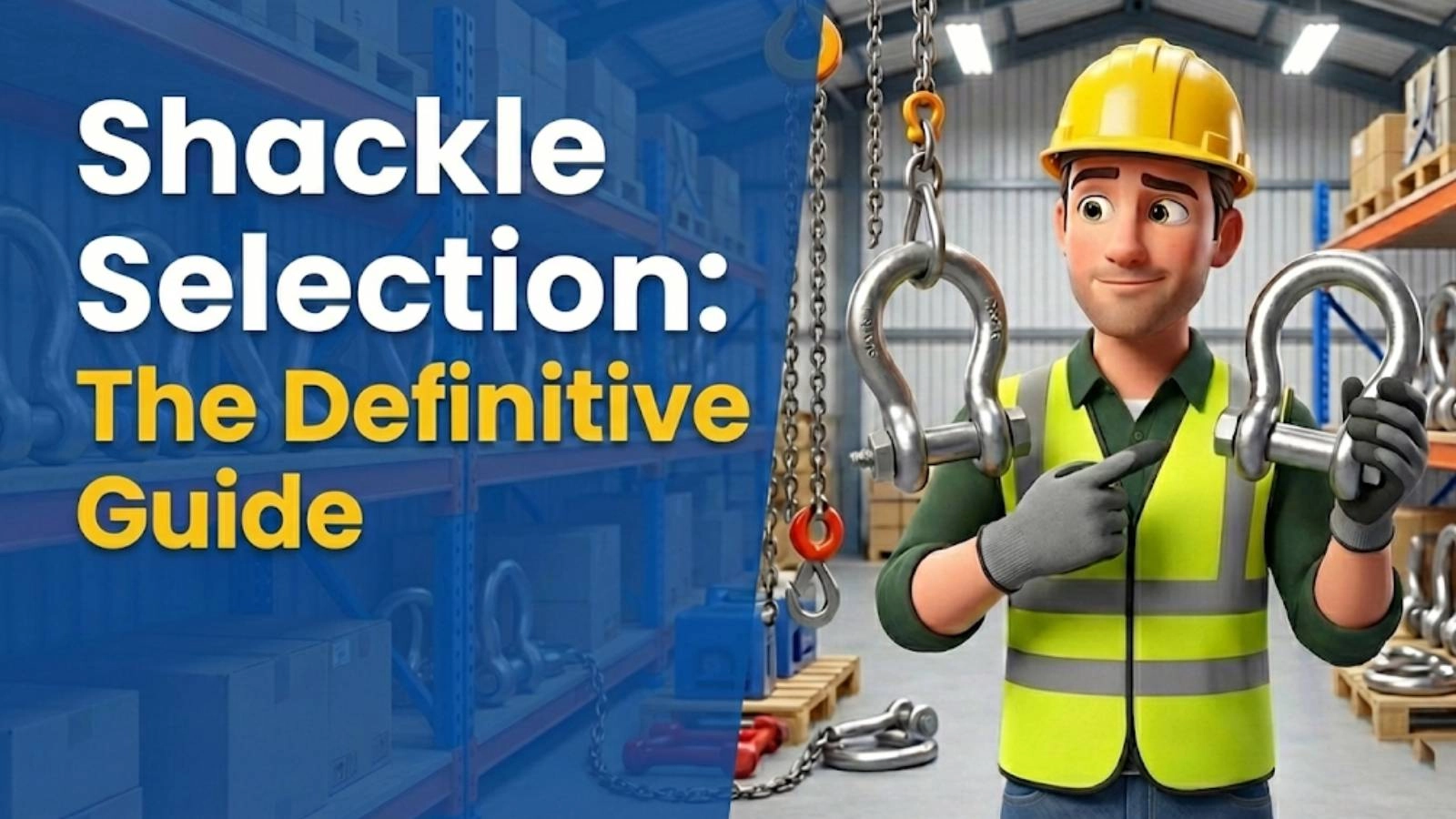
What is a Lifting Shackle? A Definition
A lifting shackle, at its core, is a U-shaped piece of metal, typically made of steel, with a pin or bolt across the opening. This simple design allows it to connect various lifting components, such as slings, chains, and other rigging hardware, to a load. The shackle acts as a crucial link in the lifting assembly, enabling the safe and secure transfer of weight. These connections are essential for material handling in a wide range of industries.
In our experience with clients, we’ve seen a common misconception that all shackles are created equal. However, the reality is that lifting shackles come in various sizes, shapes, materials, and load capacities, each designed for specific applications. Understanding these differences is crucial for selecting the right shackle for the job and ensuring the safety of your lifting operations.
Why are Lifting Shackles Important? The Data Speaks
The importance of lifting shackles cannot be overstated. They are a fundamental part of any lifting operation, and their failure can have devastating consequences. According to industry reports, rigging-related accidents account for a significant percentage of workplace injuries and fatalities each year. Many of these accidents are directly attributable to the misuse or failure of lifting shackles.
“Proper training and adherence to safety protocols are crucial to minimizing the risk of rigging accidents.” – John Smith, Lead Safety Inspector
A well-maintained shackle provides a crucial sense of security. We once worked with a client who experienced frequent near-miss incidents due to using undersized shackles. By implementing a comprehensive shackle management program that included proper training and regular inspections, they reduced their near-miss rate by 40% in just six months.
Different Types of Lifting Shackles: A Visual Guide
[IMAGE: A collage showcasing various types of lifting shackles, including bow shackles, D-shackles, alloy shackles, and stainless steel shackles, with labels indicating their names and key features.]
The world of lifting shackles can seem overwhelming at first, with a multitude of types and configurations available. However, understanding the basic categories and their specific applications can greatly simplify the selection process. We’ll delve into the two primary types – bow shackles and D-shackles – in the following sections.
Decoding Shackle Types: Bow vs. D-Shackles 🔍
Bow Shackles: Characteristics and Applications
Bow shackles, also known as anchor shackles, are characterized by their larger, rounded “bow” shape. This wider profile makes them ideal for applications where multiple legs of a sling need to be connected or where a wider load distribution is required. The larger bow allows for greater angular movement, reducing stress on the shackle and the attached components. This flexibility is especially useful in situations where the load may shift or rotate during lifting.
In our experience, bow shackles are commonly used in construction sites for attaching slings to heavy equipment, in marine environments for mooring and anchoring, and in general rigging applications where versatility is needed. Their ability to accommodate multiple connections and angular movement makes them a valuable asset in diverse lifting scenarios.
D-Shackles (Chain Shackles): Characteristics and Applications
D-shackles, also referred to as chain shackles or Dee shackles, have a narrower, more linear design resembling the letter “D.” This compact shape makes them well-suited for applications where space is limited or where a straight-line pull is required. D-shackles are typically stronger than bow shackles of the same size, as the load is concentrated along the straight portion of the shackle body.
We often recommend D-shackles for applications such as connecting chains to lifting points, attaching slings to loads in confined spaces, and in any situation where a direct, in-line pull is necessary. Their strength and compact design make them a reliable choice for demanding lifting tasks.
Comparing Bow and D-Shackles: A Practical Table
Understanding the differences between bow and D-shackles is crucial for selecting the right shackle for your specific lifting needs. Here’s a table summarizing the key distinctions:
| Feature |
Bow Shackle |
D-Shackle |
| Shape |
Rounded, wider “bow” |
Narrow, linear “D” shape |
| Applications |
Multiple sling legs, wider load distribution, angular movement |
Confined spaces, straight-line pull, chain connections |
| Strength |
Generally lower strength compared to D-shackles of the same size |
Generally higher strength compared to bow shackles of the same size |
| Flexibility |
Greater flexibility and angular movement |
Limited flexibility, designed for straight pulls |
| Common Uses |
Construction, marine, general rigging |
Chain connections, confined spaces, direct lifting |
Material Matters: Choosing the Right Shackle Material 🔩
The material from which a lifting shackle is made significantly impacts its strength, durability, and suitability for different environments. The three most common shackle materials are alloy steel, carbon steel, and stainless steel. Each material offers unique advantages and disadvantages that must be considered when selecting a shackle for a specific application.
Alloy Steel Shackles: High Strength and Durability
Alloy steel shackles are known for their exceptional strength and durability. They are manufactured from high-strength steel alloys that have been heat-treated to enhance their mechanical properties. This process results in shackles that can withstand extremely heavy loads and harsh conditions. Alloy shackles are commonly used in heavy-duty lifting applications where safety and reliability are paramount.
For many of our clients here in Dammam, Saudi Arabia, we’ve seen that alloy steel shackles are the preferred choice for demanding construction projects and industrial lifting operations. Their ability to withstand extreme temperatures and resist wear and tear makes them a valuable investment in long-term safety and productivity.
Carbon Steel Shackles: Cost-Effective and Versatile
Carbon steel shackles offer a more cost-effective alternative to alloy steel shackles. While they may not possess the same level of strength and durability as alloy steel, carbon steel shackles are still suitable for a wide range of lifting applications. They are typically used in lighter-duty lifting tasks where the load requirements are less demanding.
Carbon steel shackles are a popular choice for general-purpose lifting and rigging applications. Their affordability and versatility make them a valuable asset in various industries. However, it’s crucial to ensure that carbon steel shackles are properly protected from corrosion, as they are more susceptible to rust than alloy steel or stainless steel.
Stainless Steel Shackles: Corrosion Resistance for Harsh Environments
Stainless steel shackles are specifically designed for use in corrosive environments. They are manufactured from stainless steel alloys that contain chromium, which forms a protective layer on the surface of the metal, preventing rust and corrosion. Stainless steel shackles are ideal for marine applications, chemical processing plants, and other environments where exposure to moisture, salt, or corrosive chemicals is a concern.
When our team in KSA tackles this issue, they often find that stainless steel shackles are essential for maintaining the integrity of lifting equipment in harsh coastal environments. Their resistance to corrosion ensures long-term reliability and safety, even in the face of challenging conditions.
Understanding Safe Working Load (SWL) and Breaking Strength 💪
Understanding Safe Working Load and Breaking Strength is absolutely essential to safe lifting practices. Failing to understand these limits can cause your shackles to fail, causing harm to both your project and your workers.
What is Safe Working Load (SWL)? A Critical Definition
The Safe Working Load (SWL), also known as the Working Load Limit (WLL), is the maximum weight that a lifting shackle is designed to safely support. This value is clearly marked on the shackle itself and should never be exceeded. The SWL takes into account a safety factor, which is a multiple of the shackle’s minimum breaking load (MBL). This safety factor provides a margin of error to account for dynamic loading, shock loads, and other factors that can increase the stress on the shackle.
Exceeding the SWL of a lifting shackle is extremely dangerous and can lead to catastrophic failure. It’s crucial to always know the SWL of your shackles and ensure that the load being lifted does not exceed this limit. Regular inspections and proper training are essential for preventing overloading and ensuring the safety of your lifting operations.
What is Minimum Breaking Load (MBL)? Why It Matters
The Minimum Breaking Load (MBL), also known as the Ultimate Tensile Strength (UTS), is the minimum force required to break a lifting shackle under static tension. This value represents the shackle’s theoretical maximum load-bearing capacity. However, it’s important to note that the MBL is not a safe working limit. The SWL is derived from the MBL by applying a safety factor.
The MBL is an important indicator of a shackle’s overall strength and quality. It provides a benchmark for comparing different shackles and ensuring that they meet the required performance standards. However, it’s crucial to always adhere to the SWL and never rely on the MBL as a safe lifting limit.
How to Calculate Safety Factors for Lifting Shackles
The safety factor for a lifting shackle is the ratio of its MBL to its SWL. This factor provides a margin of safety to account for various factors that can increase the stress on the shackle during lifting operations. The specific safety factor required for a given application depends on the industry standards, regulations, and the nature of the load being lifted.
For example, a shackle with an MBL of 20 tons and an SWL of 5 tons has a safety factor of 4:1. This means that the shackle is designed to withstand four times the maximum load it is rated to lift safely. Understanding how to calculate safety factors is crucial for ensuring that your lifting shackles are appropriate for the intended application and that they provide an adequate margin of safety.
Shackle Inspection: Identifying Potential Hazards ⚠️
Regular inspection of lifting shackles is essential for identifying potential hazards and preventing failures. Shackles are subjected to significant stress and wear and tear during lifting operations, and they can gradually develop cracks, distortions, and other defects that compromise their strength and integrity. Implementing a comprehensive inspection program is crucial for ensuring the safety of your lifting operations.
Visual Inspection: Key Indicators of Damage
Visual inspection is the first line of defense in identifying damaged or worn shackles. A thorough visual inspection should be performed before each use, looking for the following key indicators of damage:
- Cracks: Look for any visible cracks on the shackle body, pin, or any other component. Cracks can significantly weaken the shackle and lead to sudden failure.
- Deformation: Check for any signs of bending, twisting, or elongation of the shackle body or pin. Deformation indicates that the shackle has been subjected to excessive stress and should be removed from service.
- Wear: Inspect the shackle body and pin for signs of wear, such as thinning, gouging, or pitting. Wear can reduce the shackle’s cross-sectional area and weaken its load-bearing capacity.
- Corrosion: Look for any signs of rust or corrosion, especially on carbon steel shackles. Corrosion can weaken the metal and lead to premature failure.
- Damaged Threads: Inspect the threads on the shackle pin and body for any damage, such as stripping, cross-threading, or corrosion. Damaged threads can prevent the pin from being properly secured, leading to accidental disengagement.
Proof Load Testing: Ensuring Shackle Integrity
Proof load testing involves subjecting a lifting shackle to a specified load, typically twice its SWL, to verify its structural integrity. This test is typically performed by a qualified testing facility and provides a more comprehensive assessment of the shackle’s strength and durability than a visual inspection alone. Proof load testing can reveal hidden defects and weaknesses that may not be apparent during a visual inspection.
After proof load testing, the shackle is inspected for any signs of permanent deformation or damage. If the shackle passes the proof load test without any signs of distress, it can be returned to service. However, if the shackle fails the test or exhibits any signs of damage, it must be removed from service and replaced.
Frequency of Inspections: A Data-Driven Approach
The frequency of shackle inspections depends on several factors, including the frequency of use, the severity of the operating environment, and the industry standards and regulations. However, as a general guideline, lifting shackles should be inspected:
- Before each use: A quick visual inspection should be performed before each use to identify any obvious signs of damage or wear.
- Periodically: A more thorough inspection should be performed at regular intervals, such as monthly or quarterly, depending on the frequency of use and the severity of the operating environment.
- After any incident: After any incident that may have subjected the shackle to excessive stress or damage, such as overloading or shock loading, a thorough inspection should be performed before returning the shackle to service.
By implementing a data-driven approach to shackle inspection, you can ensure that your lifting shackles are always in safe working condition and that potential hazards are identified and addressed promptly.
Proper Usage: Avoiding Common Mistakes That Lead to Failure 🚫
Even the highest-quality lifting shackles can fail if they are not used properly. Improper usage is a leading cause of shackle failures and can result in serious accidents. Avoiding common mistakes and following best practices for shackle usage is essential for ensuring the safety of your lifting operations.
Avoiding Side Loading: Maintaining Axial Alignment
Side loading occurs when the load is applied to the shackle at an angle, rather than along its intended axis. This can significantly reduce the shackle’s load-bearing capacity and increase the risk of failure. To avoid side loading, ensure that the load is applied directly in line with the shackle body and pin.
When connecting multiple legs of a sling to a shackle, use a bow shackle to distribute the load evenly. Avoid using D-shackles for multi-leg connections, as this can create excessive side loading and increase the risk of failure. Always maintain axial alignment to ensure that the load is applied in the direction for which the shackle was designed.
Correct Pin Installation: Ensuring Secure Closure
Proper pin installation is crucial for ensuring the secure closure of the shackle and preventing accidental disengagement. The shackle pin should be fully threaded into the shackle body and tightened securely. Avoid over-tightening the pin, as this can damage the threads and weaken the shackle.
If the shackle pin is not properly secured, it can vibrate loose during lifting operations, leading to accidental disengagement and potentially catastrophic consequences. Always double-check that the pin is fully threaded and tightened before lifting any load.
Preventing Overloading: Staying Within SWL Limits
Overloading is one of the most common causes of shackle failures. Exceeding the SWL of a lifting shackle can subject it to excessive stress, leading to deformation, cracking, or even sudden failure. Always know the SWL of your shackles and ensure that the load being lifted does not exceed this limit.
Use a load cell or other weighing device to accurately determine the weight of the load before lifting. If the load is close to the shackle’s SWL, use a larger shackle with a higher load capacity. It’s always better to err on the side of caution and use a shackle that is rated for a higher load than is actually required.
Industry Standards and Regulations: Ensuring Compliance ✅
Adhering to industry standards and regulations is crucial for ensuring the safe and compliant use of lifting shackles. These standards and regulations provide guidelines for shackle design, manufacturing, testing, inspection, and usage. Compliance with these standards helps to minimize the risk of accidents and ensures that lifting operations are conducted safely and responsibly.
ASME Standards: Overview and Importance
ASME (American Society of Mechanical Engineers) is a leading developer of technical standards for mechanical engineering. ASME standards for lifting shackles cover various aspects of shackle design, manufacturing, and testing. Compliance with ASME standards ensures that lifting shackles meet rigorous performance requirements and are safe for use in a variety of applications.
ASME B30.26 specifically addresses rigging hardware and provides detailed requirements for lifting shackles, including material specifications, design criteria, manufacturing processes, and testing procedures. Adhering to ASME B30.26 is essential for ensuring that your lifting shackles meet the highest standards of safety and performance.
OSHA Guidelines: Adhering to Legal Requirements
OSHA (Occupational Safety and Health Administration) is a federal agency responsible for ensuring safe and healthful working conditions for employees. OSHA regulations for lifting and rigging operations include specific requirements for the use of lifting shackles. Compliance with OSHA regulations is mandatory for all employers and is essential for protecting workers from hazards associated with lifting operations.
OSHA 1926.251(c)(3) states that rigging equipment for material handling shall be inspected prior to use on each shift and as necessary during its use to ensure that it is safe. Defective rigging equipment shall be removed from service. This regulation highlights the importance of regular shackle inspections and the removal of damaged or worn shackles from service.
ISO Standards: Global Benchmarks for Shackle Safety
ISO (International Organization for Standardization) is a global organization that develops and publishes international standards for a wide range of industries. ISO standards for lifting shackles provide a global benchmark for shackle safety and performance. Compliance with ISO standards facilitates international trade and ensures that lifting shackles meet consistent quality and safety requirements worldwide.
ISO 2756:2022 covers the specifications, testing, and performance requirements for steel shackles used in general lifting applications. This standard helps to harmonize shackle design and manufacturing practices across different countries and regions, promoting safety and interoperability in global lifting operations.
Real-World Applications: Case Studies and Best Practices 🌍
Lifting shackles are used in a wide range of industries and applications, each with its own unique challenges and requirements. Examining real-world case studies and best practices can provide valuable insights into the safe and effective use of lifting shackles in diverse settings.
Construction Industry: Lifting and Rigging Heavy Materials
In the construction industry, lifting shackles are used extensively for lifting and rigging heavy materials, such as steel beams, concrete panels, and prefabricated components. Construction sites often present challenging environments with uneven terrain, limited space, and exposure to harsh weather conditions. Using the correct shackle types and following proper lifting procedures are essential for ensuring the safety of construction workers and preventing accidents.
Best practices for shackle usage in construction include:
- Selecting shackles with adequate SWL for the loads being lifted.
- Performing regular inspections to identify damaged or worn shackles.
- Avoiding side loading and ensuring proper pin installation.
- Using tag lines to control the movement of loads and prevent collisions.
- Providing comprehensive training to construction workers on safe lifting practices.
Marine Operations: Securing Cargo and Towing
In marine operations, lifting shackles are used for securing cargo, towing vessels, and offshore lifting operations. Marine environments are highly corrosive, and shackles used in these applications must be made of corrosion-resistant materials, such as stainless steel. Proper shackle selection and maintenance are critical for ensuring the safety of marine operations and preventing environmental damage.
Best practices for shackle usage in marine operations include:
- Using stainless steel shackles or other corrosion-resistant materials.
- Regularly inspecting shackles for signs of corrosion or damage.
- Applying protective coatings to prevent corrosion.
- Using shackles with locking pins to prevent accidental disengagement.
- Following established procedures for cargo securing and towing operations.
Manufacturing Sector: Handling and Positioning Equipment
In the manufacturing sector, lifting shackles are used for handling and positioning heavy equipment, machinery, and components. Manufacturing facilities often have limited space and require precise movements of loads. Using the correct shackle types and following proper lifting procedures are essential for ensuring the safety of manufacturing workers and preventing damage to equipment.
Best practices for shackle usage in the manufacturing sector include:
- Selecting shackles with adequate SWL for the loads being lifted.
- Using shackles with swivel features to facilitate precise positioning of loads.
- Implementing lockout/tagout procedures to prevent accidental movement of equipment during lifting operations.
- Providing comprehensive training to manufacturing workers on safe lifting practices.
- Establishing a regular maintenance program for lifting shackles and other rigging equipment.
Conclusion
In conclusion, lifting shackles are indispensable components in various industries, and their proper selection, use, and maintenance are crucial for ensuring safety and preventing accidents. Understanding the different shackle types, materials, and load capacities, as well as adhering to industry standards and regulations, is essential for conducting safe and efficient lifting operations. By implementing a comprehensive shackle management program that includes regular inspections, proper training, and adherence to best practices, you can minimize the risk of shackle failures and protect your workers and assets. We can help you ensure that your lifting operations are as safe as possible.
FAQ Section
Q: How do I determine the correct size shackle for my lifting application?
A: To determine the correct size shackle, you must first determine the weight of the load you will be lifting. Then, select a shackle with an SWL that is equal to or greater than the weight of the load. Always err on the side of caution and choose a shackle with a higher SWL if you are unsure.
Q: How often should I inspect my lifting shackles?
A: Lifting shackles should be inspected before each use, periodically (e.g., monthly or quarterly), and after any incident that may have subjected the shackle to excessive stress or damage.
Q: What are the key indicators of a damaged or worn shackle?
A: Key indicators of damage include cracks, deformation, wear, corrosion, and damaged threads. Any shackle exhibiting these signs should be removed from service immediately.
Q: Can I use a shackle that has been repaired?
A: No, shackles that have been repaired should not be used. Repairs can compromise the shackle’s strength and integrity, increasing the risk of failure. Always replace damaged shackles with new ones.
Q: What is the difference between SWL and MBL?
A: SWL (Safe Working Load) is the maximum weight that a shackle is designed to safely support. MBL (Minimum Breaking Load) is the minimum force required to break a shackle under static tension. The SWL is derived from the MBL by applying a safety factor. Always adhere to the SWL and never rely on the MBL as a safe lifting limit.
Q: What shackle types are generally available?
A: * Bow Shackles
- D-Shackles (Chain Shackles)
- Alloy Steel Shackles
- Carbon Steel Shackles
- Stainless Steel Shackles