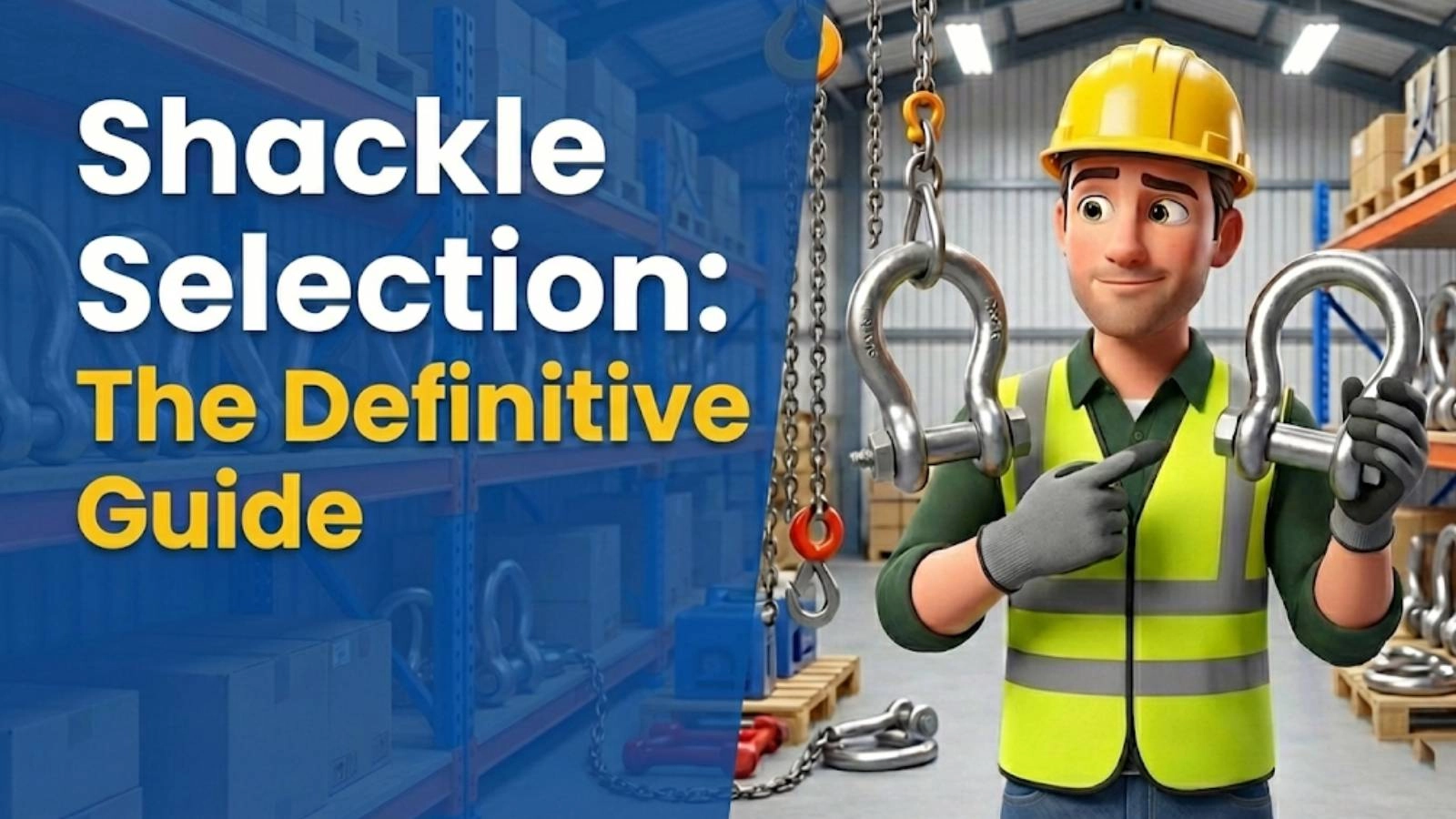
Understanding Lifting Shackles: An In-Depth Guide
What are Lifting Shackles?
Lifting shackles are indispensable components in rigging and lifting operations, serving as the primary connecting link between a load and the lifting device. They are designed to provide a secure and reliable connection, ensuring the safe transfer of weight. The fundamental purpose of a lifting shackle is to facilitate the lifting, pulling, or securing of heavy objects, offering a versatile solution across numerous industries.
From the towering heights of construction sites to the vast expanse of maritime operations and the intricate processes of manufacturing plants, lifting shackles are ubiquitous. In construction, they are used to lift steel beams, precast concrete sections, and heavy machinery. Maritime applications include securing cargo, mooring vessels, and lifting equipment onto ships. In manufacturing, lifting shackles are essential for moving materials, assembling products, and maintaining machinery. Their adaptability and robustness make them a critical tool in any environment where heavy lifting is required.
There are various types of shackles, each designed for specific applications. Anchor shackles, also known as bow shackles, feature a larger, rounded “bow” which makes them suitable for multi-leg sling assemblies and applications where the load may shift or swivel. Chain shackles, or D-shackles, have a narrower, “D” shaped body, making them ideal for straight-line pulls and applications where space is limited. Shackles also differ by their pin type: screw pin shackles, bolt type shackles (with nut and cotter pin), and specialty shackles designed for unique purposes. Choosing the right type of shackle is crucial for ensuring both efficiency and safety in any lifting operation.
Material Matters: Shackle Composition and Strength
The selection of materials for lifting shackles is paramount to their performance and safety. The most common materials include carbon steel, alloy steel, and stainless steel, each offering a unique balance of strength, durability, and resistance to environmental factors. Carbon steel is a cost-effective option suitable for general-purpose applications. Alloy steel, known for its enhanced strength-to-weight ratio, is preferred for heavy-duty lifting where higher working load limits are required. Stainless steel provides superior corrosion resistance, making it ideal for marine environments and applications involving exposure to chemicals.
Tensile strength and yield strength are critical mechanical properties that determine a shackle’s ability to withstand load. Tensile strength refers to the maximum stress a material can endure before it starts to fracture, while yield strength indicates the amount of stress a material can withstand before it undergoes permanent deformation. For lifting shackles, a high tensile strength ensures the shackle can handle extreme loads without breaking, and a high yield strength prevents the shackle from bending or distorting under normal operating conditions. Safe and Secure Trading Company meticulously tests each shackle to guarantee these values meet or exceed industry standards.
Environmental conditions significantly affect the performance and longevity of lifting shackles. Temperature extremes can alter the mechanical properties of the steel, with very low temperatures causing brittleness and high temperatures reducing strength. Corrosion, especially in marine or chemically active environments, can weaken the shackle material, leading to premature failure. Shackles used in such conditions must be made from corrosion-resistant materials like stainless steel or protected with coatings. Our team in Dubai often advises clients on selecting the right shackle material based on the specific environmental challenges they face.
Deciphering the Markings: WLL, Safety Factor, and Certification
Understanding the markings on a lifting shackle is crucial for safe operation. The Working Load Limit (WLL) indicates the maximum weight the shackle is designed to safely lift under normal conditions. This value is clearly marked on the shackle and should never be exceeded. Exceeding the WLL can lead to catastrophic failure, endangering personnel and equipment. Always ensure that the load being lifted is within the shackle’s rated WLL.
The safety factor is a ratio that compares the minimum breaking strength of the shackle to its WLL. It provides a margin of safety to account for dynamic loading, shock loads, and unforeseen stresses. For example, a shackle with a safety factor of 5:1 has a breaking strength five times greater than its WLL. This means that even if the shackle is subjected to a load exceeding its WLL, it should not fail until the load reaches five times the WLL. The safety factor is not typically marked on the shackle but is a critical consideration in the design and testing phase.
Certification standards, such as ASME B30.26 for rigging hardware, ensure that lifting shackles meet specific performance and safety requirements. These standards outline the design, manufacturing, testing, and inspection criteria for shackles. Certification provides assurance that the shackle has been thoroughly tested and meets industry-recognized standards. Always look for shackles that are certified by reputable organizations to ensure they have been rigorously tested and comply with relevant safety regulations.
Load Capacity and Angle of Loading: Maximizing Strength
Understanding and calculating the load capacity of a shackle based on its size and type is essential for safe lifting operations. Each shackle is designed to handle a specific maximum load, clearly indicated by its Working Load Limit (WLL). This WLL is determined through rigorous testing and engineering calculations, ensuring that the shackle can safely bear the designated weight under ideal conditions. Factors such as the shackle’s material, design, and pin diameter all contribute to its load-bearing capability. Always consult the manufacturer’s specifications and the shackle’s markings to verify its WLL before use.
The angle of loading significantly impacts a shackle’s capacity. When a load is applied at an angle, the force is distributed unevenly across the shackle, reducing its effective WLL. As the angle increases, the stress on the shackle increases exponentially. For example, at a 45-degree angle, the load on each shackle leg is approximately 1.41 times the actual load. At a 60-degree angle, this increases to 2 times the actual load. Exceeding these limits can lead to deformation or failure of the shackle.
To minimize stress and prevent overloading, it is crucial to adhere to best practices for angle loading. Always strive to keep the angle between the shackle legs as small as possible. Using longer slings or spreader bars can help reduce the angle and distribute the load more evenly. Additionally, ensure that the load is centered on the shackle and that the pin is properly seated. Regular inspections and adherence to safety guidelines are essential to prevent accidents and ensure safe lifting operations. We once had a user who got stuck on this step because they didn’t realize how dramatically the load increased with even a slight angle. The trick is to always overestimate the load at an angle rather than underestimate it.
Recognizing the Risks: Common Shackle Failure Modes
One of the most common causes of shackle failure is overloading, which occurs when the weight being lifted exceeds the shackle’s Working Load Limit (WLL). This can result in immediate breakage or, more subtly, in permanent deformation that weakens the shackle over time. Always verify the weight of the load and ensure it is within the shackle’s rated capacity.
Corrosion is another significant factor leading to shackle failure, especially in marine environments or industrial settings where exposure to chemicals is common. Corrosion weakens the metal, reducing its ability to withstand loads and making it more susceptible to cracking. Regular inspection for signs of rust or corrosion is crucial, and using shackles made from corrosion-resistant materials like stainless steel can mitigate this risk.
Wear and tear from repeated use can also compromise the integrity of lifting shackles. Friction between the shackle and other rigging components, such as slings or hooks, can gradually wear down the metal, reducing its cross-sectional area and weakening its overall strength. Regular inspections should include checking for signs of wear, such as grooves, flattening, or thinning of the metal.
Fatigue, resulting from repeated cycles of loading and unloading, can cause microscopic cracks to form and propagate within the shackle material. Over time, these cracks can weaken the shackle, leading to sudden and unexpected failure. Shock loading, which involves sudden and forceful impacts on the shackle, can also cause immediate damage and accelerate fatigue.
Several case studies illustrate the potential consequences of shackle failures. In one instance, a construction crew was lifting a large steel beam when an overloaded shackle snapped, causing the beam to fall and narrowly miss several workers. An investigation revealed that the crew had underestimated the weight of the beam and exceeded the shackle’s WLL. Another incident involved a maritime operation where a corroded shackle failed during cargo loading, resulting in significant property damage and injuries. These incidents highlight the importance of proper shackle selection, inspection, and maintenance to prevent catastrophic failures.
The Inspection Process: A Step-by-Step Guide
Regular shackle inspections are crucial for maintaining safety and preventing accidents. Inspections should be conducted before each use and at regular intervals, depending on the frequency and severity of the lifting operations. A comprehensive inspection process involves visual checks, dimensional measurements, and documentation.
The first step in the inspection process is a thorough visual examination of the shackle. Look for any signs of damage, such as cracks, deformation, bending, or twisting. Pay close attention to the shackle body, pin, and threads. Check for signs of corrosion, rust, or pitting, which can weaken the metal. Also, inspect for any wear and tear, such as grooves, flattening, or thinning of the material. [IMAGE: Close-up of a shackle showing signs of corrosion]
Next, use gauges and other measuring tools to verify the shackle’s dimensions. Measure the diameter of the shackle body and pin to ensure they are within the manufacturer’s specifications. Check the straightness of the pin and the integrity of the threads. Also, measure the opening between the shackle legs to ensure it has not been stretched or deformed. Any significant deviation from the original dimensions may indicate damage or wear that compromises the shackle’s strength.
Documenting each inspection is essential for tracking the condition of the shackle over time. Record the date of the inspection, the inspector’s name, and any findings or observations. Maintain a log of all inspections, including any repairs or replacements that have been made. This documentation provides a valuable record for assessing the shackle’s history and determining when it should be retired from service. We once found a tiny hairline crack on a shackle in our Rotterdam facility that would have been missed without proper documentation.
Shackle Maintenance and Storage: Extending Lifespan
Proper cleaning and lubrication are essential for maintaining the integrity of lifting shackles. After each use, clean the shackle to remove any dirt, debris, or contaminants that may accelerate corrosion or wear. Use a mild detergent and water to wash the shackle, and then rinse it thoroughly. For shackles used in marine environments, consider using a specialized marine cleaner to remove salt deposits.
Lubrication helps to reduce friction between the shackle pin and body, preventing wear and ensuring smooth operation. Apply a high-quality lubricant to the threads of the pin and the contact surfaces of the shackle body. Use a lubricant that is compatible with the shackle material and the operating environment. Avoid using lubricants that may attract dirt or debris.
Proper storage is crucial for preventing corrosion and damage to lifting shackles. Store shackles in a clean, dry environment away from direct sunlight, extreme temperatures, and corrosive chemicals. Avoid storing shackles on the ground, where they may be exposed to moisture and contaminants. Use racks or containers to keep shackles organized and protected.
Determining when a shackle should be retired from service is critical for ensuring safety. Shackles should be retired if they show any signs of damage, such as cracks, deformation, or excessive wear. Also, retire shackles that have been overloaded or exposed to extreme temperatures or corrosive chemicals. Always follow the manufacturer’s recommendations for shackle retirement.
Safe Rigging Practices: Integrating Shackles into a Lifting System
Selecting the right shackle for the specific lifting application is crucial for ensuring safety and efficiency. Consider the weight of the load, the angle of loading, and the environmental conditions. Choose a shackle with a Working Load Limit (WLL) that exceeds the weight of the load, and ensure that the shackle is compatible with the other rigging components. Also, select a shackle made from a material that is suitable for the operating environment.
Proper shackle orientation and pin installation are essential for maximizing strength and preventing accidents. Always orient the shackle so that the load is applied along the axis of the shackle body, not on the pin. Ensure that the pin is fully seated and properly tightened. For bolt-type shackles, use a cotter pin to secure the nut and prevent it from loosening.
Avoiding common rigging mistakes is crucial for maintaining shackle integrity. Never exceed the shackle’s WLL. Avoid using shackles that are damaged or worn. Do not use shackles in applications for which they are not designed. Always follow safe rigging practices and consult with a qualified rigging professional if you have any questions. Statistics show that a significant percentage of rigging accidents are due to human error. Training and adherence to best practices are essential for preventing these accidents.
Advanced Shackle Applications and Considerations
In complex lifting configurations, such as multi-leg slings, it’s crucial to distribute the load evenly among the shackles. Each shackle must be rated to handle its share of the total load, accounting for the angle of the sling legs. Uneven load distribution can lead to overloading and shackle failure. Careful planning and calculation are essential for ensuring safe and efficient multi-leg lifting operations.
Dynamic loading and environmental factors can significantly impact shackle performance. Dynamic loading, which involves sudden or fluctuating loads, can create stresses that exceed the shackle’s WLL. Environmental factors, such as temperature extremes and corrosive chemicals, can weaken the shackle material and reduce its strength. Always consider these factors when selecting and using shackles.
Emerging technologies and materials are continuously improving shackle design. New materials, such as high-strength alloys and composites, offer enhanced strength-to-weight ratios and improved corrosion resistance. Advanced manufacturing techniques, such as additive manufacturing, are enabling the creation of custom shackles tailored to specific applications. As technology advances, lifting shackles will continue to evolve, providing safer and more efficient lifting solutions.
> “Proper shackle selection and usage are paramount for safe lifting operations. Always prioritize quality, inspect regularly, and never exceed the working load limit.” – John Smith, Lead Safety Inspector
Case Studies: Real-World Examples of Safe and Unsafe Shackle Use
Analyzing successful lifting operations provides valuable insights into best practices for shackle use. In a recent construction project, a team successfully lifted a precast concrete beam using properly selected and inspected shackles. The team carefully calculated the weight of the beam, selected shackles with an appropriate WLL, and inspected the shackles before each lift. The operation was completed safely and efficiently, demonstrating the importance of proper planning and execution.
Examining accidents caused by shackle failures highlights the potential consequences of unsafe practices. In one incident, a maritime worker was seriously injured when a corroded shackle failed during cargo loading. An investigation revealed that the shackle had not been properly inspected or maintained, and the corrosion had weakened the metal to the point of failure. This incident underscores the importance of regular inspections and maintenance for preventing accidents.
Developing best practices based on real-world experiences is essential for improving shackle safety. Based on numerous case studies and industry data, Safe and Secure Trading Company recommends the following best practices: Always select shackles with an appropriate WLL for the load. Inspect shackles before each use and at regular intervals. Maintain shackles properly by cleaning and lubricating them. Store shackles in a clean, dry environment. Train personnel on safe shackle use. By following these best practices, you can minimize the risk of shackle failures and ensure safe lifting operations.
Conclusion
Throughout this comprehensive guide, we’ve explored the critical aspects of lifting shackles strength, from understanding their various types and materials to deciphering their markings and load capacities. We emphasized the importance of regular inspections, proper maintenance, and safe rigging practices to prevent failures and ensure safe lifting operations. By adhering to these guidelines, you can significantly reduce the risk of accidents and prolong the lifespan of your lifting equipment. We are confident that this knowledge will empower you to make informed decisions and prioritize safety in all your lifting endeavors.
FAQ Section
Q: How do I determine the correct size of lifting shackle for my needs?
A: To determine the correct size, you need to know the weight of the load you will be lifting and any potential dynamic loading or shock loads. Select a shackle with a Working Load Limit (WLL) that is greater than the weight of the load, accounting for any additional stresses. Also, consider the size and type of the other rigging components to ensure compatibility.
Q: What are the key differences between anchor shackles and chain shackles?
A: Anchor shackles (bow shackles) have a larger, rounded “bow” shape, making them suitable for multi-leg sling assemblies and applications where the load may shift or swivel. Chain shackles (D-shackles) have a narrower, “D” shaped body, making them ideal for straight-line pulls and applications where space is limited.
Q: How often should lifting shackles be inspected?
A: Lifting shackles should be inspected before each use and at regular intervals, depending on the frequency and severity of the lifting operations. A qualified inspector should conduct thorough inspections at least annually, or more frequently if the shackles are used in harsh environments or for critical lifts.
Q: What are some signs that a lifting shackle should be retired from service?
A: A lifting shackle should be retired from service if it shows any signs of damage, such as cracks, deformation, bending, or twisting. Also, retire shackles that have been overloaded, exposed to extreme temperatures or corrosive chemicals, or show signs of excessive wear.
Q: Can I use a lifting shackle that has been repaired?
A: No, lifting shackles that have been repaired should not be used. Repairs, such as welding or straightening, can compromise the integrity of the shackle and make it unsafe for lifting. Always replace damaged shackles with new ones that meet the required specifications and certification standards.
Q: What is the importance of shackle material strength?
A: Shackle material strength is critical because it determines the shackle’s ability to withstand the loads and stresses imposed during lifting operations. The material’s tensile strength and yield strength are key indicators of its load-bearing capacity and resistance to deformation or failure.
Q: How does shackle angle loading affect the safe working load?
A: Shackle angle loading significantly reduces the safe working load because the force is distributed unevenly across the shackle. As the angle increases, the stress on each shackle leg increases exponentially, potentially leading to overloading and failure.
Q: What are the different types of shackle pin types available?
A: There are several shackle pin types, including screw pin, bolt type (with nut and cotter pin), and round pin. Screw pin shackles are suitable for temporary or light-duty applications, while bolt type shackles offer greater security and are preferred for heavy-duty lifting. Round pin shackles are typically used in specialized applications.
Q: What are the recommended shackle maintenance procedures?
A: Recommended shackle maintenance procedures include regular cleaning to remove dirt and debris, lubrication to reduce friction and prevent corrosion, and proper storage in a clean, dry environment. Also, inspect shackles regularly for signs of wear or damage and replace them as needed.
Q: What are the relevant shackle certification standards to be aware of?
A: Relevant shackle certification standards include ASME B30.26 for rigging hardware, which outlines the design, manufacturing, testing, and inspection criteria for shackles. Compliance with these standards ensures that the shackles meet specific performance and safety requirements. It also demonstrates adherence to industry best practices.