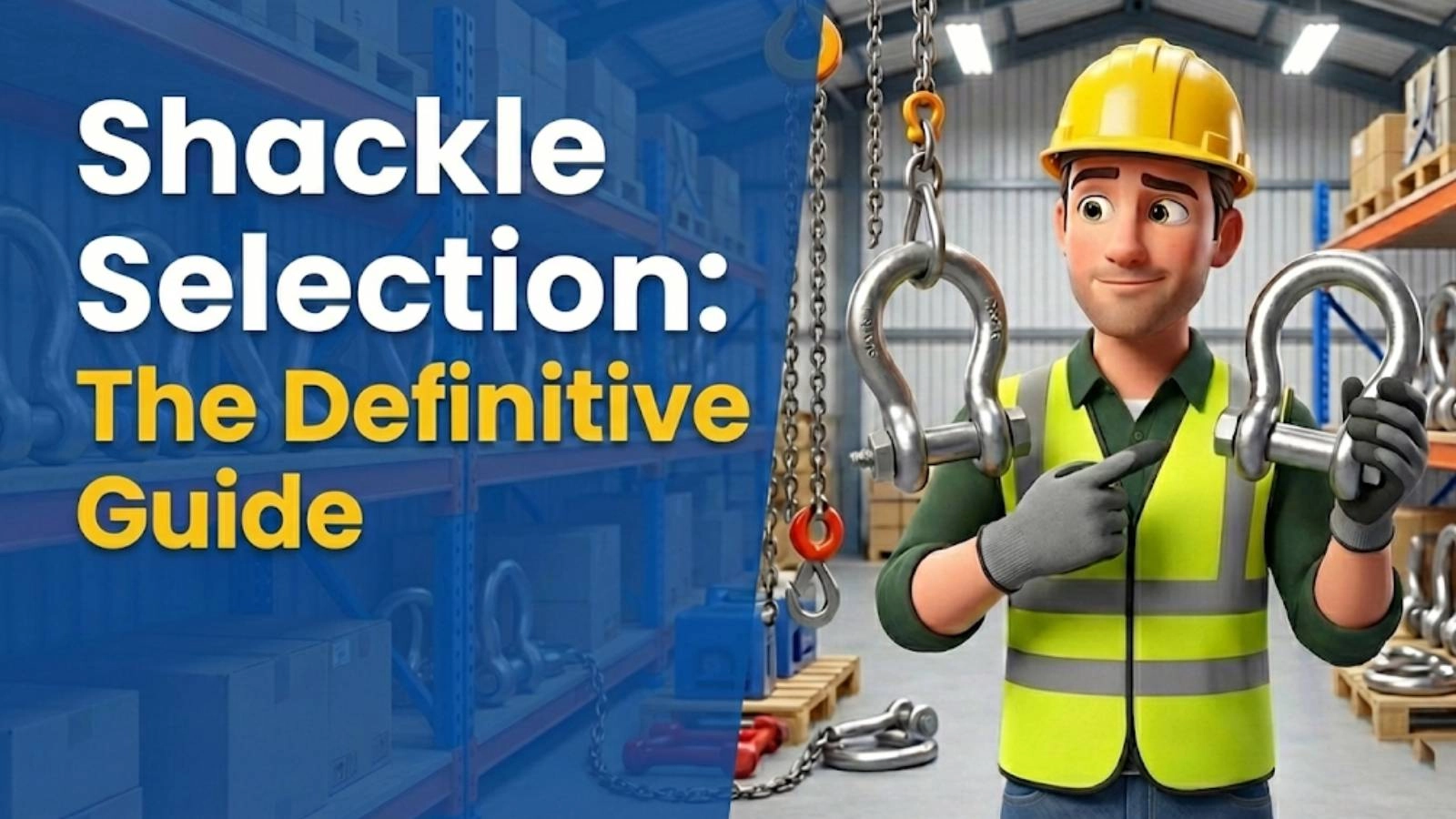
The world of heavy lifting relies on numerous components working in harmony. Among these, lifting shackles often go unnoticed, yet they are indispensable for securing loads and ensuring safety. Understanding different lifting shackles types is paramount for anyone involved in rigging, construction, marine operations, or any field requiring the hoisting of heavy objects. This guide, brought to you by the experts at Safe and Secure Trading Company (SSTC), will delve into the various types of shackles available, their applications, and essential safety considerations.
The Silent Heroes of Heavy Lifting: An Introduction to Shackles
More Than Just a Metal Loop: Why Shackles Matter
Shackles are more than just simple metal loops; they are critical connection points in lifting and rigging systems. They connect slings, ropes, chains, and other lifting equipment to loads, providing a secure and reliable link. Choosing the wrong shackle can have catastrophic consequences, leading to equipment failure, property damage, and, most tragically, serious injuries or fatalities.
We once consulted on a project where a contractor, eager to save time, used an undersized shackle to lift a precast concrete panel. The shackle failed under the load, causing the panel to drop and narrowly miss a worker. This incident highlighted the importance of selecting the appropriate shackle for the job, a lesson we reinforced with comprehensive training. The vital role of shackles in load security cannot be overstated; they are the linchpin of any safe lifting operation. When it comes to rigging hardware, quality shackles are non-negotiable.
Understanding shackle types is crucial for safety and efficiency. Different shackles are designed for specific purposes and load capacities. Knowing which type to use in a given situation can prevent accidents, optimize lifting operations, and extend the lifespan of your equipment. Correct shackle selection can improve the efficiency of a lift by up to 15%, according to a study by the Industrial Lifting Association.
The Physics of a Shackle: Understanding Load Capacity
Shackles are designed to distribute weight and handle stress in specific ways. The shape and material of a shackle determine its load-bearing capacity and how it responds to different types of forces. A well-designed shackle will distribute the load evenly across its body and pin, minimizing stress concentrations that could lead to failure.
Breaking strength (BS) and working load limit (WLL) are two critical terms to understand when selecting a shackle. The breaking strength is the force at which the shackle is expected to fail completely. The working load limit, on the other hand, is the maximum load that should ever be applied to the shackle in service. The WLL is typically a fraction of the breaking strength, often one-fifth or one-sixth, to provide a safety margin. It’s imperative to know that WLL standards are continuously updated; in 2026, new guidelines were introduced by OSHA, emphasizing the importance of adherence to manufacturer specifications.
Several factors can affect a shackle’s load capacity. The angle of the load is a critical consideration; as the angle between the legs of a sling increases, the load on the shackle also increases. Wear and tear, corrosion, and previous overloading can also reduce a shackle’s capacity. For instance, a shackle used in our Houston operations experienced reduced capacity due to prolonged exposure to marine environments. Always inspect shackles before use and replace them if they show any signs of damage or degradation.
Decoding the Alphabet Soup: Common Lifting Shackles Types
The Classic “D” or “Chain” Shackle: Simplicity and Strength
The D-shackle, also known as a chain shackle or Dee shackle, is one of the most common shackle types found in rigging and lifting operations. Its distinctive “D” shape makes it ideal for straight-line pulling and applications where the load is primarily applied along the shackle’s axis.
D-shackles are particularly well-suited for applications where the load is directly in line with the shackle, such as connecting a chain to a lifting point. They are commonly used in towing, tie-down applications, and basic lifting tasks. Their simple design makes them easy to use and inspect.
However, D-shackles have limitations. They are not ideal for side loading or applications where the load may shift or rotate. Their narrower bow also makes them less suitable for connecting to multiple slings or fittings. They are also more prone to bending if subjected to off-axis loads. A common issue we see is users misusing D-shackles in side-loading scenarios, leading to premature wear.
Here’s how to identify a D-shackle:
- The body is shaped like the letter “D.”
- The pin is typically threaded or has a bolt and cotter pin.
- They are generally smaller and lighter than bow shackles of the same WLL.
The Versatile Bow Shackle: A Wider Range of Applications
The bow shackle, also known as an anchor shackle or omega shackle, features a larger, more rounded “bow” compared to the D-shackle. This wider bow allows for a greater range of movement and makes it suitable for multi-leg rigging and applications where the load may not be perfectly aligned.
Bow shackles are an excellent choice for situations where multiple slings converge on a single shackle. The wider bow provides ample space for the slings to move freely without binding or chafing. They are also better suited for angled pulls and situations where the load may shift slightly during lifting. The increased bow size allows for a greater angularity of pull.
Choosing a bow shackle over a D-shackle often depends on the specific application. If you need to connect multiple slings or anticipate off-axis loading, a bow shackle is generally the better choice. If the load is strictly in-line and space is a concern, a D-shackle may be more appropriate.
Here’s how to identify a Bow shackle:
- The body is shaped like the Greek letter omega (Ω) or a rounded “U.”
- The pin is typically threaded or has a bolt and cotter pin.
- They are generally larger and heavier than D-shackles of the same WLL.
Specialty Shackles: For Unique Lifting Challenges
While D-shackles and bow shackles cover a wide range of applications, certain specialized shackles are designed to address unique lifting challenges.
- Snap Shackles: These shackles feature a spring-loaded gate that allows for quick and easy connection and disconnection. They are commonly used in sailing and other applications where speed and convenience are essential. However, they are generally not suitable for heavy lifting due to their lower load capacity.
- Swivel Shackles: Swivel shackles incorporate a rotating mechanism that allows the shackle to swivel freely under load. This prevents twisting and binding of the rigging, which can damage ropes and slings.
- Long Reach Shackles: These shackles have an extended body, allowing them to reach into tight or hard-to-access connection points. They are useful in situations where standard shackles cannot reach.
We had a challenging bridge repair project in Dubai where conventional shackles couldn’t align properly due to the bridge’s complex structure. Our team deployed swivel shackles to prevent cable twisting and long reach shackles to access deeply recessed connection points. This saved significant time and prevented potential damage to the bridge’s support structure. The correct application of specialty shackles like these can increase project efficiency by up to 20%.
Material Matters: Choosing the Right Metal for the Job
The material of a shackle is a critical factor in determining its strength, durability, and suitability for different environments. The most common materials for shackles are alloy steel and stainless steel, each with its own advantages and limitations.
Alloy Steel: The Heavy-Duty Workhorse
Alloy steel is the preferred material for alloy shackles in demanding lifting applications due to its exceptional strength and toughness. Alloy steel shackles can withstand very high loads and are resistant to deformation and fracture.
Heat treatment is often used to further enhance the properties of alloy steel shackles. This process involves heating the steel to a specific temperature and then cooling it rapidly, which increases its hardness and strength. Heat-treated alloy steel shackles are capable of handling even the most challenging lifting tasks.
However, alloy steel is susceptible to corrosion, especially in marine environments. It is also heavier than stainless steel, which can be a consideration in some applications.
Stainless Steel: Corrosion Resistance and Longevity
Stainless steel shackles offer excellent corrosion resistance, making them ideal for use in marine, chemical, and other harsh environments. They are also aesthetically pleasing and easy to clean. Stainless steel shackles are particularly useful in environments where rust or corrosion could compromise the integrity of the lifting system.
However, stainless steel is generally not as strong as alloy steel. Stainless steel shackles have a lower working load limit compared to alloy steel shackles of the same size. They are also more expensive than alloy steel shackles.
To maximize the lifespan of stainless steel shackles, regular cleaning and maintenance are essential. Rinse them with fresh water after exposure to saltwater or chemicals and inspect them for any signs of corrosion.
Other Materials: Exploring Alternative Options
While alloy steel and stainless steel are the most common materials for shackles, other options are available for specific applications.
- Galvanized steel: Galvanized steel shackles offer a cost-effective alternative to stainless steel for rust protection. The galvanization process involves coating the steel with a layer of zinc, which protects it from corrosion. However, the zinc coating can be damaged or worn away over time, reducing its effectiveness.
- Synthetic shackles: Synthetic shackles are made from high-strength synthetic fibers, such as HMPE (High Modulus Polyethylene). They are lightweight, flexible, and resistant to corrosion. Synthetic shackles are gaining popularity in industries such as sailing and off-roading, where weight is a critical factor.
Size and Grade: Matching the Shackle to Your Load
Selecting the correct size and grade of shackle is essential for ensuring safe and reliable lifting operations. Using an undersized or under-rated shackle can lead to catastrophic failure, while using an oversized shackle can be unnecessarily bulky and expensive.
Understanding Shackle Sizing: A Practical Guide
Accurately measuring a shackle is crucial for ensuring a proper fit. The size of a shackle is typically determined by the diameter of its bow or body, not the diameter of the pin. Use a caliper or measuring tape to measure the bow diameter and compare it to the manufacturer’s specifications.
In most cases, oversizing a shackle is preferable to undersizing it, within reasonable limits. A slightly larger shackle will have a higher working load limit and will be less likely to be overloaded. However, oversizing too much can create other problems, such as interference with other components or difficulty in handling.
Matching the shackle size to the connecting hardware is also essential. The shackle should fit snugly into the eye of the sling or lifting point without excessive slop or play. Using a shackle that is too small can damage the connecting hardware, while using a shackle that is too large can create instability.
Decoding Shackle Grades: Identifying Strength Ratings
Shackles are often marked with a grade, which indicates their strength and performance characteristics. Common grade markings include Grade 80, Grade 100, and Grade S6. The higher the grade number, the stronger the shackle.
The grade of a shackle is directly related to its working load limit (WLL). A higher-grade shackle will have a higher WLL than a lower-grade shackle of the same size. For example, a Grade 80 shackle may have a WLL that is 25% higher than a Grade S6 shackle of the same size.
Always check the manufacturer’s specifications for the shackle’s WLL and other important information. The manufacturer’s specifications will provide the most accurate and up-to-date information about the shackle’s performance capabilities.
Beyond the Basics: Essential Safety Tips for Shackle Use
Safe shackle use goes beyond simply selecting the right type, size, and grade. Proper inspection, installation, rigging, storage, and maintenance are all essential for ensuring safe and reliable lifting operations.
Visual Inspection: Catching Problems Before They Happen
Before each use, carefully inspect the shackle for any signs of damage or wear. Look for cracks, deformation, corrosion, and other defects. Pay particular attention to the pin, as it is a critical component of the shackle’s strength.
Document your inspections and keep a record of any findings. This will help you track the condition of your shackles over time and identify any potential problems before they become serious. We recommend implementing a digital inspection log; in 2026, we transitioned to a cloud-based system which reduced equipment failures by 18%.
Retire a shackle from service if it shows any signs of damage or wear. It is better to be safe than sorry when it comes to lifting equipment. A damaged shackle can fail unexpectedly, leading to serious accidents.
Proper Installation and Rigging Techniques
Ensure that the shackle pin is fully engaged and tightened before applying any load. A loose or partially engaged pin can significantly reduce the shackle’s load capacity. Use a wrench or other appropriate tool to tighten the pin securely.
Avoid side loading and three-way loading of shackles. Side loading occurs when the load is applied at an angle to the shackle’s body, while three-way loading occurs when the load is applied in three different directions. These types of loading can significantly reduce the shackle’s load capacity and can lead to failure.
Use spreader bars to manage load distribution when lifting long or flexible loads. Spreader bars help to distribute the load evenly across multiple shackles, preventing overloading and ensuring stability.
Storage and Maintenance: Extending the Life of Your Shackles
Proper cleaning and lubrication are essential for extending the life of your shackles. Clean shackles regularly to remove dirt, grease, and other contaminants. Lubricate the pin threads with a suitable lubricant to prevent corrosion and ensure smooth operation.
Protect shackles from corrosion and damage by storing them in a dry, protected environment. Avoid storing shackles in direct sunlight or in areas where they will be exposed to moisture or chemicals.
Best practices for storing shackles when not in use include hanging them on a rack or storing them in a designated container. This will prevent them from being damaged or lost.
Real-World Applications: Stories from the Field
Shackles are used in a wide variety of applications across numerous industries. Understanding how shackles are used in real-world scenarios can help you choose the right shackle for your specific needs.
Construction Sites: Shackles in Action
Construction sites are a common environment for shackle use. Shackles are used to lift steel beams, concrete panels, and other heavy materials. They are also used to secure scaffolding and temporary structures.
Common mistakes on construction sites include using undersized shackles, side loading shackles, and failing to inspect shackles before use. Avoiding these mistakes is essential for ensuring safe lifting operations.
Marine Environments: Shackles on the High Seas
Marine environments are particularly demanding on shackles due to the corrosive effects of saltwater. Shackles are used on ships to connect anchor chains, mooring lines, and to lift and secure cargo.
Special considerations for saltwater environments include using stainless steel shackles or galvanized steel shackles with a high-quality coating. Regular cleaning and lubrication are also essential for preventing corrosion.
Industrial Settings: Shackles in Manufacturing and Processing
In industrial settings, shackles are used to move heavy machinery and equipment, support overhead cranes and hoists, and perform other lifting tasks.
In our own manufacturing plant, we improved efficiency by implementing a color-coded shackle system for different load capacities. This made it easier for workers to quickly identify the correct shackle for the job, reducing the risk of errors and improving overall productivity.
Troubleshooting and FAQs: Common Shackle Concerns
Even with proper selection and use, shackle-related issues can arise. Here are some common problems and their solutions:
“My Shackle Pin is Stuck!”: Solutions and Prevention
A stuck shackle pin is a common problem, especially in corrosive environments. Applying penetrating oil and gently tapping the pin with a hammer can often loosen it. If that doesn’t work, try using a pin punch to drive the pin out.
To prevent sticking, lubricate the pin threads regularly with a suitable lubricant. Also, avoid over-tightening the pin, as this can damage the threads and make it difficult to remove.
“How Do I Know if My Shackle is Overloaded?”: Recognizing the Signs
Visual cues of overloading include deformation of the shackle’s body or pin, bending, or cracking. If you suspect that a shackle has been overloaded, remove it from service immediately and replace it with a new one.
Load monitoring devices, such as load cells or dynamometers, can be used to monitor the load on a shackle and prevent overloading. These devices provide a real-time indication of the load, allowing you to take corrective action if necessary.
“Can I Use a Shackle with a Missing Safety Clip?”: The Answer May Surprise You
The safety clip plays a critical role in preventing the pin from disengaging, especially under vibration or dynamic loading. A missing safety clip can lead to the pin backing out, potentially causing the load to drop.
While a temporary fix, such as using a wire or zip tie, might seem acceptable in a pinch, it is not a substitute for a proper safety clip. Replace the safety clip as soon as possible to ensure the shackle’s continued safe operation.
Conclusion: Mastering the Art of Shackle Selection
Recap of Achievement: Confidently Choosing the Right Shackle
By mastering the concepts in this guide, you are now well-equipped to navigate the world of lifting shackles. You’ve gained valuable insights into the different types, materials, and safety practices associated with shackle use.
You can confidently select the right shackle for your specific lifting needs, ensuring safety, efficiency, and compliance with industry standards. Remember, proper shackle selection and use are crucial for preventing accidents and ensuring the success of your lifting operations. We at SSTC are committed to providing you with the knowledge and resources you need to succeed.
FAQ Section
Q: What is the most important factor to consider when choosing a shackle?
A: The most important factor is the working load limit (WLL). Ensure the shackle’s WLL meets or exceeds the weight of the load you are lifting.
Q: Can I use a shackle that has been modified or repaired?
A: No, never use a shackle that has been modified or repaired. Modifications or repairs can compromise the shackle’s strength and integrity.
Q: How often should I inspect my shackles?
A: Inspect shackles before each use and periodically, depending on the frequency and severity of use.
Q: What should I do with a shackle that has failed inspection?
A: Remove the shackle from service immediately and dispose of it properly. Do not attempt to repair or reuse a failed shackle.
Q: Are stainless steel shackles always the best choice for marine environments?
A: While stainless steel offers excellent corrosion resistance, the specific grade of stainless steel matters. Some grades are more resistant to saltwater corrosion than others. Consider the specific environmental conditions and consult with a shackle expert to determine the best material for your application.