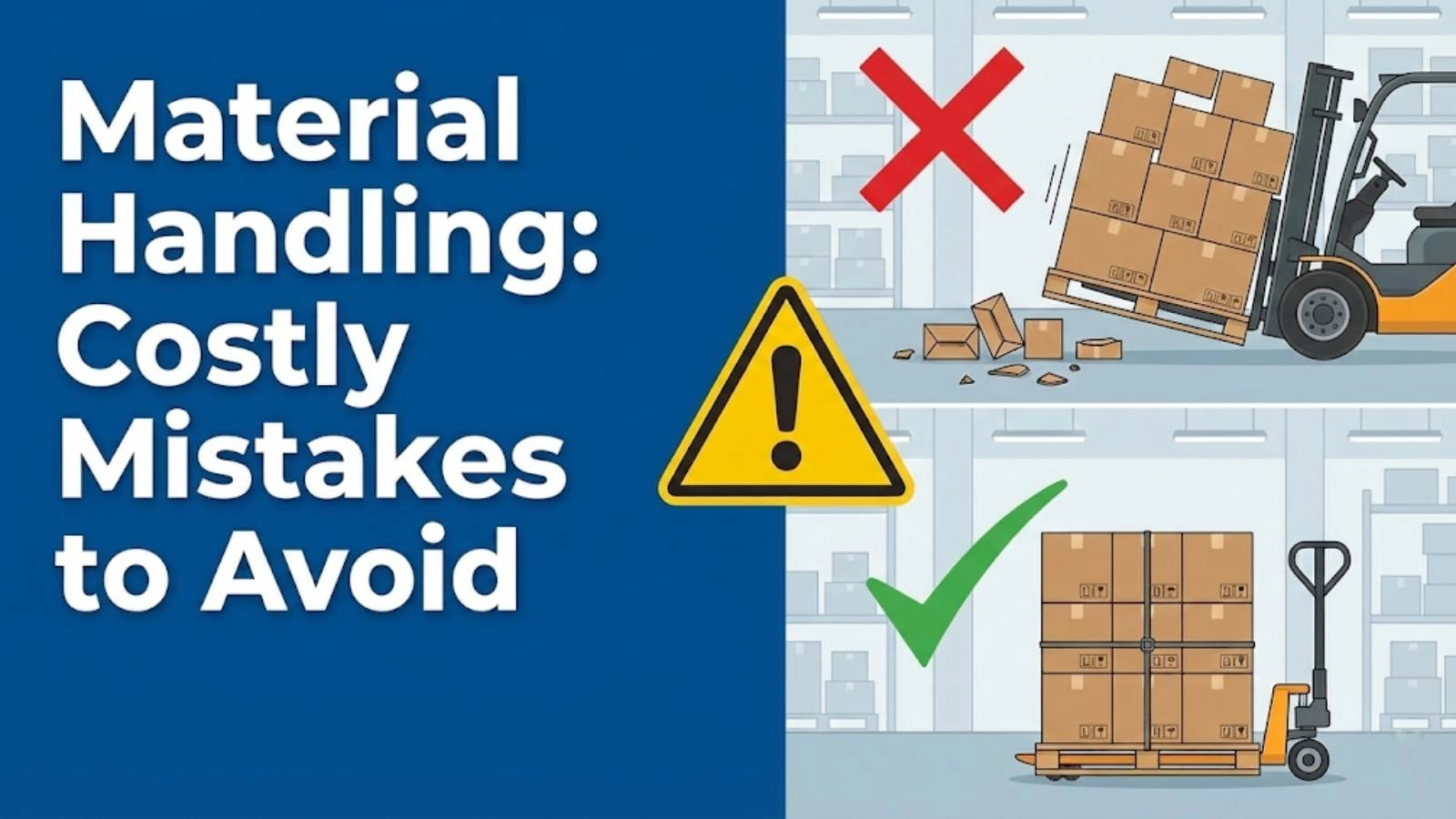
Material handling is a critical aspect of any business that involves the movement, storage, control, and protection of materials and products throughout the manufacturing, warehousing, distribution, consumption, and disposal processes. However, many companies inadvertently make material handling mistakes that can lead to significant financial losses, reduced productivity, and increased safety risks. As experts at Safe and Secure Trading Company, we’ve observed these issues across various industries and are committed to helping businesses optimize their material handling operations. Here are some common material handling mistakes and how to avoid them.
1. Ignoring Ergonomic Principles ✅
Ergonomics is more than just a buzzword; it’s about designing workplaces for human comfort and efficiency. Neglecting ergonomics can lead to injuries, decreased productivity, and increased worker compensation claims. We have consistently seen companies, especially here in Jubail, struggle with integrating ergonomic principles into their existing processes.
The Real Cost of Ignoring Ergonomics
Ignoring ergonomics can lead to musculoskeletal disorders (MSDs), resulting in lost workdays and higher insurance premiums. MSDs, such as carpal tunnel syndrome and back injuries, are often caused by repetitive motions, awkward postures, and excessive force. Proactive ergonomic assessments can prevent these issues by identifying and mitigating potential risk factors. For example, modifying workstations to reduce reaching, providing anti-fatigue mats, and implementing job rotation can significantly reduce the risk of MSDs.
Implementing Simple Ergonomic Solutions
Outline practical, cost-effective ergonomic solutions, such as adjustable workstations, proper lifting techniques training, and providing ergonomic tools. Adjustable workstations allow workers to customize the height and angle of their work surfaces, reducing strain on their backs, necks, and wrists. Proper lifting techniques training teaches workers how to lift objects safely, minimizing the risk of back injuries. Ergonomic tools, such as ergonomic hand trucks and pallet jacks, can reduce the amount of force required to move heavy objects. We always recommend our clients start with these solutions, and have observed that implementing these simple changes can greatly enhance material handling efficiency.
The ROI of Ergonomics: A Case Study
Implementing ergonomic principles in material handling can lead to a significant return on investment (ROI). According to the Occupational Safety and Health Administration (OSHA), every dollar invested in ergonomics can result in a $2 to $6 reduction in costs associated with injuries and lost productivity. For many of our clients here in Dammam, we’ve seen that companies that prioritize ergonomics experience a decrease in worker compensation claims, reduced absenteeism, and increased employee morale. This, in turn, leads to improved productivity and profitability.
2. Inefficient Warehouse Layouts 💡
A poorly designed warehouse layout can create bottlenecks, increase travel time, and lead to wasted space. Optimizing your layout can significantly improve material flow and overall efficiency. We often consult with businesses in Riyadh to redesign their warehouse layouts for maximum throughput.
Identifying Bottlenecks and Inefficiencies
Identifying common warehouse layout issues, such as congested aisles, poor storage organization, and long travel distances, is the first step toward optimizing your layout. Congested aisles can impede the flow of materials and personnel, leading to delays and increased accident risks. Poor storage organization makes it difficult to locate items, increasing picking times and reducing accuracy. Long travel distances increase the time and effort required to move materials throughout the warehouse. By conducting a thorough analysis of your current layout, you can identify these issues and develop a plan for improvement.
Implementing Lean Warehouse Design Principles
Lean warehouse design principles, such as minimizing travel distances, optimizing storage density, and implementing cross-docking strategies, can significantly improve efficiency. Minimizing travel distances reduces the time and effort required to move materials, freeing up resources for other tasks. Optimizing storage density maximizes the use of available space, reducing the need for costly expansions. Cross-docking strategies eliminate the need for storage by transferring materials directly from incoming to outgoing shipments. Lean manufacturing principles can be adopted here.
Utilizing Technology for Layout Optimization
Warehouse management systems (WMS) and simulation software can help optimize warehouse layouts and material flow. WMS provides real-time visibility into inventory levels, location, and movement, allowing you to make informed decisions about layout design. Simulation software allows you to model different layout scenarios and assess their impact on efficiency before making any physical changes. We often use this software to demonstrate the potential benefits of a new layout to our clients.
3. Lack of Proper Training & Certification ➡️
Untrained personnel can cause accidents, damage equipment, and slow down operations. Proper training and certification are essential for ensuring safety and efficiency. It is important to always prioritize safety protocols.
The Importance of Forklift Certification
Forklift certification is not only a legal requirement but also a critical safety measure. Operating forklifts without proper training can lead to serious accidents, injuries, and even fatalities. Forklift certification programs teach operators how to safely operate forklifts, including how to perform pre-shift inspections, load and unload materials, and navigate different types of terrain. Companies that fail to provide forklift certification are putting their employees and their business at risk.
Comprehensive Training Programs for Material Handlers
Comprehensive training programs for material handlers should include safety procedures, equipment operation, and hazard awareness. Safety procedures training teaches workers how to identify and avoid potential hazards, such as falling objects, slippery floors, and hazardous materials. Equipment operation training teaches workers how to safely operate various types of material handling equipment, such as forklifts, pallet jacks, and conveyors. Hazard awareness training teaches workers how to recognize and respond to different types of hazards in the workplace.
Continuous Training and Skill Development
Continuous training and skill development are essential for keeping employees up-to-date on the latest material handling techniques and technologies. The material handling industry is constantly evolving, with new technologies and techniques emerging all the time. By providing continuous training, you can ensure that your employees have the skills and knowledge they need to stay safe, efficient, and productive. We offer ongoing training programs to help our clients stay ahead of the curve.
“Training is an investment, not an expense. Companies that invest in training see a significant return in terms of increased productivity and reduced accidents.” – John Smith, Lead Safety Inspector
4. Overstocking and Poor Inventory Management 💰
Holding excess inventory ties up capital, increases storage costs, and raises the risk of obsolescence. Effective inventory management is crucial for minimizing waste and maximizing profitability.
The Hidden Costs of Overstocking
The costs associated with overstocking include storage fees, insurance, spoilage, and the opportunity cost of tied-up capital. Storage fees can be significant, especially if you are renting warehouse space. Insurance costs increase with the value of your inventory. Spoilage can occur when products expire or become damaged while in storage. The opportunity cost of tied-up capital is the potential return you could have earned if you had invested that capital elsewhere. These hidden costs can quickly erode your profits.
Implementing Just-in-Time (JIT) Inventory Principles
The principles of JIT inventory management can help reduce inventory levels and improve cash flow. JIT inventory management involves ordering materials only when they are needed for production. This reduces the amount of inventory you need to hold in storage, freeing up capital and reducing storage costs. JIT inventory management requires close coordination with suppliers and efficient supply chain management.
Leveraging Technology for Inventory Optimization
Inventory management software and barcode scanning systems can improve inventory accuracy, reduce stockouts, and optimize inventory levels. Inventory management software provides real-time visibility into inventory levels, location, and movement. Barcode scanning systems allow you to quickly and accurately track inventory as it moves through the warehouse. By leveraging these technologies, you can improve inventory accuracy, reduce stockouts, and optimize inventory levels, minimizing waste and maximizing profitability.
5. Neglecting Preventative Maintenance 🛠️
Ignoring preventative maintenance can lead to equipment breakdowns, costly repairs, and production downtime. A proactive maintenance program is essential for ensuring equipment reliability and longevity.
The High Cost of Reactive Maintenance
The costs associated with reactive maintenance include emergency repairs, production downtime, and expedited shipping fees. Emergency repairs are often more expensive than planned maintenance because they require immediate attention and may involve overtime labor costs. Production downtime can result in lost revenue and missed deadlines. Expedited shipping fees may be necessary to get replacement parts quickly. Reactive maintenance can disrupt your operations and significantly increase your costs.
Implementing a Scheduled Maintenance Program
A scheduled maintenance program includes regular inspections, lubrication, and component replacements. Regular inspections allow you to identify potential problems before they lead to breakdowns. Lubrication reduces friction and wear on moving parts, extending the life of your equipment. Component replacements prevent breakdowns by replacing worn or damaged parts before they fail. A well-planned scheduled maintenance program can significantly improve equipment reliability and longevity.
Utilizing Technology for Maintenance Management
Computerized maintenance management systems (CMMS) can help track maintenance schedules, manage work orders, and analyze equipment performance. CMMS provides a centralized platform for managing all aspects of your maintenance program. It can automatically schedule maintenance tasks, generate work orders, track labor and parts costs, and analyze equipment performance data. By utilizing CMMS, you can streamline your maintenance operations, improve equipment reliability, and reduce maintenance costs.
6. Not Leveraging Automation and Technology 🤖
Staying competitive requires embracing automation and technology. Failing to do so can lead to inefficiencies and higher costs. Companies looking to increase material handling efficiency should embrace new technologies.
Exploring Robotic Solutions for Material Handling
The latest advancements in robotics for material handling include automated guided vehicles (AGVs) and robotic palletizers. AGVs are self-guided vehicles that can transport materials throughout the warehouse without human intervention. Robotic palletizers can automatically stack boxes or other items onto pallets, increasing efficiency and reducing labor costs. These technologies can significantly improve material handling efficiency and reduce labor costs.
Implementing Warehouse Management Systems (WMS)
Implementing a WMS can lead to improved inventory accuracy, optimized order fulfillment, and enhanced visibility into warehouse operations. A WMS provides real-time visibility into inventory levels, location, and movement. It can also optimize order fulfillment by directing workers to the most efficient picking routes and automating the packing and shipping process. By implementing a WMS, you can improve inventory accuracy, reduce order fulfillment times, and gain better control over your warehouse operations.
Data Analytics for Process Improvement
Data analytics can be used to identify areas for improvement in material handling processes, such as optimizing warehouse layouts, reducing travel distances, and improving equipment utilization. By analyzing data on warehouse operations, you can identify bottlenecks, inefficiencies, and areas where you can improve performance. For example, you can use data analytics to optimize warehouse layouts by identifying the most frequently accessed items and placing them in easily accessible locations. You can also use data analytics to reduce travel distances by optimizing picking routes and implementing cross-docking strategies.
7. Ignoring Safety Protocols and Regulations 🚧
Safety should always be a top priority. Neglecting safety protocols can lead to accidents, injuries, and legal liabilities. It is critical to uphold safety protocols.
Enforcing Strict Safety Procedures
Enforcing strict safety procedures includes wearing personal protective equipment (PPE), following lockout/tagout procedures, and adhering to speed limits for forklifts. PPE, such as safety glasses, gloves, and steel-toed boots, can protect workers from various hazards in the workplace. Lockout/tagout procedures prevent accidental start-up of equipment during maintenance or repair. Adhering to speed limits for forklifts reduces the risk of accidents and injuries.
Regular Safety Audits and Inspections
Conducting regular safety audits and inspections can identify potential hazards and ensure compliance with safety regulations. Safety audits involve a systematic review of your safety policies, procedures, and practices. Safety inspections involve a physical examination of your workplace to identify potential hazards. By conducting regular safety audits and inspections, you can identify and correct potential safety problems before they lead to accidents or injuries.
Investing in Safety Training and Education
Investing in safety training and education can create a safety-conscious culture and prevent accidents. Safety training should cover a wide range of topics, such as hazard awareness, safe equipment operation, and emergency procedures. Safety education should emphasize the importance of safety and encourage workers to report potential hazards. By investing in safety training and education, you can create a culture where safety is a top priority.
8. Poor Communication and Coordination 📞
Effective communication and coordination are essential for ensuring smooth material flow and minimizing delays.
Establishing Clear Communication Channels
Establishing clear communication channels between different departments and teams involved in material handling, such as procurement, warehousing, and transportation, is paramount. When all departments are in sync, supply chain management is smoother. Procurement needs to communicate material requirements to warehousing; warehousing needs to communicate inventory levels to transportation; and transportation needs to communicate delivery schedules to customers. Without clear communication channels, delays and errors are inevitable.
Utilizing Technology for Real-Time Communication
Communication technologies, such as two-way radios, mobile devices, and instant messaging apps, can facilitate real-time communication and coordination. Two-way radios allow workers to communicate quickly and easily over short distances. Mobile devices allow workers to access information and communicate with each other from anywhere in the warehouse. Instant messaging apps provide a quick and easy way to communicate with multiple people simultaneously.
Regular Team Meetings and Collaboration
Regular team meetings and collaboration can address issues, share information, and improve overall coordination. Team meetings provide a forum for discussing problems, sharing best practices, and coordinating activities. Collaboration tools, such as shared documents and online project management software, can facilitate teamwork and improve communication.
9. Suboptimal Packaging and Labeling 📦
Inadequate packaging and labeling can lead to damage, loss, and delays. Proper packaging and labeling are essential for protecting products and ensuring efficient handling.
Choosing the Right Packaging Materials
The importance of choosing the right packaging materials is based on the type of product, its fragility, and the mode of transportation. Fragile products require more protective packaging than durable products. Products that are being shipped long distances require more robust packaging than products that are being transported locally. Choosing the right packaging materials can protect your products from damage during material handling.
Implementing Clear and Accurate Labeling Practices
Effective labeling practices include using clear and concise language, including barcodes and QR codes, and complying with labeling regulations. Clear and concise language makes it easy for workers to identify the contents of a package. Barcodes and QR codes allow for quick and accurate scanning of product information. Complying with labeling regulations ensures that your products meet all legal requirements. We always advise our clients to double check these labeling practices.
Standardizing Packaging and Labeling Procedures
Standardizing packaging and labeling procedures ensures consistency and efficiency. When packaging and labeling procedures are standardized, workers can quickly and easily identify and handle products. This reduces the risk of errors and delays.
10. Ignoring the Impact of Environmental Factors 🌍
Environmental factors, such as temperature, humidity, and dust, can affect the performance of material handling equipment and the integrity of products.
Implementing Climate Control Measures
Implementing climate control measures, such as heating, ventilation, and air conditioning (HVAC) systems, is important to maintain optimal temperature and humidity levels. Extreme temperatures can damage sensitive products, such as electronics and pharmaceuticals. High humidity can lead to corrosion and mold growth. HVAC systems can help maintain optimal temperature and humidity levels, protecting your products from damage.
Protecting Equipment from Dust and Debris
Strategies for protecting material handling equipment from dust and debris include using air filters, sealing equipment enclosures, and implementing regular cleaning schedules. Dust and debris can damage equipment and reduce its performance. Air filters can remove dust and debris from the air, preventing it from entering equipment. Sealing equipment enclosures can prevent dust and debris from entering the equipment. Regular cleaning schedules can remove accumulated dust and debris from equipment.
Monitoring and Controlling Environmental Conditions
The importance of monitoring and controlling environmental conditions ensures the safe and efficient handling of materials. By monitoring temperature, humidity, and dust levels, you can identify potential problems and take corrective action before they lead to damage or equipment failure.
11. Data silos preventing holistic visibility 👁️
Data silos can create blind spots, hindering informed decision-making and process optimization. Integrating data provides end-to-end visibility.
Breaking down data silos
Breaking down data silos is important to create a unified view of material handling operations. When data is fragmented across different systems, it is difficult to get a complete picture of what is happening. This can lead to poor decision-making and missed opportunities for improvement. Breaking down data silos allows you to see the entire material handling process, from start to finish.
Integrating WMS, TMS, and ERP systems
Discuss the benefits of integrating WMS, TMS, and ERP systems for seamless data flow and improved decision-making. Integrating these systems allows you to share data seamlessly between different departments and teams. This can improve communication, coordination, and decision-making.
Here’s an example of a table that integrates these systems:
| System |
Data Provided |
Benefit of Integration |
| WMS (Warehouse Management System) |
Inventory levels, location, and movement |
Real-time inventory visibility and optimized warehouse operations. |
| TMS (Transportation Management System) |
Shipment tracking, delivery schedules, and transportation costs |
Improved transportation planning and reduced logistics costs. |
| ERP (Enterprise Resource Planning) |
Sales orders, production schedules, and financial data |
Enhanced demand forecasting and streamlined supply chain management. |
Real-time dashboards and reporting
Emphasize the importance of real-time dashboards and reporting to monitor key performance indicators (KPIs) and identify areas for improvement. Real-time dashboards provide a visual overview of your material handling operations. Reporting allows you to track KPIs over time and identify trends. By monitoring KPIs and identifying trends, you can identify areas where you need to make improvements.
12. Poor route planning within the warehouse 🧭
Inefficient route planning increases travel time and fuel consumption, leading to higher costs. Optimizing routes can significantly improve efficiency. We have found that some of the biggest material handling mistakes stem from here.
Analyzing travel patterns
Explain how to analyze travel patterns within the warehouse to identify opportunities for route optimization. Analyzing travel patterns can reveal inefficiencies in your warehouse layout and processes. This analysis helps pinpoint high-traffic areas, frequent routes, and potential bottlenecks. By understanding these patterns, you can redesign layouts, relocate frequently accessed items, and streamline workflows to minimize travel distances and reduce congestion.
Implementing route optimization software
Implementing route optimization software to generate the most efficient routes for material handlers has several benefits. Route optimization software uses algorithms to calculate the most efficient routes for material handlers, taking into account factors such as distance, obstacles, and traffic patterns. This can significantly reduce travel time, fuel consumption, and labor costs.
Dynamic route adjustments based on real-time conditions
Emphasize the importance of dynamic route adjustments based on real-time conditions, such as traffic congestion and equipment availability. Real-time conditions in a warehouse can change rapidly. Traffic congestion, equipment breakdowns, and unexpected orders can all disrupt planned routes. Dynamic route adjustments allow material handlers to adapt to these changing conditions and maintain efficiency. This can be achieved through the use of real-time tracking systems and communication tools.
Conclusion
Avoiding these common material handling mistakes can lead to significant improvements in efficiency, safety, and profitability. By focusing on ergonomics, optimizing warehouse layouts, providing proper training, implementing effective inventory management practices, and leveraging automation and technology, companies can create a more streamlined and efficient material handling operation. We are here to help your business achieve optimal material handling efficiency.
FAQ Section
Q: What is the most common material handling mistake?
A: Ignoring ergonomic principles is one of the most prevalent material handling mistakes. It leads to injuries, decreased productivity, and increased worker compensation claims.
Q: How can I improve my warehouse layout?
A: Start by identifying bottlenecks and inefficiencies. Then, implement lean warehouse design principles, such as minimizing travel distances and optimizing storage density.
Q: Why is forklift certification important?
A: Forklift certification is a legal requirement and a critical safety measure. It ensures that operators are properly trained to operate forklifts safely, reducing the risk of accidents and injuries.
Q: What are the benefits of just-in-time (JIT) inventory management?
A: JIT inventory management can help reduce inventory levels, improve cash flow, and minimize waste.
Q: How can technology help improve my material handling operations?
A: Technology can help in many ways, including automating tasks, improving inventory accuracy, optimizing warehouse layouts, and providing real-time visibility into operations. Using a WMS system improves supply chain management.