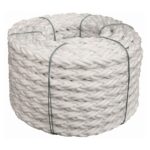
Polypropylene rope stands as a versatile and economical choice for a wide array of applications. Its lightweight nature, combined with impressive durability, makes it a favorite among professionals and hobbyists alike. This comprehensive guide, brought to you by Safe and Secure Trading Company (SSTC), will delve into the properties, uses, and best practices associated with polypropylene rope.
Introduction to Polypropylene Rope: Your Go-To Lightweight Champion
Polypropylene rope is a synthetic rope prized for its unique combination of characteristics. Its affordability and versatility make it a great choice for many applications. Let’s examine what it is and why it’s so popular.
What is Polypropylene Rope? A Beginner’s Definition
Polypropylene rope is crafted from polypropylene, a thermoplastic polymer renowned for its versatility and resilience. This material belongs to the polyolefin family and is created through the polymerization of propylene monomers. The resulting polymer boasts a high strength-to-weight ratio and exceptional resistance to various environmental factors.
The manufacturing process typically involves extruding molten polypropylene through a die to form fibers, which are then twisted or braided together to create the rope. This process allows for precise control over the rope’s diameter, construction, and overall strength. The resulting rope is lightweight, flexible, and resistant to abrasion.
One of its defining characteristics is its ability to float. This stems from polypropylene’s low density, making it lighter than water. This buoyant quality makes it a great choice for marine applications and other situations where a floating rope is beneficial.
Why Choose Polypropylene Rope? The Core Advantages
There are many reasons to select polypropylene rope. It offers a compelling blend of properties that make it a standout choice for various tasks. We’ve seen firsthand how it outperforms other materials in specific scenarios.
Its resistance to water, mildew, and chemicals is a major advantage. Unlike natural fiber ropes, polypropylene does not readily absorb water, which prevents it from rotting or decaying over time. This makes it an excellent choice for marine environments and outdoor applications where exposure to moisture is unavoidable. Moreover, its resistance to chemicals makes it suitable for industrial settings where it may come into contact with solvents, acids, or other corrosive substances.
Compared to other synthetic ropes like nylon or polyester, polypropylene rope is generally more affordable. This makes it a cost-effective option for projects where budget is a primary concern. We often recommend it to clients looking for the best balance of performance and price.
Polypropylene rope is available in a wide spectrum of vibrant colors. This is beneficial for easy identification, organization, or aesthetic purposes. In our experience, color-coding ropes by function or load capacity enhances safety and efficiency on job sites.
Key Properties and Benefits of Polypropylene Rope
The unique set of properties inherent in polypropylene rope contributes to its widespread appeal. Its specific characteristics offer a range of benefits across diverse applications. Let’s explore these in greater detail.
Lightweight and Buoyant: The Floating Advantage
The most notable characteristic of polypropylene rope is its lightweight nature and buoyancy. Because it’s a floating rope, it opens a world of uses where this is key. These properties are intrinsically linked, as polypropylene’s low density (lower than water) causes it to float effortlessly.
The ability to float is crucial for marine applications. For instance, in boating, a floating mooring line or anchor line can prevent the rope from sinking and becoming entangled with the propeller or underwater obstacles. Similarly, in fishing, a floating rope used for nets or crab traps can ensure that the gear remains visible and easily retrievable. At our Dubai location, our team frequently encounters the necessity for ropes that remain afloat in challenging marine conditions.
Consider a scenario where a worker accidentally drops a tool overboard while working on a dock. If the safety line attached to the tool is made of polypropylene rope, it will remain afloat, making it easier to locate and retrieve the tool. This simple advantage can prevent costly losses and potential environmental hazards.
Compared to other common rope materials, such as nylon or natural fibers like Manila, polypropylene is significantly lighter. Nylon, while strong, absorbs water and becomes heavier, while natural fibers are inherently dense and prone to water absorption. This weight difference can be significant, especially when handling long lengths of rope or working in situations where weight is a critical factor.
Resistance to Water, Mildew, and Chemicals: Longevity Defined
Polypropylene rope exhibits remarkable resistance to water absorption, mildew, and a wide range of chemicals. This inherent resistance contributes significantly to its longevity and makes it suitable for demanding environments.
Unlike natural fiber ropes, polypropylene does not absorb water. This prevents the rope from becoming waterlogged, heavy, and susceptible to rot and decay. The resistance to water absorption is particularly important in marine environments, where constant exposure to saltwater can quickly degrade natural fiber ropes.
Furthermore, polypropylene’s resistance to mildew ensures that it will not support the growth of mold or fungus, even in damp or humid conditions. This is a crucial advantage for ropes used in outdoor applications, such as camping, hiking, or construction, where exposure to moisture is inevitable.
Polypropylene is also resistant to many common chemicals, including acids, alkalis, and solvents. This makes it suitable for use in industrial settings where exposure to these substances is possible. For example, polypropylene rope can be used to tie down cargo in trucks transporting chemicals or to secure equipment in manufacturing plants where spills or leaks may occur.
The combination of water, mildew, and chemical resistance significantly extends the lifespan of polypropylene rope compared to other rope materials. This translates to cost savings over time, as the rope will not need to be replaced as frequently.
Strength and Durability: Performance Under Pressure
While polypropylene rope is lightweight, it possesses a respectable strength-to-weight ratio, making it suitable for various load-bearing applications. Its strength, while not as high as some other synthetic ropes like nylon, is adequate for many common tasks.
The typical breaking strength of polypropylene rope varies depending on its diameter and construction. For example, a 1/4-inch diameter polypropylene rope may have a breaking strength of around 900 lbs, while a 3/8-inch diameter rope may have a breaking strength of around 2,000 lbs. It is crucial to consult the manufacturer’s specifications to determine the exact breaking strength of a particular rope.
Several factors can affect the durability of polypropylene rope. Exposure to ultraviolet (UV) radiation from sunlight can degrade the rope over time, causing it to become brittle and lose strength. Knot type can also impact its strength. Certain knots can concentrate stress on specific areas of the rope, reducing its overall breaking strength.
To maintain polypropylene rope for long-term use, it is essential to store it in a cool, dry place away from direct sunlight. Regularly inspect the rope for signs of wear and tear, such as cuts, abrasions, or fraying. Avoid exposing the rope to excessive heat or sharp edges. Properly tying knots and using appropriate hardware can also help extend the rope’s lifespan. We advise our clients to keep a maintenance log to track rope usage and identify potential issues early on.
Top Uses for Polypropylene Rope: A Practical Guide
The versatility of polypropylene rope shines through in its diverse range of applications. From marine environments to outdoor adventures, its unique properties make it an invaluable tool. Let’s explore some of its most common uses.
Marine Applications: Boating, Fishing, and More
Polypropylene rope is a staple in marine environments, thanks to its buoyancy, water resistance, and affordability. Boating enthusiasts and commercial fishermen alike rely on its reliable performance.
For smaller boats, polypropylene rope is commonly used as a mooring line, anchor line, or fender line. Its ability to float prevents it from sinking and becoming entangled with the propeller or underwater obstacles. Its resistance to saltwater ensures that it will not rot or decay over time.
In the fishing industry, polypropylene rope is used extensively for constructing fishing nets, crab traps, and other fishing gear. Its buoyancy helps keep the gear afloat, while its resistance to saltwater ensures that it will not degrade in the harsh marine environment. We’ve supplied countless fishermen with polypropylene rope, and they consistently praise its durability and cost-effectiveness.
Polypropylene rope also finds its place in water sports equipment. It is commonly used as a tow rope for skiing or wakeboarding. Its lightweight nature and high visibility make it a safe and convenient choice for these activities.
Outdoor Activities: Camping, Hiking, and Survival
Outside of marine environments, polypropylene rope proves its worth in various outdoor activities. Campers, hikers, and survivalists appreciate its lightweight nature, strength, and versatility.
When camping, polypropylene rope can be used to secure tents, create shelters, or hang food in a bear bag to protect it from wildlife. Its resistance to water and mildew ensures that it will perform well even in damp or humid conditions.
Hikers can use polypropylene rope to make emergency repairs to gear or equipment, such as a broken backpack strap or a damaged tent pole. Its lightweight nature makes it easy to carry in a backpack without adding excessive weight.
In survival situations, polypropylene rope can be a valuable tool for building shelters, creating traps, or signaling for help. Its bright colors can enhance visibility, making it easier to spot in dense vegetation or low-light conditions.
DIY Projects and Crafting: Unleash Your Creativity
Beyond its practical applications, polypropylene rope lends itself well to various DIY projects and crafting endeavors. Its affordability, vibrant colors, and ease of use make it a popular choice among hobbyists.
Creative individuals use polypropylene rope to create decorative items such as rope baskets, plant hangers, or nautical-themed décor. Its flexibility allows for intricate knotwork and macramé designs. Its resistance to fading ensures that the colors will remain vibrant over time.
Polypropylene rope is also suitable for crafting projects involving knots and macramé. Its smooth texture makes it easy to work with, and its strength ensures that the finished product will be durable.
Furthermore, polypropylene rope can be used to create pet toys or secure garden plants. Its non-toxic nature makes it safe for pets, while its resistance to water and mildew ensures that it will not degrade in the outdoor environment.
Industrial and Construction Uses: A Reliable Workhorse
Polypropylene rope plays a crucial role in various industrial and construction applications. Its strength, chemical resistance, and affordability make it a reliable workhorse for general-purpose tasks.
In these fields, it is used for tying down cargo, securing equipment, or creating temporary barriers. Its lightweight nature makes it easy to handle and maneuver, while its strength ensures that it can withstand the rigors of the job site.
Its chemical resistance is particularly valuable in industrial settings where exposure to solvents or acids is possible. It can be used to contain spills, secure hazardous materials, or protect equipment from corrosion.
In construction, polypropylene rope is used for general-purpose tasks where a lightweight rope is preferred. It can be used to lift light materials, secure scaffolding, or create temporary barriers.
Choosing the Right Polypropylene Rope: A Buyer’s Checklist
Selecting the appropriate polypropylene rope for a specific task requires careful consideration of several factors. Diameter, construction, and color all play a vital role in ensuring safety and performance. Safe and Secure Trading Company emphasizes the importance of informed decision-making when choosing your rope.
Diameter and Length: Matching the Rope to the Task
Choosing the correct rope diameter is paramount for ensuring safety and effectiveness. The appropriate diameter depends on the intended load and application.
As a general guideline, heavier loads require thicker ropes with higher breaking strengths. Manufacturers typically provide breaking strength ratings for their ropes, which should be carefully considered when selecting a rope for a particular task. It’s always best to err on the side of caution and choose a rope with a breaking strength that exceeds the expected load.
Estimating the necessary rope length is equally important. Consider the distance the rope needs to span, the number of knots required, and any extra length needed for securing the rope. It’s always better to have too much rope than not enough.
When choosing rope size, it’s also crucial to consider safety margins. A safety margin is the difference between the rope’s breaking strength and the actual load it will be subjected to. A higher safety margin provides a greater buffer against unexpected stresses or overloads.
Construction and Weave: Understanding the Options
Polypropylene rope comes in various constructions, each offering distinct advantages and disadvantages. Twisted, braided, and diamond braid are among the most common types.
Twisted rope is the simplest type of construction, consisting of multiple strands twisted together. It is generally less expensive than braided rope but may be more prone to unraveling.
Braided rope is constructed by interlacing multiple strands in a braid pattern. This construction provides greater strength, flexibility, and abrasion resistance compared to twisted rope. Braided rope is less likely to unravel and is generally easier to handle.
Diamond braid rope is a specialized type of braided rope with a distinctive diamond-shaped pattern. This construction offers excellent strength, flexibility, and abrasion resistance. Diamond braid rope is often used in demanding applications where high performance is required.
The weave pattern significantly affects the rope’s properties. A tighter weave generally results in a stronger and more abrasion-resistant rope, while a looser weave provides greater flexibility.
For boating applications, braided rope is generally recommended due to its superior strength, flexibility, and abrasion resistance. For general-purpose tasks, twisted rope may be sufficient.
Color and Visibility: Safety First
In safety-critical applications, choosing bright, highly visible colors is of utmost importance. This makes the rope easier to see, reducing the risk of accidents.
Bright colors such as orange, yellow, or neon green are highly visible in most lighting conditions. These colors are particularly useful in environments where the rope may be difficult to see, such as in water, snow, or dense vegetation.
Color-coding can also help identify different rope types or purposes. For example, red rope could be used for emergency situations, while blue rope could be used for general-purpose tasks.
Reflective polypropylene rope is also available for low-light conditions. This type of rope contains reflective fibers that enhance visibility when illuminated by headlights or other light sources.
Knot Tying Tips for Polypropylene Rope: Secure and Reliable
Mastering essential knots is crucial for safely and effectively using polypropylene rope. Proper knot tying ensures that the rope can withstand the intended load without slipping or failing. Let’s explore some fundamental knots and techniques.
Essential Knots for Polypropylene Rope: A Quick Guide
Several knots are particularly useful for polypropylene rope. The bowline knot, clove hitch, and square knot are among the most versatile and widely used.
The bowline knot creates a secure loop at the end of the rope. It is easy to tie and untie, even after being subjected to heavy loads. The bowline is commonly used for creating a loop for attaching the rope to an object or for rescuing someone from the water.
The clove hitch is used for attaching the rope to a post or ring. It is a simple knot to tie but can be unreliable if not properly tightened. The clove hitch is often used for securing a boat to a dock or for attaching a rope to a tree branch.
The square knot joins two ropes of similar diameter. It is a relatively strong knot but can slip if not properly tightened. The square knot is commonly used for tying packages or for joining two ropes together to create a longer rope.
Tips for Secure Knot Tying with Polypropylene
To ensure secure knot tying with polypropylene rope, it is essential to tighten knots securely to prevent slippage. Slippage can significantly reduce the knot’s strength and increase the risk of failure.
Using stopper knots to prevent the rope from unraveling is also recommended. A stopper knot is a simple knot tied at the end of the rope to prevent the strands from separating. Common stopper knots include the overhand knot and the figure-eight knot.
The choice of knot can significantly impact the rope’s overall strength. Certain knots can concentrate stress on specific areas of the rope, reducing its breaking strength. Choosing the appropriate knot for the application is essential to maximize the rope’s strength.
Common Mistakes to Avoid When Tying Knots
Incorrectly tying knots can significantly reduce the rope’s strength and increase the risk of failure. It’s important to learn how to tie knots correctly and to practice regularly.
Using damaged or frayed rope for critical applications should be avoided. Damaged rope is significantly weaker than new rope and is more likely to break under load.
Practicing knot tying to ensure proficiency is important. Knot tying is a skill that requires practice to master. Regularly practice tying different knots to become proficient and confident in your ability to tie them correctly.
Maintenance and Care for Polypropylene Rope: Extending Its Life
Proper maintenance and care are essential for extending the lifespan of polypropylene rope. Regular cleaning, inspection, and storage can help prevent damage and ensure that the rope performs reliably for years to come.
Cleaning and Storage: Keeping Your Rope in Top Condition
To clean polypropylene rope, use mild soap and water. Avoid using harsh chemicals or detergents, as these can damage the rope’s fibers. Rinse the rope thoroughly with clean water to remove any soap residue.
Drying the rope thoroughly before storing it is important. Moisture can promote the growth of mildew and weaken the rope’s fibers. Hang the rope in a well-ventilated area to allow it to dry completely.
Store the rope in a cool, dry place away from direct sunlight. Exposure to sunlight can degrade the rope over time, causing it to become brittle and lose strength.
Inspecting for Wear and Tear: Identifying Potential Problems
Regularly inspect the rope for cuts, abrasions, or fraying. These are signs of wear and tear that can weaken the rope. Pay particular attention to areas where the rope is subjected to stress, such as near knots or splices.
Identify signs of UV damage or chemical degradation. UV damage can cause the rope to become discolored, brittle, and weak. Chemical degradation can cause the rope to swell, soften, or lose its elasticity.
Replace the rope if any damage is detected. Damaged rope is significantly weaker than new rope and is more likely to break under load. It is always better to err on the side of caution and replace the rope if there is any doubt about its condition.
Extending the Lifespan of Your Polypropylene Rope
Using rope protectors to prevent abrasion is recommended. Rope protectors are sleeves or coverings that can be placed over the rope to protect it from abrasion. They are particularly useful in areas where the rope is likely to rub against rough surfaces.
Avoid exposing the rope to excessive heat or sharp edges. Heat can weaken the rope’s fibers, while sharp edges can cut or abrade the rope.
Rotating the rope regularly to distribute wear evenly is suggested. Rotating the rope allows different sections to bear the load, preventing any one section from becoming excessively worn.
Common Misconceptions About Polypropylene Rope
Despite its widespread use, several misconceptions surround polypropylene rope. Addressing these myths is essential for promoting informed decision-making and ensuring safe application.
Myth: Polypropylene Rope is Weak and Unreliable
It’s a common misconception that polypropylene rope is weak and unreliable. While it may not be as strong as some other synthetic ropes like nylon or polyester, it is sufficiently strong for many applications when properly chosen and maintained.
Polypropylene rope has been successfully used in demanding situations, such as marine environments, construction sites, and outdoor adventures. Its strength-to-weight ratio and resistance to water and chemicals make it a valuable tool for various tasks.
The key to using polypropylene rope safely and effectively is to choose the right diameter and construction for the intended load. Always consult the manufacturer’s specifications to determine the rope’s breaking strength and follow safe working load guidelines.
Polypropylene Rope: Real-World Examples and Success Stories
To illustrate the versatility and reliability of polypropylene rope, let’s examine a couple of real-world case studies where it has proven its worth.
Case Study 1: Polypropylene Rope in Commercial Fishing
Commercial fishermen rely on polypropylene rope for various applications, including constructing nets and lines. Its buoyancy and resistance to saltwater make it an ideal choice for this demanding environment.
Polypropylene rope’s buoyancy helps keep the nets afloat, making them easier to deploy and retrieve. Its resistance to saltwater prevents it from rotting or decaying, extending its lifespan and reducing the need for frequent replacements.
Compared to using traditional rope materials like Manila, polypropylene rope offers significant cost savings. It is less expensive, more durable, and requires less maintenance.
Case Study 2: Polypropylene Rope in Disaster Relief Efforts
Emergency responders use polypropylene rope for securing tarps and creating temporary shelters. Its lightweight and portability make it easy to transport and deploy in disaster zones.
Polypropylene rope’s lightweight nature allows responders to carry large quantities of rope without adding excessive weight to their gear. Its portability makes it easy to maneuver in confined spaces and difficult terrain.
Its floating properties are particularly useful in water rescue operations. The rope can be used to create a lifeline for rescuing victims from flooded areas or swift-moving water.
Conclusion: Embrace the Versatility of Polypropylene Rope
Polypropylene rope stands out as a versatile, durable, and affordable solution for a wide range of applications. From marine environments to DIY projects, its unique properties make it an invaluable asset for both professionals and enthusiasts.
Recap of Key Benefits: Lightweight, Durable, and Affordable
Polypropylene rope offers a compelling combination of advantages, including its lightweight nature, resistance to water and chemicals, and affordability. Its versatility makes it suitable for a wide range of applications, from boating and fishing to camping and crafting.
Whether you’re a seasoned professional or a DIY enthusiast, polypropylene rope provides a reliable and cost-effective solution for your needs. Its durability ensures that it can withstand the rigors of demanding environments, while its affordability makes it accessible to a wide range of users.
Final Thoughts from Safe and Secure Trading Company
At Safe and Secure Trading Company, we’re committed to providing high-quality polypropylene rope solutions that meet the diverse needs of our customers. Our expertise and extensive product selection ensure that you’ll find the perfect rope for your specific application. We provide resources to assist you in selecting and using the right rope for your needs. Our knowledge ensures our customers have the right tools to complete their jobs safely.
We are confident that polypropylene rope will prove to be a valuable addition to your toolkit.
FAQ Section
Q: What is the difference between polypropylene and nylon rope?
A: Polypropylene rope is lighter, floats, and is more resistant to chemicals than nylon. Nylon is stronger and more elastic but absorbs water and is more expensive. The best rope for boating will depend on the specific application.
Q: How strong is polypropylene rope?
A: The polypropylene rope strength depends on the diameter and construction. Always check the manufacturer’s specifications for the breaking strength of a specific rope.
Q: Can polypropylene rope be used in saltwater?
A: Yes, polypropylene rope is highly resistant to saltwater and will not rot or decay like natural fiber ropes.
Q: Is polypropylene rope UV resistant?
A: Polypropylene rope has some UV resistance, but prolonged exposure to sunlight can degrade it over time. Store it away from direct sunlight to extend its lifespan.
Q: What are some common polypropylene rope uses?
A: Common uses include mooring lines, fishing nets, camping, crafting, and general-purpose tying.
Q: How should I store polypropylene rope?
A: Store it in a cool, dry place away from direct sunlight. Make sure it is clean and dry before storing it to prevent mildew.
Q: Can I dye polypropylene rope?
A: Dyeing polypropylene rope can be challenging due to its chemical resistance. Special dyes designed for synthetic fibers are required, and the results may vary.
Q: Is polypropylene rope considered a durable rope?
A: Yes, for many applications, polypropylene is a durable rope. However, its durability is influenced by UV exposure and abrasion.
Q: What are the advantages of using a floating rope?
A: Using a floating rope is essential in marine applications, water rescue, and any situation where preventing the rope from sinking is crucial for safety and retrieval.
Q: Is polypropylene rope a type of synthetic rope?
A: Yes, polypropylene rope is a synthetic rope made from thermoplastic polymers, offering benefits like water resistance and affordability.