The world of rigging is constantly evolving, and staying ahead means understanding every component’s capability. This is especially crucial when it comes to rigging screws, those unassuming yet vital connectors that bear the brunt of immense loads. In the field, we’ve observed that a lack of understanding regarding rigging screw capacity can lead to dangerous situations, equipment failures, and even injuries.
That’s why we’ve created this comprehensive guide. We’ll explore the intricacies of rigging screw capacity, from defining what it is to calculating it, adhering to industry standards, and avoiding common mistakes. Whether you’re a seasoned rigger or new to the field, this guide will provide you with the knowledge and tools you need to ensure safety and efficiency in your operations. We will also discuss how current technology plays a role in rigging safety.
Key Takeaways
- Rigging screw capacity is the maximum load a screw can safely handle, crucial for preventing accidents.
- Understanding material composition, thread design, and end fitting types directly impacts capacity.
- Accurate calculation, using appropriate safety factors, is essential for safe rigging practices.
- Regular inspections and proper maintenance are vital for maintaining rigging screw integrity.
- Selecting the right rigging screw for the application is paramount for safety and efficiency.
What Exactly is Rigging Screw Capacity? 🤔
Defining Rigging Screws (Turnbuckles): A Modern Perspective
Rigging screws, often referred to as turnbuckles, are essential components in rigging systems, designed to adjust tension or length between two points. In our experience with clients in the construction and marine industries, we’ve seen that many still view turnbuckles as simple connectors. However, modern rigging screws are engineered with precision and come in various designs, materials, and load capacities to suit diverse applications.
They consist of a metal frame, typically steel or alloy, with threaded ends that accommodate different types of end fittings, such as jaws, eyes, or hooks. By rotating the frame, you can either increase or decrease the distance between the end fittings, effectively tightening or loosening the connection. This adjustability makes rigging screws indispensable in situations where precise tensioning is required, such as securing cargo, erecting scaffolding, or tensioning cables in bridges.
2026 has brought even more advancements in rigging screw technology, with manufacturers focusing on improved materials, more precise threading, and enhanced safety features. Understanding these modern advancements is crucial for selecting the right rigging screw for your specific needs and ensuring safe and efficient operations.
Understanding Load Ratings: SWL vs. Breaking Strength
One of the most critical aspects of rigging screw capacity is understanding the difference between Safe Working Load (SWL) and breaking strength. The SWL, also known as the Working Load Limit (WLL), represents the maximum load that a rigging screw is designed to safely support under normal operating conditions. It is typically determined by dividing the breaking strength by a safety factor, which is a numerical value that accounts for uncertainties and potential risks.
Breaking strength, on the other hand, is the load at which the rigging screw is expected to fail. It represents the absolute limit of the screw’s capacity and should never be approached during normal operation. The safety factor is crucial because it provides a buffer against unexpected overloads, material defects, or environmental factors that could compromise the screw’s integrity.
A common mistake we help businesses fix is assuming that the breaking strength is an acceptable load limit. We once worked with a client who struggled with understanding SWL, leading to them using the wrong rigging screws and creating a very dangerous work environment.
Industry standards and regulations, such as those established by OSHA, ANSI, and ISO, dictate the minimum safety factors that must be used for different types of rigging applications. These standards vary depending on the specific industry and the potential risks involved.
“Always prioritize safety and adhere to the recommended SWL to prevent catastrophic failures.” – John Smith, Lead Safety Inspector
How Rigging Screw Capacity Differs from Other Rigging Components
Rigging screws are just one component in a complex rigging system, which may also include wire ropes, chains, shackles, and hooks. Each of these components has its own load capacity, and the overall capacity of the system is limited by the weakest link. It’s imperative to verify that every element in the rigging assembly meets or exceeds the required load limit for the specific application.
Unlike some other rigging components, rigging screws offer the unique advantage of adjustability. This allows for fine-tuning of tension and precise positioning, which is crucial in many applications. However, this adjustability also introduces additional considerations.
Factors Influencing Rigging Screw Capacity: Staying Current ⚙️
Material Composition: High-Strength Alloys vs. Traditional Steel
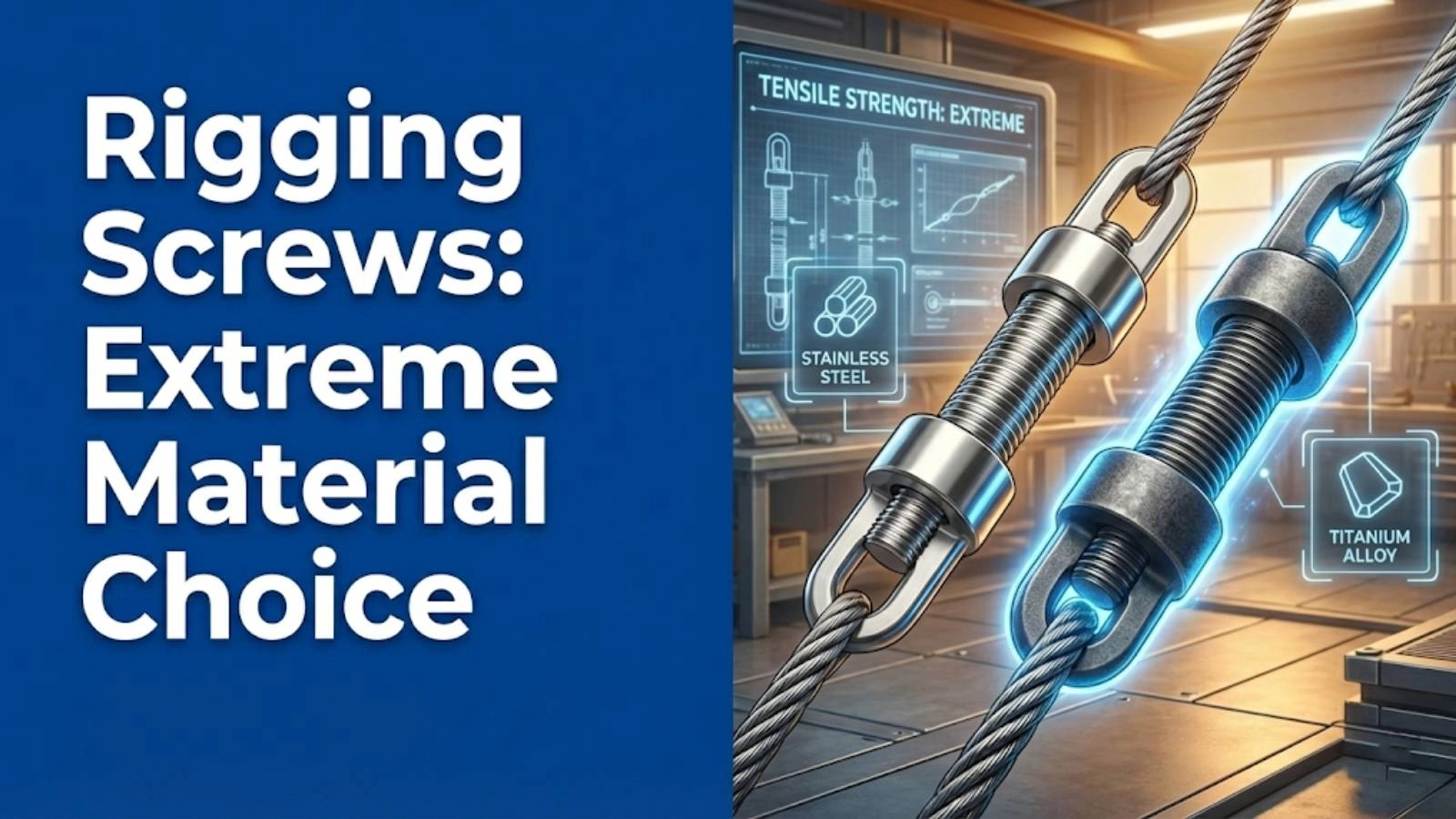
The material composition of a rigging screw significantly impacts its strength, durability, and resistance to environmental factors. Traditionally, rigging screws were made from carbon steel, which offers good strength and affordability. However, modern rigging screws often utilize high-strength alloys, such as alloy steel or stainless steel, to achieve superior performance.
Alloy steels offer increased tensile strength, yield strength, and toughness compared to carbon steel. This means that alloy steel rigging screws can withstand higher loads and are less likely to deform or fracture under stress. Stainless steel, on the other hand, provides excellent corrosion resistance, making it ideal for applications in marine environments or other corrosive settings.
The choice of material depends on the specific application and the environmental conditions. For example, in offshore oil rigs, where exposure to saltwater is constant, stainless steel rigging screws are often preferred.
Thread Design and Manufacturing Precision: The Latest Innovations
The thread design and manufacturing precision of a rigging screw play a crucial role in its load-bearing capacity and overall performance. The threads are responsible for transferring the load from one end fitting to the other, and any imperfections or inconsistencies in the thread design can significantly reduce the screw’s strength.
Modern rigging screws feature precision-machined threads that are designed to distribute the load evenly across the entire thread engagement area. This minimizes stress concentrations and maximizes the screw’s load-carrying capacity. Innovations in thread design include the use of specialized thread profiles, such as trapezoidal or buttress threads, which offer improved strength and reduced friction.
Manufacturing precision is equally important. Advanced manufacturing techniques, such as CNC machining, ensure that the threads are accurately formed and consistently sized. This results in a more reliable and predictable performance.
End Fitting Types: Jaws, Eyes, Hooks, and Their Impact
Rigging screws are available with various types of end fittings, each designed for specific applications and connection methods. The most common end fitting types include jaws, eyes, and hooks.
- Jaws: Jaws, also known as clevis ends, feature a U-shaped opening that is secured with a pin or bolt. They provide a strong and reliable connection and are often used in applications where frequent connections and disconnections are required.
- Eyes: Eyes are closed loops that can be directly connected to other rigging components, such as shackles or wire ropes. They offer a simple and versatile connection method and are commonly used in permanent or semi-permanent installations.
- Hooks: Hooks provide a quick and easy way to connect and disconnect rigging components. They are often used in applications where frequent adjustments or changes are necessary. However, hooks are generally considered to be less secure than jaws or eyes and should be used with caution.
The type of end fitting can significantly impact the overall capacity and safety of the rigging screw.
Size and Dimensions: How Diameter and Length Affect Capacity
The size and dimensions of a rigging screw, particularly its diameter and length, directly influence its load-carrying capacity. A larger diameter generally translates to a higher load capacity, as it provides a greater cross-sectional area to resist tensile forces. The length of the screw also plays a role, as it affects the amount of thread engagement and the overall stability of the connection.
However, simply increasing the size of a rigging screw is not always the best solution. The dimensions must be carefully matched to the specific application and the other components in the rigging system. Overly large rigging screws can be cumbersome and difficult to handle, while undersized screws can be dangerously inadequate.
The Impact of Corrosion and Wear: Prevention Strategies
Corrosion and wear can significantly degrade the strength and performance of rigging screws over time. Corrosion, particularly in marine environments, can weaken the metal and lead to premature failure. Wear, caused by friction and repeated loading, can also reduce the screw’s capacity and increase the risk of breakage.
To mitigate the effects of corrosion and wear, it’s essential to implement effective prevention strategies. These may include:
- Selecting corrosion-resistant materials: Stainless steel or other corrosion-resistant alloys should be used in corrosive environments.
- Applying protective coatings: Galvanizing, painting, or other protective coatings can provide a barrier against corrosion.
- Regular lubrication: Lubricating the threads can reduce friction and wear.
- Proper cleaning: Removing dirt, debris, and contaminants can prevent corrosion and wear.
Regular inspections are crucial for detecting signs of corrosion or wear early on. Any rigging screw that shows signs of damage should be removed from service and replaced immediately.
Calculating Rigging Screw Capacity: Step-by-Step 🧮
Understanding the Formula: A Simplified Approach
Calculating rigging screw capacity involves several factors, but the basic principle is to determine the maximum load that the screw can safely support based on its material properties, dimensions, and a suitable safety factor. The formula for calculating the SWL of a rigging screw can be expressed as:
SWL = (Tensile Strength x Minimum Cross-Sectional Area) / Safety Factor
Where:
- Tensile Strength: The maximum stress that the material can withstand before it starts to fracture. This value is typically provided by the manufacturer.
- Minimum Cross-Sectional Area: The smallest area of the screw that is subjected to tensile stress. This is usually the area of the threads at the root diameter.
- Safety Factor: A numerical value that accounts for uncertainties and potential risks. This value is determined by industry standards and regulations.
Accounting for Safety Factors: Current Industry Standards
The safety factor is a critical component of the capacity calculation, as it provides a buffer against unexpected overloads, material defects, or environmental factors. Industry standards and regulations dictate the minimum safety factors that must be used for different types of rigging applications.
OSHA, for example, requires a safety factor of at least 5:1 for most rigging applications. This means that the breaking strength of the rigging screw must be at least five times greater than the SWL. Other standards, such as those established by ANSI and ISO, may require different safety factors depending on the specific application and the potential risks involved.
It’s essential to consult the relevant industry standards and regulations to determine the appropriate safety factor for your specific application. Using an inadequate safety factor can significantly increase the risk of equipment failure and injury.
Real-World Examples: Calculating Capacity for Different Scenarios
Let’s consider a few real-world examples to illustrate how to calculate rigging screw capacity:
Scenario 1: A rigging screw made of alloy steel with a tensile strength of 80,000 PSI and a minimum cross-sectional area of 0.2 square inches is used in a construction application. The required safety factor is 5:1.
SWL = (80,000 PSI x 0.2 sq. in) / 5 = 3,200 lbs
Therefore, the SWL of this rigging screw is 3,200 lbs.
Scenario 2: A stainless steel rigging screw with a tensile strength of 60,000 PSI and a minimum cross-sectional area of 0.15 square inches is used in a marine application. The required safety factor is 6:1.
SWL = (60,000 PSI x 0.15 sq. in) / 6 = 1,500 lbs
Therefore, the SWL of this rigging screw is 1,500 lbs.
Online Tools and Resources: The Best Software for Accurate Calculations
Calculating rigging screw capacity can be complex, especially when dealing with multiple variables and intricate load scenarios. Fortunately, several online tools and resources are available to simplify the process and ensure accurate calculations.
These tools typically allow you to input the relevant parameters, such as material properties, dimensions, and safety factors, and automatically calculate the SWL. Some tools also provide additional features, such as load charts, safety guidelines, and compliance information.
Here are some of the best software resources for accurate calculations:
Description | Features |
—————————————————————————— | ——————————————————————————————————— |
Comprehensive rigging calculation software. | Load calculations, sling selection, center of gravity analysis. |
Mobile app for quick sling capacity calculations. | Calculates sling capacity based on sling type, angle, and load. |
Offers a variety of calculation tools and resources for wire rope applications. | Tension, weight, and strength calculators for wire ropes; safety factor guidelines. |
Provides online calculators for determining sling stress and capacity. | Sling stress calculations, capacity determination based on hitch type and angle. |
Software for calculating the safe working load of Crosby slings. | SWL calculations for various sling configurations; material and angle adjustments. |
It’s important to note that while these tools can be helpful, they should not be used as a substitute for professional engineering judgment. Always verify the results with a qualified engineer or rigging expert before using rigging screws in critical applications.
Industry Standards and Regulations: What’s New? 🛡️
OSHA Guidelines: Recent Updates and Compliance
The Occupational Safety and Health Administration (OSHA) sets forth comprehensive guidelines for rigging safety in the United States. These guidelines are designed to protect workers from hazards associated with lifting, hoisting, and material handling activities.
OSHA’s rigging standards cover a wide range of topics, including the selection, inspection, maintenance, and use of rigging equipment. The standards also specify the minimum safety factors that must be used for different types of rigging applications.
Staying up-to-date with the latest OSHA guidelines is crucial for ensuring compliance and maintaining a safe work environment. OSHA regularly updates its standards to reflect advancements in technology and best practices in the industry.
ANSI Standards: Adherence and Best Practices
The American National Standards Institute (ANSI) develops and publishes voluntary consensus standards for a wide range of industries, including rigging. ANSI standards provide detailed specifications for the design, manufacturing, testing, and use of rigging equipment.
Adhering to ANSI standards is considered a best practice in the rigging industry. These standards represent the collective knowledge and experience of industry experts and provide a framework for ensuring the safety and reliability of rigging operations.
ANSI standards relevant to rigging screws include:
ISO Standards: Global Harmonization Efforts
The International Organization for Standardization (ISO) develops and publishes international standards for a wide range of industries, including rigging. ISO standards aim to harmonize technical specifications and promote global trade.
ISO standards relevant to rigging screws include:
- ISO 3266: Shackles
- ISO 2415: Forged shackles for general lifting purposes
While ISO standards are not mandatory in the United States, they are widely recognized and respected around the world. Adopting ISO standards can help companies demonstrate their commitment to quality and safety and facilitate international trade.
Regional Variations: Understanding Local Regulations
In addition to national and international standards, regional and local regulations may also apply to rigging operations. These regulations may vary depending on the specific jurisdiction and the type of industry involved.
For example, some states or cities may have stricter requirements for rigging inspections or load testing than those specified in OSHA guidelines. It’s essential to be aware of and comply with all applicable regional and local regulations.
For many of our clients here in Dammam, Saudi Arabia, we’ve seen that understanding the local regulations and standards can be quite confusing. Navigating the nuances of these requirements can be challenging, but it’s crucial for ensuring compliance and avoiding potential penalties.
Common Mistakes to Avoid: Expert Insights ⚠️
Overloading: Recognizing the Signs and Consequences
Overloading is one of the most common and dangerous mistakes in rigging operations. It occurs when a rigging screw is subjected to a load that exceeds its SWL. Overloading can lead to catastrophic failure of the screw, resulting in dropped loads, equipment damage, and serious injuries.
Recognizing the signs of overloading is crucial for preventing accidents. Some common signs of overloading include:
- Deformation of the screw or end fittings
- Cracking or fracturing of the metal
- Excessive strain or elongation
- Difficulty in turning the screw
If any of these signs are observed, the load should be immediately reduced, and the rigging screw should be removed from service and inspected by a qualified expert.
Improper Installation: Avoiding Cross-Threading and Damage
Improper installation can significantly reduce the capacity and safety of a rigging screw. One of the most common installation errors is cross-threading, which occurs when the threads of the screw and the end fitting are not properly aligned. Cross-threading can damage the threads and weaken the connection.
To avoid cross-threading, always ensure that the threads are clean and properly aligned before tightening the screw. Use a wrench or other appropriate tool to tighten the screw to the recommended torque. Do not over-tighten the screw, as this can also damage the threads.
Neglecting Regular Inspections: A Proactive Approach
Regular inspections are essential for maintaining the safety and reliability of rigging screws. Inspections should be conducted before each use and at regular intervals, such as monthly or quarterly, depending on the frequency of use and the severity of the operating conditions.
Visual inspections should include checking for signs of corrosion, wear, deformation, cracking, and other damage. The threads should be inspected for signs of cross-threading or damage. The end fittings should be inspected for proper alignment and secure attachment.
Mixing and Matching Components: Ensuring Compatibility
Mixing and matching rigging components from different manufacturers can be dangerous, as the components may not be compatible. Different manufacturers may use different materials, dimensions, and manufacturing processes, which can affect the strength and performance of the components.
Always use rigging components from the same manufacturer or ensure that the components are certified to be compatible. Verify that the components have the same SWL and are designed for the same type of application.
Inspection and Maintenance Best Practices: Proactive Safety ✅
Visual Inspections: Identifying Potential Issues Early
Regular visual inspections are your first line of defense against rigging failures. A trained eye can spot issues before they escalate into dangerous situations.
- Corrosion: Look for rust, pitting, or scaling. Even a small amount of corrosion can significantly weaken the metal.
- Deformation: Check for bends, twists, or elongations. These indicate that the screw has been subjected to excessive stress.
- Cracks: Examine the screw and end fittings for cracks, especially in areas of high stress concentration, such as the threads and welds.
- Wear: Look for signs of wear on the threads, end fittings, and other contact surfaces.
Load Testing: When and How to Perform
Load testing involves subjecting a rigging screw to a predetermined load to verify its capacity and integrity. Load testing should be performed:
- After any repairs or modifications
- When there is reason to suspect damage or degradation
- At regular intervals, as specified by industry standards or regulations
Load testing should be performed by a qualified technician using calibrated equipment. The test load should be applied gradually and held for a specified period of time. The screw should be inspected for signs of deformation, cracking, or other damage during and after the test.
Lubrication and Cleaning: Maintaining Optimal Performance
Proper lubrication and cleaning are essential for maintaining the optimal performance of rigging screws. Lubrication reduces friction and wear on the threads, while cleaning removes dirt, debris, and contaminants that can accelerate corrosion.
- Lubrication: Apply a high-quality lubricant to the threads of the screw at regular intervals. The frequency of lubrication will depend on the operating conditions.
- Cleaning: Clean the screw regularly with a mild detergent and water. Rinse thoroughly and dry before lubricating.
Proper Storage: Protecting Against Environmental Factors
Proper storage is crucial for protecting rigging screws from environmental factors that can cause corrosion and degradation. When not in use, rigging screws should be stored in a clean, dry, and well-ventilated area.
- Avoid direct sunlight: Prolonged exposure to sunlight can degrade the metal and cause it to become brittle.
- Protect from moisture: Moisture can accelerate corrosion. Store the screws in a waterproof container or cover them with a waterproof tarp.
- Keep away from chemicals: Exposure to chemicals can damage the metal and reduce its strength.
Selecting the Right Rigging Screw: A Modern Checklist 📝
Identifying the Application: Load Type, Environment, and Frequency of Use
Before selecting a rigging screw, it’s essential to clearly define the application for which it will be used. Consider the following factors:
- Load Type: Will the screw be subjected to static loads, dynamic loads, or shock loads?
- Environment: Will the screw be used in a corrosive environment, such as a marine or chemical processing plant?
- Frequency of Use: Will the screw be used frequently or only occasionally?
The answers to these questions will help you determine the appropriate material, size, and type of rigging screw for your application.
Choosing the Appropriate Material: Corrosion Resistance and Temperature Considerations
The material of the rigging screw should be chosen based on the environmental conditions and the type of load it will be subjected to.
- Carbon Steel: Suitable for general-purpose applications in non-corrosive environments.
- Alloy Steel: Offers higher strength and toughness than carbon steel.
- Stainless Steel: Provides excellent corrosion resistance in marine or chemical processing environments.
Temperature is another important consideration. High temperatures can reduce the strength of some materials, while low temperatures can make them brittle.
Selecting the Correct End Fittings: Compatibility and Ease of Use
The end fittings of the rigging screw should be selected based on the connection method and the ease of use.
- Jaws (Clevis Ends): Provide a strong and reliable connection.
- Eyes: Offer a simple and versatile connection method.
- Hooks: Provide a quick and easy way to connect and disconnect rigging components.
Ensure that the end fittings are compatible with the other components in the rigging system.
Considering Adjustability: Fine-Tuning for Precise Positioning
One of the key advantages of rigging screws is their adjustability. This allows for fine-tuning of tension and precise positioning.
- Take-up Length: Consider the amount of take-up length required for your application.
- Thread Length: Ensure that the thread length is sufficient to provide adequate adjustment.
- Ease of Adjustment: Choose a rigging screw that is easy to adjust, even under load.
Evaluating Supplier Reputation and Certification: Ensuring Quality and Reliability
When selecting a rigging screw, it’s important to choose a reputable supplier that offers certified products. Certification ensures that the rigging screw has been tested and meets the required industry standards.
Check the supplier’s reputation and read customer reviews to ensure that they are known for providing high-quality and reliable products.
Case Studies: Real-World Applications and Lessons Learned 📚
Construction Industry: Lifting Heavy Materials Safely
In the construction industry, rigging screws are used extensively for lifting heavy materials, such as steel beams, concrete panels, and pre-fabricated components. Safe rigging practices are paramount to prevent accidents and ensure the safety of workers.
One of the key lessons learned in the construction industry is the importance of proper load calculation. Overloading rigging screws can lead to catastrophic failures, resulting in dropped loads and serious injuries.
Marine Industry: Securing Cargo and Equipment at Sea
In the marine industry, rigging screws are used to secure cargo and equipment on ships and offshore platforms. The harsh marine environment poses significant challenges, as saltwater and constant exposure to the elements can accelerate corrosion.
One of the key lessons learned in the marine industry is the importance of using corrosion-resistant materials, such as stainless steel, for rigging screws. Regular inspections and maintenance are also crucial for preventing failures.
Theatrical Rigging: Ensuring the Safety of Performers and Crew
In the theatrical rigging industry, rigging screws are used to suspend scenery, lighting, and other equipment above the stage. The safety of performers and crew is of utmost importance.
One of the key lessons learned in the theatrical rigging industry is the importance of redundancy. Multiple rigging screws are often used to support critical loads, providing a backup in case of a failure.
Manufacturing Sector: Handling and Positioning Heavy Machinery
In the manufacturing sector, rigging screws are used to handle and position heavy machinery and equipment. Precision and control are essential for ensuring the quality of manufactured products.
One of the key lessons learned in the manufacturing sector is the importance of using adjustable rigging screws to fine-tune the position of equipment. This allows for precise alignment and minimizes the risk of damage.
The Future of Rigging Screw Technology: Innovations on the Horizon 🚀
Smart Rigging Screws: Integrated Sensors for Real-Time Monitoring
One of the most exciting developments in rigging screw technology is the emergence of smart rigging screws with integrated sensors for real-time monitoring. These sensors can measure load, temperature, and other critical parameters, providing valuable data for predictive maintenance and safety management.
Smart rigging screws can alert operators to potential overloads or other problems before they lead to failures. This can significantly improve safety and reduce downtime.
Advanced Materials: Composites and Lightweight Alloys
Researchers are exploring the use of advanced materials, such as composites and lightweight alloys, to create rigging screws that are stronger, lighter, and more corrosion-resistant.
Composite materials offer excellent strength-to-weight ratios and are highly resistant to corrosion. Lightweight alloys, such as aluminum and titanium, can reduce the overall weight of rigging systems, making them easier to handle and transport.
Predictive Maintenance: Using Data Analytics to Prevent Failures
Predictive maintenance involves using data analytics to identify potential problems before they lead to failures. By analyzing data from smart rigging screws and other sources, it’s possible to predict when a rigging screw is likely to fail and take proactive measures to prevent it.
Predictive maintenance can significantly reduce downtime and maintenance costs.
Automation and Robotics: The Role of Rigging Screws in Automated Systems
Automation and robotics are transforming the rigging industry. Rigging screws are playing an increasingly important role in automated systems, such as robotic lifting arms and automated material handling systems.
Automated systems can improve efficiency, reduce labor costs, and enhance safety.
Conclusion
Understanding rigging screw capacity is not just about numbers and calculations; it’s about creating a safer, more efficient working environment. By grasping the nuances of material selection, load ratings, inspection protocols, and industry standards, you empower yourself and your team to make informed decisions that prevent accidents and optimize performance. As experts at Safe and Secure Trading Company, we’re committed to providing you with the knowledge and resources you need to succeed. Let’s work together to elevate safety standards and drive innovation in the rigging industry.
FAQ Section
What is the difference between SWL and breaking strength?
SWL (Safe Working Load) is the maximum load a rigging screw is designed to safely handle under normal conditions. Breaking strength is the load at which the screw is expected to fail. The SWL is always lower than the breaking strength and is calculated by dividing the breaking strength by a safety factor.
How often should rigging screws be inspected?
Rigging screws should be inspected before each use and at regular intervals, such as monthly or quarterly, depending on the frequency of use and the severity of the operating conditions.
What are the signs of an overloaded rigging screw?
Signs of an overloaded rigging screw include deformation of the screw or end fittings, cracking or fracturing of the metal, excessive strain or elongation, and difficulty in turning the screw.
Can I use different brands of rigging screws together?
Mixing and matching rigging components from different manufacturers can be dangerous, as the components may not be compatible. Always use rigging components from the same manufacturer or ensure that the components are certified to be compatible.
What is the best way to protect rigging screws from corrosion?
To protect rigging screws from corrosion, select corrosion-resistant materials, apply protective coatings, lubricate the threads regularly, and store the screws in a clean, dry, and well-ventilated area.