Rigging screws are essential components in various applications, from marine rigging to construction and industrial settings. Selecting the correct rigging screw is crucial for ensuring safety, efficiency, and longevity in any project. This guide provides a comprehensive overview of how to choose the right rigging screw, covering essential aspects such as load requirements, material selection, end fitting configurations, and maintenance practices.
Understanding the Basics of Rigging Screws
What is a Rigging Screw?
A rigging screw, often referred to as a turnbuckle, is a device used to adjust the tension or length of ropes, cables, and tie rods. It consists of a metal frame, typically oblong, with internal screw threads at each end. Two threaded bolts or rods, known as end fittings, are screwed into these threads. By rotating the frame, you can either tighten or loosen the assembly, adjusting the overall tension. Rigging screws are commonly used in situations where precise tensioning is required, such as securing masts on sailboats, tensioning fences, and supporting structures in construction. The proper rigging screw choice is pivotal for safety and efficiency in any application.
Rigging screws come in various sizes, materials, and configurations to suit different load requirements and environmental conditions. Understanding the basic principles of how they work is the first step in making an informed selection. Rigging screws provide a reliable method for making controlled adjustments, ensuring that structures and equipment are securely fastened and properly tensioned. We at Safe and Secure Trading Company (SSTC) emphasize that a deep understanding of the rigging screw’s function is paramount for anyone involved in rigging operations.
Key Components of a Rigging Screw (End Fittings, Body)
A rigging screw comprises several key components that work together to provide tensioning and adjustment capabilities. These include the body, end fittings, and threads.
- Body: The body, or frame, is typically an oblong or tubular piece with internal threads at both ends. It is designed to withstand significant tensile forces and provides the structure for the screw mechanism. The body’s size and material determine the overall load capacity of the rigging screw.
- End Fittings: These are the threaded components that screw into the body. Common types of end fittings include:
Jaw: A U-shaped fitting with a pin or bolt to connect to another component.
Eye: A closed loop fitting used for connecting to shackles or other looped hardware.
Hook: A fitting with an open hook for quick attachment and detachment.
Swage Terminal: A fitting designed to be permanently attached to a wire rope using a swaging tool.
- Threads: The threads inside the body and on the end fittings are critical for the screw’s functionality. The thread type (metric or imperial, coarse or fine) affects the adjustment precision and load distribution. Threads must be properly maintained and inspected to ensure they are free from damage or corrosion, which can compromise the integrity of the rigging screw.
[IMAGE: Diagram illustrating the components of a rigging screw, including the body, end fittings (jaw, eye, hook, swage), and threads]
The quality and design of each component play a vital role in the overall performance and safety of the rigging screw. At SSTC, our team in Dubai often advises clients on selecting rigging screws with high-quality components to ensure reliability and longevity.
Why Rigging Screw Choice Matters: Safety and Performance
The right rigging screw choice significantly impacts the safety and performance of any rigging system. Selecting an undersized or inappropriate rigging screw can lead to catastrophic failures, causing property damage, injuries, or even fatalities. Conversely, choosing a rigging screw that is well-suited to the application ensures the system operates safely and efficiently.
- Safety: Using rigging screws that meet or exceed the required load capacity is crucial for preventing accidents. Rigging screws should always be chosen with an appropriate safety factor to account for unexpected loads or dynamic forces.
- Performance: The correct rigging screw choice ensures that the system functions as intended. This includes maintaining the desired tension, stability, and alignment of the connected components.
- Longevity: Selecting rigging screws made from suitable materials and with appropriate corrosion resistance extends the lifespan of the rigging system. Regular inspection and maintenance further contribute to the long-term reliability of the components.
- Efficiency: The right rigging screw can simplify the installation and adjustment process, saving time and labor. For instance, using turnbuckles with easily accessible adjustment points can streamline tensioning operations.
“Proper rigging screw selection is not just about meeting the minimum requirements; it’s about ensuring the long-term safety and reliability of the entire system.” – John Smith, Lead Safety Inspector
We once had a client who underestimated the dynamic loads on a temporary structure, leading to a rigging screw failure. Fortunately, the incident resulted in no injuries, but it highlighted the critical importance of accurate load assessment and proper rigging screw choice. This underscores why, at SSTC, we prioritize educating our clients on the significance of rigorous safety protocols and informed selection processes.
Assessing Load Requirements: A Modern Approach
Determining the Working Load Limit (WLL)
Determining the Working Load Limit (WLL) is a critical step in selecting the appropriate rigging screw. The WLL represents the maximum load that a rigging screw is designed to safely handle during normal service. Exceeding the WLL can lead to component failure and potential accidents.
- Understanding Load Calculations: Begin by accurately calculating the maximum load that the rigging screw will be subjected to. This includes both the static weight of the load and any dynamic forces resulting from movement or environmental factors.
- Consulting Load Charts: Refer to the manufacturer’s load charts and specifications for each rigging screw. These charts provide the WLL for various configurations and loading conditions.
- Accounting for Load Distribution: Consider how the load is distributed across multiple rigging points. Uneven load distribution can place excessive stress on individual rigging screws.
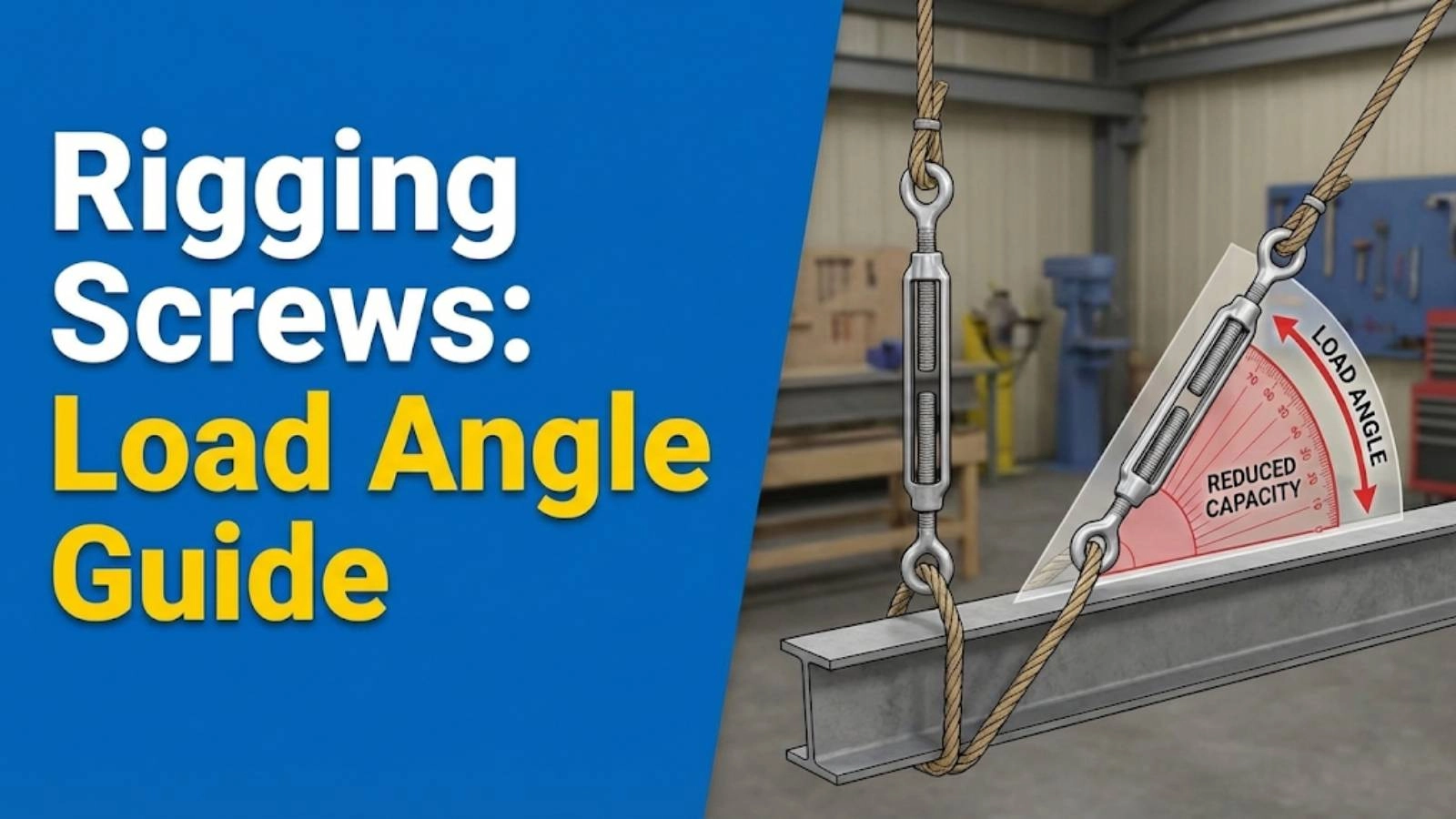
- Considering the Angle of Load: The angle at which the load is applied affects the tension on the rigging screw. Steeper angles increase the tension, so adjustments to the WLL may be necessary.
- Using WLL Calculators: Utilize online WLL calculators or consult with rigging experts to verify your calculations. These tools can help ensure that you have accurately determined the maximum load and selected a rigging screw with an appropriate WLL.
At SSTC, we recommend always erring on the side of caution when determining the WLL. It is better to choose a rigging screw with a higher WLL than is strictly necessary, providing an extra margin of safety.
Calculating Safety Factors: Current Industry Standards
Safety factors are essential multipliers applied to the Working Load Limit (WLL) to account for uncertainties, dynamic loads, and potential material weaknesses. The safety factor is the ratio of the minimum breaking strength (MBS) to the WLL. Current industry standards typically require safety factors ranging from 4:1 to 5:1, depending on the application and regulatory requirements.
- Defining Safety Factor: The safety factor is a multiplier applied to the WLL to ensure that the rigging screw can withstand loads beyond its rated capacity. For example, a safety factor of 5:1 means that the rigging screw can handle five times the WLL before failure.
- Industry Standards: Adhere to industry standards and regulations when determining the appropriate safety factor. Organizations such as OSHA, ASME, and ISO provide guidelines for safety factors in various applications.
- Application-Specific Factors: Consider the specific characteristics of the application when selecting a safety factor. Factors such as the frequency of use, environmental conditions, and potential for shock loading can influence the required safety factor.
- Dynamic Loads: Account for dynamic loads, such as those caused by lifting, acceleration, or wind, by increasing the safety factor. Dynamic loads can significantly increase the stress on rigging screws.
- Material Properties: Consider the properties of the rigging screw material when selecting a safety factor. Materials with lower tensile strength or greater susceptibility to fatigue may require higher safety factors.
Calculating safety factors correctly is paramount to ensure the integrity and safety of any rigging system. At SSTC, we emphasize the importance of understanding and applying appropriate safety factors to all rigging operations.
Dynamic vs. Static Loads: What’s Trending Now?
Understanding the difference between dynamic and static loads is crucial for selecting the right rigging screw and ensuring the safety of the rigging system. Static loads are constant and unchanging, while dynamic loads vary over time and can include sudden impacts or vibrations.
- Static Loads: Static loads are constant forces that remain relatively stable over time. Examples include the weight of a suspended object or the tension in a fixed cable. When dealing with static loads, it is important to ensure that the rigging screw’s WLL exceeds the load, with an appropriate safety factor.
- Dynamic Loads: Dynamic loads are variable forces that change over time. These can include loads caused by acceleration, deceleration, wind gusts, or wave action. Dynamic loads can significantly increase the stress on rigging screws compared to static loads.
- Impact Loads: Impact loads are sudden, high-force loads that occur when an object is dropped or experiences a sudden collision. These loads can be several times greater than the static weight of the object and require careful consideration when selecting rigging screws.
- Fatigue Loads: Fatigue loads are repeated cycles of stress that can weaken materials over time. Rigging screws subjected to fatigue loads require regular inspection and may need to be replaced more frequently.
- Trending Approaches:
Load Monitoring: Implementing load monitoring systems to track dynamic loads in real-time, allowing for adjustments to be made as needed.
Advanced Materials: Using advanced materials with higher tensile strength and fatigue resistance to better withstand dynamic loads.
Predictive Maintenance: Employing predictive maintenance techniques to identify potential failures before they occur, based on data collected from load monitoring systems.
Selecting the right rigging screw requires a thorough understanding of the types of loads it will be subjected to. SSTC recommends consulting with rigging experts to accurately assess the dynamic and static loads and to choose rigging screws that are appropriate for the specific application.
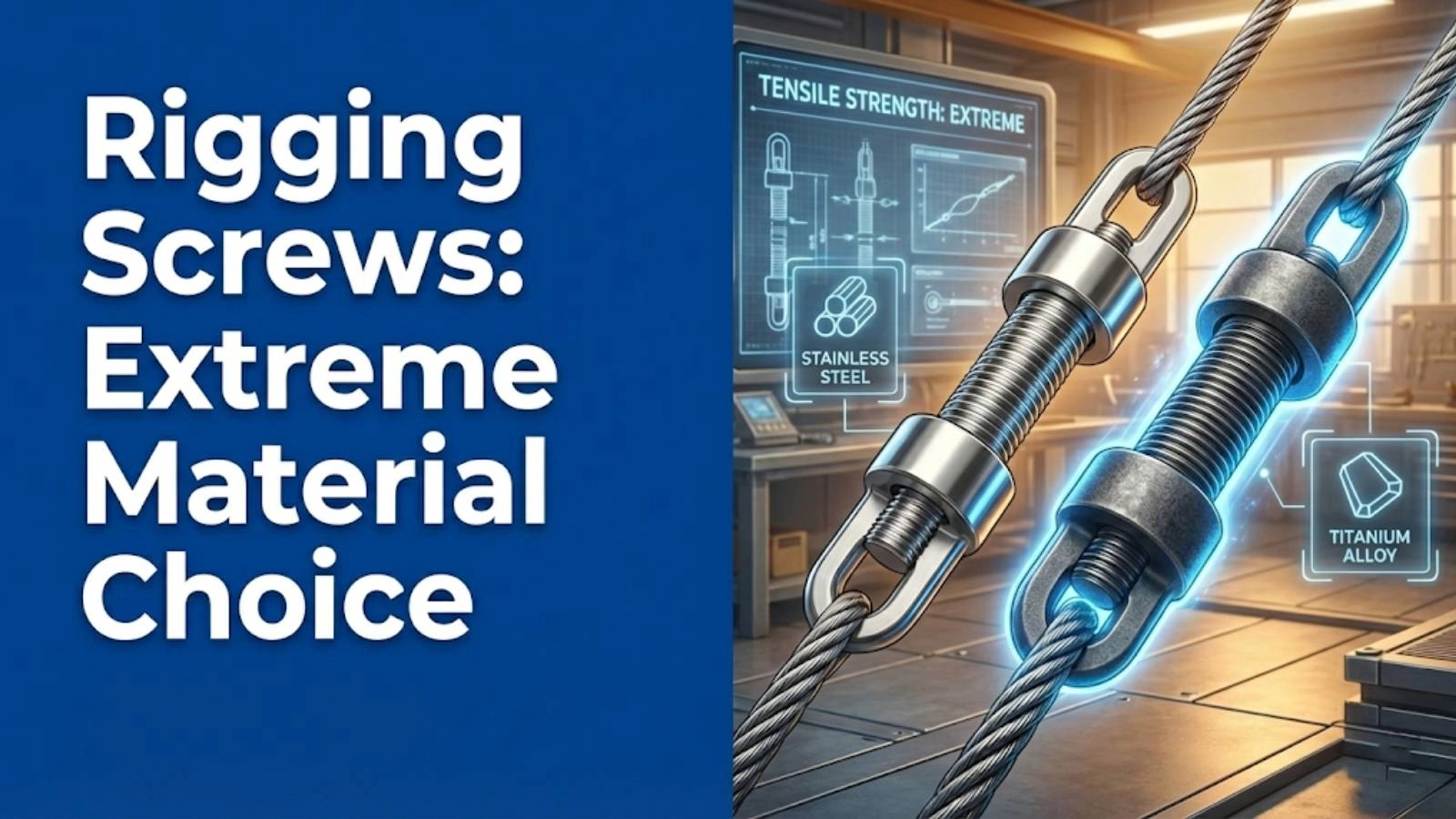
Material Selection: Trends in Rigging Screw Materials
Stainless Steel: Grades and Applications
Stainless steel is a popular material for rigging screws due to its excellent corrosion resistance, high strength, and aesthetic appeal. Several grades of stainless steel are commonly used in rigging applications, each with its own unique properties and applications.
- 304 Stainless Steel: This is the most common grade of stainless steel, offering good corrosion resistance and weldability. It is suitable for general-purpose rigging applications in non-marine environments.
- 316 Stainless Steel: This grade contains molybdenum, which enhances its corrosion resistance, particularly in chloride-rich environments such as saltwater. It is ideal for marine rigging, chemical processing, and other demanding applications.
- Duplex Stainless Steel: This type offers even higher strength and corrosion resistance compared to 316 stainless steel. It is often used in offshore oil and gas, and other highly corrosive environments.
- Applications: Stainless steel rigging screws are used in a wide range of applications, including:
Marine rigging: Securing sails, masts, and other components on boats and yachts.
Architectural rigging: Supporting structures and decorative elements in buildings and landscapes.
Food processing: Handling equipment and machinery in food processing plants where hygiene and corrosion resistance are critical.
Medical equipment: Securing components in medical devices and equipment where cleanliness and reliability are essential.
When selecting stainless steel rigging screws, it is important to consider the specific environmental conditions and load requirements of the application. SSTC provides a range of stainless steel rigging screws in various grades to meet diverse needs.
Galvanized Steel: Cost-Effective Options
Galvanized steel is a cost-effective material for rigging screws, providing good corrosion resistance through a protective layer of zinc. The galvanization process involves coating the steel with zinc, which acts as a barrier against moisture and other corrosive elements.
- Hot-Dip Galvanizing: This is the most common galvanization method, involving immersing the steel in a bath of molten zinc. It provides a thick, durable coating that offers excellent corrosion protection.
- Electrogalvanizing: This method uses an electric current to deposit a thin layer of zinc onto the steel. It provides a smoother finish than hot-dip galvanizing but offers less corrosion protection.
- Applications: Galvanized steel rigging screws are commonly used in applications where cost is a primary concern and the environment is not overly corrosive. These applications include:
Construction: Securing scaffolding, temporary structures, and fencing.
Agriculture: Tensioning fences, supporting crops, and securing equipment.
General industrial: Securing machinery, equipment, and structures in non-corrosive environments.
While galvanized steel is more affordable than stainless steel, it is important to consider its limitations in highly corrosive environments. SSTC offers galvanized steel rigging screws in various sizes and configurations to suit a wide range of applications.
Alloy Steel: High-Strength Solutions
Alloy steel rigging screws offer exceptional strength and durability, making them suitable for heavy-duty applications where high load capacities are required. Alloy steels are formulated with specific elements, such as chromium, nickel, and molybdenum, to enhance their mechanical properties.
High Tensile Strength: Alloy steels have significantly higher tensile strength compared to carbon steel or stainless steel.
Excellent Hardness: They offer superior hardness and wear resistance, making them ideal for demanding applications.
Enhanced Toughness: Alloy steels exhibit good toughness, allowing them to withstand impact and shock loads without fracturing.
Heat Resistance: Some alloy steels maintain their strength and integrity at elevated temperatures.
- Applications: Alloy steel rigging screws are commonly used in:
Heavy Lifting: Cranes, hoists, and other lifting equipment where high load capacities are essential.
Construction: Structural supports, bridges, and other infrastructure projects requiring robust materials.
Oil and Gas: Offshore drilling platforms, pipelines, and other demanding applications.
Mining: Heavy machinery and equipment used in mining operations.
When selecting alloy steel rigging screws, it is crucial to consider the specific alloy composition and heat treatment to ensure they meet the required performance criteria. SSTC provides high-quality alloy steel rigging screws designed for the most demanding applications.
Emerging Materials: Composites and Their Uses in Rigging
Composite materials are increasingly being used in rigging applications due to their lightweight properties, high strength-to-weight ratio, and excellent corrosion resistance. Composites typically consist of a reinforcing fiber (such as carbon or fiberglass) embedded in a polymer matrix.
Lightweight: Composites are significantly lighter than steel or aluminum, reducing the overall weight of the rigging system.
High Strength-to-Weight Ratio: They offer exceptional strength for their weight, allowing for increased load capacities without adding excessive weight.
Corrosion Resistance: Composites are highly resistant to corrosion, making them suitable for marine and other harsh environments.
Design Flexibility: They can be molded into complex shapes and configurations, allowing for optimized designs.
- Applications: Composite rigging screws and components are being used in:
Aerospace: Lightweight structural components for aircraft and spacecraft.
Marine: High-performance sailboat rigging, mooring systems, and underwater structures.
Renewable Energy: Wind turbine blades and other components requiring lightweight and durable materials.
Automotive: Lightweight structural components for reducing vehicle weight and improving fuel efficiency.
While composite rigging components are still relatively new, they offer significant advantages over traditional materials in certain applications. SSTC is closely monitoring the development of composite rigging technology and is committed to providing innovative solutions to our clients.
End Fitting Configurations: Choosing the Right Style
Jaw and Jaw Turnbuckles
Jaw and jaw turnbuckles are a common type of rigging screw featuring jaw-shaped end fittings that are secured with pins or bolts. This configuration is ideal for applications requiring a strong, direct connection that can be easily assembled and disassembled.
Strong Connection: The jaw design provides a robust and secure connection, minimizing the risk of slippage or failure.
Easy Assembly: The pin or bolt system allows for quick and easy assembly and disassembly, facilitating maintenance and adjustments.
Versatile Use: Jaw and jaw turnbuckles can be used in a wide range of applications, from securing fences to supporting structures.
Potential for Pin Loss: The pins or bolts can be lost or damaged, compromising the integrity of the connection. Regular inspection and maintenance are essential.
Limited Adjustment Range: The jaw design may limit the range of adjustment compared to other end fitting configurations.
Fencing: Tensioning wire fences and securing posts.
Construction: Supporting temporary structures and scaffolding.
Marine: Securing rigging on boats and yachts.
When selecting jaw and jaw turnbuckles, it is important to choose high-quality pins or bolts that are properly sized and made from corrosion-resistant materials. SSTC offers a variety of jaw and jaw turnbuckles in different sizes and materials to meet diverse needs.
Eye and Eye Turnbuckles
Eye and eye turnbuckles feature closed-loop end fittings, known as eyes, which are used to connect to shackles, hooks, or other looped hardware. This configuration is ideal for applications where a secure, flexible connection is required.
Flexible Connection: The eye design allows for movement and rotation, reducing stress on the rigging screw and connected components.
Versatile Attachment: Eye fittings can be easily connected to a variety of hardware, providing flexibility in rigging configurations.
Secure Loop: The closed-loop design ensures a secure connection, minimizing the risk of accidental disconnection.
Potential for Wear: The eyes can be subject to wear and tear, especially when used with abrasive materials. Regular inspection and maintenance are essential.
Limited Direct Connection: Eye fittings cannot be directly connected to components without the use of additional hardware, such as shackles or hooks.
Marine rigging: Securing sails, masts, and other components on boats and yachts.
Architectural rigging: Supporting structures and decorative elements in buildings and landscapes.
General industrial: Securing machinery, equipment, and structures in various settings.
When selecting eye and eye turnbuckles, it is important to choose eyes that are properly sized and rated for the intended load. SSTC offers a range of eye and eye turnbuckles in different materials and configurations to suit a wide range of applications.
Hook and Eye Turnbuckles
Hook and eye turnbuckles combine a hook end fitting with an eye end fitting, providing a versatile connection that allows for quick attachment and detachment. This configuration is ideal for applications where frequent adjustments or temporary connections are required.
Quick Attachment: The hook design allows for rapid connection and disconnection, saving time and effort.
Versatile Use: Hook and eye turnbuckles can be used in a variety of applications, from temporary rigging to adjustable supports.
Easy Adjustment: The turnbuckle mechanism allows for precise tension adjustments, ensuring optimal performance.
Potential for Accidental Disconnection: The hook can be accidentally dislodged, especially if not properly secured. Safety latches are recommended.
Lower Load Capacity: Hook and eye turnbuckles typically have a lower load capacity compared to jaw and jaw or eye and eye configurations.
Temporary rigging: Securing temporary structures, banners, and displays.
Adjustable supports: Providing adjustable support for pipes, cables, and other equipment.
Agricultural applications: Tensioning fences and securing crops.
When selecting hook and eye turnbuckles, it is important to choose hooks with safety latches to prevent accidental disconnection. SSTC offers a variety of hook and eye turnbuckles in different sizes and materials to meet diverse needs.
Swage and Threaded Terminals
Swage and threaded terminals are end fitting configurations used to connect wire rope or cable to rigging screws. Swage terminals are permanently attached to the wire rope using a swaging tool, while threaded terminals are screwed onto the wire rope.
Advantages:
Strong Connection: Swaging provides a strong, permanent connection that is virtually as strong as the wire rope itself.
Clean Appearance: Swaged connections have a clean, professional appearance.
Disadvantages:
Permanent Connection: Swaged terminals cannot be easily removed or adjusted.
Specialized Tool Required: Swaging requires a specialized swaging tool, which can be expensive.
Advantages:
Adjustable Connection: Threaded terminals can be easily adjusted or removed as needed.
No Special Tool Required: Threaded terminals can be installed using standard tools.
Disadvantages:
Lower Load Capacity: Threaded connections typically have a lower load capacity compared to swaged connections.
Potential for Loosening: Threaded terminals can loosen over time due to vibration or movement.
Cable Railing: Securing wire rope in cable railing systems.
Architectural Rigging: Supporting structures and decorative elements with wire rope.
Marine Rigging: Connecting wire rope to rigging screws on boats and yachts.
When selecting swage and threaded terminals, it is important to choose the appropriate size and material for the wire rope being used. SSTC offers a variety of swage and threaded terminals to suit different wire rope sizes and applications.
Innovative End Fitting Designs for Specific Applications
Innovative end fitting designs are continually being developed to meet the specific needs of various rigging applications. These designs often incorporate features such as quick-release mechanisms, integrated load monitoring, and enhanced corrosion resistance.
- Quick-Release Mechanisms: These designs allow for rapid connection and disconnection, ideal for applications where frequent adjustments or temporary connections are required.
- Integrated Load Monitoring: Some end fittings incorporate sensors that measure the load on the rigging screw, providing real-time data for monitoring and analysis.
- Enhanced Corrosion Resistance: New materials and coatings are being used to enhance the corrosion resistance of end fittings, making them suitable for harsh environments.
- Custom Designs: Manufacturers are increasingly offering custom end fitting designs to meet the unique requirements of specific applications.
- Applications:
Aerospace: Lightweight and high-strength end fittings for aircraft and spacecraft.
Renewable Energy: Corrosion-resistant end fittings for wind turbines and solar panels.
Offshore Oil and Gas: High-strength and corrosion-resistant end fittings for offshore drilling platforms.
SSTC is committed to staying at the forefront of rigging technology and providing our clients with the latest innovative end fitting designs. We work closely with manufacturers to develop custom solutions that meet the unique needs of our clients.
Thread Types and Their Impact
Metric vs. Imperial Threads: A Global Perspective
The choice between metric and imperial threads in rigging screws often depends on regional standards, industry practices, and the origin of the equipment being used. Metric threads are widely used in Europe and Asia, while imperial threads are more common in North America.
Advantages:
Global Standard: Metric threads are the international standard, making them widely available and compatible with equipment from around the world.
Precise Measurements: Metric threads are based on precise millimeter measurements, allowing for accurate and consistent connections.
Disadvantages:
Compatibility Issues: Metric threads are not directly compatible with imperial threads, requiring adapters or thread converters.
Advantages:
Legacy Systems: Imperial threads are commonly used in older equipment and infrastructure in North America.
Wide Availability: Imperial threads are widely available in North America.
Disadvantages:
Limited Global Use: Imperial threads are less common outside of North America, making them less versatile for international applications.
Less Precise Measurements: Imperial threads are based on inch measurements, which can be less precise than metric measurements.
Increasing Metric Adoption: There is a growing trend towards adopting metric threads globally, driven by the need for standardization and compatibility.
Dual Thread Systems: Some manufacturers offer rigging screws with dual thread systems, allowing them to be used with both metric and imperial hardware.
When selecting rigging screws, it is important to consider the thread type and ensure compatibility with the existing hardware and equipment. SSTC offers rigging screws with both metric and imperial threads to meet the needs of our global clientele.
Coarse vs. Fine Threads: Selecting for Strength and Adjustment
The choice between coarse and fine threads in rigging screws affects the strength, adjustment precision, and ease of use of the device. Coarse threads have a larger pitch (distance between threads) and are generally stronger and easier to install, while fine threads have a smaller pitch and allow for more precise adjustments.
Advantages:
Higher Strength: Coarse threads have a larger thread depth, providing greater strength and resistance to stripping.
Easier Installation: Coarse threads are easier to install and less susceptible to cross-threading.
Faster Adjustment: Coarse threads allow for faster tension adjustments due to the larger pitch.
Disadvantages:
Less Precise Adjustment: Coarse threads provide less precise adjustment compared to fine threads.
Advantages:
More Precise Adjustment: Fine threads allow for very precise tension adjustments, ideal for applications requiring fine-tuning.
Greater Holding Power: Fine threads have a greater surface area, providing greater holding power and resistance to loosening.
Disadvantages:
Lower Strength: Fine threads are generally weaker than coarse threads and more susceptible to stripping.
Slower Installation: Fine threads are more difficult to install and require more care to avoid cross-threading.
Coarse Threads: Construction, agriculture, and general industrial applications where strength and ease of use are primary concerns.
Fine Threads: Precision instruments, medical equipment, and other applications where precise adjustment is critical.
When selecting rigging screws, it is important to consider the thread type and choose the appropriate pitch for the intended application. SSTC offers rigging screws with both coarse and fine threads to meet the diverse needs of our clients.
Understanding Thread Engagement and Load Distribution
Proper thread engagement and load distribution are essential for ensuring the strength and reliability of rigging screw connections. Insufficient thread engagement or uneven load distribution can lead to premature failure and potential accidents.
Minimum Engagement Length: Ensure that the threads are engaged for a sufficient length to distribute the load evenly. As a general rule, the engagement length should be at least equal to the diameter of the thread.
Thread Condition: Inspect the threads for damage, corrosion, or wear. Damaged threads can reduce the load-carrying capacity of the connection.
Thread Compatibility: Use compatible thread types and sizes to ensure proper engagement. Mismatched threads can cause uneven load distribution and reduce the strength of the connection.
Even Loading: Ensure that the load is evenly distributed across all engaged threads. Uneven loading can concentrate stress on certain threads, leading to premature failure.
Thread Lubrication: Use thread lubricant to reduce friction and ensure even load distribution. Lubrication can also prevent galling and seizing of the threads.
Proper Tightening: Tighten the rigging screw to the recommended torque to ensure proper thread engagement and load distribution. Overtightening can damage the threads, while undertightening can lead to loosening.
Follow Manufacturer’s Recommendations: Adhere to the manufacturer’s recommendations for thread engagement and tightening torque.
Regular Inspection: Inspect the threads regularly for damage, corrosion, or wear.
Proper Maintenance: Maintain the threads with regular cleaning and lubrication.
SSTC emphasizes the importance of understanding thread engagement and load distribution to ensure the safe and reliable operation of rigging screws.
Corrosion Resistance: Protecting Your Investment
Galvanization: Process and Effectiveness
Galvanization is a widely used process for protecting steel rigging screws from corrosion. It involves coating the steel with a layer of zinc, which acts as a barrier against moisture and other corrosive elements.
Hot-Dip Galvanizing: The most common method involves immersing the steel in a bath of molten zinc. The zinc bonds to the steel, forming a durable, corrosion-resistant coating.
Electrogalvanizing: This method uses an electric current to deposit a thin layer of zinc onto the steel. It provides a smoother finish but offers less corrosion protection than hot-dip galvanizing.
Barrier Protection: The zinc coating acts as a physical barrier, preventing moisture and other corrosive elements from reaching the steel.
Sacrificial Protection: Zinc is more reactive than steel, so it corrodes preferentially, protecting the steel from corrosion. This is known as sacrificial protection.
Longevity: Galvanized coatings can last for many years, depending on the environmental conditions. In harsh environments, the coating may need to be reapplied periodically.
Construction: Securing scaffolding, temporary structures, and fencing.
Agriculture: Tensioning fences, supporting crops, and securing equipment.
General Industrial: Securing machinery, equipment, and structures in non-corrosive environments.
Galvanization provides a cost-effective and reliable method for protecting steel rigging screws from corrosion. SSTC offers galvanized steel rigging screws in various sizes and configurations to suit a wide range of applications.
Stainless Steel Passivation: Enhancing Corrosion Resistance
Passivation is a process used to enhance the corrosion resistance of stainless steel rigging screws. It involves treating the surface of the stainless steel to form a thin, protective oxide layer.
Chemical Passivation: The most common method involves immersing the stainless steel in an acid solution, such as nitric acid or citric acid. This removes any surface contaminants and promotes the formation of a passive oxide layer.
Electropolishing: This method uses an electric current to remove a thin layer of metal from the surface of the stainless steel, creating a smooth, corrosion-resistant finish.
Protective Oxide Layer: The passive oxide layer acts as a barrier, preventing corrosive elements from reaching the underlying stainless steel.
Self-Repairing: If the oxide layer is damaged, it can self-repair in the presence of oxygen, maintaining the corrosion resistance of the stainless steel.
Enhanced Durability: Passivation enhances the durability and longevity of stainless steel rigging screws, especially in harsh environments.
Marine Rigging: Securing sails, masts, and other components on boats and yachts.
Architectural Rigging: Supporting structures and decorative elements in buildings and landscapes.
Food Processing: Handling equipment and machinery in food processing plants where hygiene and corrosion resistance are critical.
Medical Equipment: Securing components in medical devices and equipment where cleanliness and reliability are essential.
Passivation is an essential process for maximizing the corrosion resistance of stainless steel rigging screws. SSTC ensures that all of our stainless steel rigging screws are properly passivated to provide optimal performance and longevity.
Protective Coatings: New Developments in Corrosion Prevention
In addition to galvanization and passivation, various protective coatings are being developed to enhance the corrosion resistance of rigging screws. These coatings offer unique properties and benefits, depending on the specific application.
Epoxy Coatings: These coatings provide excellent corrosion resistance and adhesion to steel. They are often used in marine and industrial applications.
Polyurethane Coatings: These coatings offer high abrasion resistance and UV protection. They are commonly used in outdoor applications.
Ceramic Coatings: These coatings provide exceptional hardness, heat resistance, and corrosion resistance. They are often used in demanding industrial applications.
Nano Coatings: These coatings consist of nanoscale particles that create a thin, dense barrier against corrosion. They offer superior performance compared to traditional coatings.
Enhanced Corrosion Resistance: Protective coatings can significantly extend the lifespan of rigging screws, especially in harsh environments.
Improved Durability: Coatings can protect rigging screws from abrasion, impact, and UV damage.
Customizable Properties: Coatings can be tailored to meet the specific needs of different applications, such as color, texture, and chemical resistance.
Marine: Protecting rigging screws from saltwater corrosion.
Offshore Oil and Gas: Protecting rigging screws from harsh marine and chemical environments.
Industrial: Protecting rigging screws from corrosive chemicals and extreme temperatures.
SSTC is committed to staying at the forefront of coating technology and providing our clients with the latest and most effective corrosion prevention solutions.
Considering Environmental Factors: Saltwater, Chemicals, etc.
The environmental conditions in which rigging screws are used play a significant role in their corrosion resistance and overall lifespan. It is essential to consider these factors when selecting rigging screws to ensure they are suitable for the intended environment.
- Saltwater: Saltwater is highly corrosive and can rapidly degrade steel rigging screws. Stainless steel (especially grade 316) and properly galvanized steel are the best choices for marine applications.
- Chemicals: Exposure to corrosive chemicals can damage or degrade rigging screws. Select materials and coatings that are resistant to the specific chemicals present in the environment.
- Temperature: Extreme temperatures can affect the strength and corrosion resistance of rigging screws. Choose materials that are suitable for the temperature range in which they will be used.
- Humidity: High humidity levels can accelerate corrosion. Use corrosion-resistant materials and coatings in humid environments.
- UV Exposure: Prolonged exposure to ultraviolet (UV) radiation can degrade certain materials, such as plastics and coatings. Select UV-resistant materials for outdoor applications.
- Best Practices:
Assess Environmental Conditions: Identify the specific environmental factors that will affect the rigging screws.
Select Appropriate Materials: Choose materials and coatings that are resistant to the environmental conditions.
Regular Inspection: Inspect the rigging screws regularly for signs of corrosion or damage.
Proper Maintenance: Maintain the rigging screws with regular cleaning and lubrication.
SSTC provides expert guidance on selecting rigging screws that are suitable for various environmental conditions. We help our clients choose the right materials and coatings to ensure long-term performance and reliability.
Inspecting and Maintaining Rigging Screws
Visual Inspection: Identifying Damage and Wear
Regular visual inspection of rigging screws is crucial for identifying damage, wear, and corrosion that can compromise their strength and safety. A thorough inspection should be performed before each use and at regular intervals, depending on the application and environmental conditions.
Bent or Damaged Threads: Inspect the threads for signs of bending, stripping, or damage. Damaged threads can reduce the load-carrying capacity of the rigging screw.
Cracks or Deformations: Look for cracks, deformations, or other signs of structural damage on the body and end fittings.
Wear and Erosion: Check for wear and erosion on the threads and end fittings. Worn components can weaken the rigging screw.
Rust and Oxidation: Inspect the rigging screw for signs of rust or oxidation. Corrosion can weaken the material and lead to failure.
Pitting: Look for small pits or holes on the surface of the metal. Pitting is a sign of advanced corrosion.
Coating Damage: Check for damage to protective coatings, such as galvanization or paint. Damaged coatings can expose the underlying metal to corrosion.
- Check for Proper Function:
Smooth Adjustment: Ensure that the turnbuckle adjusts smoothly and easily. Stiffness or binding can indicate damaged or corroded threads.
Secure Connections: Verify that the end fittings are securely connected and properly aligned. Loose or misaligned connections can reduce the strength of the rigging screw.
Use a Checklist: Use a checklist to ensure that all critical areas are inspected.
Document Inspections: Keep a record of all inspections, including the date, findings, and any corrective actions taken.
Replace Damaged Components: Replace any damaged or worn components immediately.
SSTC emphasizes the importance of regular visual inspections to maintain the safety and reliability of rigging screws. We provide inspection checklists and guidance to help our clients perform thorough inspections.
Load Testing: When and How to Perform It
Load testing is a critical procedure for verifying the strength and integrity of rigging screws. It involves subjecting the rigging screw to a controlled load to ensure that it can withstand the intended forces without failure.
- When to Perform Load Testing:
New Rigging Screws: Load test new rigging screws to verify that they meet the manufacturer’s specifications.
**After