Introduction to Rigging Screw SWL
Defining Safe Working Load (SWL)
The Safe Working Load (SWL) is the maximum weight a rigging screw is designed to lift or support under normal service conditions. Understanding the rigging screw SWL is paramount in any lifting or rigging operation. It’s a critical parameter that ensures the safety of personnel and equipment, preventing catastrophic failures. The SWL is typically lower than the actual breaking strength of the rigging screw, incorporating a safety factor to account for uncertainties and potential overloads.
Why Calculating Rigging Screw SWL is Crucial
Calculating rigging screw SWL accurately is not just a best practice; it’s a necessity for several reasons. First and foremost, it prevents accidents and injuries by ensuring that the rigging hardware operates within its designed capacity. Second, it protects valuable equipment and infrastructure from damage due to overloading or failure. Third, compliance with industry standards and regulations often mandates that the SWL is clearly defined and adhered to. Finally, proper SWL calculation extends the lifespan of the rigging screw, reducing the frequency of replacements and saving costs in the long run. We’ve seen instances where neglecting SWL calculations led to significant operational downtime, emphasizing the importance of diligence in this area.
Scope of This Tutorial: Advanced Rigging Practices
This tutorial provides a comprehensive, step-by-step guide on how to calculate the rigging screw SWL. We will cover the essential components, terminology, and standards related to rigging screws. We will delve into the practical aspects of SWL calculation, including accounting for dynamic loading, environmental factors, and load angles. We’ll provide practical examples and case studies to illustrate the concepts discussed. This tutorial is intended for riggers, engineers, safety officers, and anyone involved in lifting and rigging operations. Our goal is to equip you with the knowledge and tools necessary to accurately determine the rigging screw SWL and ensure safe working conditions. When our team in Dubai encounters complex rigging scenarios, they often refer to these exact calculations, ensuring consistency and safety across all operations.
Understanding Rigging Screw Components & Terminology
Parts of a Rigging Screw: A Detailed Breakdown
A rigging screw, also known as a turnbuckle, comprises several key components, each playing a vital role in its overall functionality and SWL. These include:
- Body or Frame: The central part of the rigging screw, typically elongated and threaded internally at both ends. This provides the adjustment mechanism.
- End Fittings: These are attached to the body and are available in various configurations, such as:
Eye Ends: Used for direct connection to shackles or other eye-type fittings.
Jaw Ends: Feature a clevis-like opening with a pin, allowing for quick connection and disconnection.
* Stub Ends: Designed for welding or threading into other components.
- Threads: The internal threads within the body and the external threads on the end fittings are crucial for adjusting the tension. The quality and type of threads directly impact the rigging screw’s strength and longevity.
- Locking Devices (Optional): Some rigging screws include locking nuts or pins to prevent loosening under vibration or dynamic loads.
Understanding each part ensures that the rigging screw is assembled and used correctly, contributing to the accuracy of the rigging screw SWL.
Key Terms: SWL, WLL, Breaking Strength, Safety Factor
Navigating the world of rigging requires a firm grasp of essential terminology. Here’s a breakdown of key terms related to rigging screw SWL:
- Safe Working Load (SWL): As defined earlier, this is the maximum load that a rigging screw is designed to carry safely under normal operating conditions.
- Working Load Limit (WLL): Often used interchangeably with SWL, WLL represents the maximum load that the rigging screw should be subjected to in service. While similar, some standards may differentiate slightly in their definitions.
- Minimum Breaking Load (MBL): Also known as Ultimate Tensile Strength (UTS), this is the load at which the rigging screw is expected to fail. It is significantly higher than the SWL or WLL.
- Safety Factor: This is the ratio of the MBL to the SWL (or WLL). It’s a critical value that accounts for uncertainties, dynamic loading, and material variations. A higher safety factor indicates a more conservative and safer design.
> “Understanding the distinction between SWL, WLL, and MBL, along with the appropriate safety factor, is paramount for safe rigging practices. Always consult the manufacturer’s specifications and relevant standards.” – Mark Johnson, Lead Mechanical Engineer
Knowing these terms and their relationships is crucial for accurately calculating and interpreting the rigging screw SWL.
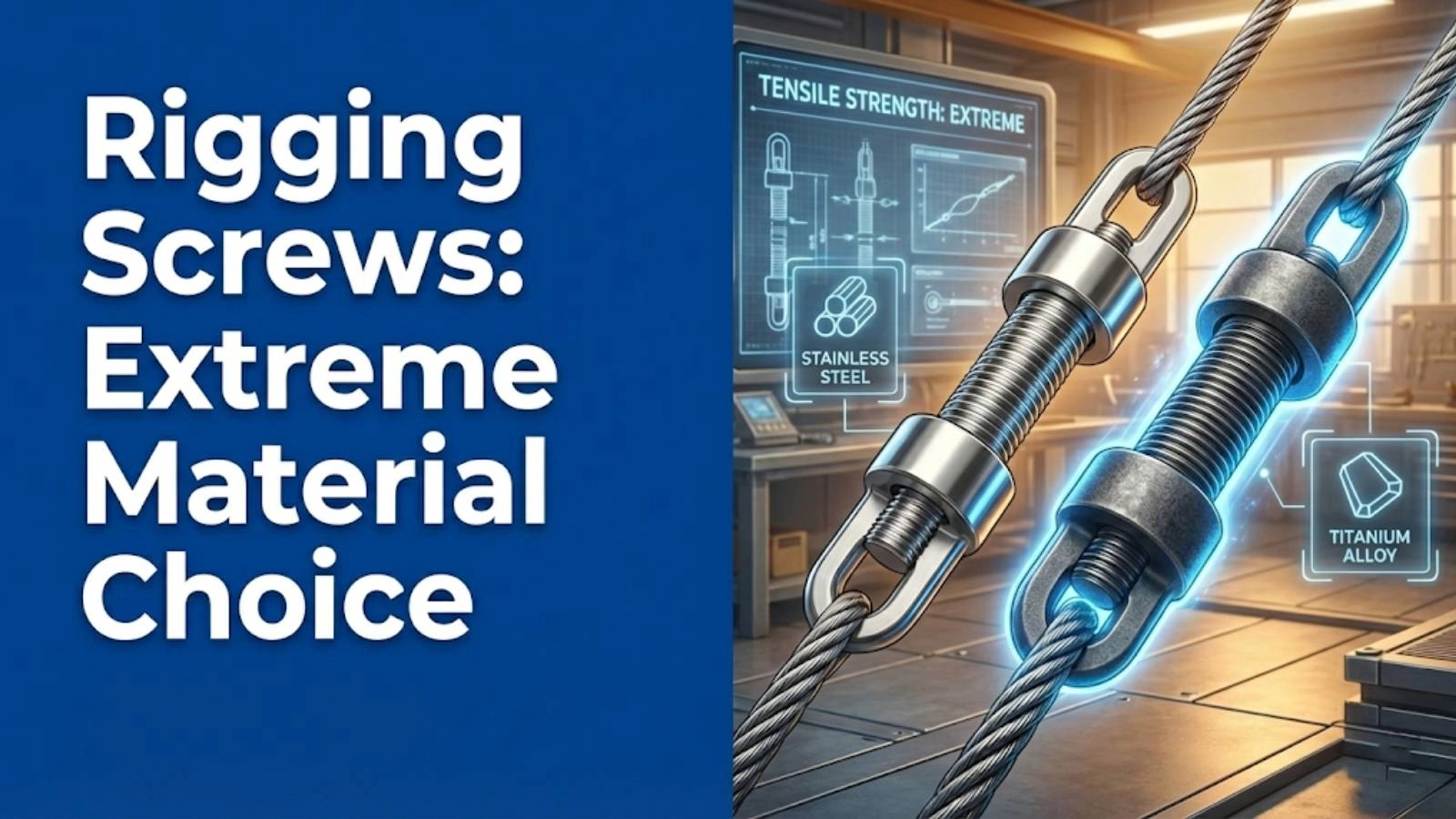
Material Grades and Their Impact on SWL
The material grade of a rigging screw directly influences its strength, durability, and ultimately, its SWL. Common materials used in rigging screws include:
- Carbon Steel: Offers good strength and is suitable for general-purpose applications. Different grades of carbon steel exist, each with varying tensile strengths.
- Alloy Steel: Provides higher strength and better resistance to wear and fatigue compared to carbon steel. Often used in more demanding applications.
- Stainless Steel: Offers excellent corrosion resistance, making it suitable for marine and outdoor environments. However, it may have lower strength compared to alloy steel.
The selection of material depends on the specific application, environmental conditions, and required SWL. The tensile strength of rigging screws is directly proportional to the material grade. Higher-grade materials allow for higher SWLs, but they also come at a higher cost. It’s crucial to consult the manufacturer’s specifications to determine the exact material grade and its corresponding strength properties when calculating the rigging screw SWL. Rigging screw inspection should be performed to ensure the material grade is correct and not damaged in any way.
Standards and Regulations Governing Rigging Screw SWL
Overview of Relevant Standards (e.g., ASME, ISO)
Several international and regional standards govern the design, manufacturing, and use of rigging screws. These standards provide guidelines for determining the rigging screw SWL and ensuring safe rigging practices. Some of the most relevant standards include:
- ASME B30.26: Specifies requirements for various rigging hardware, including rigging screws. It covers design factors, testing, inspection, and maintenance.
- ISO 2415: International standard for shackles used in general lifting applications.
- EN 13157: European standard for hand-operated lifting equipment, including rigging screws. This standard outlines requirements for design, testing, and marking.
- Federal Specification RR-C-271: A US federal specification that covers various types of chain and attachments, including rigging screws.
These standards provide a framework for ensuring that rigging screws meet minimum safety requirements and are suitable for their intended purpose. Compliance with these standards is essential for maintaining safety and avoiding liability.
Regional Regulatory Compliance: A Comparative Analysis
Regulatory compliance varies across different regions and countries. While some regions may adopt international standards like ASME or ISO, others may have their own specific regulations. For example:
- North America: Often follows ASME standards, with additional requirements from OSHA (Occupational Safety and Health Administration) in the United States and provincial regulations in Canada.
- Europe: Adheres to EN standards, which are harmonized across the European Union.
- Australia: Follows Australian Standards (AS) for lifting equipment and rigging practices.
Understanding the specific regulatory requirements in the region where the rigging screw will be used is crucial. This ensures that the equipment complies with local laws and regulations, minimizing the risk of penalties and ensuring worker safety. It’s also important to stay updated on any changes or updates to these regulations.
Impact of Non-Compliance: Legal and Safety Implications
Failure to comply with relevant standards and regulations can have severe legal and safety implications. These can include:
- Fines and Penalties: Regulatory bodies can impose significant fines for non-compliance with safety standards.
- Legal Liability: In the event of an accident or injury, non-compliance can lead to legal action and substantial financial damages.
- Equipment Failure: Using rigging screws that do not meet required standards increases the risk of equipment failure, leading to accidents and injuries.
- Reputational Damage: Non-compliance can damage a company’s reputation and erode trust with customers and stakeholders.
To mitigate these risks, it’s essential to implement a robust compliance program that includes regular audits, training, and documentation. Rigging hardware safety is a priority at SSTC and we implore you to treat it as such as well.
Step-by-Step Guide to Calculating Rigging Screw SWL
Step 1: Identify the Rigging Screw Type and Specifications
The first step in calculating the rigging screw SWL is to identify the type and specifications of the rigging screw. This involves gathering information from the manufacturer’s markings, technical data sheets, or catalogs. Key specifications to look for include:
- Type: Eye end, jaw end, stub end, etc.
- Size: Diameter of the body and end fittings.
- Material Grade: Carbon steel, alloy steel, stainless steel, etc.
- Thread Type: Metric, imperial, etc.
- Manufacturer’s Name or Logo: To ensure traceability and access to relevant technical information.
[IMAGE: A close-up photo of a rigging screw with clear markings showing the manufacturer’s name, size, and material grade.]
This information is crucial for determining the rigging screw’s strength and capacity. Without accurate specifications, it’s impossible to calculate the SWL reliably. We once had a client who assumed the specifications of a rigging screw based on its appearance, leading to a dangerous overload situation. Always verify the specifications using reliable sources.
Step 2: Determine the Minimum Breaking Load (MBL)
The Minimum Breaking Load (MBL), also known as Ultimate Tensile Strength (UTS), is the load at which the rigging screw is expected to fail. This value is typically provided by the manufacturer and should be clearly stated in the product specifications. The MBL is expressed in units of force, such as pounds (lbs) or newtons (N).
[IMAGE: A screenshot of a manufacturer’s datasheet showing the MBL for a specific rigging screw model.]
If the MBL is not readily available, it may be necessary to contact the manufacturer or consult relevant industry standards. It’s crucial to obtain the correct MBL value for the specific rigging screw being used. Using an incorrect MBL can lead to a significant error in the rigging screw SWL calculation, potentially compromising safety.
Step 3: Apply the Appropriate Safety Factor
The safety factor is a critical element in determining the rigging screw SWL. It’s a numerical value that divides the MBL to arrive at a safe working load. The appropriate safety factor depends on several factors, including the application, the type of load (static or dynamic), and relevant industry standards. Typical safety factors for lifting applications range from 4:1 to 5:1, but higher safety factors may be required in certain situations. Factors influencing the selection of the appropriate safety factor include:
- Dynamic Loading: Applications involving dynamic loads, such as shock loads or vibrations, require higher safety factors.
- Human Safety: Lifting applications where human safety is paramount typically require higher safety factors.
- Uncertainty: If there is uncertainty about the load weight or environmental conditions, a higher safety factor is recommended.
[IMAGE: A table showing recommended safety factors for different types of lifting applications and load conditions.]
Step 4: Calculate the Safe Working Load (SWL) Using the Formula
Once the MBL and safety factor are determined, the SWL can be calculated using the following formula:
SWL = MBL / Safety Factor
For example, if a rigging screw has an MBL of 20,000 lbs and a safety factor of 5:1, the rigging screw SWL would be:
SWL = 20,000 lbs / 5 = 4,000 lbs
This means that the rigging screw should not be subjected to a load exceeding 4,000 lbs under normal operating conditions.
| Parameter |
Value |
Unit |
| Minimum Breaking Load (MBL) |
20,000 |
lbs |
| Safety Factor |
5 |
– |
| Safe Working Load (SWL) |
4,000 |
lbs |
Step 5: Account for Dynamic Loading and Environmental Factors
The initial SWL calculation provides a baseline, but it’s crucial to adjust for dynamic loading and environmental factors that can affect the rigging screw’s capacity.
- Dynamic Loading: If the rigging screw will be subjected to dynamic loads, such as lifting heavy equipment that starts and stops abruptly, the SWL should be reduced to account for the increased stress.
- Environmental Factors: Exposure to corrosive environments, extreme temperatures, or UV radiation can degrade the rigging screw’s material and reduce its strength. The rigging screw SWL should be adjusted accordingly. The material grade of rigging screws also matters a lot in this case, and you should take into consideration these environmental factors when selecting your material.
To account for these factors, you may need to apply additional safety factors or consult with a qualified engineer. Ignoring these factors can lead to premature failure and potentially dangerous situations. Our team has seen instances where corrosion significantly reduced the strength of rigging screws, highlighting the importance of regular inspection and maintenance.
Advanced Considerations for SWL Calculation
Dynamic Loading: Understanding Impact and Vibration
Dynamic loading refers to loads that vary in magnitude or direction over time. Unlike static loads, which are constant, dynamic loads can introduce significant stress and fatigue on rigging screws. Common sources of dynamic loading include:
- Impact Loads: Sudden application of force, such as dropping a load or sudden acceleration.
- Vibration: Continuous oscillation or shaking, which can cause fatigue and loosening of connections.
- Cyclic Loading: Repeated application and removal of load, which can lead to fatigue failure over time.
To account for dynamic loading, it’s necessary to increase the safety factor used in the rigging screw SWL calculation. The magnitude of the increase depends on the severity of the dynamic loading. In extreme cases, it may be necessary to conduct a dynamic load analysis using specialized software or techniques. Dynamic load calculation is a necessary step to ensure the equipment’s safety and longevity.
Environmental Factors: Corrosion and Temperature Effects
Environmental factors can significantly affect the strength and lifespan of rigging screws. The most common environmental factors to consider are:
- Corrosion: Exposure to moisture, salt, chemicals, or other corrosive substances can degrade the material of the rigging screw, reducing its strength. Corrosion protection measures, such as galvanizing or using stainless steel, may be necessary in corrosive environments.
- Temperature: Extreme temperatures can affect the material properties of the rigging screw. High temperatures can reduce the tensile strength, while low temperatures can make the material brittle.
- UV Radiation: Exposure to sunlight can degrade certain materials, such as synthetic fibers used in some rigging screw components.
To account for environmental factors, it’s necessary to select materials that are resistant to the specific environmental conditions. Regular inspection and maintenance are also crucial to detect and address any signs of degradation.
Angle of Load: How Geometry Affects SWL
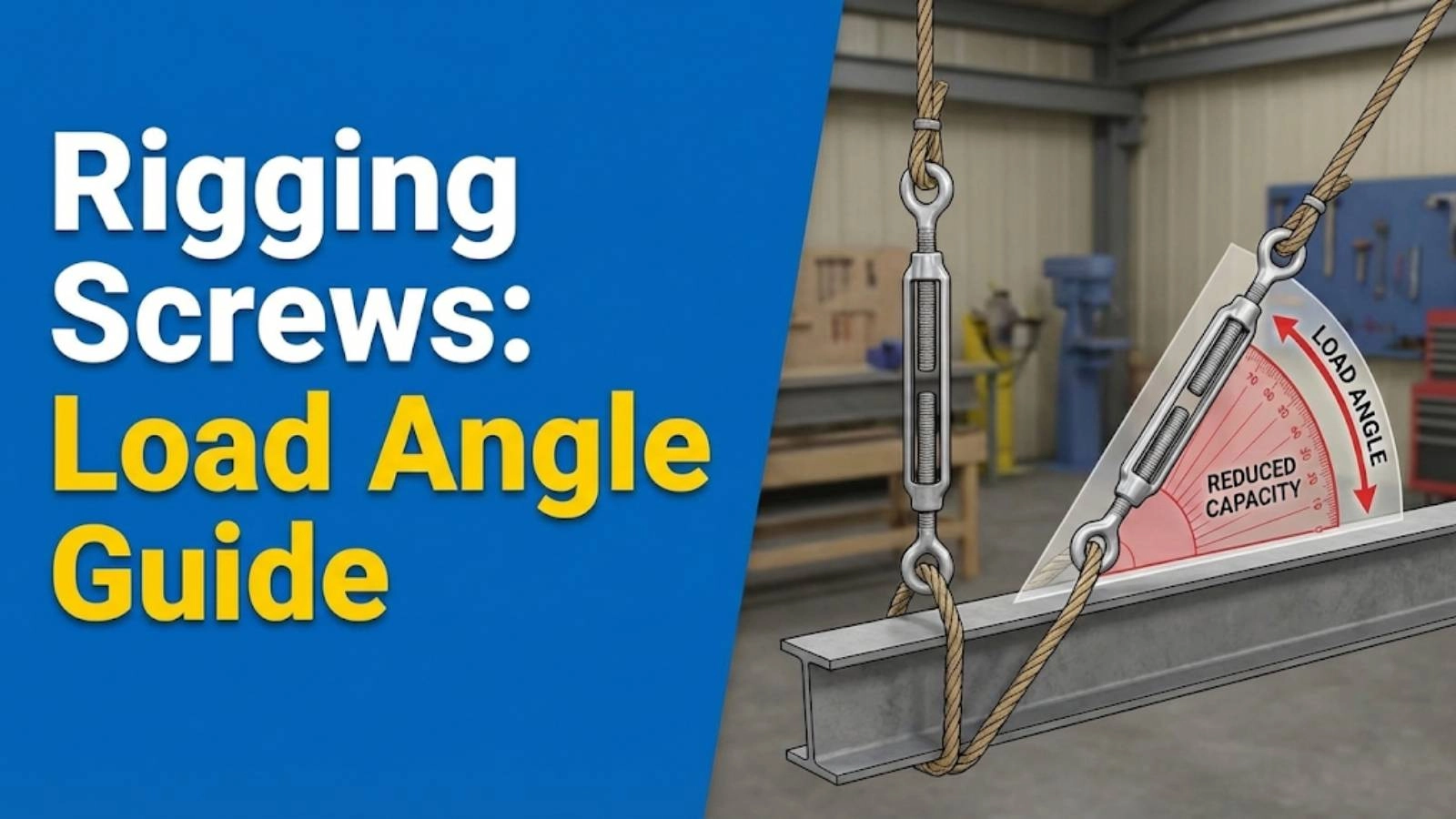
The angle at which the load is applied to the rigging screw can significantly affect its SWL. When a load is applied at an angle, the force is distributed unevenly across the rigging screw, increasing the stress on certain components. The rigging screw SWL must be reduced to account for this effect. The reduction factor depends on the angle of the load. As the angle increases, the rigging screw SWL decreases.
[IMAGE: A diagram illustrating how the angle of load affects the force distribution in a rigging screw.]
To minimize the impact of load angle, it’s recommended to keep the angle as small as possible. Using multiple rigging screws or spreader bars can also help distribute the load more evenly.
Practical Examples and Case Studies
Example 1: Calculating SWL for a Standard Rigging Screw
Let’s calculate the rigging screw SWL for a standard rigging screw with the following specifications:
- Type: Eye End Turnbuckle
- Size: 1/2 inch
- Material: Carbon Steel
- MBL: 10,000 lbs
- Safety Factor: 5:1
Using the formula SWL = MBL / Safety Factor:
SWL = 10,000 lbs / 5 = 2,000 lbs
Therefore, the rigging screw SWL for this standard rigging screw is 2,000 lbs.
Example 2: SWL Calculation with Dynamic Load Considerations
Consider the same rigging screw from Example 1, but now it will be used in an application with moderate dynamic loading. To account for the dynamic loading, we will increase the safety factor to 7:1.
- Type: Eye End Turnbuckle
- Size: 1/2 inch
- Material: Carbon Steel
- MBL: 10,000 lbs
- Safety Factor: 7:1
Using the formula SWL = MBL / Safety Factor:
SWL = 10,000 lbs / 7 = 1,428.57 lbs
Therefore, the rigging screw SWL for this application with dynamic loading is approximately 1,429 lbs. The WLL vs SWL has to be considered as well in conjunction with all of these factors.
Case Study: Failure Analysis and SWL Miscalculation
A construction company experienced a rigging failure that resulted in significant damage to equipment and a near-miss injury. The investigation revealed that the rigging crew had miscalculated the rigging screw SWL, failing to account for the angle of the load. The rigging screw was subjected to a load that exceeded its actual capacity, leading to its failure.
The company had been using a safety factor of 4:1. However, the angle of the load was approximately 45 degrees, which significantly reduced the effective SWL. After the incident, the company implemented a comprehensive training program to ensure that all rigging crews are properly trained in SWL calculation and rigging best practices. They also implemented a system for verifying rigging plans before each lift.
Inspection and Maintenance for Rigging Screw Safety
Visual Inspection: Identifying Wear and Damage
Regular visual inspection of rigging screws is crucial for identifying signs of wear, damage, or corrosion. Key areas to inspect include:
- Body: Look for cracks, dents, or distortions.
- End Fittings: Check for wear, bending, or damage to the eyes, jaws, or pins.
- Threads: Inspect for damaged, stripped, or corroded threads.
- Locking Devices: Ensure that locking nuts or pins are in place and functioning properly.
[IMAGE: A series of close-up photos showing examples of common types of wear and damage found on rigging screws.]
Any rigging screw that shows signs of wear, damage, or corrosion should be removed from service and replaced. The tensile strength of rigging screws is severely affected by these factors.
Load Testing: Validating SWL in Real-World Conditions
Load testing involves subjecting the rigging screw to a controlled load to verify its SWL. Load testing should be performed:
- After Installation: To ensure that the rigging screw is properly installed and functioning correctly.
- Periodically: To detect any degradation or damage that may have occurred over time.
- After Repairs: To verify that the repairs have been performed correctly and that the rigging screw meets its original specifications.
Load testing should be performed by qualified personnel using calibrated equipment. The test load should be equal to the SWL, and the rigging screw should be inspected for any signs of deformation or failure after the test.
Maintenance Procedures: Lubrication and Corrosion Prevention
Proper maintenance can significantly extend the lifespan of rigging screws and prevent premature failure. Key maintenance procedures include:
- Lubrication: Regularly lubricating the threads and moving parts of the rigging screw reduces friction and prevents wear. Use a lubricant that is compatible with the rigging screw material and the environmental conditions.
- Corrosion Prevention: Applying a protective coating or using corrosion-resistant materials can prevent corrosion. Inspect the rigging screw regularly for signs of corrosion and address any issues promptly.
- Storage: Store rigging screws in a clean, dry environment to prevent corrosion and damage.
By implementing these maintenance procedures, you can ensure that your rigging screws remain in good condition and provide reliable service. Rigging hardware safety is something we take seriously at SSTC, and we recommend you do as well.
Common Mistakes and How to Avoid Them
Overloading: Recognizing and Preventing Exceeding SWL
Overloading is one of the most common causes of rigging screw failure. It occurs when the load exceeds the rigging screw SWL, placing excessive stress on the components. To prevent overloading:
- Know the Load Weight: Accurately determine the weight of the load before lifting.
- Verify the Rigging Screw SWL: Ensure that the rigging screw has a SWL that is equal to or greater than the load weight.
- Consider Dynamic Loading: Account for any dynamic loading that may occur during the lift.
- Use Load Monitoring Devices: Use load cells or other devices to monitor the load weight in real-time.
[IMAGE: A diagram illustrating the concept of overloading a rigging screw and the potential consequences.]
Incorrect Installation: Proper Techniques for Rigging Screws
Incorrect installation can compromise the strength and safety of rigging screws. Common installation mistakes include:
- Over-tightening: Over-tightening the rigging screw can damage the threads and reduce its SWL.
- Misalignment: Misaligning the rigging screw can place uneven stress on the components.
- Using Incorrect Fittings: Using fittings that are not compatible with the rigging screw can lead to failure.
To ensure correct installation:
- Follow the Manufacturer’s Instructions: Carefully follow the manufacturer’s instructions for installation.
- Use Proper Tools: Use the correct tools for tightening and adjusting the rigging screw.
- Ensure Alignment: Ensure that the rigging screw is properly aligned before applying the load.
Ignoring Environmental Factors: Long-Term Degradation
Ignoring environmental factors can lead to long-term degradation of rigging screws and premature failure. To prevent this:
- Select Appropriate Materials: Choose materials that are resistant to the specific environmental conditions.
- Apply Protective Coatings: Apply protective coatings to prevent corrosion.
- Inspect Regularly: Inspect rigging screws regularly for signs of corrosion, wear, or damage.
- Replace as Needed: Replace rigging screws that show signs of degradation.
Software and Tools for SWL Calculation
Overview of Available Calculation Software
Several software programs and tools are available to assist with rigging screw SWL calculation. These tools can simplify the calculation process and reduce the risk of errors. Some popular software options include:
- Rigging Calculators: Standalone software programs specifically designed for rigging calculations.
- Engineering Analysis Software: More comprehensive software packages that include rigging analysis capabilities.
- Spreadsheet Templates: Pre-designed spreadsheet templates that can be used for SWL calculation.
These tools typically allow users to input the rigging screw specifications, load conditions, and safety factors, and then automatically calculate the SWL.
Using Online Calculators: Accuracy and Limitations
Online calculators can be a convenient way to quickly estimate the rigging screw SWL. However, it’s important to be aware of their limitations. Online calculators may not always be accurate or reliable, especially if they are not based on recognized industry standards. It’s essential to verify the accuracy of the results and to use online calculators only as a starting point. Always refer to the manufacturer’s specifications and relevant standards for accurate rigging screw SWL calculation.
Creating Custom Spreadsheets for SWL Tracking
Creating custom spreadsheets for SWL tracking can be a valuable tool for managing rigging operations. Spreadsheets can be used to store information about the rigging screws, load weights, and SWL calculations. They can also be used to track inspections, maintenance, and replacements.
[IMAGE: A screenshot of a custom spreadsheet designed for tracking rigging screw SWL calculations and inspection records.]
Creating custom spreadsheets allows you to tailor the information to your specific needs and to easily track the status of your rigging equipment.
Conclusion: Ensuring Safety Through Accurate SWL Calculation
Recap of Key Steps in SWL Calculation
Calculating rigging screw SWL accurately is essential for ensuring the safety of lifting and rigging operations. The key steps involved in the calculation process include:
1. Identifying the rigging screw type and specifications.
2. Determining the Minimum Breaking Load (MBL).
3. Applying the appropriate safety factor.
4. Calculating the rigging screw SWL using the formula.
5. Accounting for dynamic loading and environmental factors.
By following these steps carefully, you can ensure that your rigging screws are operating within their designed capacity and that your lifting operations are safe.
Importance of Continuous Training and Compliance
Continuous training and compliance with industry standards are crucial for maintaining safety in rigging operations. Rigging crews should be regularly trained on SWL calculation, rigging best practices, and inspection procedures. They should also be familiar with relevant industry standards and regulations.
By investing in continuous training and compliance, you can create a culture of safety and reduce the risk of accidents and injuries. Remember, the rigging screw safe working load is of the utmost importance for everyone’s safety.
We at Safe and Secure Trading Company are committed to providing our customers with the highest quality rigging equipment and the knowledge and support they need to operate safely. By meticulously following these guidelines, we empower you to maintain a secure and productive work environment.
FAQ Section
Q: What is the difference between SWL and WLL?
A: SWL (Safe Working Load) and WLL (Working Load Limit) are often used interchangeably and represent the maximum load a rigging component should handle. Some standards may have slight variations in their definitions, but practically, they serve the same purpose: indicating the safe load limit.
Q: How do I find the MBL for my rigging screw?
A: The MBL (Minimum Breaking Load) should be provided by the manufacturer in the product specifications, datasheet, or catalog. Look for markings on the rigging screw itself or consult the manufacturer directly if the information is not readily available.
Q: What safety factor should I use for my rigging application?
A: The appropriate safety factor depends on the application, load type (static or dynamic), and relevant industry standards. Typical safety factors range from 4:1 to 5:1, but higher factors may be needed for dynamic loads or critical applications. Consult industry standards or a qualified engineer for guidance.
Q: How often should I inspect my rigging screws?
A: Rigging screws should be inspected regularly, ideally before each use. The frequency of inspections may need to be increased in harsh environments or with frequent use. Perform more thorough inspections at least annually, or as recommended by the manufacturer and relevant standards.
Q: What do I do if I find a damaged rigging screw?
A: Any rigging screw that shows signs of wear, damage, or corrosion should be immediately removed from service and replaced. Do not attempt to repair a damaged rigging screw, as this can compromise its strength and safety.