Rigging screws are essential components in various industries, offering a reliable means of tensioning and adjusting rigging systems. These versatile devices, also known as turnbuckles, play a crucial role in ensuring the stability and safety of structures and equipment. Understanding the different rigging screw types, their applications, and best practices for maintenance is paramount for professionals across diverse sectors.
Key Takeaways
- Rigging screws, also known as turnbuckles, are crucial for tensioning and adjusting rigging systems.
- Different types of rigging screws cater to specific load requirements and environmental conditions.
- Proper inspection and maintenance are vital for ensuring the safe operation of rigging screws.
- Understanding material properties is key to selecting the right rigging screw for its intended purpose.
Understanding Rigging Screws: An Introduction ✨
Defining Rigging Screws and Their Purpose
Rigging screws, often referred to as turnbuckles, are mechanical devices used to adjust the tension or length of ropes, cables, tie rods, and other tensioning systems. They consist of a metal frame or body with threaded ends that accept different types of end fittings. These fittings, such as jaws, eyes, or hooks, connect to the components being tensioned. The primary function of a rigging screw is to provide a controlled means of applying and adjusting tension, making them indispensable in a wide array of applications.
In our experience at Safe and Secure Trading Company (SSTC), rigging screws are essential in industries ranging from construction to marine operations. We’ve consistently seen that properly selected and maintained rigging screws contribute significantly to the overall safety and efficiency of rigging systems. The ability to fine-tune tension is crucial for ensuring structural integrity and preventing failures.
The critical role rigging screws play extends beyond simple tensioning. They allow for precise adjustments to compensate for slack, stretch, or movement in a system. This is particularly important in applications where maintaining a specific tension is vital for performance or safety.
Basic Components of a Rigging Screw
A rigging screw comprises several key components, each contributing to its overall functionality. The main parts include the body, which is the central frame, and the end fittings, which connect the screw to other components. The body typically features internal threads that engage with threaded rods attached to the end fittings.
The end fittings can vary widely depending on the application. Common types include:
- Jaws: These provide a secure, fixed connection to a mating component.
- Eyes: Offering versatility, eyes allow for easy attachment to shackles, hooks, or other hardware.
- Hooks: These enable quick and convenient connections, ideal for temporary or frequently adjusted setups.
The material composition of rigging screws is typically steel, stainless steel, or other alloys. Steel provides high strength and cost-effectiveness, while stainless steel offers superior corrosion resistance, particularly important in marine environments. The thread types also play a significant role in the screw’s performance. Common thread types include coarse and fine threads, with fine threads allowing for more precise adjustments.
Why Choose the Right Rigging Screw?
Selecting the appropriate rigging screw is paramount for safety and operational efficiency. Using the wrong type or size can lead to equipment failure, potentially causing serious accidents or damage. The load capacity, indicated by the Working Load Limit (WLL), is a critical factor. Exceeding the WLL can result in catastrophic failure, so it is essential to choose a rigging screw with a WLL that meets or exceeds the anticipated load.
Environmental factors also play a significant role. In corrosive environments, such as marine settings, stainless steel rigging screws are necessary to prevent rust and degradation. Steel rigging screws, while strong and cost-effective, are susceptible to corrosion and may require protective coatings or regular maintenance.
“Choosing the right rigging screw isn’t just about strength; it’s about ensuring the entire system is reliable and safe under the intended operating conditions.” – John Smith, Lead Safety Inspector
In our experience with clients here in Dammam, Saudi Arabia, we’ve seen that overlooking these considerations can lead to costly repairs and downtime. A common mistake we help businesses fix is selecting rigging hardware without adequately assessing the environmental conditions. By understanding the specific requirements of each application, you can select the rigging screw that provides the best balance of strength, durability, and cost-effectiveness.
Exploring Different Rigging Screw Types 🔩
Jaw End Rigging Screws
Jaw end rigging screws feature end fittings with a U-shaped opening, or jaw, that is secured with a pin or bolt. These are designed for a secure and fixed connection, making them ideal for applications where minimal movement is required. The jaw end provides a robust link, ensuring that the rigging screw remains firmly attached to its mating component.
One of the primary advantages of jaw end rigging screws is their ability to create a very secure connection. This is particularly useful in applications where the connection point is fixed and doesn’t require frequent adjustments. They are commonly used in construction, industrial rigging, and marine applications where a strong, reliable connection is paramount.
However, jaw end rigging screws have limitations. Their fixed nature means that adjustability is limited after installation. Once the pin or bolt is in place, altering the connection requires disassembling the fitting, which can be time-consuming. Therefore, they are best suited for situations where the connection is intended to be permanent or semi-permanent.
Eye End Rigging Screws
Eye end rigging screws have end fittings with a circular opening, or eye, that allows for easy attachment to various types of hardware. This design provides versatility and makes them suitable for a wide range of applications. The eye end can be connected to shackles, hooks, ropes, or other fittings, offering flexibility in rigging configurations.
The primary advantage of eye end rigging screws is their versatility. They can be easily integrated into different systems and connected to various types of hardware. This makes them a popular choice in marine rigging, construction rigging, and other applications where adaptability is essential.
However, eye end fittings can be prone to loosening if not properly secured. It is crucial to ensure that the connecting hardware is properly tightened and secured to prevent slippage or detachment. Regular inspection and maintenance are necessary to maintain the integrity of the connection.
Hook End Rigging Screws
Hook end rigging screws feature end fittings with a hook that allows for quick and easy connection and disconnection. These are designed for applications where frequent adjustments or temporary connections are required. The hook end provides a convenient means of attaching and detaching the rigging screw without the need for tools.
The main advantage of hook end rigging screws is their speed and ease of use. They are ideal for applications where quick connections are needed, such as in theatrical rigging, temporary scaffolding, or load securing. The hook allows for rapid attachment and detachment, saving time and effort.
However, hook end rigging screws are not suitable for permanent or high-load applications. The hook is inherently less secure than a jaw or eye end, and it may be prone to accidental disengagement under heavy loads or dynamic conditions. Therefore, they should only be used in applications where the load is relatively light and the connection is temporary.
Stub End Rigging Screws
Stub end rigging screws feature end fittings that are designed to be connected to specialized fittings or welded in place. These are often used in custom rigging solutions where a standard end fitting is not suitable. The stub end provides a base for attaching other components, allowing for tailored rigging configurations.
The primary advantage of stub end rigging screws is their adaptability. They can be customized to meet specific requirements, making them useful in unique or specialized applications. They can be connected to custom brackets, plates, or other hardware, allowing for a seamless integration into the overall system.
However, stub end rigging screws require additional tools or processes for installation. Welding or specialized fittings may be necessary to complete the connection, which can add to the overall cost and complexity. They are best suited for situations where a custom solution is required and the additional installation effort is justified.
Swage Rigging Screws
Swage rigging screws utilize swage fittings, which are permanently attached to the wire rope or cable using a swaging tool. This creates a high-strength, permanent connection that is ideal for critical applications. The swaging process compresses the fitting onto the wire rope, creating a mechanical bond that is stronger than the wire rope itself.
One of the main advantages of swage rigging screws is their high strength and reliability. The swaged connection is incredibly strong and resistant to loosening or failure. This makes them a popular choice in applications where safety and performance are paramount, such as in aircraft cables, architectural cable railings, and high-load lifting systems.
However, swage rigging screws require specialized swaging tools for installation. The swaging process requires precision and expertise to ensure a proper connection. Once the fitting is swaged, it cannot be easily removed or adjusted, so careful planning and execution are essential.
| Rigging Screw Type |
Advantages |
Disadvantages |
Common Applications |
| Jaw End |
Secure connection, suitable for fixed points |
Limited adjustability after installation |
Construction, industrial rigging, marine |
| Eye End |
Versatility, easy attachment to various hardware |
Potential for loosening if not properly secured |
Marine rigging, construction rigging |
| Hook End |
Quick and easy connection/disconnection |
Not suitable for permanent/high-load |
Theatrical rigging, temporary scaffolding |
| Stub End |
Can be connected to specialized fittings or welded |
Requires additional tools/processes |
Custom rigging solutions |
| Swage |
High strength, permanent connection |
Requires specialized swaging tools |
Aircraft cables, cable railings, lifting systems |
Material Selection for Rigging Screws 🧪
Steel Rigging Screws
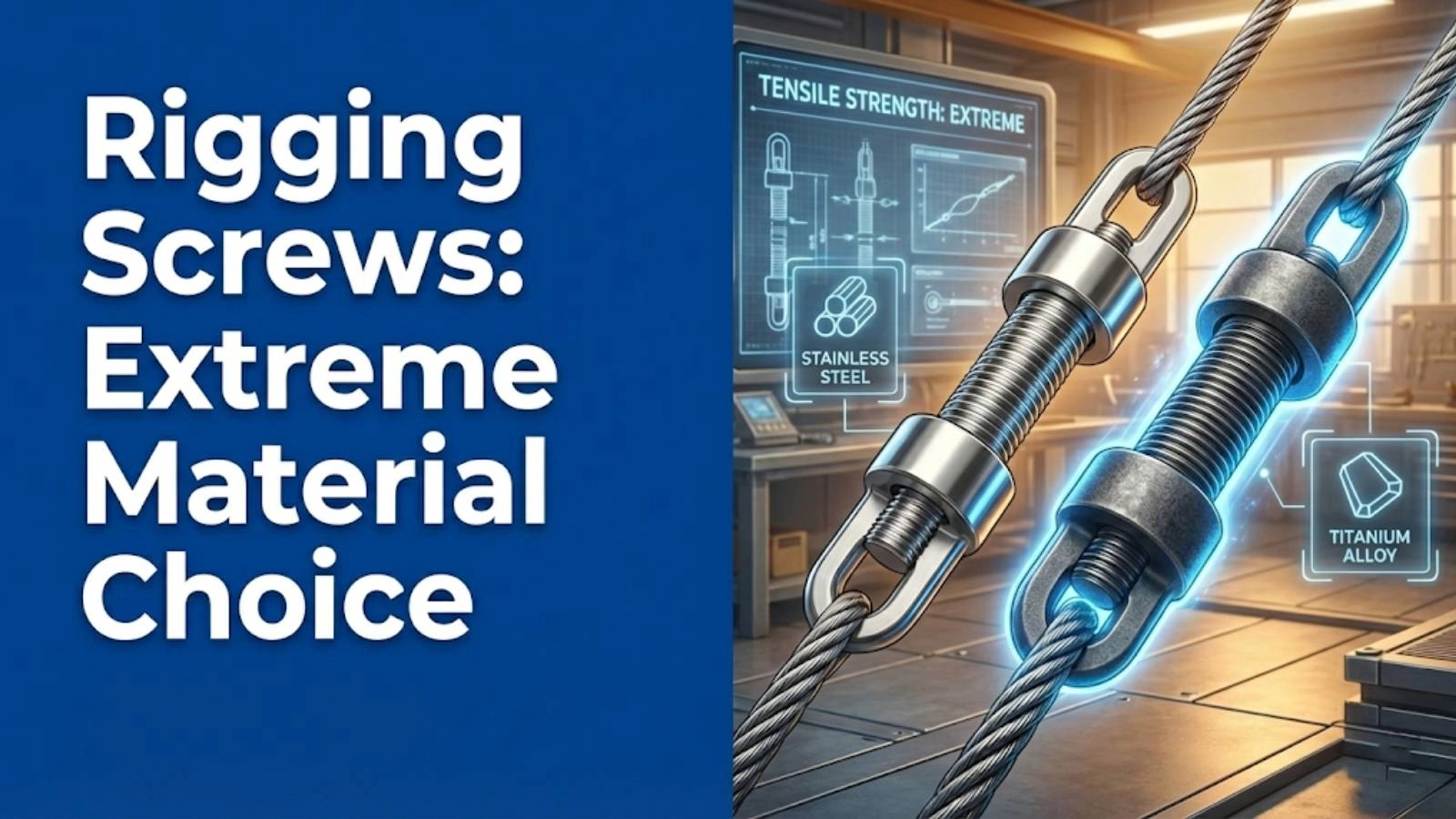
Steel is a common material for rigging screws due to its high strength and cost-effectiveness. Steel rigging screws can withstand significant loads, making them suitable for a wide range of applications. The cost-effectiveness of steel makes it an attractive option for projects with budget constraints.
Common steel grades used in rigging screws include carbon steel and alloy steel. Carbon steel offers good strength and is commonly used in general-purpose applications. Alloy steel, which contains additional elements such as chromium and nickel, provides enhanced strength and toughness, making it suitable for more demanding applications.
However, steel rigging screws are susceptible to corrosion, especially in marine or humid environments. Rust can weaken the screw and compromise its integrity, leading to potential failure. Protective coatings, such as galvanization or zinc plating, can help mitigate corrosion, but regular inspection and maintenance are still necessary.
Stainless Steel Rigging Screws
Stainless steel is an excellent material choice for rigging screws due to its superior corrosion resistance. This makes it ideal for marine environments, chemical processing plants, and other applications where exposure to corrosive elements is unavoidable. Stainless steel rigging screws can withstand prolonged exposure to saltwater, chemicals, and other harsh substances without degrading.
Different grades of stainless steel are available, each with specific properties. Grade 304 stainless steel is a common choice, offering good corrosion resistance and strength. Grade 316 stainless steel contains molybdenum, which further enhances its corrosion resistance, making it particularly suitable for marine applications.
However, stainless steel rigging screws are generally more expensive than steel rigging screws. The higher cost can be a limiting factor for some projects, but the increased durability and longevity often justify the investment in corrosive environments.
Other Materials (e.g., Alloys)
In addition to steel and stainless steel, specialized alloys are sometimes used for rigging screws in high-strength or specific applications. These alloys may offer enhanced strength, fatigue resistance, or other desirable properties.
For example, titanium alloys are known for their exceptional strength-to-weight ratio and corrosion resistance. They are often used in aerospace and other high-performance applications where weight is a critical factor. Nickel alloys offer excellent resistance to high temperatures and corrosive environments, making them suitable for extreme conditions.
Selecting alternative materials requires careful consideration of the application’s specific requirements. Factors such as load, environment, and cost must be evaluated to determine the best material for the job. Consulting with a materials engineer or rigging expert can help ensure the right choice is made.
Applications Across Industries 🏗️
Marine and Sailing Applications
In marine and sailing applications, rigging screws are essential for boat rigging, sail tensioning, and mooring systems. They provide the means to adjust and maintain the tension of various lines and cables, ensuring proper sail shape and boat control. The ability to fine-tune tension is crucial for optimizing performance and safety on the water.
Corrosion resistance is particularly important in marine environments due to constant exposure to saltwater. Stainless steel rigging screws are the preferred choice for their ability to withstand the corrosive effects of saltwater without degrading. Regular inspection and maintenance are necessary to ensure the rigging screws remain in good condition and perform reliably.
Specific rigging screw types commonly used in marine applications include jaw end, eye end, and swage rigging screws. Jaw end rigging screws provide a secure connection to fixed points, while eye end rigging screws offer versatility in attaching to various hardware. Swage rigging screws provide a high-strength, permanent connection for critical lines and cables.
Construction and Industrial Rigging
In construction and industrial rigging, rigging screws are used extensively for lifting, hoisting, and securing loads. They provide a controlled means of applying tension to cables, chains, and other lifting devices, ensuring the safe and efficient movement of heavy objects. The high load capacity and safety standards associated with rigging screws make them indispensable in these applications.
High load capacity is paramount in construction and industrial rigging due to the heavy weights involved. Rigging screws used in these applications must be able to withstand significant loads without failing. Safety standards, such as those set by ANSI and ISO, must be strictly adhered to to ensure the safety of workers and equipment.
Rigging screws are commonly used in scaffolding, bridge construction, and heavy equipment operations. In scaffolding, they provide a means of adjusting and stabilizing the structure. In bridge construction, they are used to tension cables and support structural elements. In heavy equipment operations, they are used to lift and secure heavy machinery.
Architectural and Decorative Uses
Rigging screws are also used in architectural structures, cable railings, and decorative elements. Their ability to provide tension and adjustability makes them ideal for creating visually appealing and structurally sound designs. Aesthetic considerations are often important in these applications, so material choices and finishes are carefully selected.
Stainless steel rigging screws are commonly used in architectural applications due to their corrosion resistance and aesthetic appeal. They can be polished to a bright finish or coated with various colors to match the surrounding design. Cable railings are a popular application, providing a sleek and modern look while ensuring safety and security.
Examples of innovative architectural applications include cable-suspended roofs, tensile fabric structures, and decorative cable art. These applications showcase the versatility and aesthetic potential of rigging screws in architectural design. The use of rigging screws allows for the creation of lightweight, yet strong, structures that are both functional and visually stunning.
Theatrical Rigging Applications
In theatrical rigging applications, rigging screws are used to support stage lighting, scenery, and overhead rigging systems. They provide a means of adjusting and positioning various elements of the stage, ensuring proper lighting angles and safe suspension of scenery. Ease of adjustment is particularly important in theatrical settings, where quick changes are often required.
Safety is paramount in theatrical rigging due to the potential for serious accidents. Rigging screws used in these applications must be regularly inspected and maintained to ensure their integrity. Specific rigging screw types commonly used in theatrical settings include hook end and eye end rigging screws. Hook end rigging screws allow for quick and easy connection and disconnection, while eye end rigging screws offer versatility in attaching to various hardware.
The ability to quickly adjust and reposition lighting and scenery is crucial for creating the desired effects on stage. Rigging screws provide the means to make these adjustments safely and efficiently, contributing to the overall success of the performance.
Safety and Maintenance Best Practices ⚠️
Inspection Procedures
Regular inspection of rigging screws is essential for identifying wear, corrosion, and damage. Inspections should be conducted before each use and at regular intervals, depending on the frequency and severity of use. A thorough inspection includes checking for bent or distorted components, verifying the integrity of threads and end fittings, and looking for signs of corrosion or cracking.
Bent or distorted components can indicate that the rigging screw has been subjected to excessive loads or impact. These components should be replaced immediately. The integrity of threads and end fittings is crucial for ensuring a secure connection. Damaged threads or worn end fittings can compromise the strength of the rigging screw and lead to failure.
Verifying the WLL markings are legible and match the application requirements is also crucial during inspection. Illegible or mismatched WLL markings can lead to overloading and potential accidents. Any rigging screw with questionable integrity should be removed from service and replaced.
Proper Installation Techniques
Proper installation techniques are essential for ensuring the safe and reliable operation of rigging screws. This includes ensuring correct alignment and load distribution, using appropriate tools for tightening and adjusting, and avoiding over-tightening.
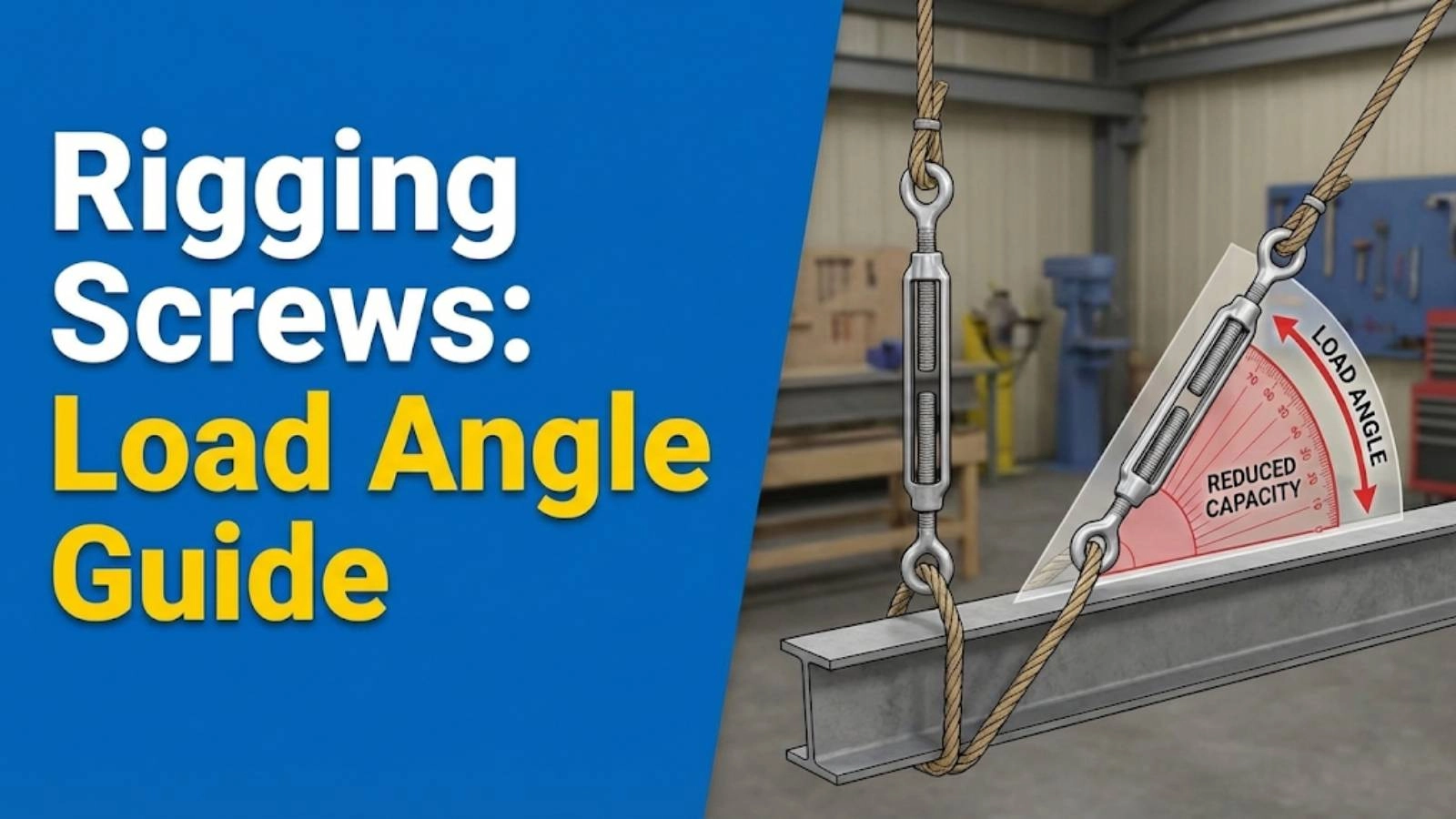
Correct alignment and load distribution are crucial for preventing uneven stress and potential failure. The rigging screw should be aligned with the load path to ensure that the load is evenly distributed across the components. Using appropriate tools for tightening and adjusting is essential for achieving the correct tension without damaging the rigging screw.
Avoiding over-tightening is crucial for preventing thread damage and potential failure. Over-tightening can strip the threads or cause the end fittings to distort. A torque wrench should be used to ensure that the rigging screw is tightened to the specified torque value.
Maintenance and Lubrication
Maintenance and lubrication are essential for preventing corrosion and ensuring smooth operation of rigging screws. This includes cleaning and lubricating rigging screws to prevent corrosion, applying anti-seize compounds to threads, and following proper storage guidelines to prevent damage and degradation.
Cleaning and lubricating rigging screws helps to remove dirt, debris, and moisture that can contribute to corrosion. A wire brush and solvent can be used to clean the rigging screw, followed by the application of a suitable lubricant. Applying anti-seize compounds to threads helps to prevent galling and seizing, making it easier to adjust the rigging screw.
Proper storage guidelines include storing rigging screws in a dry, protected environment to prevent corrosion and damage. Rigging screws should be stored away from chemicals, heat, and other harsh conditions that can accelerate degradation.
Load Capacity and Working Load Limits (WLL)
Understanding WLL and safety factors is crucial for preventing overloading and ensuring safe operation. The WLL is the maximum load that a rigging screw is designed to safely handle. Exceeding the WLL can lead to equipment failure and serious accidents.
Safety factors are used to account for uncertainties in loading conditions and material properties. A common safety factor is 5:1, meaning that the rigging screw is designed to withstand five times the WLL before failing. Avoiding exceeding the rated load capacity is essential for maintaining the integrity of the rigging screw and preventing accidents.
Properly labeling and marking rigging screws with WLL information is crucial for preventing overloading. The WLL should be clearly marked on the rigging screw and easily visible to users. Regular training and education are essential for ensuring that workers understand the importance of WLL and safety factors.
Standards and Regulations 📜
ANSI Standards
ANSI (American National Standards Institute) develops and publishes standards for a wide range of products and systems, including rigging screws. Relevant ANSI standards for rigging screws cover design, manufacturing, testing, and performance requirements. Compliance with ANSI standards is essential for ensuring the safety and reliability of rigging screws.
ANSI standards provide guidelines for determining the load capacity, material properties, and dimensional requirements of rigging screws. They also specify testing procedures for verifying that rigging screws meet the required performance standards. Compliance requirements include adhering to the specified design and manufacturing processes, conducting regular testing, and maintaining proper documentation. Certification by a recognized testing laboratory can provide assurance that a rigging screw meets the requirements of ANSI standards.
ISO Standards
ISO (International Organization for Standardization) develops and publishes international standards for a wide range of products and systems, including rigging screws. Applicable ISO standards for international applications provide a framework for ensuring the global compliance of rigging screws.
ISO standards cover similar aspects as ANSI standards, including design, manufacturing, testing, and performance requirements. Ensuring global compliance with ISO standards is essential for companies that sell rigging screws in international markets. Compliance with ISO standards can help to build trust and confidence among customers and stakeholders.
Other Regulatory Requirements
In addition to ANSI and ISO standards, local and regional regulations may also apply to rigging and lifting equipment. These regulations may vary depending on the jurisdiction and the specific application. Staying up-to-date with industry standards is crucial for ensuring compliance with all applicable regulatory requirements.
Local and regional regulations may cover aspects such as inspection frequency, training requirements, and equipment certification. It is important to consult with local authorities and industry experts to determine the specific regulatory requirements that apply to a particular situation. Failure to comply with regulatory requirements can result in fines, penalties, and legal liability.
Advanced Considerations 💡
Dynamic Loading and Fatigue
Dynamic loading refers to loads that vary over time, such as those caused by wind, waves, or vibrations. Dynamic loading can have a significant impact on the performance and lifespan of rigging screws. Understanding the effects of dynamic loading is essential for selecting the appropriate rigging screw and ensuring its long-term reliability.
Fatigue is the weakening of a material due to repeated loading and unloading. Over time, dynamic loading can cause fatigue cracks to form in rigging screws, leading to eventual failure. Considerations for fatigue resistance include selecting materials with high fatigue strength, designing rigging screws to minimize stress concentrations, and implementing regular inspection and maintenance programs.
Environmental Factors
Environmental factors such as temperature, humidity, and chemical exposure can significantly impact the performance of rigging screws. Temperature extremes can affect the strength and ductility of materials. High humidity can accelerate corrosion. Chemical exposure can cause degradation of materials.
Selecting materials that are resistant to specific environmental conditions is crucial for ensuring the long-term reliability of rigging screws. Stainless steel is often used in corrosive environments. High-temperature alloys are used in high-temperature environments. Protective coatings can be applied to materials to enhance their resistance to specific environmental factors.
Custom Rigging Solutions
Designing custom rigging screws for specialized applications may be necessary when standard rigging screws do not meet the required specifications. Custom rigging solutions can be tailored to meet specific load, environmental, or dimensional requirements.
Working with manufacturers to create tailored solutions is essential for ensuring that custom rigging screws meet the required performance standards. Manufacturers can provide engineering expertise, material selection guidance, and testing services to ensure that the custom rigging screws are safe and reliable. Custom rigging solutions can be more expensive than standard rigging screws, but they can provide a cost-effective solution for unique or demanding applications.
Troubleshooting Common Issues 🛠️
Thread Damage and Stripping
Thread damage and stripping can occur due to over-tightening, corrosion, or the use of improper tools. Damaged threads can compromise the strength of the rigging screw and lead to failure. Causes of thread damage include using excessive force when tightening the rigging screw, exposing the threads to corrosive substances, and using tools that are not properly sized or designed for the rigging screw.
Preventing thread damage involves using a torque wrench to tighten the rigging screw to the specified torque value, applying anti-seize compounds to the threads, and using proper tools. Repair options for damaged threads may include chasing the threads with a thread chaser or replacing the damaged components.
Corrosion and Rust
Corrosion and rust are common issues that can affect the performance and lifespan of steel rigging screws. Corrosion can weaken the screw and compromise its integrity, leading to potential failure. Identifying and addressing corrosion issues promptly is essential for preventing further damage.
Preventive measures to minimize corrosion include using stainless steel rigging screws in corrosive environments, applying protective coatings to steel rigging screws, and implementing regular cleaning and lubrication programs.
Difficulty in Adjusting
Difficulty in adjusting rigging screws can be caused by corrosion, thread damage, or excessive tightening. Reasons for difficulty in adjusting rigging screws include rust buildup on the threads, damaged threads that prevent smooth movement, and over-tightening that causes the threads to bind.
Troubleshooting techniques to resolve adjustment problems include cleaning and lubricating the threads, using a thread chaser to repair damaged threads, and applying heat to loosen frozen threads. If the rigging screw cannot be adjusted after these steps, it should be replaced.
Conclusion
Rigging screw types offer versatile solutions for tensioning and adjusting systems across diverse industries. By understanding the different types, materials, applications, and safety practices, you can ensure optimal performance and longevity. We have seen firsthand the importance of choosing the right rigging screw for each specific task. With our expertise at SSTC, we’re here to help you make the best decisions.
FAQ Section
What is the main difference between a jaw and eye end rigging screw?
- Jaw ends provide a secure, fixed connection, while eye ends offer greater versatility in attachment.
How often should rigging screws be inspected?
- Rigging screws should be inspected regularly, ideally before each use, and at least annually by a qualified professional.
What is WLL, and why is it important?
- WLL stands for Working Load Limit, which is the maximum load a rigging screw is designed to safely handle. Exceeding the WLL can lead to equipment failure and serious accidents.
Can I use a steel rigging screw in a marine environment?
- While possible, it is not recommended due to the high risk of corrosion. Stainless steel rigging screws are much better suited for marine environments.
What should I do if I find corrosion on my rigging screws?
- Minor surface rust can be removed with a wire brush and treated with a rust inhibitor. For severe corrosion, the rigging screw should be replaced immediately.