The Silent Danger of a Poor Safety Harness Fit
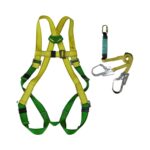
A properly fitted safety harness is critical for anyone working at height. It’s the last line of defense in a fall, and when used correctly, it can significantly reduce the risk of serious injury or fatality. However, a safety harness fit that is too loose, too tight, damaged, or incorrectly sized won’t provide the necessary protection.
At Safe and Secure Trading Company (SSTC), we understand the importance of proper fall protection. A poorly fitted harness can lead to severe injuries, including internal damage, spinal cord injuries, and even death. That’s why we’ve put together this guide to help you spot the danger signs of a safety harness fit that isn’t up to par. Here are 11 warning signs to watch out for.
1. ✅ Excessive Looseness: The “Sliding” Syndrome
Excessive looseness in a safety harness is a major red flag. This is often characterized by shoulder straps that slide off the shoulders, leg straps that dangle freely, and a general feeling that the harness isn’t snug against the body. For many of our clients here in Dammam, we’ve seen that neglecting this issue can lead to serious problems during a fall.
Why is this a problem? Because a loose fall protection harness won’t effectively arrest a fall. Instead of distributing the impact forces across the body, the harness can shift, potentially allowing the worker to slip out or experience concentrated pressure in certain areas. It can also increase the distance of the fall, exacerbating the risk of injury.
The solution is simple: adjust the straps until the harness fits snugly but comfortably.
How to adjust shoulder straps for a snug fit.
Start by loosening the shoulder straps completely. Then, while wearing the harness, gradually tighten the straps until they sit comfortably on your shoulders without slipping. You should be able to fit no more than two fingers between the strap and your shoulder.
How to tighten leg straps without restricting movement.
The leg straps should be snug enough to stay in place during a fall, but not so tight that they restrict your movement. Adjust them so you can fit a flat hand between the strap and your thigh. Make sure the straps are positioned high on the thighs, close to the groin.
Importance of adjusting the dorsal D-ring position.
The dorsal D-ring, located on the back of the harness, is the primary attachment point for the fall arrest lanyard. Its position is crucial for proper fall arrest. It should be located between your shoulder blades so that your body is suspended in an upright position during and after a fall. Adjust the harness to ensure the D-ring is properly positioned.
2. ✅ Overly Tight Straps: Restriction and Risk
On the opposite end of the spectrum is the problem of overly tight straps. This occurs when the fall protection harness is cinched down too tightly, causing discomfort, restricting movement, and potentially leading to health issues. Overly tight straps can be just as dangerous as loose straps.
Overly tight straps can lead to several problems. They can restrict breathing, cause chafing and pressure points, and even impair circulation. Reduced mobility can also increase the risk of slips and trips. Prolonged use of an overly tight harness can contribute to nerve damage and other long-term health issues.
The key is to find the right balance between a snug and restrictive fit.
Recognizing the signs of over-tightening.
Signs of over-tightening include difficulty breathing, visible red marks or chafing on the skin, numbness or tingling in the extremities, and an overall feeling of discomfort. If you experience any of these symptoms, immediately loosen the straps.
Step-by-step guide to proper loosening.
To loosen the straps, start with the leg straps, then move to the chest strap and finally the shoulder straps. Make small adjustments, checking the fit after each adjustment. The goal is to achieve a snug but comfortable fit that allows for a full range of motion.
Finding the balance between snug and restrictive.
The ideal safety harness fit is snug enough to stay in place during a fall but loose enough to allow for comfortable movement and breathing. You should be able to move freely without feeling restricted, and you shouldn’t experience any discomfort or pressure points. It may take some trial and error to find the perfect balance, but it’s worth the effort.
3. ✅ Incorrect D-Ring Placement: Missing the Mark
The D-ring is a critical component of the fall arrest system, and its placement is essential for proper fall protection. The dorsal D-ring, located on the back, should ideally be positioned between the shoulder blades. Deviation from this placement can significantly compromise the effectiveness of the fall protection harness.
Incorrect D-ring placement can lead to several problems during a fall. If the D-ring is too high or too low, it can cause the worker to be suspended in an awkward or dangerous position. This can increase the risk of suspension trauma, a potentially fatal condition that occurs when blood pools in the legs during prolonged suspension. A D-ring that’s too far to one side can cause the worker to swing uncontrollably during a fall.
Proper adjustment of the safety harness is crucial to ensure correct D-ring positioning.
Identifying the ideal dorsal D-ring location.
The ideal location for the dorsal D-ring is between the shoulder blades. This positioning ensures that the body is suspended in an upright position during and after a fall, minimizing the risk of injury. Have a coworker check the D-ring placement while you’re wearing the harness.
Adjusting the harness for optimal D-ring positioning.
To adjust the harness for optimal D-ring positioning, start by loosening all the straps. Then, adjust the shoulder straps until the D-ring sits comfortably between your shoulder blades. You may also need to adjust the chest strap and leg straps to achieve the correct positioning.
The role of the sternal D-ring (if applicable).
Some fall protection harness models also feature a sternal D-ring, located on the chest. This D-ring is typically used for ladder climbing or positioning applications. When using the sternal D-ring, it’s important to ensure that it’s properly adjusted and that the lanyard is compatible with this attachment point. Always refer to the manufacturer’s instructions for guidance.
4. ✅ Visible Damage or Wear: The Telltale Signs
Regular inspection of your safety harness is essential to identify any signs of damage or wear. Cuts, abrasions, UV damage, and chemical exposure can all compromise the integrity of the harness and its ability to withstand a fall. The harsh environments in which our clients in Jubail operate often accelerate wear and tear, making inspections even more critical.
Damage to a fall protection harness can significantly reduce its strength and effectiveness. Cuts and abrasions can weaken the webbing, making it more likely to tear during a fall. UV damage can cause the fibers to break down, while chemical exposure can corrode the materials. Any of these issues can lead to harness failure, resulting in serious injury or fatality.
Regular and thorough inspections are paramount to ensure the continued safety of your harness.
Step-by-step guide to inspecting your harness.
Begin by visually inspecting the entire harness, looking for any signs of cuts, abrasions, fraying, or discoloration. Pay close attention to the webbing, stitching, D-rings, buckles, and adjusters. Next, manually inspect the webbing by bending and twisting it to check for hidden damage. Finally, inspect the D-rings and buckles for any signs of distortion, corrosion, or damage.
Identifying different types of damage and their severity.
Different types of damage pose different levels of risk. Minor cuts and abrasions may not immediately compromise the harness, but they should be monitored closely. More severe damage, such as deep cuts, frayed webbing, or damaged hardware, requires immediate retirement of the harness.
OSHA guidelines for harness inspection and retirement.
OSHA (Occupational Safety and Health Administration) has specific guidelines for harness inspection and retirement. According to OSHA standards, harnesses must be inspected before each use and after any event that could potentially damage them. Harnesses that show signs of damage or wear must be immediately removed from service and replaced. Always refer to the latest OSHA regulations for the most up-to-date guidance.
5. ✅ Sizing Issues: The “One Size Fits All” Myth
Safety harness come in a range of sizes, and using the wrong size is a significant problem. Just as with clothing, a safety harness fit is essential for optimal comfort and safety. A “one size fits all” approach simply doesn’t work when it comes to fall protection.
An improperly sized fall protection harness can be either too loose or too tight, negating its protective capabilities. A harness that’s too large will suffer from the same issues as excessive looseness, while a harness that’s too small will cause discomfort and restrict movement. In either case, the harness won’t be able to properly distribute the impact forces during a fall.
Selecting the correct harness sizing is crucial.
Understanding harness sizing charts and measurements.
Harness sizing charts typically provide measurements for chest size, waist size, and torso length. Measure yourself accurately and compare your measurements to the sizing chart provided by the harness manufacturer. If you’re between sizes, it’s generally better to choose the larger size.
How to properly adjust a harness for different body types.
Different body types may require different adjustments to achieve a proper fit. For example, individuals with broader shoulders may need to loosen the shoulder straps, while those with shorter torsos may need to adjust the dorsal D-ring position. Experiment with different adjustments until you find a fit that is both comfortable and secure.
When to consider a custom-fit harness.
In some cases, a standard-sized safety harness may not provide an adequate fit. This is often the case for individuals with unusual body shapes or sizes. If you’re unable to find a standard harness that fits properly, consider investing in a custom-fit harness. While more expensive, a custom harness will provide a superior level of comfort and protection.
6. The Critical Role of Training: Knowledge is Protection
Even a perfectly fitted safety harness is useless without the knowledge to use it correctly. Proper training on harness usage and inspection is absolutely essential for anyone working at height. Training bridges the gap between having the equipment and knowing how to use it effectively.
Training on PPE safety ensures workers understand how to properly don, adjust, and inspect their harnesses. It also covers the importance of fall protection and the potential consequences of improper harness use. Without this knowledge, workers may not be able to identify potential hazards or use their harnesses effectively in the event of a fall.
A comprehensive construction safety program will include hands-on training, written materials, and regular refresher courses.
Understanding OSHA requirements for fall protection training.
OSHA mandates that employers provide fall protection training to all employees who may be exposed to fall hazards. This training must cover the proper use of fall arrest system equipment, including safety harness, lanyards, and anchor points. Employers must also ensure that employees understand the potential hazards of working at height and how to minimize those risks.
Hands-on practice with harness fitting and adjustment.
Hands-on practice is a critical component of any effective training program. Workers should have the opportunity to practice donning, adjusting, and inspecting their harnesses under the supervision of a qualified instructor. This will help them develop the skills and confidence they need to use their harnesses safely and effectively.
Recognizing and addressing potential hazards.
Training should also cover how to recognize and address potential hazards associated with work at height. This includes identifying potential fall hazards, selecting appropriate fall protection equipment, and implementing safe work practices. Workers should also be trained on how to respond in the event of a fall, including how to rescue a suspended coworker.
7. Addressing Specific Work Environments: Adapting the Fit
Different work environments can significantly affect harness fit. Factors such as extreme heat, cold, and confined spaces can all necessitate adjustments to ensure comfort and safety. A harness that fits perfectly in one environment may be uncomfortable or even dangerous in another.
For example, working in extreme heat can cause sweating and chafing, requiring looser adjustments to improve ventilation. In cold weather, bulky clothing can make it difficult to achieve a proper safety harness fit. Confined spaces may restrict movement, requiring a more streamlined harness design.
It’s important to consider these factors and adjust your safety harness fit accordingly.
Adjusting for cold weather gear.
When working in cold weather, it’s essential to adjust your safety harness to accommodate bulky clothing layers. Loosen the straps to allow for the extra layers, ensuring that the harness remains snug but not restrictive. Be sure to perform a fit check after making adjustments to ensure that the harness is still properly positioned.
Harness fit in confined spaces.
Confined spaces often restrict movement, making it difficult to work comfortably with a bulky harness. Consider using a specialized harness designed for confined spaces. These harnesses are typically more streamlined and offer greater freedom of movement.
Considerations for welding and other specialized tasks.
Certain tasks, such as welding, require specialized PPE safety equipment that can affect harness fit. For example, welding jackets and hoods can add bulk and restrict movement. Adjust your harness to accommodate these items, ensuring that it remains snug and secure. Also, be sure that the harness materials are compatible with the specific hazards of the task.
8. Regular Inspection Logs: Documentation Matters
Maintaining a record of harness inspection is crucial for accountability and compliance. Inspection logs provide a documented history of the harness’s condition, helping to identify potential problems and ensure that harnesses are properly maintained. This is especially important in industries with strict OSHA harness requirements.
Inspection logs demonstrate that harnesses are being regularly inspected and that any necessary repairs or replacements are being made. This can help to prevent accidents and injuries, as well as ensure compliance with safety regulations. Documenting inspections fosters a culture of safety and promotes a proactive approach to fall protection.
A well-maintained inspection log can be a valuable asset in the event of an accident or audit.
Creating a simple harness inspection log.
A simple harness inspection log should include the following information: date of inspection, harness identification number, inspector’s name, and a checklist of items to inspect (e.g., webbing, stitching, D-rings, buckles). There should also be a space to note any defects or issues found during the inspection.
What information to include in the log.
In addition to the basic information listed above, the inspection log should also include details about any repairs or replacements made to the harness. This will help to track the harness’s maintenance history and ensure that it is always in good working condition. The log should also include the date of the harness’s manufacture and its expected lifespan.
Maintaining records for audit purposes.
Inspection logs should be stored in a secure location and readily available for audit purposes. OSHA inspectors may request to review these logs to verify that harnesses are being properly inspected and maintained. Maintaining accurate and complete records can help to demonstrate compliance with safety regulations and avoid potential fines or penalties.
9. The Impact of Neglect: Real-World Consequences
Neglecting safety harness fit can have devastating consequences. While often overlooked, proper fit is just as critical as using the harness itself. Numerous incidents have highlighted the importance of taking harness safety seriously.
According to the Bureau of Labor Statistics, falls from height are a leading cause of workplace fatalities in the construction industry. In 2026, falls accounted for over 300 workplace deaths. Many of these incidents could have been prevented with proper fall protection equipment and training.
A properly fitted harness can save lives.
10. Expert Opinions on Harness Safety
“A safety harness is only as good as its fit. Make sure your harness fits snugly and comfortably before every use.” – Jane Doe, Certified Safety Professional
11. Top 3 Tips for Perfect Harness Fit: A Quick Recap
Achieving a perfect safety harness fit doesn’t need to be complicated. By following these three simple tips, you can ensure that your harness provides the best possible protection.
Prioritize proper sizing.
Choosing the correct harness sizing is the first step towards achieving a proper fit. Use a sizing chart and take accurate measurements to ensure that you select a harness that fits your body type.
Regularly inspect for damage.
Regularly inspecting your fall protection harness for damage is crucial for identifying potential problems. Look for cuts, abrasions, fraying, and other signs of wear. If you find any damage, immediately retire the harness.
Ensure snug but not restrictive fit.
The ideal safety harness fit is snug enough to stay in place during a fall but loose enough to allow for comfortable movement and breathing. Adjust the straps until you achieve this balance.
Conclusion: Prioritizing Your Safety
Your safety should always be the top priority when working at height. A properly fitted safety harness is a critical component of your fall protection system, and neglecting the fit can have serious consequences. Remember to inspect your harness regularly, adjust it properly for different work environments, and seek training on its proper use. Here at Safe and Secure Trading Company, we are dedicated to providing you with the best PPE safety equipment and knowledge.
FAQ Section
Q: How often should I inspect my safety harness?
A: You should inspect your safety harness before each use and after any event that could potentially damage it.
Q: What are the key things to look for during a harness inspection?
A: Look for cuts, abrasions, fraying, UV damage, chemical exposure, and damaged hardware.
Q: How do I know if my harness is the right size?
A: Use a sizing chart and take accurate measurements of your chest, waist, and torso. The harness should fit snugly but not restrict your movement.
Q: What should I do if my harness is damaged?
A: Immediately remove the damaged harness from service and replace it with a new one.
Q: Can I repair a damaged safety harness?
A: No, damaged safety harness should never be repaired. They must be replaced.
Q: Where should the dorsal D-ring be positioned?
A: The dorsal D-ring should be positioned between your shoulder blades.
Q: What is suspension trauma?
A: Suspension trauma is a potentially fatal condition that occurs when blood pools in the legs during prolonged suspension in a harness after a fall.
Q: How can I prevent suspension trauma?
A: Use a fall arrest system that minimizes the duration of suspension after a fall. Also, consider using suspension trauma straps, which allow you to stand up in the harness and improve circulation.
Q: What are OSHA’s requirements for fall protection training?
A: OSHA requires employers to provide fall protection training to all employees who may be exposed to fall hazards. This training must cover the proper use of fall arrest system equipment, including safety harness, lanyards, and anchor points.
Q: How can Safe and Secure Trading Company help with my fall protection needs?
A: Safe and Secure Trading Company offers a wide range of fall protection harness and equipment, as well as comprehensive safety training programs. Contact us today to learn more.