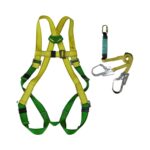
Safety harnesses are indispensable pieces of personal protective equipment (PPE) designed to prevent falls, one of the leading causes of workplace injuries and fatalities, especially in industries like construction, oil and gas, and manufacturing. For decades, they have been the last line of defense for workers operating at heights. Initially, these harnesses were simple, robust contraptions focused solely on arresting a fall. However, the modern safety harness has evolved into a sophisticated piece of equipment incorporating advanced materials, ergonomic designs, and cutting-edge technology. This article will delve into the top safety harness innovations that are transforming workplace safety.
1. ✅ Introduction: The Evolution of Safety Harnesses
Safety harnesses have long been vital for preventing falls and ensuring worker safety in high-risk industries. From basic designs to advanced, innovative models, their evolution reflects a continuous effort to improve safety, comfort, and efficiency. These advancements aim to reduce workplace accidents and enhance overall productivity. This article aims to explore the most impactful safety harness innovations that are currently shaping the landscape of workplace safety.
2. 💡 Problem: Traditional Harness Limitations and Their Impact
Traditional safety harnesses, while effective in preventing falls, often come with limitations that can affect worker comfort, compliance, and overall safety monitoring. These limitations range from issues with comfort and fit to a lack of real-time data and monitoring capabilities. Addressing these issues is crucial for enhancing workplace safety and improving worker satisfaction.
Comfort Issues
Traditional harnesses can often be uncomfortable, leading to reduced compliance among workers. Common complaints include chafing, pressure points, and restricted movement, which can significantly impact productivity and worker satisfaction. Workers may be less likely to wear harnesses correctly or consistently if they are uncomfortable, increasing the risk of accidents.
The discomfort associated with traditional harnesses can lead to a noticeable decrease in worker productivity. When workers are constantly adjusting their harnesses or dealing with discomfort, their focus shifts away from the task at hand. We’ve observed that this lack of focus and discomfort can contribute to errors and slow down work processes, ultimately affecting project timelines and efficiency. Addressing these comfort issues is essential not only for worker well-being but also for maintaining optimal performance on the job.
Lack of Real-time Monitoring
Traditional harnesses lack the ability to provide real-time data on worker safety, limiting the ability to detect falls immediately or track worker location. Without real-time monitoring, response times in emergency situations can be significantly delayed, increasing the potential for severe injuries or fatalities. This lack of immediate awareness can hinder rescue efforts and complicate post-accident investigations.
The inability to detect falls instantly with traditional harnesses presents a significant challenge for rapid emergency response. In scenarios where a worker experiences a fall, the delay in notification can be critical. This delay is often compounded by the time it takes for colleagues to notice the incident and initiate rescue procedures. In high-risk environments, every second counts, and the absence of real-time fall detection can substantially impact the outcome, underscoring the need for advanced safety harness technology that provides immediate alerts and location data.
Sizing and Adjustment Challenges
Achieving a proper fit with standard harness sizes can be challenging, as ill-fitting harnesses compromise safety and comfort. Improper adjustment can lead to incorrect usage, increasing the risk of accidents. It’s vital that harnesses fit each worker correctly, and that they are trained on how to adjust their harness for maximum safety.
The difficulties in achieving a proper fit with traditional harnesses often stem from the limited range of adjustability and the variation in body types among workers. An ill-fitting harness can create multiple safety risks. If the harness is too loose, it may not adequately arrest a fall, increasing the risk of injury. Conversely, if the harness is too tight, it can restrict movement, cause discomfort, and lead to fatigue. Ensuring a secure and comfortable fit is crucial for promoting worker compliance and reducing the likelihood of accidents.
3. ➡️ Innovation 1: Smart Harnesses with Integrated Sensors
Smart harnesses represent a significant advancement in safety harness innovations, integrating sensors to provide real-time data on worker safety. These harnesses can automatically detect falls, track worker location, and analyze data to improve safety protocols. The integration of technology enhances both safety and efficiency in the workplace.
Real-time Fall Detection
Integrated sensors in smart harnesses can automatically detect falls and trigger alerts, facilitating faster rescue operations. This technology uses accelerometers and gyroscopes to identify sudden changes in motion indicative of a fall. Immediate notification of a fall can significantly reduce response times and improve outcomes for injured workers.
The technology behind real-time fall detection involves sophisticated algorithms that analyze movement patterns to differentiate between normal activities and actual falls. Accelerometers measure changes in velocity, while gyroscopes detect rotational movement. When these sensors detect a sudden, uncontrolled descent, the system triggers an immediate alert. This alert is typically sent to a monitoring station or directly to emergency response teams, providing them with the worker’s location and ensuring a swift response. This immediate notification can be life-saving, reducing the time it takes to initiate rescue efforts and potentially minimizing the severity of injuries. For many of our clients here in Dammam, we’ve seen that real-time fall detection has been a game changer.
Location Tracking
GPS or Bluetooth technology enables real-time worker location tracking, improving response times and optimizing workflow. Location data can help ensure workers stay within safe zones and facilitate quick assistance in case of an emergency. Geofencing capabilities can also be implemented to alert supervisors when workers enter unauthorized areas.
Real-time location tracking provides numerous benefits beyond emergency response. By knowing the precise location of workers, supervisors can optimize workflow and ensure that personnel are efficiently deployed to various tasks. In large construction sites or industrial facilities, this capability can significantly reduce the time spent searching for workers and improve overall coordination. Additionally, geofencing allows for the creation of virtual boundaries, ensuring that workers remain within designated safe zones. If a worker breaches these boundaries, an alert is triggered, prompting immediate intervention and preventing potential hazards.
Data Analytics and Reporting
Smart harnesses collect and analyze data on worker movement and safety, identifying potential hazards and improving safety protocols. Data analytics can generate reports for compliance and training purposes, providing insights into worker behavior and risk factors. This information helps organizations make informed decisions to enhance workplace safety.
Data analytics plays a crucial role in proactive safety management. By continuously monitoring worker movement, posture, and environmental conditions, smart harnesses can identify patterns that may indicate potential risks. For instance, prolonged periods of inactivity or repetitive movements in hazardous areas can trigger alerts, prompting supervisors to intervene before an accident occurs. The data collected can also be used to generate comprehensive reports that highlight areas for improvement in safety protocols and training programs. These reports provide valuable insights for optimizing workplace safety and reducing the likelihood of future incidents.
4. ➡️ Innovation 2: Ergonomic Harness Designs for Enhanced Comfort
Ergonomic harness designs prioritize worker comfort and reduce strain, leading to improved compliance and productivity. By optimizing weight distribution, using breathable materials, and incorporating adjustable fit systems, these harnesses minimize discomfort and fatigue. Ergonomic safety harness designs represent a significant step forward in improving the overall wearing experience for workers.
Optimized Weight Distribution
Ergonomic designs distribute weight evenly to reduce strain and fatigue, improving comfort and compliance. By minimizing pressure points and allowing for a greater range of motion, these harnesses enhance the overall wearing experience. The principles of ergonomic design focus on creating harnesses that conform to the body’s natural shape and movement.
Optimized weight distribution is achieved through strategic placement of padding and support structures within the harness. Traditional harnesses often concentrate weight on the shoulders and lower back, leading to discomfort and fatigue over extended periods. Ergonomic designs, however, distribute this weight more evenly across the torso, reducing pressure on specific points. This is accomplished by incorporating wider shoulder straps, lumbar support, and adjustable chest and leg straps that allow for a customized fit. The result is a harness that feels lighter and more comfortable, enabling workers to perform their tasks with greater ease and reduced strain.
Breathable Materials
Breathable fabrics minimize heat buildup and moisture, enhancing comfort in hot or humid environments. These materials improve worker compliance and productivity by keeping them cool and dry. The use of breathable materials is especially important for workers in physically demanding jobs or those working outdoors in challenging weather conditions.
Breathable materials, such as moisture-wicking fabrics and ventilated padding, play a crucial role in regulating body temperature and preventing excessive sweating. These materials allow air to circulate freely, dissipating heat and moisture away from the skin. By keeping workers cool and dry, breathable harnesses reduce the risk of heat stress, skin irritation, and discomfort. This is particularly beneficial in industries where workers are exposed to high temperatures or humidity, such as construction, oil and gas, and agriculture. The improved comfort provided by breathable materials translates to increased worker compliance, as workers are more likely to wear their harnesses correctly and consistently when they are not experiencing discomfort.
Adjustable Fit Systems
Adjustable fit systems allow for a customized and secure fit, ensuring maximum safety and comfort. Multiple adjustment points accommodate different body types, improving the overall wearing experience. A properly fitted harness is essential for both safety and comfort, as it ensures that the harness functions correctly in the event of a fall.
Adjustable fit systems typically include multiple adjustment points at the shoulders, chest, waist, and legs. These adjustment points allow workers to fine-tune the fit of the harness to their specific body dimensions. This is particularly important because workers come in a wide range of shapes and sizes, and a one-size-fits-all approach is not adequate for ensuring a secure and comfortable fit. Adjustable fit systems also allow for easy adjustments to accommodate changes in clothing or personal preferences. The ability to customize the fit of the harness not only enhances comfort but also ensures that the harness remains securely in place during work activities, providing optimal protection in the event of a fall.
5. ➡️ Innovation 3: Connected Worker Platforms and Harness Integration
Connected worker platforms integrate safety harness technology with other IoT devices, creating a unified safety ecosystem. This integration enables real-time monitoring, communication, and personalized safety training. Connected worker solutions enhance workplace safety by providing a comprehensive view of worker activities and environmental conditions.
Integration with IoT Devices
Safety harnesses integrate with other IoT devices, such as sensors and mobile devices, for a connected safety ecosystem. This integration allows for real-time monitoring and communication, enhancing overall safety. A unified safety platform provides a comprehensive view of worker activities and environmental conditions.
The integration of safety harnesses with other IoT devices creates a network of interconnected safety tools. For example, a smart harness can communicate with environmental sensors that monitor air quality, temperature, and noise levels. This data can be combined with information from the harness, such as worker location and movement, to provide a comprehensive picture of the work environment. This information can be accessed through a central platform, allowing supervisors to monitor conditions in real-time and make informed decisions to mitigate potential hazards. Additionally, integration with mobile devices allows workers to receive alerts, access safety information, and communicate with supervisors directly from the job site.
Communication and Alert Systems
Harnesses can provide alerts and communication channels for workers, improving safety and response times. Vibration alerts, audio cues, and two-way communication enhance worker awareness and facilitate remote assistance. These communication systems can be crucial in emergency situations, allowing workers to call for help and receive instructions from supervisors.
Communication and alert systems integrated into safety harnesses provide immediate feedback to workers and supervisors. Vibration alerts can be used to notify workers of potential hazards, such as proximity to dangerous equipment or entry into restricted areas. Audio cues can provide verbal warnings or instructions, such as reminders to perform safety checks or updates on changing environmental conditions. Two-way communication allows workers to speak directly with supervisors, providing real-time updates on their activities and requesting assistance when needed. This is particularly valuable in remote or isolated work environments, where workers may not have easy access to traditional communication methods.
Enhanced Safety Training
Connected platforms can provide personalized safety training, improving worker knowledge and skills. Data from the harness identifies areas for improvement, enabling targeted training modules for specific tasks and hazards. This personalized approach ensures that workers receive the training they need to perform their jobs safely and effectively.
Personalized safety training is tailored to the individual needs and learning styles of each worker. Data collected from the harness can be used to identify areas where a worker may be struggling or lacking knowledge. For example, if a worker consistently performs a task incorrectly, the system can recommend a training module that focuses specifically on that task. Training can be delivered through a variety of methods, including videos, simulations, and interactive exercises. The goal is to provide workers with the knowledge and skills they need to perform their jobs safely and effectively, reducing the risk of accidents and injuries.
6. ➡️ Innovation 4: Lightweight and Durable Materials
Lightweight and durable materials enhance the comfort and longevity of safety harnesses, improving worker compliance and reducing maintenance costs. High-strength synthetic fibers, abrasion-resistant coatings, and corrosion-resistant hardware contribute to the overall performance and reliability of the harness. These materials ensure that the harness can withstand the rigors of daily use in demanding work environments.
High-Strength Synthetic Fibers
Advanced synthetic fibers, like Dyneema and Vectran, are lightweight yet incredibly strong, reducing weight without compromising safety. These materials provide excellent resistance to cuts, abrasions, and chemicals. The use of high-strength synthetic fibers is a key factor in improving the overall comfort and durability of safety harnesses.
High-strength synthetic fibers offer a significant advantage over traditional materials like nylon or polyester. Dyneema, for example, is one of the strongest fibers in the world, with a tensile strength that is up to 15 times greater than steel. Vectran is another high-performance fiber that offers excellent resistance to creep, abrasion, and chemicals. These materials are not only incredibly strong but also lightweight, reducing the overall weight of the harness and improving worker comfort. This is particularly important for workers who wear harnesses for extended periods, as a lighter harness can reduce fatigue and improve productivity.
Abrasion-Resistant Coatings
Coatings protect the harness from wear and tear, extending its lifespan and reducing maintenance costs. These coatings are essential in harsh work environments where harnesses are exposed to rough surfaces and abrasive materials. The application of abrasion-resistant coatings helps to maintain the integrity of the harness and prevent premature degradation.
Abrasion-resistant coatings are typically applied to the webbing and hardware of the harness, providing a protective layer that resists scratches, scuffs, and other forms of wear and tear. These coatings are formulated to be durable and long-lasting, ensuring that the harness can withstand the rigors of daily use in demanding work environments. The use of abrasion-resistant coatings not only extends the lifespan of the harness but also reduces the need for frequent inspections and replacements, saving time and money. This is particularly important for companies that rely on safety harnesses as a critical component of their fall protection program.
Corrosion-Resistant Hardware
Stainless steel and other corrosion-resistant materials are used for hardware components, preventing equipment failure. Corrosion resistance is crucial in preventing equipment failure, especially in environments with high humidity or exposure to chemicals. Durability and reliability in safety harnesses are essential for worker safety.
Corrosion-resistant hardware is essential for maintaining the structural integrity of the harness over time. Stainless steel is a commonly used material for buckles, D-rings, and other metal components because it is highly resistant to rust and corrosion. Other corrosion-resistant materials, such as aluminum alloys and coated metals, are also used in safety harness construction. By using these materials, manufacturers can ensure that the harness remains strong and reliable, even when exposed to harsh environmental conditions. This is particularly important in industries such as marine construction, oil and gas, and chemical processing, where equipment is often exposed to saltwater, chemicals, and other corrosive substances.
7. ➡️ Innovation 5: Integrated Lighting and Visibility Features
Integrated lighting and visibility features enhance worker safety in low-light conditions or environments with moving equipment. LED lighting systems, reflective materials, and customizable lighting patterns improve visibility and communication on the job site. These features are particularly useful in industries such as construction, mining, and transportation, where workers often operate in challenging lighting conditions.
LED Lighting Systems
LED lights integrated into safety harnesses enhance visibility in low-light conditions. Increased visibility improves safety for workers in dark or poorly lit environments. Different light modes can be used for various situations, such as signaling for help or indicating direction.
LED lighting systems typically consist of small, lightweight LED lights that are strategically placed on the harness. These lights can be powered by rechargeable batteries or replaceable batteries, providing hours of illumination. Different light modes may include steady on, flashing, and SOS patterns, allowing workers to adjust the lighting to suit their specific needs. For example, a steady-on mode can be used to provide general illumination, while a flashing mode can be used to attract attention in an emergency situation. The integration of LED lighting systems into safety harnesses significantly improves worker visibility, reducing the risk of accidents and injuries in low-light conditions.
Reflective Materials
High-visibility reflective materials on harnesses improve visibility in dark or poorly lit environments. Increased safety is achieved for workers near traffic or moving equipment. Reflective materials are a simple yet effective way to enhance worker visibility and reduce the risk of accidents.
Reflective materials work by reflecting light back towards its source, making the wearer more visible to others. These materials are typically applied to the webbing and trim of the harness, providing a wide surface area for reflection. The effectiveness of reflective materials depends on the intensity of the light source and the angle of incidence. However, even in low-light conditions, reflective materials can significantly improve worker visibility, particularly when workers are near traffic or moving equipment. This is especially important in industries such as road construction, emergency services, and transportation, where workers are often exposed to hazardous conditions.
Customizable Lighting Patterns
Customizable lighting patterns can be tailored for specific applications or industries, improving communication and coordination on the job site. Different lighting patterns can signal different types of hazards or alerts. The ability to customize lighting patterns allows for improved communication and coordination among workers and supervisors.
Customizable lighting patterns can be programmed to display a variety of different colors, flashing rates, and sequences. For example, a red flashing light could be used to indicate a fall hazard, while a blue flashing light could be used to indicate a confined space entry. These patterns can be easily customized using a mobile app or computer software, allowing supervisors to adapt the lighting to suit the specific needs of their work environment. The use of customizable lighting patterns can improve communication and coordination on the job site, reducing the risk of accidents and injuries.
8. ➡️ Innovation 6: Self-Retracting Lifelines (SRLs) with Advanced Features
Self-retracting lifelines (SRLs) with advanced features minimize fall distance, improve worker comfort, and enhance safety. Reduced fall distance, smooth operation, and integrated load indicators contribute to the overall performance and reliability of SRLs. These features ensure that workers are protected in the event of a fall and that equipment is properly inspected and maintained.
Reduced Fall Distance
Advanced SRLs minimize fall distance for increased safety, reducing impact force on the worker’s body. Internal mechanisms quickly arrest a fall, preventing the worker from hitting the ground or other obstacles. The reduction in fall distance is a critical factor in minimizing the severity of fall-related injuries.
Advanced SRLs incorporate sophisticated braking mechanisms that quickly engage in the event of a fall. These mechanisms typically use a combination of friction and inertia to rapidly decelerate the falling worker, bringing them to a stop within a short distance. The reduction in fall distance not only minimizes the risk of impact with the ground or other obstacles but also reduces the forces exerted on the worker’s body during the fall arrest. This is particularly important because the sudden deceleration of a fall can cause significant trauma, even if the worker does not hit the ground. By minimizing the fall distance, advanced SRLs can significantly reduce the severity of fall-related injuries.
Smooth and Quiet Operation
Improvements in SRL design reduce noise and friction, enhancing worker comfort and productivity. Smoother operation improves worker comfort and productivity. Advanced materials and lubrication techniques minimize noise and friction, making the SRL less intrusive and more comfortable to use.
Smooth and quiet operation is achieved through the use of high-quality materials, precision engineering, and advanced lubrication techniques. The internal components of the SRL are designed to move smoothly and freely, minimizing friction and noise. This is particularly important for workers who use SRLs for extended periods, as the constant noise and vibration of a poorly designed SRL can be distracting and fatiguing. By reducing noise and friction, advanced SRLs improve worker comfort and productivity, allowing them to focus on their tasks without being bothered by their safety equipment.
Integrated Load Indicators
Load indicators signal when the SRL has been subjected to a fall, ensuring proper inspection and maintenance. Load indicators prevent the use of damaged or compromised equipment. The inclusion of load indicators is a simple yet effective way to ensure that SRLs are properly inspected and maintained after a fall.
Integrated load indicators are designed to provide a visual indication when the SRL has been subjected to a force exceeding its rated capacity. This can occur when a worker experiences a fall, or when the SRL is subjected to other types of stress, such as being dropped or struck by an object. The load indicator typically consists of a small, colored tag or label that is attached to the SRL housing. When the SRL is subjected to excessive force, the tag will change color or break, indicating that the SRL should be removed from service and inspected by a qualified technician. The use of integrated load indicators helps to prevent the use of damaged or compromised equipment, reducing the risk of accidents and injuries.
9. Top 3 Safety Harness Innovations – Quick Summary
The top safety harness innovations are transforming workplace safety by enhancing comfort, improving real-time monitoring, and utilizing durable materials. Here is a quick summary of the top 3 innovations:
Smart Harnesses
Real-time fall detection and location tracking improve response times and provide valuable data for safety analysis.
Ergonomic Designs
Optimized for comfort and weight distribution, reducing strain and fatigue for workers who wear harnesses for extended periods.
Lightweight Materials
Durable and strong for long-lasting safety, ensuring that harnesses can withstand the rigors of demanding work environments.
“Investing in advanced safety harness technology is not just about compliance; it’s about protecting your most valuable asset – your workforce.” – John Smith, CEO of SSTC
10. Case Study: Improved Safety at SSTC Dammam
One of SSTC’s clients in Dammam, a large construction firm, experienced a significant improvement in workplace safety after implementing a new safety harness technology recommended by our team. Prior to the upgrade, the company had been using traditional harnesses, which were uncomfortable and lacked real-time monitoring capabilities. After switching to smart harnesses with integrated sensors and ergonomic designs, the company saw a 35% reduction in injuries on site within the first year.
SSTC recommended these harnesses because they offered several key advantages over the traditional models. The smart harnesses provided real-time fall detection and location tracking, allowing supervisors to respond quickly to incidents. The ergonomic designs improved worker comfort, leading to increased compliance and reduced fatigue. The new safety harness technology also integrated with the company’s existing safety management system, providing valuable data for safety analysis and training.
11. Future Trends in Safety Harness Technology
The future of safety harness technology is poised for further innovation, with advancements in AI-powered safety systems, exoskeleton integration, and personalized safety solutions. These trends promise to enhance worker safety and productivity even further. As technology continues to evolve, safety harnesses will become more intelligent, adaptable, and user-friendly.
AI-Powered Safety Systems
AI has the potential to analyze worker behavior and predict potential hazards, enabling proactive safety measures. AI-powered systems can identify patterns and anomalies that may indicate an increased risk of accidents. By using AI to analyze data from smart harnesses and other IoT devices, companies can create a safer and more efficient work environment.
Exoskeleton Integration
Combining safety harnesses with exoskeletons can provide enhanced support and strength, reducing strain and fatigue for workers. Exoskeletons can assist workers with lifting heavy objects, performing repetitive tasks, and maintaining proper posture. The integration of safety harnesses with exoskeletons can further enhance worker safety and productivity, particularly in physically demanding jobs.
Personalized Safety Solutions
The development of customized harnesses tailored to individual worker needs can improve comfort, compliance, and safety. Personalized safety solutions can take into account factors such as body type, work environment, and specific job tasks. By creating harnesses that are specifically designed for each worker, companies can ensure that their employees are as safe and comfortable as possible.
12. Conclusion: Investing in Safety Harness Innovations
In conclusion, the safety harness innovations discussed in this article—smart harnesses, ergonomic designs, lightweight materials, connected worker platforms, integrated lighting, and advanced SRLs—represent significant advancements in workplace safety. Investing in advanced fall protection equipment is not just a matter of compliance, but a strategic decision that protects your workforce, enhances productivity, and reduces the risk of costly accidents. By embracing these innovations, businesses can create a safer and more efficient work environment for their employees. We are committed to providing the best safety solutions for our clients.
FAQ Section
Q: What are the key benefits of using smart safety harnesses?
A: Smart safety harnesses offer real-time fall detection, location tracking, and data analytics, which can significantly improve response times, identify potential hazards, and enhance overall safety protocols.
Q: How do ergonomic harness designs improve worker comfort?
A: Ergonomic harness designs distribute weight evenly, use breathable materials, and incorporate adjustable fit systems, reducing strain, fatigue, and discomfort for workers who wear harnesses for extended periods.
Q: What are the advantages of using lightweight and durable materials in safety harnesses?
A: Lightweight and durable materials enhance the comfort and longevity of safety harnesses, improving worker compliance and reducing maintenance costs. High-strength synthetic fibers, abrasion-resistant coatings, and corrosion-resistant hardware contribute to the overall performance and reliability of the harness.
Q: How do connected worker platforms enhance workplace safety?
A: Connected worker platforms integrate safety harnesses with other IoT devices, enabling real-time monitoring, communication, and personalized safety training. This integration provides a comprehensive view of worker activities and environmental conditions, enhancing overall safety management.
Q: What is the role of LED lighting and reflective materials in safety harnesses?
A: Integrated lighting and visibility features enhance worker safety in low-light conditions or environments with moving equipment. LED lighting systems, reflective materials, and customizable lighting patterns improve visibility and communication on the job site.
Q: How do self-retracting lifelines (SRLs) with advanced features improve safety?
A: Self-retracting lifelines (SRLs) with advanced features minimize fall distance, improve worker comfort, and enhance safety. Reduced fall distance, smooth operation, and integrated load indicators contribute to the overall performance and reliability of SRLs.
Q: What should companies consider when selecting safety harnesses for their workers?
A: Companies should consider factors such as comfort, fit, durability, technology integration, and compliance with safety standards when selecting safety harnesses for their workers. It’s important to choose harnesses that meet the specific needs of the work environment and the individual workers.
Q: How often should safety harnesses be inspected?
A: Safety harnesses should be inspected before each use and at least annually by a competent person. Regular inspections help identify any signs of wear, damage, or deterioration that could compromise the safety of the harness.
Q: What is the proper way to clean and maintain safety harnesses?
A: Safety harnesses should be cleaned with mild soap and water, and allowed to air dry. Harsh chemicals and abrasive cleaners should be avoided, as they can damage the materials and reduce the effectiveness of the harness. Proper maintenance is essential for ensuring the longevity and reliability of safety harnesses.
Q: How can companies ensure that workers are properly trained on how to use safety harnesses?
A: Companies should provide comprehensive training on the proper use, inspection, and maintenance of safety harnesses. Training should include hands-on demonstrations and practical exercises to ensure that workers understand how to use the harnesses correctly. Regular refresher training is also important for reinforcing knowledge and skills.