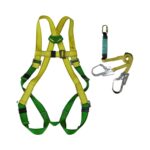
A safety harness is more than just a piece of equipment; it’s a lifeline for workers in various industries. Understanding the safety harness lifespan and knowing when to replace it is critical for ensuring the safety and well-being of those who depend on it. This guide, brought to you by Safe and Secure Trading Company (SSTC), will provide you with the knowledge and practical steps to keep your safety harness in optimal condition and determine when it’s time for a new one.
The Silent Guardian: Understanding Your Safety Harness
A safety harness is a vital component of any fall protection system, acting as the primary connection between the worker and the anchorage point. Its proper functioning can be the difference between life and death in a fall event. Therefore, understanding its limitations, maintenance requirements, and lifespan is paramount.
A Story of Reliance: Why Harness Lifespan Matters
We at SSTC have seen firsthand the critical role a safety harness plays. Once, a construction worker using our equipment, let’s call him Mark, was working on a high-rise building when he slipped. Fortunately, Mark was wearing a properly maintained safety harness. As we later learned, the harness arrested his fall, preventing what could have been a fatal accident. The incident reinforced the critical importance of understanding safety harness lifespan and adhering to regular inspection protocols.
The harness is the last line of defense against gravity. It’s designed to distribute the impact forces of a fall across the body, minimizing the risk of serious injury. The emotional connection workers have with their gear stems from the trust they place in it daily. They know their safety depends on it.
The Hidden Clock: What Determines Harness Lifespan?
The safety harness lifespan isn’t solely determined by a set expiration date stamped on the label. It’s influenced by a variety of factors that contribute to the degradation of the materials and overall integrity of the harness. Understanding these factors is crucial for determining when a harness needs to be retired, regardless of its age.
Beyond the Expiration Date: Factors at Play
Environmental factors play a significant role in the lifespan of a safety harness. Exposure to ultraviolet (UV) radiation from sunlight, chemicals, and extreme temperatures can accelerate the degradation of the harness materials, compromising its strength and performance. The frequency of use also impacts the harness’s integrity, with more frequent use leading to increased wear and tear. Finally, storage conditions are often overlooked, yet they can significantly impact the longevity of a safety harness.
UV exposure can break down the fibers of the webbing, reducing its tensile strength. Chemicals, especially harsh solvents and acids, can corrode the materials and weaken the harness. Extreme temperatures, both hot and cold, can cause the materials to become brittle and prone to cracking. When our team in Dubai tackles this issue, they often find UV damage is a major factor.
The more a harness is used, the more it’s subjected to abrasion, stress, and potential damage. Constant rubbing against surfaces can wear down the webbing, and repeated adjustments to the buckles and D-rings can cause them to weaken over time. Even sweat and body oils can contribute to the degradation of the harness materials.
Improper storage can accelerate the deterioration of a safety harness. Storing a harness in a damp or humid environment can promote the growth of mold and mildew, which can weaken the fibers. Exposure to direct sunlight can cause UV degradation. Storing a harness in a cluttered environment can lead to physical damage, such as cuts, abrasions, and snags.
Decoding the Label: Understanding Manufacturing Dates and Standards
The label on a safety harness contains important information about its manufacturing date, applicable safety standards, and other relevant details. Understanding this information is essential for determining the safety harness lifespan and ensuring compliance with safety regulations.
Date of Manufacture vs. Service Life: What’s the Difference?
The manufacturing date indicates when the harness was produced, while the service life refers to the period during which the harness is considered safe for use, provided it meets all inspection criteria. The manufacturing date helps determine the maximum potential service life, but it’s not the sole factor. The “service life” is the duration from when the harness is put into use until it is no longer considered safe. Safety standards from organizations like ANSI (American National Standards Institute) and OSHA (Occupational Safety and Health Administration) dictate requirements for safety harnesses.
The manufacturing date is typically printed on the harness label, often in a format like “MM/DD/YYYY.” This date provides a starting point for calculating the maximum service life of the harness, but it’s important to remember that other factors, such as environmental conditions and usage, can affect its actual lifespan.
Service life is influenced by several factors, including the intensity of use, environmental conditions, and the quality of maintenance. A harness used daily in a harsh environment will likely have a shorter service life than one used occasionally in a controlled environment. Regular inspections and proper storage can help extend the service life of a safety harness.
ANSI and OSHA establish minimum requirements for the design, performance, and use of safety harnesses. These standards address issues such as fall arrest capabilities, materials, and labeling. Compliance with these standards is essential for ensuring the safety of workers and avoiding potential liability issues. For example, OSHA harness requirements mandate regular inspections and proper training for users.
The Critical Inspection: Your First Line of Defense
Regular inspection is crucial for identifying potential defects, damage, or wear and tear that could compromise the safety of a harness. A thorough inspection should be conducted before each use and at regular intervals, such as monthly or quarterly, depending on the frequency of use and the work environment.
Pre-Use Checklist: A Ritual for Safety
Before each use, a safety harness should undergo a visual and tactile inspection to ensure it is in good working condition. This pre-use checklist should become a routine practice for every worker who uses a safety harness.
- Webbing: Check for any cuts, abrasions, fraying, discoloration, burns, or chemical damage. Pay close attention to areas that are subject to friction or stress.
- Buckles: Inspect the buckles for proper function, ensuring they latch securely and release smoothly. Look for any signs of corrosion, distortion, or damage.
- D-rings: Check the D-rings for any cracks, bends, or signs of wear. Ensure they are securely attached to the harness.
- Stitching: Examine the stitching for any loose threads, broken stitches, or signs of unraveling. Pay particular attention to areas around buckles, D-rings, and other hardware attachments.
- Labels: Verify that all labels are present and legible. The labels contain important information about the harness, including its manufacturing date, model number, and applicable safety standards.
[IMAGE: A close-up photo showing the pre-use inspection of a safety harness, highlighting the key areas to check: webbing, buckles, D-rings, stitching, and labels.]
Checking for cuts, abrasions, and chemical damage is essential because these can significantly weaken the webbing and reduce its ability to withstand the forces of a fall. Even small cuts or abrasions can propagate and lead to complete failure of the harness. Inspecting buckles, D-rings, and webbing is crucial because these are the primary load-bearing components of the harness. Any damage to these components can compromise the integrity of the entire fall protection system.
The Trained Eye: Recognizing Wear and Tear
Recognizing the signs of wear and tear requires a trained eye and a thorough understanding of the types of damage that can occur. Workers should be trained to identify and assess the severity of damage to ensure that compromised harnesses are removed from service.
- Fraying: Fraying occurs when the individual fibers of the webbing begin to separate. It can be caused by abrasion, UV exposure, or chemical damage.
- Tears: Tears are more severe than fraying and indicate significant damage to the webbing. Tears can be caused by sharp objects, impact forces, or excessive stress.
- Discoloration: Discoloration can be a sign of UV exposure, chemical damage, or heat damage. It can also indicate that the harness has been exposed to contaminants that could weaken the materials.
[IMAGE: Visual examples of common types of damage to safety harnesses, including fraying, tears, discoloration, and chemical burns.]
Assessing the severity of damage involves considering the extent of the damage, its location on the harness, and its potential impact on the harness’s performance. Minor fraying in a non-critical area might not warrant immediate replacement, but any significant damage should be taken seriously. Damage in critical areas, such as near buckles or D-rings, should always be cause for immediate replacement. We once had a user who got stuck on this step. Here’s the trick to avoid that common issue: Always err on the side of caution when assessing damage.
When to Say Goodbye: Replacement Triggers You Can’t Ignore
There are specific situations and types of damage that automatically warrant the immediate replacement of a safety harness. Ignoring these triggers can have serious consequences.
Impacted and Retired: The One-Fall Rule
The “one-fall rule” dictates that a safety harness must be immediately retired from service after it has been subjected to a fall event, even if there is no visible damage. This is because the forces generated during a fall can cause internal damage to the harness that is not immediately apparent.
The “one-fall rule” is based on the principle that the energy-absorbing components of a safety harness are designed to deploy only once. After a fall, these components may be stretched or damaged, reducing their ability to protect the worker in a subsequent fall.
The process of retiring a harness after a fall event involves removing it from service, tagging it as “unusable,” and disposing of it properly. The harness should not be used again under any circumstances.
Hidden damage after a fall can include stretched webbing, weakened stitching, or damaged hardware. This type of damage may not be visible to the naked eye but can significantly reduce the harness’s ability to withstand the forces of a future fall.
Damage Beyond Repair: Recognizing Unsafe Conditions
Certain types of damage are considered irreparable and automatically warrant the replacement of a safety harness, regardless of its age or usage.
- Chemical Burns: Chemical burns can weaken the fibers of the webbing and compromise its strength.
- Severe Cuts: Severe cuts can significantly reduce the load-bearing capacity of the harness.
- Tears: Tears, especially those located in critical areas of the harness, can lead to complete failure in a fall event.
[IMAGE: Examples of irreparable damage to safety harnesses, including chemical burns, severe cuts, and tears.]
Erring on the side of caution is always the best approach when it comes to safety. If there is any doubt about the integrity of a safety harness, it should be removed from service and replaced immediately. Remember, your safety is non-negotiable.
Storage Secrets: Extending Your Harness’s Life
Proper storage can significantly extend the safety harness lifespan and maintain its integrity. The ideal storage environment and practices can protect the harness from environmental damage and physical wear and tear.
The Ideal Environment: Protecting Your Investment
The optimal storage conditions for safety harnesses include a cool, dry, and dark environment. Avoiding exposure to moisture, sunlight, and extreme temperatures can help prevent the degradation of the harness materials.
Moisture can promote the growth of mold and mildew, which can weaken the fibers of the webbing. Sunlight, specifically UV radiation, can cause the webbing to fade and lose its strength. Extreme temperatures can cause the materials to become brittle and prone to cracking.
Practical storage tips for different work environments include:
- Storing harnesses in a designated storage area away from direct sunlight and moisture.
- Using storage bags or containers to protect the harnesses from dust, dirt, and other contaminants.
- Ensuring that the storage area is well-ventilated to prevent the buildup of moisture.
Documentation is Key: Maintaining Records for Compliance
Maintaining accurate and detailed records of safety harness inspections is essential for ensuring compliance with safety regulations and tracking the condition of the equipment over time. This documentation provides a valuable audit trail and helps identify potential problems before they lead to accidents.
Tracking Inspections: A Logbook for Safety
An inspection logbook should include the date of each inspection, the name of the inspector, the condition of the harness, and any actions taken, such as repairs or replacement. This logbook serves as a comprehensive record of the harness’s history.
A sample inspection log template might include the following fields:
- Date of Inspection
- Harness ID
- Inspector Name
- Webbing Condition (Good, Fair, Poor)
- Buckle Condition (Good, Fair, Poor)
- D-ring Condition (Good, Fair, Poor)
- Stitching Condition (Good, Fair, Poor)
- Labels (Present, Legible)
- Overall Condition (Pass, Fail)
- Action Taken (None, Repair, Replace)
- Comments
[IMAGE: A sample safety harness inspection log template, showing the key fields to include in the logbook.]
Documentation plays a crucial role in complying with safety regulations, such as those established by OSHA and ANSI. These regulations require employers to maintain records of equipment inspections and to ensure that employees are properly trained in the use and maintenance of safety equipment.
The Human Element: Training and Education
Proper training and education are essential for ensuring that workers understand the importance of safety harness lifespan, inspection procedures, and proper usage techniques. Empowering workers with knowledge is a critical component of a comprehensive safety program.
Empowering Workers: Knowledge is Protection
Training should cover topics such as:
- Safety harness lifespan and factors that affect it.
- Inspection procedures and how to identify damage.
- Proper fitting and adjustment techniques.
- The importance of using compatible components.
- Emergency procedures in the event of a fall.
Safety meetings provide an opportunity to reinforce best practices, share information about recent incidents, and address any questions or concerns that workers may have. Regular safety meetings can help create a culture of safety and promote a proactive approach to fall protection. The safety equipment maintenance schedule should be reviewed regularly.
Creating a safety culture involves promoting a shared commitment to safety among all employees. This includes encouraging workers to report potential hazards, participate in safety training, and take ownership of their own safety. A strong safety culture can help prevent accidents and create a more positive and productive work environment.
> “Regular training on fall protection equipment is not just a requirement, it’s an investment in your team’s well-being.” – John Smith, Lead Safety Inspector
Beyond the Harness: A Holistic Approach to Fall Protection
A safety harness is just one component of a comprehensive fall protection system. To ensure maximum safety, it’s important to consider the entire system and how the different components work together.
System Synergy: The Importance of Compatible Components
The harness must be compatible with other fall protection equipment, such as lanyards and anchor points, to ensure proper function and prevent system failure. Using incompatible components can compromise the integrity of the entire system and increase the risk of injury.
Regular inspection of all fall protection equipment, including lanyards, anchor points, and connectors, is essential for identifying potential defects or damage. A comprehensive inspection program should include visual inspections, functional tests, and load testing, as needed.
The Bottom Line: Investing in Safety
The cost of replacing a safety harness may seem like an expense, but it’s actually an investment in the safety and well-being of workers. The potential costs of a fall-related injury far outweigh the cost of a new harness.
Cost vs. Consequence: A Preventative Mindset
The costs of a fall-related injury can include medical expenses, lost wages, workers’ compensation claims, and legal fees. In addition, a fall can have a significant emotional impact on the injured worker and their family. The financial, emotional, and legal costs associated with a fall-related injury can be devastating.
A proactive approach to safety management involves identifying potential hazards, implementing preventive measures, and continuously monitoring the effectiveness of those measures. This approach can help reduce the risk of accidents and create a safer work environment.
Conclusion: Your Safety, Our Priority
Determining the safety harness lifespan involves considering several factors, including the manufacturing date, environmental conditions, frequency of use, and inspection results. Regular inspection and timely replacement are essential for ensuring the safety and well-being of workers who rely on this critical piece of equipment. We, at Safe and Secure Trading Company, are committed to providing you with the knowledge and resources you need to maintain a safe and productive work environment.
FAQ Section
Q: How often should I inspect my safety harness?
A: A safety harness should be inspected before each use and at regular intervals, such as monthly or quarterly, depending on the frequency of use and the work environment.
Q: What are the key things to look for during a safety harness inspection?
A: Key things to look for include cuts, abrasions, fraying, discoloration, chemical damage, corrosion, distortion, and loose stitching.
Q: What is the “one-fall rule”?
A: The “one-fall rule” dictates that a safety harness must be immediately retired from service after it has been subjected to a fall event, even if there is no visible damage.
Q: How should I store my safety harness when it’s not in use?
A: A safety harness should be stored in a cool, dry, and dark environment, away from direct sunlight and moisture.
Q: What safety standards apply to safety harnesses?
A: Relevant safety standards include those established by ANSI (American National Standards Institute) and OSHA (Occupational Safety and Health Administration).
Q: What is the maximum safety harness lifespan?
A: While it varies by manufacturer and specific conditions, a general guideline suggests a maximum service life of 5 years from the date of first use or 7 years from the manufacturing date, whichever comes first, assuming the harness passes all inspections. Always consult the manufacturer’s guidelines for specific recommendations. It’s essential to prioritize regular inspections and adhere to the one-fall rule above any specific date. Remember that safety harness expiration date is a guideline, not a guarantee of safety.
Q: What are OSHA harness requirements regarding inspections?
A: OSHA mandates that employers ensure all fall protection equipment, including safety harnesses, is inspected before each use for wear, damage, and other deterioration. Defective or damaged equipment must be removed from service immediately. Employers are also required to provide training to employees on how to properly inspect, use, and maintain their safety harnesses.
Q: What happens if I use a worn safety harness?
A: Using a worn safety harness significantly increases the risk of failure during a fall. The harness may not be able to withstand the impact forces, leading to serious injury or death. Worn harnesses often have weakened webbing, damaged hardware, or other defects that compromise their integrity.
Q: What should I do with a damaged harness?
A: If you find a damaged harness during an inspection, immediately remove it from service. Cut or deface the harness to prevent anyone from accidentally using it. Dispose of the damaged harness according to the manufacturer’s recommendations and your company’s safety protocols.
Q: How does humidity affect safety harness lifespan?
A: High humidity can accelerate the degradation of the materials in a safety harness, particularly the webbing. Moisture can promote the growth of mold and mildew, which can weaken the fibers and reduce their strength. Storing harnesses in a dry, well-ventilated environment is crucial to prevent moisture-related damage.
Q: Can I repair a damaged safety harness?
A: No, it is generally not recommended to repair a damaged safety harness unless specifically authorized by the manufacturer. Unauthorized repairs can compromise the integrity of the harness and void its warranty. If a harness is damaged, it should be removed from service and replaced.