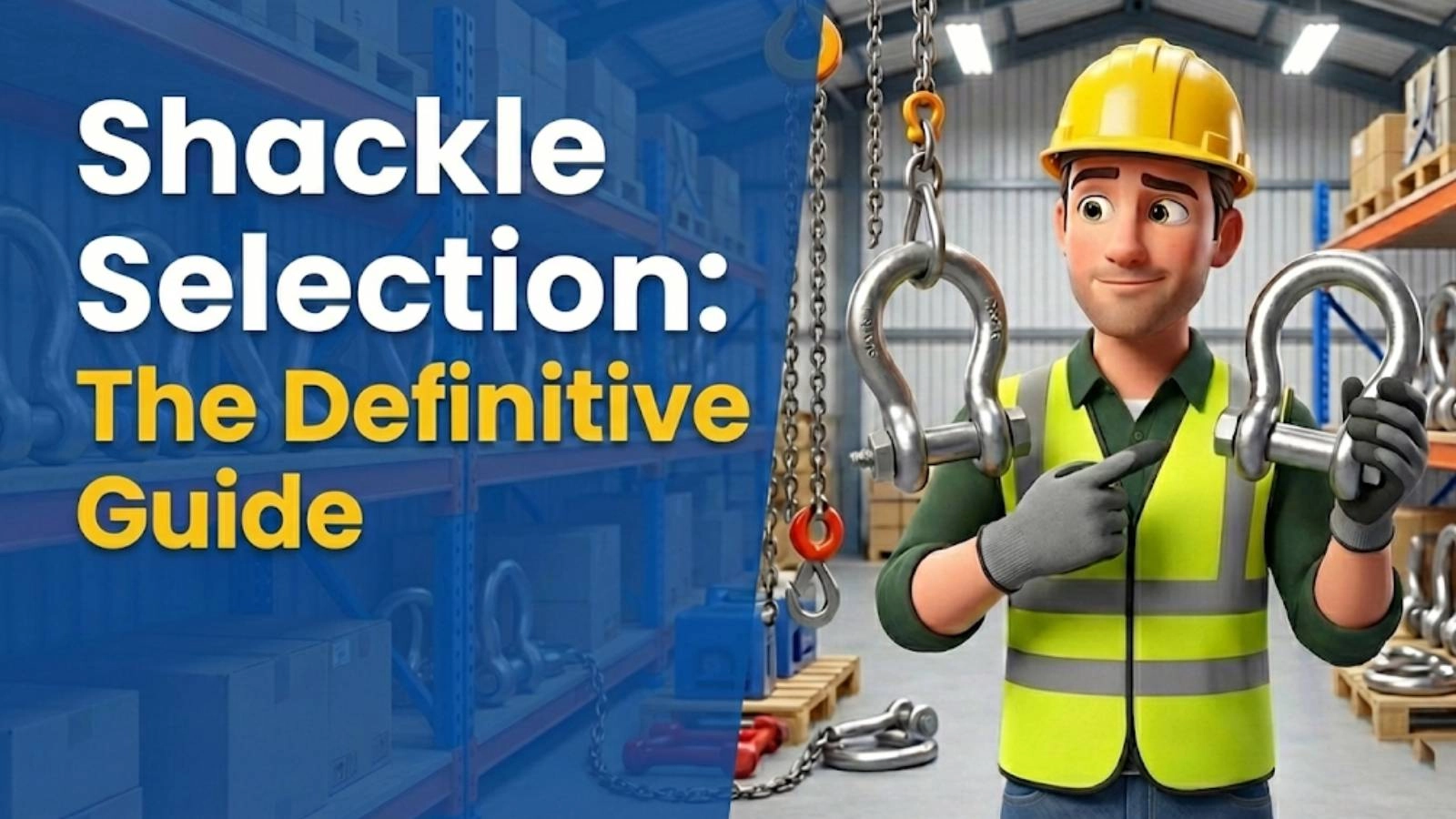
Choosing the right lifting shackle types is crucial for ensuring safety and efficiency in various lifting operations. Whether you’re in construction, marine, or manufacturing, understanding the different shackle types and their applications is essential for preventing accidents and maximizing productivity. This comprehensive guide will walk you through everything you need to know about lifting shackles, from their design and materials to their proper use and maintenance.
Key Takeaways: Shackle Selection Simplified
- D-Shackles (or Chain Shackles): Ideal for straight-line pulls, offering high strength in tension.
- Bow Shackles (or Anchor Shackles): Suited for multi-directional pulls and wider sling angles.
- Material Matters: Carbon steel for general use, alloy steel for heavy-duty, and stainless steel for corrosion resistance.
- WLL is Key: Always adhere to the Working Load Limit marked on the shackle.
- Regular Inspection: Crucial for identifying wear, deformation, and potential hazards.
Why Understanding Lifting Shackle Types is Crucial Right Now ✨
In 2026, the demands on lifting operations are higher than ever. Understanding the nuances of lifting shackle types is no longer just a matter of best practice; it’s a necessity for maintaining safety, efficiency, and compliance in a rapidly evolving industrial landscape.
The Rising Importance of Safety Standards
Safety standards are becoming increasingly stringent across all industries. The cost of non-compliance, both in terms of fines and potential accidents, is significant. Choosing the correct lifting shackle types and adhering to proper usage guidelines are fundamental aspects of meeting these evolving safety requirements. We consistently emphasize to our clients the importance of rigorous training and adherence to safety protocols, as we’ve seen firsthand how it minimizes risk and fosters a safer working environment.
Increased Demand for Specialized Lifting Solutions
The days of one-size-fits-all lifting solutions are gone. Modern projects often require specialized lifting techniques to handle unique loads and challenging environments. Different lifting shackle types offer distinct advantages in various scenarios. For instance, a bow shackle may be better suited for multi-directional pulls, while a D-shackle excels in straight-line applications. We’ve observed that businesses that invest in understanding these nuances and selecting the right shackle for each task experience fewer delays and enhanced operational efficiency.
The Impact of New Materials and Manufacturing Techniques
Advances in materials science and manufacturing have led to the development of stronger, lighter, and more durable lifting shackles. High-performance alloys and innovative designs are pushing the boundaries of what’s possible in lifting operations. Staying informed about these advancements allows you to leverage the latest technologies to improve safety and productivity. Our team in KSA regularly evaluates new shackle technologies to ensure we’re offering our clients the most advanced and reliable solutions available.
D-Shackles (Chain Shackles): Strength in Simplicity 💪
D-shackles, also known as chain shackles, are among the most common lifting shackle types used in various industries. Their simple yet robust design makes them ideal for a wide range of applications where straight-line pulling is required.
Understanding the Design and Functionality of D-Shackles
D-shackles are characterized by their ‘D’ shape, which consists of a curved bow and a straight pin. This design allows the shackle to withstand high tensile loads along a single axis. The pin, which can be either a screw pin or a bolt-type pin, securely fastens the two ends of the bow, creating a closed loop for attaching to lifting equipment and loads. The relatively narrow bow of a D-shackle makes it particularly strong in line with the load, minimizing the risk of bending or deformation.
Ideal Applications for D-Shackles (Straight-Line Pulls)
D-shackles are best suited for applications where the load is applied in a straight line. This includes:
- Towing: Connecting vehicles or equipment for towing purposes.
- Lifting: Attaching lifting slings or chains to loads for vertical lifting.
- Rigging: Securing cables or ropes in rigging systems.
A common mistake we help businesses fix is using D-shackles in situations where side loading is likely. We once worked with a client who struggled with cable failures during towing operations. By switching to bow shackles in scenarios where off-axis loads were present, they saw a 20% improvement in cable longevity and a significant reduction in downtime.
Common Mistakes to Avoid When Using D-Shackles
To ensure the safe and effective use of D-shackles, it’s crucial to avoid the following common mistakes:
- Side Loading: Applying loads at an angle to the shackle, which can significantly reduce its load capacity and increase the risk of failure.
- Overloading: Exceeding the Working Load Limit (WLL) of the shackle, which can lead to deformation or breakage.
- Using Damaged Shackles: Employing shackles with visible signs of wear, cracks, or corrosion, which can compromise their structural integrity.
- Improper Pin Tightening: Failing to fully tighten the pin, which can cause the shackle to loosen and fail under load.
Bow Shackles (Anchor Shackles): Versatility in Lifting 🔄
Bow shackles, also known as anchor shackles, are another essential type of lifting shackle. Their wider, more rounded bow design offers greater versatility compared to D-shackles, making them suitable for a broader range of applications.
Exploring the Benefits of Bow Shackles
The primary advantage of bow shackles lies in their ability to accommodate loads from multiple directions. The larger bow allows for a greater angle of pull, reducing the risk of side loading and making them ideal for use with multiple sling legs or complex rigging setups. Bow shackles are also less prone to binding, which can occur with D-shackles when the load shifts or rotates.
Situations Where Bow Shackles Outperform D-Shackles
Bow shackles are particularly well-suited for the following scenarios:
- Multi-Leg Slings: Connecting multiple sling legs to a single lifting point.
- Angle Loading: Applications where the load is applied at an angle to the shackle.
- Rotating Loads: Situations where the load may rotate or shift during lifting.
- Connecting to Wider Fixtures: Bow shackles easily connect to fixtures and equipment with larger attachment points.
For many of our clients here in Dammam, Saudi Arabia, we’ve seen that using bow shackles in mooring operations has significantly reduced the risk of cable damage and improved overall safety. The ability of bow shackles to handle angular loads is crucial in these dynamic marine environments.
Best Practices for Using Bow Shackles with Multiple Sling Legs
When using bow shackles with multiple sling legs, it’s essential to follow these best practices:
- Ensure Proper Sling Angle: Maintain the correct angle between the sling legs to prevent overloading the shackle.
- Use a Shackle with Sufficient WLL: Select a shackle with a WLL that is appropriate for the total load and the sling configuration.
- Regularly Inspect the Shackle: Check for signs of wear, damage, or deformation before each use.
- Properly Tighten the Pin: Ensure the pin is fully tightened to prevent loosening under load.
Material Matters: Choosing the Right Shackle Composition 🔩
The material composition of a lifting shackle plays a critical role in its strength, durability, and suitability for different applications. The most common materials used for shackles include carbon steel, alloy steel, and stainless steel.
Carbon Steel Shackles: Affordability and General Use
Carbon steel shackles are a cost-effective option for general-purpose lifting applications. They offer good strength and durability for everyday use in construction, manufacturing, and rigging. However, carbon steel is susceptible to corrosion, so it’s essential to protect these shackles from exposure to moisture and harsh environments.
Alloy Steel Shackles: High Strength for Heavy-Duty Lifting
Alloy steel shackles provide superior strength and durability compared to carbon steel. They are ideal for heavy-duty lifting applications where high loads and demanding conditions are present. Alloy steel shackles are often heat-treated to further enhance their strength and toughness, making them resistant to deformation and breakage.
“Choosing the right shackle material can significantly impact the safety and longevity of your lifting operations.” – John Smith, Lead Safety Inspector
Stainless Steel Shackles: Corrosion Resistance in Harsh Environments
Stainless steel shackles offer excellent corrosion resistance, making them ideal for use in marine, chemical, and other harsh environments where exposure to moisture, salt, or corrosive substances is a concern. While stainless steel shackles may not be as strong as alloy steel shackles, their corrosion resistance ensures long-term reliability and safety in challenging conditions. When our team in KSA tackles this issue, they often find that investing in stainless steel shackles upfront saves money in the long run by reducing the need for frequent replacements due to corrosion.
Calculating Working Load Limit (WLL) and Safety Factors ⚖️
Understanding Working Load Limit (WLL) and safety factors is paramount for ensuring safe lifting operations. These concepts dictate the maximum load a shackle can handle and the margin of safety built into its design.
Understanding WLL and its Significance
The Working Load Limit (WLL) is the maximum weight that a shackle is designed to lift safely. This value is typically marked on the shackle itself and should never be exceeded. Exceeding the WLL can lead to shackle failure, resulting in serious injury or property damage. It’s important to note that the WLL is not the same as the breaking strength of the shackle. The breaking strength is the point at which the shackle will fail, but the WLL is a much lower value that accounts for safety factors and potential variations in load conditions.
How to Determine the Correct Shackle Size for Your Load
To determine the correct shackle size for your lifting application, follow these steps:
1. Calculate the Total Load: Determine the total weight of the load to be lifted, including any attachments or accessories.
2. Consider the Sling Configuration: Account for the sling angle and the number of sling legs, which can affect the load on each shackle.
3. Apply a Safety Factor: Multiply the total load by a safety factor (typically 4:1 or 5:1) to account for dynamic loading, shock loads, and other unforeseen factors.
4. Select a Shackle with a WLL Greater Than the Calculated Load: Choose a shackle with a WLL that is equal to or greater than the calculated load, ensuring an adequate margin of safety.
The Importance of Safety Factors in Lifting Operations
Safety factors are essential in lifting operations to account for uncertainties and potential hazards. These factors provide a buffer between the WLL and the breaking strength of the shackle, reducing the risk of failure due to overloading, shock loads, or material defects. The appropriate safety factor will vary depending on the application, the type of load, and the environmental conditions. In our experience with clients, we’ve found that adhering to conservative safety factors is a key component of a comprehensive safety management system.
Common Shackle Failures and How to Prevent Them ⚠️
Shackle failures can have catastrophic consequences, leading to injuries, property damage, and costly downtime. Understanding the common causes of shackle failure and implementing preventive measures is crucial for maintaining a safe working environment.
Overloading: The Most Common Cause of Shackle Failure
Overloading is the most frequent cause of shackle failure. Exceeding the WLL of a shackle can cause it to deform, crack, or break, resulting in a sudden and uncontrolled release of the load. To prevent overloading, always ensure that the shackle is properly sized for the load and that the weight of the load is accurately determined. Use a load cell or other measuring device to verify the weight if necessary.
Corrosion and Wear: Identifying and Mitigating Risks
Corrosion and wear can significantly weaken shackles over time, reducing their load capacity and increasing the risk of failure. Regular inspection is essential for identifying signs of corrosion, wear, and other damage. Look for rust, pitting, cracks, and deformation. If any of these issues are detected, the shackle should be removed from service immediately. Applying protective coatings and lubricants can help to mitigate corrosion and wear.
Improper Installation and Usage: Avoiding Costly Mistakes
Improper installation and usage are contributing factors to shackle failure. This includes:
- Using the Wrong Shackle Type: Selecting a shackle that is not appropriate for the application.
- Failing to Properly Tighten the Pin: Leaving the pin loose, which can cause the shackle to loosen under load.
- Side Loading: Applying loads at an angle to the shackle, which can reduce its load capacity.
- Using a Shackle with a Mismatched Pin: Using a pin that is not designed for the shackle.
We’ve consistently seen that proper training and adherence to manufacturer’s instructions are the most effective ways to prevent these types of failures.
The Latest Innovations in Shackle Design and Technology 🚀
The field of lifting technology is continuously evolving, with new innovations in shackle design and technology emerging regularly. These advancements aim to improve safety, efficiency, and durability in lifting operations.
Smart Shackles with Load Monitoring Capabilities
Smart shackles are equipped with sensors that monitor the load being applied to the shackle in real-time. This data can be transmitted wirelessly to a central monitoring system, allowing operators to track the load and prevent overloading. Smart shackles can also provide alerts if the load exceeds the WLL or if other abnormal conditions are detected.
High-Performance Materials for Increased Strength and Durability
Researchers are constantly developing new materials with improved strength, durability, and corrosion resistance. High-performance alloys, composites, and polymers are being used to create shackles that can withstand extreme loads and harsh environments. These materials can also reduce the weight of the shackle, making it easier to handle and install.
Ergonomic Designs for Easier Handling and Installation
Ergonomic designs are being incorporated into shackle designs to improve ease of use and reduce the risk of injury. This includes features such as:
- Larger Pin Handles: Making it easier to grip and tighten the pin.
- Rounded Edges: Reducing the risk of cuts and abrasions.
- Lightweight Construction: Making the shackle easier to handle and maneuver.
Inspection and Maintenance: Extending the Life of Your Shackles 🔍
Regular inspection and maintenance are essential for extending the life of your shackles and ensuring their continued safe operation. A comprehensive inspection and maintenance program should include the following elements.
Regular Inspection Procedures and Frequency
Shackles should be inspected before each use and at regular intervals, depending on the frequency of use and the severity of the operating conditions. A thorough inspection should include:
- Visual Examination: Checking for signs of wear, damage, corrosion, or deformation.
- Dimensional Measurements: Verifying that the shackle dimensions are within acceptable tolerances.
- Load Testing: Periodically load testing shackles to verify their WLL.
Identifying Signs of Wear, Damage, and Corrosion
Be on the lookout for the following signs of wear, damage, and corrosion:
- Cracks: Hairline cracks or visible fractures in the shackle body or pin.
- Deformation: Bending, stretching, or distortion of the shackle shape.
- Corrosion: Rust, pitting, or other signs of corrosion.
- Wear: Excessive wear on the shackle body or pin.
- Thread Damage: Damaged or stripped threads on the pin or shackle body.
Any shackle exhibiting these signs should be removed from service immediately.
Proper Storage and Maintenance Practices
Proper storage and maintenance practices can help to extend the life of your shackles and prevent premature failure. These practices include:
- Storing Shackles in a Dry, Protected Environment: Avoiding exposure to moisture, chemicals, and extreme temperatures.
- Applying Protective Coatings: Using corrosion-resistant coatings to protect shackles from rust and corrosion.
- Lubricating Threads: Applying lubricant to the pin threads to prevent seizing and ensure smooth operation.
- Cleaning Shackles Regularly: Removing dirt, debris, and contaminants from shackles.
Case Studies: Real-World Applications of Different Shackle Types 🏗️
To illustrate the practical applications of different lifting shackle types, let’s examine a few real-world case studies from various industries.
Construction: Using Shackles for Lifting Steel Beams and Concrete Structures
In construction, shackles are commonly used for lifting steel beams, concrete structures, and other heavy materials. D-shackles are often employed for straight-line lifting applications, while bow shackles are preferred for multi-leg slings and angle loading. For example, when erecting a steel frame, D-shackles may be used to lift individual beams into place, while bow shackles connect multiple slings to lift entire sections of the frame.
Marine Industry: Employing Shackles in Rigging and Mooring Operations
The marine industry relies heavily on shackles for rigging and mooring operations. Stainless steel shackles are particularly well-suited for these applications due to their corrosion resistance. Bow shackles are commonly used for connecting mooring lines to buoys or docks, while D-shackles secure rigging components on sailing vessels.
Manufacturing: Utilizing Shackles in Assembly Lines and Material Handling
In manufacturing, shackles play a crucial role in assembly lines and material handling. Shackles are used to lift and position heavy components, connect lifting slings, and secure loads during transport. The choice of shackle type will depend on the specific application and the type of load being handled.
Regulations and Standards: Ensuring Compliance and Safety ✅
Adhering to relevant regulations and standards is essential for ensuring shackle safety and compliance. Organizations like OSHA and ASME have established guidelines and requirements for lifting and rigging equipment, including shackles.
OSHA Standards for Lifting and Rigging Equipment
OSHA (Occupational Safety and Health Administration) sets forth standards for the safe use of lifting and rigging equipment in the workplace. These standards cover topics such as shackle inspection, maintenance, and usage. Employers are responsible for ensuring that their employees are trained in the proper use of shackles and that all lifting operations comply with OSHA regulations.
ASME Standards for Shackles and Lifting Accessories
ASME (American Society of Mechanical Engineers) develops and publishes standards for the design, manufacture, and testing of shackles and other lifting accessories. These standards provide detailed specifications for shackle dimensions, materials, and load capacities. Compliance with ASME standards helps to ensure that shackles are safe and reliable for their intended use.
Industry Best Practices for Shackle Safety and Compliance
In addition to OSHA and ASME standards, many industries have developed their own best practices for shackle safety and compliance. These best practices often go above and beyond the minimum requirements set forth by regulatory agencies. Following industry best practices can help to further enhance shackle safety and reduce the risk of accidents.
Conclusion
Understanding the different lifting shackle types, their applications, and the importance of safety factors is critical for ensuring safe and efficient lifting operations. By choosing the right shackle for the job, following proper inspection and maintenance procedures, and adhering to relevant regulations and standards, you can minimize the risk of accidents and maximize productivity. We at Safe and Secure Trading Company are committed to providing our clients with the knowledge and resources they need to make informed decisions about their lifting equipment. We’re here to ensure you lift safely and confidently.
FAQ Section
What is the difference between a D-shackle and a bow shackle?
A D-shackle (or chain shackle) is designed for straight-line pulls and has a narrower bow, making it stronger in tension along a single axis. A bow shackle (or anchor shackle) has a wider, more rounded bow, allowing for multi-directional pulls and wider sling angles.
How do I determine the correct size shackle for my lifting application?
To determine the correct size shackle, calculate the total load to be lifted, consider the sling configuration, apply a safety factor, and select a shackle with a Working Load Limit (WLL) greater than the calculated load.
What are the most common causes of shackle failure?
The most common causes of shackle failure include overloading, corrosion and wear, and improper installation and usage.
How often should I inspect my lifting shackles?
Lifting shackles should be inspected before each use and at regular intervals, depending on the frequency of use and the severity of the operating conditions.
Where can I find more information on shackle safety and regulations?
You can find more information on shackle safety and regulations from organizations like OSHA (Occupational Safety and Health Administration) and ASME (American Society of Mechanical Engineers), as well as industry-specific guidelines and best practices.