Steel Wire Rope vs. Synthetic Rope: Which Is Right for Your Project?
Introduction: The Great Rope Debate
Choosing the right rope for a specific task can be a critical decision, impacting safety, efficiency, and overall project success. Steel wire rope and synthetic rope represent two dominant options, each offering unique properties and advantages. Understanding the nuances between these materials is essential for making informed choices.
Steel wire rope, known for its strength and durability, has been a mainstay in heavy-duty applications for decades. Synthetic rope, a more recent innovation, offers a lighter weight alternative with impressive strength-to-weight ratios. Both types of rope serve a multitude of purposes across diverse industries.
The range of applications for both steel wire rope and synthetic rope is vast. Steel wire rope is commonly found in cranes, elevators, and bridges, while synthetic rope is favored in towing, marine applications, and recreational activities. Selecting the appropriate rope requires careful consideration of factors such as load capacity, environmental conditions, and handling requirements.
A comprehensive comparison is crucial for informed decision-making when choosing between steel wire rope and synthetic rope. This analysis will explore the strengths, weaknesses, and ideal applications of each type, providing the knowledge needed to select the best rope for your project. At Safe and Secure Trading Company (SSTC), we aim to provide the clarity you need for optimal rope selection.
Understanding Steel Wire Rope: A Deep Dive
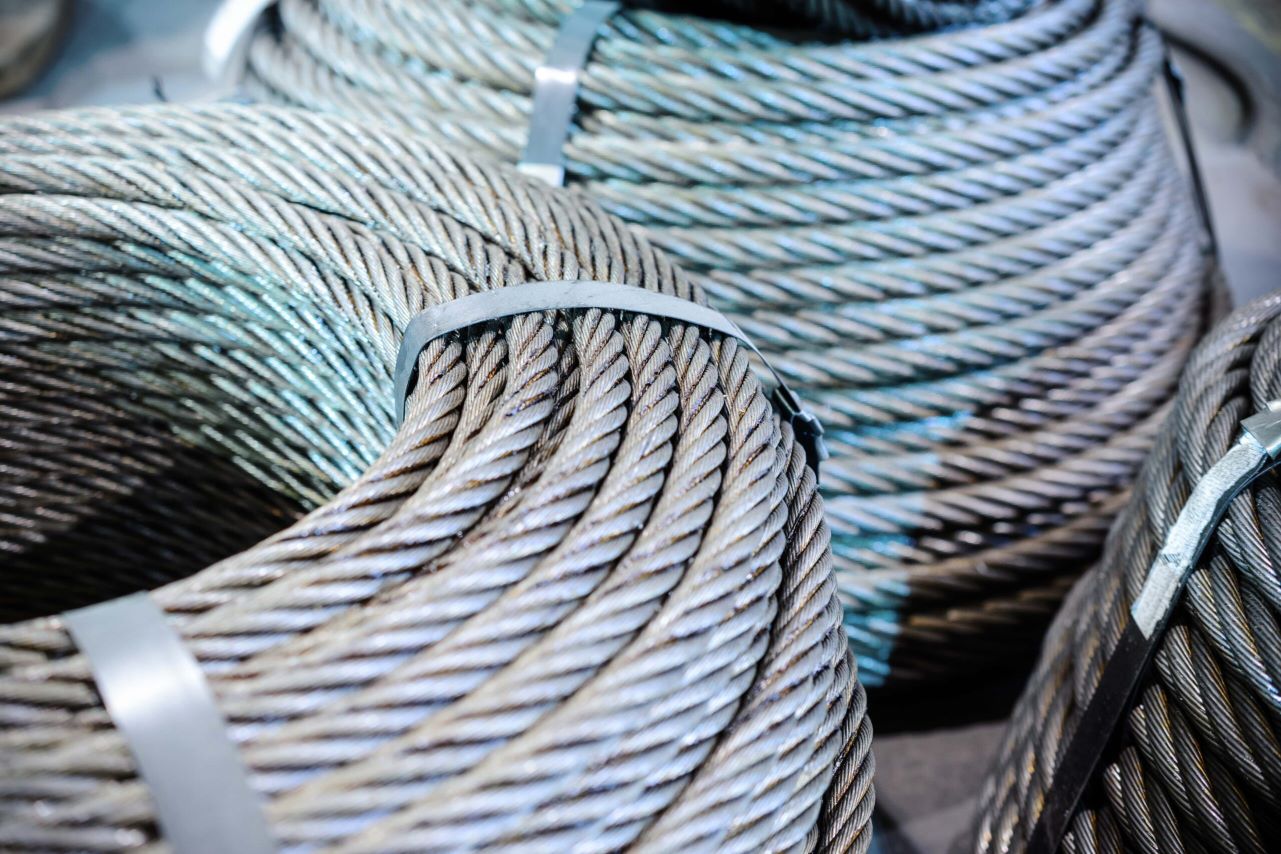
Steel wire rope is a complex assembly of individual steel wires that are twisted together to form strands. These strands are then laid helically around a core, forming the complete rope. The core can be made of steel, fiber, or even a synthetic material, each influencing the rope’s overall properties. The strength and resilience of steel wire rope make it a reliable choice for demanding applications.
The construction of steel wire rope involves various configurations, each designed for specific performance characteristics. Common types include strand rope, cable laid rope, and swaged rope. Strand rope is the most basic type, while cable laid rope consists of multiple wire ropes laid together. Swaged rope is compacted for increased density and strength.
Strand patterns within steel wire rope are crucial to its performance. Regular lay, also known as ordinary lay, features wires and strands laid in opposite directions, providing good abrasion resistance. Lang lay has wires and strands laid in the same direction, offering greater flexibility and fatigue resistance, although it is more prone to kinking. At SSTC, our experience has shown that clients often overlook the lay type, impacting rope life.
Steel grades significantly affect the strength and corrosion resistance of steel wire rope. Higher grades of steel offer greater tensile strength, allowing the rope to withstand heavier loads. Corrosion-resistant alloys, such as stainless steel, are used in environments where exposure to moisture and chemicals is a concern. We often advise clients in coastal regions to prioritize corrosion-resistant options.
The manufacturing process of steel wire rope begins with wire drawing, where steel rods are pulled through a series of dies to achieve the desired diameter. These wires are then twisted into strands, and the strands are laid around the core using specialized machinery. Quality control measures are implemented throughout the process to ensure consistent performance and safety. For many of our clients here in Dammam, we’ve seen that rope quality directly correlates with operational efficiency.
Exploring Synthetic Rope: A Modern Alternative
Synthetic rope is constructed from synthetic fibers, offering a modern alternative to traditional steel wire rope. These ropes are valued for their high strength-to-weight ratio, flexibility, and resistance to certain environmental factors. The versatility of synthetic rope has made it increasingly popular in a wide array of applications.
Common synthetic materials used in rope construction include polyester, nylon, and High Modulus Polyethylene (HMPE). Polyester offers excellent strength, abrasion resistance, and UV resistance. Nylon provides high elasticity and shock absorption. HMPE, such as Dyneema or Spectra, boasts exceptional strength and minimal elongation.
Each synthetic material possesses unique properties that influence its suitability for specific applications. Polyester is often used in mooring lines due to its low stretch and resistance to chemicals. Nylon is favored in towing applications where shock absorption is critical. HMPE is ideal for applications requiring maximum strength with minimal weight, such as winch lines. We have seen a growing demand for HMPE ropes in our operations.
Synthetic rope construction includes braided, twisted, and single-strand configurations. Braided rope, such as double braid and diamond braid, offers high strength and good handling characteristics. Twisted rope is a more traditional construction, providing good abrasion resistance. Single-strand rope is simple and economical but may be less durable than other types.
Braid patterns in synthetic rope influence its performance. Diamond braid offers a balanced combination of strength and flexibility. Double braid consists of a core and a cover, providing high strength and excellent abrasion resistance. The choice of braid pattern depends on the specific demands of the application. We once worked with a client choosing between A and B… They found B was better for their specific workflow because…
The science behind synthetic fiber strength lies in the alignment and orientation of polymer chains within the fiber. High-performance synthetic fibers are engineered to maximize the alignment of these chains, resulting in exceptional tensile strength. Elongation properties are also carefully controlled to meet the specific requirements of different applications. For many of our clients, the controlled elongation of synthetic ropes has improved operational safety.
Strength and Load Capacity: A Critical Comparison
Tensile strength is a critical factor in rope selection, representing the maximum load a rope can withstand before breaking. Steel wire rope generally offers higher tensile strength than synthetic rope of comparable size. However, advancements in synthetic fiber technology have significantly narrowed this gap. It’s crucial to consider the specific materials and construction of each rope when comparing tensile strength.
For example, a 1-inch diameter steel wire rope might have a tensile strength of 50 tons, while a comparable HMPE synthetic rope could have a tensile strength of 40 tons. While steel has a higher absolute strength, the synthetic rope is significantly lighter, resulting in a higher strength-to-weight ratio. The choice depends on whether absolute strength or weight is the more critical factor.
Working Load Limit (WLL) is the maximum load that should be applied to a rope in service, and safety factors are multipliers applied to the tensile strength to determine the WLL. The WLL is always lower than the tensile strength to account for dynamic loading, wear, and other factors. Safety factors vary depending on the application and industry standards.
The importance of WLL and safety factors cannot be overstated. Overloading a rope can lead to catastrophic failure, resulting in serious injury or property damage. Understanding and adhering to WLL guidelines is essential for safe operation. We emphasize the importance of proper training and adherence to safety protocols to all our clients.
Calculating WLL involves dividing the tensile strength of the rope by the safety factor. For example, if a rope has a tensile strength of 10,000 lbs and a safety factor of 5, the WLL would be 2,000 lbs. Always consult manufacturer specifications and relevant industry standards to determine the appropriate safety factor for your application.
Elongation refers to the amount a rope stretches under load, while elasticity is its ability to return to its original length after the load is removed. Steel wire rope has very low elongation, while synthetic rope typically exhibits higher elongation. The elongation properties of a rope can significantly impact its performance in different applications. We frequently encounter scenarios where low elongation is crucial for precision lifting.
The impact of elongation on lifting and rigging operations can be significant. Low elongation is desirable in applications where precise control is required, such as lifting heavy objects. High elongation can be beneficial in applications where shock absorption is needed, such as towing. The choice depends on the specific requirements of the task.
High elongation can provide shock absorption and reduce peak loads, but it can also lead to loss of control and instability. Low elongation offers greater precision and control but may transmit higher shock loads to the equipment and personnel. A thorough understanding of elongation properties is essential for safe and effective rope selection.
Cyclic loading refers to repeated stress on a rope, and fatigue resistance is its ability to withstand these repeated stresses without failure. Steel wire rope is generally more resistant to fatigue than synthetic rope, particularly under high loads. However, synthetic ropes with specialized constructions can offer improved fatigue resistance.
Synthetic ropes can be more susceptible to fatigue from internal friction and heat buildup during cyclic loading. Proper rope selection and maintenance are crucial for maximizing fatigue life. We advise clients to regularly inspect ropes for signs of wear and damage, especially in applications involving cyclic loading.
Durability and Environmental Resistance
Abrasion resistance is a crucial factor in rope durability, referring to its ability to withstand wear and tear from contact with other surfaces. Steel wire rope is generally more abrasion resistant than synthetic rope, making it suitable for harsh environments. However, certain synthetic ropes with specialized coatings can offer improved abrasion resistance.
In scenarios involving contact with rough surfaces, such as rocks or abrasive materials, steel wire rope tends to outperform synthetic rope. However, in applications where the rope is repeatedly run over sheaves or pulleys, synthetic rope may offer longer life due to its greater flexibility and reduced internal friction. Our experience in the field has shown us this time and again.
Corrosion resistance is another critical aspect of rope durability, referring to its ability to withstand degradation from exposure to corrosive substances. Synthetic fibers are inherently corrosion resistant, while steel wire rope is susceptible to corrosion, particularly in saltwater environments. Proper coatings and treatments can enhance the corrosion resistance of steel wire rope.
Saltwater, chemicals, and UV exposure can all degrade rope performance. Saltwater can cause steel wire rope to rust and weaken, while chemicals can dissolve or degrade synthetic fibers. UV exposure can cause synthetic fibers to break down and lose strength. Selecting the appropriate rope material for the specific environmental conditions is essential for long-term durability.
Coatings and treatments, such as galvanization or plastic coatings, can significantly improve the corrosion resistance of steel wire rope. These coatings create a barrier between the steel and the corrosive environment, extending the rope’s lifespan. Regular inspection and maintenance are still necessary to ensure the coating remains intact.
UV degradation is a significant concern for synthetic ropes, as prolonged exposure to sunlight can cause the fibers to weaken and lose strength. Certain synthetic materials, such as polyester, offer better UV resistance than others. UV-resistant coatings can also be applied to synthetic ropes to extend their lifespan.
Temperature resistance refers to a rope’s ability to maintain its strength and performance in extreme temperatures. Steel wire rope can withstand a wider range of temperatures than synthetic rope. Synthetic ropes may become brittle or lose strength at very low temperatures, while high temperatures can cause them to melt or degrade.
In extreme temperature environments, steel wire rope is often the preferred choice due to its superior temperature resistance. However, specialized synthetic ropes are available that can withstand moderately high or low temperatures. Careful consideration of the operating temperature range is essential for selecting the appropriate rope material.
Weight and Handling: Ergonomics and Practicality
Weight is a significant factor to consider, especially in applications where manual handling is required. Synthetic rope is significantly lighter than steel wire rope of comparable strength. This weight difference can have a substantial impact on ergonomics and worker safety.
For example, a 100-foot length of 1-inch diameter steel wire rope might weigh 200 lbs, while a comparable synthetic rope might weigh only 20 lbs. This weight reduction can make synthetic rope much easier to handle, reducing the risk of strain and injury. This is particularly important in applications where workers are required to carry or maneuver the rope frequently.
Handling characteristics, such as flexibility, grip, and ease of use, are also important considerations. Synthetic rope is generally more flexible and easier to handle than steel wire rope. It is less likely to kink or develop sharp bends, making it more comfortable to work with.
The ergonomic benefits of synthetic rope are particularly valuable for workers who spend long hours handling ropes. The reduced weight and increased flexibility can significantly reduce fatigue and the risk of musculoskeletal disorders. We prioritize worker safety and recommend synthetic ropes whenever weight is a concern.
Ease of inspection and maintenance is another practical consideration. Synthetic rope is generally easier to inspect than steel wire rope, as damage is often more visible. Maintenance requirements are also typically lower for synthetic rope, as it does not require lubrication to prevent corrosion.
Steel wire rope requires regular lubrication to prevent corrosion and reduce friction between the wires. This lubrication can be messy and time-consuming. Synthetic rope does not require lubrication, making it a cleaner and more convenient option.
Storage requirements can also influence rope selection. Steel wire rope should be stored in a dry, well-ventilated area to prevent corrosion. Synthetic rope is less susceptible to moisture damage and can be stored in a wider range of conditions.
Synthetic ropes are often easier to coil and store due to their flexibility and lighter weight. This can save space and make them more convenient to transport. Proper storage practices are essential for maximizing the lifespan of any rope.
Applications: Where Each Rope Excels
Steel wire rope excels in applications requiring high strength, durability, and resistance to abrasion and high temperatures. Its robust construction makes it suitable for demanding environments where safety and reliability are paramount.
Cranes and lifting equipment rely heavily on steel wire rope due to its exceptional strength and load-bearing capabilities. Elevators and hoists also utilize steel wire rope for its reliability and resistance to stretching under heavy loads. In these critical applications, the safety factor is paramount, and steel wire rope provides a proven track record.
Bridges and suspension cables often employ steel wire rope for its ability to support immense weight over long spans. The oil and gas industry also relies on steel wire rope for various applications, including offshore drilling and rigging operations. The inherent strength and durability of steel wire rope make it the material of choice in these demanding sectors.
Synthetic rope shines in applications where weight is a critical concern, or where flexibility and ease of handling are paramount. Its high strength-to-weight ratio makes it an ideal choice for applications where minimizing weight is essential.
Towing and mooring lines frequently utilize synthetic rope due to its strength, flexibility, and resistance to saltwater. Sailing and marine applications benefit from synthetic rope’s lightweight and ease of handling. Its resistance to UV degradation also makes it a durable choice for prolonged exposure to sunlight.
Arboriculture and forestry applications often favor synthetic rope due to its lightweight and ease of handling, reducing worker fatigue and improving efficiency. Recreational activities, such as climbing and rappelling, also utilize synthetic rope for its strength, flexibility, and lightweight properties. We’ve seen the adoption of synthetic ropes grow across various applications.
In one case study, a construction company switched from steel wire rope to synthetic rope for their crane lifting operations. The lighter weight of the synthetic rope allowed them to increase the crane’s lifting capacity and improve worker safety. Another case study involved a marine salvage operation that utilized synthetic rope for its superior strength-to-weight ratio, enabling them to recover a sunken vessel more efficiently.
Safety Considerations and Best Practices
Inspection procedures are crucial for identifying damage and wear in both steel wire rope and synthetic rope. Regular inspections can help detect potential problems before they lead to catastrophic failure. Properly trained personnel should conduct these inspections.
Visually inspect steel wire rope for broken wires, corrosion, and deformation. Look for signs of wear on the surface of the wires and strands. Any significant damage should be cause for concern and may warrant replacing the rope. SSTC recommends following a strict inspection schedule.
Synthetic rope should be inspected for abrasion, cuts, and fiber damage. Look for signs of wear on the surface of the rope, such as fuzziness or discoloration. Any significant damage to the fibers should be cause for concern and may warrant replacing the rope.
Proper rigging techniques and knot tying are essential for safe operation. Using the correct knots and rigging hardware can help distribute the load evenly and prevent stress concentrations. Always follow manufacturer recommendations and industry best practices.
Safe working practices are paramount when working with any type of rope. Avoid overloading the rope beyond its WLL. Never stand in the line of tension of a rope under load. Use appropriate personal protective equipment, such as gloves and eye protection.
Discarding damaged rope is crucial for preventing accidents. Once a rope has reached the end of its service life or has sustained significant damage, it should be removed from service and properly discarded. Never use a damaged rope, as it could fail under load and cause serious injury.
Relevant industry standards and regulations provide guidance on the safe use and inspection of ropes. Adhering to these standards can help ensure that ropes are used safely and effectively. Consult organizations such as OSHA, ANSI, and ISO for relevant standards and regulations.
Cost Analysis: Initial Investment vs. Long-Term Expenses
The initial purchase cost of steel wire rope is typically lower than that of synthetic rope of comparable strength. However, the long-term costs associated with each type of rope can vary depending on the application and maintenance requirements. A thorough cost analysis should consider both the initial investment and the ongoing expenses.
Maintenance costs for steel wire rope include lubrication, inspection, and repairs. Regular lubrication is essential for preventing corrosion and reducing friction between the wires. Inspections should be conducted regularly to identify any signs of damage or wear. Repairs may be necessary to address minor issues, such as broken wires.
Synthetic rope typically requires less maintenance than steel wire rope. It does not require lubrication and is generally easier to inspect. However, synthetic rope may be more susceptible to damage from abrasion or UV exposure, which could lead to higher repair or replacement costs.
Lifespan and replacement frequency are key factors in determining the overall cost-effectiveness of a rope. Steel wire rope may have a longer lifespan in certain applications due to its superior abrasion resistance. However, synthetic rope may offer a longer lifespan in other applications due to its resistance to corrosion.
The overall cost-effectiveness of a rope depends on a variety of factors, including its performance, safety, and lifespan. While steel wire rope may have a lower initial cost, synthetic rope may offer better long-term value due to its reduced weight, ease of handling, and lower maintenance requirements. At SSTC, we help clients weigh these factors to optimize their investment.
Expert Opinions and Industry Insights
> “While steel wire rope has a proven track record in heavy lifting, the advancements in synthetic rope technology now offer viable alternatives with superior strength-to-weight ratios for many applications.” – Dr. Emily Carter, Materials Science Professor
Current trends in rope technology are focused on developing stronger, lighter, and more durable materials. Manufacturers are constantly innovating to improve the performance and safety of both steel wire rope and synthetic rope. These advancements are driving the adoption of new materials and construction techniques across various industries.
The future outlook for steel wire rope and synthetic rope is positive, with both materials expected to remain essential in a wide range of applications. Steel wire rope will continue to be the material of choice for heavy-duty lifting and rigging operations, while synthetic rope will gain further traction in applications where weight and ease of handling are critical.
Final Verdict: Choosing the Right Rope for Your Needs
Steel wire rope and synthetic rope each offer unique advantages and disadvantages. Steel wire rope provides superior strength and abrasion resistance, while synthetic rope offers a lighter weight and greater flexibility. The best choice depends on the specific requirements of your project.
For heavy lifting and extreme environments, steel wire rope remains the superior choice due to its unmatched strength and durability. For weight-sensitive applications and ease of handling, synthetic rope offers a compelling alternative with its high strength-to-weight ratio and ergonomic benefits.
Making an informed decision requires careful consideration of all the factors discussed in this comparison. Evaluate your specific needs, weigh the pros and cons of each type of rope, and consult with experts to ensure you select the best rope for your project.
FAQ Section
Q: What is the main difference between steel wire rope and synthetic rope?
A: Steel wire rope offers higher strength and abrasion resistance, while synthetic rope is lighter and more flexible.
Q: Which type of rope is better for lifting heavy loads?
A: Steel wire rope is generally preferred for heavy lifting due to its superior strength.
Q: Is synthetic rope as durable as steel wire rope?
A: While steel wire rope has better abrasion resistance, synthetic rope is resistant to corrosion. The durability depends on the specific application and environment.
Q: What are the advantages of using synthetic rope in marine applications?
A: Synthetic rope is lightweight, resistant to saltwater, and easy to handle, making it ideal for marine environments.
Q: How do I inspect steel wire rope for damage?
A: Look for broken wires, corrosion, and deformation. Any significant damage should be cause for concern.
Q: What is the Working Load Limit (WLL)?
A: The WLL is the maximum load that should be applied to a rope in service, determined by dividing the tensile strength by a safety factor.
Q: How does UV exposure affect synthetic rope?
A: UV exposure can cause synthetic fibers to break down and lose strength.
Q: Can synthetic rope be used in high-temperature environments?
A: Steel wire rope is better suited for high-temperature environments, as synthetic rope can melt or degrade at high temperatures.
Q: What are the benefits of using synthetic rope for towing?
A: Synthetic rope is lightweight and provides good shock absorption, making it suitable for towing applications.
Q: How often should I inspect my ropes?
A: Ropes should be inspected regularly, especially before each use, to identify any signs of damage or wear.