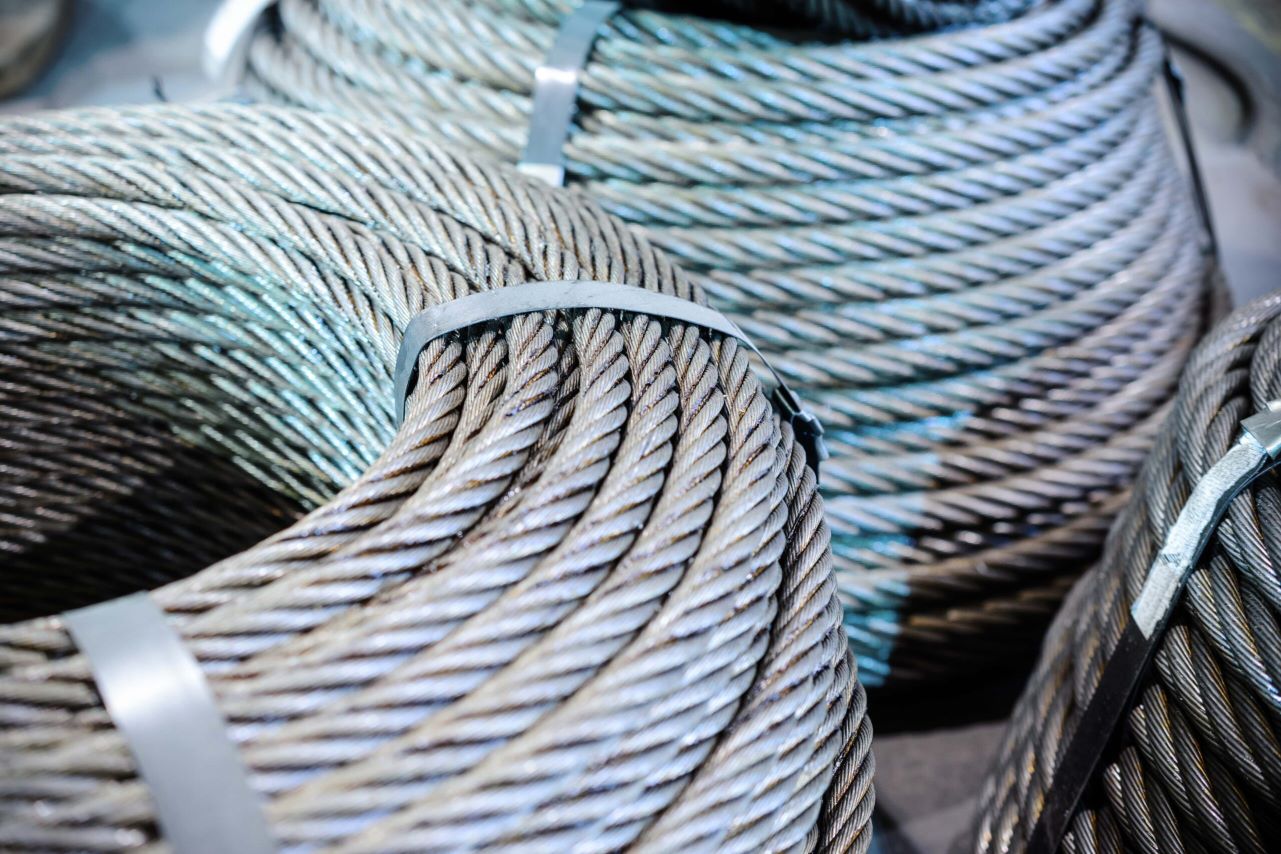
Are you a steel wire rope expert? Steel wire rope is a critical component in numerous industries, from construction and manufacturing to marine and energy. Its strength, flexibility, and durability make it indispensable for lifting, hoisting, and securing heavy loads. This quiz is designed to test your knowledge of steel wire rope, identify common misconceptions, and reinforce best practices for safe handling and maintenance.
Incorrect handling and maintenance of steel wire rope can lead to catastrophic failures, resulting in property damage, injuries, or even fatalities. A seemingly minor oversight, like neglecting to lubricate the rope properly or overlooking signs of internal corrosion, can have devastating consequences. Take this quiz to assess your understanding of steel wire rope, improve your safety practices, and ensure you’re equipped to handle this vital equipment with confidence. Let’s test your knowledge of steel wire rope!
Question 1: Identifying Different Wire Rope Constructions – Spot the Fake!
[IMAGE: Four images of different wire rope constructions: regular lay, lang lay, reverse lay, and one intentionally mislabeled or incorrect construction.]
Which of the wire rope constructions shown is incorrectly identified?
The construction of a steel wire rope significantly impacts its properties and suitability for different applications. Understanding these differences is crucial for selecting the right rope for the job and ensuring safe operation. In this question, we challenge you to identify an image that’s either mislabeled or depicts an incorrect wire rope construction.
Mistake to Avoid: Confusing regular lay with lang lay and their respective pros/cons.
One of the most common mistakes is confusing regular lay and lang lay wire rope. In a regular lay rope, the wires in the strands are laid in one direction, and the strands are laid in the opposite direction around the core. This construction offers good resistance to crushing and abrasion. In contrast, a lang lay rope has the wires and strands laid in the same direction. Lang lay ropes are more flexible and resistant to fatigue but are also more susceptible to crushing and distortion.
It is a vital error to confuse the two, because although lang lay ropes are more flexible, they are far less resistant to crushing. Thus, using a lang lay rope in an application where it will be heavily crushed would result in premature failure and could risk damage and injury.
Explain the characteristics of each construction type.
Here’s a breakdown of common wire rope constructions and their key characteristics:
- Regular Lay: The wires in the strands are laid in one direction, and the strands are laid in the opposite direction around the core. This provides a good balance of strength and abrasion resistance.
- Lang Lay: The wires and strands are laid in the same direction. This construction offers greater flexibility and fatigue resistance but is more susceptible to crushing and distortion.
- Reverse Lay: Combines regular lay and lang lay strands in the same rope to balance properties.
- Alternate Lay: Similar to reverse lay, alternating the lay direction of strands.
- Cable Laid: Multiple wire ropes are laid together to form a larger, stronger rope.
“Understanding the lay of a wire rope is paramount for selecting the appropriate rope for the task. Regular lay offers stability, while lang lay provides flexibility. Choosing the wrong one can drastically impact the rope’s lifespan and safety.” – John Sterling, Senior Engineer at SkySol Media
Knowing the differences between these constructions will help you to make a better decision on which to use, and ensure that you use them safely.
Question 2: Understanding Safe Working Load (SWL) – Don’t Overload!
[IMAGE: A scenario depicting a crane lifting a specific load with a wire rope of known diameter and material. Multiple-choice answers show different SWL calculations, including incorrect ones.]
A crane is lifting a 5-ton load using a 1-inch diameter steel wire rope with a minimum breaking strength of 50 tons. Assuming a safety factor of 5, what is the Safe Working Load (SWL) of the wire rope?
The Safe Working Load (SWL) is the maximum load that a wire rope can safely handle in a specific application. It’s calculated by dividing the minimum breaking strength (MBS) of the rope by a safety factor. Understanding SWL is crucial to prevent overloading and potential failures.
Mistake to Avoid: Ignoring the safety factor and relying solely on the rope’s breaking strength.
A common mistake is to ignore the safety factor and assume that the wire rope can safely handle its entire breaking strength. The safety factor is a critical component of SWL calculation because it accounts for variables such as dynamic loading, wear and tear, and environmental conditions. For example, if a rope has a breaking strength of 10 tons and a safety factor of 5, the SWL is only 2 tons.
Explain how to correctly calculate SWL, considering the safety factor and application.
To correctly calculate SWL, follow these steps:
1. Determine the Minimum Breaking Strength (MBS): This is the force at which the wire rope is expected to break under static tension, as provided by the manufacturer.
2. Determine the Safety Factor: The safety factor is determined by the application and industry standards. Common safety factors range from 4:1 to 10:1. More dynamic or critical applications require higher safety factors.
3. Calculate SWL: Divide the MBS by the safety factor: SWL = MBS / Safety Factor.
For example, our team in Dubai often encounters situations where a higher safety factor is necessary due to extreme weather conditions.
| Wire Rope Diameter (inches) |
Minimum Breaking Strength (tons) |
Safety Factor |
Safe Working Load (tons) |
| 1/4 |
2.5 |
5 |
0.5 |
| 1/2 |
10 |
5 |
2 |
| 3/4 |
22.5 |
5 |
4.5 |
| 1 |
40 |
5 |
8 |
Remember that the SWL calculation is a starting point. Always consider the specific application and consult with a qualified engineer or safety professional to ensure the wire rope is suitable for the job.
Question 3: Recognizing Common Wire Rope Damage – What’s a Red Flag?
[IMAGE: Images of damaged wire ropes showcasing various types of damage, such as abrasion, corrosion, kinking, birdcaging, and wear.]
Which of the wire rope damages shown in the images requires immediate rope replacement?
Identifying damage to wire rope early can prevent failures and accidents. Regular inspections are critical to ensure the rope is safe for continued use. This question tests your ability to recognize common types of damage and determine their severity.
Mistake to Avoid: Overlooking seemingly minor damage that can lead to catastrophic failure.
A frequent mistake is to dismiss seemingly minor damage, such as a few broken wires, as insignificant. However, even a small amount of damage can weaken the rope and increase the risk of catastrophic failure. For example, a single broken wire can indicate internal corrosion or fatigue, which can rapidly propagate and compromise the rope’s strength. A seemingly minor kink could put undue stress on the surrounding wires, reducing the cable strength.
Detail the different types of damage and their impact on rope strength and safety.
Here’s a detailed overview of common types of wire rope damage:
- Abrasion: Caused by friction against other surfaces, leading to wear and reduction in diameter.
- Corrosion: Occurs when the rope is exposed to moisture, chemicals, or harsh environments, weakening the wires and strands.
- Kinking: Results from bending the rope too sharply, causing permanent deformation and weakening.
- Birdcaging: Occurs when the core of the rope becomes loose, causing the strands to separate and resemble a birdcage.
- Wear: General reduction in wire diameter due to normal use and friction.
- Broken Wires: Individual wires that have fractured due to fatigue, overload, or corrosion.
- Crushing: Deformation of the rope due to excessive pressure or overloading.
- Strand Wear: Wear of the strands due to friction between the strands and the sheave or drum.
Any of these types of damage can significantly reduce the wire rope’s cable strength and increase the risk of failure. Regular inspections, proper lubrication, and careful handling can help prevent damage and extend the rope’s lifespan.
Question 4: Choosing the Right Lubricant – Prevent Premature Wear!
[IMAGE: A scenario describing a wire rope used in a marine environment with exposure to saltwater and harsh weather conditions. Multiple-choice answers offer different types of lubricants (e.g., synthetic, mineral oil-based, etc.).]
A steel wire rope is used on a fishing vessel, constantly exposed to saltwater and harsh weather conditions. Which type of lubricant is most suitable for this application?
Choosing the right lubricant is critical for protecting wire rope from corrosion and wear, extending its lifespan, and ensuring safe operation. The wrong lubricant can attract dirt and debris, accelerate corrosion, or fail to provide adequate protection.
Mistake to Avoid: Using the wrong lubricant, leading to corrosion or reduced flexibility.
A common mistake is to use a general-purpose lubricant without considering the specific application and environmental conditions. For example, using a mineral oil-based lubricant in a marine environment can lead to rapid corrosion because it doesn’t provide sufficient protection against saltwater. Similarly, using a heavy, viscous lubricant in cold temperatures can reduce the rope’s flexibility and increase the risk of kinking.
Explain the importance of lubricant selection based on the application and environmental conditions.
Here’s a guide to selecting the right lubricant for different applications:
- Marine Environments: Use a synthetic lubricant specifically formulated for saltwater resistance and corrosion protection. These lubricants typically contain additives that prevent rust and oxidation.
- High-Temperature Conditions: Use a high-temperature lubricant that can withstand extreme heat without breaking down or losing its lubricating properties.
- Cold Temperatures: Use a low-temperature lubricant that remains fluid and flexible in cold conditions, preventing stiffness and kinking.
- General-Purpose Applications: Use a mineral oil-based lubricant with rust inhibitors and anti-wear additives for basic protection.
- Food-Grade Applications: Use a food-grade lubricant that is safe for contact with food products, complying with relevant regulations.
The lubricant should be applied regularly and thoroughly, penetrating between the strands to provide full coverage. Proper lubrication reduces friction, prevents corrosion, and extends the wire rope’s service life.
Question 5: Inspecting for Internal Corrosion – The Hidden Danger!
[IMAGE: A cross-section of a wire rope showing internal corrosion. Also, images demonstrating techniques for detecting internal corrosion, such as visual inspection and magnetic particle testing.]
What specific signs indicate the presence of internal corrosion in a steel wire rope?
Internal corrosion is a hidden danger that can significantly weaken a wire rope without being immediately visible. Regular inspections are essential to detect internal corrosion early and prevent potential failures.
Mistake to Avoid: Failing to properly inspect for internal corrosion, which is often invisible to the naked eye.
A significant oversight is failing to conduct thorough inspections for internal corrosion, which can be difficult to detect with the naked eye. Surface rust may be visible, but the true extent of the corrosion inside the rope may be hidden. This can lead to a false sense of security, as the rope may appear to be in good condition when, in reality, it is severely weakened.
Explain methods for detecting internal corrosion, such as visual inspection, magnetic particle testing, and sectioning.
Here are several methods for detecting internal corrosion:
- Visual Inspection: Look for signs of surface rust, discoloration, or swelling. Pay close attention to areas where moisture can accumulate, such as rope valleys and end terminations.
- Diameter Reduction: Measure the diameter of the wire rope at various points. A reduction in diameter can indicate internal corrosion or wear.
- Magnetic Particle Testing (MPT): This method uses magnetic fields to detect surface and near-surface cracks and corrosion. It’s a non-destructive technique that can identify hidden flaws.
- Sectioning: Cut a section of the wire rope and examine the internal wires for signs of corrosion. This is a destructive method but provides a direct view of the rope’s internal condition.
- Nondestructive testing (NDT): Various NDT methods such as radiography and ultrasonic testing can be used to detect internal flaws and corrosion without damaging the rope.
Regularly inspecting wire rope and implementing appropriate inspection techniques can help identify internal corrosion early, allowing for timely replacement and preventing potential accidents.
Question 6: Proper Storage Techniques – Extend Rope Lifespan!
[IMAGE: Different wire rope storage methods: properly coiled and covered, left exposed to the elements, stored in a damp environment, and stored with chemicals.]
Which of the storage methods shown is the most effective for preventing damage and corrosion to steel wire rope?
Proper storage is essential for extending the lifespan of steel wire rope and preventing damage or corrosion. Incorrect storage can lead to kinking, rust, and reduced strength, compromising the rope’s integrity and safety.
Mistake to Avoid: Storing wire rope improperly, leading to kinking, rust, and reduced lifespan.
A common mistake is to store wire rope in a haphazard manner, exposing it to the elements or storing it in a damp environment. This can lead to rust and corrosion, which significantly reduce the cable strength and lifespan of the rope. Improper coiling or stacking can also cause kinking and deformation, further compromising its integrity.
Explain the best practices for storing wire rope, including proper coiling, lubrication, and environmental protection.
Here are best practices for storing steel wire rope:
1. Clean the Rope: Before storing, clean the wire rope to remove any dirt, debris, or contaminants.
2. Lubricate the Rope: Apply a generous coating of lubricant to protect against corrosion.
3. Coil the Rope Properly: Coil the rope neatly to avoid kinking or twisting. Follow the natural lay of the rope.
4. Store in a Dry Environment: Store the rope in a dry, well-ventilated area to prevent moisture buildup.
5. Protect from the Elements: Cover the rope with a tarp or store it indoors to protect it from rain, sun, and other environmental factors.
6. Elevate the Rope: Store the rope off the ground to prevent moisture from wicking into the rope.
7. Regular Inspections: Periodically inspect the stored rope for signs of corrosion or damage.
By following these best practices, you can extend the lifespan of your steel wire rope and ensure it remains in good condition for future use. A properly stored and maintained wire rope is a safer and more reliable wire rope.
Question 7: Understanding Different Wire Rope Grades – Strength Matters!
[IMAGE: Different wire rope grades (e.g., IPS, EIPS, EEIPS) and their corresponding tensile strengths. Ask readers to match the grade to its appropriate application based on load requirements.]
Match the wire rope grade to its appropriate application based on load requirements.
Understanding different wire rope grades is essential for selecting the right rope for the job. Each grade has different tensile strengths and properties, making it suitable for specific applications.
Mistake to Avoid: Selecting the wrong wire rope grade for the intended application, leading to overload and failure.
A critical error is selecting a wire rope grade that is not strong enough for the intended application. This can lead to overloading and potential failure, resulting in property damage, injuries, or even fatalities. For example, using a lower-grade rope for a heavy lifting operation can exceed its tensile strength, causing it to snap under the load.
Explain the characteristics of different wire rope grades and their suitable applications.
Here’s an overview of common wire rope grades and their characteristics:
- Improved Plow Steel (IPS): A high-strength grade suitable for general-purpose applications.
- Extra Improved Plow Steel (EIPS): Offers higher tensile strength than IPS, making it suitable for more demanding applications.
- Extra Extra Improved Plow Steel (EEIPS): The highest strength grade, ideal for heavy lifting and critical applications.
- Stainless Steel: Offers excellent corrosion resistance, suitable for marine and chemical environments.
- Galvanized Steel: Provides good corrosion resistance through a zinc coating, suitable for outdoor applications.
When selecting a wire rope grade, consider the following factors:
- Load Requirements: Determine the maximum load the rope will be subjected to.
- Application: Consider the specific use case, such as lifting, hoisting, or securing.
- Environmental Conditions: Assess the exposure to moisture, chemicals, or extreme temperatures.
- Safety Factor: Apply an appropriate safety factor to account for dynamic loading, wear, and other variables.
Selecting the correct wire rope grade ensures that the rope can safely handle the intended load and withstand the environmental conditions, minimizing the risk of failure.
Question 8: Identifying Kinks and Twists – Before They Cause Problems!
[IMAGE: Images of wire rope with kinks and twists. Ask readers if the rope can still be used or needs replacement.]
Does the wire rope shown in the images need to be replaced or can it still be safely used?
Kinks and twists are common forms of damage that can significantly weaken a wire rope. Identifying these defects early is crucial for preventing potential failures and ensuring safe operation.
Mistake to Avoid: Attempting to straighten kinks and twists without proper knowledge, potentially weakening the rope.
A common mistake is to attempt to straighten kinks and twists without proper knowledge or tools. This can further damage the wire rope by weakening the wires and strands, increasing the risk of failure. For example, using excessive force to straighten a kink can cause the wires to stretch or break, compromising the rope’s integrity.
Explain how kinks and twists affect rope integrity and when replacement is necessary.
Kinks and twists can have several negative effects on wire rope integrity:
- Reduced Strength: Kinks and twists create stress concentrations, reducing the rope’s overall strength and load-bearing capacity.
- Increased Wear: These defects can cause increased friction and wear on the wires and strands, accelerating deterioration.
- Internal Damage: Kinks and twists can cause internal damage to the core and wires, which may not be immediately visible.
- Unpredictable Behavior: Damaged wire rope can behave unpredictably under load, increasing the risk of sudden failure.
In general, wire rope with kinks or twists should be removed from service and replaced. Attempting to repair or straighten these defects is not recommended, as it can further weaken the rope. When in doubt, consult with a qualified wire rope inspector or safety professional.
Question 9: The Role of Sheaves and Drums – Maintain Optimal Performance!
[IMAGE: A scenario involving a wire rope running over sheaves and drums. Ask about the importance of proper sheave and drum maintenance.]
Why is proper maintenance of sheaves and drums important for wire rope performance?
Sheaves and drums play a crucial role in the performance and lifespan of wire rope. Proper maintenance of these components is essential for preventing premature wear, damage, and failure.
Mistake to Avoid: Neglecting sheave and drum maintenance, leading to premature wire rope wear and damage.
A frequent mistake is neglecting the maintenance of sheaves and drums, leading to increased wear and damage to the wire rope. For example, worn or damaged sheaves can cause excessive friction and abrasion, accelerating the deterioration of the rope. Similarly, improperly grooved drums can cause the rope to be pinched or deformed, reducing its strength and lifespan.
Explain the role of sheaves and drums in wire rope performance and the importance of regular maintenance.
Sheaves and drums serve as guides and supports for wire rope, allowing it to move smoothly and efficiently. Proper maintenance of these components includes:
- Regular Inspection: Check for signs of wear, damage, or misalignment.
- Lubrication: Lubricate sheaves and drums to reduce friction and prevent wear.
- Proper Groove Size: Ensure that the sheave and drum grooves are the correct size and shape for the wire rope.
- Alignment: Align sheaves and drums properly to prevent uneven wear and stress on the rope.
- Cleaning: Remove dirt, debris, and contaminants from sheaves and drums to prevent abrasion and corrosion.
Maintaining sheaves and drums in good condition reduces friction, prevents damage to the wire rope, and extends its service life. This can save money on replacement costs and improve the overall safety of lifting and hoisting operations.
Question 10: Wire Rope End Terminations – Secure the Load!
[IMAGE: Different types of wire rope end terminations (e.g., swaged sockets, wire rope clips). Ask which termination is most appropriate for a specific application and load requirement.]
Which wire rope end termination is most appropriate for a specific application and load requirement?
Wire rope end terminations are used to secure the ends of wire rope and connect them to other components or structures. Selecting the right end termination and installing it correctly is crucial for ensuring the safety and reliability of lifting and hoisting operations.
Mistake to Avoid: Using incorrect or improperly installed end terminations, leading to slippage and failure.
A critical mistake is using incorrect or improperly installed end terminations. This can lead to slippage and failure, resulting in dropped loads, property damage, injuries, or even fatalities. For example, using wire rope clips incorrectly or failing to tighten them properly can cause the rope to slip out of the termination under load.
Explain the different types of wire rope end terminations and their proper installation techniques.
Here are some common types of wire rope end terminations:
- Swaged Sockets: These terminations are attached by compressing a metal sleeve onto the wire rope. They offer high strength and reliability but require specialized equipment for installation.
- Wire Rope Clips: Also known as U-bolt clips, these terminations use bolts and saddles to clamp the wire rope together. They are relatively easy to install but require careful attention to detail to ensure proper tightening and spacing.
- Wedge Sockets: These terminations use a wedge-shaped piece of metal to secure the wire rope. They are commonly used in crane and hoist applications.
- Poured Sockets: These terminations involve pouring molten metal into a socket to secure the wire rope. They offer very high strength but require specialized skills and equipment.
- Flemish Eye Splice: The strongest and most reliable method. This involves unlaying the wires of the rope and interweaving them to form an eye.
When selecting and installing wire rope end terminations, follow these guidelines:
- Choose the Right Termination: Select a termination that is appropriate for the wire rope size, grade, and application.
- Follow Manufacturer’s Instructions: Always follow the manufacturer’s instructions for installation and use.
- Inspect Regularly: Inspect end terminations regularly for signs of wear, damage, or corrosion.
- Proper Installation: Ensure that the termination is installed correctly and tightened to the proper torque.
Using the correct wire rope end terminations and installing them properly ensures a secure and reliable connection, minimizing the risk of slippage and failure.
Conclusion: Your Steel Wire Rope Knowledge Scorecard
Now that you’ve completed the quiz, it’s time to evaluate your steel wire rope expertise. Here’s a scoring system to help you assess your knowledge:
- 8-10 Correct Answers: Steel Wire Rope Master! You have a comprehensive understanding of steel wire rope and its applications.
- 5-7 Correct Answers: Competent Professional. You have a solid understanding of steel wire rope, but there’s always room for improvement.
- 2-4 Correct Answers: Needs Improvement. It’s time to brush up on your steel wire rope knowledge to ensure safe handling and maintenance.
- 0-1 Correct Answers: Novice. You need to significantly improve your understanding of steel wire rope to ensure safe practices.
Review the questions you struggled with and revisit the relevant sections of this quiz to improve your understanding. Continuous learning and adherence to safety best practices are crucial for working with steel wire rope. We’ve equipped you with the knowledge to enhance safety and efficiency in your operations.
FAQ Section
Q: How often should I inspect my steel wire rope?
A: Steel wire rope should be inspected regularly, ideally before each use and at least monthly, even if it’s not used frequently. More frequent inspections are necessary in harsh environments or demanding applications. Look for signs of wear, damage, corrosion, or any other defects that could compromise the rope’s integrity. Detailed records of all inspections should be kept.
Q: What is the best way to lubricate steel wire rope?
A: The best way to lubricate steel wire rope is to use a lubricant specifically designed for wire rope applications. Clean the rope thoroughly before applying the lubricant. Apply the lubricant evenly and thoroughly, ensuring it penetrates between the strands to provide full coverage. Re-lubricate the rope regularly, following the manufacturer’s recommendations.
Q: Can I use a damaged steel wire rope if I repair it?
A: No, it is generally not recommended to use a damaged steel wire rope, even if you attempt to repair it. Repairs can weaken the rope and increase the risk of failure. It’s always best to replace a damaged wire rope with a new one to ensure safety and reliability.
Q: What safety factor should I use when calculating the Safe Working Load (SWL) for my wire rope?
A: The appropriate safety factor depends on the application and industry standards. Common safety factors range from 4:1 to 10:1. Dynamic or critical applications require higher safety factors. Consult with a qualified engineer or safety professional to determine the appropriate safety factor for your specific application.
Q: How do I properly dispose of old or damaged steel wire rope?
A: Dispose of old or damaged steel wire rope in accordance with local regulations and environmental guidelines. Contact a recycling center or waste disposal facility that accepts steel materials. Do not simply discard the rope in a landfill or other unauthorized location. Also, ensure you make the rope unusable to avoid anyone attempting to use it without your permission.