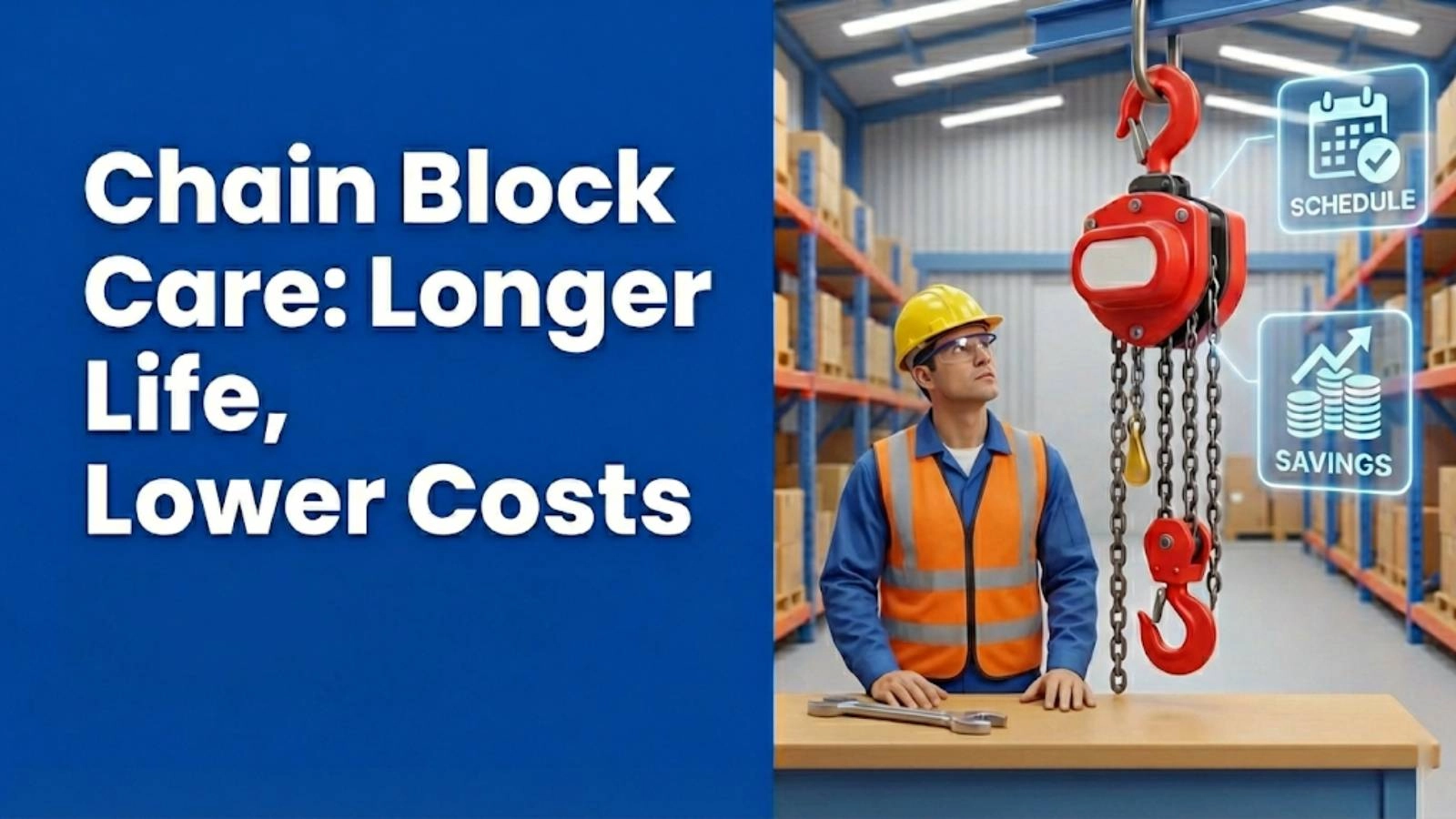
Chain blocks are indispensable tools in various industries, providing a reliable means for lifting heavy loads. Whether it’s in construction, manufacturing, or logistics, these devices play a crucial role in facilitating tasks that would otherwise be impossible or highly dangerous. However, using an inadequate or faulty chain block can lead to severe accidents, injuries, and material damage. It’s vital to understand the essential chain block features that ensure safety and efficiency. This article serves as a guide to help you make informed decisions when choosing the right chain block for your specific needs.
1. ✅ Load Capacity and Safety Factor: Matching the Block to the Task
Problem: Overloading Risks
Exceeding a chain block’s load capacity is a recipe for disaster. When a chain block is pushed beyond its limits, critical components like the chain, hooks, or gears can fail, leading to catastrophic consequences. This not only puts workers at risk of serious injury or death but can also cause significant damage to the load being lifted and the surrounding environment. Ignoring load limits can also lead to costly downtime and legal repercussions.
Solution: Understanding Load Capacity and Safety Factors
Load capacity refers to the maximum weight a chain block is designed to lift safely. This information is typically clearly marked on the chain block’s housing. Always verify this before use. The safety factor is a crucial concept that provides a margin of safety. For example, a 4:1 safety factor means the chain block is designed to withstand four times its rated load capacity before failing. We recommend selecting a chain block with a capacity that significantly exceeds the expected load, providing an additional buffer for unforeseen circumstances or variations in load weight. Many of our clients here in Dammam have found that this approach minimizes risk and enhances operational safety.
2. ✅ Chain Quality and Material: The Backbone of Safe Lifting
Problem: Chain Weakness and Failure
Using low-quality or damaged chains poses significant risks. Chains are subjected to immense stress during lifting operations, and any weakness or flaw can lead to sudden failure. Wear, corrosion, and kinking are common issues that compromise the integrity of the chain. Such a failure can result in the load dropping unexpectedly, causing severe accidents and injuries.
Solution: Choosing High-Strength Alloy Chains
It’s paramount to use alloy steel chains that meet recognized standards such as Grade 80 or Grade 100. These high-strength alloy chains offer superior tensile strength, resistance to wear, and exceptional durability. This ensures they can withstand the rigors of heavy lifting. Regular chain block inspection is also crucial. Any signs of wear, corrosion, or damage should prompt immediate replacement of the chain. We advise our clients to keep detailed records of chain inspections and replacements to maintain a safe working environment. Neglecting regular chain block maintenance can lead to component failure and potential workplace accidents.
3. ✅ Hook Design and Safety Latches: Ensuring Secure Load Attachment
Problem: Accidental Load Release
Using hooks without safety latches creates a significant hazard. Without a latch, there’s a high risk of the load accidentally detaching from the hook, particularly if the chain block is subjected to vibrations or sudden movements. This can lead to the load falling, causing damage, injuries, or even fatalities.
Solution: Prioritizing Hooks with Reliable Safety Latches
Safety latches are essential for preventing accidental load release. These latches act as a barrier, ensuring that the load remains securely attached to the hook throughout the lifting process. It is important to choose hooks with robust latch mechanisms that are easy to operate and maintain. Swivel hook options can also enhance maneuverability, allowing for more flexible and controlled lifting operations.
“Always ensure that safety latches are functioning correctly before each lift. A malfunctioning latch is as good as no latch at all.” – John Smith, Lead Safety Inspector
4. ✅ Braking Mechanism: Controlled and Reliable Load Holding
Problem: Load Slippage and Uncontrolled Descent
Chain blocks with faulty or ineffective braking systems are extremely dangerous. If the braking mechanism fails, the load can slip or descend uncontrollably. This can lead to serious accidents, injuries, and property damage. The braking system is a critical safety component that must function reliably at all times.
Solution: Selecting Chain Blocks with Robust Braking Systems
There are several types of braking mechanisms available, with Weston-style brakes being a common and reliable option. A robust braking system must be able to hold the load securely at any height, preventing any unwanted movement. Regular brake chain block inspection and chain block maintenance are crucial to ensure its continued reliability. Any signs of slippage or malfunction should be addressed immediately. For many of our clients here in Dammam, we’ve seen that a proactive approach to brake maintenance significantly reduces the risk of accidents.
5. ✅ Housing and Gear Construction: Durability for Demanding Environments
Problem: Damage from Environmental Factors
Impacts, dust, and moisture can wreak havoc on a chain block’s housing and internal components. These environmental factors can cause corrosion, wear, and damage, compromising the chain block’s structural integrity and performance. In harsh industrial environments, this type of damage is particularly prevalent.
Solution: Rugged Construction for Longevity
A durable housing is essential for protecting the internal gears and mechanism of the chain block. We recommend chain blocks with sealed housings to prevent dust and moisture ingress, extending the lifespan of the equipment. Forged and heat-treated gears offer increased strength and wear resistance, ensuring reliable performance even in demanding conditions. Our experience in the field has shown that investing in high-quality construction materials pays off in the long run by reducing the need for frequent repairs and replacements.
6. ✅ Ease of Operation and Maintenance: User-Friendly Design
Problem: Difficult Operation and Maintenance
Chain blocks that are difficult to operate or maintain can lead to several problems. Operators may experience fatigue, increasing the risk of accidents due to errors or shortcuts. Complex maintenance procedures can also lead to neglect, as workers may be less likely to perform necessary upkeep if it’s too cumbersome.
Solution: Ergonomic Design and Simple Maintenance Procedures
We recommend chain blocks with smooth and easy-to-operate hand chains, reducing operator fatigue and improving efficiency. Clear and accessible chain block maintenance instructions are also crucial, ensuring that workers can properly care for the equipment. The availability of easily replaceable parts and readily available service support can also simplify maintenance and minimize downtime. A user-friendly design promotes safer and more efficient lifting operations.
7. ✅ Compliance with Safety Standards: Ensuring Regulatory Adherence
Problem: Non-Compliance with Safety Regulations
Using chain blocks that do not meet relevant safety standards can have serious consequences. Non-compliance can lead to legal and financial penalties, as well as increased risk of accidents and injuries. Ignoring safety regulations puts workers at risk and can damage a company’s reputation.
Solution: Choosing Certified Chain Blocks
It’s essential to select chain blocks that comply with recognized standards such as ASME B30.16 and EN 13157. These standards specify requirements for design, construction, inspection, and maintenance of chain blocks. Looking for certification marks from reputable testing organizations provides assurance that the chain block has been tested and meets the required safety standards. Maintaining records of chain block inspection and certification is also crucial for demonstrating compliance and ensuring ongoing safety.
8. ✅ Regular Inspection and Maintenance: Prolonging Lifespan and Safety
Problem: Neglecting Regular Maintenance
Neglecting regular chain block inspection and chain block maintenance can have dire consequences. Undetected wear, damage, and corrosion can lead to equipment failure, resulting in accidents, injuries, and costly downtime. A proactive approach to maintenance is essential for ensuring the continued safety and reliability of chain blocks.
Solution: Implementing a Preventative Maintenance Program
We recommend establishing a regular chain block inspection and chain block maintenance schedule. Inspections should include a thorough examination for wear, corrosion, damage, and proper operation. Lubrication and replacement of worn parts are crucial for maintaining optimal performance. A well-documented preventative maintenance program helps prolong the lifespan of the chain block and minimizes the risk of accidents.
Here’s a concise summary of the top 3 most important chain block features:
1. Load Capacity: Ensure the chain block‘s capacity exceeds the expected load with an adequate safety factor.
2. Chain Quality: Use high-strength alloy chains that meet recognized standards and inspect them regularly.
3. Braking Mechanism: Choose a chain block with a robust braking system that can securely hold the load at any height.
| Feature |
Description |
Importance |
| Load Capacity |
Maximum weight the chain block can safely lift. |
Prevents overloading and potential equipment failure. |
| Chain Quality |
Material and construction of the chain. |
Ensures the chain can withstand the stress of lifting. |
| Hook Design |
Type of hook and presence of safety latches. |
Prevents accidental load release. |
| Braking Mechanism |
Type and reliability of the braking system. |
Ensures controlled load holding and descent. |
| Housing Construction |
Durability and protection of internal components. |
Protects against environmental factors and impacts. |
| Ease of Operation |
User-friendliness and ergonomic design. |
Reduces operator fatigue and improves efficiency. |
| Compliance |
Adherence to safety standards and regulations. |
Ensures legal compliance and safe operation. |
| Maintenance |
Regular inspection and upkeep. |
Prolongs lifespan and prevents equipment failure. |
Conclusion
Selecting the right chain block involves careful consideration of several essential chain block features. Load capacity, chain quality, hook design, braking mechanism, and housing construction are all critical factors that contribute to safe and efficient lifting operations. By prioritizing these chain block features, you can minimize the risk of accidents, injuries, and material damage. We believe that investing in high-quality heavy lifting equipment and implementing a robust maintenance program is essential for ensuring a safe and productive working environment.
FAQ Section
Q: What is the most important factor to consider when choosing a chain block?
A: The most important factor is the load capacity. Always ensure that the chain block‘s chain block capacity exceeds the weight of the load you intend to lift. It is also very important to verify chain block safety during operations.
Q: How often should a chain block be inspected?
A: A chain block should be inspected before each use and regularly as part of a preventative maintenance program. The frequency of regular inspections depends on the intensity of use and the operating environment. We recommend consulting the manufacturer’s guidelines for specific recommendations.
Q: What are the different chain block types?
A: There are primarily two types of industrial chain hoist: manual chain blocks and lever chain blocks. Manual chain blocks are operated by pulling a hand chain, while lever chain blocks use a lever to lift the load. The manual chain block is more common, but the lever block features can make it useful in situations where space is limited.
Q: What are some common chain block maintenance procedures?
A: Common chain block maintenance procedures include lubricating the chain, checking the hooks and latches for damage, inspecting the braking mechanism, and ensuring that all components are in good working order. Refer to the manufacturer’s manual for detailed instructions. The chain hoist features should be properly maintained for its lifespan.
Q: What safety standards should a chain block comply with?
A: A chain block should comply with recognized safety standards such as ASME B30.16 and EN 13157. These standards specify requirements for design, construction, inspection, and maintenance of chain blocks.
Q: Can a chain block be used for horizontal pulling?
A: No, chain blocks are designed for vertical lifting only. Using a chain block for horizontal pulling can damage the equipment and create a dangerous situation. For horizontal pulling, use equipment specifically designed for that purpose.
Q: How do I determine the correct chain block capacity for my needs?
A: To determine the correct chain block capacity, you need to know the weight of the heaviest load you will be lifting. Select a chain block with a rated capacity that exceeds this weight, and factor in a safety margin for unforeseen circumstances.
Q: What should I do if I find damage during a chain block inspection?
A: If you find any damage during a chain block inspection, immediately remove the chain block from service and tag it as “out of order.” Do not attempt to use the chain block until it has been properly repaired or replaced.
Q: What are the benefits of using alloy steel chains in chain blocks?
A: Alloy steel chains offer superior tensile strength, resistance to wear, and exceptional durability compared to other types of chains. This makes them ideal for heavy lifting equipment and ensures a longer lifespan for the chain block.
Q: Where can I find reliable chain blocks that meet safety standards?
A: You can find reliable chain blocks that meet safety standards from reputable suppliers who specialize in heavy lifting equipment. Ensure that the supplier can provide certification and documentation to verify compliance with relevant safety standards.
Q: How does the chain block braking mechanism work?
A: The braking mechanism in a chain block typically uses a Weston-style brake. This type of brake employs friction discs and a ratchet mechanism to hold the load securely in place. When the hand chain is released, the brake engages automatically, preventing the load from slipping or descending uncontrollably. Proper chain block maintenance of the braking system is essential for ensuring its reliability.
Q: What role does the chain block housing play in safety?
A: The chain block housing is responsible for protecting the internal gears and mechanism from environmental factors such as dust, moisture, and impacts. A durable and well-sealed housing helps to prolong the lifespan of the chain block and ensures that it operates safely and reliably, even in demanding industrial environments.
Q: What is the significance of the safety factor in chain block design?
A: The safety factor is a critical aspect of chain block design. It provides a margin of safety by ensuring that the chain block is capable of withstanding loads significantly higher than its rated capacity. A typical safety factor for chain blocks is 4:1 or 5:1, meaning that the chain block can handle four or five times its rated load before failing.
Q: How can I improve chain block safety in my workplace?
A: To improve chain block safety in your workplace, implement a comprehensive safety program that includes regular chain block inspection and chain block maintenance, proper training for operators, and strict adherence to safety regulations. Also, ensure that all chain blocks are certified and compliant with relevant safety standards.
Q: What are some warning signs that a chain block is unsafe to use?
A: Some warning signs that a chain block is unsafe to use include visible damage to the chain, hooks, or housing; signs of corrosion or wear; difficulty operating the hand chain; slippage of the braking mechanism; and any unusual noises or vibrations during operation. If you observe any of these signs, immediately remove the chain block from service and have it inspected by a qualified technician.
Q: What is the difference between a chain block and a lever block?
A: A chain block uses a hand chain to lift loads, while a lever block uses a lever. Lever blocks are often used in situations where there is limited headroom or where precise load positioning is required. Both types of heavy lifting equipment rely on similar principles of mechanical advantage to lift heavy objects.
Q: How does humidity and temperature affect chain block usage?
A: High humidity can promote rust and corrosion on chain block components, especially if they are not properly lubricated and stored. Extreme temperatures can also affect the lubrication and material properties of the chain block. It’s important to select chain blocks designed for the specific environmental conditions of your workplace and to maintain them accordingly.
Q: What is the procedure for lubricating a chain block?
A: Before lubricating a chain block, refer to the manufacturer’s instructions for specific guidance. Generally, it’s recommended to use a high-quality lubricant designed for chains and gears. Apply the lubricant to the chain, hooks, and other moving parts, ensuring that it penetrates all areas. Wipe off any excess lubricant to prevent dirt and debris from accumulating. Regular lubrication is essential for ensuring smooth operation and prolonging the lifespan of the chain block.
Q: What measures can be taken to reduce the risk of chain block overloading?
A: To reduce the risk of chain block overloading, clearly mark the chain block capacity on the equipment and ensure that all operators are aware of the load limits. Use a load cell or other weighing device to verify the weight of the load before lifting. Never attempt to lift a load that exceeds the chain block’s rated capacity. Educate workers on the dangers of overloading and the potential consequences.
Q: How does proper storage affect the lifespan of a chain block?
A: Proper storage is crucial for prolonging the lifespan of a chain block. When not in use, store the chain block in a clean, dry environment away from direct sunlight and extreme temperatures. Protect it from dust, moisture, and corrosive substances. Proper storage helps to prevent rust, corrosion, and other forms of damage that can compromise the safety and performance of the equipment.