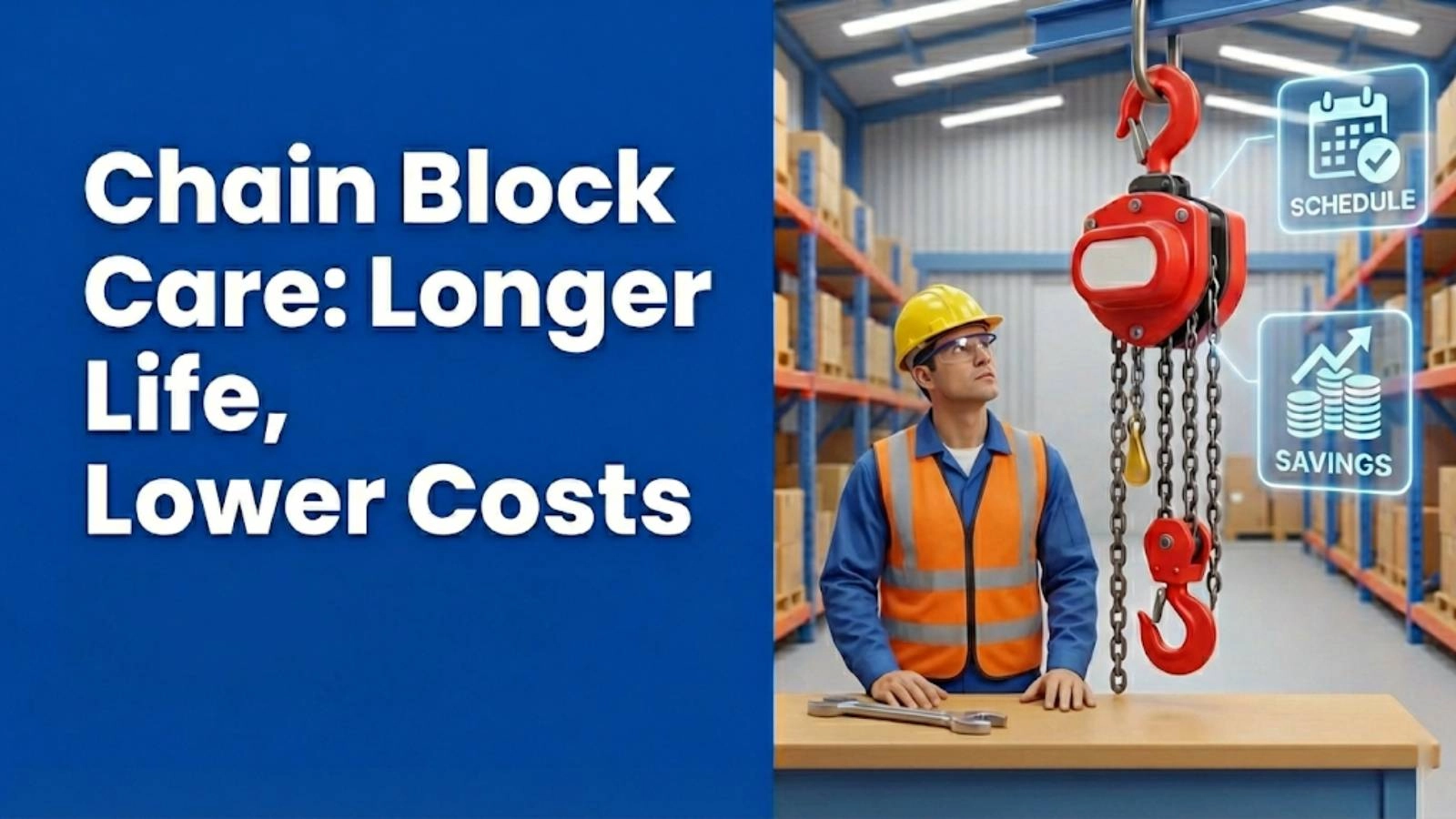
Chain Block Size: Get It Right
The selection of the correct chain block size is paramount for ensuring safety and efficiency in any lifting operation. Inaccurate selection can lead to equipment failure, workplace accidents, and costly project delays. At Safe and Secure Trading Company (SSTC), we understand the critical importance of choosing the right lifting equipment for the job. That’s why we’ve developed this comprehensive guide to help you navigate the complexities of chain block size selection.
Chain Block Size: Why It Matters Now More Than Ever
The landscape of industrial safety is constantly evolving. Staying ahead of the curve requires a deep understanding of current regulations, technological advancements, and best practices. Selecting the correct chain block size is a fundamental aspect of this, influencing not only operational efficiency but also the overall safety culture of your organization.
The Growing Emphasis on Workplace Safety
Recent years have seen a significant tightening of regulations concerning lifting operations. Regulatory bodies are increasingly stringent in their enforcement, demanding higher standards of safety and accountability. For instance, in the EU, the Machinery Directive 2006/42/EC sets out essential health and safety requirements for lifting machinery, including chain blocks. These regulations mandate that all lifting equipment must be thoroughly inspected and maintained, and that operators must be properly trained.
The consequences of non-compliance are severe. Companies face hefty fines, legal liabilities, and damage to their reputation. More importantly, workplace accidents resulting from inadequate or improperly used lifting equipment can lead to serious injuries or fatalities. According to the Bureau of Labor Statistics, lifting-related injuries account for a significant percentage of workplace incidents each year, highlighting the urgent need for improved safety practices. At SSTC, our team in Dubai has noted an increased demand for comprehensive training programs, reflecting a growing awareness of these risks.
Chain Block Innovations and New Materials
The field of chain block technology is continually advancing, with new materials and designs emerging to enhance performance, durability, and safety. Traditional manual chain block designs are being augmented with features such as overload protection, improved braking systems, and more ergonomic handles.
One notable trend is the increasing use of high-strength alloys in the construction of chain blocks. These materials offer superior resistance to wear, corrosion, and deformation, extending the lifespan of the equipment and reducing the risk of failure. For example, some manufacturers are now using quenched and tempered alloy steel for critical components, significantly increasing the chain hoist capacity and overall reliability. Additionally, advancements in chain technology have led to the development of higher-grade chains that can withstand greater loads and resist stretching. These innovations contribute to enhanced chain block safety and a reduced risk of accidents.
Understanding Chain Block Capacity: The Essentials
Grasping the core concepts of chain block capacity is the foundation for making informed decisions about lifting equipment. The safe working load (SWL) and working load limit (WLL) are critical parameters that must be clearly understood and strictly adhered to.
Defining Safe Working Load (SWL) and Working Load Limit (WLL)
The Safe Working Load (SWL) and Working Load Limit (WLL) are often used interchangeably, but it’s important to understand their subtle differences. WLL is the maximum load that a chain block is designed to lift safely, as specified by the manufacturer. SWL, on the other hand, is the maximum load that a piece of lifting equipment can safely lift in a specific application, taking into account factors such as the angle of the lift, the condition of the equipment, and the experience of the operator. In many modern contexts, WLL is the more commonly used term, representing the maximum load under ideal conditions.
Identifying these ratings on a chain block is crucial. The WLL is typically stamped directly onto the chain block housing, as well as on the accompanying documentation. This information must be clearly visible and legible. Some manufacturers also use color-coding or other visual cues to indicate the WLL. Always verify the WLL before each lift and ensure that it is not exceeded. Ignoring this critical step can lead to catastrophic failure and potential injury.
Calculating the Required Capacity for Your Load
Calculating the required chain block capacity involves accurately determining the weight of the load to be lifted and factoring in an appropriate safety margin. Start by obtaining a precise weight measurement of the load. This may involve using a calibrated weighing scale or consulting shipping documents.
Once you have the load weight, it’s crucial to incorporate a safety margin. A common practice is to add at least 20% to the load weight to account for unforeseen factors or dynamic loading. Dynamic loading occurs when the load is subjected to sudden movements or impacts, which can significantly increase the stress on the chain block. For example, if you are lifting a load that weighs 1000 kg, you should select a chain block with a WLL of at least 1200 kg. For critical lifts or situations where the load is particularly sensitive, a larger safety margin may be necessary. This proactive approach ensures that the chain block operates well within its limits, enhancing chain block safety and minimizing the risk of accidents.
Factors Influencing Chain Block Size Selection
Beyond the basic load weight, several other factors play a significant role in determining the appropriate chain block size. These include the lift height, environmental conditions, and the specific application requirements.
Load Weight: The Obvious Factor
Accurate weight assessment is the cornerstone of safe lifting operations. It’s imperative to avoid guesswork or estimations when determining the weight of the load. Always use reliable methods to obtain a precise measurement.
Underestimating the load weight can have catastrophic consequences. Overloading a chain block can lead to immediate failure, resulting in dropped loads, equipment damage, and potential injuries. Even if the chain block doesn’t fail immediately, overloading can weaken its components, reducing its lifespan and increasing the risk of future failure. One of our clients once attempted to lift a machine component using a chain block that was too small. The chain block failed, causing significant damage to the component and narrowly avoiding injury to the workers. This incident served as a stark reminder of the importance of accurate weight assessment and proper chain block selection.
Lift Height: Don’t Overlook This
The required lift height directly affects the necessary chain length. Ensure that the chain block you select has a chain long enough to accommodate the maximum lift height required for your application.
Using a chain that is too short can create hazardous situations. If the chain block is stretched beyond its designed limits, it can damage the internal mechanisms and compromise its structural integrity. Additionally, attempting to lift a load with an insufficient chain length can create awkward angles and instability, increasing the risk of accidents. When our team in Singapore is consulted on hoist selection, they always emphasize the importance of factoring in the lift height and selecting a chain block with an appropriate chain length.
Environmental Conditions: Corrosion and Temperature
Environmental factors such as humidity, temperature, and exposure to corrosive substances can significantly impact the performance and lifespan of a chain block. Selecting a chain block that is specifically designed to withstand these conditions is essential for ensuring long-term reliability and chain block safety.
In corrosive environments, such as marine environments or chemical plants, standard chain blocks can quickly corrode, weakening their components and increasing the risk of failure. In such cases, it is important to select chain blocks made from corrosion-resistant materials, such as stainless steel or galvanized steel. These materials offer superior protection against rust and corrosion, extending the lifespan of the chain block. Similarly, extreme temperatures can also affect the performance of chain blocks. High temperatures can reduce the strength of the chain and other components, while low temperatures can make the chain brittle and more susceptible to breakage. Choose lifting equipment specifically designed for use in extreme temperatures.
Chain Block Types and Their Ideal Applications
Different types of chain blocks are designed for specific applications and offer varying advantages in terms of portability, precision, and ease of use. Understanding these differences is crucial for selecting the most appropriate chain block for your needs.
Standard Chain Blocks: Versatile and Reliable
Standard chain blocks are the most common type of manual chain block, known for their versatility and reliability in a wide range of lifting applications. These chain blocks typically consist of a geared mechanism enclosed in a robust housing, with a load chain and a hand chain for operation.
Typical applications for standard chain blocks include construction sites, manufacturing plants, and maintenance workshops. They are often used for lifting heavy materials, positioning equipment, and performing general lifting tasks. Standard chain blocks are available in a wide range of chain hoist capacity, from small, portable units to larger, heavy-duty models. Their simplicity and ease of use make them a popular choice for many lifting applications.
Lever Blocks: For Tight Spaces and Horizontal Pulling
Lever blocks, also known as come-alongs, are designed for use in confined spaces and for horizontal pulling applications. Unlike standard chain blocks, which are operated by pulling a hand chain, lever blocks are operated by ratcheting a lever back and forth.
The compact design of lever blocks makes them ideal for use in tight spaces where a standard chain block would be difficult to maneuver. They are often used for rigging, positioning equipment, and pulling objects horizontally. Lever blocks are particularly useful in applications where precise control and incremental movement are required. Their ability to apply force in a controlled manner makes them a valuable tool for many industrial and construction tasks. We once assisted a client who needed to precisely align heavy pipes in a trench. A lever block was the perfect solution for this challenging task.
Geared Trolleys: Enhancing Mobility and Precision
Geared trolleys are used in conjunction with chain blocks to provide horizontal mobility and enhanced precision in lifting operations. These trolleys are designed to run along a beam or track, allowing the chain block and its load to be easily moved from one location to another.
The use of geared trolleys offers several benefits. They allow for precise positioning of the load, reducing the risk of accidents and damage. They also reduce the physical strain on the operator, making lifting operations safer and more efficient. Geared trolleys are particularly useful in applications where the load needs to be moved over a long distance or where precise positioning is critical.
The Importance of Chain Block Inspection and Maintenance
Regular inspection and maintenance are essential for ensuring the safe and reliable operation of chain blocks. A proactive approach to maintenance can prevent equipment failures, extend the lifespan of the chain block, and minimize the risk of accidents.
Regular Inspection Checklist: What to Look For
A comprehensive inspection checklist should be used to regularly assess the condition of chain blocks. This checklist should include the following items:
- Chain: Inspect the chain for signs of wear, stretching, corrosion, or damage. Look for bent, twisted, or cracked links.
- Hooks: Check the hooks for cracks, deformation, or wear. Ensure that the safety latches are functioning properly.
- Housing: Inspect the housing for cracks, dents, or other damage.
- Brake: Test the brake to ensure that it is functioning properly. The brake should hold the load securely without slipping.
- Markings: Verify that the WLL and other markings are legible and intact.
2026 data indicates that regular inspections can reduce lifting equipment failures by up to 60%. Neglecting these checks can lead to dangerous situations.
Lubrication and Cleaning: Extending Chain Block Life
Proper lubrication is essential for reducing friction and wear within the chain block. Use a high-quality lubricant specifically designed for lifting equipment. Apply the lubricant to all moving parts, including the chain, gears, and bearings.
Cleaning the chain block regularly is also important for preventing corrosion and removing dirt and debris. Use a mild detergent and water to clean the chain block, and then dry it thoroughly. Avoid using harsh chemicals or solvents, as these can damage the chain block. Regular lubrication and cleaning can significantly extend the lifespan of your chain block and ensure its continued safe operation.
Emerging Trends in Chain Block Technology
The field of chain block technology is constantly evolving, with new innovations emerging to enhance safety, efficiency, and ease of use. Two notable trends are the integration of smart technology and the development of ergonomic designs.
Smart Chain Blocks: Integration with IoT
Smart chain blocks are equipped with integrated sensors and communication technology, allowing for real-time monitoring of load weight, usage patterns, and equipment condition. This data can be transmitted wirelessly to a central monitoring system, providing valuable insights into lifting operations.
The benefits of smart chain blocks are numerous. They can help prevent overloading by providing real-time load weight information. They can also track usage patterns to identify potential maintenance needs. Additionally, they can provide alerts if the chain block is being used improperly or if there are any signs of equipment malfunction. The integration of IoT technology into chain blocks represents a significant step forward in improving chain block safety and efficiency.
Ergonomic Design: Reducing Operator Strain
Ergonomic design is increasingly important in chain block technology, with manufacturers focusing on developing chain blocks that are easier to use and that reduce operator strain. This includes features such as lightweight construction, comfortable handles, and smooth operating mechanisms.
Ergonomic chain blocks can help reduce operator fatigue, improve productivity, and minimize the risk of repetitive strain injuries. By designing chain blocks that are more comfortable and easier to use, manufacturers can contribute to a safer and more efficient work environment.
Case Studies: Real-World Examples of Chain Block Selection
To illustrate the importance of proper chain block size selection, let’s examine two real-world scenarios: a construction site lifting operation and a manufacturing plant maintenance task.
Scenario 1: Construction Site Lifting
On a construction site, workers need to lift heavy steel beams into place. The beams weigh approximately 1500 kg each, and the lift height is 10 meters. The environment is exposed to the elements, including rain and dust.
In this scenario, a standard chain block with a WLL of at least 2000 kg would be required to provide an adequate safety margin. The chain block should also be equipped with a chain length of at least 10 meters to accommodate the lift height. Given the exposed environment, a chain block made from corrosion-resistant materials, such as galvanized steel, would be recommended. Additionally, the chain block should be regularly inspected and maintained to ensure its continued safe operation.
Scenario 2: Manufacturing Plant Maintenance
In a manufacturing plant, maintenance workers need to replace a heavy motor in a confined space. The motor weighs approximately 500 kg, and the available headroom is limited.
In this scenario, a lever block would be an ideal choice due to its compact design and ability to operate in tight spaces. A lever block with a WLL of at least 600 kg would be required to provide an adequate safety margin. The lever block should also be equipped with a short chain length to minimize the amount of slack. Precise movements are crucial in this scenario, emphasizing the need for a lever block that offers fine control.
Expert Tips for Safe Chain Block Operation
Safe chain block operation is paramount for preventing accidents and ensuring the well-being of workers. Following proper lifting techniques and maintaining clear communication among team members are essential components of a safe lifting operation.
Proper Lifting Techniques: Minimizing Risks
- Plan the lift: Before beginning any lifting operation, carefully plan the lift. Identify potential hazards and develop a safe lifting plan.
- Use proper rigging: Use appropriate rigging equipment, such as slings and shackles, to connect the chain block to the load. Ensure that the rigging equipment is in good condition and has a WLL that is equal to or greater than the weight of the load.
- Lift smoothly: Lift the load smoothly and avoid sudden jerks or movements.
- Keep the load balanced: Ensure that the load is balanced and stable before lifting it.
- Never exceed the WLL: Never exceed the WLL of the chain block or any other lifting equipment.
> “Always double-check your load weight and lifting gear before starting any lift. A moment of preparation can prevent a lifetime of regret.” – John Smith, Lead Safety Inspector
Communication and Coordination: A Team Effort
Clear communication among team members is essential for coordinating lifting operations. Use hand signals or radio communication to communicate with the operator and other workers.
Before beginning the lift, ensure that all team members understand the lifting plan and their roles in the operation. Designate a spotter to monitor the lift and provide guidance to the operator. Regularly communicate the status of the lift to all team members. Proper communication and coordination can help prevent accidents and ensure a safe lifting operation.
Chain Block Size: A Checklist for Success
Selecting the correct chain block size involves careful consideration of several factors. This checklist provides a quick reference guide to help you make informed decisions and ensure safe and efficient lifting operations.
Key Considerations for Every Project
- Accurately determine the weight of the load.
- Factor in a safety margin of at least 20%.
- Consider the lift height and select a chain block with an appropriate chain length.
- Assess the environmental conditions and choose a chain block that is suitable for the environment.
- Select the appropriate type of chain block for the application.
- Regularly inspect and maintain the chain block to ensure its safe operation.
By following this checklist, you can ensure that you select the correct chain block size for your lifting needs and maintain a safe and efficient work environment.
Conclusion
You’ve now learned how to properly select a chain block size for your specific needs. You understand the importance of accurate load assessment, safety margins, and environmental considerations. We are confident that the knowledge you’ve gained from this guide will help you enhance safety and efficiency in your lifting operations. With our expertise, you are well-equipped to handle any lifting challenge.
FAQ Section
Q: What is the difference between SWL and WLL?
A: SWL (Safe Working Load) refers to the maximum load a piece of lifting equipment can safely lift in a specific application, considering factors like the angle of the lift and equipment condition. WLL (Working Load Limit) is the maximum load a chain block is designed to lift safely under ideal conditions, as specified by the manufacturer. In modern practice, WLL is more commonly used.
Q: How often should I inspect my chain block?
A: Chain blocks should be inspected before each use and regularly, at least every three months, by a qualified inspector. More frequent inspections may be necessary in harsh environments or with heavy usage.
Q: Can I use a chain block that has been modified?
A: No, chain blocks should never be modified. Modifications can compromise the structural integrity of the chain block and increase the risk of failure.
Q: What type of lubricant should I use on my chain block?
A: Use a high-quality lubricant specifically designed for lifting equipment. Avoid using general-purpose lubricants, as these may not provide adequate protection against wear and corrosion.
Q: What should I do if my chain block fails inspection?
A: If your chain block fails inspection, it should be immediately removed from service and repaired or replaced by a qualified technician. Never attempt to use a chain block that is known to be damaged or defective.
Q: Where can I find the WLL on my chain block?
A: The WLL is typically stamped directly onto the chain block housing, as well as on the accompanying documentation. Look for a clear and legible marking that indicates the maximum load capacity.