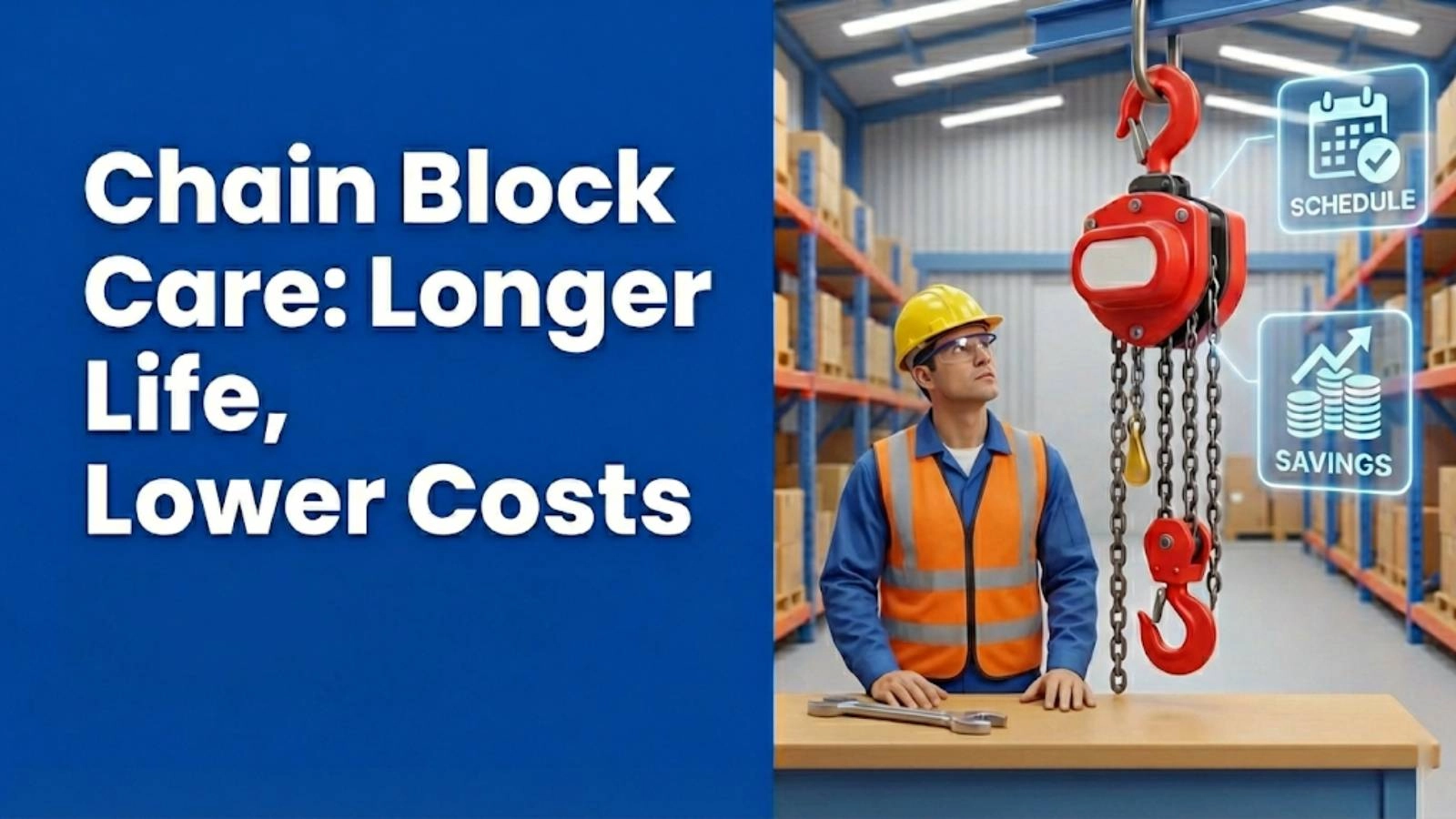
Safe and Secure Trading Company is dedicated to providing expert guidance on lifting technologies. In this electric hoist comparison, we will provide a detailed analysis of manual chain blocks versus electric hoists, two fundamental tools in material handling. Our goal is to equip engineers, safety managers, purchasing departments, and end-users with the knowledge necessary to make informed decisions about their lifting equipment needs. As an expert analysis from Safe and Secure Trading Company (SSTC), it’s important to understand the strengths and weaknesses of each.
Introduction: Understanding Lifting Technologies
Defining Manual Chain Blocks
Manual chain blocks are a time-tested lifting solution, relying on mechanical advantage and human power. These devices utilize a system of gears and pulleys to multiply the force applied by the operator, enabling them to lift heavy loads with relative ease. The principle of operation is simple but effective: pulling on the hand chain rotates a series of gears, which in turn raise or lower the load chain and attached load.
Manual chain blocks are frequently found in a variety of applications, particularly in light to medium-duty lifting scenarios. These environments often include construction sites, maintenance and repair shops, and small-scale manufacturing facilities. Their versatility makes them suitable for tasks ranging from engine repair to moving materials on a job site.
The advantages of manual chain blocks are numerous. Their portability, lower initial cost, and simple design make them an attractive option for many businesses. Unlike electric hoists, they don’t require a power source, making them reliable in remote locations or during power outages. Their simplicity also translates to easier maintenance and repair, reducing downtime and associated costs.
Defining Electric Hoists
Electric hoists, on the other hand, employ an electric motor to power the lifting mechanism. This allows for faster and more efficient lifting, especially when dealing with heavier loads or repetitive tasks. The motor drives a series of gears that raise or lower the load chain, providing smooth and controlled movement.
Electric hoists are commonly used in industrial settings where heavy-duty lifting is a regular occurrence. Examples include automotive assembly lines, heavy manufacturing plants, warehouses, distribution centers, shipyards, and ports. In these environments, the speed and efficiency of electric hoists are crucial for maintaining productivity.
The advantages of electric hoists include increased efficiency, reduced physical strain on operators, and higher lifting capacities. They can handle significantly heavier loads compared to manual chain blocks, making them suitable for demanding applications. The electric operation also minimizes operator fatigue, improving safety and productivity.
Scope of the Electric Hoist Comparison
This electric hoist comparison aims to provide a thorough and objective evaluation of manual chain blocks and electric hoists. Our objective is to empower you, the reader, to make well-informed decisions based on your specific needs and operational requirements. We will delve into the mechanical and electrical aspects of each type of hoist, examining their strengths, weaknesses, and suitability for various applications.
Our target audience includes engineers responsible for selecting and specifying lifting equipment, safety managers focused on ensuring workplace safety, purchasing departments tasked with cost-effective procurement, and end-users who operate and maintain these devices. By addressing the concerns and priorities of each group, we hope to provide a comprehensive guide that benefits everyone involved in the lifting process.
Here at Safe and Secure Trading Company, we’ve witnessed firsthand the impact of choosing the right equipment. For many of our clients here in Dammam, we’ve seen that selecting the right lifting technology significantly improves operational efficiency and safety. This electric hoist comparison is designed to assist you in making a similar informed decision.
Deep Dive: Manual Chain Blocks
Mechanical Design and Operation
Manual chain blocks operate on the principle of mechanical advantage, using a system of gears to reduce the amount of force required to lift a load. The operator pulls on the hand chain, which rotates a series of gears connected to the load chain. The gear ratios determine the mechanical advantage, with higher ratios requiring less force but more chain pulling to lift the load a given distance.
The load chain and hook mechanisms are critical components of a manual chain block. These parts are typically made of high-strength alloy steel to withstand the stresses of lifting heavy loads. Safety factors are incorporated into the design, ensuring that the chain and hooks can handle loads significantly greater than their rated capacity. Regular inspection of these components is essential to identify any signs of wear, damage, or deformation. As Safe and Secure Trading Company (SSTC), we emphasize the importance of following manufacturer’s guidelines for inspection and maintenance.
Braking systems are another vital safety feature of manual chain blocks. These mechanisms hold the load in place when the operator stops pulling the hand chain, preventing accidental lowering or dropping of the load. Common braking systems include friction brakes and Weston-style brakes, which use a ratchet and pawl mechanism to provide secure load holding. The braking system must be regularly inspected and maintained to ensure its proper function.
Advantages of Manual Chain Blocks
One of the key advantages of manual chain blocks is their portability and flexibility. These devices are relatively lightweight and compact, making them easy to transport and set up in various locations. They are particularly well-suited for remote or confined spaces where access is limited.
Cost-effectiveness is another significant benefit of manual chain blocks. Their lower purchase and maintenance costs make them an attractive option for businesses with budget constraints. The simple design also contributes to lower repair costs, as there are fewer components that can fail.
Simplicity is a hallmark of manual chain blocks. Their ease of use and maintenance require minimal training, reducing the learning curve for operators. The straightforward design also makes troubleshooting and repair relatively simple.
Independence from a power source is a crucial advantage in situations where electricity is unavailable or unreliable. Manual chain blocks can operate in power outage situations, ensuring continuity of operations. This reliability is particularly valuable in emergency situations or remote locations.
Limitations of Manual Chain Blocks
Physical exertion is a significant limitation of manual chain blocks. Operating these devices requires physical effort from the operator, which can lead to fatigue and potential injury, especially during prolonged use. This is a key consideration for high-throughput operations.
Lower lifting speeds are another drawback of manual chain blocks. The manual operation inherently limits the speed at which loads can be lifted, making them unsuitable for applications requiring high productivity.
Limited lifting capacity is also a factor to consider. Manual chain blocks are typically restricted to lighter loads compared to electric hoists. This limitation may make them unsuitable for heavy-duty lifting tasks.
Deep Dive: Electric Hoists
Electrical and Mechanical Design
Electric hoists utilize an electric motor to drive the lifting mechanism, providing increased efficiency and lifting capacity. The motor specifications, including horsepower, voltage, and duty cycle, are critical factors in determining the hoist’s performance and suitability for specific applications. Horsepower dictates the lifting power, voltage determines the electrical requirements, and duty cycle indicates how frequently the hoist can be operated without overheating.
Gearboxes and drive systems are essential for transmitting power from the motor to the load chain. These components must be durable and efficient to ensure reliable operation and minimize energy loss. Maintenance requirements for gearboxes include regular lubrication and inspection for wear or damage.
Control systems for electric hoists range from simple push-button pendants to sophisticated remote controls and programmable logic controllers (PLCs). Push-button pendants provide basic up/down control, while remote controls offer greater flexibility and operator safety. PLCs enable advanced features such as programmable lifting sequences, overload protection, and integration with other automation systems.
Advantages of Electric Hoists
Increased efficiency is a primary advantage of electric hoists. The motor-driven operation allows for faster lifting speeds and reduced cycle times, boosting productivity in high-demand environments.
Higher lifting capacity is another key benefit. Electric hoists can handle significantly heavier loads compared to manual chain blocks, making them suitable for heavy-duty lifting tasks.
Reduced physical strain on operators is a significant safety advantage. The electric operation minimizes operator fatigue and the risk of injury, improving workplace safety and reducing worker compensation claims.
Precision and control are enhanced with electric hoists. The motor-driven operation provides accurate and controlled positioning of loads, which is essential in applications requiring precise placement. We, at Safe and Secure Trading Company (SSTC), recommend considering electric hoists when precision is paramount.
Limitations of Electric Hoists
Higher initial cost is a significant barrier for some businesses. Electric hoists represent a greater investment compared to manual chain blocks.
Dependency on a power source can be a limitation in areas with unreliable electricity. Electric hoists are susceptible to power outages, which can disrupt operations.
Maintenance requirements are more complex for electric hoists. These devices require skilled technicians to perform maintenance procedures, increasing maintenance costs and downtime.
Key Features: A Detailed Side-by-Side Comparison
Lifting Capacity
Manual chain blocks typically offer lifting capacities ranging from 500 kg to 10 tons, depending on the model and design. This range makes them suitable for light to medium-duty lifting tasks in various industries.
Electric hoists, on the other hand, can handle significantly heavier loads, with lifting capacities ranging from 500 kg to 50 tons or more. This capability makes them ideal for heavy-duty lifting in manufacturing plants, warehouses, and construction sites.
The impact of lifting capacity on application suitability is significant. Choosing a hoist with adequate lifting capacity is crucial to ensure safe and efficient operation. Overloading a hoist can lead to equipment failure and serious accidents.
Lifting Speed
Factors affecting lifting speed include the gear ratio in manual chain blocks and the motor horsepower and gear ratio in electric hoists. Higher gear ratios in manual chain blocks result in slower lifting speeds, while more powerful motors and optimized gear ratios in electric hoists enable faster lifting.
Lifting speed is a critical factor for productivity. Faster lifting speeds reduce cycle times and increase throughput, improving overall efficiency. For repetitive lifting tasks, even small increases in lifting speed can have a significant impact on productivity.
Quantifiable differences in lifting speed between manual chain blocks and electric hoists can be substantial. Electric hoists can lift loads several times faster than manual chain blocks, making them a more efficient choice for high-demand applications.
Ergonomics and Safety
Manual chain blocks require physical exertion from the operator, which can lead to fatigue and potential injury. The repetitive motion of pulling the hand chain can strain muscles and joints, increasing the risk of musculoskeletal disorders.
Electric hoists minimize physical strain on operators, reducing the risk of fatigue and injury. The push-button or remote-control operation allows operators to control the hoist from a safe distance, further enhancing safety.
Safety features such as overload protection mechanisms, limit switches, emergency stop buttons, and safety latches on hooks are essential for both types of hoists. These features help mitigate risks and prevent accidents. Compliance with safety standards such as OSHA and ASME is also crucial for ensuring workplace safety.
Maintenance Requirements
Routine inspection and maintenance procedures are necessary for both manual chain blocks and electric hoists. Regular inspection of chains, hooks, brakes, and control systems is essential to identify any signs of wear, damage, or malfunction.
Component lifespan and replacement costs vary depending on the type of hoist and the frequency of use. Chains, hooks, and brakes are common wear items that may require periodic replacement. Electric hoists may also require motor maintenance or replacement.
Downtime considerations are important when planning maintenance activities. Scheduled maintenance can minimize unexpected breakdowns and extend the lifespan of the equipment. Proper maintenance also ensures safe and efficient operation.
| Feature |
Manual Chain Block |
Electric Hoist |
| Lifting Capacity |
500 kg – 10 tons |
500 kg – 50+ tons |
| Lifting Speed |
Slower, manual operation |
Faster, motor-driven |
| Ergonomics |
Requires physical exertion |
Minimizes physical strain |
| Safety |
Basic safety features |
Advanced safety features |
| Maintenance |
Simple, lower cost |
More complex, higher cost |
Cost Analysis: Initial Investment vs. Long-Term Expenses
Purchase Price
The purchase price of manual chain blocks is generally lower than that of electric hoists. A manual chain block with a 1-ton capacity may cost between $200 and $500, while an electric hoist with the same capacity could range from $1,000 to $3,000 or more.
Factors influencing pricing include the brand, features, and specifications of the hoist. Higher-quality brands with advanced features typically command a premium price.
Installation Costs
Installation requirements for manual chain blocks are relatively simple. They typically require only a suitable overhead support structure and rigging hardware. Installation costs are therefore minimal.
Electric hoists, on the other hand, may require more extensive installation, including electrical wiring and structural support. These requirements can add to the overall cost.
Electrical wiring costs can vary depending on the voltage and amperage requirements of the hoist. Structural support considerations may include reinforcing the existing overhead structure to handle the weight and dynamic loads of the hoist.
Operating Costs
Energy consumption is a significant operating cost for electric hoists. The energy consumption depends on the motor horsepower, duty cycle, and frequency of use.
Maintenance and repair costs can also contribute to the overall operating costs. Electric hoists typically require more frequent and complex maintenance compared to manual chain blocks.
Labor costs should also be considered. Manual chain blocks require more operator time and effort, while electric hoists can be operated more quickly and efficiently.
Total Cost of Ownership (TCO)
Calculating the total cost of ownership (TCO) involves considering all costs associated with the equipment over its lifespan, including purchase price, installation costs, operating costs, and maintenance costs.
Justifying the investment in electric hoists based on long-term savings is often possible. The increased efficiency and reduced labor costs of electric hoists can offset the higher initial investment over time. For many of our clients, we’ve shown them how TCO justifies the initial price premium.
Safety Considerations: A Critical Analysis
Risk Assessment
Identifying potential hazards associated with both types of hoists is crucial for ensuring workplace safety. Common hazards include overloading, dropping loads, entanglement, and electrical shock.
Developing risk mitigation strategies is essential for minimizing the likelihood of accidents. These strategies may include implementing safe operating procedures, providing adequate training, and using appropriate personal protective equipment (PPE).
Safe operating procedures should address issues such as load limits, proper rigging techniques, and emergency procedures. Training should cover the safe operation, inspection, and maintenance of the equipment. PPE may include hard hats, safety glasses, and gloves.
Safety Features
Overload protection mechanisms are designed to prevent the hoist from lifting loads beyond its rated capacity. These mechanisms may include load sensors that automatically stop the hoist when an overload is detected.
Limit switches prevent the hoist from traveling beyond its maximum or minimum limits. These switches can prevent damage to the equipment and prevent the load from colliding with other objects.
Emergency stop buttons provide a quick and easy way to stop the hoist in the event of an emergency. These buttons should be easily accessible to the operator.
Safety latches on hooks prevent the load from slipping off the hook. These latches should be inspected regularly to ensure they are functioning properly.
Training and Certification
Operator training is essential for ensuring the safe and efficient operation of hoists. Training should cover the proper use of the equipment, as well as the identification of potential hazards.
The importance of proper inspection and maintenance cannot be overstated. Regular inspection and maintenance can identify potential problems before they lead to accidents.
Compliance with safety regulations such as OSHA and ASME is mandatory for all workplaces. These regulations provide guidance on the safe operation, inspection, and maintenance of hoists.
Applications: Matching the Hoist to the Task
Manual Chain Block Applications
Construction sites often utilize manual chain blocks for lifting materials and equipment in areas where electricity is not readily available. Their portability and ease of use make them well-suited for this environment.
Maintenance and repair shops rely on manual chain blocks for lifting engines, transmissions, and other heavy components. The precision and control offered by manual chain blocks are valuable in these applications.
Small-scale manufacturing facilities may use manual chain blocks for lifting and positioning workpieces. The lower cost and simplicity of manual chain blocks make them an attractive option for smaller businesses.
Remote locations where electricity is unavailable benefit from the reliability of manual chain blocks. Their independence from a power source ensures continuity of operations in these environments.
Electric Hoist Applications
Automotive assembly lines use electric hoists for lifting and positioning car bodies, engines, and other heavy components. The speed and efficiency of electric hoists are essential for maintaining production rates in these environments.
Heavy manufacturing plants rely on electric hoists for lifting and moving raw materials, workpieces, and finished products. The high lifting capacity of electric hoists is crucial for handling heavy loads in these applications.
Warehouses and distribution centers use electric hoists for loading and unloading trucks, stacking pallets, and retrieving items from storage. The speed and efficiency of electric hoists improve throughput and reduce labor costs.
Shipyards and ports utilize electric hoists for lifting containers, cargo, and equipment. The high lifting capacity and durability of electric hoists are essential for handling heavy loads in these demanding environments.
Case Studies: Real-World Examples
In the automotive industry, a major manufacturer replaced manual chain blocks with electric hoists on its assembly line. This change resulted in a 20% increase in production efficiency and a significant reduction in operator fatigue.
In a steel fabrication plant, the implementation of electric hoists reduced the time required to move heavy steel plates by 30%. This improvement increased throughput and reduced labor costs.
At a construction site, the use of electric hoists for lifting concrete beams reduced the risk of accidents and improved the overall safety of the job site. The precise control and smooth operation of electric hoists minimized the potential for dropped loads.
Expert Insights and Recommendations
“While manual chain blocks offer simplicity and portability, electric hoists significantly boost productivity and reduce operator strain, especially in high-demand environments.” – Dr. Emily Carter, Certified Safety Engineer
Best Practices for Hoist Selection
Evaluating application requirements is the first step in selecting the right hoist. Consider the load capacity, lifting speed, duty cycle, and environmental conditions.
Considering load capacity, lifting speed, and duty cycle is crucial for ensuring that the hoist is capable of handling the intended tasks. The load capacity should be sufficient to lift the heaviest loads encountered, the lifting speed should be adequate to meet production requirements, and the duty cycle should be appropriate for the frequency of use.
Prioritizing safety features and ergonomics is essential for protecting workers and preventing accidents. Choose hoists with overload protection, limit switches, emergency stop buttons, and ergonomic controls.
Future Trends in Hoisting Technology
Advancements in electric hoist technology are continuously improving performance, safety, and efficiency. New features such as variable frequency drives (VFDs), wireless controls, and advanced diagnostics are enhancing the capabilities of electric hoists.
Integration with automation systems is becoming increasingly common. Electric hoists can be integrated with PLCs, robots, and other automation equipment to create more efficient and automated material handling systems.
Increased focus on energy efficiency and sustainability is driving the development of more energy-efficient hoists. New technologies such as regenerative braking and LED lighting are reducing energy consumption and minimizing the environmental impact of hoisting operations.
Conclusion: The Final Verdict
Summarizing the Key Differences
Manual chain blocks offer portability, lower initial cost, and simplicity, making them suitable for light to medium-duty lifting in varied environments where a power source may not be readily available. However, they require physical exertion, have lower lifting speeds, and are limited in lifting capacity.
Electric hoists provide increased efficiency, higher lifting capacity, and reduced physical strain, making them ideal for repetitive, heavy-duty lifting in industrial settings. However, they have a higher initial cost, are dependent on a power source, and require more complex maintenance.
Recommendations Based on Specific Needs
When to choose a manual chain block: Opt for a manual chain block when portability, cost-effectiveness, and independence from a power source are paramount. These are well-suited for infrequent use and maintenance tasks in remote locations.
When to choose an electric hoist: Select an electric hoist when efficiency, lifting capacity, and reduced physical strain are critical. These are ideal for high-volume production environments where heavy loads are frequently lifted.
The choice depends on a cost-benefit analysis of your specific needs. In some instances, a manual chain block will be the more appropriate and safer choice.
Final Thoughts and Call to Action
Making informed decisions about lifting equipment is crucial for ensuring workplace safety, improving productivity, and controlling costs. Understanding the strengths and limitations of each type of hoist is essential for selecting the right tool for the job. We, at Safe and Secure Trading Company, have decades of experience in providing comprehensive lifting solutions to our clients.
FAQ Section
Q: What is the main difference between a manual chain block and an electric hoist?
A: The main difference lies in the power source and operation. A manual chain block relies on manual effort to lift loads, while an electric hoist uses an electric motor for lifting.
Q: Which type of hoist is better for heavy-duty lifting?
A: Electric hoists are generally better for heavy-duty lifting due to their higher lifting capacity and motor-driven operation.
Q: Are manual chain blocks safer than electric hoists?
A: Both types of hoists can be safe when used properly. Electric hoists often have more advanced safety features, but manual chain blocks can be safer in situations where precise control and slow lifting speeds are required.
Q: What are the maintenance requirements for manual chain blocks?
A: Maintenance for manual chain blocks typically involves regular inspection of the chain, hooks, and braking system. Lubrication may also be required.
Q: What are the maintenance requirements for electric hoists?
A: Electric hoists require more complex maintenance, including inspection of the motor, gearbox, control system, and electrical components. Regular lubrication and replacement of worn parts are also necessary.
Q: Can I use a manual chain block in a remote location without electricity?
A: Yes, manual chain blocks do not require a power source and can be used in remote locations or during power outages.
Q: What safety features should I look for in an electric hoist?
A: Look for safety features such as overload protection, limit switches, emergency stop buttons, and safety latches on hooks.
Q: How do I choose the right lifting capacity for my hoist?
A: Choose a hoist with a lifting capacity that exceeds the weight of the heaviest load you will be lifting. It is also important to consider the duty cycle and frequency of use.
Q: Are electric hoists more expensive to operate than manual chain blocks?
A: Electric hoists typically have higher operating costs due to energy consumption and maintenance requirements. However, the increased efficiency and reduced labor costs may offset the higher operating costs in some applications.
Q: Where can I find reliable lifting equipment and expert advice?
A: Safe and Secure Trading Company offers a wide range of lifting equipment and expert advice to help you choose the right hoist for your specific needs. Contact us today to learn more.