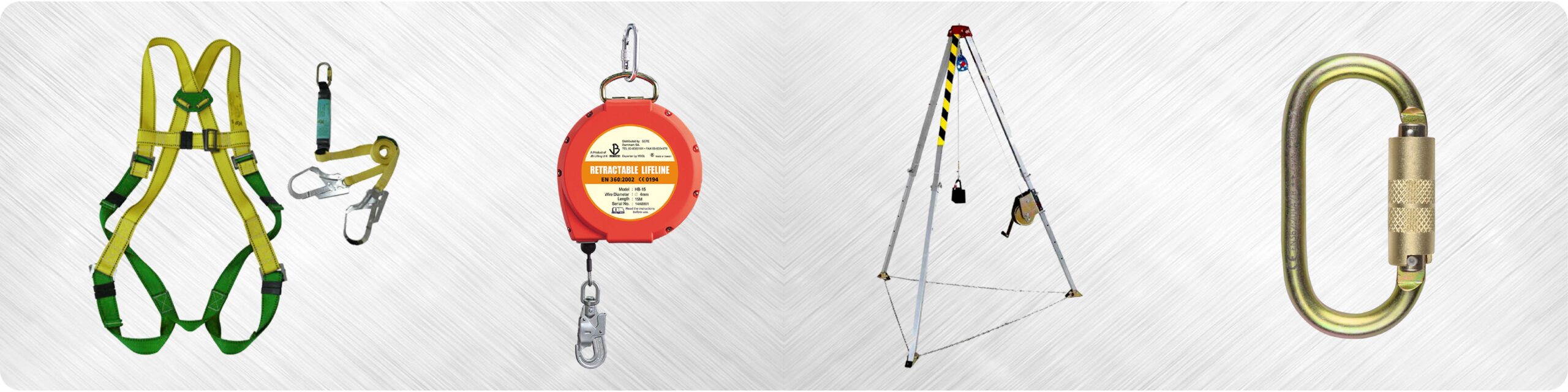
The importance of fall protection in hazardous environments cannot be overstated. Falls are a leading cause of workplace injuries and fatalities, impacting both employee well-being and a company’s bottom line. A comprehensive approach, encompassing not only equipment but also training and procedures, is crucial for creating a safe and productive work environment.
Understanding the fall protection ROI is essential for making informed decisions about safety investments. ROI, or return on investment, provides a quantifiable measure of the benefits gained from an investment compared to its cost. It helps businesses determine whether a particular safety measure is worth the investment. We at Safe and Secure Trading Company (SSTC) believe that a strong safety program is an investment, not an expense.
Defining Fall Protection: Beyond the Basics
Defining fall protection goes beyond simply providing harnesses and lifelines. It encompasses a holistic strategy designed to prevent falls from occurring in the first place, and to mitigate the consequences if a fall does happen. At SSTC, we emphasize the need for a multi-faceted approach to workplace safety.
What constitutes a “comprehensive” fall protection system? It includes several key components:
- Personal fall arrest systems (PFAS): These systems, including harnesses, lanyards, and anchor points, are designed to stop a fall in progress and minimize the impact on the worker.
- Guardrails and safety nets: These provide a physical barrier to prevent workers from falling from elevated surfaces.
- Warning line systems: Used primarily in roofing, these systems alert workers to the proximity of a fall hazard.
- Controlled access zones: Designate areas where fall hazards exist and restrict access to authorized personnel only.
The role of training and education is also paramount. Workers must be properly trained on how to use fall protection equipment, identify hazards, and follow safe work procedures. At SSTC, we’ve seen firsthand how proper training significantly reduces accidents and improves employee morale.
Regular inspection and maintenance protocols are equally important. Equipment should be inspected regularly for wear and tear, and any damaged or defective items should be immediately replaced. Proper maintenance ensures that fall protection systems are always in optimal working condition. Our team in Dubai often finds that regular inspections prevent costly repairs down the line.
Customizing systems to specific work environments is crucial. A construction site will require different fall protection measures than a roofing project or an industrial plant. Each environment presents unique hazards and requires tailored solutions. This also ensures that OSHA compliance is followed.
Direct Costs of Falls: Quantifying the Impact
Understanding the direct costs of falls is crucial for accurately calculating the fall protection ROI. These costs are often the most visible and easily quantifiable financial burdens resulting from fall-related incidents. Ignoring these costs results in an incomplete understanding of the overall financial impact.
Medical expenses are a significant direct cost. These include immediate costs such as ambulance services, emergency room treatment, and surgery. Long-term medical expenses can also accrue, including rehabilitation, physical therapy, and ongoing care for chronic injuries.
Workers’ compensation claims and liability costs are another major expense. Workers’ compensation covers medical expenses and lost wages for employees injured on the job. Liability costs can arise from lawsuits filed by injured workers or their families. The cost-benefit analysis needs to include these potential liabilities.
OSHA fines and penalties for non-compliance can be substantial. OSHA (Occupational Safety and Health Administration) imposes fines on companies that violate safety regulations. These fines can range from thousands to hundreds of thousands of dollars, depending on the severity of the violation and the company’s history of safety violations. Proper risk management is essential to avoid these fines.
Lost productivity due to injuries and investigations also contributes to direct costs. When a worker is injured, they are unable to work, which reduces productivity. Investigations into the incident also take time and resources away from normal operations. This negatively impacts the productivity improvement of the company.
Legal fees and potential settlements can add to the financial burden. In some cases, injured workers may file lawsuits against their employers or other parties. Legal fees and settlements can be significant, especially in cases involving serious injuries or fatalities.
Equipment damage and repair costs are often overlooked. Falls can damage equipment and structures, requiring repair or replacement. These costs can be substantial, especially if specialized equipment is involved. The fall protection investment should be viewed as a measure to protect equipment.
Indirect Costs: The Hidden Financial Burden
While direct costs provide a clear picture of the immediate financial impact of falls, the indirect costs often represent a more significant, yet less visible, financial burden. Understanding and quantifying these indirect costs is crucial for a comprehensive assessment of the fall protection ROI.
Impact on employee morale and retention is a key consideration. Falls can create a climate of fear and anxiety among workers, leading to decreased morale and increased turnover. Replacing employees is costly, involving recruitment, hiring, and training expenses.
Project delays and scheduling disruptions can significantly impact productivity. When a fall occurs, work often comes to a standstill while investigations are conducted and safety measures are reviewed. These delays can disrupt project schedules and lead to financial losses.
Damage to company reputation and brand image is a serious concern. A fall-related incident can damage a company’s reputation, especially if it results in serious injuries or fatalities. This can lead to lost business and difficulty attracting new customers.
Increased insurance premiums are a direct consequence of falls. Insurance companies assess risk based on a company’s safety record. A history of falls will result in higher insurance premiums, increasing operating costs.
Administrative costs associated with incident reporting and investigation can be substantial. Investigating falls requires time and resources from safety personnel, supervisors, and management. The administrative costs associated with these activities can add up quickly.
Training replacement workers also contributes to indirect costs. When an employee is injured in a fall, they often require time off work to recover. During this time, a replacement worker must be trained to fill their role. This training incurs additional costs.
Quantifiable Benefits: Calculating the ROI
Quantifiable benefits are the positive financial outcomes that result from implementing a comprehensive fall protection system. These benefits can be measured and translated into concrete financial savings, allowing for a clear calculation of the fall protection ROI. Accurately assessing these benefits is essential for demonstrating the value of safety investments.
Reduced injury rates and associated costs are a primary benefit. By preventing falls, companies can significantly reduce the number of injuries and the associated medical expenses, workers’ compensation claims, and legal fees. This directly translates into cost savings.
Decreased workers’ compensation claims result in significant financial savings. Workers’ compensation premiums are based on a company’s claims history. By reducing the number of claims, companies can lower their premiums and save money. Workplace safety improvements lead to lower premiums.
Avoidance of OSHA fines and penalties is a major financial benefit. By complying with OSHA regulations and implementing effective fall protection measures, companies can avoid costly fines and penalties. Compliance with OSHA safety standards will help save money.
Improved productivity and efficiency are significant benefits. When workers feel safe, they are more likely to be productive and efficient. A safe work environment reduces distractions and allows workers to focus on their tasks.
Lower insurance premiums due to a safer work environment provide ongoing cost savings. Insurance companies reward companies with good safety records by offering lower premiums. This provides a continuous financial benefit for companies that invest in fall protection.
Cost savings from preventing equipment damage should not be ignored. Fall protection systems can prevent equipment from being damaged in falls, saving companies the cost of repairs or replacements. These savings contribute to the overall ROI.
Intangible Benefits: The Value Beyond Numbers
Intangible benefits are the positive outcomes that result from implementing a comprehensive fall protection system but are difficult to quantify in monetary terms. While not directly measurable, these benefits are nonetheless valuable and contribute to a positive work environment and overall business success. A focus on accident reduction is invaluable.
Enhanced employee morale and job satisfaction are crucial. When workers feel safe and protected, their morale improves, leading to increased job satisfaction. Happy employees are more productive, engaged, and loyal.
Improved company reputation and positive public image are important for business success. A company known for its commitment to safety is more likely to attract customers, investors, and top talent. This positive image enhances the company’s brand value.
Attracting and retaining top talent is easier when a company prioritizes safety. Skilled workers are more likely to seek employment with companies that demonstrate a strong commitment to safety. This reduces turnover and lowers recruitment costs.
Increased trust and confidence among stakeholders is important for building strong relationships. When stakeholders, including employees, customers, and investors, trust that a company is committed to safety, they are more likely to support the company’s goals.
Reduced stress and anxiety for workers and management is a significant benefit. A safe work environment reduces the stress and anxiety associated with the risk of falls, allowing workers and management to focus on their tasks and responsibilities.
> “Investing in fall protection isn’t just about compliance; it’s about creating a culture of safety that benefits everyone.” – John Smith, Lead Safety Inspector
Calculating Your Fall Protection ROI: A Step-by-Step Guide
Calculating the fall protection ROI requires a systematic approach to identify and quantify both the costs and benefits associated with implementing a fall protection system. This step-by-step guide provides a framework for conducting an accurate ROI analysis.
Identifying all relevant costs (direct and indirect) associated with falls is the first step. This includes medical expenses, workers’ compensation claims, OSHA fines, lost productivity, equipment damage, increased insurance premiums, and administrative costs. Collect as much data as possible to ensure accuracy.
Estimating the potential savings from implementing a comprehensive fall protection system is the next step. This involves projecting the reduction in injury rates, workers’ compensation claims, OSHA fines, and other costs that will result from the system. Use historical data and industry benchmarks to make realistic estimates.
Determining the initial investment cost of the system is essential. This includes the cost of equipment, installation, training, and ongoing maintenance. Obtain accurate quotes from vendors and contractors to ensure that the investment cost is realistic.
Calculating the ROI using the formula: ((Savings – Investment) / Investment) x 100 provides a clear measure of the return on investment. This formula calculates the percentage return on the investment in the fall protection system. A higher ROI indicates a more profitable investment.
Using a real-world example to illustrate the calculation process helps to clarify the concept. For example, if a company invests $50,000 in a fall protection system and saves $75,000 in reduced costs, the ROI would be ((75,000 – 50,000) / 50,000) x 100 = 50%.
Considering the time value of money and long-term benefits is essential for a complete analysis. The time value of money recognizes that money received today is worth more than money received in the future. Discounting future savings to their present value provides a more accurate ROI calculation.
| Category |
Cost/Saving |
Amount ($) |
| Initial Investment (Equipment & Installation) |
Cost |
-50,000 |
| Reduced Medical Expenses |
Saving |
20,000 |
| Decreased Workers’ Compensation Claims |
Saving |
30,000 |
| Avoided OSHA Fines |
Saving |
10,000 |
| Improved Productivity |
Saving |
15,000 |
| Total Savings |
|
75,000 |
| Net Return (Savings – Investment) |
|
25,000 |
| ROI (%) |
|
50% |
Common Misconceptions About Fall Protection Costs
There are several common misconceptions surrounding the costs of fall protection. These misconceptions often lead companies to underestimate the true value of investing in comprehensive safety measures. At SSTC, we address these misconceptions regularly with our clients.
Myth: Fall protection is too expensive.
Reality: The cost of falls far outweighs the investment in prevention. The direct and indirect costs associated with falls, including medical expenses, workers’ compensation claims, OSHA fines, and lost productivity, can be substantial. Investing in fall protection can prevent these costs and provide a significant return on investment.
Myth: We’ve never had a fall, so we don’t need it.
Reality: Proactive measures are always more cost-effective than reactive ones. Waiting for a fall to occur before implementing fall protection measures is a risky and costly approach. Proactive measures can prevent falls from happening in the first place and protect workers from injury. Risk management always involves proactive measures.
Myth: A basic system is good enough.
Reality: Comprehensive systems provide the best protection and ROI. A basic fall protection system may not adequately address all of the potential fall hazards in a workplace. A comprehensive system, including a variety of fall protection measures, provides the best protection and reduces the risk of falls.
Myth: Training is a one-time event.
Reality: Ongoing training is essential to maintain safety and compliance. Fall protection training should be provided to all workers who are exposed to fall hazards. Ongoing training is necessary to reinforce safe work practices, update workers on new regulations, and address any changes in the work environment.
Case Studies: Real-World Examples of Fall Protection ROI
Case studies provide real-world examples of how companies have successfully implemented fall protection systems and achieved significant ROI. These examples highlight the specific strategies used and the results achieved, providing valuable lessons learned and best practices.
Showcasing companies that have successfully implemented fall protection systems and achieved significant ROI demonstrates the tangible benefits of investing in safety. These case studies provide evidence that fall protection is not just a cost, but an investment that can generate significant financial returns.
Analyzing the specific strategies they used and the results they achieved provides valuable insights into best practices. By examining the specific measures that these companies implemented, other organizations can learn how to improve their own fall protection programs.
Highlighting the lessons learned and best practices from these case studies provides practical guidance for implementing effective fall protection systems. These lessons learned can help organizations avoid common pitfalls and maximize the ROI of their safety investments.
Diverse examples across different industries and company sizes illustrate the applicability of fall protection principles in a variety of settings. These examples demonstrate that fall protection is not just for large construction companies, but for any organization that exposes workers to fall hazards. We at SSTC have seen success in multiple industries.
For example, a roofing company invested $20,000 in a comprehensive fall protection system and reduced its workers’ compensation claims by 50% in the first year. This resulted in a savings of $40,000, providing an ROI of 100%. This example demonstrates the significant financial benefits that can be achieved through a proactive approach to fall protection.
Choosing the Right Fall Protection System for Your Needs
Choosing the right fall protection system for your specific needs is critical for ensuring worker safety and maximizing the fall protection ROI. A one-size-fits-all approach is not effective, as different work environments and tasks present unique fall hazards. SSTC can provide your company with specific tailored recommendations.
Conducting a thorough risk assessment of your workplace is the first step. This involves identifying all potential fall hazards, evaluating the likelihood and severity of falls, and determining the appropriate fall protection measures. A comprehensive risk assessment provides the foundation for developing an effective fall protection plan.
Identifying the specific hazards and potential fall risks in your workplace is essential. This includes identifying elevated surfaces, unprotected edges, holes, and other potential fall hazards. Documenting these hazards provides a clear understanding of the risks that need to be addressed.
Selecting the appropriate equipment and systems based on your needs is crucial. This includes choosing the right types of harnesses, lanyards, anchor points, guardrails, safety nets, and other fall protection equipment. Select equipment that is appropriate for the specific hazards and tasks in your workplace.
Working with a qualified fall protection specialist or consultant can provide valuable expertise. A specialist can help you conduct a thorough risk assessment, select the appropriate equipment, and develop a comprehensive fall protection plan. SSTC consultants are available to provide guidance.
Ensuring proper installation, training, and maintenance is essential for the effectiveness of any fall protection system. Equipment must be installed correctly, workers must be properly trained on how to use it, and the system must be regularly inspected and maintained to ensure that it is in optimal working condition.
Conclusion: Making the Smart Investment
Investing in a comprehensive fall protection system is not just a matter of compliance; it is a smart investment that can provide significant financial returns and improve overall business performance. The key benefits include reduced injury rates, decreased workers’ compensation claims, avoidance of OSHA fines, improved productivity, lower insurance premiums, and enhanced employee morale.
By understanding the fall protection ROI and taking a proactive approach to safety, companies can create a safer, more productive, and more profitable work environment. The long-term value of a strong safety culture far outweighs the initial investment in fall protection measures. We believe a safe workplace is a successful workplace.
We are confident that implementing a comprehensive fall protection program is one of the best investments you can make in your company’s future. Don’t wait for an accident to happen before taking action.
FAQ Section
Q: What is fall protection ROI?
A: Fall protection ROI, or return on investment, is a measure of the financial benefits gained from investing in a comprehensive fall protection system compared to its cost. It helps businesses determine whether a particular safety measure is worth the investment.
Q: Why is fall protection important?
A: Fall protection is crucial because falls are a leading cause of workplace injuries and fatalities. Implementing effective fall protection measures can prevent these incidents, protect workers, and reduce associated costs.
Q: What are the direct costs of falls?
A: The direct costs of falls include medical expenses, workers’ compensation claims, OSHA fines and penalties, lost productivity due to injuries and investigations, legal fees and potential settlements, and equipment damage and repair costs.
Q: What are the indirect costs of falls?
A: The indirect costs of falls include the impact on employee morale and retention, project delays and scheduling disruptions, damage to company reputation and brand image, increased insurance premiums, administrative costs associated with incident reporting and investigation, and training replacement workers.
Q: How is fall protection ROI calculated?
A: Fall protection ROI is calculated using the formula: ((Savings – Investment) / Investment) x 100. This formula calculates the percentage return on the investment in the fall protection system.
Q: What are some common misconceptions about fall protection costs?
A: Some common misconceptions about fall protection costs include the beliefs that fall protection is too expensive, that it’s not needed if a company has never had a fall, that a basic system is good enough, and that training is a one-time event.
Q: How can I choose the right fall protection system for my needs?
A: To choose the right fall protection system, you should conduct a thorough risk assessment of your workplace, identify the specific hazards and potential fall risks, select the appropriate equipment and systems based on your needs, work with a qualified fall protection specialist or consultant, and ensure proper installation, training, and maintenance.
Q: What is the role of training in fall protection?
A: Training is essential in fall protection because it ensures that workers know how to use fall protection equipment correctly, identify hazards, and follow safe work procedures. Ongoing training is necessary to reinforce safe work practices and update workers on new regulations.
Q: How can a fall protection system improve employee morale?
A: A fall protection system can improve employee morale by creating a safer and more secure work environment. When workers feel safe and protected, they are more likely to be productive, engaged, and loyal.
Q: What are the benefits of a safer workplace beyond financial savings?
A: Beyond financial savings, a safer workplace can improve company reputation, attract and retain top talent, increase trust and confidence among stakeholders, and reduce stress and anxiety for workers and management. The focus on fall prevention is invaluable.