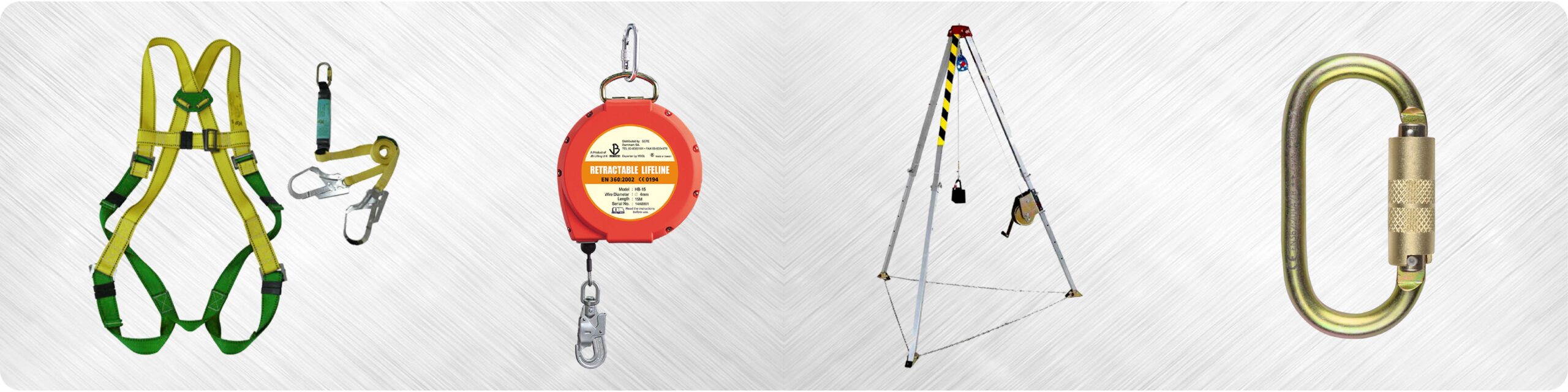
Fall protection is not just a set of regulations; it’s a commitment to the well-being of every worker. Construction sites are inherently dangerous, and falls are one of the leading causes of serious injuries and fatalities. By implementing robust fall protection measures, we can significantly reduce the risk of these incidents and create a safer working environment for everyone.
1. Introduction to Fall Protection Measures
1.1 The Critical Importance of Fall Protection
Fall protection is paramount in the construction industry because falls are a leading cause of fatalities and serious injuries. According to the Bureau of Labor Statistics, falls from heights account for a significant percentage of construction-related deaths each year. Investing in comprehensive fall protection measures not only saves lives but also reduces worker’s compensation costs and improves overall productivity. We at Safe and Secure Trading Company (SSTC) firmly believe that a safe workplace is a productive workplace.
1.2 Regulatory Framework: OSHA and ANSI Standards
OSHA (Occupational Safety and Health Administration) regulations, specifically 29 CFR 1926 Subpart M, provide the framework for fall protection requirements on construction sites. These regulations outline the specific measures employers must take to protect workers from fall hazards. ANSI (American National Standards Institute) standards provide additional guidance on the design, testing, and use of fall protection equipment. Compliance with both OSHA and ANSI standards is essential for ensuring a safe and compliant work environment. For many of our clients here in Dammam, we’ve seen that understanding these regulations leads to safer work environments.
1.3 Defining Fall Hazards: Identifying Risks on Construction Sites
Identifying fall hazards is the first step in implementing effective fall protection measures. Common fall hazards on construction sites include unprotected edges, floor and roof openings, hoist areas, and leading edges. Unprotected edges are areas where a worker could fall to a lower level without any guardrails or other fall protection. Openings in floors and roofs pose a significant trip and fall hazard. Hoist areas, where materials are lifted and lowered, can also present fall risks if not properly secured. Leading edges, which are the edges of floors or roofs that are under construction, require specific fall protection measures to prevent falls.
2. Personal Fall Arrest Systems (PFAS)
✅ A Personal Fall Arrest System (PFAS) is a critical component of many fall protection plans.
2.1 Components of a PFAS: Harness, Lanyard, and Anchorage
A PFAS consists of three essential components: a full-body safety harness, a lanyard, and an anchorage connector. The safety harness distributes fall arrest forces across the worker’s body, minimizing the risk of injury. The lanyard connects the harness to the anchorage point and may include a shock-absorbing component to reduce the impact force during a fall. The anchorage point must be capable of supporting at least 5,000 pounds per worker attached. Understanding the specifications of each component is vital.
2.2 Proper Harness Fitting and Adjustment
Proper safety harness fitting is crucial for ensuring its effectiveness during a fall. The harness should be snug but not too tight, allowing for freedom of movement while providing adequate support. Adjust the leg straps, shoulder straps, and chest strap to achieve a secure fit. Ensure that the D-ring on the back of the harness is positioned between the shoulder blades. A properly fitted harness will distribute the forces evenly across the body, reducing the risk of injury.
2.3 Anchorage Point Selection and Requirements
Selecting an appropriate anchorage point is critical for the effectiveness of a PFAS. The anchorage point must be capable of supporting at least 5,000 pounds per worker attached, or be designed by a qualified person as part of a complete PFAS. Acceptable anchorage points may include structural steel members, concrete columns, or engineered anchorage connectors. Always inspect the anchorage point before use to ensure it is in good condition and capable of supporting the required load. We often advise our clients that a professional inspection is the best way to ensure safety.
2.4 Lanyard Types and Usage: Shock-Absorbing vs. Non-Shock-Absorbing
Lanyards are available in various types, including shock-absorbing and non-shock-absorbing options. Shock-absorbing lanyards are designed to reduce the impact force on the worker’s body during a fall by gradually deploying a tear-away pack. Non-shock-absorbing lanyards are typically used in situations where the fall distance is minimal, or where a shock-absorbing lanyard would not provide adequate clearance. Always use a shock-absorbing lanyard when there is a risk of a significant fall distance.
2.5 Calculating Fall Distance and Clearance
Calculating the total fall distance is essential to ensure adequate clearance from lower levels. The total fall distance includes the lanyard length, the deceleration distance (the distance the shock-absorbing lanyard extends during a fall), and a safety factor. Ensure that there is sufficient clearance below the worker to prevent them from striking the ground or other objects during a fall. We at SSTC provide comprehensive training on calculating fall distance to ensure our clients’ workers are safe.
3. Guardrail Systems
➡️ Guardrail systems are a proactive measure that can significantly reduce fall risk.
3.1 Guardrail Height and Strength Requirements
OSHA requires that guardrail systems have a top rail height of 42 inches (+/- 3 inches) above the walking/working surface. The top rail must be capable of withstanding a force of at least 200 pounds applied in any direction. These requirements are designed to prevent workers from accidentally falling over the guardrail. Compliance with these specifications is crucial for ensuring the effectiveness of guardrail systems.
3.2 Mid-Rail and Toeboard Specifications
In addition to the top rail, guardrail systems must also have a mid-rail positioned approximately 21 inches above the walking/working surface. The mid-rail prevents workers from slipping under the top rail. Toeboards, which are at least 3.5 inches in height, are required to prevent tools, equipment, and other objects from falling to lower levels. Both mid-rails and toeboards are essential components of a complete guardrail system.
3.3 Types of Guardrail Systems: Fixed, Portable, and Cable
Guardrail systems are available in various types, including fixed, portable, and cable guardrails. Fixed guardrails are permanently installed and are typically used in areas where fall protection is continuously required. Portable guardrails are designed to be easily moved and reconfigured, making them ideal for temporary fall protection needs. Cable guardrails use tensioned cables instead of rigid rails and are often used in situations where flexibility is required. Each type of guardrail system has its own advantages and disadvantages.
3.4 Proper Installation and Inspection Procedures
Proper installation is essential for ensuring the effectiveness of guardrail systems. Follow the manufacturer’s instructions for installation and ensure that all connections are secure. Regularly inspect guardrail systems for damage, loose connections, and other defects. Replace or repair any damaged components immediately. Regular inspections and maintenance are critical for maintaining the integrity of guardrail systems.
4. Safety Net Systems
✨ Safety Nets are an excellent fall protection option, especially in scenarios where other systems might not be feasible.
4.1 When to Use Safety Nets: Applications and Benefits
Safety nets are typically used in situations where other fall protection methods, such as guardrails or PFAS, are not feasible or practical. Common applications for safety nets include bridge construction, demolition work, and steel erection. Safety nets provide a passive fall protection system, meaning they do not require any action from the worker to be effective. They can also protect workers from falling objects.
4.2 Net Design and Mesh Size Requirements
Safety nets must be designed and installed to meet specific requirements. The maximum mesh size for safety nets is 6 inches to prevent workers from falling through the net. The net must be strong enough to withstand the impact of a falling worker and must be positioned close enough to the working surface to minimize the fall distance. Proper net design is crucial for ensuring its effectiveness.
4.3 Proper Installation and Rigging Techniques
Installing safety nets requires specialized knowledge and expertise. The nets must be properly rigged and tensioned to ensure they can effectively arrest a fall. Outrigger frames and support cables are often used to provide additional support and stability. Follow the manufacturer’s instructions for installation and rigging, and ensure that all connections are secure. We at SSTC offer expert installation services to ensure the safety nets are correctly installed.
4.4 Clearance Requirements Below Safety Nets
Adequate clearance is required below safety nets to prevent workers from striking lower levels during a fall. The required clearance distance depends on the size and design of the net, as well as the potential fall distance. Consult with a qualified engineer or safety professional to determine the appropriate clearance requirements for your specific application. Ensuring adequate clearance is critical for preventing serious injuries.
4.5 Regular Inspection and Maintenance of Safety Nets
Regular inspection and maintenance are essential for maintaining the integrity of safety nets. Inspect the nets for damage, wear, and proper tension. Repair or replace any damaged sections immediately. Remove any debris or foreign objects from the net to prevent them from becoming a hazard. Proper maintenance will extend the lifespan of the safety net and ensure its continued effectiveness.
5. Controlled Access Zones (CAZ)
💡 Controlled Access Zones (CAZs) are excellent for areas where fall hazards can’t be immediately eliminated.
5.1 Establishing and Maintaining a CAZ
A Controlled Access Zone (CAZ) is a designated area where access is restricted to authorized personnel only. CAZs are typically used in areas where fall hazards exist, such as near unprotected edges or openings. To establish a CAZ, clearly mark the boundaries with warning lines, ropes, or other barriers. Restrict access to the CAZ to workers who are trained and authorized to work in that area. Maintaining a CAZ requires ongoing monitoring and enforcement.
5.2 Permissible Work Within a CAZ
Certain types of work may be permitted within a CAZ, such as overhand bricklaying or roofing. However, workers within the CAZ must be protected by other fall protection measures, such as safety harnesses and lanyards. Ensure that all workers within the CAZ are properly trained and equipped to work safely in that environment. We always recommend additional safety precautions when working in CAZs.
5.3 Warning Line Systems: Requirements and Placement
Warning line systems are often used to delineate the boundaries of a CAZ. Warning lines must be erected at least 6 feet from the unprotected edge and must be flagged or marked every 6 feet. The warning line must be between 34 and 39 inches high. The warning line serves as a visual reminder to workers that they are approaching a fall hazard. Regular inspections of warning lines are important.
5.4 Monitoring Systems and Designated Personnel
Monitoring systems and designated personnel play a crucial role in maintaining the integrity of a CAZ. A designated monitor is responsible for ensuring that workers within the CAZ are following safety procedures and that the boundaries of the CAZ are maintained. The monitor must be trained and competent in fall protection procedures. Effective monitoring is essential for preventing accidents within the CAZ.
6. Ladder Safety
6.1 Ladder Selection: Type and Load Capacity
Selecting the right ladder for the job is crucial for preventing falls. Ladders are classified by type (e.g., Type IA, Type I, Type II, Type III) based on their load capacity and intended use. Type IA ladders are designed for heavy-duty industrial use and can support up to 300 pounds. Type I ladders are designed for heavy-duty commercial use and can support up to 250 pounds. Choose a ladder that is appropriate for the weight of the worker and the materials they will be carrying.
6.2 Proper Ladder Placement and Angle
Proper ladder placement is essential for stability and safety. The base of the ladder should be placed one foot away from the wall for every four feet of height (the 4:1 rule). Ensure that the ladder is placed on a stable and level surface. Secure the top and bottom of the ladder to prevent it from slipping. Following these guidelines will help prevent ladder-related falls.
6.3 Three Points of Contact: Maintaining Stability
Maintaining three points of contact (two hands and one foot, or two feet and one hand) while climbing or working on a ladder is crucial for stability. This technique helps to keep the worker balanced and prevents them from falling if one point of contact slips. Avoid carrying heavy objects while climbing a ladder, as this can compromise your stability.
6.4 Ladder Inspection and Maintenance
Regular ladder inspection and maintenance are essential for identifying and addressing potential hazards. Inspect the ladder for damaged rungs, loose connections, and other defects. Remove any damaged ladders from service immediately and repair or replace them. Keep ladders clean and free of grease and oil to prevent slips. Proper maintenance will extend the life of the ladder and ensure its safety.
7. Scaffold Safety
✅ Scaffolds are a common site on construction projects, but they can present risks if not managed correctly.
7.1 Scaffold Types: Supported vs. Suspended
Scaffolds are temporary elevated platforms used to support workers and materials during construction, maintenance, or repair work. There are two main types of scaffolds: supported and suspended. Supported scaffolds are platforms supported by rigid supports, such as poles, frames, or posts. Suspended scaffolds are platforms suspended by ropes or cables from an overhead structure. Each type of scaffold has its own advantages and disadvantages.
7.2 Scaffold Erection and Dismantling Procedures
Scaffold erection and dismantling must be performed by trained and competent personnel. Follow the manufacturer’s instructions and OSHA regulations when erecting or dismantling a scaffold. Ensure that the scaffold is properly braced and leveled before use. Use fall protection equipment, such as safety harnesses and lanyards, during scaffold erection and dismantling. Proper procedures are essential.
7.3 Load Capacity and Stability Requirements
Scaffolds must be capable of supporting the intended load, including the weight of workers, materials, and equipment. Do not exceed the maximum load capacity of the scaffold. Ensure that the scaffold is stable and properly braced to prevent it from tipping or collapsing. Distribute the load evenly across the platform to avoid overloading any one area.
7.4 Guardrail and Toeboard Requirements on Scaffolds
Scaffolds must be equipped with guardrail systems to protect workers from falls. The guardrail system should include a top rail, mid-rail, and toeboard. The top rail should be between 38 and 45 inches high, and the mid-rail should be approximately halfway between the top rail and the platform. Toeboards are required to prevent tools, equipment, and other objects from falling to lower levels.
7.5 Scaffold Inspection and Tagging Systems
Scaffolds should be inspected by a competent person before each shift and after any event that could affect its structural integrity. A tagging system should be used to indicate the safety status of the scaffold. A green tag indicates that the scaffold is safe for use, while a red tag indicates that the scaffold is unsafe and should not be used until repairs are made. Regular inspections and tagging are essential for ensuring scaffold safety.
8. Hole Covers
💡 Hole covers are a simple but effective way to prevent falls on a construction site.
8.1 Identifying and Covering Floor and Roof Openings
Identifying and covering floor and roof openings is crucial for preventing accidental falls. Promptly cover any holes or openings with covers that are strong enough to support the intended load. Clearly mark the covers to indicate their presence and purpose. Regular inspections should be conducted to ensure all holes are covered.
8.2 Cover Strength and Marking Requirements
Covers for floor and roof openings must be capable of supporting at least twice the weight of workers, equipment, and materials that may be placed on them. The covers must be clearly marked with the word “HOLE” or “COVER” to warn workers of the hazard. The marking should be visible and legible. Strength and marking are critical for safety.
8.3 Securing Covers to Prevent Displacement
Covers for floor and roof openings must be secured to prevent them from being accidentally moved or displaced. Use nails, screws, or other fasteners to secure the covers to the surrounding structure. Regularly inspect the covers to ensure they are securely fastened. Prevention of displacement is key.
9. Fall Protection Training
9.1 Importance of Comprehensive Fall Protection Training
Comprehensive fall protection training is essential for preventing falls and ensuring that workers understand and follow safety procedures. Training should cover hazard recognition, equipment use, and emergency procedures. Workers who are properly trained are more likely to recognize fall hazards and take appropriate precautions. We at SSTC offer comprehensive fall protection training programs.
9.2 Training Content: Hazard Recognition, Equipment Use, and Procedures
Fall protection training should include instruction on hazard recognition, proper use of fall protection equipment, and emergency procedures. Workers should be trained to identify common fall hazards, such as unprotected edges, openings, and slippery surfaces. They should also be trained on how to properly inspect, use, and maintain fall protection equipment, such as safety harnesses, lanyards, and guardrails. Finally, workers should be trained on emergency procedures, such as how to respond to a fall and how to provide first aid.
9.3 Documentation and Recordkeeping
Documentation and recordkeeping are essential for verifying that workers have received fall protection training and are competent in fall protection procedures. Maintain records of training dates, attendees, and training content. Keep records of equipment inspections and maintenance. Proper documentation can help demonstrate compliance with OSHA regulations and can be used to track the effectiveness of your fall protection program.
10. Rescue Procedures
10.1 Developing a Fall Rescue Plan
Developing a fall rescue plan is essential for ensuring a prompt and effective response in the event of a fall. The rescue plan should outline the steps to be taken to rescue a fallen worker, including who is responsible for each task, what equipment is needed, and how to communicate with emergency services. The rescue plan should be reviewed and practiced regularly.
10.2 Self-Rescue vs. Assisted Rescue Techniques
There are two main types of rescue techniques: self-rescue and assisted rescue. Self-rescue techniques involve the fallen worker rescuing themselves, typically by using a descent device or other specialized equipment. Assisted rescue techniques involve other workers rescuing the fallen worker, typically by using a rescue pole or aerial lift. The appropriate rescue technique will depend on the specific circumstances of the fall.
10.3 Medical Considerations After a Fall
Medical considerations are crucial after a fall, as the fallen worker may have sustained serious injuries. Suspension trauma, a condition that can occur when a worker is suspended in a harness for an extended period, is a particular concern. Provide immediate medical attention to the fallen worker and monitor them for signs of suspension trauma or other medical complications.
11. Emergency Procedures and First Aid
11.1 First Aid Training and Equipment
Ensuring workers are trained in basic first aid is crucial for providing immediate assistance in case of injuries. First aid training should cover essential skills such as CPR, wound care, and recognizing signs of shock. Having readily available first aid equipment on site, including a well-stocked first aid kit, ensures that workers can respond effectively to minor injuries and stabilize more serious conditions until professional medical help arrives.
11.2 Emergency Contact Information and Protocols
Establishing clear emergency contact information and communication protocols is essential for reporting incidents and summoning help quickly. Emergency contact information should include phone numbers for local emergency services, supervisors, and designated safety personnel. Communication protocols should outline the steps for reporting an incident, including providing details about the location, nature of the incident, and any injuries sustained.
12. Conclusion: Creating a Culture of Safety
12.1 Reinforcing the Importance of Fall Protection
Fall protection measures are not merely a set of rules to follow; they are a critical component of a comprehensive safety program designed to protect workers from serious injury or death. The importance of fall protection cannot be overstated, as falls continue to be a leading cause of workplace fatalities in the construction industry. By implementing and consistently enforcing robust fall protection measures, employers can significantly reduce the risk of falls and create a safer working environment.
12.2 Promoting a Proactive Safety Culture
Creating a proactive safety culture is essential for fostering a workplace where safety is valued and prioritized by all employees. A proactive safety culture encourages workers to report hazards, participate in safety initiatives, and take personal responsibility for their own safety and the safety of others. Management plays a critical role in promoting a proactive safety culture by providing resources, training, and support for safety initiatives. When safety is a shared value, everyone benefits. At SSTC, we believe that a culture of safety is the foundation for a successful and sustainable business. We are committed to helping our clients create safer workplaces by providing expert advice, high-quality equipment, and comprehensive training programs.
We’re dedicated to securing your safety.
FAQ Section
Q: What is a Personal Fall Arrest System (PFAS)?
A: A Personal Fall Arrest System (PFAS) is a system used to protect workers from falls from heights. It typically includes a full-body harness, a lanyard, and an anchorage connector.
Q: How often should fall protection equipment be inspected?
A: Fall protection equipment should be inspected before each use to ensure it is in good working condition.
Q: What are the requirements for guardrail height?
A: OSHA requires that guardrail systems have a top rail height of 42 inches (+/- 3 inches) above the walking/working surface.
Q: What is a Controlled Access Zone (CAZ)?
A: A Controlled Access Zone (CAZ) is a designated area where access is restricted to authorized personnel only, typically used in areas where fall hazards exist.
Q: Why is fall protection training important?
A: Fall protection training is essential for preventing falls and ensuring that workers understand and follow safety procedures. It helps workers recognize hazards and use equipment correctly.
Q: What should be included in a fall rescue plan?
A: A fall rescue plan should outline the steps to be taken to rescue a fallen worker, including who is responsible for each task, what equipment is needed, and how to communicate with emergency services.
Q: What are the different types of lanyards?
A: There are shock-absorbing lanyards and non-shock-absorbing lanyards. Shock-absorbing lanyards reduce the impact force during a fall.
Q: What is the 4:1 rule for ladder placement?
A: The base of the ladder should be placed one foot away from the wall for every four feet of height.
Q: How should hole covers be marked?
A: Hole covers should be clearly marked with the word “HOLE” or “COVER” to warn workers of the hazard.
Q: What is suspension trauma?
A: Suspension trauma is a condition that can occur when a worker is suspended in a harness for an extended period after a fall.