The efficiency and safety of material handling operations heavily rely on understanding and respecting the limits of your equipment. A critical component in many lifting systems is the geared trolley. When it comes to geared trolley weight, are you overloading? Understanding the factors that influence a geared trolley’s capacity, recognizing potential hazards, and implementing proactive safety measures are crucial for preventing accidents and ensuring a productive work environment.
The Silent Danger: Understanding Geared Trolley Weight
The Case of the Misjudged Motor: A Real-World Lesson
We’ve seen firsthand how easily mistakes can happen. A manufacturing plant was tasked with moving a large electric motor across their workshop floor. The motor was clearly heavy, but the team estimated its weight and selected what they thought was an appropriate geared trolley. As they began lifting the motor, the trolley groaned under the strain, and the I-beam visibly flexed. Fortunately, they stopped the lift immediately. Upon closer inspection, the motor far exceeded the trolley weight limit. They narrowly avoided a catastrophic failure that could have resulted in serious injury and significant equipment damage. This serves as a stark reminder that underestimating weight or exceeding capacity can have severe consequences. We, at Safe and Secure Trading Company (SSTC), always advise double-checking the specifications.
What is a Geared Trolley and Why Does Weight Matter?
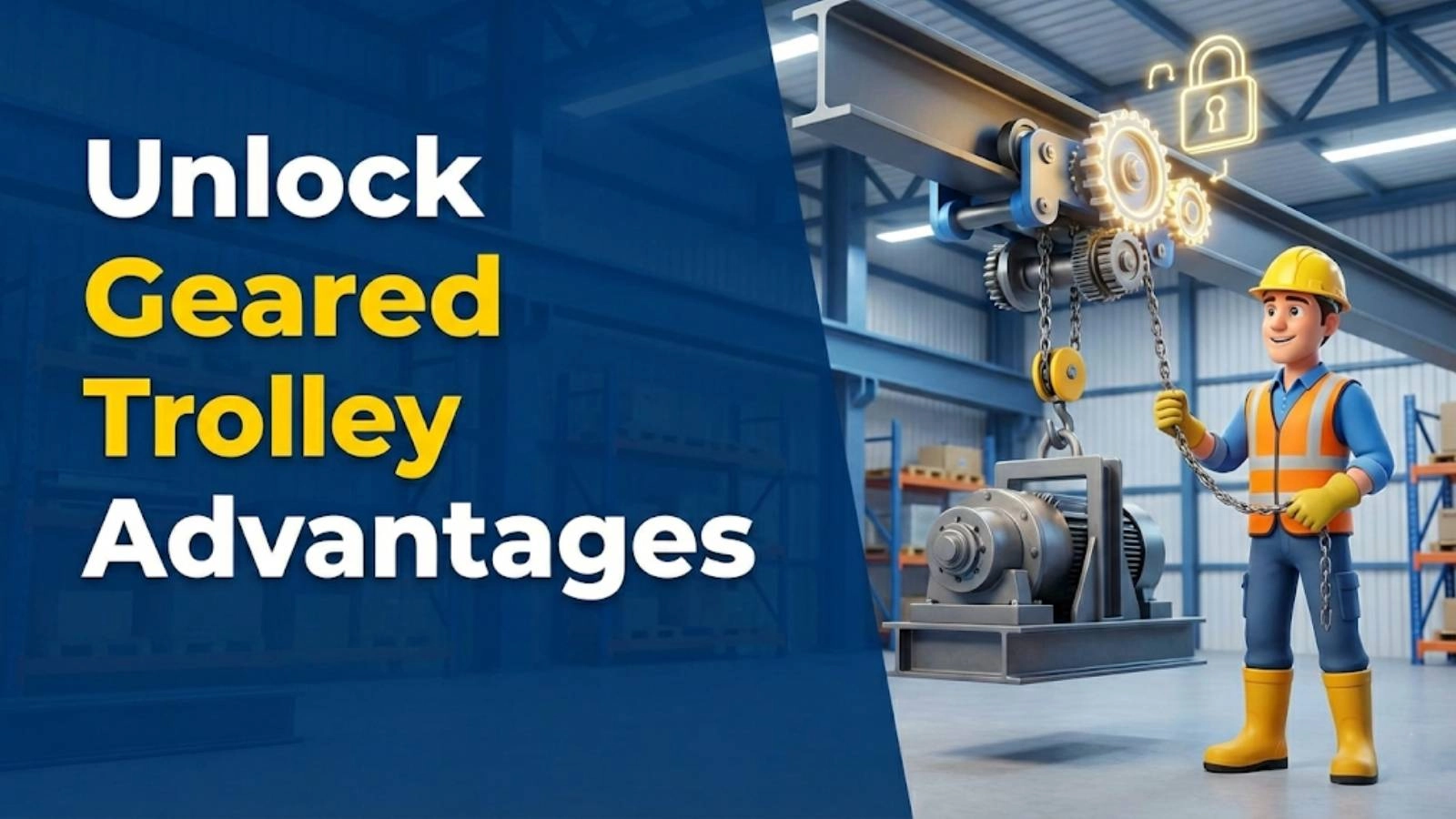
A geared trolley is a mechanical device designed to move heavy loads horizontally along an I-beam or similar track. It typically consists of wheels that roll along the beam, a frame to support the load, and gears that allow for controlled movement. These trolleys are commonly used in conjunction with hoists, cranes, and other lifting equipment to facilitate material handling in various industrial settings. They offer a versatile and efficient solution for moving materials within a defined area. The weight of the load being lifted or moved matters because exceeding the geared trolley weight limit can lead to several dangerous outcomes, including trolley failure, dropped loads, equipment damage, and potential injuries to personnel. Adhering to weight limits ensures safety, prolongs equipment life, and maintains operational efficiency.
Decoding the Numbers: Key Factors Affecting Geared Trolley Weight Capacity
Safe Working Load (SWL): The Golden Rule
The Safe Working Load (SWL) is the maximum weight that a geared trolley is designed to safely lift and support. It’s typically marked on the trolley itself and in the manufacturer’s specifications. It is sometimes referred to as the crane trolley weight capacity or the hoist trolley weight rating. This is the golden rule that should never be exceeded. Exceeding the SWL can lead to catastrophic failure of the trolley and the load dropping. The SWL is determined by the manufacturer based on various factors, including the trolley’s material composition, design, and intended use. Manufacturers conduct rigorous testing to ensure that their trolleys can safely handle the specified load. Always consult the manufacturer’s documentation to determine the SWL of your specific geared trolley model. Understanding the safe working load is paramount, and our team in Dubai constantly emphasizes this during training sessions.
Material Matters: Steel vs. Aluminum
The material composition of a geared trolley significantly impacts its weight capacity and overall performance. Steel and aluminum are the most common materials used in trolley construction. Steel trolleys generally offer higher strength and durability compared to aluminum trolleys, allowing them to handle heavier loads. Steel is also more resistant to wear and tear, making it suitable for demanding industrial applications. However, steel is heavier than aluminum, which can make steel trolleys more difficult to install and maneuver. Aluminum trolleys, on the other hand, are lighter and easier to handle. This makes them a good choice for applications where portability and ease of installation are important. Aluminum is also corrosion-resistant, making it suitable for use in outdoor or humid environments. However, aluminum trolleys typically have a lower safe working load (SWL) compared to steel trolleys, and they may be more susceptible to damage from impact or abrasion.
| Material |
Pros |
Cons |
Typical Applications |
| Steel |
High strength, high durability, high SWL, wear-resistant |
Heavier, more difficult to maneuver, susceptible to corrosion |
Heavy-duty industrial applications, construction sites, manufacturing plants |
| Aluminum |
Lighter, easier to handle, corrosion-resistant |
Lower SWL, less durable, more susceptible to damage |
Light-duty applications, portable lifting systems, environments with corrosion concerns |
I-Beam Specifications: Matching the Trolley to the Beam
The I-beam plays a critical role in supporting the geared trolley and the load it carries. The I-beam’s size, material, and structural integrity directly affect the trolley’s load-bearing capabilities. The I-beam must be strong enough to support the combined weight of the trolley, the hoist (if applicable), and the maximum load being lifted. The I-beam’s flange width must also be compatible with the trolley’s wheel spacing to ensure proper fit and smooth movement. Using an undersized or incompatible I-beam can compromise the entire lifting system and create a serious safety hazard. The beam’s load capacity should always be clearly marked and never exceeded.
We once had a client using an I-beam they thought was sufficient. They were wrong and risked collapse. The trick is to always consult with a structural engineer to determine the appropriate I-beam size and material for your specific lifting application. Compatibility between the trolley and the I-beam is paramount for safe and efficient operation.
Hoist Compatibility: The Unsung Hero
The hoist is the lifting mechanism that works in conjunction with the geared trolley to raise and lower loads. Matching the hoist’s capacity to the trolley’s capacity is essential for ensuring the safety and efficiency of the lifting system. If the hoist has a higher capacity than the trolley, the trolley may be overloaded, leading to failure. Conversely, if the hoist has a lower capacity than the trolley, the system will be limited by the hoist’s capacity. The hoist trolley weight capacity should always be equal to or less than the geared trolley capacity.
Using an incompatible hoist can compromise the entire system and create a dangerous situation. Always verify that the hoist’s capacity is compatible with the trolley’s SWL before commencing any lifting operations. Also, factor in the hoist’s own weight as part of the overall load on the I-beam. Ensuring compatibility can greatly improve your material handling safety.
Beyond the Numbers: Hidden Influences on Trolley Weight Capacity
The Angle of Attack: How Inclines Affect Load
While most geared trolley applications involve lifting loads vertically, situations may arise where loads need to be lifted or moved on an incline. Lifting loads on an incline can significantly increase the stress on the trolley and the I-beam, effectively reducing the system’s overall weight capacity. When a load is lifted vertically, the entire weight is supported by the trolley and the I-beam. However, when a load is lifted on an incline, a portion of the weight is transferred horizontally, creating additional stress on the trolley’s wheels and the I-beam’s flanges. The steeper the incline, the greater the horizontal force and the higher the stress on the system.
To compensate for the increased stress, it is necessary to reduce the maximum allowable load when working on inclines. Consult with a qualified engineer or refer to the manufacturer’s guidelines to determine the appropriate weight limit for your specific application and incline angle. As a general rule, reduce the SWL by a percentage that corresponds to the sine of the incline angle. Understanding the “angle of attack” can save you from future incidents.
Environmental Factors: Temperature and Corrosion
Extreme temperatures and corrosive environments can significantly weaken a trolley’s components, reducing its weight capacity and increasing the risk of failure. High temperatures can cause the trolley’s steel components to lose strength and become more susceptible to deformation. Low temperatures can make the steel more brittle and prone to cracking. Corrosive environments, such as those found in coastal areas or industrial plants, can cause rust and corrosion to form on the trolley’s metal parts, weakening them over time. Regular inspections are especially critical in harsh environments to detect any signs of damage or degradation. Protective coatings, such as paint or galvanizing, can help to mitigate the effects of corrosion. Lubricating moving parts helps prevent wear and tear, extending the life of the trolley. In some cases, using trolleys made from corrosion-resistant materials, such as stainless steel or aluminum, may be necessary.
Dynamic Loading: The Invisible Threat
Dynamic loading refers to sudden impacts, jerks, or vibrations that can significantly increase the stress on a geared trolley, even if the static load is within the SWL. Dynamic loads can occur when a load is suddenly dropped, when a hoist is started or stopped abruptly, or when the trolley encounters an obstruction on the I-beam. These sudden forces can create stress spikes that far exceed the trolley’s rated capacity, leading to premature wear, deformation, or even catastrophic failure. To minimize dynamic loading, it is essential to operate lifting equipment smoothly and avoid sudden movements. Use soft starts and stops when operating hoists, and ensure that the load is properly secured to prevent it from swinging or shifting during movement. Inspect the I-beam for any obstructions or irregularities that could cause the trolley to jolt.
“Dynamic loading is often overlooked, but it’s a major contributor to trolley failures. Always prioritize smooth, controlled movements.” – John Smith, Lead Safety Inspector
Practical Steps: Ensuring Safe Geared Trolley Operation
Pre-Lift Checklist: Your First Line of Defense
A comprehensive pre-lift checklist is your first line of defense against accidents and equipment damage. Before each lifting operation, take the time to inspect the trolley, the hoist, the I-beam, and the load to ensure that everything is in good working order and that the weight limits are not exceeded. Here’s what your pre-lift inspection checklist should include:
- Weight Verification: Verify the weight of the load to be lifted and ensure that it is within the trolley’s SWL.
- Equipment Inspection: Inspect the trolley for any signs of damage, wear, or corrosion. Check the wheels for smooth movement and ensure that the brakes are functioning properly. Inspect the hoist for any frayed cables, damaged hooks, or malfunctioning controls.
- I-Beam Assessment: Examine the I-beam for any signs of bending, cracks, or corrosion. Ensure that the trolley is properly aligned with the I-beam and that there are no obstructions in its path.
- Environmental Assessment: Assess the environmental conditions and take any necessary precautions to protect the equipment from extreme temperatures, corrosion, or other hazards.
- Load Security: Ensure that the load is properly secured to the hoist and that the lifting slings or chains are in good condition.
- Clearance Check: Verify that there is adequate clearance for the load to be lifted and moved without striking any obstacles.
[HTML Table: Downloadable Checklist Template]
| Item |
Description |
Check |
| Weight Verification |
Verify load weight against trolley SWL |
|
| Trolley Inspection |
Check for damage, wear, corrosion |
|
| Hoist Inspection |
Inspect cables, hooks, controls |
|
| I-Beam Assessment |
Check for bending, cracks, corrosion |
|
| Environmental Assessment |
Assess temperature, corrosion risks |
|
| Load Security |
Ensure proper load attachment |
|
| Clearance Check |
Verify clear path for lifting |
|
Load Distribution: The Art of Balance
Proper load distribution is crucial for ensuring the stability and safety of the lifting operation. An unevenly distributed load can create excessive stress on one side of the trolley, potentially leading to tipping, instability, or even failure. The goal is to center the load directly beneath the trolley’s suspension point, ensuring that the weight is evenly distributed across all of the trolley’s wheels.
[IMAGE: Visual example of proper load distribution – load centered beneath the trolley.]
[IMAGE: Visual example of improper load distribution – load offset to one side, causing tilting.]
Use multiple lifting slings or chains to distribute the load evenly. Adjust the sling lengths to ensure that the load is level and balanced. Avoid lifting loads with sharp edges or protrusions that could concentrate stress on a single point. When lifting long or flexible loads, use a spreader bar to distribute the weight evenly along the length of the load. Always double-check the load distribution before lifting to ensure that the trolley is stable and that the load is properly balanced.
Regular Inspections: Catching Problems Early
Regular inspections by qualified personnel are essential for identifying potential problems before they lead to accidents or equipment damage. Inspections should be conducted at regular intervals, depending on the frequency of use and the severity of the operating environment. A formal trolley inspection checklist should be used. Here are the key components to inspect during each inspection:
- Wheels: Check the wheels for wear, cracks, or damage. Ensure that the wheels are properly lubricated and that they rotate smoothly.
- Frame: Inspect the frame for any signs of bending, cracks, or corrosion.
- Suspension Point: Examine the suspension point for any signs of wear or deformation.
- Brakes: Test the brakes to ensure that they are functioning properly.
- I-Beam Interface: Check the interface between the trolley and the I-beam for any signs of wear or damage.
- Fasteners: Inspect all bolts, nuts, and screws to ensure that they are properly tightened.
Any defects or damage discovered during the inspection should be promptly repaired or replaced. Keep a record of all inspections and repairs. Material handling safety is a continuous improvement process.
Troubleshooting: What To Do When Things Go Wrong
Overload Indicators: Recognizing the Warning Signs
Recognizing the warning signs of an overloaded trolley can prevent a potentially dangerous situation from escalating. An overloaded trolley may exhibit several telltale signs, including:
- Creaking or Groaning Sounds: Unusual noises coming from the trolley or the I-beam can indicate that the system is under excessive stress.
- Bending or Deformation: Visible bending or deformation of the trolley’s frame or the I-beam is a clear sign of overload.
- Difficulty Moving: If the trolley becomes difficult to move along the I-beam, it may be a sign that the load is too heavy.
- Excessive Vibration: Excessive vibration during lifting or movement can indicate that the trolley is overloaded or that there is an imbalance in the load.
If you suspect that a trolley is overloaded, stop the lifting operation immediately and take the following actions:
- Lower the Load: Carefully lower the load to the ground.
- Verify the Weight: Double-check the weight of the load to ensure that it does not exceed the trolley’s SWL.
- Inspect the Equipment: Thoroughly inspect the trolley, the hoist, and the I-beam for any signs of damage.
- Correct the Problem: If the load is too heavy, use a trolley with a higher SWL or reduce the weight of the load. If there is damage to the equipment, repair or replace the damaged components before resuming operations.
Addressing Common Issues: Bent Flanges, Worn Wheels
Even with careful operation and regular maintenance, geared trolleys can experience common issues that require attention. Two of the most frequent problems are bent flanges and worn wheels.
- Bent Flanges: Bent flanges on the I-beam can impede the trolley’s movement and create excessive stress on the wheels. Minor bends can sometimes be straightened using specialized tools, but severely bent flanges may require replacement of the I-beam section.
- Worn Wheels: Worn wheels can cause the trolley to vibrate, make noise, and move unevenly. Replace worn wheels promptly to ensure smooth and safe operation. Ensure that the new wheels are the correct size and type for your trolley.
For both bent flanges and worn wheels, proper lubrication is essential for preventing premature wear and tear. Regularly lubricate the wheels and the I-beam flanges to reduce friction and ensure smooth movement. The industrial trolley weight, combined with friction, can quickly degrade non-lubricated parts.
When to Call the Experts: Knowing Your Limits
While some trolley maintenance and repair tasks can be performed in-house, it is essential to know when to call in the experts. Complex or potentially dangerous situations should always be handled by qualified professionals. Here are some situations that warrant seeking professional assistance:
- Structural Damage: Any signs of structural damage to the trolley, the hoist, or the I-beam should be evaluated by a qualified engineer.
- Electrical Malfunctions: Electrical malfunctions in the hoist or the trolley’s control system should be repaired by a certified electrician.
- Unusual Noises or Vibrations: Persistent unusual noises or vibrations coming from the trolley or the hoist should be investigated by a qualified technician.
- Lack of Expertise: If you lack the necessary expertise or equipment to safely perform a repair or maintenance task, it is best to seek professional assistance.
Safe and Secure Trading Company can provide you with contact information for qualified inspection and repair services in your area. We believe knowing your limits is as important as knowing your equipment.
Conclusion: Mastering Geared Trolley Weight for Safe and Efficient Lifting
We’ve explored the critical aspects of geared trolley weight, from understanding SWL to recognizing hidden influences like dynamic loading and environmental factors. We’ve outlined practical steps for ensuring safe operation through pre-lift checklists, proper load distribution, and regular inspections. By implementing these strategies, you can significantly reduce the risk of accidents, prolong equipment life, and maintain efficient material handling operations. Remember, adhering to weight limits is not just a recommendation; it’s a fundamental principle of safety and operational excellence.
FAQ Section
Q: How often should I inspect my geared trolley?
A: The frequency of inspections depends on the usage and environment. We recommend daily pre-lift checks and a comprehensive inspection by a qualified person at least quarterly, or more often in harsh conditions.
Q: What do I do if I suspect my trolley is overloaded?
A: Stop the lifting operation immediately. Lower the load, verify its weight, and inspect the trolley, hoist, and I-beam for damage. Correct the problem before resuming.
Q: Can I increase the SWL of my geared trolley?
A: No. Never exceed the manufacturer’s stated SWL. Modifying the trolley can compromise its structural integrity and create a dangerous situation.
Q: What type of lubricant should I use on my geared trolley?
A: Use a high-quality, multi-purpose grease that is compatible with the trolley’s components and the operating environment. Consult the manufacturer’s recommendations for specific lubricant types.
Q: Where can I find the SWL of my geared trolley?
A: The SWL is typically marked on the trolley itself, usually on a label or stamped into the frame. It can also be found in the manufacturer’s documentation.
Q: What is the average trolley weight limit?
A: The average trolley weight limit varies greatly depending on the type and size of the trolley, ranging from a few hundred pounds for light-duty trolleys to several tons for heavy-duty industrial models. The geared trolley capacity will be clearly marked by the manufacturer.
Q: How does the hoist trolley weight affect the geared trolley weight limit?
A: The hoist trolley weight must be factored into the total load on the geared trolley and the I-beam. Ensure that the combined weight of the hoist, the trolley, and the load does not exceed the SWL of either the trolley or the I-beam.