The Rising Cost of Labor: A growing concern for businesses. The Impact on Profitability: How labor costs affect your bottom line. The Equipment Solution: An often-overlooked key to savings.
Introduction: The Labor Cost Challenge
In today’s competitive business environment, achieving significant labor cost reduction is a top priority for companies of all sizes. The increasing cost of labor presents a major challenge to profitability, forcing businesses to seek innovative strategies for staying competitive. Over the past few years, we have witnessed firsthand how uncontrolled labor costs can erode profit margins and hinder growth.
The impact on your bottom line is undeniable. Every dollar spent on labor directly affects your net income. Effectively managing and reducing these costs is crucial for maintaining financial health and achieving sustainable growth. Many businesses find that lower labor expenses can free up capital for reinvestment in other critical areas, such as research and development, marketing, or expansion.
One of the most effective, yet often overlooked, solutions for labor cost reduction lies in strategic equipment investment. By carefully selecting and implementing the right equipment, businesses can automate tasks, improve efficiency, and ultimately reduce their reliance on manual labor. At Safe and Secure Trading Company (SSTC), we believe that the right equipment is not just an expense, but a strategic asset that can drive significant cost savings strategies and improve your company’s overall performance.
Identifying Labor-Intensive Areas
To effectively implement a labor cost reduction strategy, the first step is to identify which areas of your business are most labor-intensive. This involves a thorough analysis of your workflows and a detailed collection of data. SSTC’s experience shows that many businesses are surprised by where their labor costs are actually concentrated.
Analyzing Your Workflow: Pinpoint where labor is heavily used
Start by mapping out your key business processes, from start to finish. Identify each step involved and the number of employees required at each stage. Look for bottlenecks or areas where tasks are performed manually and repetitively. This will provide a clear picture of where labor is heavily used and where automation or more efficient equipment could have the biggest impact. When our team in Dubai tackles this issue, they often find inefficiencies in seemingly simple processes.
Data Collection: Track time spent on specific tasks
Once you’ve mapped your workflows, begin collecting data on the time spent on specific tasks. This can be done through time tracking software, employee surveys, or direct observation. Focus on gathering accurate and consistent data to provide a reliable basis for analysis. For example, track the time spent on tasks like packaging, sorting, or transporting materials. Accurate data is the cornerstone of any successful operational optimization effort.
Common Culprits: Examples in different industries (manufacturing, retail, etc.)
Different industries face different labor challenges. In manufacturing, common labor-intensive areas include assembly lines, quality control, and material handling. In retail, tasks like stocking shelves, managing inventory, and processing transactions often consume significant labor hours. In the logistics industry, warehousing, order fulfillment, and transportation are key areas to examine. Identifying these “common culprits” in your industry can help you focus your labor cost reduction efforts.
Actionable Takeaway: How to conduct a quick assessment
To conduct a quick assessment, start by selecting one or two key processes to analyze. Use a simple stopwatch or time tracking app to measure the time spent on each task within those processes. Talk to your employees and gather their insights on where they feel time is being wasted or where tasks are particularly difficult or repetitive. Compile your findings and look for patterns or areas where improvements can be made. This initial assessment will give you a solid foundation for developing a more comprehensive labor cost reduction strategy.
The Right Equipment: A Beginner’s Guide
Once you’ve identified your labor-intensive areas, the next step is to determine what type of equipment can help you streamline operations and reduce your reliance on manual labor. Choosing the “right” equipment is crucial for maximizing your return on investment and achieving sustainable labor cost reduction.
Defining “Right” Equipment: Efficiency, durability, and suitability
The “right” equipment is not necessarily the most expensive or technologically advanced. Instead, it’s the equipment that best fits your specific needs, processes, and budget. Consider factors like efficiency (how quickly and effectively the equipment performs its task), durability (how long the equipment will last and how much maintenance it will require), and suitability (how well the equipment integrates into your existing workflows). It is also important to consider equipment efficiency when making your decision.
New vs. Used: Weighing the pros and cons
When choosing equipment, you’ll also need to decide whether to buy new or used. New equipment typically comes with a warranty, the latest technology, and greater reliability. However, it also comes with a higher price tag. Used equipment can be a more affordable option, but it may require more maintenance and may not be as efficient as new equipment. Weigh the pros and cons carefully based on your budget and the specific needs of your business. We once had a client who jumped straight to purchasing new equipment without considering other factors and it proved to be a mistake.
Understanding ROI: Calculating the return on your equipment investment
Before investing in any equipment, it’s essential to calculate the potential return on investment (ROI). This involves estimating the cost savings that the equipment will generate over its lifespan, compared to the initial investment and ongoing maintenance costs. Consider factors like reduced labor hours, increased production volume, and improved product quality. A positive ROI indicates that the equipment will pay for itself over time and contribute to your bottom line.
Here’s an example of calculating potential ROI for automated packaging equipment:
| Item |
Value |
| Initial Investment |
$50,000 |
| Annual Labor Savings |
$20,000 |
| Increased Production Value |
$10,000 |
| Annual Maintenance Costs |
$2,000 |
| Lifespan of Equipment (Years) |
5 |
| Total Savings Over Lifespan |
($20,000 + $10,000 - $2,000) * 5 = $140,000 |
| Net ROI |
$140,000 - $50,000 = $90,000 |
Actionable Takeaway: A simple checklist for equipment selection
Here’s a simple checklist to guide your equipment selection process:
- ✅ Define your specific needs and objectives.
- ✅ Research available equipment options and compare features and prices.
- ✅ Consider both new and used equipment options.
- ✅ Calculate the potential ROI for each option.
- ✅ Evaluate the equipment’s efficiency, durability, and suitability.
- ✅ Read customer reviews and seek recommendations from industry peers.
- ✅ Ensure that you have adequate training and maintenance support.
Automation for Repetitive Tasks
One of the most effective ways to achieve significant labor cost reduction is through workplace automation. By automating repetitive tasks, you can free up your employees to focus on more complex and value-added activities.
What is Automation?: A simple explanation for beginners
Automation involves using equipment or software to perform tasks that were previously done manually. This can range from simple tasks like sorting and packaging to more complex processes like data entry and customer service. The goal of automation is to increase efficiency, reduce errors, and lower labor expenses.
Examples of Automated Equipment: Conveyor belts, robotic arms, automated packing systems
There are many types of automated equipment available, depending on the specific needs of your business. Conveyor belts can automate the movement of materials and products, reducing the need for manual handling. Robotic arms can perform repetitive tasks like welding, painting, and assembly with greater speed and accuracy. Automated packing systems can streamline the packaging process, reducing labor costs and improving efficiency.
The Benefits of Automation: Speed, accuracy, and reduced errors
The benefits of automation are numerous. Automated equipment can perform tasks much faster than humans, leading to increased production volume. Automation also reduces the risk of human error, improving product quality and reducing waste. By automating repetitive tasks, you can significantly reduce your labor expenses and free up your employees to focus on more strategic activities.
Actionable Takeaway: Identifying one task you can automate immediately
Identify one repetitive task in your business that is currently performed manually. Research available automation solutions for that task and calculate the potential cost savings. Consider the initial investment, ongoing maintenance costs, and the potential increase in efficiency and accuracy. If the ROI is positive, consider implementing automation to streamline operations and reduce your reliance on manual labor.
Equipment to Reduce Manual Handling
Manual handling of materials and products is a common source of injuries, fatigue, and errors in many businesses. Investing in equipment to reduce manual handling can improve equipment efficiency, create a safer work environment, and reduce labor costs.
The Problem with Manual Handling: Injuries, fatigue, and errors
Manual handling can lead to a variety of musculoskeletal disorders, such as back pain, carpal tunnel syndrome, and tendonitis. These injuries can result in lost workdays, increased healthcare costs, and decreased productivity. Manual handling can also be physically demanding, leading to fatigue and reduced accuracy.
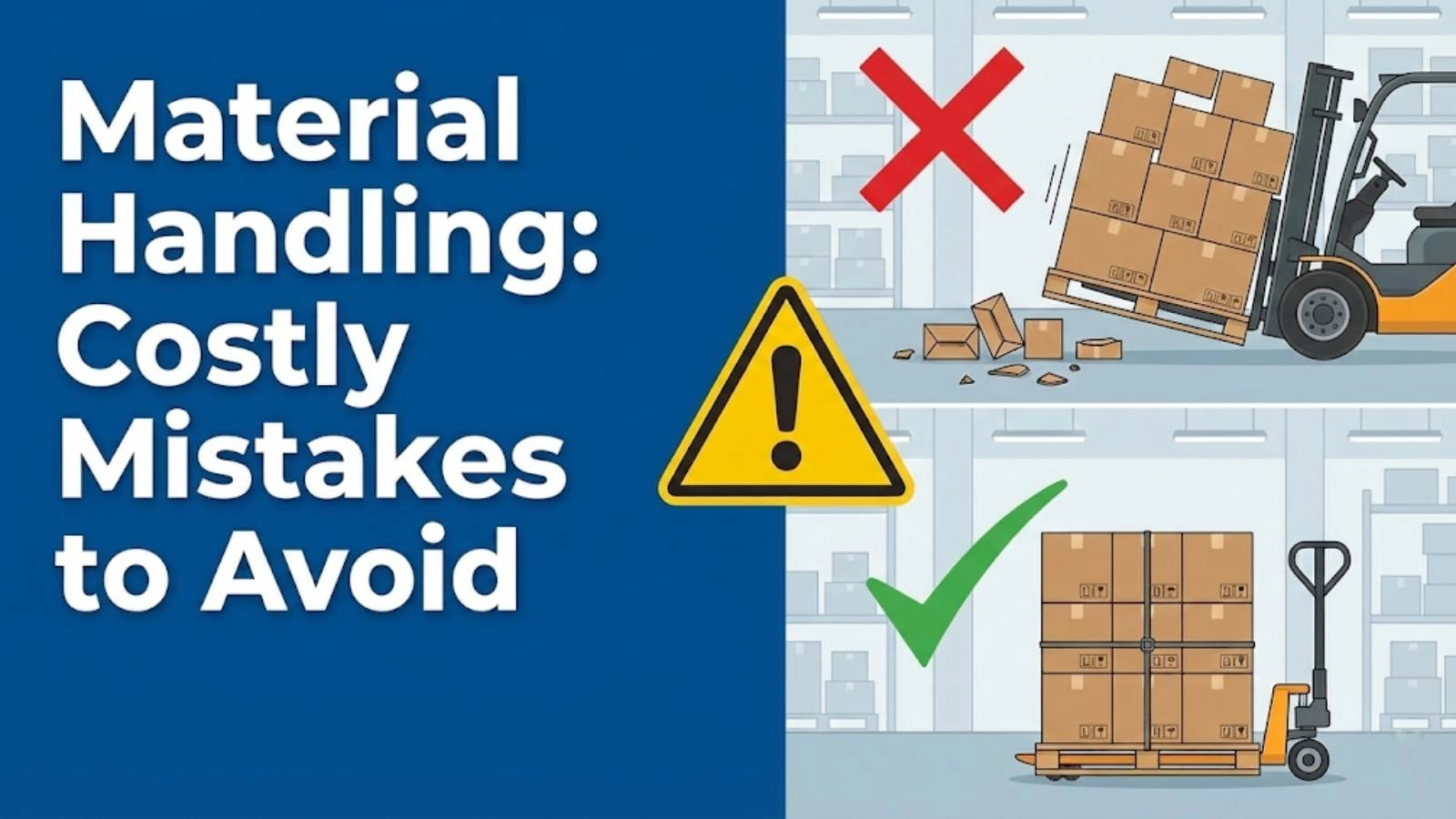
Solutions: Forklifts, pallet jacks, ergonomic workstations
There are many types of equipment available to reduce manual handling. Forklifts and pallet jacks can be used to move heavy loads, reducing the need for manual lifting and carrying. Ergonomic workstations can be designed to minimize strain and fatigue, improving employee comfort and productivity. Other solutions include automated guided vehicles (AGVs) and robotic material handling systems.
The Impact on Employee Health: Creating a safer work environment
By reducing manual handling, you can create a safer and healthier work environment for your employees. This can lead to reduced injury rates, improved morale, and increased productivity. A safer work environment can also help you attract and retain top talent, reducing turnover costs.
Actionable Takeaway: Evaluating current handling procedures
Evaluate your current manual handling procedures to identify areas where improvements can be made. Observe your employees as they perform their tasks and look for signs of strain or fatigue. Ask your employees for their feedback on how to make their jobs safer and easier. Based on your findings, identify equipment solutions that can reduce manual handling and improve workplace automation.
Investing in Efficient Machinery
Investing in efficient machinery is another key strategy for achieving sustainable labor cost reduction. Energy-efficient equipment can lower operating costs and reduce your environmental impact, while high-speed machinery can complete tasks faster and with less labor.
Energy-Efficient Equipment: Lower operating costs and environmental benefits
Energy-efficient equipment uses less energy to perform the same tasks as traditional equipment. This can result in significant cost savings strategies on your utility bills, as well as reduced greenhouse gas emissions. Look for equipment with energy-saving features, such as variable speed drives, LED lighting, and automatic shut-off systems.
High-Speed Machinery: Completing tasks faster and with less labor
High-speed machinery can complete tasks much faster than traditional equipment, allowing you to increase production volume with less labor. This can be particularly beneficial for businesses with high-volume production requirements. Consider investing in high-speed equipment for tasks like packaging, labeling, and sorting.
Maintenance Considerations: Keeping your equipment running smoothly
Proper maintenance is essential for keeping your equipment running smoothly and maximizing its lifespan. Develop a regular maintenance schedule and train your employees on how to perform basic maintenance tasks. Consider investing in a maintenance management system to track maintenance activities and prevent equipment downtime. Remember, equipment efficiency is directly tied to its proper upkeep.
Actionable Takeaway: Researching energy-efficient options for existing equipment
Research energy-efficient options for your existing equipment. Consider replacing older, less efficient equipment with newer models that consume less energy. Look for rebates and incentives from your local utility company to help offset the cost of upgrading to energy-efficient equipment. Even small changes can have a big impact on your energy consumption and labor expenses.
Training and Skill Development
Investing in training and skill development for your employees is crucial for maximizing equipment efficiency and achieving sustainable labor cost reduction. Properly trained employees can operate equipment more safely, efficiently, and effectively.
The Importance of Training: Maximizing equipment performance
Adequate training is essential for ensuring that your employees understand how to operate equipment correctly and safely. This can help prevent accidents, reduce equipment downtime, and improve overall performance. Training should cover topics such as equipment operation, maintenance, troubleshooting, and safety procedures.
Providing Adequate Training: Investing in your employees’ skills
Provide your employees with ongoing training and skill development opportunities. This can include on-the-job training, formal classroom training, and online courses. Encourage your employees to ask questions and seek clarification on any topics they don’t understand. Investing in your employees’ skills is an investment in your company’s future.
Cross-Training Benefits: Flexibility and adaptability
Cross-training involves training employees to perform multiple tasks or operate different types of equipment. This can increase flexibility and adaptability, allowing you to shift employees to different roles as needed. Cross-training can also improve employee morale and engagement by providing them with new challenges and opportunities for growth.
Actionable Takeaway: Creating a basic training plan for new equipment
When you acquire new equipment, develop a basic training plan for your employees. This plan should include:
- An overview of the equipment’s features and functions.
- Step-by-step instructions on how to operate the equipment safely and correctly.
- Information on routine maintenance and troubleshooting procedures.
- A quiz or practical exercise to assess employee understanding.
Streamlining Inventory Management
Inefficient inventory management can be a significant drain on your resources. Streamlining inventory management can reduce labor costs, improve accuracy, and minimize waste.
The Labor Cost of Inventory: Ordering, stocking, and tracking
Managing inventory involves a variety of labor-intensive tasks, such as ordering, stocking, tracking, and counting. These tasks can consume significant labor hours, especially if they are performed manually. Inefficient inventory management can also lead to stockouts, overstocking, and waste, further increasing labor expenses.
Equipment Solutions: Inventory management software, barcode scanners
There are many equipment solutions available to streamline inventory management. Inventory management software can automate tasks such as ordering, tracking, and reporting. Barcode scanners can speed up the process of receiving, stocking, and picking items. Other solutions include automated storage and retrieval systems (AS/RS) and radio-frequency identification (RFID) technology.
Real-Time Tracking: Reducing errors and improving accuracy
Real-time tracking of inventory can significantly reduce errors and improve accuracy. This allows you to know exactly how much of each item you have in stock, where it is located, and when it needs to be reordered. Real-time tracking can also help you identify slow-moving or obsolete items, allowing you to take action to minimize waste.
Actionable Takeaway: Exploring basic inventory tracking tools
Explore basic inventory tracking tools, such as spreadsheets or simple inventory management apps. Start by tracking your most important items and gradually expand your tracking efforts to include more items. Use barcode scanners to speed up the process of data entry and improve accuracy. Even a basic inventory tracking system can help you reduce labor costs and improve efficiency.
Case Studies: Real-World Examples
Let’s examine a few real-world examples of companies that have successfully implemented labor cost reduction strategies through technology investment and efficient machinery.
Company A: Improved efficiency in manufacturing
Company A, a manufacturing firm specializing in automotive parts, faced escalating labor expenses that threatened their profitability. They conducted a thorough analysis of their production line and identified several labor-intensive areas, particularly in the assembly and packaging stages.
To address these challenges, Company A invested in robotic arms for assembly and automated packaging systems. This workplace automation significantly reduced the need for manual labor, leading to a 40% reduction in labor costs in these areas. Furthermore, the increased speed and accuracy of the automated systems improved product quality and reduced waste.
Company B: Reduced labor costs in retail
Company B, a large retail chain, struggled with high labor costs associated with inventory management and customer service. They implemented an inventory management software system with barcode scanners, which automated the process of tracking and managing inventory levels. This reduced the time spent on manual inventory counts and minimized stockouts.
Additionally, Company B invested in self-checkout kiosks to reduce the number of cashiers needed during peak hours. These kiosks allowed customers to scan and pay for their items independently, freeing up cashiers to focus on providing assistance and support. As a result, Company B achieved a 25% reduction in labor costs while improving customer satisfaction.
Company C: Optimized operations in logistics
Company C, a logistics company specializing in warehousing and distribution, faced challenges related to manual material handling and inefficient order fulfillment processes. They invested in forklifts, pallet jacks, and conveyor belts to reduce manual handling and streamline the movement of goods within their warehouse.
Company C also implemented a warehouse management system (WMS) that optimized order picking and packing processes. This system used real-time data to guide employees to the most efficient routes and ensure accurate order fulfillment. These improvements resulted in a 30% reduction in labor costs and a significant increase in order fulfillment speed.
Key Takeaways: Learning from successful implementations
These case studies highlight the importance of conducting a thorough analysis of your operations to identify labor-intensive areas. Investing in the right equipment and workplace automation solutions can significantly reduce labor expenses, improve efficiency, and enhance your company’s competitiveness. Remember to carefully evaluate your specific needs and choose solutions that are tailored to your business requirements.
Measuring Your Success
Measuring your success is crucial for determining whether your labor cost reduction strategies are working and for identifying areas where further improvements can be made. By tracking key performance indicators (KPIs) and calculating labor cost savings, you can quantify the impact of your efforts and ensure that you are on track to achieve your goals.
Key Performance Indicators (KPIs): Tracking your progress
Key Performance Indicators (KPIs) are metrics that you can use to track your progress towards your labor cost reduction goals. Some common KPIs include:
- Labor costs as a percentage of revenue: This measures the proportion of your revenue that is spent on labor.
- Labor productivity: This measures the output produced per labor hour.
- Equipment downtime: This measures the amount of time that equipment is out of service due to maintenance or repairs.
- Employee turnover rate: This measures the percentage of employees who leave your company over a given period.
- Injury rate: This measures the number of workplace injuries per employee.
Calculating Labor Cost Savings: Quantifying the impact
To calculate your labor cost savings, compare your labor expenses before and after implementing your labor cost reduction strategies. Consider factors such as reduced labor hours, increased production volume, and improved product quality. You can also calculate the ROI for specific equipment investments by comparing the cost savings generated by the equipment to its initial investment and ongoing maintenance costs.
Continuous Improvement: Refining your strategies
Labor cost reduction is an ongoing process that requires continuous improvement. Regularly review your KPIs, analyze your results, and identify areas where further improvements can be made. Stay up-to-date on the latest equipment and workplace automation solutions, and be willing to adapt your strategies as your business evolves.
Actionable Takeaway: Choosing 2-3 KPIs to monitor immediately
Choose two to three KPIs that are most relevant to your business and begin monitoring them immediately. Track these KPIs over time and use the data to identify trends and patterns. Share your findings with your employees and encourage them to suggest ideas for improvement. By continuously monitoring your progress and refining your strategies, you can achieve sustainable labor cost reduction.
Troubleshooting Common Issues
Even with careful planning and implementation, you may encounter some common issues when implementing labor cost reduction strategies. Addressing these issues proactively can help you minimize disruptions and ensure the success of your efforts.
Equipment Downtime: Prevention and quick repairs
Equipment downtime can negate the benefits of automation and efficient machinery. To prevent downtime, develop a regular maintenance schedule and train your employees on how to perform basic maintenance tasks. Invest in a maintenance management system to track maintenance activities and prevent equipment failures. When downtime does occur, have a plan in place for quick repairs or replacements.
Employee Resistance: Addressing concerns and promoting adoption
Employees may resist workplace automation or other labor cost reduction strategies if they fear job losses or are uncomfortable with new technology. To address these concerns, communicate openly and honestly with your employees about the benefits of these changes. Emphasize that the goal is not to eliminate jobs, but to improve efficiency and create a more sustainable business. Provide adequate training and support to help your employees adapt to new roles and responsibilities.
> “Embrace technology to empower your workforce, not replace them. Automation should augment human capabilities, freeing employees to focus on more strategic and fulfilling tasks.” – Michael Johnson, Productivity Consultant
Unexpected Costs: Planning for maintenance and upgrades
Unexpected costs, such as equipment repairs or upgrades, can derail your labor cost reduction efforts. To mitigate this risk, factor in these costs when calculating the ROI for equipment investments. Set aside a budget for maintenance and repairs, and be prepared to upgrade equipment as needed to maintain efficiency and performance. A long-term technology investment strategy should also include provisions for obsolescence and future innovation.
Conclusion: Investing in Your Future
You’ve learned practical ways to reduce labor costs!
By implementing the strategies outlined in this guide, you can significantly reduce your labor costs, improve efficiency, and enhance your company’s competitiveness. From identifying labor-intensive areas and investing in efficient machinery to streamlining inventory management and providing adequate training, there are many steps you can take to optimize your operations and reduce your reliance on manual labor. Remember that successful labor cost reduction requires a holistic approach that considers all aspects of your business.
The long-term benefits of labor cost reduction extend far beyond immediate cost savings strategies. By creating a more efficient and sustainable business, you can increase your profitability, improve your customer satisfaction, and create a more rewarding work environment for your employees. At Safe and Secure Trading Company (SSTC), we are committed to helping you achieve these goals through our expertise and comprehensive range of equipment solutions. We believe that investing in your business is an investment in your future, and we are here to support you every step of the way.
FAQ Section
Q: What is the first step in reducing labor costs?
A: The first step is to identify the most labor-intensive areas of your business. This involves analyzing your workflows, collecting data on time spent on specific tasks, and identifying common culprits in your industry.
Q: How can automation help reduce labor costs?
A: Automation can significantly reduce labor costs by automating repetitive tasks, improving efficiency, reducing errors, and freeing up employees to focus on more complex and value-added activities.
Q: What type of equipment can help reduce manual handling?
A: There are many types of equipment available to reduce manual handling, including forklifts, pallet jacks, ergonomic workstations, automated guided vehicles (AGVs), and robotic material handling systems.
Q: How important is training in maximizing equipment performance?
A: Training is crucial for maximizing equipment performance. Properly trained employees can operate equipment more safely, efficiently, and effectively, which can reduce downtime and improve overall productivity.
Q: How can I measure the success of my labor cost reduction efforts?
A: You can measure the success of your efforts by tracking key performance indicators (KPIs) such as labor costs as a percentage of revenue, labor productivity, equipment downtime, employee turnover rate, and injury rate. You can also calculate your labor cost savings by comparing your labor expenses before and after implementing your strategies.
Q: What should I do if my employees resist workplace automation?
A: Communicate openly and honestly with your employees about the benefits of automation. Emphasize that the goal is not to eliminate jobs, but to improve efficiency and create a more sustainable business. Provide adequate training and support to help your employees adapt to new roles and responsibilities.
Q: How can I prevent equipment downtime?
A: To prevent equipment downtime, develop a regular maintenance schedule and train your employees on how to perform basic maintenance tasks. Invest in a maintenance management system to track maintenance activities and prevent equipment failures.
Q: What are some key considerations when choosing new equipment?
A: When choosing new equipment, consider factors such as efficiency, durability, suitability, cost, and energy consumption. Be sure to calculate the potential ROI before making any investments.
Q: How can inventory management software reduce labor costs?
A: Inventory management software can automate tasks such as ordering, tracking, and reporting, reducing the time spent on manual inventory counts and minimizing stockouts. This can significantly reduce labor costs associated with inventory management.
Q: What is cross-training and how can it benefit my company?
A: Cross-training involves training employees to perform multiple tasks or operate different types of equipment. This can increase flexibility and adaptability, allowing you to shift employees to different roles as needed. Cross-training can also improve employee morale and engagement by providing them with new challenges and opportunities for growth.