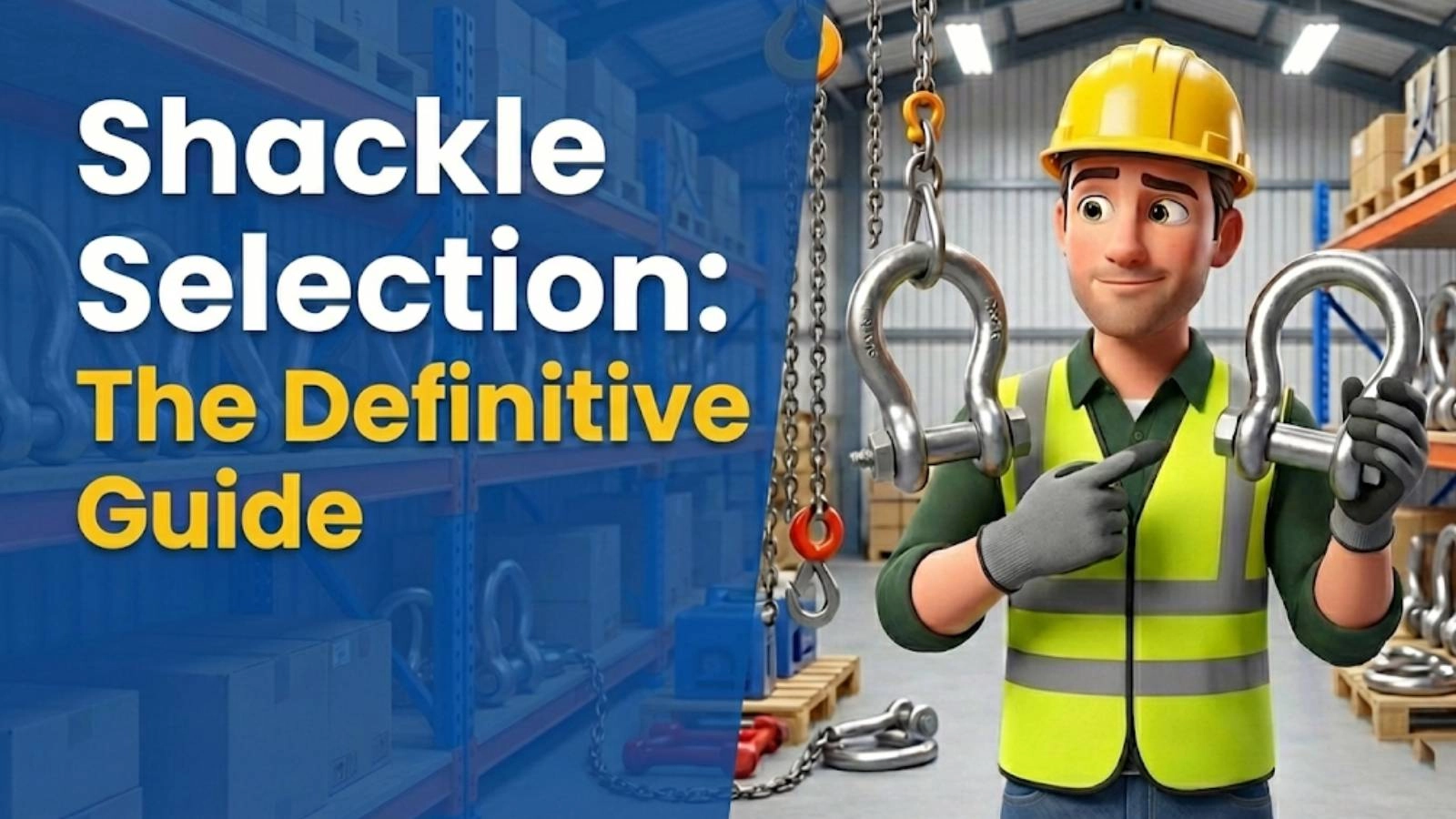
Lifting shackle failure can lead to catastrophic accidents, injuries, and costly damages. That’s why Safe and Secure Trading Company (SSTC) is dedicated to providing comprehensive guidance on preventing such incidents. Our experience in supplying and inspecting rigging equipment across various industries, from construction sites to marine operations here in Jubail, has given us valuable insights into the critical factors that contribute to shackle safety. By implementing these top 5 tactics, you can significantly reduce the risk of lifting shackle failure and ensure a safer working environment.
1. Comprehensive Pre-Lift Shackle Inspection
✅ Before each lift, a thorough inspection of your shackles is paramount. This process allows you to identify any potential weaknesses or damages that could compromise the shackle’s integrity. A meticulous inspection regime is the first line of defense against lifting shackle failure.
1.1. Visual Inspection: Identifying Obvious Defects
- Detailed examination for cracks, bends, and deformations.
- Checking for corrosion, rust, and pitting on the shackle body and pin.
- Inspection of the shackle eye and pin hole for elongation or wear.
A comprehensive visual inspection is a critical first step. Carefully examine the shackle body and pin for any signs of cracking, bending, or deformation. Pay close attention to areas where stress is concentrated, such as the bow and pin hole. Corrosion, rust, and pitting can significantly weaken the shackle, so these should also be meticulously checked.
1.2. Dimensional Verification: Ensuring Correct Measurements
- Measuring the shackle’s bow and pin diameter to ensure they meet specifications.
- Checking for any signs of stretching or distortion that could indicate overloading.
- Confirming that the shackle jaw opening is within acceptable tolerances.
Dimensional verification is equally important to ensure the shackle hasn’t been compromised. Measure the shackle’s bow and pin diameter to ensure they meet the manufacturer’s specifications. Stretching or distortion can indicate that the shackle has been overloaded in the past, even if it appears visually sound. The shackle jaw opening should also be within the manufacturer’s acceptable tolerances.
1.3. Pin Integrity: A Crucial Safety Point
- Inspecting the shackle pin for straightness, thread damage, and wear.
- Verifying the pin is the correct type and size for the shackle being used.
- Ensuring the pin fits snugly and securely in the shackle body.
The integrity of the shackle pin is absolutely crucial for preventing lifting shackle failure. Inspect the pin for straightness, thread damage, and wear. Ensure that the pin is the correct type and size for the shackle being used, and that it fits snugly and securely in the shackle body. A damaged or improperly fitted pin can easily lead to a lifting shackle failure under load.
2. Adherence to Working Load Limits (WLL)
💡Exceeding the Working Load Limit (WLL) is a leading cause of lifting shackle failure. Understanding and strictly adhering to the WLL is non-negotiable for safe lifting operations. This practice ensures that the shackle is operating within its designed capacity, significantly reducing the risk of failure.
2.1. Understanding WLL and Safety Factors
- Defining WLL and its significance in preventing shackle failure.
- Explaining safety factors and their role in load calculations.
- Highlighting the importance of never exceeding the WLL.
The Working Load Limit (WLL) is the maximum load that a shackle is designed to safely carry. It’s crucial to understand this limit and never exceed it. Safety factors are incorporated into the WLL calculation to account for uncertainties and dynamic loading. Understanding WLL is a critical component of lifting safety.
2.2. Accurate Load Weight Assessment
- Methods for accurately determining the weight of the load being lifted.
- Consideration of dynamic loading and impact forces.
- Using load cells or other weighing devices for precise measurements.
Accurately determining the weight of the load being lifted is essential for selecting the appropriate shackle and ensuring that the WLL is not exceeded. Remember to consider dynamic loading and impact forces, which can significantly increase the stress on the shackle. Using load cells or other weighing devices can provide precise measurements, reducing the risk of overloading.
2.3. Selecting the Appropriate Shackle Size and Type
- Using WLL charts and tables to select the correct shackle for the application.
- Considering the angle of loading and its effect on shackle capacity.
- Understanding the difference between bow shackles and D-shackles and their appropriate uses.
Selecting the correct shackle size and type for the application is crucial for lifting safety. Use WLL charts and tables to guide your selection, and always consider the angle of loading, as it can significantly affect shackle capacity. Understand the difference between bow shackles and D-shackles, and choose the appropriate type based on the specific lifting requirements.
3. Proper Shackle Assembly and Usage
➡️ Even the strongest shackle can fail if not assembled and used correctly. Proper assembly and usage techniques are vital for maintaining the shackle’s integrity and preventing lifting shackle failure. These techniques minimize stress concentrations and ensure that the load is distributed evenly.
3.1. Correct Pin Installation Techniques
- Ensuring the shackle pin is fully threaded and properly seated.
- Using the correct torque specifications when tightening the pin.
- Avoiding cross-threading or damaging the pin threads.
Correct pin installation is crucial for safe shackle operation. Ensure that the shackle pin is fully threaded and properly seated. Use the correct torque specifications when tightening the pin to prevent it from loosening under load. Always avoid cross-threading or damaging the pin threads, as this can significantly weaken the connection.
3.2. Avoiding Side Loading and Three-Legged Pulls
- Understanding the dangers of side loading and its impact on shackle strength.
- Using spreader bars or other devices to prevent side loading.
- Avoiding three-legged pulls, which can significantly increase stress on the shackle.
Side loading can drastically reduce a shackle’s WLL and should be avoided at all costs. Use spreader bars or other devices to ensure that the load is applied directly along the shackle’s bow. Avoid three-legged pulls, as these can significantly increase the stress on the shackle and increase the risk of lifting shackle failure.
3.3. Shackle Orientation and Alignment
- Orienting the shackle so that the load is applied along the bow.
- Ensuring the shackle is properly aligned with the load and lifting device.
- Avoiding sharp bends or kinks in the rigging that could stress the shackle.
Proper shackle orientation and alignment are essential for distributing the load evenly and preventing stress concentrations. Orient the shackle so that the load is applied along the bow, and ensure that the shackle is properly aligned with the load and lifting device. Avoid sharp bends or kinks in the rigging that could stress the shackle.
“The key to preventing rigging accidents is meticulous attention to detail in every step of the lifting process, from shackle inspection to load securement.” – John Anderson, Lead Safety Inspector
4. Regular Maintenance and Lubrication
⚙️ Like any piece of equipment, shackles require regular maintenance to ensure their continued safe operation. Proper maintenance, including lubrication, prevents corrosion and reduces friction, extending the shackle’s lifespan and minimizing the risk of lifting shackle failure.
4.1. Establishing a Preventative Maintenance Schedule
- Creating a regular inspection and maintenance schedule for all lifting shackles.
- Documenting all inspections and maintenance activities.
- Training personnel on proper shackle maintenance procedures.
Establishing a preventative maintenance schedule is crucial for ensuring the long-term reliability of your lifting shackles. Create a regular inspection and maintenance schedule for all shackles, and document all activities. Train personnel on proper shackle maintenance procedures to ensure that they are equipped to identify and address potential problems.
4.2. Lubrication Best Practices
- Using appropriate lubricants to prevent corrosion and reduce friction.
- Applying lubricant to the shackle pin threads and bearing surfaces.
- Avoiding the use of lubricants that could attract dirt or debris.
Lubrication is essential for preventing corrosion and reducing friction in shackles. Use appropriate lubricants specifically designed for this purpose, and apply them to the shackle pin threads and bearing surfaces. Avoid using lubricants that could attract dirt or debris, as these can actually accelerate wear.
4.3. Storage and Handling Procedures
- Storing shackles in a dry, protected environment to prevent corrosion.
- Handling shackles carefully to avoid damage or deformation.
- Using proper lifting and handling techniques when working with heavy shackles.
Proper storage and handling procedures are crucial for preventing damage to shackles. Store shackles in a dry, protected environment to prevent corrosion, and handle them carefully to avoid damage or deformation. When working with heavy shackles, use proper lifting and handling techniques to prevent injuries and damage to the equipment.
| Maintenance Task |
Frequency |
Details |
| Visual Inspection |
Before each use |
Check for cracks, bends, corrosion, and thread damage. |
| Dimensional Verification |
Monthly |
Measure bow and pin diameter, check for stretching. |
| Lubrication |
Monthly or as needed |
Apply appropriate lubricant to pin threads and bearing surfaces. |
| Proof Load Testing |
Annually or after repairs |
Test shackle to its proof load rating. |
5. Thorough Training and Competency
🧑🏫 Investing in thorough training and competency assessments for all personnel involved in lifting operations is essential. Properly trained and competent personnel are more likely to follow safe lifting practices, identify potential hazards, and prevent lifting shackle failure. Training is a cornerstone of crane safety and hoist safety.
5.1. Comprehensive Rigging Training Programs
- Providing comprehensive rigging training programs for all personnel involved in lifting operations.
- Covering topics such as shackle inspection, load calculation, and safe lifting practices.
- Ensuring training meets or exceeds industry standards and regulations.
Comprehensive rigging training programs should cover all aspects of safe lifting operations, including shackle inspection, load calculation, and safe lifting practices. Ensure that the training meets or exceeds industry standards and regulations, and that it is tailored to the specific needs of your workplace.
5.2. Competency Assessments and Certification
- Conducting regular competency assessments to ensure personnel are proficient in rigging procedures.
- Providing certification for qualified riggers.
- Requiring ongoing training and recertification to maintain competency.
Regular competency assessments are essential for ensuring that personnel are proficient in rigging procedures. Provide certification for qualified riggers, and require ongoing training and recertification to maintain competency. This helps to ensure that everyone involved in lifting operations has the knowledge and skills necessary to perform their job safely.
5.3. Continuous Improvement and Feedback
- Encouraging continuous improvement in rigging practices.
- Soliciting feedback from personnel on ways to improve safety and efficiency.
- Implementing changes based on feedback and lessons learned.
Encourage continuous improvement in rigging practices by soliciting feedback from personnel on ways to improve safety and efficiency. Implement changes based on feedback and lessons learned, and continuously review and update your training programs to reflect the latest best practices.
6. Environmental Factors and Their Impact
Lifting shackles are often used in diverse environments, each presenting unique challenges. Understanding how environmental factors affect shackle performance is critical for shackle failure prevention. Ignoring these factors can significantly increase the risk of accidents.
6.1. Corrosion in Marine Environments
- Discuss the accelerated corrosion rates in marine or coastal environments.
- Recommend specific shackle materials (e.g., stainless steel) or coatings for corrosion resistance.
- Detail the importance of more frequent inspections in these environments.
Marine and coastal environments pose a significant corrosion risk to lifting shackles. The high salt content in the air and water accelerates the corrosion process, potentially weakening the shackle over time. We recommend using shackles made from corrosion-resistant materials like stainless steel or those with specialized coatings. In such environments, more frequent inspections are crucial to identify and address corrosion early. For many of our clients here in Dammam, we’ve seen that a switch to stainless steel shackles, combined with monthly inspections, has dramatically reduced corrosion-related issues.
6.2. Temperature Extremes: Brittle Fracture
- Explain how extreme cold can lead to brittle fracture in some shackle materials.
- Suggest using shackles made from materials specifically designed for low-temperature applications.
- Provide guidelines for reducing load limits in extreme cold.
Extreme cold can cause some shackle materials to become brittle, increasing the risk of fracture under load. This is especially important to consider in regions with harsh winters or in specialized applications involving cryogenic temperatures. To mitigate this risk, we advise using shackles made from materials specifically designed for low-temperature applications, such as certain types of alloy steel. It’s also prudent to reduce load limits when operating in extreme cold, providing an extra margin of safety.
6.3. Chemical Exposure and Degradation
- Identify common chemicals that can degrade shackle materials.
- Recommend appropriate protective measures, such as using chemical-resistant coatings.
- Establish protocols for inspecting shackles that may have been exposed to chemicals.
Exposure to certain chemicals can degrade shackle materials, reducing their strength and increasing the likelihood of failure. It’s crucial to identify potential chemical hazards in the work environment and select shackles made from materials resistant to those specific chemicals. Protective measures, such as chemical-resistant coatings, can also help. If a shackle has been exposed to chemicals, it should be thoroughly inspected for signs of degradation before being put back into service.
7. Documentation and Record Keeping
Meticulous documentation and record-keeping are indispensable for maintaining a safe lifting operation. These practices allow for the tracking of shackle lifecycles, the identification of potential issues, and the analysis of incidents. Proper documentation is a cornerstone of lifting safety.
7.1. Maintaining Inspection Logs
- Explain the necessity of keeping detailed records of shackle inspections.
- Describe what information should be included in the inspection logs (date, inspector, findings, etc.).
- Recommend using a digital inspection system for easier tracking and analysis.
Detailed inspection logs are essential for tracking the condition of lifting shackles over time. These logs should include the date of the inspection, the name of the inspector, and a detailed description of any findings, such as cracks, corrosion, or deformation. We recommend using a digital inspection system to streamline the process and facilitate easier tracking and analysis.
7.2. Tracking Shackle Lifecycles
- Discuss the importance of tracking how long a shackle has been in service.
- Suggest methods for marking and identifying individual shackles.
- Establish a policy for retiring shackles after a certain period, regardless of condition.
Tracking the lifecycle of each shackle allows you to identify when it’s nearing the end of its useful life and should be retired. Implementing a system for marking and identifying individual shackles is crucial for effective lifecycle tracking. Consider establishing a policy for retiring shackles after a certain period, regardless of their apparent condition, as a proactive measure to prevent lifting shackle failure.
7.3. Incident Reporting and Analysis
- Emphasize the need for reporting all incidents involving shackle failure, even near misses.
- Outline the steps involved in conducting a thorough incident analysis.
- Use incident data to identify trends and improve preventative measures.
All incidents involving lifting shackle failure, including near misses, should be reported and thoroughly investigated. The incident analysis should identify the root causes of the failure and recommend corrective actions to prevent similar incidents from occurring in the future. Analyzing incident data can reveal trends and patterns that can be used to improve preventative measures and enhance lifting safety.
8. Understanding Shackle Material Properties
The materials used in shackle construction significantly impact their strength, durability, and suitability for different applications. A deep understanding of these properties is vital for making informed decisions about shackle selection and usage, promoting shackle failure prevention.
8.1. Steel Grades and Their Characteristics
- Explain the different grades of steel used in shackle manufacturing (e.g., carbon steel, alloy steel).
- Discuss the strengths and weaknesses of each material in relation to lifting applications.
- Recommend specific steel grades for different load requirements and environments.
Different grades of steel, such as carbon steel and alloy steel, possess distinct characteristics that make them suitable for different lifting applications. Carbon steel is a common and cost-effective option, while alloy steel offers superior strength and durability. The choice of steel grade should be based on the specific load requirements, environmental conditions, and safety factors involved in the lifting operation. For example, alloy steel shackles are often preferred for heavy-duty lifting and applications where high strength is critical.
8.2. Heat Treatment Processes
- Describe the various heat treatment processes used to improve the strength and durability of shackles.
- Explain how heat treatment affects the microstructure of the steel.
- Highlight the importance of ensuring that shackles are properly heat-treated.
Heat treatment processes, such as quenching and tempering, are used to enhance the strength and durability of shackles. These processes alter the microstructure of the steel, making it more resistant to stress and fatigue. It’s crucial to ensure that shackles have been properly heat-treated according to the manufacturer’s specifications to achieve the desired mechanical properties.
8.3. Non-Destructive Testing (NDT) Methods
- Introduce various NDT methods used to detect hidden flaws in shackles (e.g., ultrasonic testing, magnetic particle inspection).
- Explain the principles behind each NDT method.
- Recommend using NDT as part of a comprehensive inspection program.
Non-Destructive Testing (NDT) methods, such as ultrasonic testing and magnetic particle inspection, can detect hidden flaws and imperfections in shackles that may not be visible to the naked eye. These methods are valuable tools for ensuring the integrity of shackles and preventing lifting shackle failure. We recommend incorporating NDT into a comprehensive inspection program, especially for shackles used in critical lifting applications.
Conclusion
Preventing lifting shackle failure requires a multi-faceted approach, encompassing thorough inspection, adherence to WLL, proper assembly, regular maintenance, and comprehensive training. By implementing these five tactics, you can significantly reduce the risk of accidents and create a safer working environment. Remember that consistent vigilance and a commitment to safety are paramount. We are confident that these guidelines will help you maintain safe and secure lifting operations.
FAQ Section
Q: How often should lifting shackles be inspected?
A: Lifting shackles should be inspected before each use and periodically according to a documented inspection schedule. The frequency of periodic inspections should be based on the severity of the service conditions, the type of loads being lifted, and the recommendations of the shackle manufacturer.
Q: What are some common signs of shackle failure?
A: Common signs of shackle failure include cracks, bends, deformations, corrosion, rust, pitting, thread damage, and elongation. If any of these signs are present, the shackle should be immediately removed from service.
Q: What is the difference between a bow shackle and a D-shackle?
A: A bow shackle has a larger, more rounded bow than a D-shackle. Bow shackles are generally used for connecting multiple slings or for applications where the load may shift or rotate. D-shackles are typically used for in-line connections where the load is applied directly along the axis of the shackle.
Q: Can a shackle be repaired if it is damaged?
A: No, damaged shackles should never be repaired. Attempting to repair a shackle can weaken it and make it more likely to fail under load. Damaged shackles should be immediately removed from service and replaced with new ones.
Q: What is the proof load of a lifting shackle?
A: The proof load is the load that a shackle is tested to by the manufacturer. The proof load is typically two times the Working Load Limit (WLL). Proof load testing is designed to verify the structural integrity of the shackle.
Q: What regulations govern the use of lifting shackles?
A: The use of lifting shackles is governed by various safety regulations and standards, such as those established by OSHA (Occupational Safety and Health Administration) and ANSI (American National Standards Institute). It’s crucial to be familiar with and comply with all applicable regulations and standards to ensure safe lifting operations. Adhering to these regulations ensures the use of safe lifting practices and promotes material handling safety.