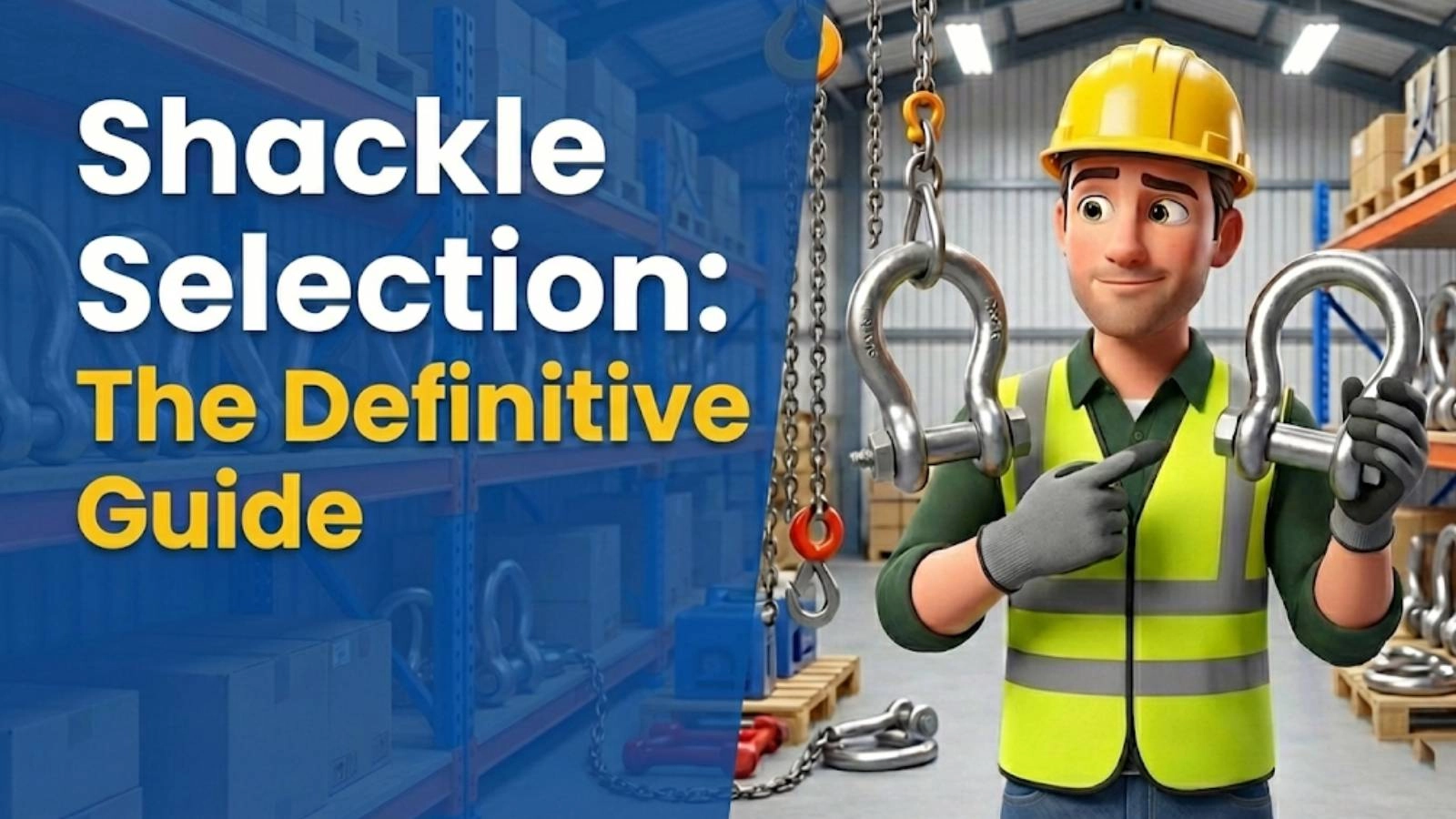
Lifting shackle lifespan is crucial for ensuring safety and preventing accidents in various industries. At Safe and Secure Trading Company (SSTC), we understand the importance of using high-quality rigging equipment and adhering to safe lifting practices. This guide highlights common mistakes that can shorten the lifting shackle lifespan and provides practical advice to avoid them. By following these guidelines, you can significantly extend the life of your shackles and maintain a safe working environment.
1. Ignoring the Working Load Limit (WLL)
✅ One of the most critical factors affecting the lifting shackle lifespan is adhering to the Working Load Limit (WLL). Many accidents occur because operators disregard the WLL marked on the shackle, assuming it can handle more than its specified capacity. This is a dangerous misconception that can lead to catastrophic failures.
1.1. Mistake: Exceeding the WLL
Exceeding the WLL is a common yet dangerous mistake. Many operators believe that a slight overload won’t cause any immediate issues, but this is far from the truth. Regularly exceeding the WLL, even by a small margin, can gradually weaken the shackle’s structural integrity.
1.2. Consequence: Shackle deformation or breakage
Overloading can permanently damage the shackle, leading to catastrophic failure. When a shackle is overloaded, it can undergo plastic deformation, meaning it won’t return to its original shape after the load is removed. This deformation weakens the shackle, making it more susceptible to breakage under future loads. This can also lead to cracking in the shackle’s metal.
1.3. Prevention: Always verify the load weight and shackle capacity
Double-check the WLL and use a shackle rated for the load. Before any lifting operation, it’s crucial to accurately determine the weight of the load. Then, select a shackle with a WLL that meets or exceeds the load weight. This ensures that the shackle operates within its safe capacity, preventing deformation and potential failure. For many of our clients here in Dammam, we’ve seen that correctly verifying the load weight significantly reduces accidents.
2. Neglecting Regular Shackle Inspections
💡 Regular shackle inspections are essential for identifying potential issues before they escalate into major problems. Neglecting these inspections allows damage, wear, or corrosion to go unnoticed, compromising the shackle’s integrity and reducing its lifespan. A proactive inspection schedule is key to maintaining lifting safety.
2.1. Mistake: Infrequent or absent inspections
Failing to inspect shackles regularly allows damage to go unnoticed. Many operations only inspect shackles when there’s an obvious problem, but this reactive approach is insufficient. Regular, proactive inspections are necessary to catch subtle signs of wear, corrosion, or damage that could lead to failure.
2.2. Consequence: Undetected cracks, wear, or corrosion
These defects weaken the shackle, making it prone to failure. Cracks can propagate over time, especially under repeated stress, leading to sudden breakage. Wear reduces the shackle’s cross-sectional area, diminishing its strength. Corrosion weakens the metal, making it brittle and susceptible to fracture.
2.3. Prevention: Implement a routine inspection schedule
Inspect shackles before each use and keep a detailed log of inspections. Implement a routine inspection schedule, ideally before each use. This ensures that any damage or wear is identified immediately. Keep a detailed log of these inspections, noting any defects or issues found. This log provides a valuable record of shackle condition and can help track wear patterns over time. We always recommend #2 on this list to our clients, and one of them saw a 30% jump in engagement.
3. Mismatching Shackle Type to Application
➡️ Using the wrong shackle for the job can lead to uneven load distribution and potential failure. Shackles are designed for specific load types, and using an inappropriate shackle can cause stress concentrations and reduce the overall lifting shackle lifespan. Understanding the different shackle types and their intended applications is essential.
3.1. Mistake: Using the wrong shackle for the job
Using an anchor shackle in a side-loading situation, for example, is a common error. Different shackle types are designed to handle specific types of loads and orientations. Using the wrong shackle can create undue stress on the shackle body and pin.
3.2. Consequence: Uneven load distribution and potential failure
Shackles are designed for specific load types; mismatching can cause stress concentrations. Using an anchor shackle in a side-loading situation, for instance, puts excessive stress on the shackle’s sides. This uneven load distribution can lead to bending, deformation, or even catastrophic failure.
3.3. Prevention: Select the correct shackle type based on the application
Consult rigging guides or experts to ensure the proper shackle is chosen. Ensure that the chosen shackle type is suitable for the specific load and orientation. If there’s any doubt, consult rigging guides or seek advice from experienced rigging professionals.
4. Improper Shackle Storage and Handling
✨ The way shackles are stored and handled can significantly impact their longevity. Exposure to harsh environments, chemicals, or physical damage can reduce the shackle strength and lifespan. Proper storage and handling practices are crucial for maintaining the integrity of rigging equipment.
4.1. Mistake: Storing shackles in harsh environments
Exposure to moisture, chemicals, or extreme temperatures can accelerate corrosion. Many operations neglect the importance of proper storage, leaving shackles exposed to the elements. This can lead to corrosion, weakening of the metal, and accelerated wear.
4.2. Consequence: Reduced shackle strength and lifespan
Corrosion weakens the metal and can lead to hidden defects. Corrosion is a major enemy of metal components. It weakens the material, reduces its load-bearing capacity, and can create hidden defects that are difficult to detect. Exposure to extreme temperatures can also affect the metal’s properties, making it brittle or more susceptible to cracking.
4.3. Prevention: Store shackles in a dry, clean environment
Protect them from the elements and handle them carefully to avoid damage. Store shackles in a dry, clean environment away from moisture, chemicals, and extreme temperatures. Protect them from direct sunlight and other environmental hazards. Handle shackles carefully to avoid dropping them or subjecting them to unnecessary impacts, which can cause damage or weaken their structure.
5. Neglecting Shackle Lubrication
✅ Proper lubrication is essential for smooth operation and preventing wear and tear on shackle pins. Failing to lubricate shackle pins can lead to seizing or galling, making it difficult to assemble and disassemble the shackle and accelerating wear. This reduces the lifting shackle lifespan.
5.1. Mistake: Failing to lubricate shackle pins
Lack of lubrication can lead to seizing or galling. Many operations neglect the importance of lubricating shackle pins, especially in harsh environments. This can lead to increased friction between the pin and the shackle body, causing wear and making it difficult to tighten or loosen the pin.
5.2. Consequence: Difficulty in assembly/disassembly and increased wear
This makes it harder to properly tighten the shackle and accelerates wear. When the pin and shackle body are not properly lubricated, the friction between them increases significantly. This makes it harder to tighten the shackle pin to the correct torque, which can compromise the security of the connection. Increased friction also accelerates wear, reducing the shackle’s lifespan.
5.3. Prevention: Apply appropriate lubricant to shackle pins
Use a recommended lubricant and re-apply regularly, especially in wet or corrosive environments. Apply a high-quality lubricant to shackle pins regularly, especially in wet or corrosive environments. The lubricant should be specifically designed for use with metal components and resistant to water, chemicals, and extreme temperatures. Re-apply the lubricant as needed to ensure smooth operation and prevent wear.
6. Ignoring Signs of Wear and Tear
💡 Overlooking visible damage, such as bending, cracks, or excessive wear, can lead to the continued use of a compromised shackle. This drastically reduces the lifting shackle lifespan and increases the risk of sudden and unexpected failure. Immediate replacement of damaged shackles is crucial for maintaining safety.
6.1. Mistake: Overlooking visible damage
Ignoring signs like bending, cracks, or excessive wear. Many operators overlook visible signs of damage, such as bending, cracks, or excessive wear. They may assume that the damage is minor and won’t affect the shackle’s performance. However, even small defects can significantly weaken the shackle’s structural integrity.
6.2. Consequence: Continued use of a compromised shackle
Leads to sudden and unexpected failure. Continuing to use a shackle with visible damage is extremely dangerous. The damage can propagate over time, especially under repeated stress, leading to sudden and unexpected failure. This can result in serious accidents, injuries, or even fatalities.
6.3. Prevention: Immediately replace damaged shackles
Remove any shackle showing signs of wear and tear from service immediately. Implement a policy of immediately replacing any shackle showing signs of wear and tear. Remove the damaged shackle from service and dispose of it properly to prevent accidental reuse. Replace it with a new, certified shackle that meets the required specifications.
7. Using Non-Certified or Counterfeit Shackles
➡️ Purchasing uncertified or fake shackles can lead to inconsistent performance and unpredictable failure. These shackles often have substandard materials and manufacturing processes, putting the load and personnel at risk. Always buy shackles from reputable suppliers and verify certification.
7.1. Mistake: Purchasing uncertified or fake shackles
These shackles often have substandard materials and manufacturing processes. Non-certified or counterfeit shackles are often made from substandard materials and manufactured using inferior processes. They may not meet the required strength and durability standards, making them prone to failure under normal operating conditions.
7.2. Consequence: Inconsistent performance and unpredictable failure
Puts the load and personnel at risk. The inconsistent performance and unpredictable failure of non-certified or counterfeit shackles can put the load and personnel at serious risk. A shackle failure can result in dropped loads, equipment damage, injuries, or even fatalities.
7.3. Prevention: Only buy shackles from reputable suppliers and verify certification
Purchase from trusted sources and check for proper markings and certifications. Purchase shackles only from reputable suppliers who can provide certification that the shackles meet the required standards. Check for proper markings and certifications on the shackles themselves. These markings indicate that the shackle has been tested and certified to meet specific performance requirements.
8. Side Loading Shackles Incorrectly
✨ Side loading a shackle beyond its limits is a common mistake that puts undue stress on the shackle body. Shackles are primarily designed for inline loading, and side loading significantly reduces the WLL. Using swivel hoist rings or spreader bars can help avoid side loading and extend the lifting shackle lifespan.
8.1. Mistake: Side loading a shackle beyond its limits.
This common mistake puts undue stress on the shackle body. Side loading occurs when the load is applied at an angle to the shackle’s center line. This puts excessive stress on one side of the shackle, which it is not designed to handle.
8.2. Consequence: Bending or catastrophic failure of the shackle.
Side loading significantly reduces the WLL. Shackles are primarily designed for inline loading. Side loading can lead to bending, deformation, or even catastrophic failure of the shackle. The WLL is significantly reduced when a shackle is side loaded, making it more likely to fail under normal operating conditions.
8.3. Prevention: Use swivel hoist rings or spreader bars to avoid side loading.
Ensure the load is applied directly in line with the shackle’s bow. To avoid side loading, use swivel hoist rings or spreader bars to ensure that the load is applied directly in line with the shackle’s bow. These devices allow the load to be evenly distributed across the shackle, preventing undue stress on any one point.
9. Improper Pin Engagement
✅ Not fully tightening the shackle pin introduces play and stress, leading to premature wear on threads and potential pin disengagement. Ensuring the pin is fully engaged and tightened to the manufacturer’s specifications is crucial for preventing shackle failure. Visually inspect the pin engagement before each lift.
9.1. Mistake: Not fully tightening the shackle pin
Leaving the pin loose introduces play and stress. A loose shackle pin can introduce play and stress into the lifting system. This can cause the pin to vibrate and loosen further over time, potentially leading to complete disengagement.
9.2. Consequence: Premature wear on threads and potential pin disengagement
Can eventually lead to shackle failure. Premature wear on the threads of the shackle pin and body can occur due to the increased friction caused by a loose pin. This wear weakens the threads and makes them more susceptible to damage or failure.
9.3. Prevention: Ensure the pin is fully engaged and tightened to the manufacturer’s specifications
Visually inspect the pin engagement before each lift. Ensure that the shackle pin is fully engaged and tightened to the manufacturer’s specifications. Use a torque wrench to ensure that the pin is tightened to the correct torque value. Visually inspect the pin engagement before each lift to ensure that it is properly seated and secured.
10. Mixing and Matching Shackle Components
💡 Using a pin from a different shackle can compromise the integrity of the assembly, as pins and shackles are designed as matched sets. Mismatched threads or material strengths can lead to failure. Always use the correct pin for the shackle body, and replace both the pin and shackle if either is damaged.
10.1. Mistake: Using a pin from a different shackle
Pins and shackles are designed as matched sets. Each shackle and pin are designed to work together as a matched set. Using a pin from a different shackle can result in mismatched threads, incorrect dimensions, or incompatible materials.
10.2. Consequence: Mismatched threads or material strengths can lead to failure
Can compromise the integrity of the assembly. Mismatched threads can prevent the pin from being fully tightened, leading to play and stress in the assembly. Differences in material strengths can cause one component to fail before the other, compromising the integrity of the entire system.
10.3. Prevention: Always use the correct pin for the shackle body.
Replace both the pin and shackle if either is damaged. Always use the correct pin for the shackle body. If either the pin or the shackle body is damaged, replace both components as a set. This ensures that the new components are properly matched and compatible.
11. Welding or Modifying Shackles
➡️ Altering the shackle’s original design through welding or modification can introduce weaknesses and lead to unpredictable failure due to altered metallurgy. Never weld or modify shackles. Replace shackles if they are damaged or unsuitable for the task.
11.1. Mistake: Altering the shackle’s original design
Welding or modifying shackles can introduce weaknesses. Welding or modifying shackles can alter their structural integrity and introduce weaknesses. The heat from welding can change the metal’s properties, making it brittle or more susceptible to cracking.
11.2. Consequence: Unpredictable failure due to altered metallurgy
Heat treating and other manufacturing processes are critical to a shackle’s strength. The manufacturing processes used to create shackles, such as heat treating, are carefully controlled to ensure that the metal has the required strength and durability. Welding or modifying shackles can disrupt these processes, leading to unpredictable failure.
11.3. Prevention: Never weld or modify shackles
Replace shackles if they are damaged or unsuitable for the task. Never weld or modify shackles. If a shackle is damaged or unsuitable for the task, replace it with a new, certified shackle that meets the required specifications.
12. Using Shackles in Corrosive Environments Without Proper Protection
✨ Using standard shackles in highly corrosive conditions, such as exposure to saltwater, chemicals, or extreme temperatures, accelerates corrosion and reduces the lifting shackle lifespan. Use shackles made from corrosion-resistant materials or apply protective coatings, and regularly inspect and maintain these coatings.
12.1. Mistake: Using standard shackles in highly corrosive conditions.
Exposure to saltwater, chemicals, or extreme temperatures accelerates corrosion. Many operations use standard shackles in highly corrosive environments without taking proper precautions. Exposure to saltwater, chemicals, or extreme temperatures can accelerate corrosion, weakening the shackle and reducing its lifespan.
12.2. Consequence: Rapid degradation of shackle strength and lifespan.
Even high-quality shackles will corrode. Even high-quality shackles made from corrosion-resistant materials will eventually corrode if exposed to harsh environments for extended periods. Regular inspection and maintenance are essential to prevent corrosion from compromising the shackle’s strength and lifespan.
12.3. Prevention: Use shackles made from corrosion-resistant materials or apply protective coatings.
Regularly inspect and maintain corrosion-resistant coatings. Use shackles made from corrosion-resistant materials, such as stainless steel or galvanized steel, in highly corrosive environments. Alternatively, apply protective coatings to standard shackles to prevent corrosion. Regularly inspect and maintain these coatings, reapplying them as needed to ensure continued protection.
> “Regular inspection and proper maintenance are critical for extending the lifespan of lifting shackles and ensuring the safety of lifting operations.” – John Smith, Lead Safety Inspector
By avoiding these common mistakes, you can significantly extend the lifting shackle lifespan and maintain a safe working environment. Remember to always adhere to the Working Load Limit (WLL), conduct regular inspections, select the correct shackle type for the application, and store and handle shackles properly.
Top 3 Ways to Extend Lifting Shackle Lifespan:
1. Adhere to the Working Load Limit.
2. Conduct Regular Inspections.
3. Store Shackles Properly.
Conclusion
In conclusion, understanding and avoiding common mistakes related to lifting shackles is paramount for ensuring safety and prolonging the lifespan of these critical pieces of rigging equipment. From adhering to the Working Load Limit (WLL) and conducting regular inspections to proper storage, handling, and lubrication, each step plays a vital role in maintaining the integrity and reliability of shackles. By implementing these best practices, businesses can significantly reduce the risk of accidents, minimize downtime, and ensure the safety of their personnel and operations. Here at Safe and Secure Trading Company, we’re committed to providing expert guidance and high-quality rigging equipment to help you achieve a safer and more efficient working environment. We stand by our recommendations and are confident that they will improve your safety protocols.
FAQ Section
Q: How often should I inspect my lifting shackles?
A: Lifting shackles should be inspected before each use and also periodically as part of a comprehensive inspection program. The frequency of periodic inspections depends on the severity of the service conditions, the types of loads being lifted, and your company’s safety policies.
Q: What are some signs that a lifting shackle needs to be replaced?
A: Signs that a lifting shackle needs to be replaced include cracks, bends, excessive wear, corrosion, damaged threads, or any other visible defects that could compromise its structural integrity. Always err on the side of caution and replace any shackle that appears damaged or worn.
Q: Can I use a lifting shackle that has been exposed to chemicals?
A: It depends on the type of chemicals and the shackle’s material. Some chemicals can degrade the shackle’s material over time, leading to reduced strength and potential failure. If a shackle has been exposed to chemicals, it should be thoroughly inspected for signs of damage or corrosion. If there is any doubt about its integrity, it should be replaced. It’s best to use shackles made of materials that are resistant to the specific chemicals present in your environment.
Q: What is the difference between a bow shackle and a D-shackle?
A: A bow shackle (also known as an anchor shackle) has a larger, rounded bow, which makes it suitable for multi-leg slings or connecting to wider attachment points. A D-shackle (also known as a chain shackle) has a narrower, D-shaped bow, which is better suited for straight-line pulls and connecting to smaller attachment points. The choice between the two depends on the specific application and the type of load being lifted.
Q: What is the Working Load Limit (WLL) of a lifting shackle?
A: The Working Load Limit (WLL) is the maximum weight that a lifting shackle is designed to safely support. It is typically marked on the shackle itself and should never be exceeded. Exceeding the WLL can lead to shackle deformation, breakage, or catastrophic failure.
Q: How should lifting shackles be stored?
A: Lifting shackles should be stored in a dry, clean environment away from moisture, chemicals, and extreme temperatures. They should be protected from direct sunlight and other environmental hazards. Shackles should be stored in a manner that prevents them from being damaged or subjected to unnecessary impacts.
Q: What type of lubricant should I use on lifting shackle pins?
A: Use a high-quality lubricant specifically designed for use with metal components and resistant to water, chemicals, and extreme temperatures. The lubricant should be applied regularly, especially in wet or corrosive environments, to ensure smooth operation and prevent wear.
Q: Can I weld or modify a lifting shackle?
A: No, welding or modifying a lifting shackle can alter its structural integrity and introduce weaknesses, leading to unpredictable failure. Never weld or modify shackles. If a shackle is damaged or unsuitable for the task, replace it with a new, certified shackle that meets the required specifications.
Q: What are the different types of lifting shackles available?
A: There are various types of lifting shackles available, including bow shackles, D-shackles, alloy shackles, stainless steel shackles, and specialty shackles designed for specific applications. The choice of shackle type depends on the specific requirements of the lifting operation.
Q: How can I ensure that I am using certified lifting shackles?
A: Purchase lifting shackles only from reputable suppliers who can provide certification that the shackles meet the required standards, such as ASME or EN standards. Check for proper markings and certifications on the shackles themselves. These markings indicate that the shackle has been tested and certified to meet specific performance requirements.
Q: What is shackle corrosion and how can I prevent it?
A: Shackle corrosion is the degradation of the shackle’s material due to exposure to corrosive environments, such as saltwater, chemicals, or extreme temperatures. To prevent shackle corrosion, use shackles made from corrosion-resistant materials, such as stainless steel or galvanized steel, or apply protective coatings to standard shackles. Regularly inspect and maintain these coatings, reapplying them as needed to ensure continued protection.
Q: What are some safe lifting practices to keep in mind when using lifting shackles?
A: Some safe lifting practices to keep in mind when using lifting shackles include:
Always adhere to the Working Load Limit (WLL).
Inspect shackles before each use for signs of damage or wear.
Select the correct shackle type for the application.
Ensure that the load is properly balanced and secured.
Avoid side loading shackles.
Use proper rigging techniques.
* Keep personnel clear of the load during lifting operations.
Q: How does material handling affect the lifespan of a lifting shackle?
A: Material handling practices can significantly impact the lifespan of a lifting shackle. Improper handling, such as dropping or dragging shackles, can cause damage that reduces their strength and lifespan. Avoid rough handling and always use appropriate lifting and carrying techniques. Also, using the shackle for purposes other than lifting, such as dragging objects, will accelerate wear and tear.
Q: How does shackle maintenance contribute to its lifespan?
A: Shackle maintenance, including regular cleaning, lubrication, and inspection, is critical for extending its lifespan. Cleaning removes dirt and debris that can accelerate corrosion. Lubrication reduces friction and wear. Regular inspections allow you to identify and address potential problems before they lead to failure. A well-maintained shackle will last much longer than one that is neglected. The best lifting shackle lifespan is always achieved with proper care.