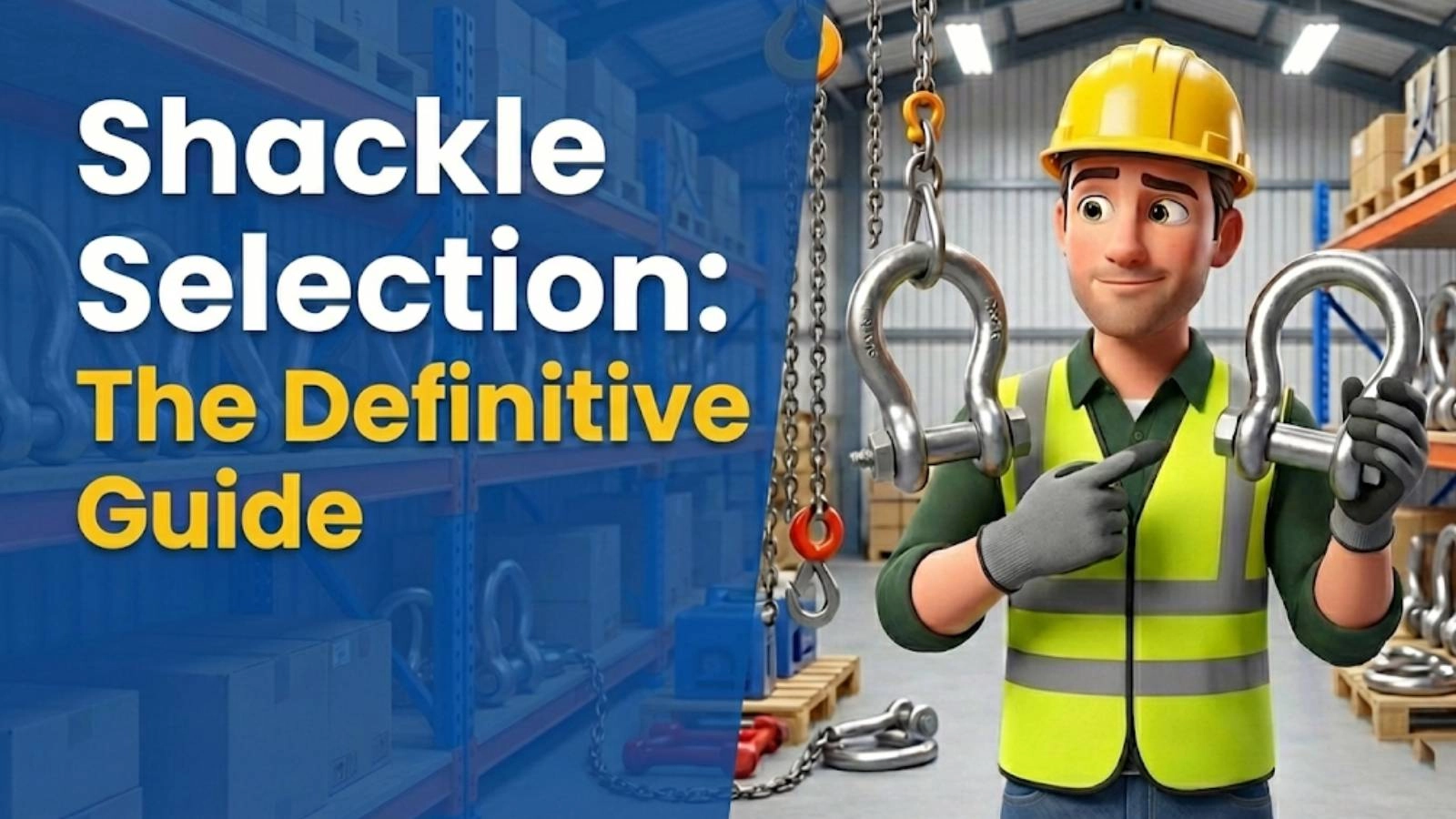
The Silent Guardian: Why Lifting Shackle Safety Matters
A Close Call: The Story of Near Miss
Imagine a busy construction site. The air is thick with dust, the sound of machinery fills the air, and workers are moving with purpose. A large steel beam is being hoisted into place by a crane, secured by what appears to be a sturdy lifting shackle. Suddenly, with a sickening crack, the shackle fails. The beam swings precariously, narrowly missing several workers before crashing to the ground. Fortunately, no one was seriously injured, but the potential for disaster was immense. The investigation later revealed that the shackle had been overloaded and had not been properly inspected before use.
This near-miss serves as a stark reminder of the potential consequences of neglecting lifting shackle safety. The repercussions of a shackle failure can range from minor property damage to severe injuries or even fatalities. Operational delays are also common, as investigations and repairs can bring work to a standstill. However, such incidents are preventable. By implementing proper safety measures, adhering to load limits, and conducting regular inspections, we can significantly reduce the risk of accidents and create a safer working environment.
The Unsung Hero: Understanding the Lifting Shackle
The lifting shackle, often overlooked, is a critical component in any rigging system. It acts as the primary connection point between the load and the lifting device, whether it’s a crane, hoist, or chain block. Its seemingly simple design belies its importance; a failure in this single component can have catastrophic consequences. Understanding the different types of shackles and their proper applications is paramount for ensuring safe lifting practices.
There are several types of shackles, each designed for specific purposes. Anchor shackles, also known as bow shackles, have a larger, more rounded shape, making them suitable for connecting to slings with a wider radius. Chain shackles, or D-shackles, are narrower and designed for straight-line pulls. Bolt-type shackles use a bolt and nut for secure closure, offering a high degree of stability and are often used in long-term or critical lifts. Each shackle type has advantages and limitations, making proper selection vital.
The materials used in shackle construction also play a significant role in their strength and durability. Alloy steel shackles offer exceptional strength and toughness, making them ideal for heavy-duty lifting applications. Carbon steel shackles are more economical but may not be suitable for extreme conditions or critical lifts. The choice of material depends on the specific application and environmental factors. Understanding the material properties helps in selecting the right shackle for the job, ensuring Lifting shackle safety and preventing potential failures.
Deciphering the Numbers: Load Capacity and Working Load Limit (WLL)
What the Markings Tell You: A Shackle’s Secret Language
Every lifting shackle is marked with crucial information that dictates its safe usage. Among the most important markings are the Working Load Limit (WLL), which specifies the maximum weight the shackle is designed to lift safely under normal conditions. The Safe Working Load (SWL) is sometimes used interchangeably with WLL, representing the same value. Other markings might include the manufacturer’s name or logo, the shackle size, the grade of steel, and sometimes a traceability code. Understanding these markings is fundamental to Lifting shackle safety.
The WLL is not just a suggestion; it’s an absolute limit. Exceeding the WLL puts the shackle at risk of deformation, fracture, or complete failure. Such a failure can lead to dropped loads, equipment damage, and, most importantly, serious injury or death. We at Safe and Secure Trading Company cannot stress enough how critical it is to adhere strictly to the WLL marked on each shackle.
Ignoring the WLL is a gamble with potentially devastating consequences. Always verify the WLL before each lift and ensure that the load weight never exceeds this limit. Our team in Dubai always double-checks the WLL before authorizing any lifting operation.
The Danger of Assumptions: Why You Can’t Just “Guess”
One of the most dangerous mistakes in lifting operations is assuming the weight of the load. Visual estimations are often inaccurate, and relying on guesswork can lead to overloading the shackle and other rigging components. It’s imperative to know the actual weight of the load being lifted, not just an approximation.
Several factors can affect a shackle’s load capacity beyond just the weight of the load itself. Angle loading, where the load is applied at an angle to the shackle, significantly reduces its effective WLL. Shock loading, caused by sudden jerks or impacts, can create forces far exceeding the static weight of the load. Environmental conditions, such as extreme temperatures or corrosive atmospheres, can also weaken the shackle over time.
“Never assume the weight of a load. Always verify with reliable scales or load cells to ensure you’re operating within the shackle’s limits.” – John Smith, Certified Rigging Inspector
The Eyes Have It: Inspection Best Practices
Before Every Lift: A Quick Visual Check
Before each and every lift, a quick visual inspection of the lifting shackle is essential. This simple check can identify obvious damage or defects that could compromise the shackle’s integrity. Look for cracks, corrosion, deformation (bending or stretching), excessive wear, and damaged threads on the pin. Pay close attention to the shackle’s body and pin, as these are the areas most susceptible to stress and damage.
Any suspect shackles should be immediately removed from service. Do not attempt to use a shackle that shows signs of damage, regardless of how minor it may seem. It’s always better to err on the side of caution and replace the shackle with a new, undamaged one. Remember, a few moments spent on inspection can prevent a potentially catastrophic accident. Safe lifting practices always begin with a thorough check of all equipment.
[IMAGE: A checklist infographic for pre-lift shackle inspection.]
Deep Dive: Comprehensive Inspection Procedures
While pre-lift visual checks are crucial, a more thorough and comprehensive inspection should be conducted regularly by a qualified rigging inspector. This inspection involves a detailed examination of the shackle, including measuring its dimensions to check for elongation or deformation. Elongation is a sign that the shackle has been overloaded and is no longer safe to use. The inspector will also check for any signs of cracks or corrosion that may not be visible to the naked eye.
Regular inspections by a qualified rigging inspector are vital for identifying hidden damage and ensuring that shackles remain safe for use. These inspections should be documented and kept on file for future reference. We at Safe and Secure Trading Company recommend following relevant inspection standards and regulations, such as those outlined by OSHA (Occupational Safety and Health Administration) and ASME (American Society of Mechanical Engineers). Adhering to these standards ensures compliance and promotes a culture of Lifting shackle safety.
The Right Tool for the Job: Selecting the Proper Shackle
Matching the Shackle to the Task: A Guide to Choosing Wisely
Selecting the proper shackle for a specific lifting task is not a matter of guesswork; it requires careful consideration of several factors. The load weight is, of course, the primary consideration. The shackle’s WLL must always exceed the weight of the load being lifted, with a safety factor built in. The lifting angle is another critical factor, as angle loading significantly reduces the shackle’s effective load capacity. Environmental conditions, such as exposure to corrosive substances or extreme temperatures, can also affect shackle performance. Finally, the frequency of use should be considered; shackles used in high-cycle applications may require more frequent inspection and replacement.
Choosing the appropriate shackle type is also essential. Anchor shackles are generally preferred for applications involving multiple sling legs or where the load may shift during lifting. Chain shackles are better suited for straight-line pulls and applications where space is limited. Bolt-type shackles offer a higher degree of security and are often used in critical lifts or where the load will be suspended for an extended period. Understanding the specific requirements of the lifting task is paramount for selecting the right shackle.
Beyond Capacity: Considering the Environment
Environmental factors often get overlooked, but they can significantly impact shackle performance and longevity. Temperature extremes, for instance, can affect the steel’s strength and ductility. Cold temperatures can make the steel more brittle, increasing the risk of fracture, while high temperatures can reduce its yield strength. Humidity and corrosive substances, such as salt water or chemicals, can accelerate corrosion, weakening the shackle over time.
In harsh environments, it’s crucial to use shackles made from corrosion-resistant materials. Stainless steel shackles offer excellent resistance to corrosion and are ideal for marine or chemical processing applications. Galvanized shackles provide a lower level of corrosion protection but are suitable for less demanding environments. Regularly inspecting shackles for signs of corrosion is essential, regardless of the material they are made from. Safe lifting practices involve not only selecting the right shackle but also protecting it from environmental damage.
Avoiding the Angle of Death: Understanding Angle Loading
The Physics of Lifting: How Angles Affect Load Capacity
Angle loading is one of the most common and dangerous causes of shackle failure. When a load is lifted at an angle, the force on the shackle is no longer acting in a straight line. This creates a horizontal component of force that increases the stress on the shackle and reduces its effective load capacity. The greater the lifting angle, the greater the reduction in load capacity.
The reduction in WLL due to angle loading can be significant. For example, at a lifting angle of 45 degrees, the effective WLL of the shackle is reduced by approximately 30%. At a lifting angle of 60 degrees, the reduction is closer to 50%. Exceeding these limits can lead to catastrophic failure.
Reduction in WLL (%) |
—|
0 |
3.4 |
13.4 |
29.3 |
50.0 |
Best Practices for Safe Angle Lifting
To minimize the risks associated with angle loading, it’s essential to use spreader bars or other techniques that keep the lifting angle as small as possible. Spreader bars distribute the load evenly between the sling legs, reducing the stress on the shackles. When lifting at an angle is unavoidable, it’s crucial to calculate the reduced WLL and ensure that the load weight does not exceed this limit.
Always use the correct size and type of shackle for the load and lifting angle. Never exceed the reduced WLL. Regular inspections are also essential to detect any signs of stress or damage caused by angle loading. Remember, safety should always be the top priority in any lifting operation.
Maintenance Matters: Keeping Your Shackles in Top Shape
Cleaning and Lubrication: A Simple Routine for Longevity
Regular maintenance is crucial for extending the life of your lifting shackles and ensuring their continued safe operation. Cleaning shackles regularly removes dirt, grime, and corrosion that can degrade the steel and weaken the shackle. Use a wire brush or mild abrasive to remove any surface rust or debris.
Proper lubrication is also essential for preventing corrosion and ensuring smooth operation of the shackle pin. Apply a thin coat of lubricant to the pin threads and bearing surfaces before each use. Use a lubricant specifically designed for lifting equipment, as these lubricants are formulated to withstand heavy loads and extreme conditions. A simple routine of cleaning and lubrication can significantly extend the life of your shackles.
Storage Secrets: Protecting Your Investment
Proper storage is just as important as regular cleaning and lubrication. When not in use, shackles should be stored in a dry, protected environment to prevent corrosion and damage. Avoid storing shackles on the ground or in direct sunlight, as these conditions can accelerate corrosion and degrade the steel.
Ideally, shackles should be stored in a designated storage area, such as a tool room or storage container. This helps to keep them organized and prevents them from being damaged or lost. When storing shackles, make sure they are properly labeled and identified. This will help to ensure that the correct shackle is used for each lifting task.
Troubleshooting Shackle Issues: When Things Go Wrong
Common Problems and Solutions: A Quick Reference Guide
Despite the best maintenance efforts, problems can still arise with lifting shackles. Here are some common issues and their solutions:
- Bent pins: A bent pin indicates that the shackle has been overloaded or subjected to excessive stress. Replace the shackle immediately.
- Damaged threads: Damaged threads can make it difficult to properly tighten the shackle pin, compromising its security. Replace the shackle.
- Corrosion: Surface rust can be removed with a wire brush, but significant corrosion indicates that the shackle has been weakened and should be replaced.
- Deformation: Any sign of deformation, such as bending or stretching, indicates that the shackle has been overloaded and is no longer safe to use. Replace the shackle.
- Stripped threads: If the threads are stripped, do not force the pin. Discard and replace the shackle. Attempting to use it could lead to catastrophic failure.
Addressing these common problems promptly can prevent more serious issues and ensure Lifting shackle safety.
When to Say Goodbye: Recognizing the Signs of Shackle Failure
Knowing when to retire a lifting shackle is just as important as knowing how to use it properly. Look for signs of irreparable damage that warrant shackle replacement, including cracks, deformation, excessive wear, and significant corrosion. Any shackle that exhibits these signs should be immediately removed from service and replaced with a new one.
It’s always better to err on the side of caution when it comes to Lifting shackle safety. If you are unsure whether a shackle is safe to use, it’s best to replace it. The cost of replacing a shackle is minimal compared to the potential consequences of a shackle failure.
The SSTC Commitment: Your Partner in Safety
How We Ensure Quality: Our Rigorous Testing Process
At Safe and Secure Trading Company (SSTC), we are committed to providing safe and reliable lifting equipment. Our quality control measures for lifting shackles are rigorous and comprehensive. We start with material testing to ensure that the steel meets our strict specifications for strength and ductility. We then conduct load testing on every shackle to verify that it can withstand its rated WLL. Finally, we perform dimensional inspections to ensure that the shackle meets our exacting standards for size and shape.
Our team in Dubai meticulously inspects and certifies every shackle before it ships, ensuring that our customers receive only the highest quality products. Our commitment to quality extends beyond our products to our customer service and technical support. We are here to help you with all your Lifting shackle safety needs.
Available Resources: Training and Support
We offer a variety of training resources on lifting shackle safety, including online courses, on-site training programs, and informative articles and guides. Our training programs cover all aspects of shackle safety, from proper selection and inspection to safe usage and maintenance. We also provide technical support to help you with any questions or concerns you may have about our products or services. Contact us today to learn more about our training and support resources.
Recap of Achievement: Lifting with Confidence
By following the guidelines outlined in this guide, you can significantly improve your Lifting shackle safety practices and create a safer working environment. Remember to always inspect shackles before each use, adhere to the WLL, avoid angle loading, and maintain your shackles properly. Prioritizing safety in all lifting operations is not just a best practice; it’s a moral imperative. We at Safe and Secure Trading Company are here to support you in your commitment to safety.
FAQ Section
Q: What is the difference between WLL and SWL?
A: WLL (Working Load Limit) and SWL (Safe Working Load) are often used interchangeably and generally refer to the same thing: the maximum load a shackle is designed to safely lift under normal conditions.
Q: How often should I inspect my shackles?
A: Shackles should be visually inspected before every lift. A more comprehensive inspection should be conducted regularly by a qualified rigging inspector, ideally at least annually, or more frequently depending on the severity of the operating environment and frequency of use.
Q: What do I do if I find a crack in a shackle?
A: Immediately remove the shackle from service. Cracks are a sign of significant damage and can lead to catastrophic failure. Do not attempt to repair the shackle; replace it with a new one.
Q: Can I use a shackle that is slightly overloaded?
A: Absolutely not. Overloading a shackle can lead to deformation, cracking, or complete failure. Always adhere to the WLL marked on the shackle.
Q: How does angle loading affect shackle capacity?
A: Angle loading reduces a shackle’s effective load capacity. The greater the lifting angle, the greater the reduction in capacity. Use spreader bars to minimize angle loading whenever possible.
Q: What type of lubricant should I use on shackle pins?
A: Use a lubricant specifically designed for lifting equipment. These lubricants are formulated to withstand heavy loads and extreme conditions. Avoid using general-purpose lubricants, as they may not provide adequate protection.
Q: Can I weld a damaged shackle?
A: No. Welding a damaged shackle is extremely dangerous and can compromise its integrity. Always replace a damaged shackle with a new one.
Q: Where can I find more information on Lifting shackle safety?
A: Contact Safe and Secure Trading Company for training resources and technical support. You can also consult relevant safety standards and regulations, such as those outlined by OSHA and ASME.