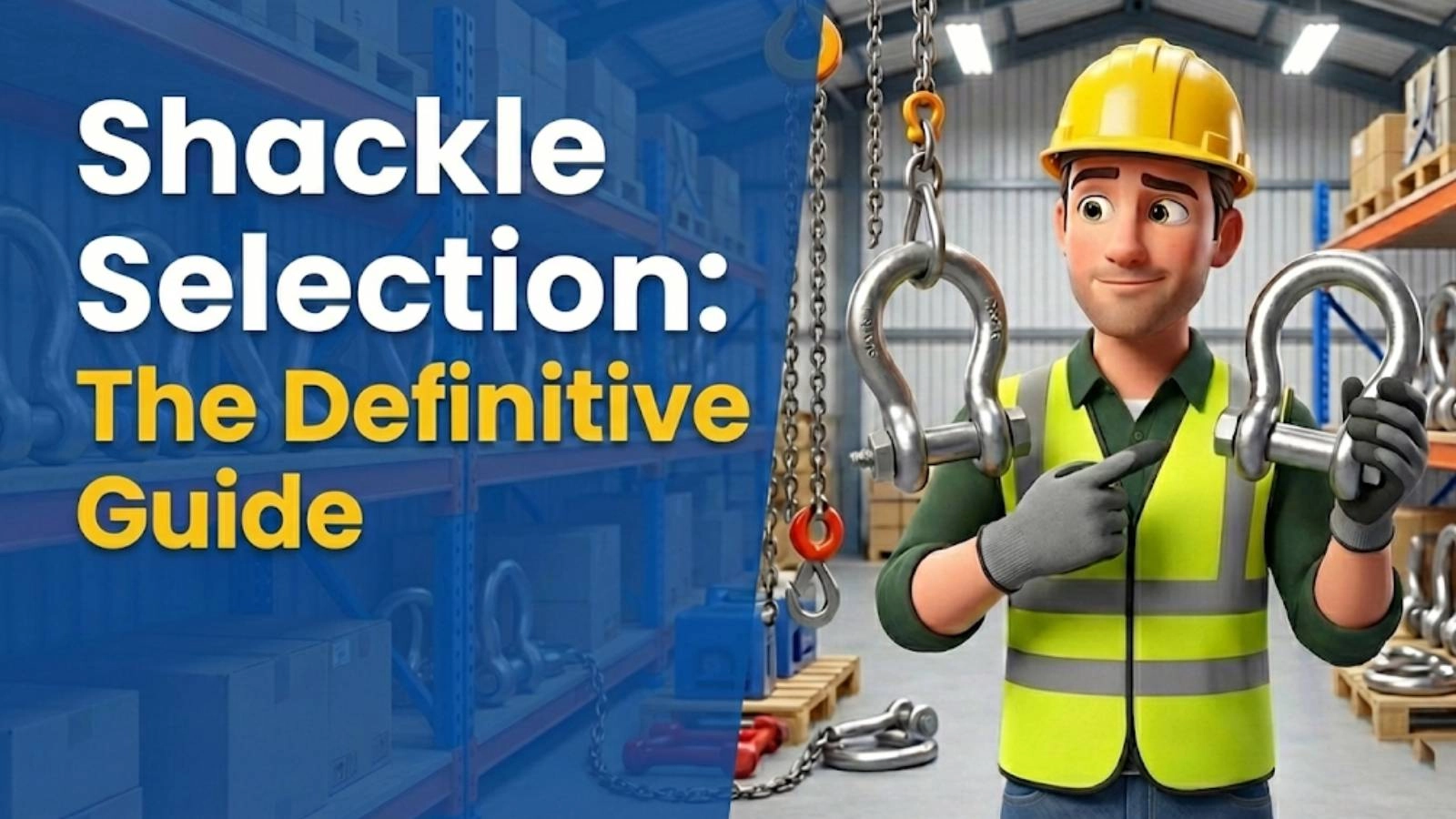
Lifting shackle testing is a critical process that ensures the safety and reliability of lifting operations across various industries. At Safe and Secure Trading Company (SSTC), we understand the importance of thorough testing procedures to mitigate risks and prevent accidents. This article will delve into the specifics of lifting shackle testing, its significance, and the best practices we recommend.
Understanding Lifting Shackles
A lifting shackle is a U-shaped piece of metal secured with a pin or bolt, designed to connect lifting slings, chains, or other rigging hardware to an object being lifted. They are integral components in material handling safety and rigging equipment, playing a vital role in a wide range of applications.
Types of Shackles
There are several types of shackles, each designed for specific purposes and load capacities. Understanding these differences is crucial for selecting the right shackle for the job.
- Anchor Shackles (Bow Shackles): Characterized by their larger, rounded “bow,” anchor shackles are ideal for connecting multiple lines or allowing a wider angle of pull. They’re commonly used in situations where the load may shift or rotate.
- Chain Shackles (D-Shackles): With a narrower, more linear design, chain shackles are best suited for straight-line pulls. Their compact size makes them ideal for applications with limited space.
- Safety Shackles: These shackles incorporate a safety bolt or pin with a double locking system to prevent accidental opening during use. They are often used in critical lifting applications where added security is required.
- Specialty Shackles: This category includes various specialized shackles designed for specific tasks, such as swivel shackles, long reach shackles, and wide body shackles.
Shackle Materials and Manufacturing
The materials used in shackle manufacturing directly impact their strength, durability, and suitability for different environments.
- Carbon Steel: Commonly used for general-purpose shackles, carbon steel offers good strength and affordability. However, it is susceptible to corrosion and may not be suitable for harsh environments.
- Alloy Steel: Alloy steel shackles provide superior strength and durability compared to carbon steel. They are often used in heavy-duty lifting applications and can withstand higher loads.
- Stainless Steel: Ideal for marine environments and applications where corrosion resistance is critical, stainless steel shackles offer excellent protection against rust and degradation.
- Manufacturing Processes: Shackles are typically manufactured through forging or casting processes. Forging involves shaping metal using compressive forces, resulting in a stronger and more durable product. Casting involves pouring molten metal into a mold, which can be more cost-effective but may result in a slightly weaker product.
The Importance of Lifting Shackle Testing
Lifting shackle testing is not just a regulatory requirement; it’s a fundamental aspect of ensuring safety in any lifting operation. In our experience at Safe and Secure Trading Company, proactive testing significantly reduces the risk of accidents and equipment failures.
Preventing Accidents and Injuries
The primary goal of lifting shackle testing is to identify any defects or weaknesses that could lead to failure during a lift. A failed shackle can cause a load to drop unexpectedly, resulting in serious injuries or fatalities. Thorough testing helps to prevent these catastrophic events.
Ensuring Compliance with Regulations
Many countries and industries have strict regulations regarding lifting equipment and shackle load testing. Compliance with these regulations is essential to avoid fines, legal liabilities, and reputational damage. Regular testing demonstrates a commitment to safety and adherence to industry standards.
Maintaining Equipment Reliability
Regular lifting equipment testing not only identifies existing problems but also helps to detect signs of wear and tear early on. This allows for timely maintenance and repairs, extending the lifespan of the shackles and preventing unexpected downtime. When our team in Dubai tackles this issue, they often find that early detection saves significant costs in the long run.
Reducing Liability
By implementing a comprehensive shackle inspection and testing program, companies can significantly reduce their liability in the event of an accident. Demonstrating that all reasonable steps were taken to ensure the safety of lifting equipment can help to mitigate legal and financial consequences.
> “Regular inspection and testing of lifting shackles are crucial for maintaining a safe working environment and preventing costly accidents.” – John Smith, Lead Safety Inspector
Types of Lifting Shackle Testing
There are several types of lifting shackle testing, each designed to assess different aspects of the shackle’s integrity. Understanding these tests is crucial for implementing an effective testing program.
Visual Inspection
Visual inspection is the first line of defense in identifying potential problems with lifting shackles. A thorough visual inspection should be conducted before each use, looking for signs of wear, damage, or corrosion.
- Cracks: Check for any visible cracks on the shackle body, pin, or threads. Cracks can significantly weaken the shackle and increase the risk of failure.
- Deformation: Look for any signs of bending, stretching, or distortion in the shackle’s shape. Deformation indicates that the shackle has been overloaded or subjected to excessive stress.
- Corrosion: Examine the shackle for signs of rust or corrosion, especially in marine environments or areas with high humidity. Corrosion can weaken the metal and compromise its integrity.
- Wear: Check for excessive wear on the pin and shackle body, particularly at the points of contact with other rigging hardware. Wear can reduce the shackle’s load-bearing capacity.
- Legibility of Markings: Ensure that the shackle’s markings, including the working load limit (WLL) and manufacturer’s identification, are clearly legible. Illegible markings can lead to misuse and overloading.
Proof Load Testing
Proof load testing involves subjecting the shackle to a load significantly higher than its working load limit to verify its strength and integrity. This test is typically performed by a qualified testing facility using calibrated testing equipment. Proof load testing is sometimes referred to as a crane shackle test, though it applies to all shackles, not just those used with cranes.
- Test Procedure: The shackle is installed in a testing machine and subjected to a proof load, typically twice the WLL. The load is held for a specified period, usually a few minutes, while the shackle is inspected for any signs of deformation or failure.
- Acceptance Criteria: To pass the proof load test, the shackle must not exhibit any permanent deformation or cracking after the load is removed. Any shackle that fails the test must be removed from service and destroyed.
- Frequency: Proof load testing should be performed on new shackles before they are put into service and periodically thereafter, as recommended by the manufacturer or relevant regulations.
Magnetic Particle Inspection (MPI)
Magnetic particle inspection is a non-destructive testing method used to detect surface and near-surface cracks and discontinuities in ferromagnetic materials. This test is particularly useful for identifying defects that may not be visible to the naked eye.
- Test Procedure: The shackle is magnetized, and then a suspension of magnetic particles is applied to its surface. If there are any cracks or discontinuities, the magnetic particles will be attracted to them, forming a visible indication.
- Advantages: MPI is a relatively quick and inexpensive testing method that can detect very small cracks and defects. It is also suitable for testing shackles of various shapes and sizes.
- Limitations: MPI is only effective on ferromagnetic materials, such as carbon steel and alloy steel. It cannot be used on stainless steel or other non-magnetic materials.
Dye Penetrant Inspection (DPI)
Dye penetrant inspection is another non-destructive testing method used to detect surface cracks and discontinuities in non-porous materials. This test is suitable for a wide range of materials, including stainless steel and aluminum.
- Test Procedure: A dye penetrant is applied to the surface of the shackle and allowed to dwell for a specified period. Excess penetrant is then removed, and a developer is applied. The developer draws the penetrant out of any cracks or discontinuities, making them visible under ultraviolet light.
- Advantages: DPI is a simple and cost-effective testing method that can be used on a variety of materials. It is also relatively easy to perform in the field.
- Limitations: DPI is only effective for detecting surface cracks and discontinuities. It cannot detect subsurface defects.
Ultrasonic Testing (UT)
Ultrasonic testing uses high-frequency sound waves to detect internal flaws and defects in materials. This test is particularly useful for identifying subsurface cracks, voids, and inclusions that may not be detectable by other methods.
- Test Procedure: A transducer emits ultrasonic waves into the shackle, and the waves are reflected back to the transducer. The time it takes for the waves to return and the amplitude of the reflected signal can be used to detect and characterize any flaws or defects.
- Advantages: UT can detect both surface and subsurface defects. It is also a relatively accurate and reliable testing method.
- Limitations: UT requires specialized equipment and trained personnel. It can also be more time-consuming and expensive than other testing methods.
Lifting Shackle Safety Best Practices
Implementing best practices for lifting shackle safety is crucial for preventing accidents and ensuring the longevity of your equipment. At SSTC, we advise our clients to adopt a comprehensive approach that includes proper selection, inspection, and usage of shackles.
Proper Shackle Selection
Selecting the right shackle for the job is the first step in ensuring safety. Consider the following factors when choosing a shackle:
- Working Load Limit (WLL): Always select a shackle with a WLL that meets or exceeds the weight of the load being lifted. Ensure the WLL is clearly marked on the shackle. Never exceed the WLL.
- Shackle Type: Choose the appropriate shackle type (anchor, chain, safety, etc.) based on the specific application and the angle of pull.
- Material: Select a shackle made of a material that is suitable for the environment and the type of load being lifted. Consider factors such as corrosion resistance and temperature.
- Size: Ensure that the shackle is the correct size for the lifting sling, chain, or other rigging hardware being used. The shackle should fit snugly but not be forced into place.
Regular Shackle Inspection
Regular shackle inspection is essential for identifying potential problems before they lead to accidents. Conduct a visual inspection before each use and a more thorough inspection periodically, as recommended by the manufacturer or relevant regulations.
- Frequency: Inspect shackles before each use and periodically (e.g., monthly or quarterly) depending on the frequency of use and the severity of the operating environment.
- Documentation: Keep a record of all shackle inspections, including the date of the inspection, the findings, and any corrective actions taken.
- Removal Criteria: Remove any shackle from service that exhibits any of the following: cracks, deformation, corrosion, excessive wear, or illegible markings.
Safe Shackle Usage
Using shackles safely involves following proper procedures and avoiding common mistakes that can lead to accidents.
- Proper Pin Installation: Ensure that the shackle pin is fully threaded and properly secured. Use a cotter pin or other locking device to prevent the pin from loosening during use.
- Avoiding Side Loading: Side loading occurs when the load is applied at an angle to the shackle, which can significantly reduce its load-bearing capacity. Use spreaders or other devices to prevent side loading.
- Avoiding Shock Loading: Shock loading occurs when the load is suddenly applied to the shackle, which can create excessive stress and lead to failure. Lift loads smoothly and avoid sudden jerks or impacts.
- Proper Storage: Store shackles in a clean, dry place to prevent corrosion and damage. Avoid storing shackles in direct sunlight or extreme temperatures.
Training and Competency
Ensure that all personnel involved in lifting operations are properly trained and competent in the selection, inspection, and use of lifting shackles. Training should cover the following topics:
- Shackle Types and Applications
- Working Load Limits and Safety Factors
- Inspection Procedures and Criteria
- Safe Usage Practices
- Relevant Regulations and Standards
| Shackle Type |
Typical Applications |
Key Features |
| Anchor Shackle (Bow) |
Connecting multiple lines, allowing wider angle of pull |
Larger, rounded bow, suitable for shifting loads |
| Chain Shackle (D) |
Straight-line pulls, limited space applications |
Narrower, linear design, compact size |
| Safety Shackle |
Critical lifting applications requiring added security |
Safety bolt or pin with double locking system |
| Swivel Shackle |
Applications requiring rotation under load |
Allows 360-degree rotation, reduces stress on rigging |
| Long Reach Shackle |
Reaching recessed or hard-to-access lifting points |
Extended length, provides extra reach |
Common Misconceptions About Lifting Shackle Testing
There are several common misconceptions about lifting shackle testing that can lead to unsafe practices. It’s important to debunk these myths and promote a better understanding of the importance of testing.
Myth: Visual Inspection is Enough
One common misconception is that a simple visual inspection is sufficient to ensure the safety of lifting shackles. While visual inspection is an important first step, it cannot detect subsurface cracks or other internal defects that may compromise the shackle’s integrity. Proof load testing, MPI, DPI, or UT are necessary to identify these hidden flaws.
Myth: Only Old Shackles Need Testing
Another misconception is that only old shackles need testing. While older shackles are more likely to have accumulated wear and damage, new shackles can also have manufacturing defects that are not visible to the naked eye. Proof load testing new shackles before putting them into service is essential to verify their strength and integrity.
Myth: WLL is All That Matters
Some people believe that as long as the load is below the shackle’s working load limit (WLL), there is no need for testing. However, the WLL is based on ideal conditions and does not account for factors such as side loading, shock loading, or environmental conditions. Regular testing helps to ensure that the shackle can withstand these real-world stresses.
Myth: Stainless Steel Shackles Don’t Need Testing
While stainless steel shackles are more resistant to corrosion, they are not immune to other types of damage, such as cracking or deformation. Regular inspection and testing are still necessary to ensure the safety of stainless steel shackles, especially in critical lifting applications.
The Role of Standards and Regulations
Lifting shackle testing is governed by various standards and regulations that aim to ensure safety and consistency in testing procedures. Compliance with these standards is essential for maintaining a safe working environment and avoiding legal liabilities.
Key Standards
- ASME B30.26: This standard covers the safe use of rigging hardware, including shackles. It provides guidance on selection, inspection, testing, and maintenance of shackles.
- EN 13889: This European standard specifies the requirements for forged steel shackles used for general lifting purposes. It includes requirements for materials, design, manufacturing, and testing.
- ASTM A952/A952M: This standard covers the requirements for forged grade 80 and grade 100 alloy steel lifting components and weldless chain.
Regulatory Requirements
Many countries and industries have specific regulatory requirements for lifting equipment and shackle load testing. These requirements may vary depending on the jurisdiction and the type of industry. It is important to be familiar with the relevant regulations in your area and to ensure that your testing program complies with these requirements. Safe and Secure Trading Company stays abreast of all new and updated regulations to ensure compliance for our clients.
Implementing a Lifting Shackle Testing Program
Implementing a comprehensive lifting shackle testing program involves several key steps:
1. Risk Assessment: Conduct a risk assessment to identify the potential hazards associated with lifting operations and to determine the appropriate level of testing required.
2. Written Procedures: Develop written procedures for shackle inspection, testing, and maintenance. These procedures should be based on industry best practices and relevant standards.
3. Training: Provide training to all personnel involved in lifting operations, covering the proper selection, inspection, and use of lifting shackles.
4. Equipment: Ensure that you have the necessary equipment for conducting shackle inspections and tests, such as visual inspection tools, magnetic particle testing equipment, or ultrasonic testing equipment.
5. Record Keeping: Keep accurate records of all shackle inspections, tests, and maintenance activities. These records should be readily available for review by regulatory agencies or internal auditors.
6. Periodic Review: Periodically review and update your testing program to ensure that it remains effective and compliant with the latest standards and regulations.
Practical Examples of Lifting Shackle Testing
To illustrate the importance of lifting shackle testing, let’s consider a few practical examples:
- Construction Site: On a construction site, lifting shackles are used to hoist heavy materials, such as steel beams and concrete panels. Regular lifting shackle testing can prevent accidents caused by shackle failure, ensuring the safety of workers and the public.
- Manufacturing Plant: In a manufacturing plant, shackles are used to move heavy machinery and equipment. Regular testing can prevent downtime and costly repairs caused by shackle failure, ensuring the smooth operation of the plant.
- Offshore Oil Rig: On an offshore oil rig, shackles are used to lift and lower equipment and supplies. The harsh marine environment can accelerate corrosion and wear, making regular testing essential to prevent accidents and environmental damage.
- Shipping Industry: In the shipping industry, lifting shackle testing is vital for securing cargo and ensuring the safe loading and unloading of goods. Proper inspection of rigging equipment, including lifting shackles, helps prevent accidents and damage to cargo during transportation.
These examples demonstrate that lifting shackle testing is a critical safety measure in a variety of industries and applications.
The Future of Lifting Shackle Testing
The future of lifting shackle testing is likely to be shaped by advancements in technology and a greater emphasis on data-driven decision-making.
- Remote Monitoring: Remote monitoring systems are being developed that can continuously monitor the condition of lifting shackles and detect signs of wear or damage in real-time.
- AI-Powered Inspection: Artificial intelligence (AI) is being used to automate the visual inspection process, improving the accuracy and efficiency of shackle inspections.
- Digital Record Keeping: Digital record-keeping systems are replacing paper-based systems, making it easier to track shackle inspections, tests, and maintenance activities.
- Predictive Maintenance: Predictive maintenance techniques are being used to forecast when shackles are likely to fail, allowing for timely maintenance and repairs.
- Improved Materials: New materials are being developed that offer greater strength, durability, and corrosion resistance, reducing the need for frequent testing and replacement.
These advancements will help to make lifting shackle testing more efficient, reliable, and cost-effective, further improving safety in lifting operations.
Conclusion
Understanding the nuances of lifting shackle testing is vital for maintaining safe and efficient operations. By implementing a comprehensive testing program, adhering to industry best practices, and staying informed about the latest advancements in technology, companies can minimize risks, ensure compliance, and protect their workers and assets. We, at Safe and Secure Trading Company, are committed to providing our clients with the expertise and support they need to implement effective lifting shackle testing programs. We help ensure every lift is a safe lift.
FAQ Section
Q: How often should lifting shackles be inspected?
A: Lifting shackles should be visually inspected before each use. A more thorough inspection, including NDT methods like MPI or DPI, should be conducted periodically, as recommended by the manufacturer or relevant regulations. This might be monthly, quarterly, or annually, depending on the frequency and severity of use.
Q: What is the difference between WLL and proof load?
A: The Working Load Limit (WLL) is the maximum load that a shackle is designed to safely lift. The proof load is a test load that is typically twice the WLL, applied to the shackle to verify its strength and integrity. The shackle must withstand the proof load without permanent deformation.
Q: Can I use a shackle that has been repaired?
A: No, shackles that have been repaired by welding or other methods should not be used. Repairs can compromise the shackle’s strength and integrity, making it unsafe for lifting operations. Shackles that are damaged or worn should be removed from service and replaced.
Q: What should I do if I find a crack in a shackle?
A: If you find a crack in a shackle, it should be immediately removed from service and destroyed. Do not attempt to use or repair the shackle. Cracks can significantly weaken the shackle and increase the risk of failure.
Q: What is the significance of shackle proof load?
A: Shackle proof load is a critical testing process that verifies the shackle’s ability to withstand loads significantly higher than its working load limit. It ensures that the shackle is free from manufacturing defects and can safely handle the intended lifting operations.
Q: What is material handling safety, and how does it relate to lifting shackles?
A: Material handling safety encompasses the safe and efficient movement, storage, and control of materials in a workplace. Lifting shackles are a vital component of material handling, and their proper use, inspection, and testing are essential for preventing accidents and injuries.
Q: Why is lifting shackle safety so important?
A: Lifting shackle safety is paramount because the failure of a shackle can lead to dropped loads, equipment damage, serious injuries, or even fatalities. Proper shackle selection, inspection, testing, and usage are essential for preventing these catastrophic events.
Q: What does shackle inspection involve?
A: Shackle inspection involves a thorough visual examination for signs of cracks, deformation, corrosion, and wear. It also includes verifying the legibility of markings, checking the proper installation of the pin, and ensuring that the shackle is the correct type and size for the application. More advanced inspections may involve NDT methods like MPI or DPI.
Q: How does WLL affect shackle selection?
A: The Working Load Limit (WLL) is the primary factor in shackle selection. Always choose a shackle with a WLL that meets or exceeds the weight of the load being lifted. Never exceed the WLL, as this can lead to shackle failure and accidents.
Q: What are the requirements for shackle load testing in 2026?
A: The specific requirements for shackle load testing in 2026 depend on the industry, location, and applicable standards and regulations. However, generally, shackle load testing should be performed by a qualified testing facility using calibrated testing equipment. The test should involve subjecting the shackle to a proof load, typically twice the WLL, and inspecting it for any signs of deformation or failure. All testing activities must comply with relevant standards such as ASME B30.26 and EN 13889.