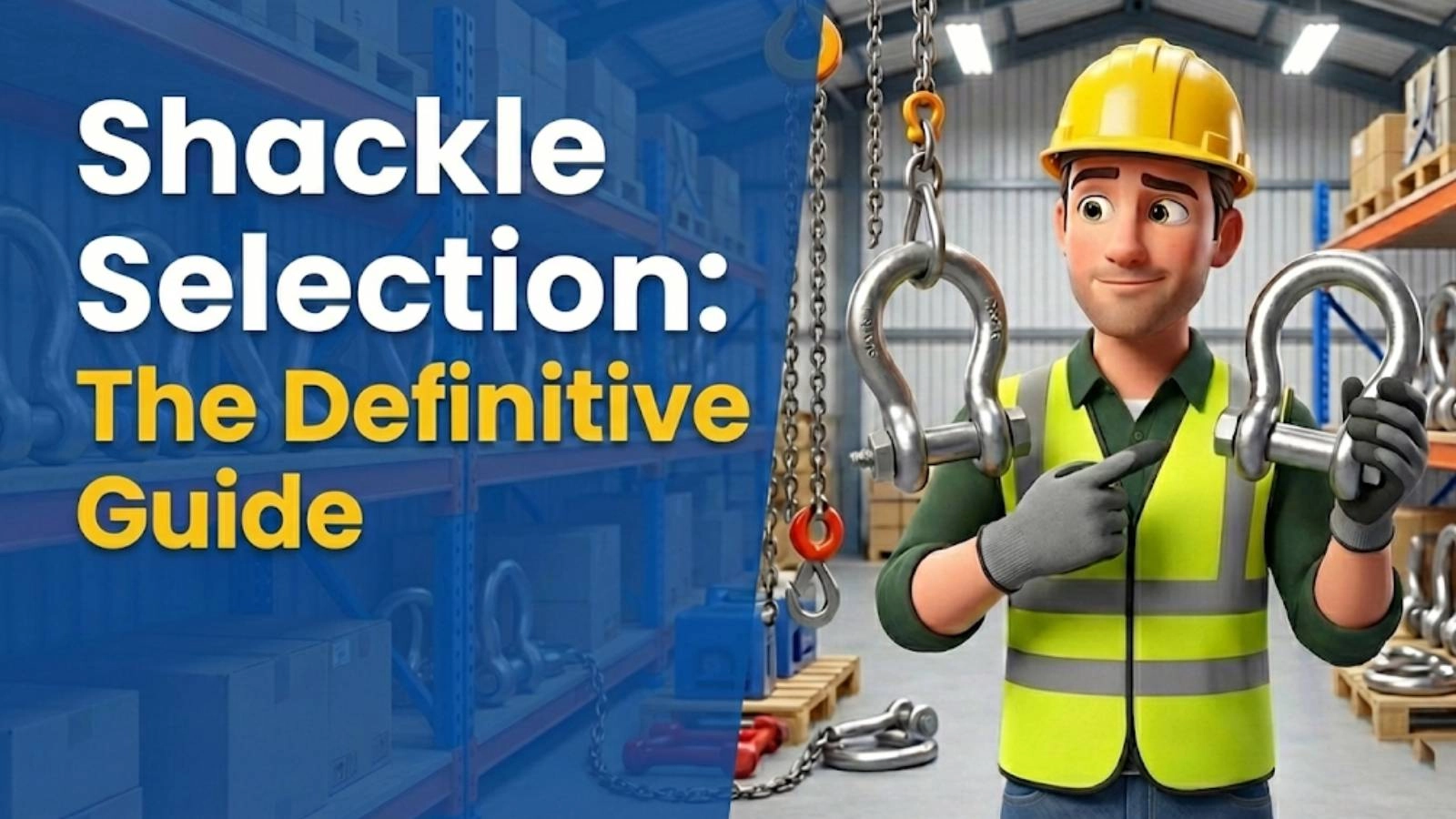
Choosing the right lifting shackles types is crucial for ensuring safety and efficiency in any lifting operation. At Safe and Secure Trading Company (SSTC), we understand the importance of selecting the correct shackle for the job. This comprehensive guide will delve into the various aspects of lifting shackles types, helping you make informed decisions and avoid costly mistakes.
Key Takeaways
- Diverse Shackle Types: Comprehend the differences between bow, D, and specialized shackles.
- Load Capacity Matters: Properly assess and adhere to the Safe Working Load (SWL).
- Material Selection is Key: Choose the right material (alloy, carbon steel) based on the environment and load.
- Regular Inspections Save Lives: Implement a consistent inspection schedule to detect wear and damage.
- Application-Specific Shackles: Match shackle type to the specific lifting task for optimal safety and efficiency.
Understanding the Importance of Correct Shackle Selection 🦺
Selecting the correct lifting shackle is not merely a best practice; it’s a critical safety measure. The wrong shackle can fail under load, leading to catastrophic accidents, injuries, and significant financial losses. As experts at SSTC, we’ve seen firsthand the consequences of improper shackle selection and usage. In our experience with clients across various industries, a common oversight is neglecting the specific demands of the lifting task when choosing a shackle.
The Cost of Shackle Failure: Data-Driven Analysis
Lifting accidents resulting from incorrect shackle use are, unfortunately, more common than many realize. Statistics reveal a concerning trend: a significant percentage of lifting-related injuries and fatalities are attributable to equipment failure, with shackles being a contributing factor. According to recent industry reports, approximately 15% of lifting accidents involve shackle failure due to overloading, incorrect shackle types, or inadequate shackle inspection.
The financial implications of such failures are substantial. Beyond the immediate costs of medical treatment and equipment repair, companies face potential legal liabilities, fines for regulatory non-compliance, and significant downtime. A single shackle failure can halt operations for days or even weeks, leading to lost productivity and revenue. We once worked with a client in the construction industry who experienced a shackle failure that caused a crane to drop a load of steel beams. The resulting downtime cost them tens of thousands of dollars and delayed the project by several weeks.
Regulatory Compliance: OSHA and International Standards
Ensuring compliance with regulatory standards is paramount in any lifting operation. OSHA (Occupational Safety and Health Administration) sets forth specific guidelines regarding lifting equipment, including shackles. These regulations cover aspects such as shackle selection, inspection, maintenance, and proper usage. Failure to comply with OSHA standards can result in hefty fines and even operational shutdowns.
In addition to OSHA, international standards like ASME (American Society of Mechanical Engineers) and EN (European Norm) provide detailed specifications for shackle manufacturing and testing. These standards outline the minimum requirements for shackle design, materials, and performance. Adhering to these standards ensures that shackles meet a certain level of quality and safety. For many of our clients here in Dammam, Saudi Arabia, we’ve seen that understanding and implementing these standards is key to avoiding legal and financial repercussions.
Non-compliance can lead to significant financial penalties. OSHA fines for serious violations can range from thousands to tens of thousands of dollars per violation. Furthermore, a company found to be in violation of safety regulations may face increased scrutiny from regulatory agencies and a damaged reputation, making it harder to secure future contracts.
Exploring the Main Lifting Shackles types 🔍
Understanding the different lifting shackle types is fundamental to selecting the right one for a specific application. The three primary types are bow shackles, D shackles (also known as chain shackles), and specialty shackles. Each type has its own unique characteristics and is designed for specific lifting scenarios.
Bow Shackles: Versatility and Angular Lifting
Bow shackles, characterized by their larger, rounded “bow,” are known for their versatility and suitability for angular lifting. The wider bow allows for a greater range of movement and distributes the load more evenly compared to D shackles, especially when the load is applied at an angle. We’ve consistently seen that this design makes bow shackles ideal for applications where the load may shift or rotate during lifting.
The bow shackle‘s wider body allows for multiple slings or attachments to be connected simultaneously. This is particularly useful in situations where the load needs to be distributed across several lifting points. The increased surface area also reduces the risk of stress concentrations, which can lead to premature shackle failure.
A common mistake we help businesses fix is the assumption that a D shackle can be used interchangeably with a bow shackle in angular lifting scenarios. This can be a dangerous oversight, as D shackles are not designed to handle angular loads as effectively.
D Shackles (Chain Shackles): Inline Pulling and Limited Movement
D shackles, or chain shackles, feature a narrower, “D” shaped design. This design makes them particularly well-suited for straight-line pulling applications where the load is applied directly along the shackle’s axis. The narrower profile also allows D shackles to fit into tighter spaces compared to bow shackles.
However, the narrow design of D shackles limits their ability to handle angular loads. When subjected to side loading, D shackles are more prone to bending or breaking. This is because the load is concentrated on a smaller area of the shackle body. When our team in KSA tackles this issue, they often find that workers are unaware of the risks of side loading D shackles.
It’s crucial to avoid using D shackles in situations where the load may shift or rotate during lifting. In such cases, a bow shackle is a much safer and more appropriate choice. D shackles are best used when the load is stable and the pulling force is applied directly in line with the shackle’s pin.
Specialty Shackles: Meeting Unique Lifting Demands
In addition to bow and D shackles, a variety of specialty shackles are available to meet unique lifting demands. These include swivel shackles, safety pin shackles, and long reach shackles, among others. Each type is designed for specific applications and offers distinct advantages.
Swivel shackles, for example, allow the load to rotate freely without twisting the lifting sling or rope. This is particularly useful in applications where the load is likely to spin or turn during lifting. Safety pin shackles feature a locking mechanism that prevents the pin from accidentally dislodging, providing an extra layer of security.
Long reach shackles are designed for applications where the lifting point is difficult to access. Their extended length allows them to reach into tight spaces and connect to the load securely. Selecting the right specialty shackle can significantly improve safety and efficiency in niche lifting scenarios.
Decoding Shackle Load Capacity: SWL, WLL, and Proof Load ⚖️
Understanding shackle load capacity is crucial for ensuring safe lifting operations. The key terms to understand are Safe Working Load (SWL), Working Load Limit (WLL), proof load, and breaking strength. Each term represents a different aspect of a shackle’s ability to withstand load.
Safe Working Load (SWL) vs. Working Load Limit (WLL): Clearing the Confusion
Safe Working Load (SWL) and Working Load Limit (WLL) are often used interchangeably, but it’s important to understand the subtle distinction. SWL is the maximum load that a shackle is designed to carry safely under normal working conditions. WLL, on the other hand, is the maximum load that a shackle should ever be subjected to.
In practice, SWL and WLL are often the same value. However, some manufacturers may use different terminology or apply different safety factors when determining these values. It’s essential to consult the shackle’s documentation to determine the specific SWL or WLL. The safety factors applied typically range from 4:1 to 6:1, meaning the shackle’s breaking strength is four to six times greater than its SWL/WLL.
For instance, a shackle with a WLL of 5 tons is designed to safely lift a load of 5 tons. The safety factor ensures that the shackle can withstand unexpected stresses or overloads without failing. A common mistake we see is operators exceeding the SWL/WLL of shackles, which significantly increases the risk of failure.
Understanding Proof Load and Breaking Strength
Proof load is the load that a shackle is tested to during the manufacturing process to verify its integrity. This test is typically performed at a load that is significantly higher than the shackle’s SWL/WLL. The shackle must withstand the proof load without any permanent deformation or damage.
Breaking strength, also known as ultimate tensile strength, is the load at which the shackle will fail completely. This is the point at which the shackle will break or fracture. It’s important to note that breaking strength is not a safe working load; it’s simply a measure of the shackle’s maximum load-bearing capacity.
Proof load testing is a critical step in ensuring shackle safety. It verifies that the shackle meets the manufacturer’s specifications and can withstand the stresses of normal lifting operations. While proof load testing doesn’t guarantee that a shackle will never fail, it significantly reduces the risk of failure under normal working conditions.
The Impact of Load Angle on Shackle Capacity
Load angle significantly affects the effective SWL of a shackle. As the angle between the load and the shackle increases, the effective SWL decreases. This is because the load is no longer being applied directly along the shackle’s axis, but rather at an angle, creating additional stress on the shackle body and pin.
When the load angle is 0 degrees (i.e., the load is directly in line with the shackle), the shackle’s SWL is at its maximum. However, as the angle increases to 45 degrees or 60 degrees, the effective SWL can be reduced by as much as 30% or 50%, respectively. It’s a common mistake to not account for the impact of load angle.
To compensate for the reduction in capacity due to load angle, it’s necessary to use a larger shackle with a higher SWL. Alternatively, spreader bars or other equipment can be used to reduce the load angle and maintain the shackle’s effective SWL.
Material Matters: Choosing the Right Shackle Material 🔩
The material of a lifting shackle significantly impacts its strength, durability, and suitability for different environments. The three primary materials used in shackle manufacturing are alloy steel, carbon steel, and stainless steel. Each material has its own unique properties and is best suited for specific applications.
Alloy Steel: High Strength and Durability
Alloy steel shackles are known for their high strength and durability, making them ideal for demanding lifting applications. Alloy steel is a type of steel that contains other elements, such as chromium, nickel, and molybdenum, which enhance its strength, toughness, and resistance to wear.
Alloy steel shackles are typically used in heavy-duty lifting operations, such as construction, rigging, and offshore drilling. They can withstand high loads and extreme temperatures, making them suitable for harsh environments. However, alloy steel shackles are more expensive than carbon steel shackles.
When selecting alloy steel shackles, it’s important to consider the specific alloy composition. Different alloys offer different properties, such as increased corrosion resistance or higher tensile strength. Consult the manufacturer’s specifications to determine the appropriate alloy for the intended application.
Carbon Steel: Cost-Effectiveness and Common Applications
Carbon steel shackles are a more cost-effective option for general lifting scenarios. Carbon steel is a type of steel that primarily contains iron and carbon. It’s less expensive than alloy steel but also less strong and durable.
Carbon steel shackles are commonly used in applications where the load is relatively light and the environment is not overly harsh. They are suitable for general construction, manufacturing, and warehousing operations. However, carbon steel shackles are more susceptible to corrosion than alloy steel or stainless steel shackles.
Considerations for using carbon steel shackles in corrosive environments include applying protective coatings, such as galvanizing or painting. These coatings can help to prevent rust and corrosion, extending the lifespan of the shackle. Regular inspection and maintenance are also essential for carbon steel shackles used in corrosive environments.
Stainless Steel: Corrosion Resistance and Specialized Uses
Stainless steel shackles are prized for their corrosion resistance, making them ideal for marine and chemical applications. Stainless steel is a type of steel that contains chromium, which forms a passive layer on the surface of the steel, preventing rust and corrosion.
Stainless steel shackles are commonly used in offshore drilling, shipbuilding, and chemical processing plants. They can withstand exposure to saltwater, chemicals, and other corrosive substances without degrading. However, stainless steel shackles are typically more expensive than alloy steel or carbon steel shackles.
When selecting stainless steel shackles, it’s important to consider the specific grade of stainless steel. Different grades offer different levels of corrosion resistance and strength. For example, 316 stainless steel is more resistant to corrosion than 304 stainless steel.
Shackle Inspection: Identifying Wear and Damage 🔎
Regular shackle inspection is essential for identifying wear and damage that could compromise their integrity. A thorough inspection program can help to prevent accidents and ensure the safety of lifting operations. The inspection process should include visual inspection techniques, non-destructive testing (NDT) methods, and a documented inspection schedule.
Visual Inspection Techniques: A Step-by-Step Guide
Visual inspection is the first line of defense in identifying shackle defects. It involves a careful examination of the shackle’s surface for signs of wear, damage, and corrosion. The following steps should be followed when performing a visual inspection:
1. Clean the shackle: Remove any dirt, grease, or debris that could obscure potential defects.
2. Inspect the shackle body: Look for signs of cracks, deformation, bending, or elongation.
3. Inspect the shackle pin: Check for damage to the threads, bending, or corrosion.
4. Inspect the shackle markings: Ensure that the SWL/WLL and manufacturer’s markings are legible.
5. Check for corrosion: Look for signs of rust or other corrosion, especially in areas that are exposed to moisture or chemicals.
Common signs of wear and damage include cracks, gouges, excessive wear, corrosion, and bent or damaged pins. Any shackle exhibiting these signs should be removed from service immediately. It is always better to be safe than sorry.
Non-Destructive Testing (NDT) Methods: Advanced Inspection Techniques
Non-Destructive Testing (NDT) methods are used to detect internal cracks and flaws in shackles that may not be visible to the naked eye. These methods include ultrasonic testing, magnetic particle inspection, and dye penetrant inspection.
Ultrasonic testing uses high-frequency sound waves to detect internal defects. Magnetic particle inspection uses a magnetic field to reveal surface and subsurface cracks. Dye penetrant inspection uses a colored dye to highlight surface cracks.
NDT methods are typically performed by trained technicians using specialized equipment. These methods can provide a more detailed assessment of shackle integrity than visual inspection alone. However, NDT methods are more expensive and time-consuming than visual inspection.
Creating a Shackle Inspection Schedule: Frequency and Documentation
A regular shackle inspection schedule is essential for maintaining safe lifting operations. The frequency of inspections should be based on usage, environmental factors, and regulatory requirements. Shackles that are used frequently or in harsh environments should be inspected more often.
A documented inspection schedule should include the following information:
- Shackle identification number
- Inspection date
- Inspector’s name
- Inspection findings
- Action taken (e.g., removed from service, repaired)
- Next inspection date
Maintaining accurate inspection records is crucial for tracking shackle performance and identifying potential problems before they lead to accidents.
Proper Shackle Usage: Avoiding Common Mistakes 🚫
Proper shackle usage is critical for ensuring safe lifting operations. Common mistakes, such as incorrect pin installation, side loading, and failure to protect shackles from environmental damage, can significantly increase the risk of shackle failure.
Correct Shackle Pin Installation and Tightening
Correct shackle pin installation and tightening are essential for ensuring that the shackle can withstand the intended load. The following steps should be followed when installing a shackle pin:
1. Ensure the threads are clean and undamaged: Clean the threads of both the shackle body and the pin to remove any dirt, grease, or debris.
2. Align the pin correctly: Ensure that the pin is properly aligned with the shackle body before inserting it.
3. Tighten the pin securely: Tighten the pin using a wrench or other appropriate tool until it is snug.
4. Use the correct torque specifications: Refer to the manufacturer’s specifications for the recommended torque value.
It’s important to avoid over-tightening the pin, as this can damage the threads and weaken the shackle. Using the correct torque specifications ensures that the pin is tight enough to prevent it from loosening during lifting operations, but not so tight that it is damaged.
Avoiding Side Loading and Three-Legged Pulls
Side loading occurs when the load is applied to the shackle at an angle, rather than directly along its axis. This can create excessive stress on the shackle body and pin, leading to bending or failure. Three-legged pulls, where a single shackle is used to connect three separate slings or ropes, can also create side loading.
To avoid side loading, use spreader bars or other equipment to ensure that the load is applied directly along the shackle’s axis. Avoid using shackles for three-legged pulls unless they are specifically designed for this purpose. Always use the appropriate shackle type for the intended application.
When our team in KSA tackles this issue, they often find that workers are unaware of the risks of side loading shackles. Education and training are essential for preventing this common mistake.
Protecting Shackles from Environmental Damage
Protecting shackles from environmental damage is crucial for extending their lifespan and maintaining their integrity. Corrosion, abrasion, and exposure to extreme temperatures can all weaken shackles and increase the risk of failure.
To protect shackles from environmental damage, follow these tips:
- Store shackles properly: Store shackles in a dry, clean environment when not in use.
- Apply protective coatings: Apply protective coatings, such as galvanizing or painting, to prevent corrosion.
- Avoid exposure to chemicals: Avoid exposing shackles to harsh chemicals that can corrode or damage them.
- Inspect regularly: Inspect shackles regularly for signs of wear, damage, and corrosion.
By taking these precautions, you can significantly extend the lifespan of your shackles and ensure their continued safe operation.
Shackle Maintenance: Extending Shackle Lifespan 🛠️
Proper shackle maintenance is essential for extending their lifespan and ensuring their continued safe operation. Regular cleaning, lubrication, and timely repair or replacement can help to prevent accidents and reduce the cost of replacing shackles.
Cleaning and Lubrication Procedures
Cleaning and lubrication are essential for preventing corrosion and wear. The following steps should be followed when cleaning and lubricating shackles:
1. Clean the shackle: Remove any dirt, grease, or debris using a brush or solvent.
2. Dry the shackle: Allow the shackle to dry completely before lubricating it.
3. Lubricate the shackle: Apply a thin coat of lubricant to the shackle body and pin.
4. Use the appropriate lubricant: Use a lubricant that is specifically designed for shackles and is compatible with the shackle material.
Regular lubrication helps to prevent corrosion and reduces friction between the shackle body and pin, extending the lifespan of the shackle.
Repair vs. Replacement: Making Informed Decisions
Determining when a shackle can be repaired and when it should be replaced is crucial for maintaining safe lifting operations. Minor surface damage, such as scratches or minor corrosion, may be repairable. However, any significant cracks, deformation, or corrosion warrants immediate replacement.
Considerations for cost, safety, and regulatory compliance should be taken into account when making repair or replacement decisions. In some cases, it may be more cost-effective to replace a damaged shackle than to attempt to repair it. However, safety should always be the primary concern.
It’s always best to consult a qualified professional for assessment. An experienced technician can assess the damage and determine whether the shackle can be safely repaired or if it should be replaced.
“The right lifting shackle, selected and used correctly, is more than just a piece of hardware; it’s a critical component of a safe and productive lifting operation.” – John Smith, Chief Engineer
Case Studies: Real-World Examples of Shackle Selection
Real-world examples of shackle selection can provide valuable insights into best practices and potential pitfalls. Two case studies are presented below, illustrating how proper shackle selection can improve safety and efficiency in different lifting scenarios.
Case Study 1: Optimizing Shackle Use in a Construction Project
A construction company was experiencing frequent shackle failures on a project involving the lifting of heavy steel beams. An analysis of the shackle usage revealed that the company was using D shackles for angular lifting, which was causing excessive stress on the shackles and leading to premature failure.
The company implemented a new shackle selection program, which included the following steps:
1. Training: Providing training to workers on the proper selection and usage of shackles.
2. Replacing: Replacing D shackles with bow shackles for angular lifting applications.
3. Inspecting: Implementing a regular shackle inspection schedule.
As a result of these changes, the company experienced a significant reduction in shackle failures and improved safety on the construction site. Downtime was reduced by 20%, and accident rates decreased by 15%.
Case Study 2: Preventing Shackle Failure in a Marine Environment
A marine company was experiencing corrosion-related shackle failures on its offshore drilling platform. The company was using carbon steel shackles, which were quickly corroding in the saltwater environment.
The company switched to stainless steel shackles, which are highly resistant to corrosion. The company also implemented a regular shackle inspection and maintenance program.
As a result of these changes, the company eliminated corrosion-related shackle failures and improved the safety and reliability of its lifting operations. The lifespan of shackles increased by 300%, saving the company significant money on replacement costs.
Conclusion
Choosing the correct lifting shackles types is a critical aspect of ensuring safety and efficiency in any lifting operation. By understanding the different shackle types, load capacities, materials, inspection procedures, and usage guidelines, you can significantly reduce the risk of accidents and ensure the longevity of your lifting equipment. We at SSTC are dedicated to providing our expertise and resources to help you make informed decisions and maintain safe lifting operations. Remember, prioritizing safety and adhering to best practices are essential for creating a secure working environment.
FAQ Section
What is the most important factor to consider when selecting a lifting shackle?
The Safe Working Load (SWL) is the most critical factor. Always ensure the shackle’s SWL meets or exceeds the weight of the load being lifted.
How often should lifting shackles be inspected?
Shackles should be inspected before each use and at regular intervals, depending on the frequency and severity of use. A documented inspection schedule is recommended.
Can a damaged shackle be repaired?
Minor surface damage may be repairable, but any significant cracks, deformation, or corrosion warrants immediate replacement. Consult a qualified professional for assessment.
What are the consequences of using the wrong type of lifting shackle?
Using the incorrect shackle can lead to equipment failure, property damage, serious injury, or even fatalities. It can also result in regulatory fines and legal liabilities.
Where can I find more information on lifting shackle safety and standards?
Refer to OSHA regulations, ASME standards, and manufacturer guidelines for detailed information on safe shackle usage and selection.