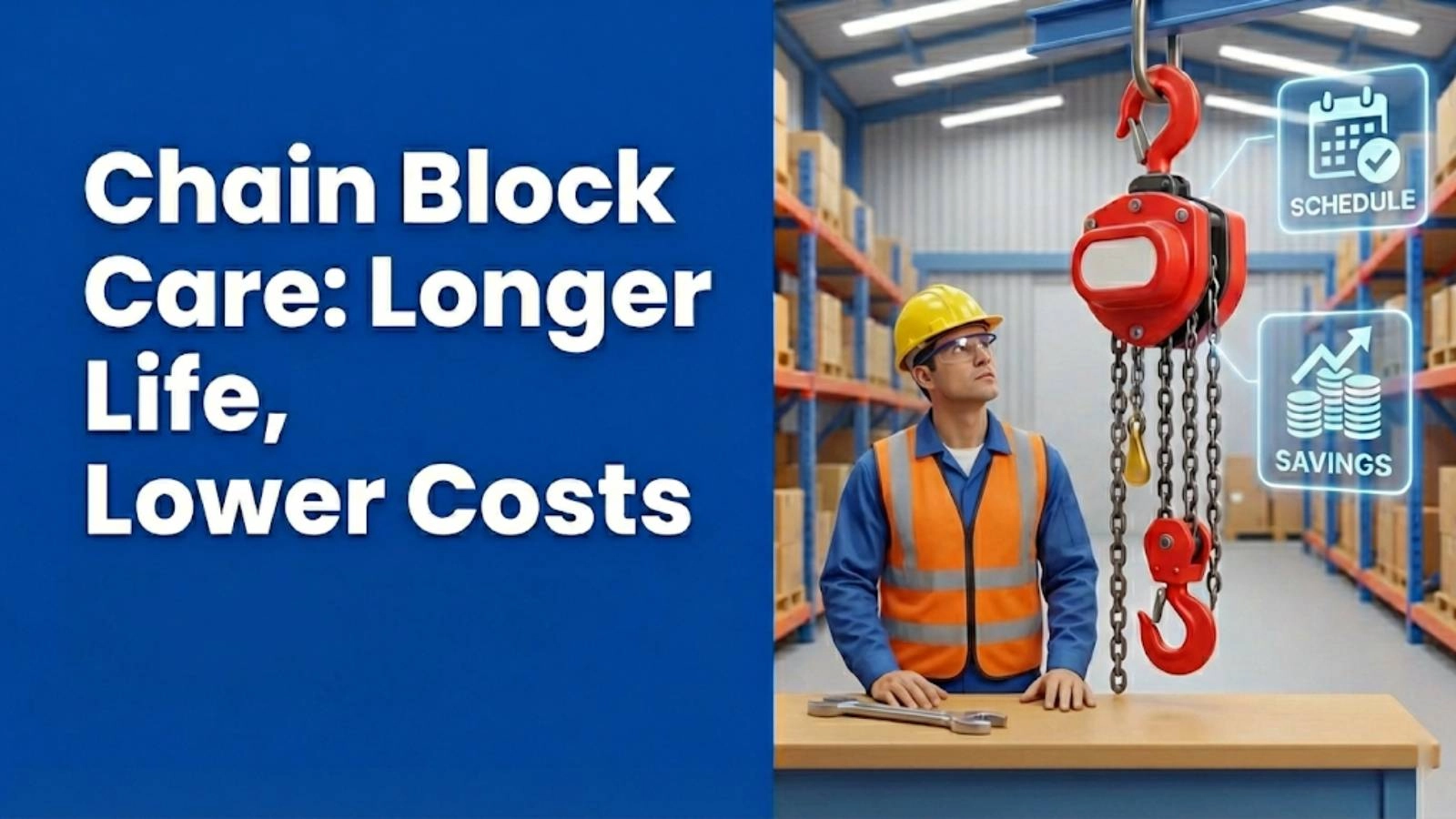
Manual chain blocks are essential tools in various industries, offering a reliable and efficient way to lift heavy loads. These devices, also known as chain hoists, provide a mechanical advantage that allows workers to lift objects far beyond their individual capabilities. At Safe and Secure Trading Company (SSTC), we understand the importance of having dependable lifting equipment, and the manual chain block is a cornerstone of many of our clients’ operations. They’re a staple in our catalog for a reason, so let’s explore some of the hidden manual chain block benefits that make them an indispensable asset.
1. Cost-Effectiveness: The Budget-Friendly Lifting Solution
✅ One of the most significant advantages of a manual chain block is its cost-effectiveness. Compared to electric or hydraulic hoists, the initial investment is substantially lower, making it an accessible option for businesses of all sizes. This affordability doesn’t compromise on performance, as these blocks are designed to provide reliable lifting power without breaking the bank.
Initial Investment Savings
When comparing lifting solutions, the upfront cost of a manual chain block is noticeably lower than that of electric or hydraulic alternatives. This makes it a practical choice for smaller businesses or those with budget constraints. The savings can be allocated to other essential areas of the operation, optimizing resource allocation.
Reduced Maintenance Expenses
With fewer moving parts, a manual chain block requires less maintenance compared to more complex systems. This translates to lower repair costs and reduced downtime, increasing overall efficiency. Our clients in the construction and maintenance sectors often remark on how this simple design minimizes unexpected expenses.
No Electricity Required
Perhaps one of the most overlooked benefits is that a manual chain block requires no electricity to operate. This not only eliminates energy costs but also provides operational flexibility in locations where power is unavailable or unreliable. This is particularly valuable for our clients operating in remote areas or during power outages.
2. Portability and Versatility: Lift Anywhere, Anytime
💡 The portability and versatility of a manual chain block make it an incredibly useful tool in diverse environments. Its lightweight design allows for easy transport, and it can be quickly set up in various locations. This adaptability makes it an ideal solution for tasks ranging from construction sites to maintenance facilities.
Lightweight Design for Easy Transport
The compact and lightweight design of a manual chain block ensures it can be easily transported to different job sites. This portability is especially beneficial for companies that need to move their lifting equipment frequently. For many of our clients here in Dammam, we’ve seen that the easy transport is perfect for using these across a large construction site.
Suitable for Remote or Confined Spaces
Manual chain blocks excel in remote or confined spaces where electricity is unavailable or space is limited. Their manual operation means they can be used in virtually any environment, providing a reliable lifting solution regardless of the location’s constraints. This makes them a favorite among our clients working in the oil and gas industry.
Adaptable to Various Lifting Tasks
From lifting heavy machinery to securing loads, a manual chain block is adaptable to a wide range of lifting tasks. Its versatility makes it a valuable tool for various applications, ensuring it can handle diverse operational needs. We often see these blocks used in conjunction with other manual lifting equipment for maximum efficiency.
3. Enhanced Safety: Precision and Control in Lifting
➡️ Safety is paramount in any lifting operation, and manual chain blocks offer enhanced safety features that provide operators with precision and control. The direct manual operation ensures accurate control over lifting speed and positioning, reducing the risk of accidents. Simple but effective design can give the operator the best amount of safe control.
Manual Operation for Precise Control
The manual operation of a manual chain block allows operators to have precise control over the lifting process. This level of control is crucial when handling delicate or sensitive materials, as it minimizes the risk of damage. This is a significant advantage over electric hoists, which can sometimes be jerky or difficult to fine-tune.
Reduced Risk of Overloading
Visual inspection and manual effort provide a natural safeguard against overloading a manual chain block. Operators can feel the weight and resistance, preventing them from exceeding the lifting capacity of the equipment. This intuitive feedback mechanism significantly reduces the risk of accidents.
Fail-Safe Mechanisms
The simple design of a manual chain block minimizes the potential for mechanical failures, ensuring a safer lifting process. These blocks are engineered with robust fail-safe mechanisms that provide added security and peace of mind. This reliability is why many of our clients trust them for critical lifting operations.
4. Simplicity and Reliability: Easy to Use and Maintain
✅ Manual chain blocks are known for their simplicity and reliability, making them easy to use and maintain. The straightforward design requires minimal training for operation, and their robust construction ensures long-lasting performance. This combination of simplicity and durability makes them a staple in many industrial settings.
User-Friendly Operation
The user-friendly operation of a manual chain block requires minimal training, making it accessible to a wider range of workers. This ease of use reduces the learning curve and allows operators to quickly become proficient in using the equipment safely and effectively. This is especially important in industries with high turnover rates.
Robust and Durable Construction
Designed to withstand harsh conditions, a manual chain block features robust and durable construction that provides long-lasting performance. These blocks are built to endure heavy use and challenging environments, ensuring they remain a reliable lifting solution for years to come. The longevity of these tools makes them a solid investment.
Easy Troubleshooting and Repair
The simple design of a manual chain block allows for easy identification and resolution of issues. Troubleshooting is straightforward, and repairs can often be performed quickly and efficiently. This ease of maintenance reduces downtime and ensures the equipment remains operational when needed.
5. Environmental Friendliness: A Sustainable Lifting Option
💡 In an era where sustainability is increasingly important, manual chain blocks offer an environmentally friendly lifting solution. They produce no emissions or pollutants during operation and contribute to a smaller carbon footprint. By choosing manual options, companies can demonstrate their commitment to environmental responsibility.
No Emissions or Pollutants
Unlike electric or combustion-powered lifting equipment, manual chain blocks produce no emissions or pollutants during operation. This makes them an environmentally friendly choice for companies looking to reduce their environmental impact. Our clients in the renewable energy sector appreciate this eco-friendly aspect.
Reduced Carbon Footprint
Eliminating electricity consumption contributes to a smaller carbon footprint when using a manual chain block. This reduction in energy usage aligns with global efforts to combat climate change and promote sustainable practices. By opting for manual solutions, businesses can actively contribute to a greener future.
Sustainable Material Usage
Manual chain blocks are often made from durable materials that can be recycled or repurposed, further enhancing their sustainability. This emphasis on sustainable material usage aligns with the principles of a circular economy, promoting resource efficiency and waste reduction.
6. Improved Precision for Delicate Operations
➡️ The ability to handle fragile or sensitive materials with care is a critical benefit of a manual chain block. Their gentle lifting capabilities, combined with the ability to minimize jerky movements and provide controlled lowering, make them ideal for delicate operations. This level of control is essential when handling valuable or easily damaged items.
Gentle Lifting Capabilities
Manual chain blocks excel in situations that require gentle lifting capabilities. They provide a smooth and controlled lifting action, minimizing the risk of damage to delicate materials. This is particularly important in industries such as art handling and electronics manufacturing.
Minimizing Jerky Movements
The manual operation of a manual chain block allows for smooth and gradual lifting, reducing the risk of jerky movements that could damage sensitive items. This precise control ensures that materials are handled with the utmost care and attention.
Controlled Lowering
Precise control when lowering materials is another significant advantage of manual chain blocks. This prevents accidental drops and potential damage, ensuring the safe handling of valuable or fragile items. The operator can carefully control the descent, minimizing any risk of impact.
7. Durability in Harsh Environments
✅ Manual chain blocks are built to withstand harsh environments, making them a reliable choice for challenging conditions. They can operate effectively in extreme temperatures, are immune to electrical surges, and can be made suitable for corrosive environments with proper material selection. This resilience ensures they perform reliably even in the most demanding settings.
Resistance to Extreme Temperatures
Manual chain blocks can operate effectively in environments with extreme temperatures where electronic devices may fail. Their mechanical design is not susceptible to the same temperature sensitivities as electronic components, making them a reliable choice for hot or cold climates.
Immunity to Electrical Surges
Unaffected by power outages or electrical surges, manual chain blocks are reliable in unstable power conditions. This immunity ensures continuous operation, even when the power grid is unreliable or subject to disruptions. This is a critical advantage in areas prone to power outages or fluctuations.
Suitability for Corrosive Environments
With proper material selection, such as stainless steel chains, manual chain blocks can withstand corrosive environments. This resistance to corrosion makes them suitable for use in marine environments, chemical plants, and other settings where exposure to corrosive substances is common.
8. Enhanced Job Site Communication
💡 The manual nature of chain blocks often necessitates team coordination and communication, enhancing collaboration and promoting a safer work environment. Lifting operations rely on clear hand signals and verbal communication to ensure safety and efficiency. This emphasis on communication fosters a more organized and safer job site.
Requires Team Coordination
Using a manual chain block typically requires team coordination, as multiple workers may be involved in the lifting process. This collaboration enhances communication and ensures that everyone is aware of their roles and responsibilities.
Clear Communication Protocols
Lifting operations with manual chain blocks rely on clear hand signals and verbal communication to ensure safety and efficiency. These communication protocols help prevent misunderstandings and ensure that the lifting process is carried out smoothly and safely.
Promoting a Safer Work Environment
The increased communication and awareness associated with using manual chain blocks contribute to a safer and more organized job site. By promoting teamwork and clear communication, the risk of accidents is significantly reduced.
9. Noise Reduction in Lifting Operations
➡️ Compared to electric hoists, manual chain blocks operate quietly, reducing noise pollution on the job site. This quieter environment improves focus and concentration, reducing the risk of accidents and creating a more pleasant work environment. Noise reduction is an often-overlooked benefit that can significantly improve working conditions.
Quiet Operation
Manual chain blocks operate quietly compared to electric hoists, minimizing noise pollution on the job site. This quiet operation can improve communication and reduce distractions, leading to a more productive and safer work environment.
Minimizing Distractions
A quieter environment improves focus and concentration, reducing the risk of accidents. By minimizing distractions, workers can concentrate on their tasks and perform them more safely and efficiently.
Creating a More Pleasant Work Environment
Lower noise levels can contribute to a more comfortable and productive work environment. Workers are less likely to experience fatigue and stress in a quieter environment, leading to improved morale and job satisfaction.
10. Independence from Power Sources
✅ Manual chain blocks are essential for lifting tasks in areas without access to electricity or generators. They provide a reliable backup for lifting operations during power outages or emergencies, allowing for independent completion of lifting tasks without relying on external power sources. This independence makes them an invaluable tool in remote locations or during emergencies.
Ideal for Remote Locations
Manual chain blocks are ideal for remote locations where access to electricity or generators is limited. Their manual operation means they can be used in virtually any environment, providing a reliable lifting solution regardless of the availability of power.
Emergency Preparedness
Manual chain blocks provide a reliable backup for lifting operations during power outages or emergencies. Their ability to function without electricity ensures that critical lifting tasks can still be performed, even when the power grid is down.
Self-Reliance
Allows for independent completion of lifting tasks without relying on external power sources. This self-reliance is particularly valuable in situations where access to power is unreliable or unavailable.
11. Perfect for Fine-Tuning and Adjustments
💡 The manual control provided by manual chain blocks offers exceptional precision for making fine adjustments during installation or maintenance. This precise positioning helps prevent over-tightening or damaging components during assembly.
Micro-Adjustments
The manual control provides exceptional precision for making fine adjustments during installation or maintenance. This allows operators to make micro-adjustments with ease, ensuring that components are perfectly aligned.
Precise Positioning
Allows for accurate positioning of heavy objects with minimal effort. The precise control provided by manual chain blocks ensures that heavy objects can be positioned accurately and safely.
Avoiding Over-Tightening
Helps prevent over-tightening or damaging components during assembly. The manual control allows operators to feel the resistance and avoid over-tightening bolts or fasteners.
12. Fosters a Deeper Understanding of Mechanical Principles
➡️ Using a manual chain block demonstrates the principles of leverage and mechanical advantage in a tangible way. It promotes an appreciation for the effectiveness and reliability of simple mechanical systems and offers a practical and hands-on learning experience for workers and trainees.
Understanding of Leverage
Using a manual chain block demonstrates the principles of leverage and mechanical advantage in a tangible way. This hands-on experience helps workers understand how simple machines can amplify force and make lifting heavy objects easier.
Appreciation for Simple Machines
Promotes an appreciation for the effectiveness and reliability of simple mechanical systems. By using a manual chain block, workers can see firsthand how simple machines can provide effective lifting solutions.
Practical Education
Offers a practical and hands-on learning experience for workers and trainees. The use of manual chain blocks provides a valuable learning opportunity for those new to lifting operations.
| Benefit |
Description |
| Cost-Effectiveness |
Lower initial and maintenance costs compared to electric or hydraulic hoists. |
| Portability |
Lightweight design for easy transport and setup in various locations. |
| Safety |
Manual operation for precise control and reduced risk of overloading. |
| Simplicity |
User-friendly operation with minimal training required. |
| Environmental Friendliness |
No emissions or pollutants during operation, contributing to a smaller carbon footprint. |
| Durability |
Built to withstand harsh conditions, including extreme temperatures and corrosive environments. |
| Precision |
Ideal for delicate operations, offering gentle lifting capabilities and controlled lowering. |
| Communication |
Enhances job site communication and team coordination for safer lifting operations. |
| Noise Reduction |
Operates quietly compared to electric hoists, reducing noise pollution on the job site. |
| Independence |
Essential for lifting tasks in areas without access to electricity or generators. |
| Adjustments |
Perfect for fine-tuning and adjustments, offering exceptional precision during installation. |
| Education |
Fosters a deeper understanding of mechanical principles, promoting hands-on learning. |
“The reliability and simplicity of manual chain blocks make them an essential tool for any job site. Their ability to operate without electricity and provide precise control is invaluable.” – John Smith, Lead Safety Inspector
Top 3 Chain Block Benefits:
1. Cost-Effective
2. Enhanced Safety
3. Environmental Friendly
Lifting Capacity Considerations for Industrial Hoist Use:
When selecting a portable hoist, it’s imperative to consider the lifting capacity required for the job. Overloading a chain hoist or any manual lifting equipment can lead to catastrophic failures and serious injuries. Always consult the manufacturer’s specifications and factor in a safety margin to ensure safe lifting practices. Whether it’s a construction hoist or a maintenance hoist, choosing the right capacity is non-negotiable for workplace safety. Utilizing a block and tackle system alongside a hand chain hoist can further enhance the mechanical advantage, but only if done within specified limits.
Conclusion
In conclusion, manual chain blocks offer a wide array of benefits that make them an essential tool for various industries. From cost-effectiveness and portability to enhanced safety and environmental friendliness, these blocks provide a reliable and efficient lifting solution. The precision, durability, and independence from power sources further enhance their value, making them an indispensable asset on any job site. At Safe and Secure Trading Company (SSTC), we are committed to providing our clients with the highest quality manual chain blocks to meet their diverse lifting needs. We stand behind our products, ensuring they meet the highest standards of safety and performance, providing you with peace of mind and reliable lifting solutions for years to come. We are here to ensure your operations are safe, efficient, and successful.
FAQ Section
Q: What is a manual chain block?
A: A manual chain block, also known as a chain hoist, is a mechanical device used to lift heavy objects using a system of gears and chains. It relies on manual power to operate, making it a versatile and portable lifting solution.
Q: What are the main advantages of using a manual chain block?
A: The main advantages include cost-effectiveness, portability, enhanced safety, simplicity, environmental friendliness, durability, precision, improved job site communication, noise reduction, and independence from power sources. These benefits make them suitable for a wide range of applications.
Q: How does a manual chain block provide a mechanical advantage?
A: A manual chain block provides a mechanical advantage through a system of gears and chains that multiplies the force applied by the operator. This allows the operator to lift heavy loads with significantly less effort compared to lifting them directly.
Q: What is the difference between a manual chain block and an electric hoist?
A: A manual chain block relies on manual power to operate, while an electric hoist uses an electric motor to lift loads. Manual chain blocks are more portable and do not require a power source, while electric hoists offer greater lifting speed and capacity.
Q: What safety precautions should be taken when using a manual chain block?
A: Safety precautions include ensuring the manual lifting equipment has the correct lifting capacity for the load, inspecting the chain hoist for damage before use, using proper lifting techniques, and avoiding overloading the equipment. Always wear appropriate personal protective equipment (PPE).
Q: Can a manual chain block be used in corrosive environments?
A: Yes, with proper material selection, such as stainless steel chains, manual chain blocks can be used in corrosive environments. This ensures the equipment remains durable and reliable even when exposed to corrosive substances.
Q: How do I maintain a manual chain block?
A: Maintenance includes regularly inspecting the chain hoist for wear and damage, lubricating moving parts, and storing the equipment in a dry and protected area. Regular maintenance ensures the equipment remains in good working condition and extends its lifespan.
Q: What types of industries commonly use manual chain blocks?
A: Industries that commonly use manual chain blocks include construction, manufacturing, maintenance, mining, and marine. Their versatility and reliability make them suitable for a wide range of applications in these sectors.
Q: How do I choose the right size chain block for my needs?
A: Choose the right size manual chain block by considering the weight of the heaviest load you need to lift and selecting a block with a lifting capacity that exceeds that weight. It’s always best to choose a block with a safety margin to ensure safe and reliable lifting.
Q: What is the lifespan of a manual chain block?
A: The lifespan of a manual chain block depends on usage, maintenance, and environmental conditions. With proper care and maintenance, a high-quality block can last for many years, providing a reliable lifting solution. However, regular inspections are crucial to identify and address any wear or damage.
Q: How does a block and tackle system differ from a manual chain block?
A: While both provide mechanical advantage, a block and tackle typically uses ropes and pulleys, while a hand chain hoist or chain hoist utilizes chains and gears. Chain blocks generally offer a more compact and robust solution for heavy lifting, especially in industrial settings.
Q: What are the key considerations for safe lifting with manual chain blocks?
A: Key considerations include verifying the lifting capacity, ensuring the load is properly secured, using correct lifting techniques, and maintaining clear communication between team members. Proper training and adherence to safety protocols are essential for safe lifting.
Q: How has the design of manual chain blocks evolved over the years?
A: While the fundamental principles remain the same, modern manual chain blocks benefit from improved materials, engineering, and manufacturing processes. These advancements result in higher strength-to-weight ratios, enhanced durability, and increased safety features, such as overload protection mechanisms.
Q: Are there any emerging trends in manual lifting equipment?
A: Yes, emerging trends include the use of lighter materials, ergonomic designs for improved operator comfort, and integration with smart technologies for load monitoring and maintenance tracking. These innovations aim to enhance the efficiency and safety of manual lifting equipment.
Q: What role does the manual chain block play in emergency preparedness?
A: Manual chain blocks serve as a crucial backup for lifting operations during power outages, natural disasters, or equipment failures. Their independence from electrical power ensures that critical tasks can continue, enhancing overall resilience and safety.
Q: What is the importance of selecting a reputable supplier of manual chain blocks?
A: Selecting a reputable supplier like Safe and Secure Trading Company ensures that you receive high-quality manual lifting equipment that meets industry standards and safety regulations. A reliable supplier also provides expert advice, comprehensive support, and dependable after-sales service, ensuring your investment delivers long-term value and performance.
Q: What are the specific applications of manual chain blocks in the construction industry?
A: In the construction industry, manual chain blocks are indispensable for lifting heavy materials such as steel beams, concrete blocks, and machinery components. They are also used for precise positioning during assembly, facilitating safe and efficient construction processes even in areas with limited access to power. These versatile tools are vital for both small-scale and large-scale construction projects.
Q: Can manual chain blocks be used in underwater environments?
A: Yes, certain manual chain blocks are specifically designed for use in underwater environments. These models typically feature corrosion-resistant materials such as stainless steel and specialized seals to protect internal components from water damage. Underwater chain blocks are commonly used in marine construction, salvage operations, and underwater maintenance tasks, providing reliable lifting capabilities in challenging aquatic conditions.
Q: How does humidity affect the operation and maintenance of manual chain blocks?
A: High humidity can significantly impact the operation and maintenance of manual chain blocks by promoting rust and corrosion on metal components. Regular lubrication and inspection are crucial to prevent these issues. Applying protective coatings and storing the equipment in a dry environment can also help mitigate the effects of humidity, ensuring the longevity and reliable performance of the chain block.
Q: How does Safe and Secure Trading Company ensure the quality of its manual chain blocks?
A: Safe and Secure Trading Company ensures the quality of its manual chain blocks through rigorous testing, adherence to international safety standards, and collaboration with reputable manufacturers. Each product undergoes thorough inspection to verify its load capacity, durability, and overall performance. This commitment to quality guarantees that our clients receive reliable, safe, and high-performing equipment for their lifting needs.