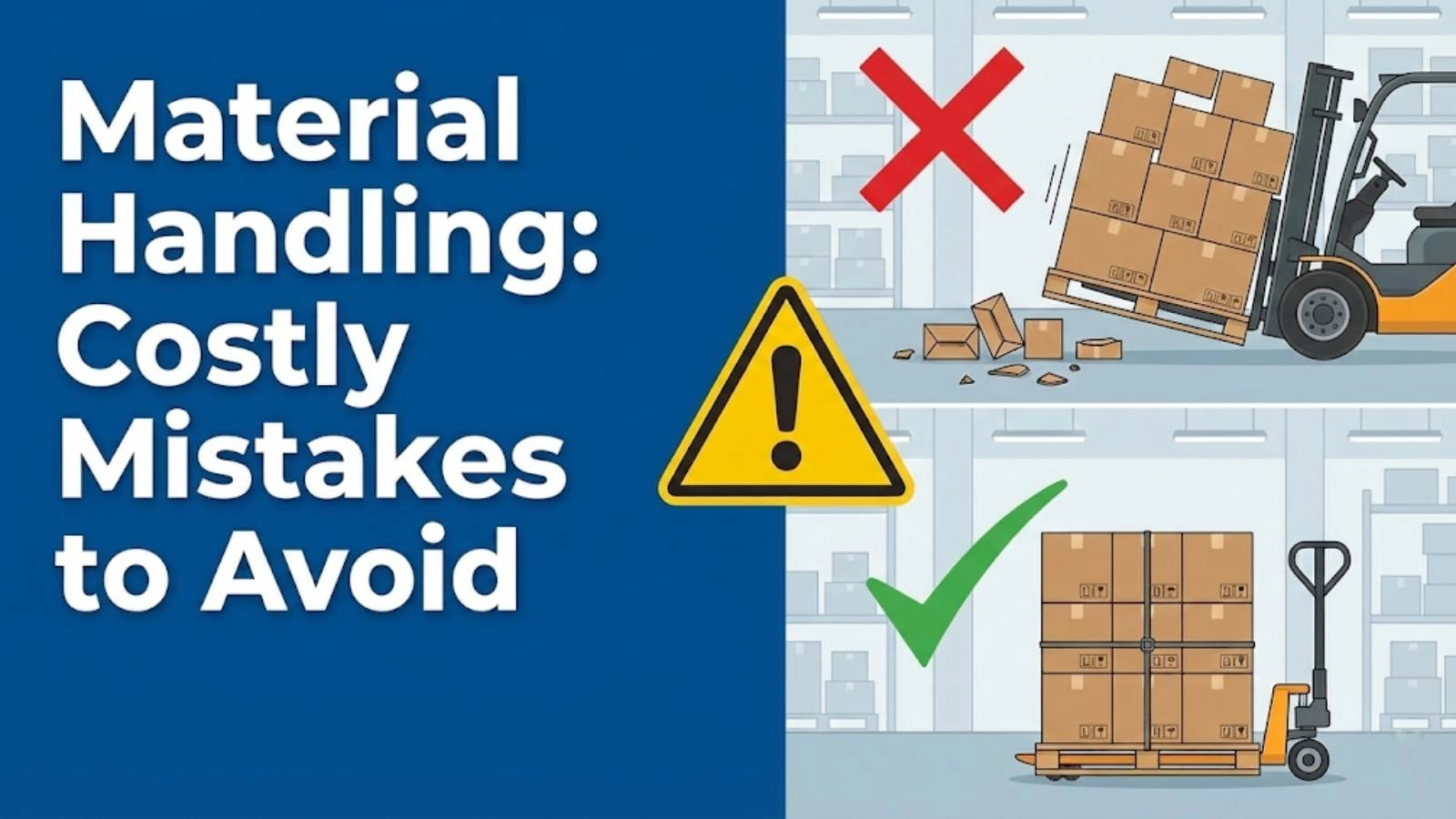
As a seasoned expert at Safe and Secure Trading Company (SSTC), I’ve observed countless businesses struggle with their material handling processes. These struggles often stem from surprisingly common, yet easily avoidable, mistakes. By understanding these pitfalls, you can optimize your warehouse operations, improve safety, and boost your bottom line. In this article, we’ll delve into the most prevalent material handling mistakes and provide actionable strategies to steer clear of them.
1. Overlooking Future Scalability
✅ Core Issue: A common material handling mistake is to focus solely on present requirements without considering future growth. This shortsighted approach can lead to premature equipment obsolescence and costly replacements as your business expands. We’ve seen this happen frequently, especially with startups here in Dammam, where initial savings often turn into long-term expenses.
Planning for Growth is Crucial
Effective planning for growth is a cornerstone of smart material handling solutions. We at SSTC emphasize that businesses should proactively anticipate future demands rather than reactively addressing them. This forward-thinking approach involves forecasting potential increases in production, storage, and workforce.
Assessing Long-Term Needs
Conducting a thorough analysis of projected growth over the next 3-5 years is essential. Consider potential increases in production volume, storage requirements, and workforce size. For many of our clients in the Gulf region, we’ve found that underestimating growth is a frequent material handling mistake. Accurately predicting these factors will help you choose equipment that can adapt to future demands.
Choosing Modular and Adaptable Equipment
Opting for equipment that can be easily reconfigured or expanded to accommodate future changes is a wise investment. Modular conveyor systems, adjustable shelving, and forklifts with variable capacity are excellent choices. We’ve witnessed companies benefit immensely from this strategy, particularly those in rapidly evolving industries. These adaptable material handling solutions can save significant costs in the long run.
The Scalability Checklist
Ensure the equipment vendor can support future upgrades and expansions. Ask about compatibility with other systems and the availability of spare parts. We always advise our clients to inquire about the vendor’s scalability support, as it’s a critical factor in avoiding future material handling mistakes. For instance, some vendors offer modular systems that can be easily expanded, while others may have limited upgrade options.
2. Ignoring Ergonomics and Safety
💡 Vital Consideration: Another critical material handling mistake is neglecting ergonomics and safety. This oversight can lead to increased worker injuries, reduced productivity, and higher insurance costs. We believe that investing in ergonomic equipment and comprehensive safety training is not just a moral imperative, but also a sound business decision.
The Human Factor in Material Handling
Failing to prioritize ergonomics and safety can significantly impact your workforce. At SSTC, we’ve seen firsthand how neglecting the human factor in material handling leads to increased worker injuries, decreased morale, and reduced overall productivity. This oversight directly affects your bottom line and creates a negative work environment.
Ergonomic Assessments
Conduct ergonomic assessments to identify potential risk factors in the workplace. Focus on tasks involving heavy lifting, repetitive motions, and awkward postures. We often recommend these assessments to our clients, as they provide valuable insights into potential problem areas. Identifying and addressing these risks is a crucial step in creating a safer and more efficient work environment.
Ergonomic Equipment Solutions
Invest in equipment designed to minimize physical strain. This includes adjustable workstations, lift assist devices, and ergonomic hand tools. For many of our clients here in Dammam, we’ve seen that implementing ergonomic equipment can significantly reduce worker fatigue and injuries. This investment not only improves worker well-being but also boosts productivity and reduces insurance costs.
Safety Training and Procedures
Implement comprehensive safety training programs that cover proper equipment operation, safe lifting techniques, and emergency procedures. Regularly review and update these programs to reflect changing workplace conditions. We stress the importance of ongoing training to our clients. Regular safety audits and refresher courses are essential for maintaining a safe work environment.
“Ignoring ergonomics in material handling is not only unethical but also economically short-sighted. Investing in worker well-being leads to increased productivity and reduced long-term costs.” – Dr. Emily Carter, Ergonomics Specialist
3. Neglecting Proper Maintenance
➡️ Costly Oversight: One of the most frequent material handling mistakes we see is neglecting proper maintenance. This can lead to equipment breakdowns, costly repairs, and premature equipment failure. At SSTC, we advocate for implementing a proactive maintenance program to maximize the lifespan and performance of your equipment.
The High Cost of Neglect
Neglecting regular maintenance can have severe consequences for your operations. We’ve seen countless businesses suffer from unexpected downtime and expensive repairs due to inadequate maintenance practices. Implementing a proactive maintenance program is essential for maximizing the lifespan and performance of your material handling equipment.
Creating a Maintenance Schedule
Develop a detailed maintenance schedule that outlines routine inspections, lubrication, and component replacements. Follow the manufacturer’s recommendations for specific maintenance tasks. We always advise our clients to adhere to a strict maintenance schedule. Regular inspections and preventive maintenance can identify and address potential problems before they escalate into major breakdowns.
Training Maintenance Personnel
Ensure that maintenance personnel are properly trained to perform routine maintenance tasks and diagnose potential problems. Provide ongoing training to keep them up-to-date on the latest equipment technologies. We emphasize the importance of investing in the training and development of your maintenance team. Well-trained personnel are better equipped to identify and resolve issues quickly and efficiently.
Utilizing Technology for Predictive Maintenance
Implement sensor-based monitoring systems and data analytics to predict potential equipment failures before they occur. This allows for proactive maintenance and minimizes downtime. For our clients in the manufacturing sector, we often recommend predictive maintenance technologies. These systems can analyze real-time data to identify patterns and predict when equipment is likely to fail, allowing for proactive maintenance and minimizing downtime.
Statistic Alert!
According to a recent study, companies that implement proactive maintenance programs experience 25% fewer equipment breakdowns and a 15% reduction in maintenance costs.
4. Insufficient Operator Training
⚠️ Safety Hazard: Allowing untrained personnel to operate material handling equipment is a serious material handling mistake and a recipe for accidents, injuries, and damaged goods. We at SSTC strongly believe that comprehensive operator training is essential for ensuring a safe and efficient workplace.
The Risk of Untrained Operators
The consequences of allowing untrained personnel to operate material handling equipment can be devastating. We’ve witnessed numerous incidents caused by operator error, resulting in injuries, property damage, and significant disruptions to operations. Investing in proper training is crucial for mitigating these risks.
Formal Certification Programs
Invest in certified training programs for all equipment operators. These programs should cover equipment operation, safety procedures, and load handling techniques. We recommend certified training programs that meet industry standards. These programs provide operators with the knowledge and skills they need to operate equipment safely and efficiently.
Regular Refresher Courses
Provide regular refresher courses to reinforce safety procedures and keep operators up-to-date on best practices. For our clients with high employee turnover, we strongly recommend regular refresher courses. These courses help to reinforce safety procedures and ensure that all operators are up-to-date on the latest best practices.
Performance Monitoring and Feedback
Implement a system for monitoring operator performance and providing regular feedback. Address any unsafe behaviors or knowledge gaps promptly. We advise our clients to implement a system for monitoring operator performance. Regular feedback and coaching can help to improve operator skills and identify any areas where additional training is needed.
5. Poor Warehouse Layout and Design
🏗️ Efficiency Killer: An inefficient warehouse layout is a significant material handling mistake that can lead to wasted time, increased travel distances, and bottlenecks in material flow. We advocate for optimizing your warehouse layout to streamline operations and maximize efficiency.
The Impact of Layout on Efficiency
An inefficient warehouse layout can have a significant impact on your bottom line. We’ve seen companies struggle with increased labor costs, longer lead times, and reduced order fulfillment rates due to poor layout design. Optimizing your warehouse layout is essential for streamlining operations and maximizing efficiency.
Optimizing Material Flow
Analyze material flow patterns and identify areas for improvement. Design the layout to minimize travel distances and streamline the movement of goods. We recommend conducting a thorough analysis of your material flow patterns. This analysis can help you identify bottlenecks and areas where improvements can be made to minimize travel distances and streamline the movement of goods.
Utilizing Vertical Space
Maximize vertical space by using high-density shelving and racking systems. This can significantly increase storage capacity without expanding the footprint of the warehouse. For our clients in densely populated areas, we often recommend maximizing vertical space. High-density shelving and racking systems can significantly increase storage capacity without the need for costly warehouse expansions.
Implementing Automation
Consider implementing automated material handling systems, such as conveyors and automated guided vehicles (AGVs), to improve efficiency and reduce labor costs. We often suggest exploring automation options for our clients looking to improve efficiency and reduce labor costs. Automated material handling solutions, such as conveyors and AGVs, can significantly streamline operations and reduce the need for manual labor.
6. Ignoring the Total Cost of Ownership (TCO)
💰 Hidden Expenses: Focusing solely on the initial purchase price of equipment is a common material handling mistake. It’s essential to consider the total cost of ownership (TCO), including maintenance, energy consumption, and disposal costs. We emphasize the importance of evaluating the long-term financial implications of your equipment investments.
Beyond the Purchase Price
Focusing solely on the initial purchase price of equipment can be misleading. At SSTC, we’ve seen companies make the material handling mistake of choosing the cheapest option upfront, only to incur significant costs down the line due to maintenance, repairs, and energy consumption. A more comprehensive approach is needed to avoid these hidden expenses.
Calculating TCO
Calculate the TCO for each piece of equipment by factoring in all associated costs over its expected lifespan. This will provide a more accurate comparison of different options. We advise our clients to develop a detailed TCO analysis for each piece of equipment they are considering. This analysis should include all associated costs, such as maintenance, energy consumption, insurance, and disposal.
Energy Efficiency Considerations
Choose energy-efficient equipment to reduce operating costs and minimize environmental impact. Electric forklifts, LED lighting, and energy-efficient conveyor systems can all contribute to significant savings. We always encourage our clients to prioritize energy efficiency when selecting material handling equipment. Energy-efficient options not only reduce operating costs but also minimize your environmental impact.
7. Failing to Assess Vendor Reputation
🤝 Due Diligence: The reputation and reliability of the equipment vendor are crucial factors to consider. Choosing a vendor with a proven track record of providing high-quality equipment and excellent customer service is essential to avoiding material handling mistakes. We at SSTC stress the importance of conducting thorough due diligence before selecting a vendor.
The Importance of Vendor Selection
The vendor you choose can significantly impact the success of your material handling operations. At SSTC, we’ve seen companies struggle with unreliable equipment, poor customer service, and inadequate support due to choosing the wrong vendor. Selecting a reputable and reliable vendor is crucial for ensuring a smooth and efficient operation.
Checking References and Reviews
Check references and read online reviews to assess the vendor’s reputation. Look for feedback on equipment quality, customer service, and after-sales support. We advise our clients to thoroughly research potential vendors. Checking references and reading online reviews can provide valuable insights into the vendor’s reputation and track record.
Evaluating Service and Support
Ensure that the vendor offers comprehensive service and support, including maintenance contracts, spare parts availability, and technical assistance. For our clients operating in remote areas, we emphasize the importance of comprehensive service and support. A vendor that offers maintenance contracts, readily available spare parts, and technical assistance can help to minimize downtime and keep your operations running smoothly.
8. Inadequate Load Capacity Assessment
⚖️ Safety First: Overloading material handling equipment is a major safety hazard and a costly material handling mistake that can lead to equipment damage or failure. We emphasize the importance of accurately assessing load capacity requirements to ensure safe and efficient operations.
The Dangers of Overloading
Overloading material handling equipment is a serious safety hazard. At SSTC, we’ve witnessed numerous accidents caused by overloading, resulting in injuries, property damage, and significant equipment damage. It’s crucial to ensure that all equipment is operated within its specified load capacity.
Determining Maximum Load Requirements
Accurately determine the maximum load requirements for each piece of equipment. Consider the weight, size, and shape of the materials being handled. We advise our clients to carefully assess the maximum load requirements for each piece of equipment. This assessment should consider the weight, size, and shape of the materials being handled, as well as any potential variations in load distribution.
Selecting Equipment with Appropriate Capacity
Choose equipment with a load capacity that exceeds the maximum load requirements. This provides a safety margin and prevents overloading. We recommend selecting equipment with a load capacity that exceeds the maximum load requirements. This provides a safety margin and helps to prevent overloading, reducing the risk of accidents and equipment damage.
9. Neglecting Environmental Factors
🌡️ Operational Impact: Environmental factors, such as temperature, humidity, and dust, can significantly impact the performance and lifespan of material handling equipment, making it a costly material handling mistake to ignore. We advise considering these factors when selecting and maintaining your equipment.
The Impact of Environment on Equipment
Environmental factors can significantly impact the performance and lifespan of material handling equipment. At SSTC, we’ve seen equipment failures and reduced performance due to exposure to extreme temperatures, high humidity, and excessive dust. Protecting your equipment from these environmental factors is crucial for ensuring reliable operation.
Choosing Environmentally Suitable Equipment
Select equipment that is designed to withstand the specific environmental conditions of the workplace. For our clients operating in harsh environments, we recommend selecting equipment that is specifically designed to withstand those conditions. This may include equipment with sealed components, corrosion-resistant coatings, and temperature-controlled systems.
Implementing Environmental Controls
Implement environmental controls, such as temperature and humidity regulation, to protect equipment from damage and ensure optimal performance. We advise implementing environmental controls to protect your material handling equipment. This may include temperature and humidity regulation systems, dust collection systems, and ventilation systems.
10. Not Considering Automation Options
🤖 Efficiency Boost: Failing to consider automation options is a significant material handling mistake that can limit your operational efficiency and competitiveness. We advocate for exploring automation opportunities to streamline processes and reduce labor costs.
The Benefits of Automation
Automation can significantly improve efficiency, reduce labor costs, and enhance safety in material handling operations. At SSTC, we’ve seen companies achieve significant improvements in productivity and profitability through the implementation of automated systems. Automation can free up employees to focus on more strategic tasks, reduce the risk of human error, and improve overall operational efficiency.
Identifying Automation Opportunities
Identify opportunities to automate repetitive or labor-intensive tasks. Consider using automated guided vehicles (AGVs), robotic palletizers, and automated storage and retrieval systems (AS/RS). We recommend conducting a thorough assessment of your material handling processes to identify potential automation opportunities. This assessment should consider the volume of materials being handled, the complexity of the tasks being performed, and the potential for cost savings.
Phased Automation Implementation
Implement automation in a phased approach, starting with the most critical areas and gradually expanding to other areas. We advise our clients to implement automation in a phased approach. Starting with the most critical areas allows you to test the technology, refine your processes, and demonstrate the benefits of automation before making a large-scale investment.
11. Ignoring Software and Technology Integration
💻 Seamless Operations: A common material handling mistake is failing to integrate equipment with warehouse management systems (WMS) and other software platforms. We emphasize the importance of seamless integration to improve efficiency and visibility.
The Power of Integration
Integrating material handling equipment with warehouse management systems (WMS) and other software platforms can significantly improve efficiency and visibility. At SSTC, we’ve seen companies achieve real-time inventory tracking, optimized material flow, and improved order fulfillment rates through seamless integration. Integration allows you to make data-driven decisions and optimize your material handling operations.
Ensuring System Compatibility
Ensure that the equipment is compatible with existing software systems. Choose equipment that supports open standards and data exchange protocols. We advise our clients to carefully consider system compatibility when selecting material handling equipment. Choosing equipment that supports open standards and data exchange protocols ensures that it can be easily integrated with your existing software systems.
Utilizing Data Analytics
Utilize data analytics to track equipment performance, identify bottlenecks, and optimize material flow. We recommend utilizing data analytics to track equipment performance and identify areas for improvement. Analyzing data can help you identify bottlenecks, optimize material flow, and make data-driven decisions to improve your material handling operations.
12. Failure to Conduct a Thorough Risk Assessment
⚠️ Proactive Prevention: A critical material handling mistake is neglecting to conduct a thorough risk assessment. We emphasize the importance of identifying potential hazards and implementing mitigation measures to ensure a safe working environment.
Identifying Potential Hazards
Conduct a thorough risk assessment to identify potential hazards associated with material handling operations. This includes hazards related to equipment operation, material handling procedures, and the work environment. We advise our clients to conduct a comprehensive risk assessment to identify potential hazards. This assessment should consider all aspects of your material handling operations, from equipment operation to material handling procedures and the work environment.
Implementing Risk Mitigation Measures
Implement risk mitigation measures to address identified hazards. This may include engineering controls, administrative controls, and personal protective equipment (PPE). We recommend implementing a range of risk mitigation measures to address identified hazards. These measures may include engineering controls, such as machine guarding and safety interlocks, administrative controls, such as safety procedures and training programs, and personal protective equipment (PPE), such as safety glasses and gloves.
Regular Review and Updates
Regularly review and update the risk assessment to reflect changing workplace conditions and new equipment technologies. For our clients in rapidly evolving industries, we strongly recommend regular review and updates of the risk assessment. This ensures that the assessment remains relevant and effective in protecting workers from potential hazards.
Conclusion
Avoiding these material handling mistakes is crucial for optimizing your warehouse operations, enhancing safety, and improving your bottom line. From overlooking scalability to neglecting maintenance and safety, these oversights can lead to costly consequences. By prioritizing proper planning, investing in ergonomic equipment, and implementing comprehensive training programs, you can create a safer, more efficient, and more profitable material handling operation. Remember, as your trusted partner at Safe and Secure Trading Company, we’re here to help you navigate these challenges and implement the best material handling solutions for your business. We offer comprehensive assessments, tailored recommendations, and ongoing support to ensure your success.
FAQ Section
Q: What is material handling equipment?
A: Material handling equipment encompasses a wide range of tools and machinery used to move, store, control, and protect materials throughout a manufacturing, warehousing, distribution, or disposal process. This equipment can include forklifts, conveyors, cranes, shelving, and automated systems.
Q: Why is proper material handling important?
A: Proper material handling is crucial for optimizing efficiency, reducing costs, improving safety, and enhancing productivity within a business. It ensures that materials are moved and stored efficiently, minimizing delays and damage.
Q: How can I improve warehouse efficiency?
A: Improving warehouse efficiency involves optimizing layout, implementing automation, utilizing vertical space, improving inventory management, and providing proper training to employees. Regular assessments and continuous improvement efforts are also essential.
Q: What are the key considerations for equipment procurement?
A: Key considerations for equipment procurement include assessing future needs, evaluating total cost of ownership (TCO), considering ergonomics and safety, checking vendor reputation, and ensuring system compatibility.
Q: What are the benefits of automation in material handling?
A: Automation in material handling offers numerous benefits, including increased efficiency, reduced labor costs, enhanced safety, improved accuracy, and real-time inventory tracking.
Q: How can I reduce costs in material handling operations?
A: Cost reduction in material handling can be achieved through optimizing warehouse layout, implementing automation, improving maintenance practices, selecting energy-efficient equipment, and negotiating favorable vendor contracts.
Q: What are some common safety hazards in material handling?
A: Common safety in material handling hazards include overloading equipment, operating equipment without proper training, neglecting ergonomics, failing to conduct risk assessments, and inadequate maintenance.
Q: How can I improve safety in my warehouse operations?
A: Improving warehouse operations safety involves implementing comprehensive safety training programs, conducting regular risk assessments, providing appropriate personal protective equipment (PPE), and enforcing strict safety procedures.
Q: What is ROI on equipment and how do I calculate it?
A: ROI on equipment stands for Return on Investment and measures the profitability of an equipment investment. It can be calculated by dividing the net profit from the equipment by the cost of the equipment and multiplying by 100 to express it as a percentage.
Q: How does inventory management impact material handling?
A: Effective inventory management is crucial for optimizing material handling processes. Accurate inventory tracking, efficient storage strategies, and streamlined picking and packing processes can significantly improve material flow and reduce costs.