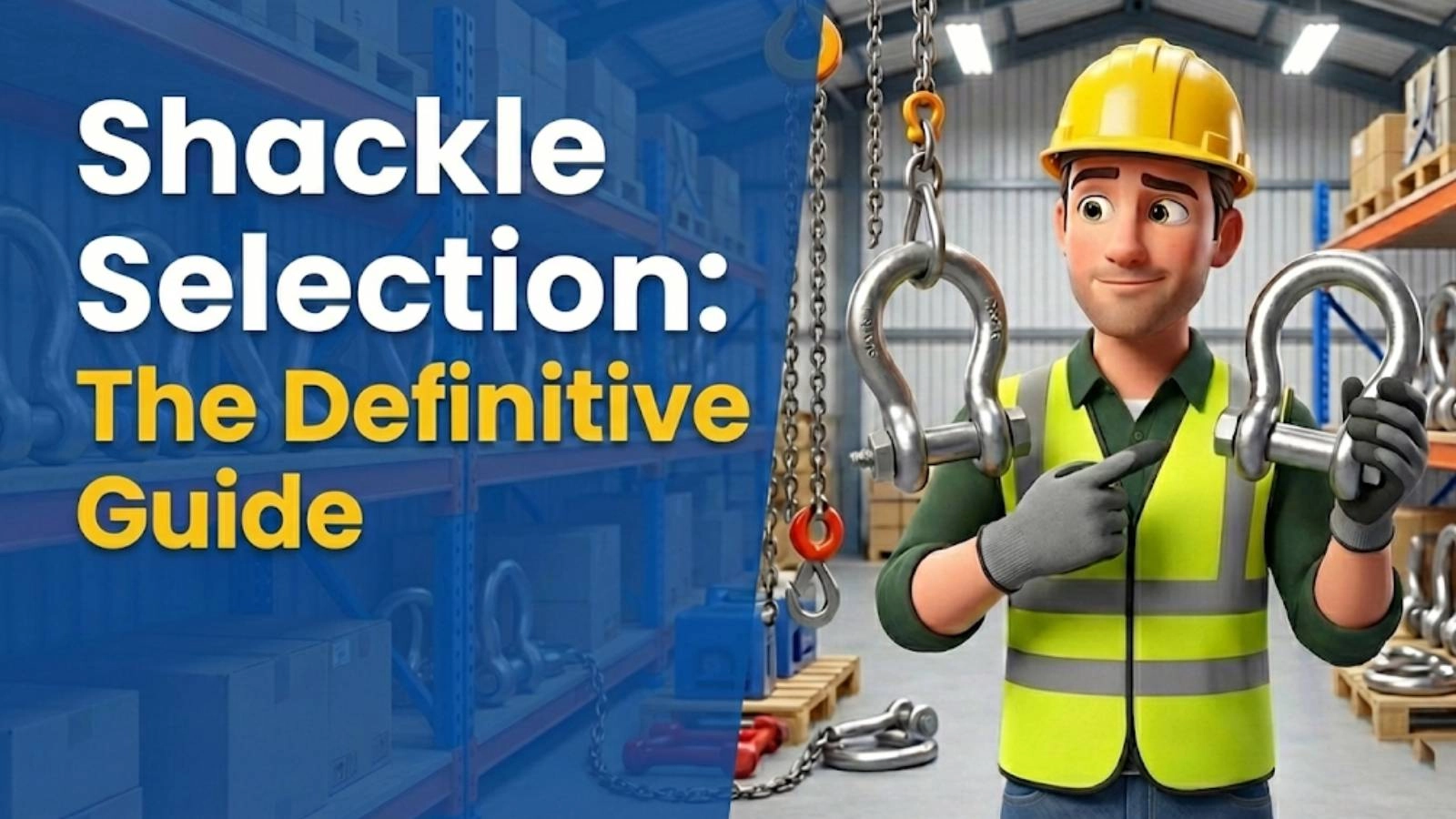
Shackles are indispensable tools in a wide array of lifting and rigging applications. However, their effectiveness hinges entirely on their safe and correct usage. This comprehensive guide, brought to you by Safe and Secure Trading Company (SSTC), will delve into the crucial aspects of shackle safety, ensuring you have the knowledge to prevent accidents and maintain a safe working environment. We’ll explore everything from selecting the right shackle to implementing rigorous inspection procedures and mastering proper usage techniques.
Key Takeaways
- Shackles are a vital component in lifting, and understanding their safe use is paramount.
- Proper shackle selection, regular inspection, and correct application are key to preventing accidents.
- Ignoring safety guidelines can lead to equipment failure, injuries, or even fatalities.
What are Shackles and Why is Shackle Safety Important? 🤔
Defining Shackles: The Basics
A shackle is a U-shaped or D-shaped piece of hardware with a removable pin or bolt across the opening. This simple yet robust design makes it an essential connector in lifting, rigging, and load handling operations. They act as the crucial link between the load and the lifting device, ensuring a secure connection for overhead lifting and other heavy-duty tasks. In our experience with clients, we’ve seen that a lack of understanding of the fundamental role of shackles can lead to serious safety oversights.
There are several types of shackles, each designed for specific applications. Bow shackles, characterized by their larger, rounded shape, are ideal for multi-leg slings and applications where the load may shift. D-shackles (also known as chain shackles or dee shackles) are narrower and stronger in a straight line pull, making them suitable for single-leg lifts. Chain shackles are specifically designed to connect chain links, whereas specialty shackles like swivel shackles allow for rotation under load.
The primary role of shackles in lifting applications is to provide a secure and reliable connection between the load and the lifting device, such as a crane, hoist, or sling. This connection is critical for maintaining load stability and preventing accidental disconnections, which can lead to catastrophic consequences.
The High Cost of Neglecting Shackle Safety
The potential hazards of improper shackle use are significant and far-reaching. Load slippage, equipment failure, and severe injuries are just a few of the possible outcomes. Overloading a shackle, using the wrong type for the application, or failing to inspect it properly can all lead to catastrophic failure. We once worked with a client who consistently overloaded their shackles, resulting in premature wear and tear. By implementing a proper training program and load monitoring system, we helped them avoid a potentially disastrous accident.
Real-world examples of accidents caused by shackle misuse are numerous and often tragic. For instance, a construction site accident might involve a shackle failing due to overloading, causing the load to fall and injure workers below. Similarly, in a marine environment, a corroded shackle could break during a lifting operation, resulting in damage to equipment and potential environmental hazards.
Following safety guidelines and regulations is paramount to preventing these types of accidents. These guidelines provide clear instructions on shackle selection, inspection, usage, and maintenance. By adhering to these standards, businesses can significantly reduce the risk of accidents, protect their employees, and avoid costly legal repercussions.
Selecting the Right Shackle for the Job ⚙️
Understanding Working Load Limit (WLL)
The Working Load Limit (WLL) is the maximum weight a shackle is designed to safely lift. It is a critical parameter that must never be exceeded. The WLL is typically marked on the shackle itself, often stamped or engraved on the shackle body. It is crucial to verify the WLL before each use to ensure it is adequate for the load being lifted. The WLL is often expressed in tons, kilograms, or pounds.
To identify the WLL on a shackle, carefully inspect the shackle body for markings. The WLL should be clearly visible and legible. If the markings are unclear or missing, the shackle should not be used. Always refer to the manufacturer’s specifications for clarification if needed. When our team in KSA tackles this issue, they often find that proper training on identifying WLL markings is essential to prevent misuse.
Never exceeding the WLL is a cardinal rule of safe lifting practices. The WLL incorporates a safety factor, typically ranging from 4:1 to 5:1, which means the shackle is designed to withstand a load several times greater than its WLL. However, exceeding the WLL can compromise the shackle’s integrity, leading to deformation, cracking, or even complete failure. The consequences of exceeding the WLL can be devastating, resulting in load drops, equipment damage, and serious injuries.
Matching Shackle Type to Application
Bow shackles and D-shackles serve different purposes based on their design and load-bearing characteristics. Bow shackles, with their larger, rounded “bow,” are designed to accommodate wider sling legs and allow for lifting from multiple directions. They are suitable for applications where the load may shift or rotate during lifting. In contrast, D-shackles (or chain shackles) are narrower and designed for straight-line pulls. They are stronger than bow shackles of the same size for inline loading but are less forgiving of angular loading.
The load angle significantly impacts shackle selection. When a shackle is loaded at an angle, the force on the shackle increases. This increased force reduces the effective WLL of the shackle. It is crucial to consider the load angle when selecting a shackle and to consult load charts to determine the allowable load at different angles. Side loading should be avoided whenever possible, as it can severely reduce the shackle’s capacity and increase the risk of failure.
Shackles are typically made from steel, alloy steel, or stainless steel. Steel shackles are commonly used for general-purpose lifting applications. Alloy steel shackles offer higher strength and durability, making them suitable for heavy-duty lifting. Stainless steel shackles are ideal for corrosive environments, such as marine or chemical processing applications, due to their resistance to rust and corrosion. The material selection should be based on the specific requirements of the lifting environment and the type of load being handled.
Size Matters: Choosing the Correct Shackle Size
Ensuring proper fit within the rigging system is essential for safe lifting practices. The shackle must be compatible with the size of the sling, chain, or other rigging components to which it is connected. Using a shackle that is too small can create stress concentrations and increase the risk of failure. Conversely, using a shackle that is too large can introduce unnecessary weight and bulk into the rigging system.
Avoiding overloading due to undersized shackles is a critical safety consideration. An undersized shackle may not be able to withstand the load being lifted, leading to deformation or failure. Always verify that the shackle’s WLL is adequate for the load weight, and consider the potential for dynamic loading or shock loading, which can increase the effective load on the shackle.
General guidelines for shackle size based on load weight are readily available from shackle manufacturers and rigging experts. These guidelines typically provide a table or chart that correlates load weight to the appropriate shackle size and WLL. Always consult these guidelines and err on the side of caution when selecting shackle size. Remember that the guidelines are intended as a starting point, and the actual shackle size required may vary depending on the specific lifting application and environmental conditions.
Essential Shackle Inspection Procedures 👀
Pre-Use Inspection Checklist
Before each use, a thorough visual inspection of the shackle is crucial. This includes checking for cracks, bends, or distortions in the shackle body and pin. Cracks can propagate under load and lead to catastrophic failure. Bends or distortions indicate that the shackle has been overloaded or subjected to excessive stress.
Check for corrosion, wear, and damage on the shackle body and pin. Corrosion can weaken the shackle and make it more susceptible to failure. Wear can reduce the shackle’s cross-sectional area, diminishing its strength. Damage, such as gouges or dents, can create stress concentrations and increase the risk of cracking.
Verify proper pin engagement and thread condition. The pin should be fully engaged and securely tightened. Damaged threads can prevent proper pin engagement and reduce the shackle’s load-carrying capacity. The pin should be easy to install and remove, without excessive force or binding.
Recognizing Signs of Shackle Damage
Identifying cracks, gouges, and other surface imperfections is essential during shackle inspections. Cracks can be difficult to detect with the naked eye, so use a magnifying glass or other inspection aids to thoroughly examine the shackle surface. Gouges and other surface imperfections can create stress concentrations and increase the risk of cracking.
Detecting deformation or elongation of the shackle body is another critical aspect of shackle inspection. Deformation indicates that the shackle has been overloaded or subjected to excessive stress. Elongation suggests that the shackle material has yielded and lost its original strength. Any deformation or elongation should be considered a sign of damage, and the shackle should be removed from service.
Assess pin condition and thread integrity. The pin should be straight and free from bends or distortions. The threads should be clean and undamaged. Damaged threads can prevent proper pin engagement and reduce the shackle’s load-carrying capacity. The pin should be easy to install and remove, without excessive force or binding.
Establishing a Regular Inspection Schedule
Implementing daily, weekly, and monthly inspection routines is essential for maintaining shackle safety. Daily inspections should be conducted before each use to identify any obvious signs of damage. Weekly inspections should involve a more thorough examination of the shackle, including checking for cracks, corrosion, and wear. Monthly inspections should include a detailed assessment of the shackle’s overall condition, including measuring its dimensions and comparing them to the manufacturer’s specifications.
Documenting inspection findings and taking corrective actions is a crucial part of a comprehensive shackle safety program. Inspection findings should be recorded in a log or database, along with any corrective actions taken. This documentation provides a valuable record of shackle condition and helps track trends in shackle performance.
Criteria for shackle removal includes cracks, deformation, excessive corrosion, damaged threads, or any other condition that compromises the shackle’s integrity. A shackle should be retired from service if it fails to meet the manufacturer’s specifications or if it shows any signs of damage.
Mastering Proper Shackle Usage Techniques 💪
Connecting Shackles Correctly
Using proper shackle orientation to avoid side loading is crucial for safe lifting. Always align the shackle so that the load is applied along the shackle’s centerline. Avoid applying the load at an angle, as this can create side loading and significantly reduce the shackle’s capacity. Side loading can also damage the shackle and increase the risk of failure.
Ensuring full pin engagement and tightening is essential for a secure connection. The pin should be fully inserted into the shackle body and tightened securely. If the pin is not fully engaged, it can weaken the connection and increase the risk of slippage. Use a wrench or other appropriate tool to tighten the pin, but avoid over-tightening, which can damage the threads.
Avoiding sharp bends and stress concentrations is important for preventing shackle damage. When connecting the shackle to a sling or other rigging component, ensure that the connection is smooth and free from sharp bends. Sharp bends can create stress concentrations and weaken the shackle. Use shackle protectors or other padding to minimize abrasion and prevent damage to the shackle.
Avoiding Common Shackle Misuse Mistakes
Never exceeding the WLL of the shackle is a fundamental safety rule. Always verify that the shackle’s WLL is adequate for the load being lifted. Consider the potential for dynamic loading or shock loading, which can increase the effective load on the shackle. If in doubt, use a shackle with a higher WLL.
Preventing side loading and three-way loading is crucial for maintaining shackle safety. Side loading occurs when the load is applied at an angle to the shackle’s centerline. Three-way loading occurs when the load is applied in three different directions. Both side loading and three-way loading can significantly reduce the shackle’s capacity and increase the risk of failure.
Protecting shackles from abrasion and impact is essential for preventing damage. Abrasion can wear away the shackle’s surface and reduce its strength. Impact can create stress concentrations and increase the risk of cracking. Use shackle protectors or other padding to minimize abrasion and prevent impact damage. Avoid dragging shackles across abrasive surfaces or dropping them from heights.
Shackle Maintenance and Storage Best Practices 🧰
Cleaning and lubricating shackles regularly can extend their lifespan and prevent corrosion. Use a mild detergent and water to clean shackles, and then rinse them thoroughly. Lubricate the pin threads with a light oil or grease to prevent corrosion and ensure smooth pin engagement. Avoid using abrasive cleaners or solvents, as they can damage the shackle’s surface.
Storing shackles in a dry, protected environment can prevent corrosion and damage. Store shackles in a tool box or storage cabinet to protect them from the elements. Avoid storing shackles in direct sunlight or in areas where they may be exposed to moisture or corrosive substances.
Preventing exposure to corrosive substances is crucial for maintaining shackle safety. Corrosive substances can weaken the shackle and make it more susceptible to failure. Avoid using shackles in corrosive environments, such as marine or chemical processing applications, unless they are specifically designed for such use. If shackles are exposed to corrosive substances, clean them immediately and inspect them thoroughly for damage.
Safe Lifting Practices with Shackles: Step-by-Step 📝
Step 1: Planning the Lift
Assessing the load weight and dimensions is the first step in planning a safe lift. Accurately determine the weight of the load to ensure that the lifting equipment has sufficient capacity. Measure the load’s dimensions to ensure that it can be safely lifted and transported.
Determining the center of gravity is crucial for maintaining load stability. The center of gravity is the point at which the load’s weight is evenly distributed. If the load is not lifted from its center of gravity, it may become unstable and tip or swing during lifting.
Selecting the appropriate lifting equipment is essential for a safe lift. Choose lifting equipment that has a WLL that meets or exceeds the weight of the load. Ensure that the lifting equipment is in good condition and has been properly inspected.
Step 2: Rigging the Load
Choosing the correct shackle type and size is critical for ensuring a secure connection. Select a shackle that has a WLL that meets or exceeds the weight of the load. Consider the type of load and the lifting environment when choosing the shackle type.
Connecting shackles properly to the load and lifting device is essential for preventing accidents. Ensure that the shackle pin is fully engaged and tightened securely. Avoid side loading or three-way loading the shackle.
Ensuring proper load distribution is crucial for maintaining load stability. Distribute the load evenly among the lifting points to prevent overloading any single point. Use slings or other rigging components to distribute the load as needed.
Step 3: Performing the Lift
Communicating clearly with the lifting team is essential for a safe lift. Establish clear communication signals and procedures before the lift begins. Ensure that all members of the lifting team understand their roles and responsibilities.
Lifting the load slowly and smoothly can help prevent sudden stress on the shackles. Avoid jerking or sudden movements, which can increase the load on the rigging.
Monitoring the load and rigging for any signs of instability during the lift is critical. Watch for signs of slippage, deformation, or excessive stress. If any problems are detected, stop the lift immediately and take corrective actions.
> “Safety isn’t expensive, it’s priceless. Prioritize thorough inspections and proper training to prevent accidents.” – John Smith, Lead Safety Inspector
Understanding Shackle Safety Standards and Regulations 📜
OSHA Guidelines for Lifting and Rigging
The Occupational Safety and Health Administration (OSHA) provides comprehensive guidelines for lifting and rigging operations, including specific requirements for shackle use. These guidelines are designed to protect workers from hazards associated with lifting and rigging activities.
Compliance with inspection and maintenance standards is mandated by OSHA. Employers are required to inspect lifting equipment, including shackles, regularly and maintain them in good working condition. Defective or damaged equipment must be removed from service.
Employee training and competency requirements are also outlined by OSHA. Employers must provide training to employees who operate or work around lifting equipment. This training must cover topics such as shackle selection, inspection, usage, and maintenance.
ASME Standards for Shackles
The American Society of Mechanical Engineers (ASME) develops and publishes standards for rigging hardware, including shackles. ASME B30.26 specifically addresses the requirements for rigging hardware.
Understanding ASME B30.26 standards for rigging hardware is essential for ensuring safe lifting practices. This standard covers topics such as material requirements, performance requirements, and marking and labeling requirements for shackles.
Material and performance requirements for shackles are outlined in ASME B30.26. Shackles must be made from materials that meet specific strength and ductility requirements. They must also be capable of withstanding specified loads and environmental conditions.
Marking and labeling requirements are also addressed in ASME B30.26. Shackles must be marked with their WLL, manufacturer’s name or trademark, and other relevant information. This marking must be durable and legible.
Other Relevant Safety Regulations
Local and regional safety regulations may also apply to shackle use. These regulations may vary depending on the location and industry. It is essential to be aware of and comply with all applicable safety regulations. For many of our clients here in Dammam, Saudi Arabia, we’ve seen that understanding and adhering to local regulations is crucial for avoiding penalties and ensuring worker safety.
Industry-specific guidelines and best practices may also exist for shackle use. These guidelines provide additional information and recommendations for safe lifting practices in specific industries.
Staying up-to-date on safety standards is essential for maintaining a safe working environment. Safety standards are constantly evolving, so it is important to stay informed of the latest changes and updates. Subscribe to industry publications, attend safety conferences, and consult with safety experts to stay up-to-date on safety standards.
Shackle Safety Training and Competency 👨🏫
The Importance of Formal Training
Ensuring employees understand safe shackle practices through formal training is paramount. Proper training equips employees with the knowledge and skills necessary to select, inspect, and use shackles safely and effectively.
Reducing the risk of accidents and injuries is a key benefit of formal training. Trained employees are more likely to identify potential hazards and take appropriate precautions to prevent accidents.
Meeting regulatory requirements for training is also essential. Many regulatory agencies require employers to provide training to employees who operate or work around lifting equipment.
Key Training Topics
Shackle types and applications are fundamental training topics. Employees should be trained on the different types of shackles, their intended uses, and their limitations.
WLL and load angle considerations should also be covered in training. Employees should understand how to determine the WLL of a shackle and how to account for load angle when selecting a shackle.
Inspection procedures and criteria are critical training topics. Employees should be trained on how to inspect shackles for damage and how to determine when a shackle should be removed from service.
Proper usage techniques should also be covered in training. Employees should be trained on how to connect shackles properly, avoid side loading, and protect shackles from abrasion and impact.
Resources for Shackle Safety Training
Online training courses and webinars offer a convenient and cost-effective way to provide shackle safety training. These courses can be accessed from anywhere with an internet connection and can be completed at the employee’s own pace.
In-person training programs provide a more hands-on learning experience. These programs typically involve demonstrations, practical exercises, and opportunities for employees to ask questions.
Manufacturer-provided training materials can also be a valuable resource. Shackle manufacturers often provide training materials, such as manuals, videos, and presentations, that can be used to supplement other training resources.
Conclusion
Safe lifting practices are non-negotiable, and shackles play a vital role in ensuring the safety and success of lifting operations. By understanding shackle types, adhering to inspection procedures, and employing proper usage techniques, you can significantly reduce the risk of accidents and create a safer working environment. At Safe and Secure Trading Company (SSTC), we emphasize comprehensive training and adherence to safety standards.
FAQ Section
What is the most important factor when selecting a shackle?
The Working Load Limit (WLL) is the most crucial factor. Always ensure the shackle’s WLL meets or exceeds the weight of the load.
How often should shackles be inspected?
Shackles should be inspected before each use and periodically, based on the frequency of use and the severity of the operating environment.
What are the signs that a shackle needs to be replaced?
Look for signs of damage like cracks, bends, corrosion, excessive wear, or damaged threads. Any of these indicate the shackle should be removed from service.