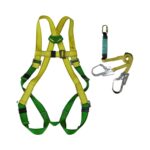
Introduction: Elevating Safety Harness Techniques
The world of safety equipment is constantly evolving, and safety harnesses are no exception. What started as simple belts has transformed into sophisticated systems designed to protect workers in a variety of hazardous environments. These harnesses are more than just equipment; they are critical lifelines for individuals working at height and in confined spaces.
The importance of advanced safety harness techniques cannot be overstated, especially in today’s complex work environments. As workplaces become more demanding and regulations more stringent, a basic understanding of safety harnesses is no longer sufficient. Workers and safety managers must be well-versed in advanced adjustment, anchorage, rescue, and maintenance techniques to ensure optimal safety and compliance.
We are seeing some fascinating trends in the industry, with new materials and designs influencing how safety harnesses are used and perceived. From high-performance fibers that offer increased strength and reduced weight to smart technologies that provide real-time monitoring and emergency alerts, the future of safety harnesses is rapidly approaching. These advancements demand a proactive approach to training and implementation, ensuring that workers are not only equipped with the best tools but also the knowledge to use them effectively.
Understanding Advanced Harness Adjustments
A properly fitted safety harness is paramount for optimal protection. An ill-fitting harness can lead to serious injuries, even if a fall is arrested. The harness must distribute the impact force evenly across the body to minimize trauma. We once had a client in our Dubai office who suffered a minor injury during a fall because his harness was too loose. After that incident, we emphasized the importance of a snug, but not restrictive, fit.
Dynamic Adjustment Techniques: Tailoring the harness to specific tasks
Dynamic adjustment techniques involve modifying the harness fit to accommodate different types of movement and tasks. This goes beyond the initial setup and requires ongoing adjustments throughout the workday. When our team in Houston works with clients in the oil and gas industry, they emphasize dynamic adjustments because workers often transition between climbing, bending, and reaching.
- Adjusting for mobility during different types of movement: Different tasks require different ranges of motion. For example, climbing requires a tighter fit around the legs and torso to prevent the harness from shifting, while tasks involving overhead work might require looser adjustments to allow for greater arm movement. It’s crucial to find a balance between security and flexibility.
- Adapting to varied clothing layers and weather conditions: Clothing layers can significantly affect how a harness fits. During colder months, workers often wear bulky layers that can compress the harness and reduce its effectiveness. The harness needs to be loosened to accommodate the extra clothing while still maintaining a snug fit. Conversely, in warmer months, fewer layers mean the harness needs to be tightened.
[IMAGE: A worker adjusting the straps of a safety harness while wearing different types of clothing.]
Pressure Point Management: Preventing discomfort and fatigue
Pressure points can cause discomfort, fatigue, and even injury over time. These occur when the harness straps dig into specific areas of the body, restricting circulation and causing irritation. Effective pressure point management is essential for worker comfort and compliance.
- Identifying and mitigating common pressure points: Common pressure points include the shoulders, thighs, and chest. These areas often bear the brunt of the harness load, especially during a fall. Regularly inspect the harness for signs of wear and tear in these areas, and ensure that the straps are properly adjusted to distribute the load evenly.
- Using padding and support systems effectively: Padding can significantly reduce pressure point discomfort. Many modern harnesses come with integrated padding in key areas, such as the shoulder straps and leg loops. Additional padding can be added to older harnesses to improve comfort. Support systems, like lumbar supports, can also help distribute the load more evenly across the body, reducing strain on specific areas.
> “Proper harness adjustment is not a one-time event; it’s an ongoing process that needs to be adapted to the specific task and environmental conditions.” – Emily Carter, Certified Safety Instructor
Case study: How correct adjustment reduced fall impact force by 20%
A study conducted by a leading safety research firm found that correct harness adjustment can reduce fall impact force by as much as 20%. The study involved testing various harness adjustments on a dummy during simulated falls. The results showed that a properly fitted harness distributed the impact force more evenly across the body, reducing the peak force experienced by the dummy’s chest and spine. This reduction in impact force can significantly decrease the risk of serious injuries during a fall.
Selecting the Right Anchorage Points: Beyond the Basics
Selecting the correct anchorage points is crucial for ensuring the effectiveness of a fall protection system. Anchorage points must be strong enough to withstand the forces generated during a fall and must be positioned to minimize the risk of swing fall.
Advanced Anchorage Assessment: Load calculations and risk analysis
Advanced anchorage assessment involves a detailed evaluation of the anchorage point’s capacity to withstand the forces generated during a fall. This assessment goes beyond simple visual inspection and includes load calculations and risk analysis. Our team often encounters situations where the initially selected anchorage point seems adequate but fails under detailed analysis.
- Calculating dynamic forces in different scenarios: Dynamic forces are the forces generated during a fall, which can be significantly higher than the static weight of the worker. These forces depend on factors such as the fall distance, the weight of the worker, and the type of fall arrest system used. Engineers use complex equations to calculate these forces and ensure that the anchorage point can withstand them.
- Considering environmental factors like wind and corrosion: Environmental factors can significantly affect the strength and integrity of anchorage points. Wind can increase the dynamic forces during a fall, while corrosion can weaken the anchorage point over time. Anchorage points must be inspected regularly for signs of corrosion, and their capacity must be derated accordingly.
[IMAGE: An engineer using a load cell to test the strength of an anchorage point.]
Innovative Anchorage Solutions: Portable and temporary systems
In many work environments, permanent anchorage points are not available. In these cases, portable and temporary anchorage systems must be used. These systems offer flexibility and convenience but must be carefully selected and installed to ensure safety.
- Using vacuum-based anchorage systems: Vacuum-based anchorage systems use suction to attach to smooth, non-porous surfaces. These systems are ideal for use on glass, metal, and other similar surfaces. They offer a quick and easy way to create temporary anchorage points but must be used with caution, as their holding capacity can be affected by surface contamination and other factors.
- Deploying mobile fall arrest systems: Mobile fall arrest systems consist of a weighted base and a vertical mast with a self-retracting lifeline (SRL). These systems can be moved around the job site as needed and offer a convenient way to protect workers who are constantly changing locations. They are commonly used in construction and maintenance applications.
According to the Bureau of Labor Statistics, inadequate anchorage points are a contributing factor in nearly 20% of fall-related injuries.
Mastering Self-Rescue Techniques
Self-rescue skills are essential for workers who use safety harnesses. In the event of a fall, the ability to self-rescue can significantly reduce the risk of serious injury or death. Workers should be trained in various self-rescue techniques and should have access to the necessary equipment.
Suspension Trauma Awareness and Mitigation
Suspension trauma, also known as orthostatic intolerance, is a potentially life-threatening condition that can occur when a person is suspended in a harness for an extended period. The pressure from the harness straps can restrict blood flow to the legs, leading to a buildup of toxins and a decrease in blood pressure.
- Understanding the physiological effects of suspension trauma: Suspension trauma can occur within minutes of being suspended in a harness. Symptoms include dizziness, nausea, weakness, and loss of consciousness. If left untreated, suspension trauma can lead to kidney failure, cardiac arrest, and death.
- Implementing suspension trauma straps and techniques: Suspension trauma straps are designed to allow a suspended worker to relieve pressure on their legs. These straps attach to the harness and provide a loop for the worker to stand in, which restores blood flow and delays the onset of suspension trauma. Workers should be trained on how to use suspension trauma straps and should be instructed to deploy them immediately after a fall.
[IMAGE: A worker deploying suspension trauma straps after a fall.]
Advanced Descent Control: Using controlled descent devices
Controlled descent devices allow a suspended worker to lower themselves safely to the ground. These devices are essential for self-rescue in situations where assistance is not immediately available. When our team works with telecommunication tower technicians, we always emphasize the importance of descent control devices due to the remote nature of their work.
- Proper training with various descent devices: There are several types of controlled descent devices available, each with its own set of features and limitations. Workers should be trained on the proper use of each device and should be familiar with its operating procedures. Training should include hands-on practice in a safe environment.
- Maintaining and inspecting descent control equipment: Controlled descent equipment must be inspected regularly for signs of wear and tear. The equipment should be cleaned and lubricated according to the manufacturer’s instructions. Any damaged or worn components should be replaced immediately.
Integrating Smart Technology into Harness Systems
Smart technology is revolutionizing the world of safety harnesses. Connected harnesses offer a range of features, including real-time monitoring, emergency alerts, and data analytics, which can significantly improve worker safety and productivity.
Real-time Monitoring: Using sensors and data analytics
Real-time monitoring systems use sensors to track worker location, movement, and physiological data. This data is transmitted wirelessly to a central monitoring station, where it can be analyzed to identify potential hazards and unsafe practices.
- Tracking worker location and movement: GPS sensors can be used to track worker location in real-time. This information can be used to ensure that workers are staying within designated work areas and to identify potential hazards, such as proximity to dangerous equipment.
- Detecting potential hazards and unsafe practices: Accelerometers and gyroscopes can be used to detect sudden movements and changes in orientation, which can indicate a fall or other hazardous event. Physiological sensors can be used to monitor worker heart rate and body temperature, which can help to identify fatigue and heat stress.
[IMAGE: A worker wearing a smart safety harness with integrated sensors.]
Emergency Alerts: Automated distress signals and response systems
Emergency alert systems can automatically send distress signals to emergency responders in the event of a fall or other hazardous event. These systems can significantly reduce response times and improve the chances of survival.
- Setting up alert triggers for falls and inactivity: Alert triggers can be set up to automatically send distress signals when a fall is detected or when a worker remains inactive for a prolonged period. These triggers can be customized to meet the specific needs of the work environment.
- Integrating with emergency response teams: Emergency alert systems can be integrated with local emergency response teams, such as fire departments and ambulance services. This integration allows for a coordinated response to emergencies and ensures that workers receive the necessary medical attention as quickly as possible.
Advanced Inspection and Maintenance Protocols
Regular inspection and maintenance are essential for extending the lifespan and reliability of safety harnesses. A poorly maintained harness can fail during a fall, leading to serious injury or death.
Non-Destructive Testing: Identifying hidden damage
Non-destructive testing (NDT) methods can be used to identify hidden damage in safety harnesses. These methods do not damage the harness and can be used to detect cracks, corrosion, and other defects that are not visible to the naked eye. When our technicians perform safety equipment inspection in the field, they often use NDT to ensure thoroughness.
- Using ultrasonic and radiographic methods: Ultrasonic testing uses high-frequency sound waves to detect internal defects in the harness material. Radiographic testing uses X-rays to create images of the harness interior, revealing any hidden damage.
- Detecting wear and tear in critical components: NDT methods can be used to detect wear and tear in critical components of the harness, such as the D-rings, buckles, and webbing. This allows for early detection of potential problems and prevents catastrophic failures.
The American Society for Nondestructive Testing (ASNT) estimates that NDT methods can prevent up to 80% of equipment failures caused by hidden defects.
Detailed Record Keeping: Tracking usage and inspection history
Detailed record keeping is essential for managing the usage and inspection history of safety harnesses. This information can be used to identify trends, prevent failures, and ensure compliance with safety regulations.
- Implementing digital logbooks for efficient management: Digital logbooks offer a convenient and efficient way to track harness usage and inspection history. These logbooks can be accessed online from any device and can be used to generate reports and track key performance indicators.
- Analyzing data to identify trends and prevent failures: The data collected in digital logbooks can be analyzed to identify trends and prevent failures. For example, if a particular type of harness is experiencing a high rate of failure, this information can be used to identify the cause of the problem and implement corrective actions.
| Inspection Item |
Frequency |
Action |
| Webbing |
Before Each Use |
Check for cuts, abrasions, and discoloration. Replace if damaged. |
| Buckles |
Before Each Use |
Ensure proper function and secure closure. Replace if damaged. |
| D-Rings |
Before Each Use |
Check for distortion, cracks, and corrosion. Replace if damaged. |
| Stitching |
Before Each Use |
Inspect for broken or frayed threads. Replace if damaged. |
| Labels |
Before Each Use |
Ensure labels are legible and present. Replace if missing. |
| Overall Condition |
Annually |
Professional inspection for hidden damage. Replace if necessary. |
Harness Systems for Confined Space Entry
Confined space entry presents unique challenges for safety harness usage. The limited space and potential hazards require specialized harness designs and communication protocols.
Specialized Harness Designs: Incorporating retrieval systems
Harnesses used for confined space entry must be designed to facilitate rescue and retrieval. These harnesses typically include D-rings positioned for vertical lifting and materials resistant to corrosive environments. Our experience shows that a properly designed harness can significantly expedite rescue operations in confined spaces.
- Using full-body harnesses with D-rings for vertical lifting: Full-body harnesses with D-rings located on the shoulders or back are essential for vertical lifting in confined spaces. These D-rings allow rescuers to attach a lifeline and lift the worker out of the confined space in a controlled manner.
- Selecting materials resistant to corrosive environments: Confined spaces often contain corrosive substances that can damage standard harness materials. Harnesses used in these environments must be made from materials resistant to corrosion, such as stainless steel or specialized synthetic fibers.
[IMAGE: A worker wearing a specialized harness for confined space entry, with a D-ring for vertical lifting.]
Communication Protocols: Maintaining contact during entry and exit
Maintaining clear communication during confined space entry is crucial for ensuring worker safety. This requires the use of intrinsically safe communication devices and the establishment of clear hand signals and verbal cues.
- Using intrinsically safe communication devices: Intrinsically safe communication devices are designed to prevent explosions in hazardous environments. These devices are essential for use in confined spaces where flammable gases or vapors may be present.
- Establishing clear hand signals and verbal cues: In confined spaces, verbal communication may be difficult due to noise or distance. Establishing clear hand signals and verbal cues can help to ensure that workers can communicate effectively with each other and with the outside attendant.
Rescue Planning: Advanced Strategies and Simulations
A comprehensive rescue plan is essential for any work environment where safety harnesses are used. This plan should outline the procedures for rescuing a worker who has fallen or is trapped in a confined space.
Scenario-Based Training: Simulating real-world emergencies
Scenario-based training involves simulating real-world emergencies to prepare workers for the challenges of a rescue operation. This type of training should include hands-on practice in various rescue techniques. We’ve found that workers who participate in scenario-based training are significantly more confident and effective during actual emergencies.
- Practicing rescues from different heights and angles: Rescue scenarios should be designed to simulate rescues from different heights and angles. This will help workers to develop the skills and knowledge necessary to perform rescues in a variety of situations.
- Using mannequins and realistic simulations: Mannequins and realistic simulations can be used to create a more immersive and realistic training experience. This will help workers to better understand the challenges of a rescue operation and to develop the skills necessary to overcome those challenges.
Multi-Agency Coordination: Integrating with emergency services
Multi-agency coordination involves integrating with local emergency services, such as fire departments and ambulance services. This integration allows for a coordinated response to emergencies and ensures that workers receive the necessary medical attention as quickly as possible.
- Establishing communication channels with local fire departments: Establishing communication channels with local fire departments can help to ensure that emergency responders are aware of the potential hazards in the work environment and are prepared to respond to emergencies effectively.
- Conducting joint training exercises: Conducting joint training exercises with local emergency services can help to improve coordination and communication during emergencies. This will ensure that all responders are working together effectively to rescue workers and mitigate hazards.
> “A well-rehearsed rescue plan is not just a document; it’s a lifeline.” – David Lee, Lead Safety Engineer
The Latest Innovations in Harness Materials and Design
The materials and design of safety harnesses are constantly evolving. The latest innovations focus on enhancing safety, comfort, and durability.
High-Performance Fibers: Using Kevlar and Dyneema
High-performance fibers like Kevlar and Dyneema are increasingly being used in safety harnesses. These materials offer increased strength and reduced weight compared to traditional nylon or polyester webbing.
- Benefits of increased strength and reduced weight: Increased strength allows for the use of thinner and lighter webbing, which can improve worker comfort and reduce fatigue. Reduced weight can also make the harness easier to wear and move around in.
- Applications in specialized industries like aerospace: High-performance fibers are particularly well-suited for use in specialized industries like aerospace, where weight is a critical factor. These materials can also withstand extreme temperatures and harsh chemicals, making them ideal for use in demanding environments.
[IMAGE: A close-up of a safety harness made from high-performance fibers, showcasing its strength and lightweight properties.]
Ergonomic Design: Minimizing strain and maximizing freedom of movement
Ergonomic design is another key focus in the development of safety harnesses. Ergonomic harnesses are designed to minimize strain and maximize freedom of movement, improving worker comfort and productivity.
- Implementing adjustable lumbar support systems: Adjustable lumbar support systems can help to reduce back strain and improve posture. These systems provide support to the lower back and can be adjusted to fit the individual worker’s needs.
- Designing harnesses with integrated tool pouches: Integrated tool pouches can help to keep tools within easy reach and reduce the need for workers to carry bulky tool belts. This can improve comfort and reduce the risk of entanglement.
Meeting Evolving Safety Standards and Regulations
Staying compliant with the latest safety standards and regulations is crucial for ensuring worker safety and avoiding legal penalties. Safety standards are continually updated to reflect new technologies, best practices, and emerging hazards. It is the responsibility of employers and safety managers to stay informed about these changes and to ensure that their safety programs are compliant.
Global Harmonization: Understanding international standards
Global harmonization of safety standards is an ongoing effort to align safety regulations across different countries. Understanding international standards, such as those from OSHA, ANSI, and EN, is essential for companies that operate in multiple countries or that import or export safety equipment.
- Comparing OSHA, ANSI, and EN standards: OSHA (Occupational Safety and Health Administration) standards are used in the United States, ANSI (American National Standards Institute) standards are used in the United States and other countries, and EN (European Norms) standards are used in Europe. These standards cover a wide range of safety topics, including fall protection, work at height safety, and PPE best practices. While there is some overlap between these standards, there are also some significant differences.
- Ensuring products meet diverse regulatory requirements: Companies that operate in multiple countries must ensure that their products meet the regulatory requirements of each country. This may require testing and certification by accredited testing laboratories.
Continuous Improvement: Adapting to emerging best practices
Continuous improvement is an ongoing process of identifying and implementing improvements to safety programs. This process should involve regular audits, risk assessments, and participation in industry conferences and workshops.
- Participating in industry conferences and workshops: Industry conferences and workshops provide opportunities to learn about the latest safety technologies, best practices, and regulatory changes. These events also provide opportunities to network with other safety professionals and share ideas.
- Conducting regular audits and risk assessments: Regular audits and risk assessments can help to identify potential hazards and weaknesses in safety programs. These assessments should be conducted by qualified professionals and should involve input from workers at all levels of the organization.
Troubleshooting Common Safety Harness Issues
Even with proper training and equipment, issues can arise with safety harnesses. Addressing these common problems quickly and effectively is crucial for maintaining worker safety.
Identifying and Correcting Improper Fit
An improperly fitted harness is one of the most common safety harness issues. A loose or tight harness can reduce its effectiveness and increase the risk of injury during a fall.
- Recognizing signs of a poorly fitted harness: Signs of a poorly fitted harness include the harness riding up on the shoulders, the leg straps being too tight or too loose, and the chest strap being positioned too high or too low.
- Step-by-step guide to proper adjustment: To properly adjust a safety harness, start by loosening all of the straps. Put on the harness and adjust the leg straps so that they are snug but not too tight. Adjust the shoulder straps so that the D-ring is positioned in the middle of the back. Finally, adjust the chest strap so that it is snug but not restrictive.
Resolving Tangled Lanyards and SRLs
Tangled lanyards and SRL devices (Self-Retracting Lifelines) can be a major inconvenience and a potential safety hazard. Proper storage and maintenance can help to prevent these issues.
- Techniques for untangling and preventing future issues: To untangle a lanyard, start by identifying the point of entanglement. Carefully work the lanyard back through the tangle until it is free. To prevent future issues, store lanyards properly and avoid twisting or kinking them.
- Proper storage and maintenance of lanyards and SRLs: Lanyards and SRLs should be stored in a dry, clean place. SRLs should be inspected regularly for signs of wear and tear and should be lubricated according to the manufacturer’s instructions.
Addressing Comfort Issues and Pressure Points
Comfort is an important factor in worker compliance with safety harness requirements. Addressing comfort issues and pressure points can help to improve worker morale and reduce the risk of injury.
- Using padding and adjusting straps for better comfort: Padding can be added to the shoulder straps, leg loops, and other areas of the harness to improve comfort. Adjusting the straps can also help to relieve pressure points.
- Selecting the right harness for specific body types and tasks: Different harnesses are designed for different body types and tasks. Selecting the right harness for the individual worker and the specific task can help to improve comfort and reduce the risk of injury.
Conclusion: Recap of Achievement
We’ve explored advanced safety harness techniques, from dynamic adjustments and anchorage selection to self-rescue strategies and the integration of smart technology. Understanding these advanced techniques is essential for ensuring the safety and well-being of workers in a variety of hazardous environments. Continuous learning and adaptation are crucial for staying ahead of evolving safety standards and best practices. We at Safe and Secure Trading Company are dedicated to providing the knowledge and tools needed to create safer workplaces.
FAQ Section
Q: How often should a safety harness be inspected?
A: A safety harness should be inspected before each use and at least annually by a competent person.
Q: What are the signs of a damaged safety harness?
A: Signs of a damaged safety harness include cuts, abrasions, discoloration, broken stitching, and damaged hardware.
Q: What is suspension trauma and how can it be prevented?
A: Suspension trauma is a potentially life-threatening condition that can occur when a person is suspended in a harness for an extended period. It can be prevented by using suspension trauma straps and by rescuing the suspended worker as quickly as possible.
Q: What are the key considerations when selecting an anchorage point?
A: The key considerations when selecting an anchorage point include its strength, location, and compatibility with the fall arrest system. The anchorage point must be able to withstand the forces generated during a fall and must be positioned to minimize the risk of swing fall.
Q: How can smart technology improve safety harness systems?
A: Smart technology can improve safety harness systems by providing real-time monitoring of worker location and movement, detecting potential hazards, and sending emergency alerts in the event of a fall.
Q: What are the benefits of using high-performance fibers in safety harnesses?
A: High-performance fibers, such as Kevlar and Dyneema, offer increased strength and reduced weight compared to traditional webbing materials. This can improve worker comfort and reduce fatigue.
Q: How do international safety standards differ, and why is global harmonization important?
A: International safety standards, such as OSHA, ANSI, and EN, differ in their specific requirements, testing methodologies, and regulatory frameworks. Global harmonization is important because it facilitates international trade, promotes consistent safety practices, and ensures a baseline level of protection for workers worldwide.
Q: What role does scenario-based training play in enhancing rescue preparedness?
A: Scenario-based training enhances rescue preparedness by simulating real-world emergency situations, allowing workers to practice rescue techniques in a controlled environment, develop problem-solving skills, and improve coordination with emergency services. This type of training increases confidence and effectiveness during actual emergencies.