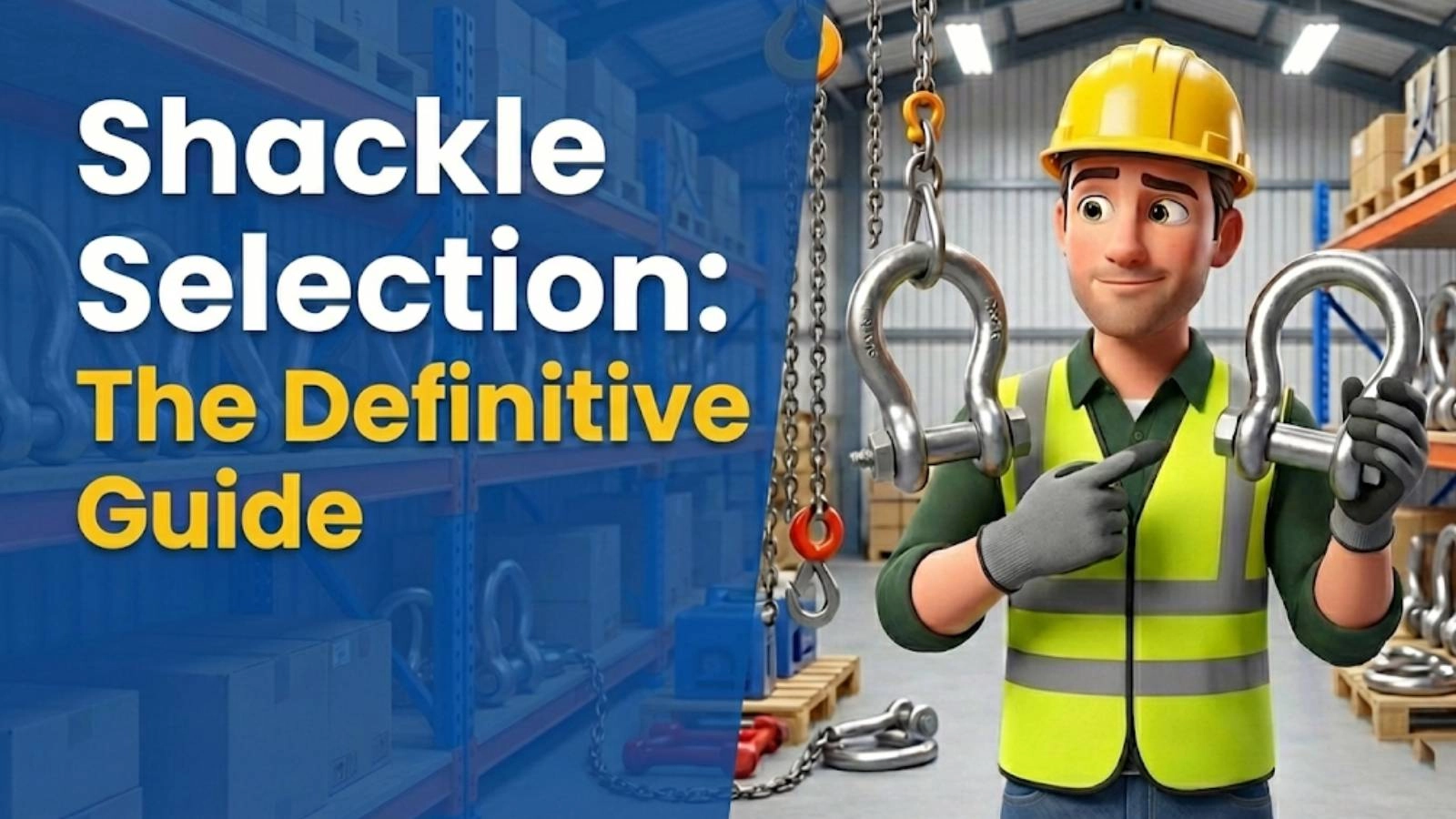
The lifespan of a lifting shackle is a critical factor in ensuring the safety and efficiency of rigging operations. Neglecting the factors that affect a lifting shackle lifespan can lead to catastrophic failures, resulting in injuries, property damage, and costly downtime. Understanding these factors and implementing proactive maintenance practices is essential for maximizing the lifting shackle lifespan and minimizing risks.
Why Shackle Lifespan Matters: A Safety and Cost Perspective
- The critical role of shackles in lifting operations.
- Consequences of shackle failure: injuries, damage, downtime.
- Financial implications of premature shackle replacement.
Shackles are indispensable components in various lifting and rigging applications, serving as crucial links between lifting devices and loads. Their reliability directly impacts the safety of personnel and the integrity of the lifted materials. Shackle failure can lead to severe consequences, including injuries to workers, damage to equipment, and costly operational downtime. Replacing shackles prematurely due to inadequate maintenance or improper usage can also result in significant financial burdens for companies. Therefore, understanding and proactively managing the factors that influence the lifting shackle lifespan is paramount.
The Problem: Premature Shackle Failure is Common
- Lack of awareness about factors affecting shackle lifespan.
- Inadequate inspection and maintenance practices.
- Using the wrong shackle for the application.
Despite the critical role of shackles in ensuring safe lifting operations, premature shackle failure remains a common problem in many industries. This issue often stems from a lack of awareness regarding the various factors that can affect the lifting shackle lifespan, such as material fatigue, corrosion, improper usage, and environmental conditions. Furthermore, inadequate inspection and maintenance practices, coupled with the use of incorrect shackle types for specific applications, contribute significantly to the problem of premature shackle failure. Addressing these issues requires a comprehensive approach that encompasses education, training, and the implementation of robust inspection and maintenance programs.
1. ✅ Material Fatigue and Wear: Understanding Load Cycles
The Problem: Repetitive Stress Weakens Shackles
- Explanation of metal fatigue and its impact.
- How load cycles contribute to material degradation.
- Example: High-frequency lifting operations, causing accelerated wear.
Metal fatigue is a progressive and localized structural damage that occurs when a material is subjected to cyclic loading. Over time, repetitive stress weakens the metal, leading to the formation and propagation of cracks, ultimately resulting in failure. Load cycles, or the repeated application and removal of stress, play a significant role in accelerating material degradation. For instance, in high-frequency lifting operations, such as those found in manufacturing or construction sites, shackles experience constant stress, which can lead to premature fatigue and reduce the lifting shackle lifespan.
The Solution: Reduce Stress and Optimize Load Management
- Choosing shackles with appropriate WLL (Working Load Limit).
- Avoiding shock loading and dynamic loading.
- Implementing load monitoring systems.
To mitigate the effects of material fatigue and extend the lifting shackle lifespan, it is crucial to choose shackles with an appropriate Working Load Limit (WLL) that exceeds the expected maximum load. Avoiding shock loading, which involves sudden and forceful application of weight, and dynamic loading, which includes rapidly changing loads, can also reduce stress on the shackles. Implementing load monitoring systems can provide real-time data on the weight being lifted, allowing operators to adjust their procedures and prevent overloading, further optimizing load management and minimizing the risk of fatigue-related failures. We, at Safe and Secure Trading Company, always advise our clients in Jubail on the importance of proper load management.
2. 💡 Corrosion: The Silent Shackle Killer
The Problem: Environmental Factors Accelerate Corrosion
- Different types of corrosion (rust, pitting, galvanic).
- Impact of saltwater, chemicals, and humidity.
- Example: Shackles used in offshore environments or chemical plants.
Corrosion is a pervasive electrochemical process that degrades metals through chemical reactions with their environment. Rust, pitting, and galvanic corrosion are common types of corrosion that can significantly compromise the integrity of shackles. Saltwater, chemicals, and high humidity levels accelerate the corrosion process. For example, shackles used in offshore environments or chemical plants are particularly susceptible to corrosion due to constant exposure to corrosive elements, leading to a reduced lifting shackle lifespan and increased risk of failure.
The Solution: Prevention and Protective Measures
- Selecting corrosion-resistant materials (e.g., stainless steel).
- Applying protective coatings and lubricants.
- Implementing regular cleaning and inspection schedules.
Preventing corrosion is essential for extending the lifting shackle lifespan. Selecting shackles made from corrosion-resistant materials, such as stainless steel, is a proactive step in minimizing the risk of corrosion. Applying protective coatings, such as galvanization or epoxy, and using specialized lubricants can create a barrier between the shackle and corrosive elements. Implementing regular cleaning and inspection schedules allows for the early detection of corrosion, enabling timely intervention and preventing further degradation. For our clients here in Dammam, we’ve seen that switching to stainless steel shackles can extend lifespan by up to 50% in marine environments.
3. ➡️ Improper Usage: Misapplication and Overloading
The Problem: Using Shackles Beyond Their Limits
- Exceeding the WLL (Working Load Limit).
- Side loading and three-way loading.
- Using shackles for unintended purposes.
Improper usage is a significant factor contributing to shackle failure. Exceeding the Working Load Limit (WLL) is a common mistake that places excessive stress on the shackle, leading to deformation or breakage. Side loading, which occurs when the load is applied at an angle to the shackle’s bow, and three-way loading, which involves applying force in multiple directions, can also compromise the shackle’s structural integrity. Additionally, using shackles for unintended purposes, such as pulling or dragging objects, can subject them to stresses beyond their design capabilities, drastically reducing the lifting shackle lifespan.
The Solution: Training, Procedures, and Proper Selection
- Comprehensive training for operators and riggers.
- Developing clear lifting procedures and guidelines.
- Selecting the correct type and size of shackle for each application.
To prevent shackle failure due to improper usage, comprehensive training for operators and riggers is crucial. Training should cover the correct methods for using shackles, the importance of adhering to the WLL, and the dangers of side loading and three-way loading. Developing clear lifting procedures and guidelines provides a standardized approach to lifting operations, ensuring that shackles are used safely and effectively. Selecting the correct type and size of shackle for each specific application is also essential for ensuring that the shackle is capable of handling the anticipated loads and stresses. We at Safe and Secure Trading Company offer customized training programs to ensure safe lifting practices.
4. 🌊 Environmental Conditions: Extreme Temperatures and Chemical Exposure
The Problem: Harsh Environments Degrade Shackles
- Impact of extreme heat and cold on material properties.
- Effects of chemical exposure (acids, alkalis, solvents).
- Example: Shackles used in foundries or chemical processing facilities.
Harsh environmental conditions can significantly degrade shackles, reducing their lifespan and increasing the risk of failure. Extreme temperatures, both high and low, can alter the material properties of shackles, making them more brittle or prone to deformation. Chemical exposure to acids, alkalis, and solvents can cause corrosion and weaken the shackle’s structure. For instance, shackles used in foundries are exposed to high temperatures, while those used in chemical processing facilities may come into contact with corrosive chemicals, both of which can severely impact the lifting shackle lifespan.
The Solution: Material Selection and Protective Measures
- Using shackles made from heat-resistant or chemically inert materials.
- Implementing protective barriers and enclosures.
- Regularly inspecting shackles for signs of degradation.
Selecting shackles made from heat-resistant or chemically inert materials is crucial for mitigating the effects of harsh environments. For example, using shackles made from alloy steel or stainless steel can provide better resistance to high temperatures and chemical exposure. Implementing protective barriers and enclosures can shield shackles from direct exposure to extreme temperatures or corrosive chemicals. Regularly inspecting shackles for signs of degradation, such as cracks, corrosion, or deformation, is essential for detecting potential problems early and preventing failure.
5. 🔍 Neglecting Regular Inspections and Maintenance
The Problem: Hidden Damage Goes Unnoticed
- Lack of formal inspection programs.
- Insufficient training for inspectors.
- Failure to document inspection findings.
Neglecting regular inspections and maintenance can lead to hidden damage going unnoticed, increasing the risk of shackle failure. A lack of formal inspection programs and insufficient training for inspectors can result in critical defects being overlooked. Failure to document inspection findings can prevent the identification of trends and the implementation of corrective actions. Without a proactive inspection and maintenance program, shackles can degrade unnoticed, compromising their structural integrity and reducing the lifting shackle lifespan.
The Solution: Establish a Robust Inspection Program
- Implementing a routine inspection schedule (daily, weekly, monthly).
- Training personnel on proper inspection techniques.
- Documenting all inspections and maintenance activities.
Establishing a robust inspection program is essential for ensuring the safety and longevity of shackles. Implementing a routine inspection schedule, including daily, weekly, and monthly inspections, allows for the early detection of potential problems. Training personnel on proper inspection techniques, such as visual inspection and non-destructive testing (NDT), ensures that they can identify defects accurately. Documenting all inspections and maintenance activities provides a record of the shackle’s condition, enabling the identification of trends and the implementation of preventive maintenance measures. We at Safe and Secure Trading Company recommend visual inspections before each use to identify any signs of wear or damage.
6. Understanding Shackle Types and Their Lifespan Implications
Bow Shackles vs. D-Ring Shackles: Lifespan Differences
- Discuss the pros and cons of each type.
- Explain how their designs affect their lifespan.
- Recommend suitable applications for each.
Bow shackles and D-ring shackles are two common types of shackles, each with its own advantages and disadvantages that affect their lifespan. Bow shackles, with their larger, rounded shape, are designed for use in multi-leg lifting applications and provide more flexibility in load direction. However, their larger size can make them more susceptible to bending under extreme loads. D-ring shackles, with their narrower, “D” shape, are stronger in line with the load and are suitable for single-leg lifting applications. Their compact design makes them less prone to bending but also limits their flexibility in load direction. The choice between bow shackles and D-ring shackles depends on the specific application and the expected load conditions, which directly impact their lifting shackle lifespan.
Specialty Shackles: Load Rated vs. Non-Load Rated
- Clarify the difference between load-rated and non-load-rated shackles.
- Explain why using non-load-rated shackles for lifting can be dangerous.
- Highlight situations where specialty shackles are necessary.
Load-rated shackles are designed and tested to meet specific safety standards and are clearly marked with their Working Load Limit (WLL). Non-load-rated shackles, on the other hand, are not intended for lifting applications and do not have a WLL. Using non-load-rated shackles for lifting can be extremely dangerous, as they may fail under load, leading to accidents and injuries. Specialty shackles, such as those made from high-strength alloys or designed for specific environmental conditions, are necessary for specialized lifting applications that require enhanced performance and safety. Always ensure the shackles you use are load-rated for the task at hand to maximize shackle safety.
7. The Role of Lubrication in Extending Shackle Lifespan
Why Lubrication is Essential for Shackle Longevity
- Explain how lubrication reduces friction and wear.
- Discuss different types of lubricants suitable for shackles.
- Recommend a lubrication schedule.
Lubrication plays a crucial role in extending the lifting shackle lifespan by reducing friction and wear between moving parts. Applying lubricant to the pin and body of the shackle minimizes friction during load cycles, preventing premature wear and tear. Different types of lubricants, such as grease, oil, and dry lubricants, are suitable for shackles, depending on the application and environmental conditions. A regular lubrication schedule, based on the frequency of use and environmental factors, should be established to ensure that shackles are adequately lubricated and protected.
The Risks of Improper Lubrication
- Explain how using the wrong lubricant can damage shackles.
- Discuss the consequences of neglecting lubrication.
- Provide guidance on choosing the right lubricant.
Using the wrong lubricant can damage shackles by causing corrosion, attracting dirt and debris, or degrading the shackle’s material. Neglecting lubrication can lead to increased friction, accelerated wear, and premature failure. Choosing the right lubricant involves considering the shackle’s material, the operating temperature, and the environmental conditions. For example, using a lubricant that is not compatible with saltwater in an offshore environment can accelerate corrosion and reduce the lifting shackle lifespan. Always consult the shackle manufacturer’s recommendations for the appropriate lubricant.
8. Documentation and Record-Keeping: Tracking Shackle Performance
The Importance of Maintaining Detailed Records
- Explain how documentation helps track shackle lifespan.
- Describe the types of records that should be kept (inspections, maintenance, usage).
- Highlight the benefits of using a digital record-keeping system.
Maintaining detailed records of shackle inspections, maintenance, and usage is essential for tracking their performance and predicting potential failures. Documentation helps track the lifting shackle lifespan by providing a history of the shackle’s condition and usage patterns. The types of records that should be kept include inspection reports, maintenance logs, and usage records, which detail the loads lifted, the frequency of use, and any incidents or anomalies. Using a digital record-keeping system can streamline the documentation process, making it easier to access and analyze data.
Using Data to Improve Shackle Management
- Explain how data analysis can identify trends and predict failures.
- Discuss how data can inform maintenance schedules and replacement decisions.
- Provide examples of data-driven insights.
Data analysis can identify trends and predict failures, enabling proactive maintenance and replacement decisions. By analyzing inspection data, maintenance records, and usage logs, it is possible to identify patterns that indicate potential problems. For example, a trend of increasing corrosion or wear can signal the need for more frequent inspections or a change in lubricant. Data can also inform maintenance schedules and replacement decisions, ensuring that shackles are replaced before they reach their failure point. These data-driven insights can significantly improve shackle management practices and extend the lifting shackle lifespan.
9. Best Practices for Shackle Storage
Protecting Shackles When Not in Use
- The importance of proper storage to prevent corrosion and damage.
- Ideal storage conditions (temperature, humidity, protection from chemicals).
- Tips for organizing and labeling shackles.
Proper storage is crucial for preventing corrosion and damage to shackles when they are not in use. The ideal storage conditions include a cool, dry environment with low humidity and protection from chemicals. Shackles should be stored in a clean, dry place, away from direct sunlight and extreme temperatures. Organizing and labeling shackles can help prevent damage and ensure that the correct shackle is used for each application. For corrosion prevention, consider applying a rust inhibitor before storing shackles.
10. Shackle Replacement Criteria: Knowing When to Retire a Shackle
Identifying Signs of Imminent Failure
- Visible signs of wear and tear (cracks, deformation, corrosion).
- Using NDT (Non-Destructive Testing) methods.
- Establishing clear replacement criteria based on inspection findings.
Identifying signs of imminent failure is crucial for preventing accidents and ensuring the safety of lifting operations. Visible signs of wear and tear, such as cracks, deformation, and corrosion, indicate that a shackle should be retired. Non-Destructive Testing (NDT) methods, such as magnetic particle inspection and ultrasonic testing, can detect hidden defects that are not visible to the naked eye. Establishing clear replacement criteria based on inspection findings ensures that shackles are replaced before they reach their failure point.
Legal and Regulatory Requirements for Shackle Replacement
- Overview of relevant standards and regulations (OSHA, ASME).
- Compliance requirements for shackle replacement.
- Consequences of failing to meet regulatory standards.
Legal and regulatory requirements mandate the proper inspection and replacement of shackles to ensure safety in lifting operations. Standards and regulations, such as those set by OSHA (Occupational Safety and Health Administration) and ASME (American Society of Mechanical Engineers), provide guidelines for shackle inspection, maintenance, and replacement. Compliance with these requirements is essential for avoiding penalties and ensuring the safety of workers. Failing to meet regulatory standards can result in fines, legal action, and, most importantly, accidents and injuries.
11. Case Studies: Learning from Shackle Failures
Real-World Examples of Shackle-Related Accidents
- Detailed accounts of accidents caused by shackle failure.
- Analysis of the root causes of these failures.
- Lessons learned from these incidents.
Real-world examples of shackle-related accidents provide valuable insights into the consequences of neglecting shackle safety. Detailed accounts of accidents caused by shackle failure highlight the importance of proper inspection, maintenance, and usage. Analyzing the root causes of these failures, such as overloading, corrosion, and improper usage, can help prevent similar incidents from occurring. Lessons learned from these incidents emphasize the need for comprehensive training, robust inspection programs, and a safety-first culture.
How to Prevent Similar Accidents in Your Operations
- Recommendations for improving shackle management practices.
- Emphasis on the importance of training and communication.
- Creating a safety-first culture.
Preventing similar accidents in your operations requires a proactive approach to shackle management. Implementing robust inspection programs, providing comprehensive training, and fostering open communication are essential for improving shackle safety. Emphasizing the importance of training and communication ensures that workers are aware of the risks associated with shackles and know how to use them safely. Creating a safety-first culture encourages workers to report potential problems and prioritize safety over productivity.
12. Partnering with SSTC for Shackle Safety and Longevity
How SSTC Ensures Shackle Quality and Performance
- Our rigorous testing and certification processes.
- Our commitment to providing high-quality, reliable shackles.
- Our expertise in shackle inspection and maintenance.
At Safe and Secure Trading Company (SSTC), we ensure shackle quality and performance through rigorous testing and certification processes. Our commitment to providing high-quality, reliable shackles is unwavering. We also offer expertise in shackle inspection and maintenance, helping our clients maintain safe and efficient lifting operations. Our dedication to quality and safety makes us a trusted partner for all your shackle needs.
Customized Solutions for Extending Shackle Lifespan
- Our tailored training programs for your workforce.
- Our comprehensive inspection and maintenance services.
- Our ongoing support and consultation.
SSTC provides customized solutions for extending the lifting shackle lifespan of your equipment. We offer tailored training programs for your workforce, comprehensive inspection and maintenance services, and ongoing support and consultation. Our goal is to help you optimize your shackle management practices, reduce the risk of accidents, and improve the efficiency of your lifting operations.
Conclusion: Maximizing Shackle Lifespan for a Safer, More Efficient Operation
Summarizing the Key Factors
- Recap of the top factors affecting shackle lifespan.
- Emphasis on the importance of proactive maintenance and inspection.
- A call to action for improving shackle management practices.
In summary, maximizing the lifting shackle lifespan requires a comprehensive approach that addresses material fatigue, corrosion, improper usage, environmental conditions, and the importance of regular inspections and maintenance. Proactive maintenance and inspection are crucial for detecting potential problems early and preventing failures. By implementing robust shackle management practices, you can significantly improve the safety and efficiency of your lifting operations.
Final Thoughts: Investing in Shackle Safety
- The long-term benefits of prioritizing shackle safety and longevity.
- The importance of creating a safety-first culture.
-
Investing in shackle safety and longevity provides long-term benefits, including reduced accident rates, lower maintenance costs, and increased operational efficiency. Creating a safety-first culture is essential for ensuring that shackles are used safely and effectively. We at SSTC are dedicated to providing our clients with the highest quality shackles and expert support to ensure safe and efficient lifting operations.
FAQ Section
Q: What is the Working Load Limit (WLL) of a shackle?
A: The Working Load Limit (WLL) is the maximum weight that a shackle is designed to safely lift. It is crucial to never exceed the WLL to prevent shackle failure and ensure safety.
Q: How often should shackles be inspected?
A: Shackles should be visually inspected before each use and undergo a more thorough inspection at least every three months, or more frequently depending on the severity of the operating environment.
Q: What are the signs of a worn or damaged shackle?
A: Signs of a worn or damaged shackle include cracks, deformation, corrosion, excessive wear, and any other visible defects. If any of these signs are present, the shackle should be removed from service immediately.
Q: Can shackles be repaired?
A: No, shackles should never be repaired. If a shackle is damaged or worn, it should be replaced with a new one that meets the required specifications.
Q: What type of lubricant should be used on shackles?
A: The type of lubricant used on shackles depends on the application and environmental conditions. Generally, a high-quality grease or oil that is compatible with the shackle material is recommended. Consult the shackle manufacturer’s recommendations for specific guidance.
Q: How does saltwater affect shackles?
A: Saltwater can cause corrosion in shackles, especially those made from carbon steel. Shackles used in marine environments should be made from corrosion-resistant materials, such as stainless steel, and regularly inspected for signs of corrosion.
Q: What is side loading and why is it dangerous?
A: Side loading occurs when the load is applied at an angle to the shackle’s bow. This can significantly reduce the shackle’s WLL and increase the risk of failure. Shackles should always be loaded in line with the bow to ensure safe operation.
Q: What are the best practices for storing shackles?
A: The best practices for storing shackles include keeping them in a cool, dry place, away from direct sunlight and chemicals. Shackles should be stored in a clean condition and protected from corrosion.
Q: How do I choose the right size shackle for my lifting application?
A: To choose the right size shackle, you need to determine the weight of the load being lifted and select a shackle with a WLL that exceeds that weight. You should also consider the type of lifting application and the environmental conditions to ensure that the shackle is suitable for the task.
Q: What is the difference between a bow shackle and a D-ring shackle?
A: A bow shackle has a larger, rounded shape and is designed for multi-leg lifting applications and providing more flexibility in load direction. A D-ring shackle has a narrower, “D” shape, is stronger in line with the load, and is suitable for single-leg lifting applications.