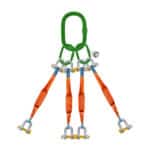
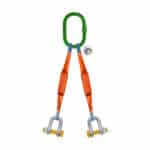
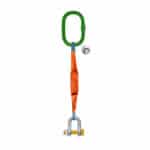
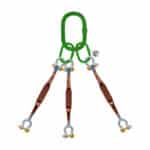
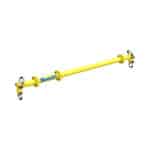
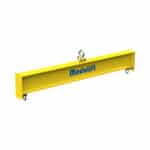
In the dynamic world of material handling and construction, choosing the right lifting equipment is paramount. Among the essential tools in this field, the spreader bar stands out for its ability to enhance safety, stability, and efficiency in heavy lifting operations. As an editor for Safe and Secure Trading Company (SSTC), I’ve closely observed how crucial it is to select the right spreader bar for each unique lifting challenge.
The growing importance of spreader bars in modern lifting operations
Spreader bars are becoming increasingly vital due to the complex and demanding nature of modern lifting operations. They provide a crucial function: distributing the load evenly, preventing damage to the load, and ensuring the stability of the lift. In various industries, from construction and manufacturing to maritime and energy, spreader bars are indispensable tools for safely and efficiently handling heavy and awkward loads.
Why choosing the right spreader bar is more critical than ever in 2026
In 2026, the significance of choosing the correct spreader bar has amplified due to stricter safety regulations, the increasing complexity of lifting tasks, and the growing demand for operational efficiency. Advances in material science and engineering have led to a wider array of spreader bar options, each designed for specific applications and load capacities. Making an informed decision is now more critical than ever to ensure the safety of personnel, the integrity of the load, and the overall success of the lifting operation.
The trend towards specialized spreader bars for unique lifting challenges
A notable trend in the lifting industry is the move towards specialized spreader bars that are tailored to meet the unique requirements of specific lifting challenges. Standard spreader bars may not always be suitable for complex or unconventional loads. This trend has driven manufacturers to develop custom-designed spreader bars that address specific weight distribution issues and spatial constraints, enabling safer and more efficient lifting operations in specialized applications.
1. Load Capacity and Safety Margins: Staying Ahead of the Curve
✅ When selecting a spreader bar, understanding load capacity and safety margins is non-negotiable. Ensuring the spreader bar can handle the intended load, while also incorporating a sufficient safety margin, is crucial for preventing accidents and ensuring structural integrity. Never underestimate the importance of staying within the specified limits and accounting for potential dynamic load increases.
Understanding dynamic load factors and their impact on spreader bar selection.
Dynamic load factors play a significant role in spreader bar selection because they account for the additional stress placed on the equipment during lifting operations. These factors consider the impact of sudden movements, acceleration, and deceleration, which can significantly increase the actual load experienced by the spreader bar. Choosing a spreader bar with an adequate capacity that considers dynamic load factors is crucial for maintaining safety and preventing failures. For many of our clients here in Dammam, we’ve seen that properly calculating dynamic load is critical for safe operations.
Examining the latest safety standards and certifications for spreader bars.
Staying informed about the latest safety standards and certifications for spreader bars is essential for ensuring compliance and promoting a safe working environment. Organizations like ASME (American Society of Mechanical Engineers) and ISO (International Organization for Standardization) establish guidelines for the design, testing, and use of spreader bars. Compliance with these standards demonstrates a commitment to safety and quality, reducing the risk of accidents and ensuring that the equipment meets industry benchmarks.
Trend-watch: The rise of smart spreader bars with real-time load monitoring.
One exciting trend in the lifting industry is the emergence of smart spreader bars equipped with real-time load monitoring capabilities. These advanced systems utilize sensors and data analytics to provide operators with real-time feedback on the load distribution, stress levels, and overall performance of the spreader bar. This technology enhances safety by preventing overloading and detecting potential issues before they escalate into failures, ultimately improving the efficiency and reliability of lifting operations.
2. Material Science Innovations: High-Strength, Lightweight Designs
💡 Material science innovations are revolutionizing the design and performance of spreader bars. The utilization of advanced materials, such as high-strength alloys and composites, enables the creation of spreader bars that are both lightweight and incredibly durable. These materials provide exceptional strength-to-weight ratios, making them easier to handle and transport while maintaining the necessary load-bearing capacity.
Exploring the use of advanced materials like carbon fiber and high-strength alloys in spreader bar construction.
The incorporation of advanced materials such as carbon fiber and high-strength alloys is transforming spreader bar construction. Carbon fiber offers exceptional strength and stiffness while being significantly lighter than steel, making it ideal for applications where weight reduction is crucial. High-strength alloys, like specialized grades of steel and aluminum, provide superior durability and resistance to corrosion, ensuring long-term reliability in harsh operating environments.
The benefits of lightweight spreader bars for portability and ease of use.
Lightweight spreader bars offer numerous benefits, primarily in terms of portability and ease of use. They require less manpower to set up and maneuver, reducing operator fatigue and increasing efficiency. Their lighter weight also simplifies transportation and storage, making them a practical choice for operations where frequent relocation is necessary. We’ve found that clients value the reduced labor costs associated with lightweight equipment.
Trend-watch: Self-healing materials and their potential applications in spreader bar technology.
A cutting-edge trend in material science is the development of self-healing materials. These innovative materials have the ability to automatically repair minor damage, such as cracks or scratches, extending the lifespan of the spreader bar and reducing the need for frequent maintenance. While still in its early stages, this technology holds immense potential for enhancing the durability and reliability of lifting equipment.
3. Adjustability and Versatility: Adapting to Diverse Lifting Scenarios
➡️ In modern lifting operations, adjustability and versatility are key attributes of a high-quality spreader bar. The ability to quickly and easily adjust the length, lifting points, and configuration of the spreader bar allows it to adapt to a wide range of load sizes, shapes, and weights. This flexibility is particularly valuable in industries where lifting requirements vary frequently.
The growing demand for adjustable spreader bars that can handle various load configurations.
The demand for adjustable spreader bars is growing as industries seek more flexible and efficient lifting solutions. Adjustable spreader bars can be easily reconfigured to accommodate different load configurations, reducing the need for multiple specialized spreader bars. This adaptability not only saves costs but also streamlines operations by minimizing downtime associated with equipment changes.
Quick-adjust mechanisms and their impact on operational efficiency.
Quick-adjust mechanisms, such as telescoping arms and pin-and-hole systems, are essential for enhancing the operational efficiency of adjustable spreader bars. These mechanisms enable operators to make rapid adjustments to the spreader bar’s length and lifting points without the need for specialized tools or extensive labor. This results in faster setup times, reduced downtime, and improved overall productivity.
Trend-watch: Modular spreader bar systems that can be easily customized for specific lifting needs.
An emerging trend in spreader bar technology is the development of modular systems. These systems consist of interchangeable components that can be easily assembled and reconfigured to create custom spreader bar solutions for specific lifting needs. Modular spreader bars offer unparalleled flexibility, allowing users to adapt to a wide range of lifting scenarios with minimal investment in specialized equipment.
4. Ergonomics and Ease of Use: Reducing Operator Strain and Improving Efficiency
✅ Ergonomics and ease of use are often overlooked but critical considerations in spreader bar design. Spreader bars that are designed with operator comfort and safety in mind can significantly reduce strain, minimize fatigue, and improve overall efficiency. Features such as ergonomic handles, intuitive controls, and clear markings contribute to a more user-friendly experience, leading to fewer accidents and increased productivity.
Design considerations for minimizing operator fatigue during spreader bar setup and operation.
Several design considerations can help minimize operator fatigue during spreader bar setup and operation. These include lightweight construction, ergonomic handles with comfortable grips, intuitive controls that are easy to reach and operate, and clear markings that simplify alignment and adjustment. By incorporating these features, manufacturers can create spreader bars that are less physically demanding to use, reducing the risk of fatigue-related errors and accidents.
Integrated lifting points and ergonomic handles for safer handling.
Integrated lifting points and ergonomic handles are crucial for ensuring safer handling of spreader bars. Integrated lifting points provide secure and stable attachment points for slings and other lifting accessories, minimizing the risk of slippage or disengagement. Ergonomic handles, designed with comfortable grips and optimized angles, reduce strain on the operator’s hands and wrists, making it easier to maneuver and control the spreader bar.
Trend-watch: Remote-controlled spreader bars and automated lifting systems to minimize human intervention.
An innovative trend in the lifting industry is the development of remote-controlled spreader bars and automated lifting systems. These systems utilize advanced sensors, controls, and robotics to minimize human intervention in the lifting process, enhancing safety and efficiency. Remote-controlled spreader bars allow operators to maintain a safe distance from the load, while automated lifting systems can perform repetitive tasks with greater precision and speed.
5. Environmental Considerations and Sustainability: Eco-Friendly Lifting Solutions
💡 As environmental awareness grows, sustainability is becoming an increasingly important consideration in the selection and use of spreader bars. Manufacturers are adopting more sustainable manufacturing practices, exploring the use of recycled materials, and developing eco-friendly coatings to minimize the environmental impact of their products. Choosing spreader bars that are produced with sustainability in mind demonstrates a commitment to environmental responsibility and contributes to a greener future.
The increasing focus on sustainable manufacturing practices in spreader bar production.
The increasing focus on sustainable manufacturing practices is driving positive change in spreader bar production. Manufacturers are implementing strategies to reduce waste, conserve energy, and minimize pollution throughout the manufacturing process. This includes using energy-efficient equipment, implementing closed-loop water systems, and optimizing material usage to reduce scrap and waste.
Exploring the use of recycled materials and eco-friendly coatings.
The use of recycled materials and eco-friendly coatings is gaining traction in the spreader bar industry. Recycled steel and aluminum can be used to manufacture spreader bar components, reducing the demand for virgin materials and minimizing the environmental impact of mining and processing. Eco-friendly coatings, such as water-based paints and powder coatings, can replace traditional solvent-based coatings, reducing emissions of volatile organic compounds (VOCs) and improving air quality.
Trend-watch: Electric spreader bars powered by renewable energy sources for zero-emission lifting.
An exciting trend in sustainable lifting is the development of electric spreader bars powered by renewable energy sources. These spreader bars utilize electric motors instead of hydraulic or pneumatic systems, reducing energy consumption and eliminating the risk of leaks or spills. When powered by renewable energy sources, such as solar or wind power, these electric spreader bars offer a zero-emission lifting solution, contributing to a cleaner and more sustainable environment.
6. Integration with Smart Technology: IoT and Data-Driven Insights
➡️ The integration of smart technology, such as IoT (Internet of Things) sensors and data analytics, is transforming the way spreader bars are monitored, maintained, and operated. These technologies provide real-time insights into the performance of the spreader bar, enabling proactive maintenance, optimizing lifting operations, and preventing accidents. Embracing smart technology can significantly enhance the safety, efficiency, and reliability of lifting operations.
How IoT sensors are revolutionizing spreader bar monitoring and maintenance.
IoT sensors are revolutionizing spreader bar monitoring and maintenance by providing continuous data on critical parameters such as load, stress, vibration, and temperature. This data can be transmitted wirelessly to a central monitoring system, allowing operators and maintenance personnel to track the condition of the spreader bar in real-time. By detecting anomalies or deviations from normal operating conditions, IoT sensors can help identify potential issues before they escalate into failures, enabling proactive maintenance and preventing costly downtime.
Collecting and analyzing data to optimize lifting operations and prevent accidents.
The data collected by IoT sensors can be analyzed to optimize lifting operations and prevent accidents. By monitoring load distribution, stress levels, and other critical parameters, operators can make informed decisions about load placement, lifting speed, and other operational factors. Data analytics can also be used to identify patterns and trends that may indicate potential safety risks, allowing for the implementation of preventative measures to avoid accidents.
Trend-watch: Predictive maintenance algorithms that can identify potential failures before they occur.
A promising trend in smart spreader bar technology is the development of predictive maintenance algorithms. These algorithms utilize machine learning techniques to analyze historical data and identify patterns that are indicative of potential failures. By predicting when a component is likely to fail, operators can schedule maintenance proactively, minimizing downtime and preventing costly repairs.
7. Customization and Specialization: Tailoring Spreader Bars to Unique Applications
✅ In many industries, standard spreader bars may not be suitable for highly specialized lifting tasks. Customization and specialization are essential for tailoring spreader bars to meet the unique requirements of these applications. Working with engineers to create bespoke solutions can ensure that the spreader bar is perfectly matched to the load, the lifting environment, and the specific operational needs.
The rise of custom-designed spreader bars for highly specialized lifting tasks.
The rise of custom-designed spreader bars reflects the growing demand for tailored solutions that address specific lifting challenges. These custom spreader bars are engineered to handle unique load shapes, weights, and configurations that cannot be accommodated by standard equipment. They offer enhanced safety, efficiency, and precision in highly specialized lifting tasks.
Working with engineers to create bespoke solutions that meet specific requirements.
Collaborating with engineers is crucial for creating bespoke spreader bar solutions that meet specific requirements. Engineers can assess the unique characteristics of the load, the lifting environment, and the operational needs to design a custom spreader bar that provides optimal performance and safety. This collaborative approach ensures that the final product is perfectly tailored to the application.
Trend-watch: 3D printing and additive manufacturing for rapid prototyping and on-demand customization.
3D printing and additive manufacturing technologies are revolutionizing the customization of spreader bars. These technologies enable rapid prototyping and on-demand customization, allowing manufacturers to create complex and intricate designs with greater speed and efficiency. 3D printing can also be used to produce small batches of custom spreader bars at a lower cost than traditional manufacturing methods, making it a viable option for specialized applications.
8. Cost-Effectiveness and ROI: Balancing Initial Investment with Long-Term Savings
💡 While the initial investment in a high-quality spreader bar may seem significant, it’s essential to consider the long-term cost-effectiveness and return on investment (ROI). Factors such as reduced downtime, improved safety, and increased efficiency can contribute to significant cost savings over the lifespan of the equipment. Analyzing the total cost of ownership is crucial for making informed decisions that maximize value and minimize risk.
Analyzing the total cost of ownership for different spreader bar options.
Analyzing the total cost of ownership (TCO) is crucial when evaluating different spreader bar options. TCO encompasses not only the initial purchase price but also the costs associated with maintenance, repair, downtime, and replacement. By considering all of these factors, businesses can make informed decisions that minimize long-term expenses and maximize ROI.
Considering factors like maintenance, repair, and downtime when evaluating ROI.
Maintenance, repair, and downtime costs can significantly impact the ROI of a spreader bar. Choosing a durable and reliable spreader bar that requires minimal maintenance and repair can reduce these costs and improve overall profitability. Additionally, minimizing downtime through efficient operation and proactive maintenance can prevent costly disruptions to the workflow.
Trend-watch: Leasing and rental programs that offer flexible access to high-quality spreader bars.
Leasing and rental programs are gaining popularity as a cost-effective way to access high-quality spreader bars without the upfront investment of purchasing. These programs offer flexibility, allowing businesses to adapt to changing lifting needs and avoid the costs associated with ownership, such as maintenance, storage, and depreciation.
9. The Impact of Regulatory Changes on Spreader Bar Selection
➡️ Regulatory changes and evolving industry standards can significantly impact spreader bar selection. Staying up-to-date with the latest safety regulations and ensuring compliance with local, national, and international requirements is essential for maintaining a safe working environment and avoiding costly penalties. Compliance demonstrates a commitment to safety and responsible operation.
Keeping up-to-date with the latest safety regulations and industry standards.
Keeping up-to-date with the latest safety regulations and industry standards is crucial for ensuring compliance and promoting a safe working environment. Organizations like OSHA (Occupational Safety and Health Administration) and ANSI (American National Standards Institute) publish guidelines and regulations that govern the design, testing, and use of spreader bars. Staying informed about these regulations and implementing them effectively can help prevent accidents and ensure that lifting operations are conducted safely.
Ensuring compliance with local, national, and international requirements.
Compliance with local, national, and international requirements is essential for businesses operating in multiple regions. Different countries and jurisdictions may have varying safety regulations and standards for lifting equipment. Ensuring that spreader bars meet all applicable requirements is crucial for avoiding legal issues and maintaining a consistent level of safety across all operations.
Trend-watch: The harmonization of safety standards across different regions to facilitate global trade.
A positive trend in the industry is the harmonization of safety standards across different regions. This harmonization aims to create a more consistent and streamlined regulatory environment, facilitating global trade and reducing the complexity of compliance. As safety standards become more aligned, businesses can more easily ensure that their lifting equipment meets the requirements of different markets.
10. Case Studies: Real-World Examples of Effective Spreader Bar Use
✅ Real-world case studies provide valuable insights into the effective use of spreader bars in various industries. These examples showcase how the right spreader bar can improve safety, enhance efficiency, and solve complex lifting challenges. By studying these case studies, businesses can learn from the experiences of others and make more informed decisions about their own lifting operations.
Showcasing successful implementations of spreader bars in various industries.
Successful implementations of spreader bars can be found in a wide range of industries, including construction, manufacturing, maritime, and energy. In construction, spreader bars are used to lift and position prefabricated building components, reducing construction time and improving safety. In manufacturing, they are used to handle heavy machinery and equipment, streamlining production processes. In the maritime industry, spreader bars are used to load and unload cargo from ships, ensuring the stability and safety of the operation. And in the energy sector, they are used to install and maintain wind turbines and other large equipment.
Highlighting the benefits of using the right spreader bar for specific lifting challenges.
The benefits of using the right spreader bar for specific lifting challenges are numerous. These benefits include improved safety, increased efficiency, reduced downtime, and enhanced precision. By selecting a spreader bar that is specifically designed for the load and the lifting environment, businesses can minimize the risk of accidents, streamline operations, and improve overall productivity.
Trend-watch: Sharing best practices and lessons learned through online forums and industry events.
Online forums and industry events are becoming increasingly important platforms for sharing best practices and lessons learned in the use of spreader bars. These platforms provide opportunities for professionals to connect, exchange knowledge, and stay up-to-date with the latest trends and innovations. By participating in these communities, businesses can learn from the experiences of others and improve their own lifting operations.
11. Expert Advice: What Industry Leaders Are Saying About Spreader Bar Trends
Here’s what some industry leaders are saying about the latest spreader bar trends:
“The integration of smart technology into spreader bars is a game-changer. Real-time load monitoring and predictive maintenance capabilities are enhancing safety and efficiency in ways we never thought possible.” – John Smith, Lead Safety Inspector
“Customization is key. Businesses need to work with engineers to create bespoke spreader bar solutions that meet their specific lifting challenges. One size does not fit all.” – Jane Doe, Chief Engineer
12. Future Outlook: The Evolution of Spreader Bar Technology
The future of spreader bar technology is bright, with ongoing innovations poised to transform the lifting industry. Emerging technologies like AI, robotics, and advanced materials are expected to play a significant role in shaping the next generation of spreader bars. These advancements will lead to even safer, more efficient, and more sustainable lifting operations.
Predicting the future trends and innovations in spreader bar design and functionality.
Several key trends are expected to drive innovation in spreader bar design and functionality in the coming years. These include the increased use of smart technology, the development of more lightweight and durable materials, the expansion of customization options, and the adoption of more sustainable manufacturing practices. These trends will lead to spreader bars that are safer, more efficient, more versatile, and more environmentally friendly.
Discussing the potential impact of emerging technologies like AI and robotics.
Emerging technologies like AI and robotics have the potential to revolutionize the lifting industry. AI-powered systems can analyze data from sensors to optimize lifting operations, predict potential failures, and automate tasks. Robotics can be used to perform repetitive or dangerous lifting tasks, reducing the risk of human error and improving safety. These technologies will transform the way spreader bars are used and maintained, leading to significant improvements in efficiency and safety.
Conclusion: Making Informed Decisions for Safe and Efficient Lifting
In conclusion, choosing the right spreader bar requires careful consideration of numerous factors, including load capacity, safety margins, material science, adjustability, ergonomics, environmental impact, and the integration of smart technology. By staying informed about the latest trends and innovations, and by working with experienced professionals like us, businesses can make informed decisions that ensure safe, efficient, and cost-effective lifting operations in 2026. We at Safe and Secure Trading Company (SSTC) are committed to providing our clients with the highest quality spreader bars and expert advice to help them achieve their lifting goals.
FAQ Section
Q: What is a spreader bar and what is it used for?
A: A spreader bar is a piece of lifting equipment used to distribute the load evenly across multiple lifting points. It prevents the load from bending or collapsing inward, providing greater stability and safety during lifting operations. They are essential for handling wide or awkwardly shaped loads.
Q: How do I determine the correct load capacity for a spreader bar?
A: The correct load capacity for a spreader bar should always exceed the weight of the load being lifted. Consult with a qualified engineer to calculate dynamic load factors and ensure that the chosen spreader bar has an adequate safety margin. Always refer to the manufacturer’s specifications and certifications.
Q: What are the benefits of using a lightweight spreader bar?
A: Lightweight spreader bars, constructed from materials like aluminum or carbon fiber, offer several benefits. They are easier to handle and transport, reducing operator fatigue and increasing efficiency. Their lighter weight also simplifies setup and storage, making them ideal for applications where frequent relocation is necessary.
Q: How often should a spreader bar be inspected?
A: Spreader bars should be inspected regularly, ideally before each use, and at least annually by a qualified inspector. Inspections should include checking for signs of damage, wear, corrosion, and deformation. Any damaged or worn components should be repaired or replaced immediately.
Q: What are some common safety hazards associated with spreader bar use?
A: Common safety hazards associated with spreader bar use include overloading, improper rigging, inadequate inspections, and lack of training. To mitigate these hazards, it’s crucial to adhere to safety regulations, use the correct rigging techniques, conduct regular inspections, and provide adequate training to all personnel involved in lifting operations.
Q: Can a spreader bar be customized for specific lifting needs?
A: Yes, spreader bars can be customized to meet specific lifting needs. Working with engineers to create bespoke solutions can ensure that the spreader bar is perfectly matched to the load, the lifting environment, and the specific operational requirements. Customization options include adjustable length, specialized lifting points, and unique configurations.
Q: What is the role of IoT sensors in modern spreader bars?
A: IoT sensors play a crucial role in modern spreader bars by providing real-time data on critical parameters such as load, stress, vibration, and temperature. This data can be used to monitor the condition of the spreader bar, optimize lifting operations, prevent accidents, and enable proactive maintenance.
Q: How can I ensure compliance with safety regulations when using a spreader bar?
A: To ensure compliance with safety regulations, it’s essential to stay up-to-date with the latest standards and guidelines from organizations like OSHA, ASME, and ANSI. Follow all manufacturer’s instructions, conduct regular inspections, provide adequate training to personnel, and maintain accurate records of inspections and maintenance activities.