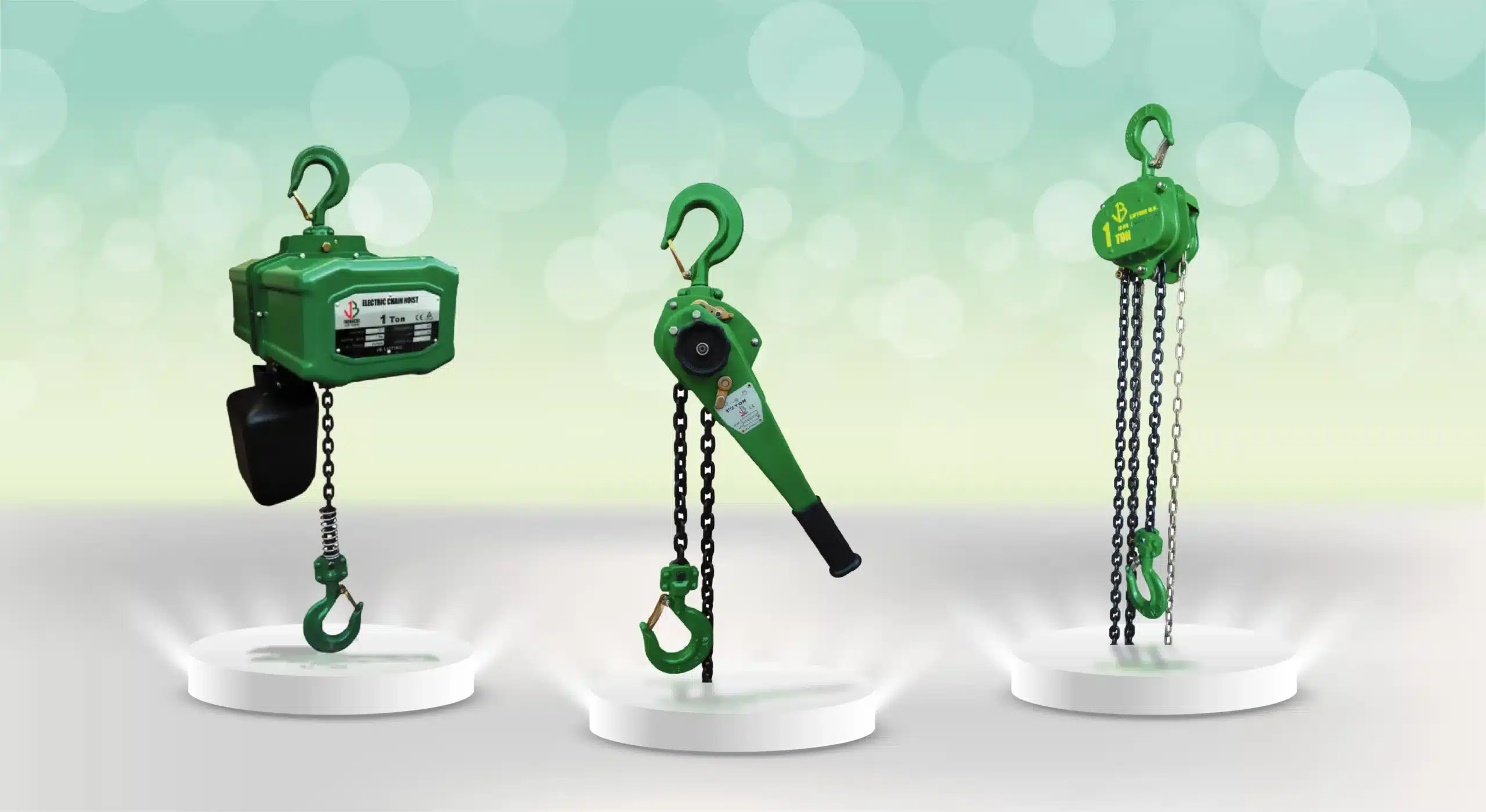
Choosing the right hoist for your lifting needs is a critical decision that impacts safety, efficiency, and overall productivity. Many businesses stumble when deciding between an electric chain hoist and a manual hoist, often overlooking key factors that can lead to costly mistakes. This guide is designed to help you navigate the complexities of hoist selection, ensuring you make an informed choice that aligns with your specific requirements.
Key Takeaways
- Understanding the common mistakes in choosing between electric and manual chain hoists can significantly improve workplace safety and efficiency.
- Proper assessment of lifting requirements, environmental conditions, and operational frequency is critical for informed decision-making.
- Ignoring maintenance needs and overlooking safety features are frequent oversights that can lead to accidents and equipment failure.
Mistake #1: Neglecting Load Capacity Requirements ⚖️
Underestimating Maximum Load
A common error is underestimating the maximum weight you’ll need to lift. Always factor in a safety margin above your typical load. In our experience with clients, we’ve found that many initially underestimate the weight of their heaviest loads by not accounting for attachments or unforeseen additions. This oversight can lead to selecting a hoist with insufficient capacity, creating a hazardous situation. We recommend always erring on the side of caution and choosing a hoist rated for a higher load than you currently anticipate. This provides a safety buffer and allows for future flexibility. Remember, it’s always better to have excess capacity than to risk overloading the equipment.
Failing to Account for Dynamic Loading
Dynamic loading (sudden impacts or jerky movements) can significantly increase stress on the hoist. Account for this when calculating load capacity. Dynamic loads, often overlooked, introduce forces far exceeding the static weight of the object being lifted. These forces arise from sudden starts, stops, or swinging motions. For instance, a seemingly light load can exert significant stress on the electric chain hoist if it’s lifted abruptly. Our team in KSA encounters this frequently, especially in fast-paced manufacturing environments. To mitigate this, we advise clients to factor in a dynamic load factor, typically ranging from 1.1 to 2.0, depending on the application’s intensity. This factor multiplies the static load to estimate the true stress on the hoist.
The Importance of a Safety Factor
Failing to calculate a safety factor into your lifting capacity is a recipe for disaster. Always ensure your hoist can handle more than the expected load. A safety factor is a crucial multiplier applied to the maximum expected load to ensure the hoist operates well within its safe working load (SWL). This buffer accounts for uncertainties in load estimation, material strength variations, and potential wear and tear over time. In our experience, a safety factor of at least 2:1 is recommended for most general lifting applications. For critical lifts or hazardous environments, this factor should be even higher. We once worked with a client who struggled with premature hoist failures due to inadequate safety factors. By increasing their safety factor, they reduced breakdowns and improved overall safety.
Mistake #2: Ignoring Duty Cycle and Frequency of Use ⏱️
Overlooking the Impact of Frequent Lifting
Using a manual hoist for tasks that require frequent lifting is inefficient and can lead to operator fatigue. Manual hoists are ideal for occasional, light-duty tasks. However, when used repetitively, they can cause significant strain on the operator, reducing productivity and increasing the risk of musculoskeletal injuries. We’ve consistently seen that businesses that rely on manual hoists for high-frequency lifting experience higher rates of employee absenteeism and reduced overall efficiency. Electric chain hoist options are the better investment when tackling heavier or more frequent lifting tasks.
Misjudging the Duty Cycle of Electric Hoists
Electric hoists have duty cycle limitations. Overusing them can cause overheating and premature failure. Duty cycle refers to the amount of time an electric hoist can operate within a specific period (usually 10 minutes) without overheating. Exceeding the duty cycle can cause the motor to overheat, damaging the hoist and potentially creating a hazardous situation. For many of our clients here in Dammam, Saudi Arabia, we’ve seen that understanding and adhering to the duty cycle is critical for prolonging the lifespan of their electric chain hoists. Always consult the manufacturer’s specifications for the duty cycle rating and ensure it aligns with your operational needs.
Matching Hoist Type to Usage Patterns
Assess how often you’ll be using the hoist. For frequent, heavy lifting, an electric hoist is typically the better choice. For occasional use, a manual hoist might suffice. Matching the hoist type to your usage patterns is essential for optimizing efficiency and minimizing costs. If you’re constantly lifting heavy loads, an electric hoist is the obvious choice. It will save time, reduce operator fatigue, and improve overall productivity. However, if you only need to lift occasionally and the loads are relatively light, a manual hoist might be a more economical option. We work closely with our clients to analyze their lifting requirements and recommend the most appropriate hoist type for their specific needs.
Mistake #3: Skimping on Safety Features and Protocols ⚠️
Disregarding Overload Protection
Failing to ensure overload protection is in place for electric hoists is dangerous. This feature prevents lifting loads beyond the hoist’s capacity. Overload protection is a critical safety feature that prevents the hoist from lifting loads exceeding its rated capacity. This protection can be mechanical, electrical, or a combination of both. Without it, the hoist is at risk of mechanical failure, which could cause the load to drop and potentially injure workers. We strongly recommend that all electric chain hoists be equipped with overload protection. It’s a small investment that can prevent serious accidents and costly damage.
Neglecting Regular Inspections
Irregular or nonexistent inspections are a significant oversight. Regular inspection can catch minor issues before they become major problems. Regular inspections are essential for maintaining the safety and reliability of your chain hoist. Inspections should be performed by trained personnel and should include a thorough examination of all critical components, such as the chain, hooks, brakes, and controls. A common mistake we help businesses fix is implementing a comprehensive inspection schedule. We recommend daily pre-shift inspections by the operator and more detailed monthly or quarterly inspections by a qualified technician.
Omitting Proper Training for Operators
Lack of proper training is a critical safety risk. Operators must be trained on safe operating procedures and emergency protocols. Proper training is paramount for safe and efficient hoist operation. Operators must understand the hoist’s capabilities, limitations, and safety features. They should also be trained on how to perform pre-shift inspections, recognize potential hazards, and respond to emergencies. We offer comprehensive training programs for hoist operators. Proper training not only reduces the risk of accidents but also extends the lifespan of the equipment.
Mistake #4: Overlooking Environmental Conditions 🌡️
Failing to Consider Extreme Temperatures
Extreme temperatures can affect the performance and lifespan of both electric and manual hoists. Extreme temperatures, both high and low, can significantly impact the performance and longevity of hoists. High temperatures can cause the motor in electric hoists to overheat, reducing its efficiency and lifespan. Low temperatures can make lubricants more viscous, affecting the hoist’s smooth operation. We advise clients operating in extreme environments to select hoists specifically designed for those conditions. These hoists often feature enhanced cooling systems, specialized lubricants, and temperature-resistant components.
Ignoring Exposure to Corrosive Substances
Exposure to corrosive substances can damage hoist components. Select hoists with appropriate corrosion-resistant coatings. Corrosive substances, such as acids, alkalis, and saltwater, can wreak havoc on hoist components, leading to premature rust and failure. If your hoist will be operating in a corrosive environment, it’s essential to select a model with appropriate corrosion-resistant coatings and materials. Stainless steel components and epoxy coatings are often used to protect hoists from corrosion. A client of ours in the petrochemical industry had significant corrosion issues with their standard hoists. By switching to corrosion-resistant models, they significantly reduced maintenance costs and downtime.
Adapting Hoist Selection to the Work Environment
Consider the environment when choosing a hoist. For example, outdoor applications may require weather-resistant models. The work environment plays a crucial role in hoist selection. Outdoor applications require hoists that are weather-resistant and protected from rain, snow, and sunlight. Dusty environments necessitate hoists with sealed components to prevent dust from entering and damaging the mechanism. Hazardous environments may require explosion-proof hoists to prevent ignition of flammable materials. We conduct thorough site assessments to understand the specific environmental challenges our clients face and recommend hoists accordingly.
Mistake #5: Choosing the Wrong Suspension Type ⛓️
Mismatching Suspension to Structural Support
The hoist’s suspension type (hook, trolley, etc.) must be compatible with the structural support system. The suspension type of the electric chain hoist must be compatible with the structural support system to ensure safe and stable operation. A hook-mounted hoist is suitable for applications where the hoist is suspended from a fixed point. A trolley-mounted hoist allows for horizontal movement along a beam or track. We’ve seen instances where clients attempted to use hook-mounted hoists on trolley systems, resulting in instability and potential accidents. Always verify that the suspension type is appropriate for the available support structure.
Ignoring Headroom Requirements
Failing to consider headroom can limit the hoist’s lifting height. Headroom refers to the vertical distance between the hoist’s suspension point and the lowest point of the hook. Insufficient headroom can limit the hoist’s lifting height, preventing you from raising the load to the desired level. Low-headroom hoists are available for applications where headroom is restricted. Before selecting a hoist, carefully measure the available headroom and ensure it’s adequate for your lifting needs.
Ensuring Compatibility and Stability
Verify that the suspension type is appropriate for the load and the available support structure. Compatibility and stability are paramount when selecting a suspension type. The suspension type must be able to support the weight of the load and withstand the forces generated during lifting. It must also be compatible with the available support structure. We conduct thorough structural assessments to ensure that the support system can safely accommodate the hoist and the intended loads.
Mistake #6: Neglecting Ergonomic Considerations 💪
Overlooking the Strain on Operators
Using a manual hoist for tasks that require repetitive lifting can lead to musculoskeletal injuries. Manual hoists require significant physical effort to operate, which can lead to musculoskeletal injuries, especially when used repetitively. Ergonomic considerations are often overlooked, but they are crucial for protecting the health and well-being of operators. We encourage our clients to prioritize ergonomic solutions, such as electric hoists with pendant controls, to minimize operator strain.
Failing to Provide Proper Support and Assistance
Ensure operators have adequate support and assistance when using manual hoists. When manual hoists are used, it’s essential to provide operators with adequate support and assistance. This may include providing mechanical advantage devices, such as lever hoists, or assigning additional personnel to assist with lifting. Proper support can reduce the risk of injuries and improve overall efficiency. When our team in KSA tackles this issue, they often find that simple changes, such as providing ergonomic handles or lifting platforms, can significantly improve operator comfort and safety.
Prioritizing Operator Comfort and Safety
Electric hoists can reduce operator strain and improve overall safety. Electric chain hoists offer significant ergonomic advantages over manual hoists. They require minimal physical effort to operate, reducing operator strain and fatigue. Electric hoists also offer features such as variable speed control and precise positioning, which can further enhance operator comfort and safety. Prioritizing operator comfort and safety not only protects employees but also improves productivity and reduces the risk of accidents.
Mistake #7: Ignoring Maintenance Needs 🛠️
Failing to Establish a Preventative Maintenance Schedule
Neglecting regular maintenance can lead to unexpected breakdowns and costly repairs. A preventative maintenance schedule is essential for ensuring the longevity and reliability of your electric chain hoist. This schedule should include regular inspections, lubrication, and replacement of worn parts. Failing to establish a preventative maintenance schedule can lead to unexpected breakdowns, costly repairs, and potentially dangerous situations. We work with our clients to develop customized maintenance schedules tailored to their specific needs and operating conditions.
Using Incorrect Lubricants or Replacement Parts
Using incorrect lubricants or replacement parts can damage the hoist. Using incorrect lubricants or replacement parts can severely damage the hoist and compromise its safety. Always use the lubricants and replacement parts specifically recommended by the hoist manufacturer. Incorrect lubricants can cause excessive wear and tear on moving parts, while incorrect replacement parts may not fit properly or meet the required strength and durability standards. A common mistake we help businesses fix is sourcing generic replacement parts from unreliable suppliers. We strongly advise our clients to use only genuine manufacturer-approved parts.
The Importance of Regular Inspections and Servicing
Regular inspections and servicing are essential for maintaining hoist performance and safety. Regular inspections and servicing are crucial for maintaining the performance and safety of your hoist. Inspections can identify potential problems before they become major issues, while servicing ensures that all components are properly lubricated and functioning correctly. We offer comprehensive inspection and servicing programs for electric chain hoists. Regular maintenance not only extends the lifespan of the equipment but also ensures safe and reliable operation.
Mistake #8: Poor Budget Allocation 💰
Focusing Solely on Upfront Costs
Focusing only on the initial purchase price without considering long-term operating and maintenance costs is shortsighted. Focusing solely on the upfront purchase price of an electric chain hoist is a common mistake. While initial cost is important, it’s essential to consider the long-term operating and maintenance costs as well. Cheaper hoists may have lower initial prices but often require more frequent repairs and have shorter lifespans, ultimately costing more in the long run. We advise clients to consider the total cost of ownership, including purchase price, maintenance, operating expenses, and potential downtime costs.
Ignoring the ROI of an Electric Hoist in High-Frequency Scenarios
In situations with frequent lifting, an electric hoist offers better ROI due to increased efficiency and reduced labor costs. In situations with frequent lifting, an electric chain hoist offers a significantly better return on investment (ROI) compared to a manual hoist. While the initial cost of an electric hoist is higher, it increases efficiency, reduces labor costs, and minimizes the risk of operator injuries. By automating the lifting process, an electric hoist can handle more loads in less time, freeing up workers for other tasks. We work with our clients to calculate the ROI of different hoist options based on their specific usage patterns and labor costs.
Balancing Initial Investment with Long-Term Savings
Carefully assess the total cost of ownership, including purchase price, maintenance, and operating expenses. Balancing initial investment with long-term savings is crucial for making a sound financial decision. Carefully assess the total cost of ownership, including purchase price, maintenance, operating expenses, and potential downtime costs. Consider the lifespan of the hoist and the frequency of repairs. Investing in a slightly more expensive, higher-quality hoist often pays for itself in the long run due to increased reliability and reduced maintenance costs.
Mistake #9: Not Consulting Experts Before Purchase 🧑💼
Skipping Professional Consultation
Not consulting with experienced professionals can result in making poor purchase decisions. Skipping professional consultation can lead to costly mistakes. Experienced professionals can assess your specific needs, evaluate your work environment, and recommend the most appropriate electric chain hoist for your application. They can also provide guidance on installation, operation, and maintenance. We strongly recommend consulting with a qualified hoist supplier or engineer before making a purchase.
Not assessing specific needs and compliance requirements
Failing to assess your specific needs and compliance requirements can lead to inadequate or non-compliant hoist choices. Failing to adequately assess your specific needs and compliance requirements can result in choosing a hoist that is inadequate or non-compliant with safety regulations. Different industries and applications have different lifting requirements and safety standards. It’s essential to understand these requirements before selecting a hoist. We work with our clients to conduct thorough needs assessments and ensure that the chosen hoist meets all applicable safety standards and regulations.
Benefits of professional guidance
Professional guidance can help you choose the right hoist for your specific needs, ensuring optimal safety, efficiency, and compliance. Professional guidance offers numerous benefits when selecting an electric chain hoist. Experts can help you:
- Choose the right hoist for your specific needs.
- Ensure optimal safety.
- Maximize efficiency.
- Ensure compliance with safety regulations.
- Minimize the risk of costly mistakes.
“The biggest mistake we see is businesses not considering the long-term costs associated with maintenance and downtime. Investing in a slightly more expensive, higher-quality hoist often pays for itself in the long run.” – John Smith, SSTC Senior Engineer
Conclusion
Choosing the correct electric chain hoist is an important decision. By avoiding these common mistakes – neglecting load capacity, ignoring duty cycles, skimping on safety, overlooking environmental factors, choosing the wrong suspension, disregarding ergonomics, neglecting maintenance, poor budget allocation, and not consulting experts – you can make a well-informed decision, improving workplace efficiency and safety. At Safe and Secure Trading Company (SSTC), we’ve seen countless businesses benefit from taking these factors seriously.
FAQ Section
Q: When is an electric chain hoist a better choice than a manual hoist?
A: Electric chain hoists are generally better for frequent, heavy lifting, or when ergonomic considerations are paramount. They reduce operator strain and increase efficiency compared to manual hoists.
Q: How often should I inspect my electric chain hoist?
A: Inspections should be performed regularly, ideally before each use, and a comprehensive inspection should be conducted at least annually by a qualified technician. Regular inspections can catch minor issues before they become major problems.
Q: What safety features should I look for in an electric chain hoist?
A: Overload protection, limit switches, and emergency stop buttons are crucial safety features. These features help prevent accidents and ensure safe operation.
Q: Can I use any type of chain with my electric chain hoist?
A: No, you should only use the type of chain specifically recommended by the hoist manufacturer. Using the wrong type of chain can compromise the hoist’s safety and performance.
Q: What are the signs that my electric chain hoist needs servicing?
A: Unusual noises, jerky movements, slow lifting speeds, or visible damage are all signs that your hoist requires servicing. Addressing these issues promptly can prevent further damage and ensure safe operation.