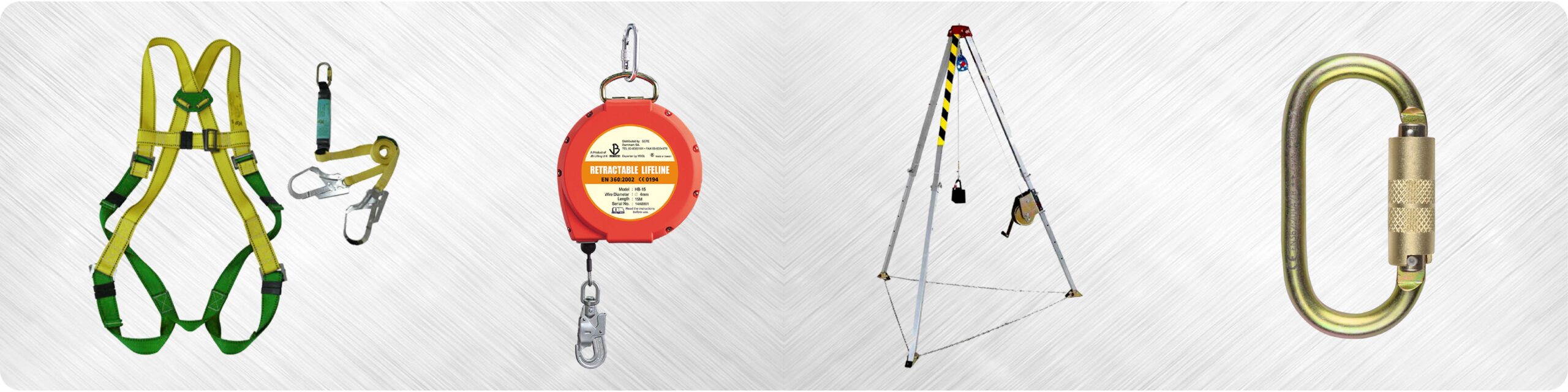
Fall protection harnesses are critical pieces of personal protective equipment (PPE) when working at heights. Choosing the right harness isn’t just about meeting OSHA compliance; it’s about ensuring the safety and well-being of workers. A properly selected and fitted harness can significantly reduce the risk of serious injury or even death in the event of a fall.
Using the wrong fall protection harnesses or using them incorrectly, however, can have dire consequences. A harness that doesn’t fit properly may not distribute fall forces effectively, leading to injury. Similarly, a harness that’s not appropriate for the specific task may not provide adequate protection. It’s essential to understand the different types of harnesses, their intended uses, and how to inspect and maintain them properly.
Our goal at Safe and Secure Trading Company (SSTC) is to help you select the best fall protection harnesses for your specific job requirements and avoid common pitfalls. By understanding the potential hazards and taking the necessary precautions, you can create a safer work environment for everyone. We aim to guide you through the harness selection guide process.
Mistake #1: Ignoring Job-Specific Requirements
The most common pitfall we see is using a generic harness for all tasks. This is like using a single tool for every job – it might work in some situations, but it’s far from ideal and can even be dangerous.
Different jobs present different fall risks and require varying degrees of mobility. For example, a construction worker installing roofing needs a different type of harness than a telecom technician climbing a utility pole. Ignoring these differences can compromise safety and efficiency.
The solution is to conduct a thorough risk assessment for each job. This assessment should identify potential fall hazards, the required range of motion, and any specific needs related to the work environment. Once you have a clear understanding of the risks, you can match harness features to specific tasks. For example, positioning harnesses are suitable for tasks that require hands-free work, while fall arrest systems are essential for jobs where falls are a significant risk. For many of our clients here in Dammam, we’ve seen that a detailed risk assessment leads to better harness selection and ultimately, a safer work environment.
Mistake #2: Overlooking Harness Types
Another common mistake is not understanding the different types of fall protection harnesses available. There’s a wide variety of harnesses designed for specific applications, and using the wrong type can compromise both safety and comfort.
Using the wrong type of harness can lead to inadequate protection in a fall. For instance, a suspension harness, designed for comfortable suspension during rappelling or rope access work, is not appropriate for fall arrest. Conversely, a basic fall arrest harness might be uncomfortable and restrictive for tasks requiring extended periods of suspension.
To avoid this mistake, it’s crucial to understand the different harness types and their specific applications. Let’s explore some common types:
- Full-body harnesses: These are the most common type of fall protection harnesses. They are designed to distribute fall forces across the wearer’s body, minimizing the risk of injury. Full-body harnesses typically have D-rings on the back for fall arrest and may also have side or front D-rings for positioning or retrieval.
- Positioning harnesses: These harnesses are designed to allow workers to be supported in a specific position, freeing up their hands for work. They typically have D-rings on the sides that are used with a positioning lanyard. Positioning harnesses are not designed for fall arrest and should only be used in conjunction with a separate fall arrest system.
- Suspension harnesses: These harnesses are designed for comfortable suspension during rappelling or rope access work. They typically have padded seat slings and multiple attachment points for distributing weight evenly. Suspension harnesses are not designed for fall arrest and should only be used in conjunction with a separate fall arrest system.
- Rescue harnesses: These harnesses are designed for use in rescue operations. They typically have multiple attachment points for attaching rescue ropes and equipment. Rescue harnesses may also have features such as padded shoulder straps and leg loops for increased comfort.
Selecting the appropriate harness type is critical for ensuring both safety and comfort. We once worked with a client choosing between a full-body harness and a positioning harness for their tower climbers. They found the positioning harness was better for their specific workflow because it allowed them to work hands-free while still being safely secured to the tower.
Mistake #3: Improper Harness Fit
Wearing a harness that is either too loose or too tight is a serious mistake. A poorly fitted harness won’t distribute fall forces properly, significantly increasing the risk of injury during a fall.
A harness that is too loose can allow the worker to slip out during a fall, negating the protection it’s supposed to provide. Conversely, a harness that is too tight can restrict movement, cause discomfort, and even lead to circulation problems.
Proper harness fit is essential for ensuring its effectiveness. Here’s a step-by-step guide to achieving a proper fit:
1. Loosen all straps: Before putting on the harness, loosen all leg straps, chest straps, and shoulder straps.
2. Put on the harness: Step into the harness and pull it up over your shoulders. Ensure that the D-ring on the back is positioned between your shoulder blades.
3. Adjust leg straps: Tighten the leg straps so that they are snug but not too tight. You should be able to fit a flat hand between the strap and your thigh.
4. Adjust chest strap: Fasten the chest strap and adjust it so that it is snug but not too tight. The chest strap should be positioned about six inches below your collarbone.
5. Adjust shoulder straps: Tighten the shoulder straps so that the harness fits snugly against your body. Ensure that the straps are not twisted or bunched up.
6. Check the fit: Once you have adjusted all the straps, check the overall fit of the harness. It should be snug but not restrictive. You should be able to move freely without the harness slipping or shifting.
7. The “Two-Finger Rule”: Once tightened, you should be able to easily slide two fingers between the straps and your body. If you can fit more than two fingers, the straps are too loose. If you can’t fit two fingers, the straps are too tight.
It’s crucial to check the harness fit before each use and make adjustments as needed. Workers should be trained on how to properly fit their harnesses and understand the importance of a snug but comfortable fit.
Mistake #4: Neglecting Regular Inspections
Failing to inspect fall protection harnesses before each use is a critical oversight. Damaged or worn fall protection equipment can fail during a fall, rendering it useless and putting the worker at serious risk.
Regular inspections are essential for identifying potential problems before they become hazards. Just because a harness looks okay on the surface doesn’t mean it’s free from hidden damage or wear.
Here’s a detailed inspection checklist that should be followed before each use:
- Check for cuts, tears, abrasions, or chemical damage: Carefully examine the webbing for any signs of damage. Pay particular attention to areas around buckles, D-rings, and other hardware.
- Inspect buckles, D-rings, and webbing for damage: Ensure that buckles are functioning properly and that D-rings are not bent, cracked, or corroded. Check the webbing for any signs of fraying or wear.
- Verify that labels are legible: Ensure that all labels are present and legible. The labels provide important information about the harness, including its weight capacity and manufacturing date.
- Check the energy absorber: If your harness has an energy absorber, inspect it for any signs of deployment or damage. An energy absorber that has been deployed should be replaced immediately.
- Check the lanyard: If your harness has a lanyard, inspect it for any signs of damage or wear. Pay particular attention to the snap hooks and other connectors.
Inspections should be documented to track the condition of the harness over time. This documentation can help identify patterns of wear and tear and ensure that harnesses are replaced when necessary. In addition to pre-use inspections, harnesses should also undergo periodic inspections by a competent person. OSHA requires that harnesses be inspected at least annually, but more frequent inspections may be necessary depending on the frequency of use and the severity of the work environment.
> “Regular inspection of fall protection equipment is not just a best practice; it’s a life-saving measure. Identifying and addressing potential issues before they lead to accidents is paramount.” – John Miller, Lead Safety Inspector
Mistake #5: Incorrect Attachment Points
Using the wrong D-ring for the intended application can lead to improper fall arrest and increased injury risk. Each D-ring on a fall protection harness is designed for a specific purpose, and using the wrong one can compromise the effectiveness of the entire fall protection system.
Attaching a lanyard to the wrong D-ring can result in an improper fall arrest, potentially causing the worker to swing into an obstacle or experience a more severe impact.
To avoid this mistake, it’s crucial to understand the purpose of each D-ring:
- Back D-ring (fall arrest): This D-ring is located on the back of the harness, between the shoulder blades. It is designed for use with a fall arrest lanyard or self-retracting lifeline (SRL). The back D-ring is the primary attachment point for fall arrest because it distributes fall forces evenly across the body.
- Side D-rings (positioning): These D-rings are located on the sides of the harness, typically at the hips. They are designed for use with a positioning lanyard, which allows workers to be supported in a specific position while keeping their hands free for work. Side D-rings are not designed for fall arrest and should only be used in conjunction with a separate fall arrest system.
- Front D-ring (climbing/rescue): This D-ring is located on the front of the harness, typically at the chest. It is designed for use in climbing or rescue applications. A front D-ring can be used for fall arrest in certain situations, such as when working on a ladder or in a confined space.
Always refer to the manufacturer’s instructions for specific guidance on the proper use of D-rings. Workers should be trained on how to identify and use the correct attachment point for each task.
Mistake #6: Ignoring Weight Capacity
Exceeding a fall protection harnesses’s weight capacity, including tools and equipment, can cause it to fail during a fall. Harnesses are designed to withstand specific forces, and overloading them can compromise their structural integrity.
Overloading a harness can cause straps to break, buckles to fail, or D-rings to deform. This can lead to serious injury or even death in the event of a fall.
To avoid this mistake, it’s essential to determine the harness’s weight capacity and ensure that the combined weight of the worker and tools does not exceed that limit. Here’s how to do it:
1. Check the harness label: The harness label will specify the maximum weight capacity of the harness. This weight capacity typically includes the worker’s weight, clothing, and tools.
2. Weigh the worker and tools: Use a scale to weigh the worker and all tools and equipment that will be worn or carried while working.
3. Calculate the total weight: Add the worker’s weight and the weight of the tools to determine the total weight.
4. Compare the total weight to the harness’s weight capacity: Ensure that the total weight does not exceed the harness’s weight capacity. If it does, you will need to use a different harness with a higher weight capacity.
Remember to account for all tools and equipment, including tool belts, radios, and other accessories. If you are unsure about the weight of a particular item, it’s always best to err on the side of caution and weigh it.
Mistake #7: Lack of Proper Training
Failing to provide adequate training on fall protection harnesses use and fall protection in general is a major mistake. Untrained workers are more likely to make mistakes and get injured.
Without proper training, workers may not understand the importance of fall protection, how to select the right harness, how to fit it properly, or how to inspect it for damage. They may also be unaware of the proper procedures for using fall protection equipment and what to do in the event of a fall.
A comprehensive fall protection training program should include the following elements:
- Harness selection and fitting: Workers should be trained on how to select the right harness for the job and how to fit it properly. This includes understanding the different types of harnesses, their intended uses, and how to adjust the straps for a comfortable and secure fit.
- Inspection procedures: Workers should be trained on how to inspect harnesses for damage before each use. This includes checking for cuts, tears, abrasions, chemical damage, and other signs of wear.
- Proper use of attachment points: Workers should be trained on the proper use of D-rings and other attachment points. This includes understanding the purpose of each D-ring and how to connect lanyards and other fall protection equipment properly.
- Fall arrest techniques: Workers should be trained on proper fall arrest techniques. This includes understanding how to position themselves to minimize the risk of injury in the event of a fall.
- Rescue procedures: Workers should be trained on rescue procedures. This includes knowing how to rescue a fallen worker and how to provide first aid.
Training should be conducted by a competent person who is knowledgeable in fall protection and OSHA requirements. Regular refresher training should be provided to ensure that workers stay up-to-date on the latest safety procedures. We’ve seen that companies with robust training programs experience significantly fewer fall-related accidents.
Mistake #8: Poor Storage Practices
Improperly storing fall protection harnesses when not in use can significantly reduce their lifespan and effectiveness. Exposure to sunlight, chemicals, or moisture can damage harnesses and compromise their ability to protect workers.
Poor storage practices can lead to the degradation of the harness materials, causing them to weaken and become more susceptible to damage. This can increase the risk of harness failure in the event of a fall.
To avoid this mistake, follow these guidelines for proper harness storage:
- Store in a cool, dry, and clean environment: Avoid storing harnesses in areas that are exposed to extreme temperatures, humidity, or dirt.
- Protect from sunlight, chemicals, and abrasion: Sunlight can damage the harness materials, causing them to weaken and fade. Chemicals can also degrade the materials and reduce their strength. Abrasion can wear down the webbing and other components of the harness.
- Hang harnesses to prevent creasing or compression: Hanging harnesses allows them to air out and prevents the webbing from becoming creased or compressed. This can help extend the life of the harness.
Consider providing designated storage areas for harnesses to ensure that they are properly stored. Educate workers on the importance of proper storage practices and how to care for their harnesses. For many of our clients here in Dammam, we recommend storing harnesses in individual, breathable bags to protect them from dust and sunlight.
Mistake #9: Not Having a Rescue Plan
Failing to have a plan for rescuing a worker who has fallen is a critical oversight. Suspension trauma can occur within minutes of a fall, making prompt rescue essential.
Suspension trauma, also known as orthostatic intolerance, occurs when a worker is suspended in a harness after a fall. The pressure from the harness straps can restrict blood flow, leading to a buildup of blood in the legs and a decrease in blood flow to the brain. This can cause unconsciousness and even death within a short period of time.
A comprehensive rescue plan should include the following elements:
- Prompt rescue of suspended worker: The rescue plan should outline the steps that will be taken to rescue a suspended worker as quickly as possible. This may involve using a rescue pole, a ladder, or other specialized equipment.
- Proper equipment and trained personnel: The rescue plan should identify the equipment that will be needed for the rescue and ensure that trained personnel are available to perform the rescue.
- Communication protocols: The rescue plan should establish clear communication protocols to ensure that everyone involved in the rescue is aware of the situation and their roles.
- First Aid preparedness: The rescue plan should ensure that first aid supplies and trained personnel are available to provide medical assistance to the rescued worker.
Different rescue techniques may be appropriate depending on the specific situation. Some common rescue techniques include self-rescue, assisted rescue, and mechanical rescue. We once worked with a client who implemented a drone-based rescue system, allowing them to quickly assess the situation and deliver rescue equipment to the fallen worker.
It is critical to practice the rescue plan regularly to ensure that everyone involved is familiar with the procedures. Time is of the essence in a rescue situation, and a well-rehearsed plan can save a life.
Conclusion: Ensuring Worker Safety Through Proper Harness Selection and Use
Avoiding these common mistakes is paramount to ensuring worker safety when working at heights. By understanding the specific requirements of each job, selecting the right fall protection harnesses, ensuring a proper fit, conducting regular inspections, using the correct attachment points, adhering to weight capacity limits, providing adequate training, practicing proper storage, and having a comprehensive rescue plan, you can significantly reduce the risk of fall-related injuries.
Choosing the right harness for the job is not just a matter of compliance; it’s a commitment to protecting your workers and providing them with a safe work environment. We at Safe and Secure Trading Company are dedicated to helping you achieve this goal through expert guidance and high-quality fall protection equipment.
FAQ Section
Q: How often should fall protection harnesses be inspected?
A: Fall protection harnesses should be inspected before each use and at least annually by a competent person. More frequent inspections may be necessary depending on the frequency of use and the severity of the work environment.
Q: What are the different types of D-rings on a fall protection harness and what are they used for?
A: The different types of D-rings include the back D-ring (fall arrest), side D-rings (positioning), and front D-ring (climbing/rescue). Each D-ring is designed for a specific purpose, and using the wrong one can compromise the effectiveness of the fall protection system.
Q: How do I know if my fall protection harness fits properly?
A: A properly fitted harness should be snug but not restrictive. You should be able to fit a flat hand between the leg straps and your thigh, and the chest strap should be positioned about six inches below your collarbone. The D-ring on the back should be positioned between your shoulder blades.
Q: What is suspension trauma and how can it be prevented?
A: Suspension trauma, also known as orthostatic intolerance, occurs when a worker is suspended in a harness after a fall. It can be prevented by promptly rescuing the suspended worker and ensuring that they are provided with medical assistance. Having a comprehensive rescue plan is essential.
Q: Where can I find more information on OSHA compliance for fall protection?
A: You can find more information on OSHA compliance for fall protection on the OSHA website or by contacting a qualified safety professional. Safe and Secure Trading Company can also provide guidance on OSHA compliance and help you select the right fall protection equipment for your needs.
Q: What are the key elements of a comprehensive fall protection training program?
A: A comprehensive fall protection training program should include harness selection and fitting, inspection procedures, proper use of attachment points, fall arrest techniques, and rescue procedures. The training should be conducted by a competent person and should be regularly updated to reflect the latest safety procedures.
Q: How should fall protection harnesses be stored when not in use?
A: Fall protection harnesses should be stored in a cool, dry, and clean environment, away from sunlight, chemicals, and abrasion. They should be hung to prevent creasing or compression.